

If you’ve had liposuction before and the results weren’t what you hoped for, you’re not alone. Many people experience contour irregularities, small residual fat pockets, uneven skin texture, or asymmetry after traditional liposuction. Sometimes this happens because of healing patterns, sometimes because too much or too little fat was removed, and sometimes simply because the skin didn’t retract as smoothly as expected.
In this detailed guide, I want to walk you through exactly what Smartlipo can and cannot do after previous liposuction. You’ll learn how revision treatment works, why Smartlipo is different from traditional liposuction, who is most likely to benefit from it, and what results you can realistically expect. I’ll also explain what alternatives may be available if Smartlipo isn’t suitable and how to decide on the safest and most effective plan for your goals.
Why Liposuction Results Sometimes End Up Uneven
Before exploring how Smartlipo helps, it’s important to understand why uneven results happen in the first place. This helps you make sense of what can be improved and what requires a different approach.
After liposuction, the body heals in ways that aren’t always predictable. Even if the surgeon removes fat evenly, your skin, connective tissue, and lymphatic system each play a role in how the final contour settles.
Here are the most common reasons uneven results occur:
1. Residual Fat Pockets: In some areas, stubborn fat can be harder to remove or may have been intentionally left behind to avoid over-removal. These pockets can show up months after healing is complete.
2. Over-Removal of Fat: If too much fat is taken from an area, the skin may look dented or sunken. This is usually more difficult to correct.
3. Scar Tissue and Fibrosis: After liposuction, the body forms internal scar tissue known as fibrosis. If this develops unevenly, it can pull the skin inwards or create firmness and lumpiness.
4. Asymmetry: If one side heals differently from the other, or if fat was removed unevenly, the result can look unbalanced.
5. Skin Laxity: Liposuction does not tighten the skin. So if the skin does not retract well after fat removal especially in older patients or larger treatment areas the surface may appear uneven.
6. Irregular Healing: Every body heals differently. Swelling, fluid retention, and the way connective tissue reforms beneath the skin all influence the final outcome.
Understanding the cause of your unevenness is essential because Smartlipo addresses some of these issues very effectively but not all.
What Smartlipo Actually Does
Smartlipo is a laser-assisted lipolysis treatment that targets fat while also stimulating skin tightening. Unlike traditional liposuction, which only removes fat, Smartlipo uses controlled laser energy to liquefy fat cells and encourage collagen production in deeper skin layers.
This dual action makes Smartlipo especially useful for revision work. It can correct both uneven fat deposits and loose or sagging skin, improving overall body contours.
The treatment offers several benefits, including selective fat melting, improved skin tightening, smoother contours, better definition, gradual improvement in skin texture, minimal downtime, and the use of local rather than general anaesthetic.
Because Smartlipo is gentler and more precise than traditional liposuction, it allows practitioners to refine contours carefully. The tissue experiences less trauma, making recovery easier and results more natural-looking.
Why Smartlipo Is Often Chosen for Revision Liposuction
If you’ve already been through liposuction once, you might be hesitant about undergoing another procedure. That’s understandable. The good news is that Smartlipo as a revision option is generally smoother, less invasive, and easier to recover from than repeating traditional lipo.
Smartlipo is commonly recommended for revision because:
1. It Can Target Small Irregular Areas: Traditional liposuction often struggles with small, specific bumps or dips. Smartlipo allows fine-tuned correction because the practitioner can precisely target small trouble spots.
2. The Laser Helps Break Up Scar Tissue: Fibrosis after liposuction can create firmness or lumpiness. The Smartlipo laser helps soften this scar tissue and smooth out the treated area.
3. It Tightens Skin: This is one of the biggest advantages. If loose skin contributed to your uneven result, Smartlipo’s collagen-stimulating effect can improve tightness and surface smoothness.
4. It Helps Blend Edges: If the transition between liposuctioned and non-liposuctioned areas looks harsh, Smartlipo can smooth the blend.
5. Minimal Trauma Means Better Precision: Because Smartlipo uses laser energy to melt fat rather than aggressively suctioning it, the practitioner can sculpt with more subtlety and create a more refined result.
Together, these benefits make Smartlipo an excellent choice for many people seeking correction after previous liposuction especially those with mild to moderate irregularities.
When Smartlipo Works Well as a Revision Treatment

Smartlipo is especially effective as a revision treatment because it can target both fat and skin concerns with precision. Whether you’re dealing with leftover fat, uneven texture, or loose skin after previous liposuction, Smartlipo’s laser technology allows your practitioner to refine and improve results. It’s designed to address subtle irregularities that traditional liposuction alone might not fully correct.
Small Residual Fat Pockets: If your unevenness is caused by leftover fat in specific spots, Smartlipo can target and remove those pockets precisely.
Mild to Moderate Dents or Lumps: If fibrosis or uneven fat removal has created irregular texture, Smartlipo can help smooth the surface.
Skin Laxity After Liposuction: The collagen stimulation from Smartlipo helps tighten loose skin, improving the overall result.
Contour Refinement: If your shape looks uneven, blurry, or asymmetrical, Smartlipo can create definition and restore balance.
Blending Edges: Smartlipo can soften the transition between treated and untreated areas.
Revision of Old Liposuction: Even if your original liposuction was years ago, Smartlipo can still help correct irregularities.
If your concerns fall into these categories, Smartlipo may give you a much more refined result.
When Smartlipo Might NOT Be the Best Option
While Smartlipo is excellent for refining and smoothing many areas, it isn’t suitable for every type of unevenness. Some issues require alternative treatments or surgical approaches to achieve the best results.
1. Over-Removal of Fat (Deep Dents): If too much fat has been removed, Smartlipo cannot restore lost volume. In these cases, options such as fat grafting or dermal fillers may be needed to rebuild the contour and achieve a smoother appearance.
2. Severe Fibrosis: Smartlipo can help soften mild to moderate fibrosis (scar tissue), but very dense or severe scarring may require subcision or additional scar-release techniques to properly correct the irregularity.
3. Significant Skin Laxity: If the skin is extremely loose or sagging, Smartlipo alone may not provide sufficient tightening. In these cases, a surgical lift (such as a tummy tuck, arm lift, or thigh lift) may be a more effective solution to achieve a firm, smooth contour.
4. Very Large Irregular Areas: Smartlipo is most effective on small to medium-sized areas. Very large uneven regions may need more extensive revision surgery or combined approaches to achieve uniform results.
5. Unrealistic Expectations: Smartlipo can significantly improve unevenness, but it cannot guarantee perfection. The goal of revision treatment is measurable improvement rather than a flawless surface, and understanding this helps set realistic expectations.
Your practitioner will carefully evaluate your individual situation and guide you on whether Smartlipo is appropriate, or whether another procedure would better address your specific type of irregularity.
How Smartlipo Breaks Down Fat Differently From Traditional Liposuction
Traditional liposuction removes fat by physically breaking it up and suctioning it out. While effective, this approach can cause trauma to the surrounding tissue. This is particularly a concern during revision procedures, where precision is crucial.
Smartlipo takes a different approach by using laser energy to melt fat before it is removed. This liquefaction makes the process gentler and less disruptive to the tissue.
In addition to targeting fat, Smartlipo stimulates collagen production, which helps tighten the skin as it works. This dual effect improves the overall contour and smoothness of the treated area.
Because the procedure is more controlled and precise, Smartlipo is ideal for fine corrections. It allows practitioners to sculpt small areas accurately while minimizing trauma, making it especially suitable for revision treatments.
What to Expect During a Smartlipo Revision Procedure
If you’re considering Smartlipo after previous liposuction, the procedure is designed to be precise and minimally invasive. It focuses on refining areas that need correction while reducing trauma to the surrounding tissue. Most patients find the process straightforward, with a quicker and more comfortable recovery compared to traditional liposuction.
Consultation: Your practitioner will examine your unevenness, assess skin quality, and determine whether Smartlipo is likely to help.
Marking the Treatment Areas: Precise marking is important because Smartlipo targets specific pockets or transitions.
Local Anaesthetic: Most Smartlipo procedures use local anaesthetic rather than general anaesthetic.
Small Incisions: Tiny incisions allow the laser fibre to reach the fat layer.
Laser Fat Melting: The laser energy melts the targeted fat and helps break up scar tissue.
Optional Suction: In some cases, the liquefied fat is gently suctioned out. In others, it’s left to be metabolised naturally.
Skin Tightening: The heat from the laser stimulates collagen, which helps tighten the skin over the following months.
Minimal Downtime: Smartlipo recovery is usually quicker and easier than traditional lipo recovery.
Because the procedure is gentle and precise, most patients find revision treatment much more comfortable than their original liposuction.
Healing, Collagen Production & Final Results
After Smartlipo, your results develop gradually, particularly when it comes to skin tightening. In the first one to two weeks, you may notice early improvements, especially if the main concern was leftover fat pockets.
Between one and three months, scar tissue begins to soften, and the skin starts tightening. Contour irregularities become less noticeable as the treated area smooths out.
From three to six months, collagen production reaches its peak. This helps improve skin firmness and texture, giving a more natural and refined appearance.
After six months and beyond, the final results become visible and continue to improve for up to a year. This slow, progressive change can be very satisfying, especially for those seeking to refine the results of a previous liposuction.
Why Revision Liposuction Requires Specialist Skill
Revision liposuction always requires more skill than a first-time procedure. The tissue has already been altered, and scar tissue may be present, making precision absolutely essential. Without careful technique, results can be uneven or unpredictable.
Working with an experienced specialist such as those offering Smartlipo at reputable body contouring clinics ensures your treatment is tailored to your needs. They consider factors like tissue quality, your anatomy, and the specific nature of any unevenness.
A skilled practitioner can carefully assess whether Smartlipo is the most suitable option for you. They can also explain what results are realistic, target only the areas needing correction, and combine techniques if necessary to achieve the best outcome.
Experts also know how to avoid overworking delicate tissue and manage expectations clearly and honestly. Choosing the right practitioner is one of the most important factors in achieving a successful revision liposuction result.
Can Smartlipo Fix Every Type of Unevenness?
Not every type of unevenness can be corrected with the same approach. Smartlipo is highly effective for surface-level irregularities and mild to moderate contour issues. However, deeper structural problems sometimes require different treatments.
For example, indentations caused by excessive fat removal may be better addressed with fat grafting. Severe fibrosis or scar tissue might need a procedure called subcision to release tethered areas.
Large amounts of loose skin may require surgical excision rather than laser treatment alone. Similarly, significant asymmetry often needs a combination of approaches to achieve balance.
In many cases, the best results come from using multiple techniques together. This tailored approach ensures that both the contours and the texture of the treated area are optimally refined.
What About Safety? Is Smartlipo Safe After Previous Liposuction?
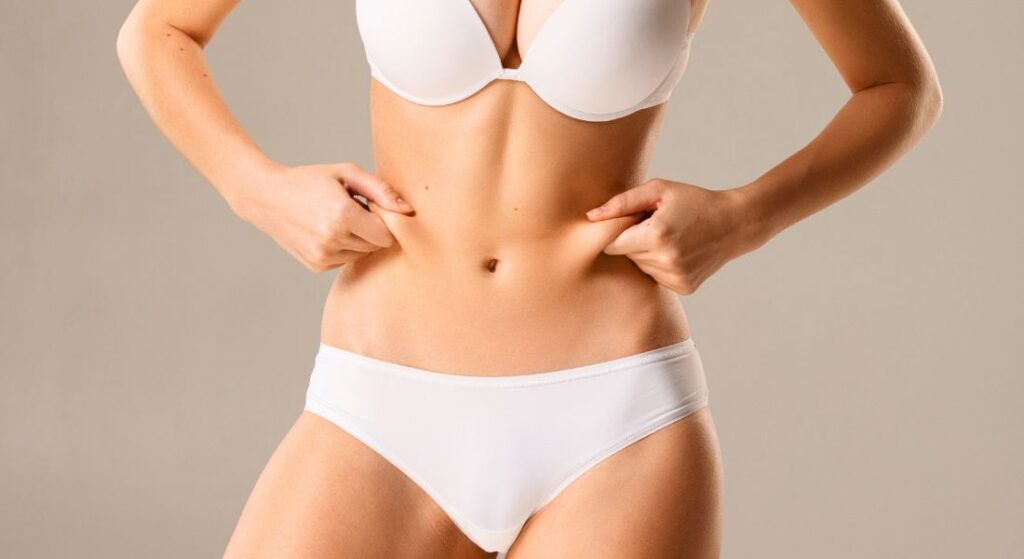
Yes, Smartlipo is generally safe after previous liposuction when performed by a practitioner experienced in revision procedures. Expertise is key to managing scar tissue and working safely in areas that have already been treated.
Because Smartlipo is gentler and more precise, it reduces the risks typically associated with revisiting the same area. Many patients report that recovery is easier and more comfortable compared to their original liposuction.
Temporary effects are common but mild, including swelling, light bruising, tenderness, or firmness as collagen develops. These usually resolve on their own within a few days to weeks.
Serious complications are very rare when the procedure is carried out by a qualified and skilled practitioner. With proper technique, Smartlipo offers a safe and effective way to refine previous liposuction results.
How to Decide Whether Smartlipo Is Right for You
If you’ve been unhappy with your previous liposuction, Smartlipo can offer significant improvements. However, it works best when it matches your specific needs and treatment goals. A tailored approach ensures the most satisfying results.
Smartlipo may be suitable if you have mild to moderate unevenness, residual fat pockets, or localized lumps and dents. It’s also ideal if your skin needs tightening, you want a precise revision or prefer a procedure with minimal downtime.
On the other hand, Smartlipo may not be the right choice for everyone. Deep indentations from aggressive liposuction, extremely loose skin, or a desire for dramatic fat removal may require alternative approaches.
It may also be unsuitable if your unevenness comes from missing volume rather than excess fat, or if you expect perfectly smooth results. The best way to know whether Smartlipo is right for you is through a specialist consultation.
FAQs:
1. Can Smartlipo completely fix uneven results from previous liposuction?
Smartlipo is highly effective for refining small irregularities and improving skin tightness, but it may not completely correct severe indentations or structural issues caused by over-removal of fat. The treatment can significantly improve the appearance and smoothness, yet some cases may require additional procedures such as fat grafting or surgical lifts.
2. How soon will I see results after Smartlipo revision treatment?
Initial improvements can often be noticed within the first few weeks, particularly with small fat pockets and early skin tightening. The most noticeable results usually develop gradually over three to six months as collagen production peaks, and the final contour can continue to improve for up to a year.
3. Is Smartlipo safe to use on areas previously treated with liposuction?
Yes, Smartlipo is generally safe when performed by a skilled practitioner who has experience with revision procedures. Its laser-assisted method is gentler than traditional liposuction, which reduces trauma to already treated tissue and lowers the risk of complications.
4. Will Smartlipo help with loose skin after previous liposuction?
Smartlipo stimulates collagen production in the skin, which can improve firmness and texture. While it is effective for mild to moderate skin laxity, very loose skin may require a surgical lift to achieve a fully tightened and smooth appearance.
5. How long does it take to recover from a Smartlipo revision procedure?
Recovery is usually quicker and more comfortable than traditional liposuction. Most patients experience mild swelling or bruising that resolves within a few days to weeks, and many can return to normal activities shortly after treatment, depending on the areas treated.
6. Can Smartlipo correct asymmetry caused by previous liposuction?
Smartlipo can improve minor asymmetry by refining the contours and smoothing transitions between treated and untreated areas. However, pronounced asymmetry or deep volume differences may require more than one procedure or a combination of treatments for optimal results.
7. Are the results of Smartlipo permanent?
The fat removed during Smartlipo does not return, and collagen improvements can last for several years. That said, natural ageing and weight fluctuations can affect long-term appearance, and occasional touch-ups may be recommended to maintain the refined contour.
8. Is Smartlipo painful compared to traditional liposuction?
Most patients report that Smartlipo is less uncomfortable than conventional liposuction because it uses local anaesthetic and laser energy rather than aggressive suctioning. Some mild discomfort, tenderness, or warmth can occur during and after the procedure, but these effects are generally short-lived.
9. Can Smartlipo remove fat from large areas after previous liposuction?
Smartlipo works best on small to medium-sized areas that need contour refinement. Very large areas may be more challenging to treat effectively with Smartlipo alone, and your practitioner may recommend combining treatments or using alternative methods for optimal results.
10. How do I know if I am a good candidate for Smartlipo revision?
The best way to determine suitability is through a consultation with an experienced specialist who can assess your previous liposuction results, skin quality, and areas of unevenness. They will create a personalised plan and advise whether Smartlipo alone or in combination with other treatments will achieve the best possible outcome.
Final Thought: Is Lanluma Right for You?
Lanluma is an effective solution for restoring facial volume and improving skin texture, offering a subtle yet noticeable rejuvenation. Because the treatment works by stimulating your body’s own collagen, results develop gradually, giving a natural, long-lasting improvement without the need for more invasive procedures. Many patients find it enhances overall facial harmony, helping them look refreshed and youthful while maintaining their unique features.
If you’re thinking about smartlipo treatment in London, get in touch with us at the London Medical & Aesthetic Clinic to discuss your goals and discover how this procedure could benefit you. Our team can guide you through the process, explain what to expect, and create a personalised treatment plan to achieve the best possible results safely and effectively.
References:
1. Diaconu, C.C., Ionescu, D., Albu, S. & Lupascu, D. (2009) Evaluation of Skin Tightening After Laser‑Assisted Liposuction, Lasers in Surgery and Medicine, 41(7), pp.491–497. https://www.sciencedirect.com/science/article/abs/pii/S1090820X0900315X
2. Valizadeh, S., Yaghoobi, R., Rafiee, Z. & Javidnia, H. (2015) Evaluation of Safety and Efficacy of 980‑nm Diode Laser‑Assisted Lipolysis Versus Traditional Liposuction for Submental Rejuvenation, Journal of Cosmetic Dermatology, 14(3), pp.250–255. https://pubmed.ncbi.nlm.nih.gov/25968162/
3. Swanson, E., et al. (2024) Laser‑Assisted Lipolysis Versus Surgical Fat Removal: A Review of Efficacy, Safety, and Patient Satisfaction, Cosmetics, 11(5):164. https://www.mdpi.com/2079-9284/11/5/164
4. Apfelberg, D.B., et al. (2004) Laser Lipolysis of the Arm With and Without Suction Aspiration: Clinical and Histologic Changes, Aesthetic Surgery Journal, 24(1), pp.22–28. https://pubmed.ncbi.nlm.nih.gov/19466641/
5. Nationwide Analysis of Complications and Risks Associated With Types of Liposuction in 69,424 Patients, Aesthetic Surgery Journal, 45(12), pp.1252–1262. https://academic.oup.com/asj/article-abstract/45/12/1252/8218035