


When most people hear about Smartlipo, they think it’s simply a way to remove fat. In reality, it works on a much deeper biological level. Unlike traditional liposuction, which physically removes fat, Smartlipo uses laser energy to target adipocytes, the cells that store fat, triggering a series of controlled cellular and tissue-level changes. This process… Read more… Laser–Adipocyte Interaction in Smartlipo: How Fat Cells Are Disrupted
When most people think about Smartlipo, they focus primarily on fat reduction. What is often overlooked is that the defining feature of Smartlipo is not suction, but controlled thermal energy. This heat fundamentally influences how subcutaneous fat, connective tissue, and the dermis respond during and after treatment, making thermal control just as important as fat… Read more… Thermal Effects of Smartlipo on Subcutaneous Tissue and Skin
When you think of laser skin treatments, it’s easy to picture changes only on the surface smoother texture, even tone, or softer fine lines. Many people assume that lasers simply “resurface” the skin without affecting the deeper layers. The truth is far more fascinating. CO₂ laser resurfacing doesn’t just target what’s visible; it initiates a… Read more… Epidermal–Dermal Crosstalk After CO₂ Laser: Why Surface Treatment Changes Deep Skin Structure
If you have ever wondered how laser skin treatments create smoother, firmer, and more youthful-looking skin, the answer lies in how your skin responds to controlled injury. Fractional CO₂ laser therapy goes beyond superficial resurfacing. It delivers precise microscopic columns of energy into the dermis, intentionally creating tiny zones of injury while leaving surrounding tissue… Read more… Fractional CO₂ Laser and Dermal Wound Healing: A Controlled Injury Model
If you’re considering laser skin treatments, it helps to understand how collagen responds to CO₂ laser resurfacing. Collagen forms the structural backbone of your skin, giving it strength, elasticity, and a youthful appearance. CO₂ laser delivers precise thermal energy, causing controlled collagen denaturation that triggers a cascade of repair mechanisms. This controlled thermal effect leads… Read more… Collagen Denaturation and Remodelling After CO₂ Laser Resurfacing
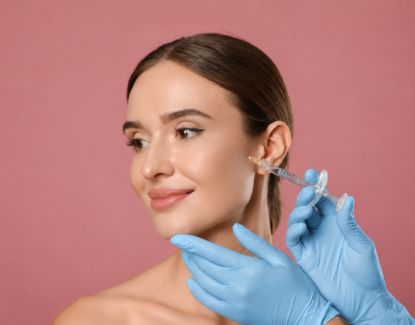
When you first hear about Sculptra, it might seem like just another injectable filler promising temporary volume. However, the science behind it goes much deeper than simple plumping. Sculptra is designed to work with your skin’s natural structure, stimulating processes that rebuild and strengthen its architecture over time. Two key mechanisms are involved: neocollagenesis and… Read more… Neocollagenesis vs Collagen Maturation: How Sculptra Improves Skin Architecture Over Time
When you hear the word injectable, it is easy to assume that all injectable treatments behave in the same way. In reality, there is a fundamental biological difference between traditional fillers and biostimulatory treatments like Sculptra, which explains why it does not act like a filler or provide instant volume. Rather than simply filling space,… Read more… Foreign-Body Response vs Regenerative Biostimulation: Why Sculptra Does Not Behave Like a Filler
When you think about injectable treatments, it’s natural to focus on the first few months after treatment. With Sculptra, however, some of the most important changes happen well beyond the first year. To understand why your results can still be visible after 12–24 months, you need to look at what is happening within your skin… Read more… Long-Term Tissue Remodelling After Sculptra: What Happens Beyond 12–24 Months
When people first hear that Sculptra works gradually, it can raise questions or even concerns. In a world where many aesthetic treatments promise immediate results, slow improvement may feel unusual or confusing. To truly understand how Sculptra works, we need to look beyond what’s visible and explore the biology of biostimulation. Sculptra functions by triggering… Read more… Inflammatory Response and Biostimulation: Why Sculptra Works Gradually
When collagen is discussed in aesthetic medicine, it is often treated as a single concept. In reality, collagen is not one uniform substance, and different types of collagen play very different roles in skin structure, strength, and ageing. To truly understand how Sculptra works, we need to look closely at which type of collagen it… Read more… Type I vs Type III Collagen: What Kind of Collagen Does Sculptra Stimulate?