



If you’ve recently experienced weight gain or weight loss, you may have noticed unexpected changes in your face or body. These changes often create new concerns about volume, structure, firmness, or skin quality. You might feel that your cheeks appear flatter than before, your jawline looks softer, or your skin seems loose in areas that used to feel tight.
Many people ask whether Sculptra works the same after weight changes, whether they should wait before starting treatment, and how long results last if their weight continues to fluctuate. These are important questions, especially because collagen behaves very differently from ordinary fillers.
This article is designed to give you clarity. I’ll walk you through how weight gain and weight loss affect facial and body volume, how Sculptra responds to these changes, and what timing makes the most sense depending on your situation. Whether you’re dealing with post-weight-loss hollowness or weight-gain-related facial heaviness, you’ll understand how Sculptra fits into your treatment options.
How Weight Changes Affect Your Face and Skin
Your skin and deeper tissues respond to weight changes more than you might expect. When you gain weight, fat pads in your face may become fuller, which can soften your features or alter your natural definition. For some people, this creates heaviness along the jawline or mid-face, while others notice small changes that simply make their features look different from before.
When you lose weight, your face may appear slimmer, but it can also look hollow. Cheeks may deflate more quickly than other areas, especially if you naturally carry less facial fat. Your under-eye region may start to look sunken, and your skin can appear looser because fat volume plays a role in providing structure and support.
This is the point where many people start thinking about Sculptra. You may feel your face doesn’t look like it used to, or that it has lost some of the youthful softness and firmness that made you feel confident. Understanding how your tissues respond to weight changes helps you make sense of whether Sculptra is ideal for you.
What Makes Sculptra Different From Fillers After Weight Changes?

Before diving into whether Sculptra is suitable post-weight-change, it’s helpful to understand how it works. Sculptra is not a filler that instantly adds volume. It stimulates your body to rebuild collagen slowly over time. This means it doesn’t create a sudden “filled” appearance. Instead, it restores the deeper support layers that help maintain youthful contours.
This is especially important after weight changes because collagen loss and fat loss often occur together. If fillers treat the surface level, Sculptra treats the internal architecture. The result is a more natural improvement that blends with your facial movements and adjusts more gracefully if your weight continues to change.
Another advantage is longevity. Once your collagen develops, it remains stable for a long time, even if your weight fluctuates slightly. That’s one of the reasons many people choose Sculptra after weight loss: it reinforces the foundation instead of simply replacing lost fat.
Understanding this distinction helps you see why Sculptra is often preferable when your facial structure has shifted due to changes in body weight.
Can You Use Sculptra After Weight Loss? Absolutely And Here’s Why
If you’ve recently lost weight, you might be seeing hollowness in your temples, cheeks, and under-eye region. This can make you look more tired or older than you feel. Weight loss is one of the most common reasons people choose Sculptra, and it is extremely effective in restoring balanced volume.
Post-weight-loss hollowing happens because fat pads shrink faster than your skin can adapt. The deeper support collapses slightly, leaving your face looking deflated. Sculptra helps by stimulating new collagen along those same areas, replacing what fat volume used to provide.
You may notice that your mid-face looks lifted, your cheeks regain their natural curve, and your skin becomes more resilient. Because Sculptra works gradually, the outcome looks authentic, not like you’ve suddenly added volume. This natural look is ideal when your face has changed due to weight loss because your goal is usually restoration, not dramatic transformation.
You can safely use Sculptra soon after weight loss, although many practitioners recommend waiting until your weight stabilises ideally for at least a few months. This ensures that your treatment plan is based on your long-term appearance rather than transitional changes.
Does Weight Loss Affect How Much Sculptra You Need?
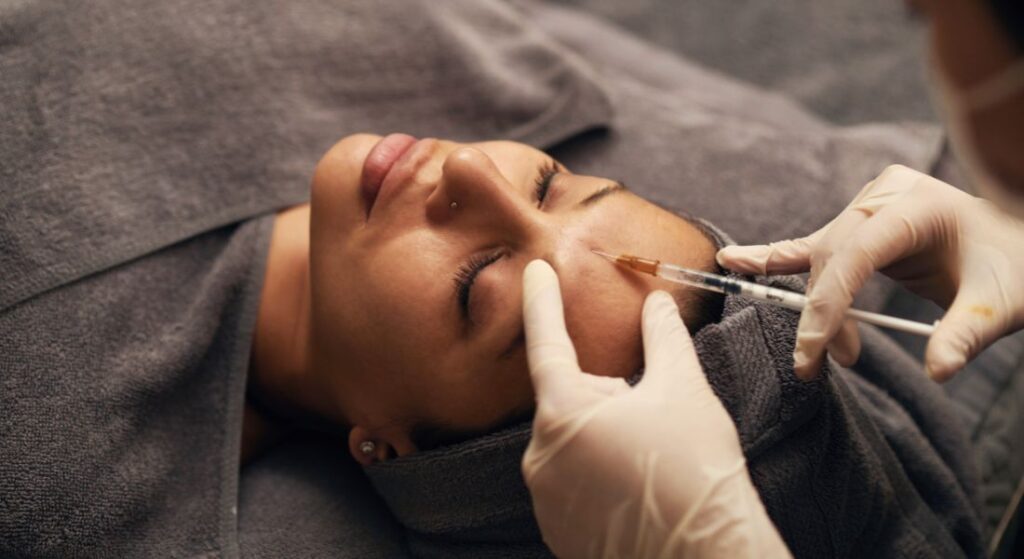
In short, yes, weight loss can affect how much Sculptra you need, but the exact amount depends on your individual facial structure and skin quality. If you have lost a significant amount of weight, you may require more Sculptra than someone whose weight has remained stable. This is because greater fat loss often leads to a more noticeable reduction in facial volume and support.
During your consultation, your injector will carefully assess several factors, including:
The degree of hollowing: Areas such as the cheeks, temples, or jawline may appear sunken after weight loss and may need more collagen support.
The elasticity of your skin: Reduced elasticity can affect how well the skin tightens once collagen production is stimulated.
Areas where fat pads have reduced: Certain facial fat compartments shrink more than others, influencing where and how much Sculptra is required.
Your collagen quality: Previous collagen loss, age, and lifestyle factors all affect how robust your results can be.
Your natural facial proportions: Treatment is always tailored to maintain balance and avoid overcorrection.
In many cases, patients who have experienced visible changes following weight loss require two to three treatment sessions in the first year. Once a strong collagen foundation has been rebuilt, maintenance becomes much simpler, often requiring only occasional top-ups to sustain results.
Can Sculptra Be Used After Weight Gain? Yes, But With a Different Purpose
Sometimes the opposite problem occurs. If you’ve gained weight and noticed heavier cheeks or reduced jawline definition, you may wonder whether Sculptra can help. Sculptra does not dissolve fat, so it’s not used to correct heaviness. However, it can enhance contour and lift in a way that improves overall balance.
Weight gain can soften certain features, and Sculptra can be used strategically to support areas that appear flatter or weighed down. For example, if weight gain has caused the lower face to feel heavier, subtle Sculptra placement in the mid-face can give a gentle lifting effect by reinforcing the tissue support above it.
This doesn’t reduce fat but improves structure, which can create a more sculpted look. It’s important to have a consultation with an experienced practitioner to understand whether your specific concerns would benefit from Sculptra or from a different treatment.
How Collagen Responds to Weight Changes After Treatment
One of the biggest concerns people have been whether future weight changes will affect their Sculptra results. Collagen behaves differently from fat, so you may find that your Sculptra improvements remain even if your weight shifts.
Your collagen support structure doesn’t disappear with mild weight changes. If you lose additional weight after treatment, you may need more collagen stimulation later, but you won’t lose the benefits you’ve already built. If you gain weight, your collagen acts as an internal framework supporting the fat pads that develop.
In both cases, Sculptra remains stable and continues enhancing firmness, resilience, and definition.
Does Sculptra Look Natural After Weight Fluctuations?
Yes. This is one of the biggest advantages of Sculptra. Because it stimulates collagen gradually, the results blend with your facial expression and natural shaping. Unlike fillers that create instant volume, Sculptra becomes part of your skin over several months.
This makes it a very forgiving treatment during times of physical change. Whether your face becomes slightly fuller or slightly slimmer afterwards, your collagen support remains harmonious. Most people appreciate this because it means their results feel stable rather than dependent on their weight.
Sculptra for Body Areas Affected by Weight Changes
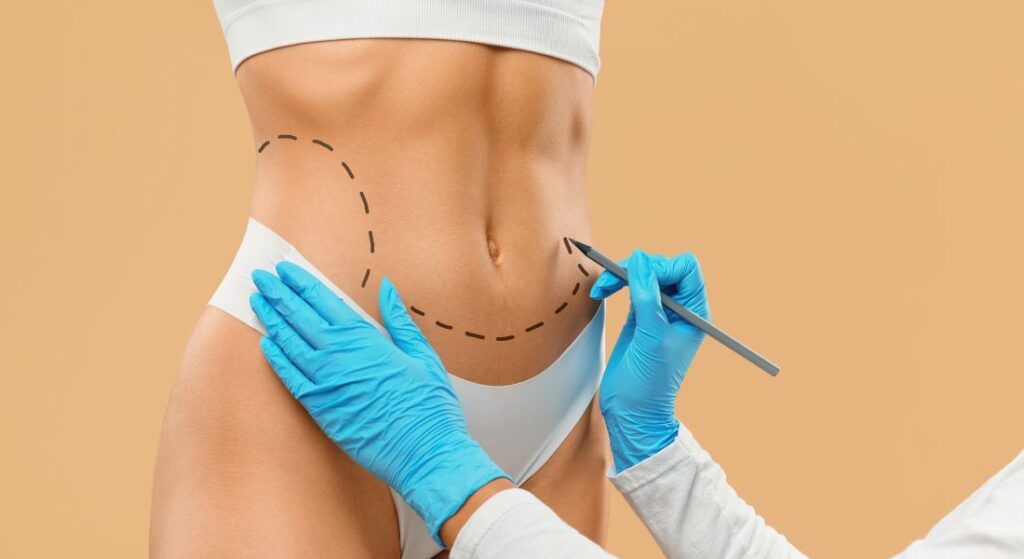
Sculptra is not limited to facial treatments. It is also commonly used on body areas where weight changes have affected skin firmness, texture, or elasticity. These areas often struggle to recover on their own, even with exercise or topical treatments.
Common treatment areas include:
Arms (after weight loss): Helps improve crepiness and skin laxity, particularly along the upper arms.
Stomach (after pregnancy or weight loss): Supports collagen rebuilding to improve skin texture and mild laxity.
Thighs: Ideal for smoothing crepey skin and improving overall firmness across larger areas.
Buttocks: Enhances skin quality, firmness, and subtle volume without surgery.
Hips: Can help restore smoother contours after significant weight changes.
Décolletage: Improves thinning or crepey skin in an area prone to collagen loss.
Post-weight-loss crepiness is one of the most challenging concerns to treat. Sculptra works particularly well in these areas because it builds deep, structural collagen, improving skin thickness, elasticity, and overall texture. Over time, the skin becomes firmer, smoother, and more resilient.
If you are considering facial treatment, it can also be helpful to know that Sculptra can be extended to body areas, allowing for a more comprehensive and balanced rejuvenation plan.
How Practitioners Tailor Sculptra to Your Weight-Related Changes
Sculptra is not a one-size-fits-all treatment. Your practitioner will carefully assess how weight changes have affected your facial fat pads, skin quality, and overall balance. Even two people who have lost the same amount of weight may need completely different treatment plans, depending on how their face has changed.
During your assessment, your practitioner will analyse:
Where structural support is lacking – Identifying areas where collagen loss has reduced underlying support.
Which areas have collapsed or hollowed – Commonly around the cheeks, temples, or jawline after weight loss.
How your bone structure interacts with your fat distribution – This helps determine where support should be restored rather than simply adding volume.
Where lifting versus filling is needed – Some areas benefit from collagen-driven tightening, while others require subtle volumisation.
Which injection planes should be used – Depth and placement are critical to achieving smooth, natural-looking results.
How your skin elasticity is performing – Skin that has lost elasticity may need a more gradual or staged approach.
Where collagen stimulation will offer the greatest benefit – Treatment is focused on areas that will respond best over time.
This is why choosing an experienced, highly skilled injector is so important. Sculptra relies heavily on precise technique and a deep understanding of facial anatomy. When applied thoughtfully, it produces smoother, more harmonious results particularly in patients whose appearance has changed following weight loss or gain.
How Many Sessions Do You Need After Weight Gain or Loss?
The number of Sculptra sessions you’ll need largely depends on how much weight you’ve gained or lost and how those changes have affected your facial structure. Weight fluctuations can alter fat distribution, skin tension, and overall support, so treatment plans are always personalised rather than fixed.
After significant weight loss, most patients require two to four sessions within the first year. This approach allows your practitioner to gradually rebuild collagen and restore structural support where volume has reduced. Once results are established, a maintenance session every 12 to 24 months is usually enough to keep the outcome looking natural and balanced.
Following weight gain, treatment is typically lighter and more conservative. The focus is less on replacing lost volume and more on refining contours, improving skin quality, and maintaining facial proportions. In many cases, fewer sessions are needed because existing volume is still present.
How Sculptra Compares With Fillers After Weight Changes
If you’re wondering whether fillers might be easier or more immediate, it’s helpful to understand the key differences. Hyaluronic acid fillers add instant volume and can be shaped precisely. But they don’t stimulate collagen in the same way Sculptra does.
After weight loss, fillers may look less natural because they don’t always blend smoothly with thinner facial tissues. They can also add weight in areas where you might want lightness.
After weight gain, fillers may contribute to a fuller appearance if placed in the wrong area.
Sculptra, on the other hand, reinforces your tissue structure without adding artificial heaviness. This makes it ideal for long-term correction and natural reshaping. That said, combination treatment is common. Many practitioners use Sculptra for foundation building and small amounts of filler for fine-tuning.
Is Sculptra Safe After Significant Weight Changes?
Yes, Sculptra is considered safe after significant weight gain or loss when it’s performed by an experienced practitioner. Its biocompatible material and long track record in aesthetic medicine make it suitable for patients whose facial structure has changed due to weight fluctuations. Because results develop gradually, it adapts well to faces that are still settling after a change in body weight.
One of the most important safety factors is ensuring your weight is reasonably stable before starting treatment. Your practitioner will also assess whether facial hollowing is genuinely related to weight loss or influenced by ageing, muscle activity, or bone structure. This helps ensure Sculptra is used for the right indication and in the right areas.
Technical precision plays a major role in safety and outcomes. Correct injection depth, appropriate dilution, and careful product placement are essential to stimulate collagen evenly and reduce the risk of nodules or irregular texture. Avoiding overcorrection is particularly important, as Sculptra continues to build results over time.
When these considerations are followed, Sculptra remains one of the safest and most effective collagen-stimulating treatments available. A tailored approach allows results to look natural, balanced, and in harmony with your facial structure after weight changes.
What Happens If You Lose More Weight After Sculptra?
If you lose weight again after your Sculptra treatments, your results will not disappear. Collagen remains stable even if fat volume changes. However, the appearance of hollowness may return if your weight loss is significant.
In this situation, a maintenance session can restore balance by reinforcing the newer, slimmer facial contours. Many people who are on long-term weight-loss journeys schedule check-ins every few months to adjust their plan based on how their face evolves.
The key point is that Sculptra will not harm your appearance during future weight changes. It will simply adapt to your new baseline.
What Happens If You Gain Weight After Sculptra?
If you gain weight after treatment, your results may appear softer because your fat pads may grow slightly. But your collagen itself remains intact. In fact, many people find that their Sculptra results look even smoother because the added fat blends with the underlying collagen support.
If fullness in specific areas becomes a concern, your practitioner can adjust your plan, perhaps using a lifting technique or focusing on contouring areas like the temples, cheekbones, or jawline. Again, Sculptra adapts beautifully to changes, making it a stable and reliable treatment.
Will Sculptra Look Odd as Your Body Changes?
One of the biggest fears people have is that they will end up with an unnatural appearance if their weight changes after treatment. But Sculptra doesn’t create instant volume that could look mismatched. Instead, it builds collagen slowly, and this collagen integrates into your natural tissue structure. That’s why even significant weight changes do not create an artificial look. Your face will continue to appear like you just with better support, improved firmness, and a more youthful contour.
Sculptra on a Weight-Change Journey: A Realistic Expectation
When you’re navigating weight changes, whether from fitness, health issues, lifestyle adjustments, or medical treatment, your face may go through phases. Sculptra works best when you see it as part of a long-term plan rather than a quick fix.
You may need more support during certain stages and less during others. But the foundation you build with Sculptra is long-lasting and incredibly adaptable. Many people find that Sculptra gives them a more consistent, stable appearance across years of physical change. This emotional reassurance is just as important as the visible results.
Sculptra on a Weight-Change Journey: A Realistic Expectation
When you’re navigating weight changes, whether from fitness, health issues, lifestyle adjustments, or medical treatment, your face may go through phases. Sculptra works best when you see it as part of a long-term plan rather than a quick fix.
You may need more support during certain stages and less during others. But the foundation you build with Sculptra is long-lasting and incredibly adaptable. Many people find that Sculptra gives them a more consistent, stable appearance across years of physical change. This emotional reassurance is just as important as the visible results.
FAQs:
1. Can I get Sculptra immediately after losing weight?
You can have Sculptra after weight loss, but most practitioners recommend waiting until your weight has stabilised. This is because facial volume and skin tension continue to change for a short time after weight loss. Treating too early can lead to under- or over-correction once your face settles. Once your weight is stable, Sculptra can be planned accurately to restore balanced support.
2. Will Sculptra replace the fat I lost in my face?
Sculptra does not replace fat directly. Instead, it stimulates collagen, which rebuilds the internal support structure that fat once provided. This creates a similar soft fullness and firmness without adding artificial volume. The result is a more natural restoration rather than a “filled” look.
3. Does Sculptra work differently if I gained weight instead of losing it?
Yes, the goal of treatment changes. After weight gain, Sculptra is not used to reduce fullness but to improve structure, lift, and contour. It can help restore balance by supporting areas that feel weighed down or flat, creating a more refined facial shape rather than increasing volume.
4. Will weight fluctuations ruin my Sculptra results?
No, weight fluctuations do not ruin Sculptra results. Collagen behaves differently from fat and remains stable even if your weight changes. While significant future weight loss or gain may slightly alter how your face looks, the collagen foundation you’ve built will remain and can be adjusted with maintenance treatment if needed.
5. Do I need more Sculptra if I lost a lot of weight?
Often, yes. Significant weight loss usually leads to greater fat and support loss, which means more collagen stimulation is needed. The exact amount depends on your facial anatomy, skin quality, and how your fat pads have changed. Your practitioner will tailor the number of sessions based on these factors rather than using a standard amount.
6. Can Sculptra make my face look heavy if I’ve gained weight?
When performed correctly, Sculptra should not make your face look heavy. Because it does not add instant volume, it enhances support rather than bulk. Proper placement focuses on lift and structure, helping maintain definition even if your face has become fuller due to weight gain.
7. Is Sculptra safer than fillers after major weight changes?
Sculptra is often considered safer and more forgiving after weight changes because it works gradually and integrates into your natural tissues. Unlike fillers, which can appear obvious if facial fat shifts, Sculptra adapts with your face over time. Safety still depends heavily on injector experience and correct technique.
8. How long do Sculptra results last if my weight stays stable?
If your weight remains relatively stable, Sculptra results can last two years or longer. The collagen your body produces is long-lasting, although natural ageing continues. Many people only need occasional maintenance sessions to keep their results looking balanced and refreshed.
9. Can Sculptra help loose skin after weight loss?
Yes, Sculptra can significantly improve skin quality after weight loss by increasing collagen thickness and elasticity. While it does not remove excess skin, it can reduce crepiness, improve firmness, and make the skin appear stronger and smoother, especially in areas like the face, arms, thighs, and abdomen.
10. Will Sculptra still look natural if my body continues to change?
Yes, this is one of Sculptra’s biggest advantages. Because results develop slowly and become part of your natural tissue structure, they remain harmonious even during physical changes. Your face continues to look like you, just with better support, resilience, and overall balance.
Final Thoughts: Choosing the Right Approach After Weight Changes
Weight gain and weight loss can change your face in subtle but emotionally significant ways. What often feels most unsettling is not simply volume loss or fullness, but the sense that your features no longer reflect how you feel. Treatments like Sculptra work best when they are approached thoughtfully, with an understanding of how collagen, fat, and skin quality interact over time rather than chasing quick fixes.
Because Sculptra rebuilds your own collagen gradually, it is particularly well suited to faces that are still adapting after physical change. Whether your concern is post-weight-loss hollowing, softened contours after weight gain, or skin that feels less resilient than before, the key is personalised planning and expert technique. When used correctly, collagen stimulation creates support that evolves naturally with you, rather than fighting against future changes.
At London Medical & Aesthetic Clinic, treatments are led by Dr Ayham Al-Ayoubi, a globally recognised expert in advanced injectable techniques. If you’re considering sculptra treatment in London, you can contact us at the London Medical & Aesthetic Clinic.
References:
1. Kubik, P., Gruszczyński, W. and Filipowska, M. (2025) Comparative analysis of reconstitution and solubility of two poly-L-lactic acid fillers for medical applications, Polymers, 17(13), 1778. https://www.mdpi.com/2073-4360/16/18/2564
2. Kim, J.H., et al. (2022) Poly-L-Lactic Acid (PLLA) fillers improved dermal collagen synthesis via M2 macrophage polarization, Cells, 12(9), 1320. https://www.mdpi.com/2073-4409/12/9/1320
3. Moy, R.L. and Fincher, E.F. (2005) Poly-L-lactic acid for the aesthetic correction of facial volume loss, Aesthetic Surgery Journal, 25(6), pp. 646–648. https://pubmed.ncbi.nlm.nih.gov/19338874/
4. Fitzgerald, R., Vleggaar, D. and Goldberg, D.J. (2011) Facial volume restoration of the aging face with poly-L-lactic acid, Dermatologic Therapy, 24(1), pp. 2–27. https://pubmed.ncbi.nlm.nih.gov/21276155/
5. Efficacy and Safety of Poly-L-Lactic Acid in Facial Aesthetics (multiple studies showing increased dermal thickness and improvement in facial lipoatrophy after PLLA treatment). https://pmc.ncbi.nlm.nih.gov/articles/PMC11435306/