


A common misconception in aesthetic medicine is that meaningful body change always shows up as a drop on the scales. Many people assume that if the number on the scale hasn’t moved, no real improvement has occurred. In reality, body contour and body weight are related but distinct.
Laser liposuction targets localized fat deposits to reshape specific areas, rather than dramatically reducing overall weight. This means you can achieve a slimmer, more proportionate silhouette while weighing almost the same as before. It also explains why people sometimes feel dissatisfied after weight loss alone: the scale may drop, but stubborn areas remain resistant.
By focusing on contour rather than weight, laser liposuction helps refine your proportions, enhance definition, and improve how clothing fits. Understanding this distinction ensures realistic expectations and helps you decide whether the procedure aligns with your aesthetic goals.
Importantly, laser liposuction can also stimulate skin tightening in treated areas. The combination of fat reduction and collagen stimulation often produces a smoother, firmer appearance, giving results that look natural rather than artificially “sucked in.” This makes it particularly valuable for patients seeking subtle yet noticeable improvements without significant lifestyle disruption.
Why weight is a poor measure of body shape
Body weight is often used as a marker of progress, but it provides very limited information about how your body actually looks. The number on the scale reflects total mass, not shape, proportion, or composition, which is why it can be misleading when assessing aesthetic change.
1. Lack of Body Composition Insight: The scale combines muscle, fat, bone, water, and organ mass into a single number. It does not show how much fat you carry or where it is distributed.
2. No Information on Fat Distribution: Weight cannot indicate whether fat is stored centrally or in specific areas that affect visual shape and proportion. Two people can weigh the same and look completely different.
3. Muscle and Fat Changes Cancel Out: Fat loss paired with muscle gain may produce little change on the scale. Despite this, body contour, firmness, and definition can improve significantly.
4. Visual Change Without Weight Change: Within the same individual, body shape can change dramatically even when weight remains stable. This often leads to confusion or frustration when progress is judged by weight alone.
5. Aesthetic Goals Are Visual, Not Numerical: For appearance-based outcomes, proportion, tone, and localised fat matter far more than total body weight. The scale does not capture these improvements.
In conclusion, weight is a blunt and often misleading measure of body shape. When the goal is aesthetic change, visual assessment, fit of clothing, and body composition provide far more meaningful indicators of progress than the number on the scale.
Why body contour matters more than total fat
When people say they want to “lose weight,” they are often really talking about how they want to look in specific areas. A flatter abdomen, smoother flanks, more defined thighs, or a cleaner waistline these are contour goals, not total weight goals.
Total fat reduction occurs systemically and unevenly, while contour refinement is local and intentional. Confusing the two can create unrealistic expectations from both lifestyle efforts and aesthetic treatments.
Laser liposuction is designed to target these contour concerns directly. Its purpose is to sculpt and balance the body’s shape, rather than produce significant changes on the scale.
How fat distribution shapes appearance
Your fat distribution is largely genetic, meaning your body follows established patterns when storing fat. Hormones, biological sex, age, and inherited traits all influence where fat naturally settles on your body. You cannot consciously control these preferences, even when you eat well and exercise consistently. This is why certain areas tend to hold fat more stubbornly than others.
You may notice that fat storage varies significantly between individuals. Some people store fat centrally, while others store it more peripherally across the body. You might accumulate fat around the lower abdomen, or instead notice it settling on the hips, thighs, or arms. These patterns remain consistent regardless of your overall body fat percentage.
When you lose weight, your body reduces fat according to the same internal rules. You often lose fat first from areas that are not favoured storage sites. Areas your body prefers to store fat are usually the last to shrink and the first to refill. This is why you can be relatively lean and still feel unhappy with your silhouette.
Why diet and exercise don’t sculpt
Diet and exercise are highly effective at improving your overall body composition and supporting long-term health. They help reduce total body fat and increase muscle tone, but they are not designed for precise shaping. You may become fitter and leaner without seeing changes in the specific areas you want to refine. This can feel confusing when your effort does not translate into visible contour changes.
You cannot direct your body to burn fat from one specific area through movement or nutrition alone. The signals that control fat loss operate systemically, meaning your body decides where fat is released from. You might notice changes in some areas while others remain largely unchanged. This process is driven by biology rather than willpower.
This limitation does not diminish the value of lifestyle change or healthy habits. It simply reflects how the human body is designed to function. Once you understand this, it becomes easier to see why contour-focused treatments exist. They are intended to address shape in ways that diet and exercise cannot do on their own.
The difference between fat loss and fat removal
Fat loss reduces the size of fat cells across your entire body, while fat removal reduces the number of fat cells in a specific area. This difference is important because it affects how your body changes shape. When you lose fat through diet or exercise, the fat cells shrink but remain in place. They are still able to expand again in the future.
When fat is removed through a procedure, those fat cells are permanently eliminated from that location. This creates a structural change rather than a temporary reduction in volume. The scale often barely reflects the removal of a few hundred millilitres of fat. Visually, however, the change can be far more noticeable in the treated area.
This is how your body contour can improve without a significant change in overall weight. The effect is focused on proportion rather than total mass. You may look more balanced even though the number on the scale stays similar. This targeted shift is what makes fat removal different from general fat loss.
What laser liposuction actually targets
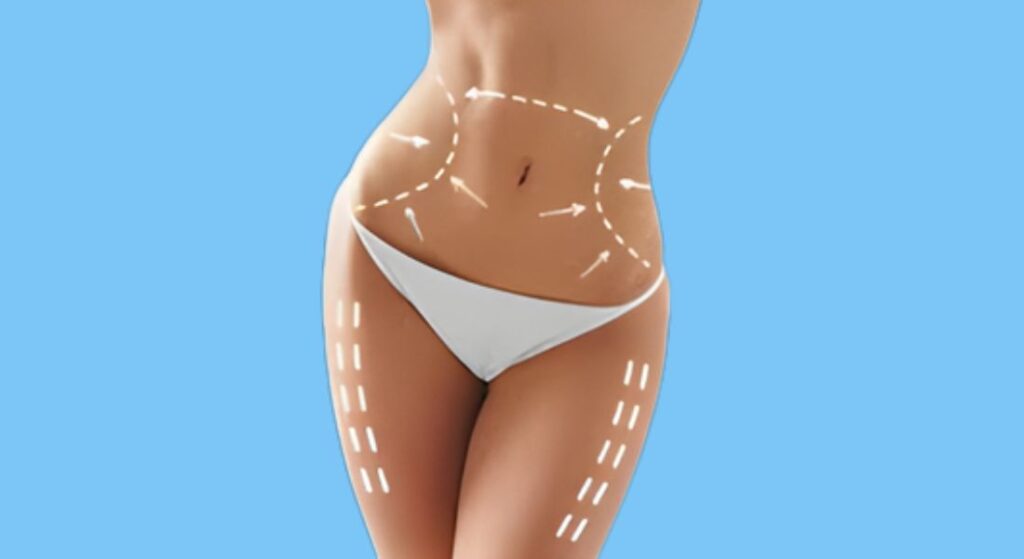
Laser liposuction targets localised fat deposits that affect your shape rather than your overall body size. These are areas where fat sits unevenly and disrupts proportion, even when your weight is stable. The focus is on contour rather than general weight reduction. This makes it different from methods aimed at whole-body fat loss.
Common treatment areas include the lower abdomen, flanks, inner and outer thighs, knees, upper arms, the bra line, and the submental region under the chin. These areas often remain resistant despite regular exercise and careful eating. You may be fit and healthy overall, yet still notice these pockets standing out. Their persistence is usually due to fat distribution rather than lifestyle habits.
The goal is not to make you smaller everywhere on your body. Instead, it is to correct imbalance and restore more natural proportions. Because the treatment is targeted, your overall weight often changes very little. This is why many patients are surprised by how subtle the scale movement is after treatment.
Why the scale often barely moves
It can be confusing when you see visible changes in body shape but little movement on the scale. This disconnect happens because weight is a poor proxy for fat removal and body contouring outcomes. Understanding why the scale behaves this way helps prevent unnecessary disappointment.
1. Fat Weighs Less Than Expected: Fat is relatively light, with around one litre weighing approximately 0.9 kilograms. Removing a noticeable amount of fat can improve shape without producing a dramatic change in total body weight.
2. Small Volumes, Big Visual Impact: Most contouring treatments remove modest fat volumes compared to your overall body mass. Even clear visual improvements may only equate to one or two kilograms, which is easy to overlook on the scale.
3. Daily Weight Fluctuations: Normal variations from hydration, food intake, and digestion can mask small changes in fat mass. These fluctuations often exceed the actual weight of fat removed.
4. Post-Treatment Fluid and Swelling: Temporary inflammation and fluid retention after a procedure can further obscure early weight changes. The body needs time to settle before any reduction becomes measurable.
5. Mismatch Between Purpose and M`easurement: Contouring treatments aim to improve proportion and shape, not reduce overall body weight. Using the scale as the main measure misses the true goal of the intervention.
In conclusion, minimal movement on the scale does not mean a treatment has failed. The real indicator of success is improved contour and proportion, which the scale is simply not designed to measure.
Why clothes fit differently after contouring
Clothing fit is influenced by body circumference rather than overall weight. When fat is reduced in a specific area, the measurements of that area change even if your weight stays similar. This directly affects how clothes sit on your body. You may notice a difference without any significant movement on the scale.
Reducing localised fat alters the way garments rest and move with you. Waistbands often feel looser, and fabrics tend to drape more smoothly. Your proportions can feel more balanced, making outfits look and feel better overall. These changes are structural rather than weight-related.
This is often the first benefit you notice after contouring. Many people experience improved clothing fit long before the scale shows anything meaningful. That experience helps reinforce why contouring and weight loss are not interchangeable goals.
How laser liposuction reshapes rather than shrinks
Laser liposuction uses targeted laser energy to disrupt fat cells beneath your skin, allowing them to be removed with a high degree of precision. The laser breaks down the fat before it is extracted, which gives the practitioner greater control over the process. This approach focuses on reshaping specific areas rather than removing large volumes. As a result, the treatment is designed to refine contour instead of simply making you smaller.
Because the fat is emulsified before removal, sculpting can be carried out in a controlled and deliberate way. This avoids the blunt reduction associated with older techniques. You are more likely to see refined lines and subtle improvements in proportion. The emphasis remains on balance rather than dramatic size change.
This method is particularly suited to contour refinement rather than overall volume reduction. The goal is to create smoother transitions between treated and untreated areas. By preserving your natural shape, the result looks more harmonious and less obviously altered.
The role of skin tightening
One advantage of laser-assisted techniques is how they interact with the surrounding tissue. The thermal energy delivered during treatment can stimulate collagen contraction, which helps your skin adjust to the new contour. This effect is particularly important when your overall weight has not changed, but local fat volume has been reduced. In these cases, skin response plays a key role in the final appearance.
When your skin retracts well, it enhances the smoothness and definition of the contour. Good skin elasticity allows the treated area to look firm and proportionate. If the skin does not adapt effectively, it can soften or undermine the visual result. This variation is largely individual and biologically driven.
Because of this, patient selection is more important than marketing claims. Not everyone will respond in the same way to skin tightening effects. Understanding how your skin is likely to behave helps set realistic expectations. It also explains why careful assessment matters more than broad promises.
Why body contouring suits weight-stable patients
Body contouring is best suited to you if your weight has been stable for some time. Weight stability allows the new contour to settle properly and remain consistent over the long term. When your weight fluctuates significantly after treatment, proportions can change in unpredictable ways. This can reduce the clarity of the result.
This is another reason laser liposuction is not intended as a weight-loss tool. It works most effectively once your weight loss efforts have reached a plateau. At that point, the treatment can address shape rather than ongoing size changes. The focus remains on refinement, not reduction.
If your weight is still changing rapidly, contouring is likely to be premature. Your body has not yet reached a stable baseline for reshaping. Waiting until your weight has settled helps ensure a more predictable and lasting outcome.
Why people misjudge whether they need to lose weight
Many people assume you need to lose more weight when what you actually need is a change in distribution. You may already be at a healthy weight, yet certain areas remain disproportionate. This often leads you to believe the solution is further weight loss. In reality, the issue is shape rather than size.
You might chase a lower number on the scale, hoping stubborn areas will finally respond. Despite continued effort, those areas often remain unchanged. The body simply does not release fat evenly. This can make weight loss feel ineffective, even when you are doing everything right.
This cycle can result in unnecessary restriction, loss of muscle tone, and reduced overall wellbeing. You may become smaller without looking more balanced. Understanding when to stop chasing weight and start thinking about contour is a key turning point. It allows you to focus on proportion instead of constant reduction.
The emotional impact of shape versus size

Shape influences your confidence in a different way to overall size. You may feel physically healthy, strong, and capable, yet still feel held back by one specific area. This can affect how you dress, how you move, and how comfortable you feel in social situations. The disconnect can exist even when your weight is entirely appropriate.
This experience is not about vanity or unrealistic expectations. It is about the gap between the effort you put in and the outcome you see in the mirror. When your lifestyle choices do not translate into the shape you expect, frustration can quietly build. Over time, that mismatch can take up more mental space than you realise.
When contour improves, many people describe a sense of closure rather than excitement. The issue stops demanding attention or influencing daily decisions. You no longer fixate on managing or disguising a particular area. That psychological relief is often overlooked, but it can be deeply significant.
Why laser liposuction is not cheating
There is a common belief that medical body contouring is a shortcut for people unwilling to put in effort. This assumption ignores how and why most people actually consider laser liposuction. In reality, the decision is usually grounded in biology, not a lack of discipline.
1. Stigma Rather Than Reality: The idea that procedures reflect laziness is rooted in social judgement, not evidence. It overlooks the effort most patients have already invested.
2. Most Candidates Are Already Disciplined: Suitable candidates typically exercise consistently, eat well, and maintain stable weight. They seek treatment only after reaching a physiological ceiling.
3. Biological Limits, Not Motivation: Certain fat deposits resist change due to genetics and hormone signalling. At this stage, increasing effort does not produce different results.
4. Complementary, Not a Replacement: Laser liposuction works alongside healthy habits. It refines areas that diet and exercise cannot selectively change.
5. Refinement Rather Than Substitution: The procedure does not “do the work” for you. It builds on what you have already achieved to improve proportion and contour.
In conclusion, laser liposuction is not about avoiding effort. It is a targeted solution for biological limitations, supporting disciplined lifestyles rather than replacing them.
How results compare to non-invasive treatments
Non-invasive fat reduction methods rely on your body to gradually clear damaged fat cells over time. Because this process is biological, changes tend to be modest and develop slowly. You may need multiple sessions before noticing a visible difference. Results can also vary depending on how your body responds.
Laser liposuction removes fat directly, which leads to a more immediate and predictable change in contour. The outcome is structural rather than gradual, as fat cells are physically removed from the treated area. This allows for clearer shaping in a single procedure. The results are typically more defined than with non-invasive options.
The trade-off is that laser liposuction is minimally invasive and involves downtime and recovery. You need to factor in healing time and temporary side effects. Choosing between options depends on your priorities, your tolerance for downtime, and how much change you want to achieve.
The importance of realistic visual goals
Successful contouring begins with setting realistic visual goals for your body. You are not creating a completely new shape, but refining the one you already have. Subtle changes often produce the most natural and satisfying results. This approach helps maintain balance and harmony.
When treatment is too aggressive, it can lead to unnatural transitions or surface irregularities. Instead of improving proportion, excessive reduction may draw attention to the treated area. Careful planning is essential to preserve smooth contours. This is why precision matters more than volume.
Restraint should be seen as a skill rather than a limitation. Knowing when to stop is part of achieving a good outcome. A measured approach allows your natural shape to remain intact. The result is improvement that looks effortless rather than engineered.
Why consultation quality outweighs technology
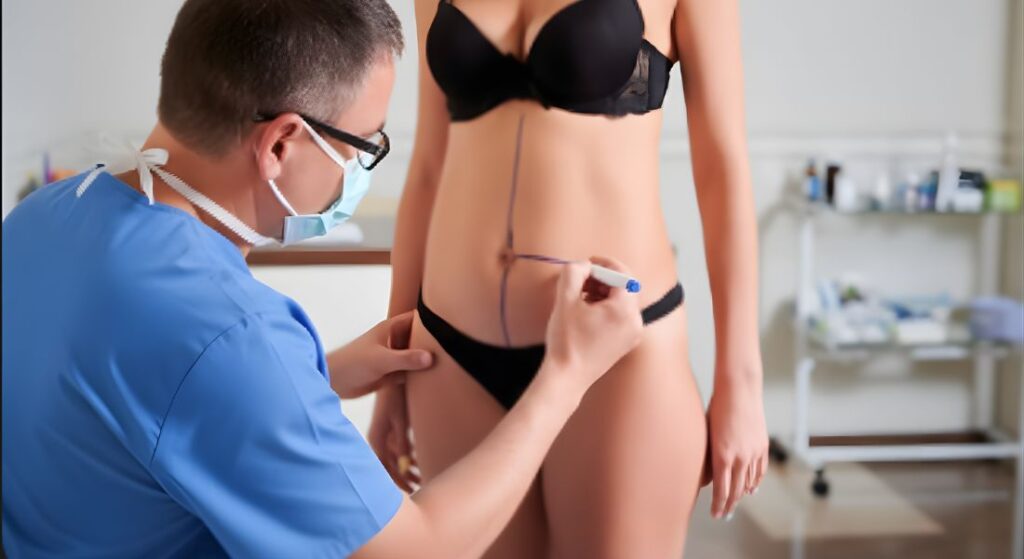
The same device can produce very different outcomes depending on who is using it. Your results are shaped far more by planning, precise marking, volume estimation, and a deep understanding of anatomy than by the brand of laser alone. Technique and judgement play a decisive role. Technology is only as effective as the hands guiding it.
A good consultation should help you understand what realistic improvement looks like. It should focus on alignment between your goals, your anatomy, and what the procedure can genuinely achieve. Promising transformation rather than refinement is a warning sign. Clarity matters more than reassurance.
When discussing options such as laser liposuction in London for targeted body contouring, the conversation should centre on suitability rather than persuasion. You should feel informed, not sold to. Questions should be welcomed and limitations explained openly. That is how trust is built.
Recovery without weight loss anxiety
The same device can produce very different outcomes depending on who is using it. Your results are shaped far more by planning, precise marking, volume estimation, and a deep understanding of anatomy than by the brand of laser alone. Technique and judgement play a decisive role. Technology is only as effective as the hands guiding it.
A good consultation should help you understand what realistic improvement looks like. It should focus on alignment between your goals, your anatomy, and what the procedure can genuinely achieve. Promising transformation rather than refinement is a warning sign. Clarity matters more than reassurance.
When discussing options such as laser liposuction in London for targeted body contouring, the conversation should centre on suitability rather than persuasion. You should feel informed, not sold to. Questions should be welcomed and limitations explained openly. That is how trust is built.
How long results take to reveal themselves
Initial changes after treatment are often hidden by swelling. In the early stages, results can look uneven or less impressive than expected. This does not reflect the final outcome. Your body is still responding to the procedure.
Over the following weeks to months, inflammation gradually settles. During this time, your skin adapts and the contours continue to refine. Improvements become clearer as healing progresses. The final shape emerges slowly rather than all at once.
Judging success too early is a common mistake. Patience is an essential part of the process. This timeline also reinforces why weight is a poor short-term indicator of outcome. Visual change matters more than the number on the scale.
Longevity without obsession
Because fat cells are removed during treatment, results tend to be long-lasting as long as your weight remains stable. The change is structural rather than temporary, which helps preserve the new contour over time. You are not chasing constant improvement. Instead, you are maintaining what has already been achieved.
You do not need perfection to keep your results. What matters most is consistency in your everyday habits. Moderate exercise and balanced eating are usually enough. The pressure to micromanage your body often fades.
Many patients find that once a problematic area is addressed, their relationship with exercise and food becomes more relaxed. You may feel less driven by frustration and more motivated by wellbeing. This shift makes maintenance feel manageable rather than consuming. Results are sustained without obsession.
When laser liposuction is the wrong solution
Laser liposuction is designed for body contouring, not for overall weight reduction. Understanding its limitations is essential to avoid unrealistic expectations and dissatisfaction. In certain situations, choosing an alternative approach is more appropriate.
1. Primary Goal Is Weight Loss: If your main aim is significant or rapid weight loss, laser liposuction is not suitable. The procedure refines shape rather than producing large changes on the scale.
2. Expectations Tied to Scale Numbers: Relying on the scale to judge success often leads to disappointment. Laser liposuction improves proportion, not total body mass.
3. Unstable Weight: If your weight is still fluctuating, results may be unpredictable or short-lived. Weight stability is important for maintaining contour improvements.
4. Poor Skin Quality: When skin elasticity is limited, contouring results may be less defined. In such cases, alternative or additional treatments may be recommended.
5. Substitute for Lifestyle Change: Laser liposuction does not replace healthy eating or regular exercise. Using it as a stand-alone solution for weight management is inappropriate.
In conclusion, laser liposuction is not the right choice for everyone. Clear goals, stable weight, and realistic expectations are key to deciding whether the procedure aligns with your needs.
Making an informed, grounded decision
Deciding whether to pursue contouring should feel calm rather than urgent. You are not fixing a flaw or correcting a failure. Instead, you are addressing a mismatch between the effort you have already invested and the outcome you are seeing. That perspective removes unnecessary pressure from the decision.
Once you understand that body contour and body weight are separate variables, the choice becomes easier to evaluate. You can assess the option logically rather than emotionally. Expectations become more realistic and grounded. This understanding helps you decide whether the treatment aligns with your goals.
That sense of clarity is the foundation of good results. It allows you to proceed with confidence or to step back without regret. In either case, the decision feels considered rather than reactive. This mindset supports better outcomes overall.
FAQs:
1. Can laser liposuction change my body shape even if my weight stays the same?
Yes. Laser liposuction improves body contour by removing localised fat from specific areas, which can noticeably change shape and proportion without causing a significant drop on the scale.
2. Why doesn’t laser liposuction lead to major weight loss?
The procedure removes relatively small volumes of fat compared to total body mass. Its purpose is reshaping targeted areas rather than reducing overall body weight.
3. Who is laser liposuction most suitable for?
It is best suited to people with stable weight who are close to their natural baseline but have stubborn fat deposits that disrupt proportion despite healthy habits.
4. Which areas can be treated for contour improvement?
Common areas include the abdomen, flanks, thighs, arms, knees, bra line, and under the chin regions where fat often persists due to genetic distribution patterns.
5. Why can’t diet and exercise achieve the same contouring results?
Diet and exercise reduce fat systemically and cannot selectively target specific areas. Fat distribution is genetically determined, which limits how precisely lifestyle changes can sculpt shape.
6. Will my clothes fit differently after laser liposuction?
Often, yes. Reducing fat in a specific area changes circumference measurements, which can improve how clothes sit and drape even when body weight remains similar.
7. Does laser liposuction tighten the skin as well as remove fat?
Laser-assisted techniques can stimulate collagen contraction, helping the skin adapt to the new contour. The degree of tightening varies depending on individual skin quality.
8. How long does it take to see final contouring results?
Early changes may be visible within weeks, but final results usually develop over three to six months as swelling resolves and tissues settle.
9. Can fat return after laser liposuction?
Fat cells removed from the treated area do not regenerate. However, remaining fat cells can expand with significant weight gain, which may affect overall proportions.
10. When is laser liposuction not the right choice?
It is not suitable if your primary goal is weight loss, if your weight is still fluctuating, or if expectations are focused on scale changes rather than visual contour improvement.
Final Thoughts: When Shape Matters More Than the Scale
Laser liposuction sits in a very specific space within aesthetic medicine. It is not about chasing weight loss or transforming your body into something unrecognisable. It is about addressing proportion, balance, and those persistent areas that do not respond to effort alone. When weight is stable and goals are visual rather than numerical, contouring can offer a quiet but meaningful shift in how you feel in your body.
Understanding the difference between body weight and body shape is what prevents disappointment. The scale may barely move, but the mirror, your clothes, and your day-to-day confidence often tell a very different story. For the right person, laser liposuction provides refinement rather than reduction, and resolution rather than escalation.
If you’re thinking about laser liposuction in London as a targeted body contouring option, you can get in touch with us at the London Medical & Aesthetic Clinic. You can also learn more about the procedure, suitability, and approach on our dedicated page for laser liposuction in London.
References:
1. DiBernardo, B.E. and Reyes, J. (2009) Evaluation of skin tightening after laser-assisted liposuction, Aesthetic Surgery Journal, https://pubmed.ncbi.nlm.nih.gov/19825469/
2. Manzano-Finol, A. et al. (2025) Laser-assisted lipolysis: A promising alternative to traditional liposuction, Aesthetic Plastic Surgery, https://pmc.ncbi.nlm.nih.gov/articles/PMC12594724/
3. Lee, K.W.A., Chan, L.K.W., Lee, A.W.K., Lee, C.H., Wan, J. and Yi, K.-H. (2024) Laser-assisted lipolysis versus surgical fat removal: A review of efficacy, safety and patient satisfaction, https://www.mdpi.com/2079-9284/11/5/164
4. Wulkan, M., Cardoso, R.B., Sumida, D.H., Magalon, J. and Mordon, S. (2018) Laser-assisted liposuction and traditional liposuction: Systematic review, Aesthetic Plastic Surgery, https://pubmed.ncbi.nlm.nih.gov/29362943/
5. Daniell, J.F. (2019) Effectiveness of cryolipolysis in body contouring and fat reduction: Systematic review and meta-analysis, Aesthetic Surgery Journal https://pubmed.ncbi.nlm.nih.gov/41607567/