

If you’re considering a Thread lift, it’s completely natural to wonder whether you’re the “right age” for it. The honest answer is that there isn’t one perfect age but your skin quality, rather than just your age, plays the biggest role in how well it works for you.
A thread lift uses dissolvable sutures placed under your skin to gently lift sagging areas and stimulate Collagen production. This means the treatment doesn’t just reposition tissue it also encourages your skin to become firmer over time. However, how effective this is depends on factors like your skin elasticity, how much volume you’ve lost, and how advanced the ageing changes are.
In general, people tend to benefit most from a thread lift in their late 30s to early 50s. At this stage, you may notice mild to moderate sagging, but your skin still has enough elasticity to respond well to both the lifting effect and collagen stimulation. If you’re younger, you might not need the treatment yet. If you’re older with more significant sagging, a thread lift can still help, but the results may be more subtle.
Ultimately, it’s less about your exact age and more about how your skin is behaving. In the rest of this article, you’ll see how age influences results, when you’re most likely to benefit, and how to decide if it’s the right option for you.
Is There an Ideal Age for a Thread Lift?
There is no single “perfect” age for a thread lift, but there is an ideal stage in the ageing process. You are most likely to benefit when you start to notice early to moderate skin laxity. At this point, your skin still has enough elasticity to respond well to the treatment. This helps the threads lift and support your skin more effectively.
If you have the procedure too early, you may feel that the results are very subtle and not really necessary. If you wait too long, the lift may not be strong enough to give you the outcome you want. A thread lift works best for mild to moderate sagging rather than more advanced changes. This is why timing plays such an important role in your results.
The key is choosing the right moment for you, when the treatment can make a noticeable difference. Many people find it helpful to address concerns before they become more pronounced. A personalised consultation can help you decide if now is the right time. This ensures your results look natural and in harmony with your features.
Why Age Matters in Thread Lift Results
Your age plays a role in how your skin looks and responds to a thread lift. As you get older, your collagen levels naturally decrease, and your skin becomes less firm. This can affect how well the threads are able to lift and support your tissues. In simple terms, the stronger your skin structure, the better the support the threads can provide.
If you are younger, your skin usually has more elasticity and can bounce back more easily after the lift. This often means smoother and more noticeable results. As your skin matures, it may not respond in the same way and could need additional support. In some cases, you might benefit from combining treatments to achieve the best outcome.
That said, age is only one part of the picture. Factors such as your skin quality, lifestyle, and overall health also make a difference. A proper assessment helps determine what will work best for you. This ensures your treatment is tailored to give you the most natural and effective result possible.
Best Age Range for Most Patients
If you are considering a thread lift, you might be wondering whether your age makes you a good candidate. Most people who benefit from this treatment are in their late 30s to early 50s. At this stage, you may begin to notice mild to moderate sagging, especially around your cheeks, jawline, or neck. This is usually the point where a thread lift can create a visible improvement while still looking natural. At this stage, your skin still responds well to lifting and collagen stimulation.
1. Mild to moderate sagging becomes noticeable: You may start to see early signs of sagging, such as slight drooping in your cheeks or a less defined jawline. Fine lines can also become more visible. A thread lift works particularly well at this stage because the skin has not lost too much structure, making it easier to lift and support.
2. Your skin still has good elasticity: In your late 30s to early 50s, your skin usually still has enough elasticity to adjust to the lifting effect. This helps the results look smooth and natural rather than tight or overdone. It also supports better healing after the procedure.
3. You can still produce collagen effectively: Thread lifts stimulate collagen production, which helps improve your skin over time. At this age, your body can still respond well to this process, helping your skin become firmer and more refined in the months following treatment.
4. Results tend to look balanced and natural: Because the signs of ageing are not too advanced, the results are usually subtle and well-proportioned. You are more likely to look refreshed rather than noticeably “treated”, which is what many people prefer.
Overall, this age range is often seen as the ideal time to have a thread lift. You are treating the early signs of ageing while your skin still responds well, which can lead to more satisfying and longer-lasting results.
Skin Elasticity vs Age
Your skin elasticity often matters more than your actual age when it comes to thread lift results. You might be in your 50s and still have firmer, more responsive skin than someone in their 30s. In that case, you could be a better candidate for the treatment. This is why age alone does not determine how suitable you are.
If your skin is more elastic, it will respond better to lifting and adapt more easily to the threads. This usually means your results look smoother and last longer. On the other hand, if your skin has reduced elasticity, the lift may be more limited. The threads can still provide support, but the overall effect may be less noticeable.
This is why your practitioner will focus closely on your skin quality during your consultation. They will assess how your skin behaves rather than relying only on your age. This helps ensure the treatment is appropriate for you. It also improves the chances of achieving natural and satisfying results.
Role of Collagen in Thread Lift Results
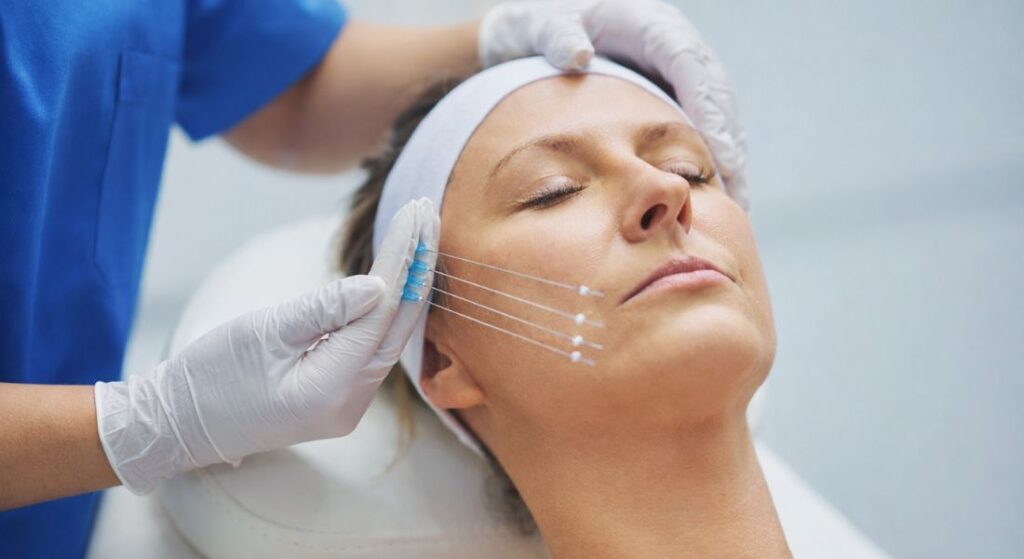
Collagen plays an important role in how your skin responds after a thread lift. The treatment works by triggering your body’s natural healing response, which stimulates collagen production. This helps improve your skin’s firmness and gradually enhances its texture over time. As a result, your skin can look smoother and more supported even after the initial lift.
If you are younger, your body tends to produce collagen more efficiently. This means you may see quicker improvements and results that last longer. The combination of immediate lifting and ongoing collagen stimulation often gives you a more noticeable outcome. Your skin also adapts more easily to the changes created by the threads.
As you get older, your body still produces collagen, but the process becomes slower. You can still benefit from the treatment, although the results may develop more gradually. The overall effect might be softer compared to younger patients, but it can still refresh your appearance. A tailored approach helps maximise your results based on how your skin responds.
Early Intervention vs Late Treatment
If you are thinking about a thread lift, the timing of your treatment can make a noticeable difference to your results. Many people choose to have treatment earlier, when the first signs of sagging appear, rather than waiting until changes become more advanced. Acting at the right time can help you achieve a more natural and effective outcome. The stage at which you choose treatment affects how well it works.
1. Early treatment is often more effective: If you address mild sagging early, it is much easier to lift and support the skin. You may notice subtle drooping around your cheeks or jawline, and this is usually the ideal time to intervene. The threads can reposition the skin more easily, giving you a smoother and more refreshed appearance.
2. Better support from your skin structure: When you choose treatment earlier, your skin still has better elasticity and strength. This allows the threads to hold the tissue more effectively and produce more balanced results. It also helps your skin respond well to collagen stimulation.
3. Advanced sagging can be harder to correct: If you wait until sagging becomes more pronounced, a thread lift on its own may not give you the level of lift you expect. In these cases, the skin has lost more structure, and the results may be more limited or less noticeable.
4. Later stages may need combination treatments: With more advanced ageing, you may need additional or more intensive treatments to achieve your desired outcome. This could include combining a thread lift with other non-surgical procedures or, in some cases, considering surgical options.
Overall, choosing the right time for treatment plays a key role in your results. If you act earlier, you are more likely to achieve a natural-looking lift with less intervention. Waiting longer can still provide some improvement, but the results may be more limited and require a more comprehensive approach.
How Facial Ageing Affects Results
Facial ageing does not just involve sagging skin, it also includes a loss of volume in areas such as your cheeks and under-eye region. A thread lift is designed to lift and support sagging tissue, but it does not replace lost volume. This means your results will depend on the type of ageing you are experiencing. If sagging is your main concern, you are more likely to see a clear improvement.
If you have noticeable volume loss, a thread lift on its own may not give you the result you are hoping for. In these cases, you may benefit from combining treatments to restore both lift and fullness. This could help create a more balanced and natural-looking outcome. Treating only one aspect of ageing can sometimes limit how effective the overall result appears.
Understanding how your face has changed over time is key to choosing the right approach. Your practitioner will assess whether sagging, volume loss, or a combination of both is affecting your appearance. This helps ensure your treatment plan is tailored to your needs. As a result, you are more likely to achieve results that look natural and well-proportioned.
Differences Between Men and Women
Men and women tend to age in different ways, and this can influence how your skin responds to a thread lift. If you are a man, your skin is often thicker and may behave slightly differently when lifted. If you are a woman, you may notice volume loss becoming visible earlier, particularly in areas such as the cheeks. These natural differences can affect how the results appear.
Because of this, your treatment plan is always adjusted to suit your individual features. The number of threads, their placement, and the overall technique may be tailored based on your anatomy. This helps ensure the lift looks natural and works in harmony with your facial structure. A personalised approach is essential for achieving balanced results.
Your gender is only one part of the overall assessment. Your age, skin quality, and specific concerns are just as important when planning your treatment. By considering all of these factors together, your practitioner can create a plan that suits you best. This increases the likelihood of achieving results that look subtle, natural, and effective.
Lifestyle Factors That Influence Results
Your lifestyle has a direct impact on how your skin looks and how well it responds to a thread lift. Habits such as smoking, excessive sun exposure, and an unbalanced diet can weaken your skin over time. This can affect how well the threads are able to lift and support your tissues. In simple terms, healthier skin tends to respond better to treatment.
If you take good care of your skin, you are more likely to see smoother and longer-lasting results. A balanced diet, proper hydration, and protecting your skin from the sun all help maintain its strength and elasticity. On the other hand, certain habits can slow down healing and reduce the effectiveness of the procedure. This means your results may not be as noticeable or may not last as long.
This is why looking after your skin is just as important as the treatment itself. Small changes in your daily routine can make a meaningful difference to your outcome. Your practitioner may also guide you on how to improve your skin health before and after the procedure. By supporting your skin from within, you can help maximise the benefits of your thread lift.
Recovery at Different Ages
If you are considering a thread lift, you might wonder whether your age will affect how quickly you recover. While healing can vary slightly from person to person, most people find that recovery is relatively quick regardless of age. In general, the procedure is well tolerated and does not involve a long downtime. Your age can have some influence, but it is usually not a major factor.
1. Younger skin may heal a little faster: If you are younger, your body typically has better circulation and tissue repair. This means you may notice swelling or mild bruising settling more quickly. Your skin may also adjust faster to the threads, helping you feel back to normal sooner.
2. Recovery may be slightly slower with age: As you get older, your skin’s natural healing process can slow down a little. This might mean that minor swelling, tenderness, or tightness lasts slightly longer. However, these effects are usually mild and manageable.
3. Downtime is still minimal for most people: Regardless of your age, you can usually return to your normal routine within a few days. You may be advised to avoid strenuous activity or excessive facial movements for a short period, but this applies to everyone, not just older patients.
4. Results settle gradually over time: While initial recovery is quick, your final results develop over several weeks as your skin adjusts and collagen production increases. This timeline is similar across different age groups.
Overall, age does not significantly affect your recovery after a thread lift. You can expect a relatively smooth and manageable healing process, with only small differences depending on your body’s natural healing ability.
Longevity of Results by Age

Thread lift results usually last between 12 to 24 months, but this can vary depending on your age and skin condition. If you are younger, your body tends to produce collagen more efficiently, which can help your results last longer. Your skin also recovers more quickly, supporting a more sustained lifting effect. This often means you can enjoy the benefits for an extended period.
As you get older, your collagen production slows down, which may shorten how long the results last. You can still see a noticeable improvement, but the effects may fade sooner compared to younger patients. This does not mean the treatment is ineffective, but it may require a slightly different approach. Your results will depend on how your skin responds over time.
Maintenance treatments can help you keep your results for longer. By having follow-up sessions at the right intervals, you can maintain the lift and support your skin’s structure. Your lifestyle choices also play an important role in longevity. Taking care of your skin can help you get the most out of your treatment.
When Thread Lifts May Not Be Enough
In some cases, a thread lift may not give you the level of lifting you are hoping for. If you have more advanced or severe skin laxity, the threads may not be able to provide enough support on their own. This is because the treatment is designed for mild to moderate ageing rather than significant sagging. In these situations, other options may be more suitable for you.
You may be advised to consider alternative treatments, including surgical procedures, if you are looking for a more dramatic change. While thread lifts can still offer some improvement, they are not a replacement for surgery in more advanced cases. Understanding this helps you make an informed decision about what is right for you. It also prevents disappointment with the outcome.
This is why having realistic expectations is so important before going ahead with treatment. Your clinician will assess your skin and explain what results you can reasonably expect. They will guide you towards the option that best suits your needs and goals. This ensures you achieve a result that looks natural and appropriate for your condition.
Combination Treatments for Better Results
A thread lift can give you a noticeable lift, but it is often combined with other treatments to enhance your overall result. For example, you might add fillers to restore lost volume or skin treatments to improve texture and tone. This combination approach helps address multiple signs of ageing at the same time. As a result, your outcome can look more balanced and natural.
If you are older or have a mix of concerns, combining treatments is often recommended. A thread lift can reposition and support your tissues, while other treatments work on volume loss or skin quality. This creates a more complete rejuvenation rather than focusing on just one aspect. You are more likely to achieve a refreshed appearance rather than a partial improvement.
Your treatment plan should always be tailored to your individual needs. Your practitioner will assess your skin and recommend the right combination for you. This ensures each treatment complements the others and works together effectively. With the right approach, you can achieve results that look subtle, natural, and well-proportioned.
Preventative Use of Thread Lifts
You might be surprised to learn that thread lifts are not only used to correct sagging they can also be used as a preventative treatment. Some people choose to have a thread lift earlier, before significant ageing changes appear, to help maintain their facial structure. This approach is more common in younger patients who want to stay ahead of visible sagging. When used preventatively, the focus is on maintaining rather than correcting.
1. Helps maintain your natural facial structure: If you choose treatment early, threads can provide gentle support to areas that are starting to lose firmness. This can help preserve your natural contours, particularly around your cheeks and jawline, before noticeable sagging develops.
2. May delay visible signs of ageing: By supporting the skin and stimulating collagen production, a preventative thread lift can slow down how quickly ageing changes become visible. You may find that your skin stays firmer and more defined for longer.
3. Not always necessary for everyone: Preventative treatment is not essential. If your skin is still firm and you have minimal concerns, you may not need any intervention at all. The decision depends on your individual goals, skin quality, and how early you want to take action.
4. Requires careful assessment and planning: Starting treatment too early or without clear need may not provide meaningful benefits. A proper consultation helps determine whether a preventative approach is suitable for you and ensures the treatment is tailored to your needs.
Overall, preventative thread lifts can be helpful in selected cases, particularly if you want to maintain your appearance rather than correct more advanced changes. With the right timing and guidance, this approach can support long-term skin quality while keeping your results natural and subtle.
Importance of Personalised Assessment
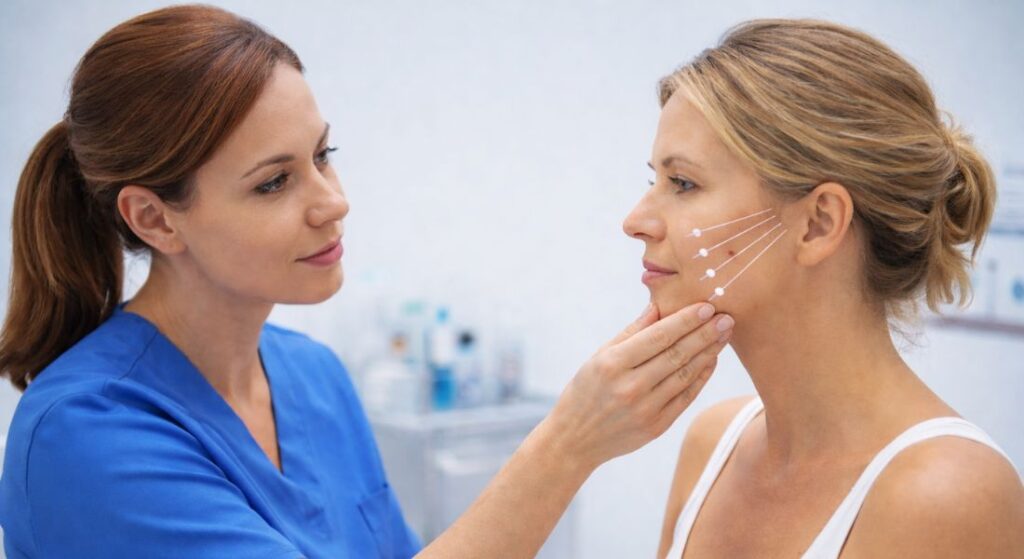
A personalised consultation is essential if you are considering a thread lift. Your age on its own is not enough to determine whether the treatment is right for you. Your skin condition, facial structure, and expectations all play an important role. Looking at the full picture helps ensure the treatment suits your needs.
When your treatment plan is customised, you are more likely to achieve better and more natural-looking results. Your practitioner can adjust the technique, number of threads, and placement based on your individual features. This tailored approach helps maximise the effectiveness of the procedure. It also reduces the risk of results that feel overdone or unbalanced.
A professional assessment gives you a clear understanding of what you can realistically expect. You will be guided on whether a thread lift is suitable or if other options may be more appropriate. This helps you make an informed decision with confidence. In the end, the right planning is key to achieving results that you are happy with.
Psychological Benefits of Timely Treatment
Choosing to address ageing changes at the right time can have a positive impact on how you feel about your appearance. Many people find that they feel more confident when their outward look reflects how they feel inside. Even subtle improvements can make a meaningful difference to your overall self-image. This can help you feel more comfortable in both personal and professional settings.
If you opt for treatment early, you are more likely to achieve natural and understated results. Rather than making noticeable changes, the focus is on maintaining your appearance and slowing visible ageing. This often leads to higher satisfaction, as the results feel like a refreshed version of you. You can enhance your features without altering your identity.
Confidence is an important part of any aesthetic treatment outcome. When you feel good about how you look, it can influence your mood and daily interactions. A well-timed treatment can support both your appearance and your self-esteem. This is why timing is not just a physical consideration, but an emotional one as well.
Risks of Treating Too Early
If you choose to have a thread lift too early, you may not see much of a noticeable difference. When your skin is still firm and shows very minimal laxity, the results can feel subtle or even unnecessary. This means you might go through a procedure without gaining clear benefits. In many cases, it is simply not the right stage for this type of treatment.
Timing your treatment based on visible signs of ageing is important. When there is some degree of sagging, the threads can lift and support your skin more effectively. This helps ensure the results are meaningful and worth the procedure. Treating too soon can limit how much improvement you actually see.
Avoiding premature treatment also allows your face to age naturally over time. Intervening at the right moment helps you maintain a balanced and realistic approach to ageing. It ensures that each treatment you choose has a clear purpose. This way, your results remain subtle, appropriate, and in harmony with your natural features.
Risks of Treating Too Late
If you are thinking about a thread lift, timing can make a real difference to what you achieve. Waiting until sagging becomes more advanced may limit how effective the treatment can be. While thread lifts can still offer some improvement, the results may not meet your expectations if the changes are already quite pronounced. When treatment is delayed, a few challenges can arise.
1. Limited lifting effect in advanced sagging: If your skin has significant laxity, threads may not be able to lift and support the tissue enough. You might see only subtle changes rather than a clearly noticeable improvement, which can feel disappointing.
2. Results may not match your expectations: If you are hoping for a more defined or lifted look, a thread lift on its own may not deliver this in later stages. This mismatch between expectations and results is one of the most common reasons for dissatisfaction.
3. More complex treatment may be needed: At a more advanced stage, you may need additional or alternative treatments to achieve your goals. This could include combining procedures or considering more intensive options, depending on your concerns.
4. Skin structure may not respond as well: As sagging progresses, your skin loses elasticity and support. This can make it harder for the threads to hold effectively and produce long-lasting results.
Overall, understanding the right timing for treatment helps you make a more informed decision. If you act earlier, you are more likely to achieve a noticeable and natural-looking improvement. Waiting too long does not mean treatment is not possible, but it may require a different approach to get the result you want.
How to Decide If You Are Ready
The best way to decide if you are ready for a thread lift is through a professional assessment. You can also look out for early signs such as mild sagging or a loss of definition along your jawline. These are often indicators that your skin may benefit from added support. When you start to notice these changes, it could be the right time to consider treatment.
If your skin changes are still very minimal, you may not need a thread lift just yet. On the other hand, if the changes are more advanced, you might find that other treatments are more suitable for your goals. This is why it is important to match the treatment to your current stage of ageing. Choosing the right timing helps you achieve more effective and satisfying results.
A consultation gives you clear guidance based on your individual needs. Your practitioner will assess your skin and explain what options are best for you. This helps you make a confident and informed decision. It also ensures your treatment plan is tailored to deliver natural and balanced results.
Choosing the Right Treatment Timing
Choosing the right time for a thread lift is all about finding the right balance for you. It should be early enough that your skin can still respond well, but not so early that the changes are barely noticeable. When timed correctly, the treatment can give you a visible yet natural improvement. This makes the results feel worthwhile without looking overdone.
If you have treatment too soon, you may not see enough of a difference to justify it. If you wait too long, the lift may not be strong enough on its own to meet your expectations. This is why timing plays such an important role in your overall outcome. Getting this balance right helps you make the most of what the treatment can offer.
When you choose the right moment, you can achieve results that look subtle, refreshed, and in harmony with your features. It also helps you avoid unnecessary or ineffective procedures. A professional assessment can guide you towards the most suitable timing. In aesthetic treatments, when you choose to act can be just as important as the treatment itself.
FAQs:
1. What is the best age to have a thread lift?
There isn’t a fixed age, but most people benefit most in their late 30s to early 50s. This is when mild to moderate skin laxity begins and your skin still has enough elasticity to respond well. The timing depends more on your skin condition than your exact age.
2. Can you have a thread lift in your 30s?
Yes, you can. In your 30s, thread lifts are usually more preventative, helping maintain facial structure and delay ageing changes. Results tend to be subtle and natural rather than dramatic.
3. Is your 40s the ideal time for a thread lift?
For many people, yes. In your 40s, skin laxity becomes more noticeable, making this an ideal time for visible yet natural-looking lifting. Results are often more defined compared to earlier years.
4. Do thread lifts work in your 50s?
Yes, thread lifts can still work in your 50s, but results depend heavily on your skin quality. You may see improvement in sagging, although the lift may be more subtle than in younger patients.
5. Can you get a thread lift in your 60s?
You can, but expectations need to be realistic. The skin is usually less elastic at this stage, so results may be limited. In some cases, combination treatments or alternative options may be more effective.
6. Does age affect how long thread lift results last?
Yes, age can influence longevity. Younger patients often see longer-lasting results due to stronger collagen production. Older patients may need maintenance treatments sooner.
7. Is skin elasticity more important than age?
Absolutely. Skin elasticity often matters more than your age. If your skin is firm and resilient, you’re more likely to achieve better lifting results regardless of your age.
8. Can a thread lift replace a surgical facelift at an older age?
Not usually. Thread lifts are best for mild to moderate sagging. If ageing changes are more advanced, surgical options may provide more noticeable results.
9. Is it better to have a thread lift early or wait?
Early treatment often gives better outcomes because mild sagging is easier to correct. However, having it too early may not provide noticeable benefits. The key is finding the right timing based on visible changes.
10. How do you know if you’re ready for a thread lift?
You may be ready if you notice mild sagging around your jawline, cheeks, or neck. The best way to decide is through a professional consultation, where your skin quality and goals can be properly assessed.
Final Thoughts: Choosing the Right Age for a Thread Lift
A thread lift isn’t really about reaching a specific age milestone, but about recognising the right stage of skin ageing. You’re likely to see the best results when mild to moderate laxity starts to appear and your skin still has enough elasticity to respond well. Acting at this point allows the treatment to enhance your natural features rather than trying to correct more advanced changes later on.
It’s also worth keeping in mind that your skin quality, lifestyle, and overall facial structure often matter more than your actual age. Two people of the same age can have very different results depending on their collagen levels, skin thickness, and degree of volume loss. That’s why a personalised approach is essential to ensure the treatment is both effective and natural-looking. If you’re thinking about thread lift treatment in London, you can get in touch with us at the London Medical & Aesthetic Clinic.
References:
1. Savoia, A., Accardo, C., Vannini, F., Di Pasquale, B. & Baldi, A. (2014) ‘Outcomes in thread lift for facial rejuvenation: a study performed with Happy Lift™ revitalizing’, Dermatology and Therapy, 4(1), pp. 103-114. https://pubmed.ncbi.nlm.nih.gov/24436079/
2. Alam, M., Hughart, R., Geisler, A., et al. (2022) ‘Patient satisfaction and safety of minimally invasive thread lift procedures: a systematic review’, Dermatologic Surgery, 48(6), pp. 709-716. https://pubmed.ncbi.nlm.nih.gov/35246938/
3. Diaspro, A., Luni, M. & Rossini, G. (2021) ‘Thread lifting of the jawline: a pilot study for quantitative evaluation’, Journal of Cutaneous and Aesthetic Surgery, 14(1), pp. 47-54. https://pmc.ncbi.nlm.nih.gov/articles/PMC8149973/
4. Kim, S.-B., Hong, G.-W., Park, S.-Y., Wan, J. & Yi, K.-H. (2024) ‘Reverse and antegrade vector thread lifting techniques: correcting nasolabial and marionette lines’, Clinical, Cosmetic and Investigational Dermatology, 17, pp. 1-10. https://pmc.ncbi.nlm.nih.gov/articles/PMC11626346/
5. Ang, M., Mehta, J.S., Schallhorn, J.M. & Trattler, W.B. (2025) ‘Refractive lens exchange in modern practice: indications, outcomes and patient selection’, Asia-Pacific Journal of Ophthalmology. https://www.sciencedirect.com/science/article/pii/S2352587825001342