

Robotic prostate surgery may offer several potential benefits for many patients. These can include smaller incisions, magnified 3D vision for the surgeon, highly precise instrument movements, less blood loss during the operation, and a shorter hospital stay compared with traditional open surgery in suitable cases. These advantages are mainly related to the minimally invasive approach and the level of control the robotic system provides.
Many patients also experience a quicker early recovery and less wound discomfort because the procedure is performed through keyhole incisions rather than a larger open cut. The enhanced visual detail and fine instrument control may help the surgeon operate more accurately within the confined space around the prostate.
However, it is important to understand that robotic prostate surgery is still major surgery and carries significant risks. Possible complications can include bleeding, infection, blood clots, urinary leakage, erectile dysfunction, anaesthetic-related risks, and the possibility that further treatment such as radiotherapy or hormone therapy may still be required after surgery.
A balanced understanding of the procedure is important when considering treatment. Robotic technology can support surgery by improving precision and visibility, but it does not remove all risks or guarantee a particular result. Your outcome depends on several factors, including the cancer itself, your anatomy, overall health, and how your body heals after the operation.
What Silhouette Soft Is Designed to Do
Silhouette Soft is a thread lift treatment designed to reposition soft tissue and create a gentle lifting effect in selected areas of your face. The treatment uses absorbable sutures with small cones that help support and reposition the tissue beneath the skin. As your body responds to the threads, collagen production may also be stimulated, which can contribute to improved skin support and texture over time.
The treatment is intended to improve facial contour and mild skin laxity without the need for large incisions or surgical skin removal. Depending on your individual suitability and treatment goals, Silhouette Soft may be used around the cheeks, jawline, lower face, and neck to create a more refreshed and supported appearance.
Cleveland Clinic explains that thread lift results are temporary and typically last between one and three years. Over time, the threads gradually dissolve and are absorbed by your body, which is why the lifting effect is not considered permanent.
Why Early Facial Ageing Happens
Early facial ageing can happen for several reasons, including collagen loss, reduced skin elasticity, volume changes, gravity, sun damage, repeated facial movement, weight fluctuations, and genetics. These changes usually develop gradually over time rather than appearing suddenly, which is why many people first notice subtle differences in their facial shape and skin support.
You may notice early ageing as softening along your jawline, mild jowling, flatter cheeks, deeper folds around the mouth, or looser skin in the lower face and neck area. These changes can make the face appear less defined or less lifted even before deeper wrinkles develop.
It is important to understand that early facial ageing is not only about wrinkles on the skin surface. It also involves deeper structural changes affecting tissue support, facial shape, elasticity, and the position of soft tissues beneath the skin. This is why treatments for early ageing often focus on contour and support as well as skin quality.
Mild to Moderate Facial Laxity
Silhouette Soft is usually more suitable for mild to moderate facial laxity rather than severe sagging. When your skin and underlying tissues still have reasonable elasticity and support, the threads may help reposition soft tissue and create a fresher, more lifted contour in selected areas of the face.
If sagging is more advanced, the lifting effect from threads may be too subtle to produce the result you are hoping for. Reviews of thread-lift techniques have noted that people with moderate to severe ptosis and skin laxity may still have noticeable sagging after treatment, and in some cases the looseness may even appear more obvious because the tissues are not adequately supported by threads alone.
This is why careful patient selection is important. Early treatment may be useful for some people when the skin is still responsive and the degree of laxity is relatively mild. However, thread lifting is not the right solution for everyone with early facial ageing, and a proper assessment is needed to decide whether the treatment is likely to provide balanced and realistic results for your individual facial structure and skin quality.
Why Some Patients Prefer Not to Wait for Surgery
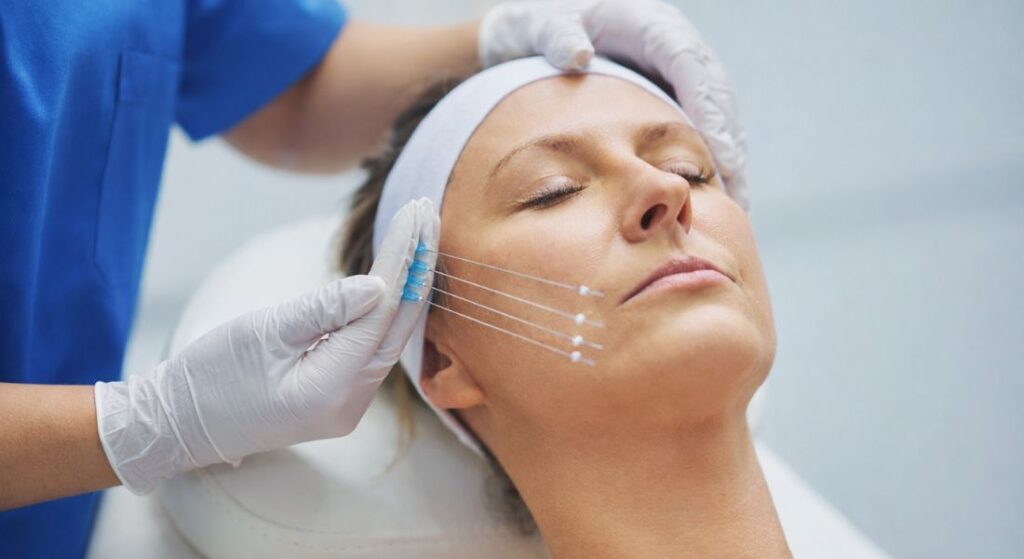
Some patients do not want to wait until facial ageing becomes advanced enough for surgery. They may notice early skin laxity, softening around the jawline, or mild loss of facial definition and want to address these changes sooner. For these patients, a gentler and less invasive option may feel more suitable than waiting for a surgical facelift. Silhouette Soft may appeal to people who want visible but natural improvement without large surgical incisions.
1. Treating Early Skin Laxity: Silhouette Soft may be considered when facial laxity is still mild to moderate. It can help support and reposition soft tissue before ageing changes become more advanced.
2. A Less Invasive Option Than Surgery: Some patients prefer a treatment that does not involve large incisions or a full surgical recovery. A thread lift may offer a more approachable option for those who want improvement but are not ready for facelift surgery.
3. Natural-Looking Improvement: Silhouette Soft may appeal to people who want a refreshed look rather than a dramatic change. The aim is usually to improve facial support and definition while still keeping the result subtle and natural.
4. It Does Not Rule Out Surgery Later: Choosing a thread lift earlier does not mean you are avoiding surgery forever. It may simply help manage early changes before a surgical facelift becomes relevant or necessary.
Waiting for surgery is not the right choice for everyone, especially if early changes are already affecting confidence. A treatment such as Silhouette Soft may offer a middle ground between doing nothing and choosing a full facelift. However, it is important to understand that results are more limited than surgery and depend on your skin quality, facial structure, and degree of laxity. A proper consultation can help you decide whether a thread lift is suitable now or whether another option would be more appropriate.
How Silhouette Soft Differs From a Surgical Facelift
A surgical facelift is designed to reposition deeper facial tissues and remove excess skin in order to create a more significant lifting and tightening effect. It is generally more suitable when facial ageing has become more advanced, particularly if you have heavier jowling, marked skin laxity, or noticeable neck sagging.
Silhouette Soft works differently. It does not remove loose skin or surgically reposition deeper facial structures. Instead, it uses absorbable threads with small cones to support and reposition soft tissue in selected patients with mild to moderate laxity. The treatment is intended to create a subtler lifting effect with less downtime than surgery.
It is important to understand this difference so that expectations remain realistic. Silhouette Soft may provide a gentle improvement in facial contour and support, but it does not produce the same level of correction as a surgical facelift. If skin looseness, jowling, or neck sagging becomes more advanced, surgery may offer a more appropriate and longer-lasting result.
Is Silhouette Soft Better Than Waiting?
Silhouette Soft is not automatically better than waiting for surgery. Whether it is the right choice for you depends on several factors, including your facial structure, skin quality, pattern of ageing, treatment goals, budget, tolerance for downtime, and expectations about the type of result you want to achieve.
Early treatment with Silhouette Soft may be helpful if your concerns are mild and you are looking for a subtle, natural-looking improvement without undergoing surgery. In suitable patients, thread lifting may help support facial contour and delay the need for more invasive procedures. However, if your changes are very minimal, you may decide that treatment is not necessary at this stage.
Waiting may also be the better option if your skin laxity is progressing in a way that is more likely to require surgical correction later. In these situations, a thread lift may provide only limited improvement or temporary benefit compared with what a facelift could achieve in the future. The decision is therefore highly personalised rather than one-size-fits-all, and should be based on careful assessment and realistic expectations about what each treatment can and cannot do.
Who May Be a Good Candidate?
A good candidate for Silhouette Soft is usually someone with mild to moderate facial laxity, reasonable skin elasticity, and realistic expectations about the type of improvement the treatment can provide. In most cases, the aim is to achieve a subtle lift and fresher facial contour rather than a dramatic transformation.
You may be considered suitable if you have early signs of ageing such as mild jowling, slight cheek descent, softening along the jawline, or early looseness in the lower face or neck. These changes are often easier to support when the skin and underlying tissues still have relatively good elasticity and structure.
Research on minimally invasive facial rejuvenation describes ideal candidates for facial thread lifts as people with early signs of ageing, including mild wrinkle formation, jowls, and reduced skin tightness. This highlights the importance of selecting patients whose facial ageing pattern is still suitable for a subtle lifting approach rather than more extensive surgical correction.
Who May Not Be Suitable?
Silhouette Soft may not be suitable for you if there is significant loose skin, heavy tissue descent, advanced jowling, very thin or fragile skin, active infection, certain medical conditions, or unrealistic expectations about the results. In these situations, the lifting effect from threads may be too limited to provide a satisfactory or balanced outcome.
Some patients may achieve better results from a different treatment approach. Depending on your facial structure and degree of ageing, this could include surgical facelift procedures, skin tightening treatments, volume restoration with fillers, or a combination treatment plan tailored to your needs. A careful assessment is important to identify the main cause of the concern rather than assuming threads are always the best option.
The NHS advises patients considering cosmetic procedures to speak to an experienced professional, research the treatment carefully, understand the full costs involved, and choose a properly qualified practitioner. This helps support safer decision-making and more realistic expectations about what the procedure can achieve.
The Role of Skin Quality
Skin quality strongly affects the results you may achieve with Silhouette Soft. If your skin still has good elasticity, firmness, and collagen support, it may respond better to lifting and collagen stimulation. However, if the skin is very thin, crepey, sun-damaged, or significantly loose, a thread lift may not give the level of improvement you want. This is why a proper assessment of skin quality is important before deciding whether Silhouette Soft is the right treatment.
1. Good Elasticity Can Support Better Results: Skin with good elasticity is more likely to adapt well after thread placement. It may respond better to gentle lifting because the tissue still has enough strength and firmness to support the new position.
2. Poor Skin Quality Can Limit the Outcome: If the skin is sun-damaged, thin, crepey, or very loose, the results may be less noticeable or less satisfying. In these cases, lifting alone may not be enough because the skin itself may need strengthening or resurfacing.
3. Other Treatments May Be Needed: Some patients may benefit from treatments that improve texture, firmness, hydration, or collagen quality before or alongside a thread lift. Options may include resurfacing, skin tightening, injectable treatment, or surgery, depending on the concern.
Early Ageing Is Not Only About Lifting: Treating early ageing is not just about repositioning the skin. Skin texture, hydration, firmness, collagen quality, and overall tissue health all affect how refreshed and natural the final result looks.
Skin quality plays a major role in whether Silhouette Soft is likely to achieve the result you want. A thread lift may help with mild to moderate laxity, but it cannot fully correct poor texture, severe looseness, or heavily damaged skin on its own. This is why a tailored treatment plan is often more effective than focusing on lifting alone. A careful consultation can help identify whether your skin needs lifting, tightening, resurfacing, hydration support, or a different approach altogether.
The Role of Facial Volume
Early facial ageing is often caused by a combination of mild skin laxity and gradual volume loss rather than sagging alone. As facial volume decreases over time, areas such as the cheeks, temples, and midface can begin to look flatter or less supported. This can change the overall facial shape and contribute to an older appearance.
Silhouette Soft threads are designed to reposition and support soft tissue, but they do not replace lost facial volume in the same way that dermal fillers or fat transfer treatments can. If you have noticeable volume loss, threads alone may not provide the most balanced or natural-looking result because the underlying facial support has also changed.
In some cases, a combined treatment approach may be recommended to address both tissue position and volume deficiency. However, this should always be planned carefully and tailored to your facial structure and ageing pattern. The goal should be facial balance and natural-looking improvement rather than excessive treatment or overfilling.
The Role of Collagen Stimulation
Silhouette Soft is often described as offering both a mechanical lifting effect and possible collagen support. The threads help reposition soft tissue, while the body’s natural healing response may encourage firmness around the treated area over time. As the threads gradually dissolve, some patients may notice an improvement in skin support and texture. However, collagen response is individual and should not be seen as a guaranteed transformation.
1. Mechanical Lift Comes First: The initial effect of Silhouette Soft comes from the placement of the threads and the way they support the skin. This can help create a subtle lifting effect in suitable patients with mild to moderate laxity.
2. Collagen May Support Firmness Over Time: As the threads dissolve, the body’s healing response may stimulate collagen around the treated area. This may help improve skin firmness and support, but the degree of improvement can vary from person to person.
3. Results Depend on Individual Factors: Age, skin quality, lifestyle, smoking, sun exposure, nutrition, and genetics can all influence how well your skin responds. Patients with healthier skin and better elasticity may see a more noticeable supporting effect.
4. Collagen Stimulation Is Not Guaranteed: It is important not to expect collagen stimulation to completely transform the skin. It should be viewed as a possible added benefit of treatment, not a guaranteed result or replacement for other skin-improving procedures.
Collagen stimulation can be a useful supporting part of Silhouette Soft treatment, but it should be discussed realistically. The main goal is usually gentle lifting and improved support, while collagen response may add further firmness over time. Because every patient’s skin behaves differently, results cannot be promised in the same way for everyone. A careful consultation can help you understand whether your skin quality is likely to respond well and whether additional treatments may be needed.
What Results Can Look Like

Silhouette Soft results are usually designed to look natural and subtle rather than dramatic or obviously altered. The aim is not to create a tight or “pulled” appearance, but instead to provide gentle support and improvement in facial contour for suitable patients.
After treatment, you may notice better cheek positioning, a more defined jawline, reduced mild sagging, or improved contour in the lower face and neck area. These changes are typically intended to refresh the face while still allowing your natural facial expressions and features to remain balanced.
Results can vary from person to person depending on skin quality, tissue laxity, facial structure, and healing response. Some patients notice a visible lifting effect soon after treatment, while others experience a softer and more gradual improvement as swelling settles and collagen stimulation develops over time.
Why Results Are Temporary
Silhouette Soft results are temporary because the threads used in the treatment are absorbable and gradually dissolve over time. In addition, the natural ageing process continues after treatment, meaning the skin and underlying tissues will keep changing as the years pass.
Some patients see this temporary nature as an advantage because it offers a less permanent commitment than surgery. They may prefer a treatment that provides subtle improvement without undergoing a surgical facelift or making long-term changes straight away. Others may feel that repeated maintenance treatments are less appealing and may eventually prefer the longer-lasting results that surgery can provide when facial ageing becomes more advanced.
Cleveland Clinic notes that thread lift results are temporary and may last from one to three years depending on the individual patient and the specific procedure performed. This is why it is important to have realistic expectations and understand that Silhouette Soft is generally intended as a temporary facial rejuvenation option rather than a permanent correction for ageing.
Recovery Compared With Surgery
Recovery after Silhouette Soft is usually shorter and less intensive than recovery after a surgical facelift. Most patients can return to normal daily activities more quickly, although it is still common to experience temporary swelling, bruising, tenderness, tightness, dimpling, or mild asymmetry during the early healing period.
Although recovery may be easier than surgery, Silhouette Soft is still a medical aesthetic procedure and should be treated seriously. Your face and underlying tissues need time to settle and heal properly after the threads are placed, so following aftercare instructions is an important part of the treatment process.
Depending on your practitioner’s advice, you may be asked to avoid strong facial movements, facial massage, strenuous exercise, pressure on the treated areas, and certain sleeping positions for a short time after the procedure. These precautions are intended to help the threads settle correctly and reduce the risk of complications or unwanted movement during healing.
Risks and Limitations
Silhouette Soft can have side effects and limitations, even though it is less invasive than surgery. Possible issues may include swelling, bruising, discomfort, dimpling, puckering, asymmetry, infection, visible thread irregularity, thread movement, or dissatisfaction with the final appearance. Some of these effects are temporary and improve during healing, while others may occasionally require further management.
It is important to understand that less invasive does not mean risk-free. Before treatment, you should have a clear discussion about the possible complications, expected results, and limitations of the procedure. Realistic expectations are important because thread lifting is designed to create subtle improvement rather than dramatic surgical correction.
The NHS advises patients to think carefully before having cosmetic procedures, discuss expectations openly with a qualified practitioner, and choose a reputable and safe provider. Careful assessment, proper technique, and appropriate aftercare all play an important role in reducing risk and supporting better outcomes.
When Waiting May Be the Better Option
Waiting may be the better option if your signs of facial ageing are still very mild, if you are unsure about having treatment, or if your expectations are unlikely to be achieved with a thread lift. In some cases, it may also make more sense to wait if you are more likely to require a surgical facelift later in order to achieve the level of correction you want.
Choosing not to have treatment immediately is a completely valid decision. Some patients prefer to monitor how their face changes over time, focus on skincare, consider non-invasive treatments, or wait until a more definitive procedure becomes appropriate for their stage of ageing and personal goals.
A consultation should not pressure you into early treatment. Instead, it should help you understand the available options, the likely results, the limitations of each approach, and whether treatment is appropriate for your individual facial structure, skin quality, and expectations at this stage.
When Surgery May Be More Appropriate
Surgery may be more appropriate for you when there is significant loose skin, deeper facial folds, heavy jowls, neck laxity, or more advanced tissue descent. In these situations, the degree of ageing may go beyond what a thread lift can realistically improve.
A surgical facelift is designed to address concerns that threads cannot fully correct, particularly excess skin and deeper structural repositioning of facial tissues. By lifting and repositioning deeper layers and removing loose skin, surgery can usually create a more noticeable and longer-lasting improvement in facial contour and definition.
Silhouette Soft may still be useful for selected patients with earlier or milder ageing changes and may delay the desire for surgery in some cases. However, it cannot fully replace a surgical facelift when ageing becomes more advanced. Understanding this difference helps place thread lifting within the wider facial rejuvenation pathway and supports more realistic expectations about what each treatment can achieve.
Combination Treatment for Early Ageing
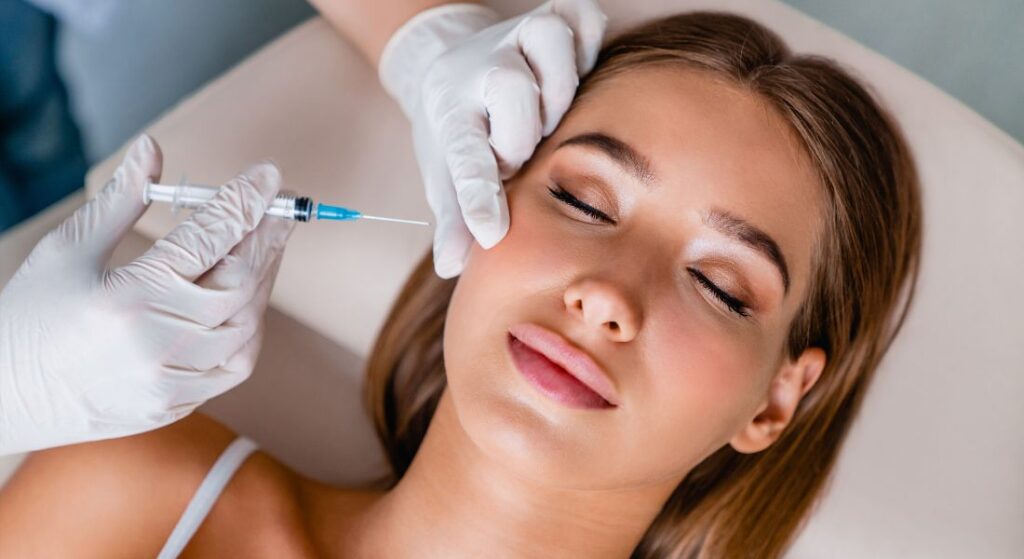
Early facial ageing may sometimes respond best to a combined treatment plan rather than relying on one procedure alone. Depending on your concerns, Silhouette Soft may be combined with skincare, injectables, skin boosters, laser treatments, radiofrequency, ultrasound-based treatments, or other non-surgical approaches to create a more balanced overall result.
Threads are mainly designed to support lifting and repositioning of soft tissue. Other treatments may target different aspects of ageing, such as volume loss in the cheeks or temples, uneven skin texture, pigmentation, fine lines, or reduced skin hydration. Because facial ageing usually involves several different changes at the same time, combining treatments can sometimes provide a more comprehensive approach.
However, combination treatment should always be conservative and carefully planned around your facial structure, skin quality, and goals. More treatment is not automatically better, and over-treatment can create an unnatural appearance. The aim should be subtle, balanced improvement that suits your individual features rather than trying to correct every sign of ageing at once.
Choosing the Right Practitioner
Choosing the right practitioner is an important part of Silhouette Soft treatment because successful thread lifting depends heavily on facial anatomy knowledge, accurate thread placement, vector planning, and the ability to manage complications if they occur. The treatment is not simply about inserting threads, but about understanding how facial tissues move, age, and respond to support.
You should choose a qualified and experienced practitioner who can assess your suitability honestly and explain whether the treatment is likely to meet your goals. A good practitioner should also discuss alternatives, limitations, risks, aftercare requirements, and realistic outcomes rather than promising dramatic results.
A responsible practitioner may sometimes advise that Silhouette Soft is not the right option for you. Although this can feel disappointing, that honesty is important because it helps protect you from unrealistic expectations, unnecessary treatment, and results that may not suit your facial structure or degree of ageing.
FAQs:
1. What is Silhouette Soft and how does it work?
Silhouette Soft is a minimally invasive thread lift treatment that uses absorbable sutures with tiny cones to reposition soft tissue and create a subtle lifting effect. The treatment may also stimulate collagen production as the body responds to the threads over time.
2. Who is usually suitable for Silhouette Soft?
Silhouette Soft is generally more suitable for people with mild to moderate facial laxity, early jowling, softening of the jawline, mild cheek descent, or early neck laxity. Ideal candidates usually still have reasonable skin elasticity and realistic expectations about subtle improvement.
3. How long do Silhouette Soft results last?
Results are temporary because the threads gradually dissolve and the ageing process continues. Many patients may notice improvement lasting between one and three years, although this varies depending on skin quality, lifestyle, age, and individual healing response.
4. Is Silhouette Soft better than a facelift?
Silhouette Soft and facelift surgery are designed for different levels of ageing. Silhouette Soft may help mild to moderate laxity with subtle improvement and shorter recovery, while a surgical facelift is usually more appropriate for advanced sagging, excess skin, and more significant tissue descent.
5. Can Silhouette Soft replace surgery permanently?
No. Silhouette Soft cannot fully replace facelift surgery when ageing becomes more advanced. Some patients use thread lifting to manage earlier facial changes before surgery becomes relevant later on.
6. What areas of the face can Silhouette Soft treat?
Silhouette Soft may be used around the cheeks, jawline, lower face, nasolabial folds, marionette area, and neck depending on the patient’s anatomy and suitability assessment.
7. What is recovery like after Silhouette Soft?
Recovery is usually shorter than facelift surgery, but patients may still experience swelling, bruising, tenderness, tightness, dimpling, or mild asymmetry during healing. Most practitioners also recommend temporarily avoiding strenuous exercise, facial massage, and pressure on the treated area.
8. Are there risks or side effects with Silhouette Soft?
Yes. Possible risks and side effects may include swelling, bruising, discomfort, puckering, infection, asymmetry, visible thread irregularities, thread movement, or dissatisfaction with the final result. Although less invasive than surgery, it is still a medical aesthetic procedure.
9. Can Silhouette Soft be combined with other treatments?
Yes. Some patients may benefit from combining Silhouette Soft with skincare, dermal fillers, skin boosters, laser treatment, radiofrequency, or ultrasound-based treatments. Combination treatment should always be conservative and tailored to the patient’s facial structure and goals.
10. How do I know whether I should choose Silhouette Soft or wait?
The decision depends on factors such as skin quality, degree of laxity, ageing pattern, expectations, budget, and tolerance for downtime. A consultation with an experienced practitioner can help determine whether early treatment, non-surgical management, or waiting for surgery is more appropriate for your situation.
Final Thoughts: Is Early Treatment With Silhouette Soft the Right Choice?
Silhouette Soft may be a suitable option for some people experiencing early facial ageing, particularly when concerns such as mild jowling, softening of the jawline, or early cheek descent are beginning to appear. It can offer a subtle lifting effect without the larger incisions and longer recovery associated with facelift surgery. For carefully selected patients, this earlier intervention may help maintain facial contours while ageing changes are still relatively mild.
At the same time, Silhouette Soft is not automatically better than waiting for surgery. The right approach depends on factors such as skin quality, facial structure, degree of laxity, long-term goals, lifestyle, and expectations. Some people may benefit from a conservative non-surgical treatment plan, while others may achieve more meaningful improvement by waiting until a surgical facelift becomes more appropriate. Understanding the limitations of thread lifting is just as important as understanding its benefits.
A thoughtful consultation with an experienced practitioner can help determine whether Silhouette Soft fits appropriately within your facial rejuvenation journey. Honest assessment, realistic expectations, and careful treatment planning are essential to achieving balanced and natural-looking results. If you’re considering a silhouette soft thread lift in London, you can contact us at the London Medical & Aesthetic Clinic.
Reference:
1. Chae, W.S., Lee, H.S. and Kim, J.H. (2025) Thread lifting: Classification, techniques, and current clinical applications, Archives of Plastic Surgery, 52(1), pp. 12–21. Available at: https://pmc.ncbi.nlm.nih.gov/articles/PMC12594578/
2. Hong, G.W., Wan, J. and Yoon, S.E. (2025) Pre- and post-procedural considerations and thread types for thread lifting, Life, 15(1), p. 85. Available at: https://www.mdpi.com/2075-1729/15/1/85/
3. Lycka, B., Bazan, C., Poletti, E. and Treen, B. (2015) The emerging technique of the antiptosis subdermal suspension thread, Dermatology Research and Practice, pp. 1–7. Available at: https://pmc.ncbi.nlm.nih.gov/articles/PMC4511012/
4. Bertossi, D., Botti, G., Gualdi, A., Zaccaria, G. and Nocini, P.F. (2019) Effectiveness, longevity, and complications of facelift by barbed suture insertion, Aesthetic Surgery Journal, 39(3), pp. 241–247. Available at: https://pubmed.ncbi.nlm.nih.gov/31280848/
5. Atiyeh, B.S., Chahine, F. and Abou Ghanem, O. (2021) Percutaneous thread lift facial rejuvenation: History, technical advancements, and outcomes, Aesthetic Plastic Surgery, 45(4), pp. 1310–1323. Available at: https://pubmed.ncbi.nlm.nih.gov/33961884/