


If you want to treat stretch marks, there is no single option that will be best for you. Your treatment may depend on whether your stretch marks are newer red or purple marks, older white marks, your skin tone and how much downtime you are comfortable with.
You may be offered options such as fractional CO₂ laser, microneedling or radiofrequency treatments, depending on your skin and the type of stretch marks you have. You should expect improvement rather than complete removal, as effective treatment can make your stretch marks smoother, narrower and less noticeable rather than erase them completely.
What Exactly Are Stretch Marks?
Stretch marks develop when changes within the deeper layers of your skin affect collagen and elastic fibres. They often appear during periods when your body changes relatively quickly, although hormones and genetics can also influence whether you develop them.
1. Common Triggers: You may develop stretch marks during puberty, pregnancy or periods of rapid changes in body size.
2. Common Areas: Stretch marks frequently appear on your abdomen, breasts, hips, thighs, buttocks or upper arms.
3. Appearance Changes: Newer marks may look red, pink or purple before gradually becoming paler or silvery as they mature.
4. Scar-Like Changes: Established stretch marks behave more like atrophic scars because structural changes have occurred within the deeper skin.
Stretch marks are therefore more than a surface change, which is why moisturisers alone cannot usually remove established marks. Treatments that stimulate collagen remodelling may help make them smoother and less noticeable, although complete removal is unlikely.
When Should You Have New Stretch Marks Medically Assessed?
Most stretch marks are harmless and develop during pregnancy, puberty or changes in body size. However, you should consider medical assessment if you develop unusually large or widespread stretch marks without an obvious reason, particularly if you use corticosteroid medicines.
You should also speak to a doctor if prominent purple stretch marks appear alongside symptoms such as easy bruising, muscle weakness, a rounded or puffy face or unusual weight gain around your trunk. Rarely, this combination can be associated with conditions involving excess cortisol, such as Cushing’s syndrome.
Why Does the Colour and Age of Your Stretch Marks Matter?
If your stretch marks are new and red, pink or purple, they may respond more readily to treatment because active vascular changes are still present. You may find treatments such as pulsed-dye laser useful when redness is a major concern, although you still need to consider the risk of pigmentation.
If your stretch marks have become white or silvery, they are usually more mature and scar-like. You may therefore benefit more from treatments such as microneedling, fractional laser or radiofrequency that focus on stimulating collagen and improving the texture of your skin.
Can Any Treatment Completely Remove Stretch Marks?
No treatment can reliably remove your stretch marks completely. You may see them become narrower, smoother, lighter or less noticeable, but some visible changes can remain.
If you have older white stretch marks, you may need to be particularly realistic because mature striae can be more resistant to treatment. Before you start, you should ask what level of improvement is realistic for your stretch marks rather than expecting completely clear skin.
Evidence Note
Current research does not identify one treatment that consistently removes stretch marks or works best for everyone. Outcomes differ according to whether the marks are newer striae rubrae or mature striae albae, the treatment used and individual skin characteristics. The realistic goal is therefore improvement in colour, width and texture rather than guaranteed complete removal.
How Does Fractional CO₂ Laser Treat Stretch Marks?
Fractional CO₂ laser uses controlled heat to create tiny treatment zones in your skin, encouraging collagen remodelling. If you have stretch marks, this can help make the lines smoother and less noticeable.
You may experience redness, swelling or peeling while your skin heals. If you have darker or pigment-prone skin, you should also discuss the risk of pigmentation before treatment.
Is Fractional CO₂ Laser Best for White Stretch Marks?
If you have white stretch marks, fractional CO₂ laser can help by stimulating collagen and improving your skin’s texture. However, you should not assume it is automatically better than every other treatment.
One study found that both fractional CO₂ laser and microneedling significantly improved white stretch marks, with no clear difference between them. You may therefore prefer microneedling if you want a less intensive option or have concerns about downtime or pigmentation.
How Does Microneedling Treat Stretch Marks?
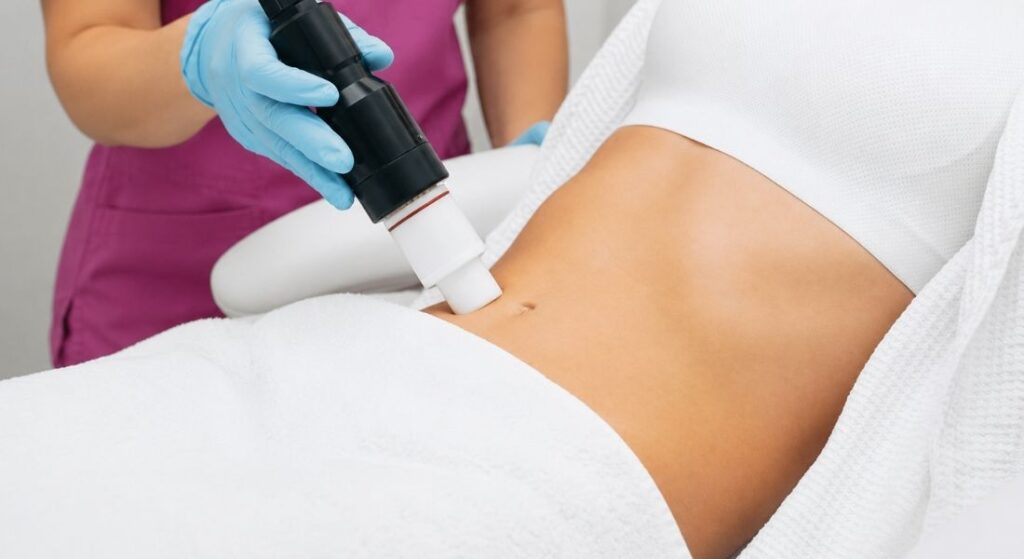
Microneedling creates tiny controlled channels in your skin, which can stimulate collagen and elastin production. If you want to improve your stretch marks without using heat, you may find this approach appealing.
You may need several sessions, depending on your stretch marks and how your skin responds. You should still discuss pigmentation and scarring risks with your practitioner, particularly if you have darker or pigment-prone skin.
Fractional CO₂ Laser or Microneedling: Which Is Better?
If you are choosing between fractional CO₂ laser and microneedling, both can improve stretch marks. Overall evidence does not establish one treatment as universally better for stretch marks. Results vary according to the type and age of the stretch marks, skin type, device settings, treatment protocol and whether another treatment is used alongside it, so your choice should be based on your individual risks and goals.
You may prefer microneedling if you want a more conservative option with less thermal injury. If you want stronger resurfacing and are comfortable with more recovery, you may consider CO₂ laser after discussing the risks with your practitioner.
Research Insight
A 2024 systematic review and meta-analysis of 11 controlled studies found that microneedling and laser treatments produced broadly comparable improvement in stretch marks, with no significant difference in pooled clinical effectiveness. A separate randomised trial of 40 people with striae alba also found significant improvement after four monthly sessions of either microneedling or fractional CO₂ laser, without a significant difference between the treatments. These findings show why one treatment cannot yet be considered universally superior.
Stretch-Mark Treatments at a Glance
| Treatment | May suit | Main advantage | Main limitation |
| Fractional CO₂ laser | Mature white stretch marks and more noticeable texture | Strong fractional collagen remodelling | More downtime and greater PIH risk |
| Microneedling | Mature stretch marks and people wanting non-thermal treatment | No thermal injury and usually more conservative recovery | Several sessions may be needed |
| RF microneedling | Selected mature stretch marks | Combines mechanical needling with dermal heating | Devices and treatment settings vary |
| Pulsed-dye laser | New red or purple stretch marks | Targets vascular redness | Less relevant once stretch marks become white |
| Non-ablative fractional laser | Selected stretch marks needing collagen remodelling | Less surface ablation than CO₂ | Improvement can be gradual |
| Prescription topical retinoid treatment | Selected early red stretch marks | Some evidence in selected early stretch marks | Limited evidence for mature white marks; unsuitable during pregnancy |
| PRP combinations | Selected adjunctive treatment | May enhance some microneedling outcomes | Evidence remains limited and heterogeneous |
What About Radiofrequency Microneedling?
Radiofrequency microneedling combines tiny needles with controlled heat delivered into your skin. If you want to stimulate collagen while treating deeper stretch-mark changes, you may find this approach worth considering.
You should remember that different devices use different settings and energy levels, so results can vary. Your practitioner should help you decide whether radiofrequency microneedling is more suitable for you than conventional microneedling or CO₂ laser.
Are Vascular Lasers Better for New Red Stretch Marks?
If your stretch marks are still red, pink or purple, a vascular laser such as pulsed-dye laser may help target the redness. You may see better results when you treat these newer marks before they become white and more mature.
You should still discuss pigmentation risk, particularly if you have darker skin. Once your stretch marks become white, you may need a treatment that focuses more on collagen remodelling than redness.
Can Non-Ablative Fractional Lasers Treat Stretch Marks?
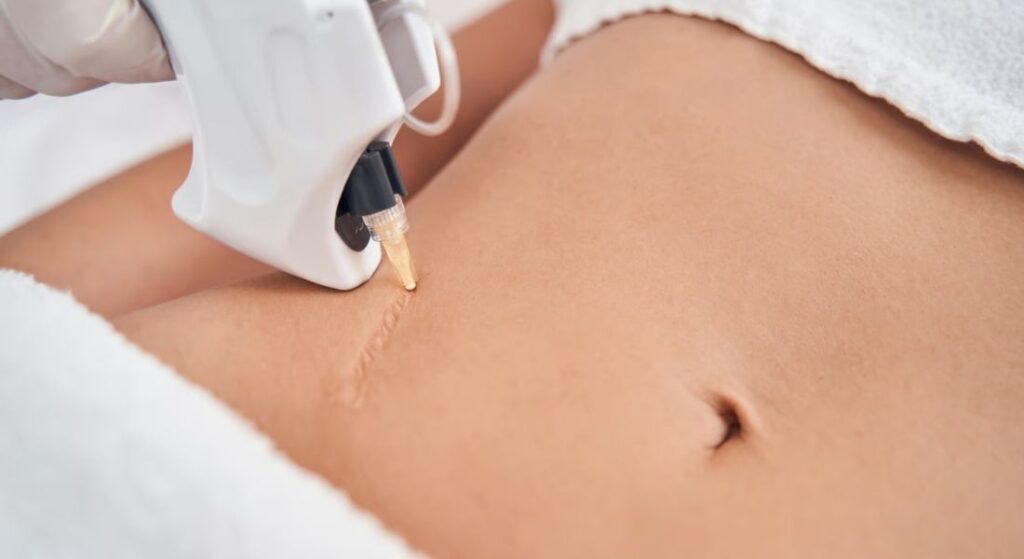
Yes, non-ablative fractional lasers can improve your stretch marks by heating deeper skin layers to stimulate collagen without removing the surface in the same way as CO₂ laser. You may find them appealing if you want collagen remodelling with less surface damage.
You may need several sessions because results usually develop gradually. If you want less downtime, your practitioner can help you decide whether this approach suits you better than CO₂ laser or microneedling.
Do Stretch-Mark Creams or Prescription Topical Treatments Work?
Most over-the-counter stretch-mark creams have limited evidence, so you should not expect them to remove established marks. Prescription topical retinoids have also been studied for stretch marks, particularly newer marks, but they are not suitable for everyone and should only be considered after appropriate medical assessment.
Older white stretch marks are generally more difficult to change with topical treatment. If a prescription topical treatment is being considered, your medical suitability and any pregnancy plans should be discussed with an appropriate prescriber before treatment.
UK Guidance Note
UK medicines-safety guidance advises that topical retinoids should not be used during pregnancy as a precaution. People planning a pregnancy should also avoid topical retinoids, so pregnancy plans should be discussed before any prescription topical retinoid treatment is considered for stretch marks.
Can PRP Improve Stretch-Mark Treatment?
PRP may help support your skin’s healing when combined with treatments such as microneedling. Some studies suggest that you may see better improvement with PRP alongside microneedling than with microneedling alone.
However, you should not assume PRP is essential for your treatment. The studies are still relatively small, so your practitioner should decide whether adding PRP is worthwhile for you based on your stretch marks and treatment goals.
Does Your Skin Tone Affect the Best Treatment?
Yes, your skin tone and your tendency to develop dark marks can influence which treatment is right for you. If you have darker or pigment-prone skin, you may need extra care when considering heat-based treatments such as CO₂ laser.
You may find microneedling more appealing because it does not use thermal energy, but you can still develop pigmentation after treatment. Your practitioner should consider your skin tone, previous reactions and the type of stretch marks you have before choosing the safest option.
Clinical Tip
Tell your practitioner if acne, cuts, waxing or previous cosmetic treatments tend to leave persistent dark marks. Your personal history of post-inflammatory hyperpigmentation can help guide the choice and intensity of treatment, particularly when you are comparing heat-based procedures with conventional microneedling.
How Many Sessions Might You Need?
You will usually need more than one session because your skin needs time to remodel collagen and improve the stretch marks. The number of treatments and the interval between them can vary considerably depending on whether you have fractional laser, conventional microneedling, radiofrequency microneedling or another approach.
You should not assume that you need exactly three sessions or that one treatment will remove your stretch marks. Your practitioner should review how your skin responds and adjust your treatment plan for you.
What Downtime and Side Effects Should You Expect?
Your downtime will depend on the treatment you choose. CO₂ laser usually causes more redness, swelling and peeling, while you may experience milder redness and sensitivity after microneedling.
You can also develop pigmentation changes with any procedure, particularly if your skin is prone to dark marks. You should therefore choose the treatment that gives you a reasonable improvement without creating more recovery or risk than you are comfortable with.
How Can You Choose the Best Stretch-Mark Treatment for You?

Start by looking at your stretch marks. If you have new red or purple marks, you may benefit from treatment that targets colour, while older white marks may need more focus on collagen and texture.
You should also consider your skin tone, how easily you develop dark marks, your budget and how much downtime you can manage. Your practitioner can then help you choose the option that gives you the best balance of improvement, safety and recovery.
Myth vs Fact
| Myth | Fact |
| Stretch marks can be completely removed with the right treatment. | Current treatments generally improve their colour, width and texture rather than erase them completely. |
| CO₂ laser is always better than microneedling. | Comparative research shows broadly similar overall improvement, although individual results vary. |
| Microneedling has no pigmentation risk. | PIH can still occur even though microneedling does not use thermal energy. |
| Red and white stretch marks should be treated the same way. | New red stretch marks retain a vascular component, while mature white marks generally need greater emphasis on collagen remodelling. |
| RF microneedling and conventional microneedling are identical. | RF microneedling additionally delivers thermal energy through the needles. |
| More aggressive treatment always gives better results. | Greater intensity can also increase downtime and complications without guaranteeing greater improvement. |
| Stretch-mark creams can remove mature white marks. | Most topical products have limited evidence for established striae. |
| A prescription topical retinoid is safe during pregnancy because it is applied to the skin. | UK guidance advises against topical retinoids during pregnancy and when planning pregnancy. |
| Everyone needs the same number of sessions. | Treatment number depends on the procedure, type of stretch marks and individual response. |
Key Takeaways
1. There is no single best treatment for every type of stretch mark.
2. New red or purple stretch marks and older white stretch marks may respond differently to treatment.
3. Fractional CO₂ laser and microneedling can both improve mature stretch marks.
4. Comparative evidence suggests broadly similar improvement with fractional CO₂ laser and microneedling-based treatments, although pigmentation risk can differ between approaches. A 2024 meta-analysis comparing fractional microneedle radiofrequency with fractional CO₂ laser found PIH significantly less frequent with radiofrequency microneedling.
5. Microneedling avoids thermal injury but can still cause pigmentation or other complications.
6. RF microneedling, non-ablative lasers and vascular lasers may have roles in selected patients.
7. Some prescription topical retinoids have been studied mainly for early stretch marks, but topical retinoids should not be used during pregnancy or when planning pregnancy.
8. Realistic treatment aims for improvement rather than complete removal.
Frequently Asked Questions
1. What is the best treatment for stretch marks?
There is no single treatment that is best for everyone. Your stretch marks’ age, colour, depth, skin tone and the amount of downtime you can accept will help determine whether microneedling, fractional CO₂ laser, radiofrequency or another option is more suitable for you.
2. Can stretch marks be completely removed?
No treatment can reliably remove stretch marks completely. You can usually aim for improvement in their colour, width, texture and visibility rather than expecting completely mark-free skin.
3. Is microneedling effective for stretch marks?
Microneedling can improve the appearance of stretch marks by stimulating collagen and elastin remodelling. You may need several sessions, particularly if your stretch marks are mature or more deeply indented.
4. Is CO₂ laser better than microneedling for stretch marks?
Both treatments can improve stretch marks, and clinical research has not consistently shown one to be significantly better overall. CO₂ laser provides more intensive thermal resurfacing, while microneedling may be more appealing if you want less thermal injury and generally easier recovery.
5. Which treatment is best for old white stretch marks?
Older white stretch marks, known as striae alba, often respond to treatments that stimulate deeper collagen remodelling. You may be considered for microneedling, fractional laser or radiofrequency-based treatment depending on your skin and the appearance of the marks.
6. Can laser treatment remove red stretch marks?
Laser treatment can improve the appearance of newer red or purple stretch marks by targeting their vascular component and encouraging skin remodelling. Pulsed-dye laser may be considered when redness is prominent, although your skin tone and risk of pigmentation need to be assessed.
7. Is microneedling safe for darker skin with stretch marks?
Microneedling can be suitable for darker skin because it does not use the thermal energy associated with laser resurfacing. You can still develop post-inflammatory hyperpigmentation, so your practitioner should consider your skin tone and previous tendency to develop dark marks when planning treatment.
8. Do stretch-mark creams actually work?
Most over-the-counter stretch-mark creams have limited evidence for significantly improving established stretch marks. Some prescription topical retinoid treatments have been studied for early stretch marks, but they are not suitable for everyone. You should discuss any prescription topical treatment with an appropriate medical professional, particularly if you are pregnant or planning a pregnancy.
9. How many treatments will you need for stretch marks?
You will usually need a course of treatments rather than a single session. The number can vary according to the age, depth and extent of your stretch marks, the treatment you choose and how your skin responds.
10. How can you choose the right stretch-mark treatment?
You should consider your stretch marks’ colour, age, depth and location alongside your skin tone, pigmentation risk, budget and preferred recovery time. A personalised assessment can help you choose an approach that offers a realistic balance between improvement, downtime and safety.
Final Thoughts: Choosing the Best Treatment for Stretch Marks
Stretch marks can often be improved, but no treatment can guarantee that they will disappear completely. Your results will depend on whether your stretch marks are new or mature, their colour and depth, your skin tone and how well you tolerate the treatment and recovery period.
If you are considering CO₂ laser treatment for stretch marks in London, you can contact our team at the London Medical & Aesthetic Clinic to discuss whether the treatment may be suitable for you and explore your options.
References:
1. Saki, N., Rahimi, F., Pezeshkian, F.S. and Parvar, S.Y. (2022) ‘Comparison of the efficacy of microneedling versus CO₂ fractional laser to treat striae alba: A randomized clinical trial’, Dermatologic Therapy, 35(1), article e15212. Available at: https://pubmed.ncbi.nlm.nih.gov/34796595/
2. Aktoz, F. and Yilmaz, N. (2024) ‘Comparing fractional microneedle radiofrequency and fractional CO₂ laser for striae distensae treatment: A systematic review and meta-analysis’, Lasers in Medical Science, 39(1), article 271. Available at: https://pubmed.ncbi.nlm.nih.gov/39516426/
3. Sun, X., Jia, X. and Huang, L. (2024) ‘Microneedling Therapy for Striae Distensae: Systematic Review and Meta-Analysis’, Aesthetic Plastic Surgery, 48(15), pp. 2915–2926. Available at: https://pubmed.ncbi.nlm.nih.gov/38509316/
4. Chaudhury, H., Remmert, N., Chen, H. and Tarbox, M. (2026) ‘Advancements in treating stretch marks across all skin types: A comprehensive review of therapeutic modalities’, International Journal of Women’s Dermatology, 12(1), article e244. Available at: https://pmc.ncbi.nlm.nih.gov/articles/PMC12799299/
5. Hague, A. and Bayat, A. (2017) ‘Therapeutic targets in the management of striae distensae: A systematic review’, Journal of the American Academy of Dermatology, 77(3), pp. 559–568.e18. Available at: https://www.sciencedirect.com/science/article/pii/S0190962217303006