


You cannot currently remove established stretch marks completely and permanently, but you can often make them less noticeable. If you have newer red or purple stretch marks, you may respond more readily to treatment than if you have older white marks.
You may see improvement with treatments such as fractional CO₂ laser, microneedling or radiofrequency microneedling, depending on your skin and stretch marks. Your goal should be realistic improvement in colour, texture and width rather than expecting the marks to disappear completely.
Why Are Stretch Marks Considered Permanent?
Stretch marks are considered permanent because they involve changes in the deeper layers of your skin, including collagen and elastic fibres. Once mature stretch marks develop, you cannot simply remove them by shedding the skin’s surface, although you can make them less noticeable.
Treatments such as fractional laser and microneedling can help remodel your skin and improve the colour, texture and appearance of your stretch marks. You should therefore think of treatment as improving your stretch marks rather than completely erasing them.
Why Do Stretch Marks Form in the First Place?
Stretch marks can develop when your skin changes relatively quickly and the deeper supporting tissues are unable to adapt in the same way. Several factors can influence whether you develop them, so the cause is not simply stretching of the skin.
1. Rapid Growth: You may develop stretch marks during puberty when your body changes quickly over a relatively short period.
2. Pregnancy: Changes in your skin, hormones and body size during pregnancy can contribute to the development of stretch marks.
3. Body-Size Changes: Significant or rapid changes in your body size can place additional strain on collagen and elastic fibres within your skin.
4. Genetics and Hormones: Your genetic tendency and hormonal changes can influence how likely you are to develop stretch marks.
5. Corticosteroid Medicines: Long-term or potent corticosteroid creams or tablets can make your skin more prone to developing stretch marks, particularly when they cause thinning of the skin.
Because these changes occur within the deeper layers of your skin, moisturisers can improve hydration but cannot fully restore the altered structure. You may also develop new stretch marks in the future if similar changes occur again.
When Should You Have Stretch Marks Medically Assessed?
Most stretch marks are harmless and develop during pregnancy, puberty or changes in body size. However, you should consider medical assessment if you suddenly develop unusually large or widespread stretch marks without an obvious explanation, particularly if you are using corticosteroid medicines.
You should also speak to a doctor if prominent stretch marks develop alongside symptoms such as easy bruising, muscle weakness, a rounded or puffy face or unusual weight gain around your trunk. Rarely, this combination can be associated with excess cortisol, including Cushing’s syndrome.
What Is the Difference Between Red and White Stretch Marks?
Your stretch marks can change colour as they mature. Newer marks are usually pink, red or purple, while older marks often become pale, white or silvery and may look flatter and more scar-like.
If you have newer red stretch marks, you may respond better to treatments that target redness and early skin changes. If your marks are older and white, you may need treatments that focus more on collagen and texture, although you should still have realistic expectations about the improvement you can achieve.
Can Stretch Marks Fade Without Treatment?
Yes, your stretch marks can naturally become less noticeable over time, particularly when newer red or purple marks gradually fade to a paler colour. You may notice that they become harder to see even without treatment, although the underlying skin changes can remain.
Natural fading mainly changes how your stretch marks look rather than completely restoring your skin’s original structure. If your marks are very new, you may want to discuss their natural progression with your practitioner before choosing an intensive treatment.
What Does Meaningful Stretch-Mark Improvement Look Like?

Meaningful improvement does not mean your stretch marks have to disappear completely. You may notice that your marks become narrower, smoother, less depressed or closer in colour to your surrounding skin.
Your results can vary depending on the age, depth and type of stretch marks you have. Even a noticeable reduction can be worthwhile if your marks become much less visible, so you should focus on realistic improvement rather than complete removal.
Evidence Note
A systematic review of 74 quality-assessed publications involving 2,328 patients found that no treatment had proved completely effective for stretch marks. The review also highlighted limitations including small study sizes, different treatment protocols and inconsistent outcome measures. This supports setting expectations around meaningful improvement rather than complete or permanent removal.
What Can Different Stretch-Mark Treatments Realistically Achieve?
| Treatment | What it may improve | Important limitation |
| Fractional CO₂ laser | Texture, width and visibility of mature striae | More downtime and PIH risk; cannot guarantee complete removal |
| Conventional microneedling | Texture and collagen remodelling | Usually requires a treatment course; PIH can still occur |
| RF microneedling | Texture through mechanical and thermal stimulation | Devices and protocols vary considerably |
| Vascular laser | Redness in newer striae rubrae | Less relevant once marks become mature and white |
| Non-ablative fractional laser | Texture and dermal remodelling | Improvement may be gradual and require several sessions |
| Tretinoin | Selected early active stretch marks | Limited benefit for mature white marks; avoid during pregnancy/planning pregnancy |
| Combination treatments | May address several components of stretch marks | Evidence does not show that adding more treatments is always better |
How Can Fractional CO₂ Laser Improve Stretch Marks?
Fractional CO₂ laser creates controlled microscopic injuries in your skin, which can stimulate collagen production and remodelling. You may see improvements in the width, texture and overall visibility of your stretch marks as your skin heals.
Because CO₂ laser is an ablative treatment, you can experience redness, swelling, tenderness, crusting or pigmentation afterwards. It can make your stretch marks much less noticeable, but you should not expect it to completely erase the areas where your skin has changed.
Are CO₂ Laser Results Permanent?
Improvements after fractional CO₂ laser may persist, but current research does not establish a guaranteed duration or permanent result. Your skin continues to remodel collagen after treatment, so treated stretch marks may remain narrower, smoother or less noticeable over time, although long-term outcomes can vary between individuals.
However, long-lasting improvement is not the same as permanent removal. Your treated marks can remain faintly visible, and you may develop new stretch marks if your body changes again, so you should not expect CO₂ laser to make your skin permanently stretch-mark-free.
Is Microneedling an Alternative to CO₂ Laser?
Yes, microneedling can be an alternative to CO₂ laser for improving your stretch marks. Instead of heat, it uses fine needles to create controlled micro-injuries that encourage your skin to produce and remodel collagen.
You may prefer microneedling if you are concerned about downtime or pigmentation, particularly if your skin tends to develop dark marks after inflammation. Both treatments can improve stretch marks, so your practitioner should consider your skin tone, stretch-mark type and the level of improvement you want before recommending one for you.
Research Insight
A 2025 meta-analysis of six randomised trials involving 166 patients found no significant difference between fractional CO₂ laser and microneedling in overall clinical improvement or patient satisfaction. However, post-inflammatory hyperpigmentation occurred significantly more often with fractional CO₂ laser, supporting treatment selection based on both expected improvement and your individual pigmentation risk.
What About Radiofrequency Microneedling?
Radiofrequency microneedling combines fine needles with controlled heat delivered into your skin. You may find it useful for stretch marks because it can stimulate collagen remodelling at selected depths.
You should remember that different devices use different needles and energy settings, so your results and recovery can vary. You may experience redness, swelling, discomfort or pigmentation, which is why your practitioner should choose the treatment settings specifically for you.
Are Other Lasers Useful for Stretch Marks?
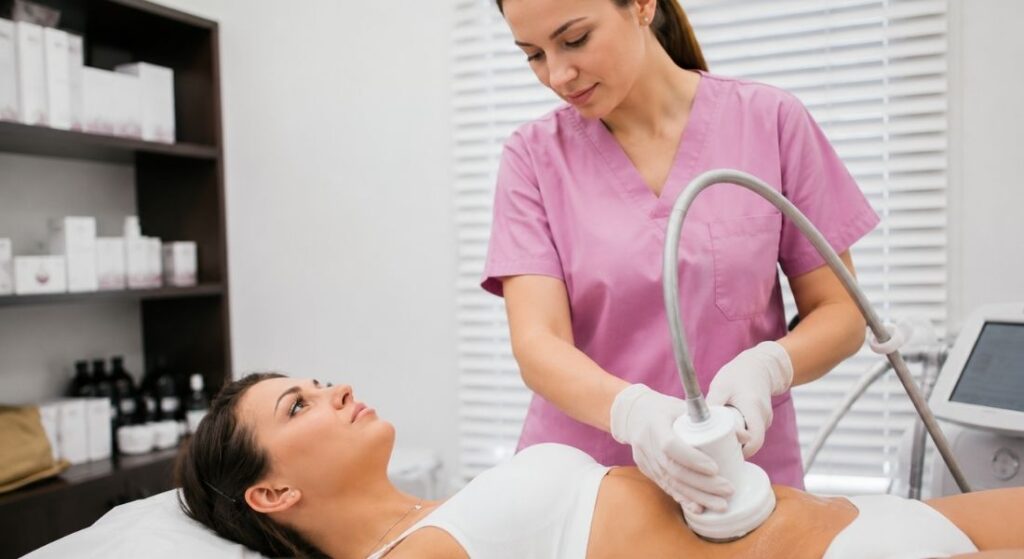
Yes, you have several laser options besides CO₂ laser. If your stretch marks are still red or purple, you may benefit from a vascular laser that targets redness, while older white marks may respond better to treatments that stimulate collagen and improve texture.
You may also consider a non-ablative fractional laser if you want skin remodelling without the same level of surface injury as CO₂ laser. Your practitioner should choose the technology based on your stretch marks, skin tone, pigmentation risk and how much downtime you can manage.
Can Creams Permanently Remove Stretch Marks?
You should not expect ordinary creams to permanently remove your stretch marks. Moisturisers can keep your skin hydrated and comfortable, while tretinoin may help some newer red stretch marks, but neither can reliably erase established white marks.
If tretinoin is being considered for newer stretch marks, your clinician should assess whether it is suitable for you. Benefits can vary according to how early the marks are and the treatment strength and duration, and skin irritation can occur. Your expectations should therefore remain focused on possible improvement rather than complete removal.
UK Guidance Note
UK medicines-safety guidance advises that topical retinoids such as tretinoin should not be used during pregnancy as a precaution. People planning a pregnancy should also avoid topical retinoids, so pregnancy plans should be discussed before tretinoin is considered for stretch marks.
Can Combination Treatments Produce Better Results?
Combination treatments may help you achieve better improvement when your stretch marks have different concerns, such as changes in colour, texture and depth. You may benefit from combining approaches such as microneedling with PRP or laser treatment when a single procedure is unlikely to address everything.
You should not assume that adding more treatments will automatically give you better results. Your practitioner should choose combinations based on your stretch marks, skin tone and treatment goals while considering the extra cost, downtime and potential irritation.
Does Your Skin Tone Affect How Much Treatment Is Safe?
Yes, your skin tone and history of developing dark marks can affect which treatment is safest for you. If you tend to develop pigmentation after acne, cuts or cosmetic treatments, you should tell your practitioner before choosing a laser or other heat-based procedure.
Having darker skin does not automatically rule out laser treatment, but your suitability needs careful assessment because pigmentation risk can be higher with some laser procedures. Your practitioner may need to adjust the device, treatment settings and aftercare or consider a non-thermal option such as conventional microneedling. Your practitioner can help you decide whether microneedling, a non-ablative treatment or adjusted CO₂ laser is the better option for your skin.
Clinical Tip
Tell your practitioner if previous acne, cuts, waxing, burns or cosmetic procedures have left persistent dark marks. Your own history of post-inflammatory hyperpigmentation can be particularly useful when deciding between thermal procedures such as fractional CO₂ laser and non-thermal conventional microneedling.
How Many Treatments Does It Usually Take to See Improvement?
You will usually need several treatments because your skin needs time to heal and produce new collagen. The number of sessions can vary depending on your stretch marks, the treatment you choose and how your skin responds.
You should be cautious about claims that one session will permanently remove your stretch marks. Your practitioner should review your progress between treatments and adjust your plan for you rather than automatically increasing treatment intensity.
Can New Stretch Marks Develop After Successful Treatment?
Yes, you can develop new stretch marks even after successfully improving existing ones. Changes such as pregnancy, puberty or significant changes in your body size can create new marks because your underlying tendency to develop stretch marks remains.
This does not mean your previous treatment has stopped working. You may still have long-lasting improvement in the stretch marks you treated, but no procedure can guarantee that you will never develop new ones.
How Can You Decide Whether Stretch-Mark Treatment Is Worthwhile?
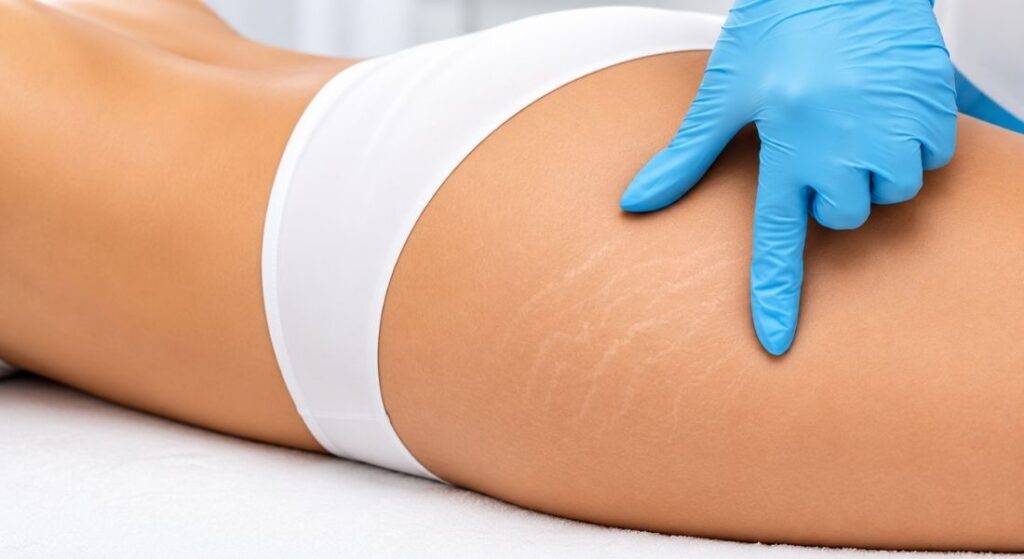
You should start by having your stretch marks assessed based on their colour, age, depth, location and your skin tone. New red marks may need a different approach from older white marks, so you should not assume one treatment will suit every type.
You should also consider the full treatment course, including cost, downtime and pigmentation risk. If you focus on making your stretch marks less noticeable rather than expecting completely clear skin, you are more likely to feel that the treatment is worthwhile.
Myth vs Fact
| Myth | Fact |
| The right laser can permanently erase stretch marks. | Current treatments can improve stretch marks but cannot reliably restore completely unmarked skin. |
| If stretch marks improve after treatment, they can never change again. | Improvement may persist, but long-term outcomes vary and new stretch marks can develop elsewhere. |
| CO₂ laser is always better because it is more intensive. | Comparative evidence shows microneedling can achieve similar overall improvement in some patients. |
| Microneedling has no pigmentation risk. | It avoids thermal injury but can still cause inflammation and PIH. |
| Red and white stretch marks are the same. | Red striae are earlier and retain a vascular component; white striae are more mature and scar-like. |
| Creams can rebuild mature stretch marks completely. | Most topical products have limited evidence for established white striae. |
| Tretinoin works equally well on every stretch mark. | Evidence is mainly for selected early active stretch marks. |
| More treatments combined together always give better results. | Combination treatment may help selected patients, but more procedures also add cost, recovery and potential complications. |
| Successful treatment means you cannot develop new stretch marks. | New stretch marks can still develop with future pregnancy, growth or significant body changes. |
Key Takeaways
1. Established stretch marks cannot currently be reliably removed completely and permanently.
2. Treatment can make them smoother, narrower, less red or less noticeable.
3. New red or purple stretch marks may respond differently from mature white stretch marks.
4. Fractional CO₂ laser can improve mature striae, but more intensive treatment does not guarantee better results.
5. Microneedling can produce comparable improvement in some studies and may have a lower PIH risk than fractional CO₂ laser.
6. Long-term durability varies, and current research does not justify promising permanent CO₂ laser results.
7. New stretch marks can develop even after existing marks have been successfully treated.
8. Tretinoin has evidence mainly for early stretch marks and should not be used during pregnancy or when planning pregnancy.
9. Your treatment should be chosen according to the type of stretch marks, skin tone, pigmentation history, downtime and realistic goals.
Frequently Asked Questions
1. Can stretch marks be removed permanently?
No, there is currently no treatment that can reliably remove established stretch marks completely. You can often make them less noticeable by improving their colour, texture, width and overall appearance.
2. What is the best treatment for stretch marks?
The best treatment for you depends on whether your stretch marks are new or mature, their colour and depth, your skin tone and how much downtime you can accept. Options such as fractional CO₂ laser, microneedling, radiofrequency microneedling and selected laser treatments may all have a role.
3. Is fractional CO₂ laser effective for old white stretch marks?
Yes, fractional CO₂ laser can improve the appearance of mature white stretch marks by stimulating collagen remodelling and improving skin texture. However, you should expect improvement rather than complete removal, and several treatments may be needed.
4. Is microneedling safer than CO₂ laser for darker skin?
Microneedling may be considered when pigmentation risk is a concern because conventional microneedling does not use the thermal energy associated with CO₂ laser. Comparative research has found a lower overall risk of post-inflammatory hyperpigmentation with microneedling, but this does not mean it is automatically the safest option for every darker skin tone. Your practitioner should consider your skin type, previous pigmentation and treatment settings before recommending a procedure.
5. Can creams get rid of stretch marks?
Ordinary moisturising creams cannot reliably remove established stretch marks because they do not rebuild the altered dermal structure. Some topical treatments, including tretinoin, have evidence for certain newer stretch marks but are not suitable for everyone.
6. Do red stretch marks respond better to treatment?
New red or purple stretch marks often respond more readily than older white stretch marks. You may benefit from treatments that target redness and early skin remodelling while the marks are still in their earlier stage.
7. How many treatments will you need for stretch marks?
You will often need several sessions because collagen remodelling takes time. The number of treatments depends on your stretch-mark type, treatment chosen, treatment intensity and how your skin responds.
8. Can stretch marks come back after treatment?
An existing stretch mark can remain improved after successful treatment, but you can still develop new stretch marks in the future. Changes such as pregnancy, puberty or significant changes in body size can create new areas of striae.
9. What results should you realistically expect from stretch-mark treatment?
You may notice that your stretch marks become less visible, smoother, narrower or closer in colour to the surrounding skin. Complete disappearance is uncommon, so you should judge success by meaningful improvement rather than expecting completely unmarked skin.
10. How can you choose the right stretch-mark treatment?
You should consider the age, colour, depth and location of your stretch marks alongside your skin tone, pigmentation history and tolerance for downtime. A consultation can help you compare the expected improvement, risks and recovery of treatments such as CO₂ laser, microneedling and radiofrequency microneedling.
Final Thoughts: What Can You Expect from Stretch-Mark Treatment?
Stretch marks are considered permanent changes within the deeper layers of your skin, so no treatment can reliably promise to erase them completely. However, you can often achieve meaningful improvement in their colour, texture, width and visibility, and some improvement may persist over time. The degree and durability of improvement can vary, so treatment should be matched to the age and appearance of your stretch marks.
If you are considering CO2 laser treatment for stretch marks in London, you can contact our team at the London Medical & Aesthetic Clinic to discuss whether the treatment may be suitable for you and explore your treatment options.
References:
1. Mustafa, A. et al. (2025) ‘Evaluating CO₂ laser and micro-needling therapies for striae distensae: A comprehensive meta-analysis and systematic review’, Lasers in Medical Science, 40(1), article 161. Available at: https://pubmed.ncbi.nlm.nih.gov/40131559/
2. Kang, S., Kim, K.J., Griffiths, C.E.M., Wong, T.Y., Talwar, H.S., Fisher, G.J., Gordon, D., Hamilton, T.A., Ellis, C.N. and Voorhees, J.J. (1996) ‘Topical tretinoin (retinoic acid) improves early stretch marks’, Archives of Dermatology, 132(5), pp. 519–526. Available at: https://pubmed.ncbi.nlm.nih.gov/8624148/
3. Wu, Y. and Wang, H. (2026) ‘Advances in the treatment of striae distensae’, Journal of Cosmetic Dermatology, 25(1), article e70683. Available at: https://pmc.ncbi.nlm.nih.gov/articles/PMC12820439/
4. Chaudhury, H., Remmert, N., Chen, H. and Tarbox, M. (2026) ‘Advancements in treating stretch marks across all skin types: A comprehensive review of therapeutic modalities’, International Journal of Women’s Dermatology, 12(1), article e244. Available at: https://pmc.ncbi.nlm.nih.gov/articles/PMC12799299/
5. Hague, A. and Bayat, A. (2017) ‘Therapeutic targets in the management of striae distensae: A systematic review’, Journal of the American Academy of Dermatology, 77(3), pp. 559–568.e18. Available at: https://www.sciencedirect.com/science/article/pii/S0190962217303006/