


Fractional CO₂ laser can make your stretch marks less noticeable by stimulating collagen remodelling and controlled healing within your skin. You may see improvements in the texture, width and overall visibility of your marks, including older white stretch marks.
Your results will depend on the age and type of your stretch marks, your skin tone and the treatment settings used. CO₂ laser cannot guarantee complete removal, and you may face a higher risk of post-inflammatory hyperpigmentation than with microneedling, so you should discuss whether the expected improvement is worth the recovery and pigmentation risk for you.
What Are Stretch Marks?
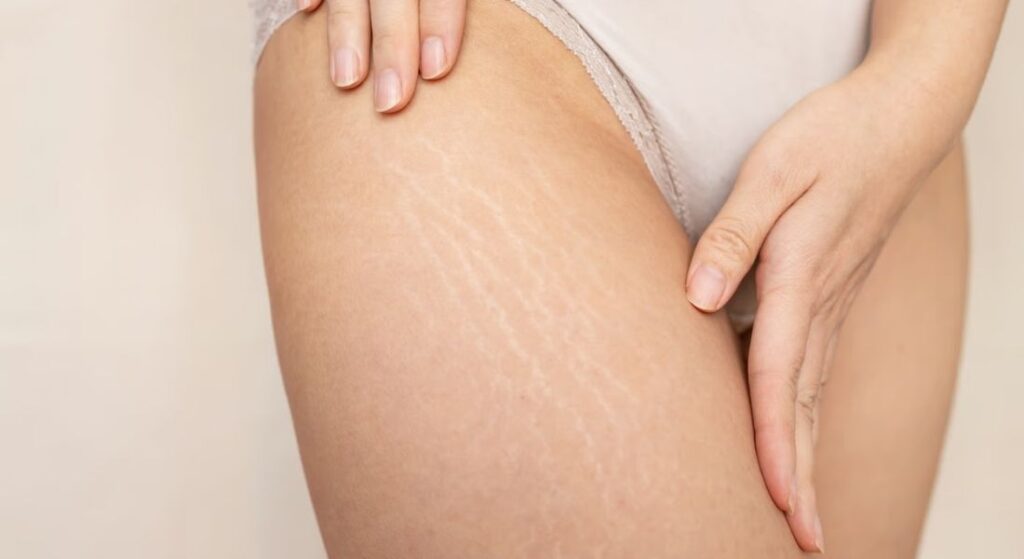
Stretch marks develop when the deeper structure of your skin changes, often during rapid growth, pregnancy, changes in body size or hormonal changes. Your genetics can also affect whether you develop them, and you may notice them on your abdomen, hips, thighs, buttocks, breasts or upper arms.
These changes affect collagen and elastin, so established stretch marks behave more like atrophic scars than temporary surface marks. Treatments such as fractional CO₂ laser aim to stimulate collagen remodelling, helping you make your stretch marks smoother and less noticeable.
Why Do Stretch Marks Change from Red to White?
Your stretch marks often begin as red, pink or purple marks because blood vessels and inflammatory changes are more noticeable in the early stage. As they mature, they usually lose this colour and become pale, white or silvery, sometimes appearing slightly depressed.
This change can affect which treatment is suitable for you. If your stretch marks are still red, a treatment targeting redness may help, while older white marks may benefit more from collagen-remodelling treatments, although you should expect improvement rather than complete removal.
How Does Fractional CO₂ Laser Work?
Fractional CO₂ laser uses 10,600 nm laser energy to create tiny, controlled areas of injury within your skin. Because only microscopic columns are treated while surrounding skin is left intact, your skin can begin a healing response that encourages collagen remodelling.
The aim is not to simply burn away your stretch marks. Instead, the treatment encourages your skin to remodel the altered tissue, which may make your marks smoother, less depressed and better blended with the surrounding skin.
How Effective Is CO₂ Laser for White Stretch Marks?
Fractional CO₂ laser can help you improve mature white stretch marks by targeting their altered texture and deeper skin structure. Studies have reported significant improvement after several treatment sessions, with some research finding better results than certain topical treatments.
You may notice that your stretch marks become narrower, smoother or less noticeable, but they are unlikely to disappear completely. Your results will depend on how deep and extensive your marks are, as well as how your skin responds to treatment.
Evidence Note
A 2026 systematic review evaluated 69 articles on stretch-mark treatment, including 35 on lasers and other energy-based devices. Although several approaches produced improvement, the authors concluded that current evidence does not identify one consistently effective treatment, with some studies limited by small samples or lower-quality evidence. This supports realistic expectations rather than describing fractional CO₂ laser as a guaranteed solution.
Can CO₂ Laser Treat New Red Stretch Marks?
CO₂ laser can stimulate collagen in your newer red stretch marks, but it may not be the most targeted option if redness is your main concern. Early stretch marks have more noticeable vascular changes, so treatments designed to target blood vessels may sometimes be considered.
You should therefore have your stretch marks assessed for both colour and texture before choosing CO₂ laser. If your marks are still red or purple, your practitioner may recommend a different treatment or a staged approach rather than treating them in the same way as older white marks.
How Much Improvement Can You Realistically Expect?
You can often achieve noticeable improvement with fractional CO₂ laser, but there is no reliable percentage that applies to everyone. Your stretch marks, skin type, laser settings and number of sessions can all affect how much change you see.
You should expect your marks to become less noticeable rather than disappear completely. For you, a successful result may mean smoother, narrower stretch marks that blend better with your surrounding skin, even if faint lines remain.
Can CO₂ Laser Completely Remove Stretch Marks?
No, you should not expect fractional CO₂ laser to completely remove your stretch marks. The treatment can stimulate collagen remodelling and improve the appearance of the altered skin, but it cannot guarantee that your skin will return to its original structure.
You can still achieve a meaningful cosmetic improvement even when some marks remain visible. Your stretch marks may become smoother, narrower and less noticeable, so the realistic goal should be reducing their visibility rather than expecting completely clear skin.
How Does CO₂ Laser Compare with Microneedling?
CO₂ laser and microneedling can both help you improve stretch marks by stimulating collagen remodelling. The main difference is that CO₂ laser uses controlled heat and ablation, while microneedling creates mechanical micro-injuries without thermal energy.
You may find microneedling more appealing if you are concerned about pigmentation or downtime, as studies have found a higher risk of post-inflammatory hyperpigmentation with CO₂ laser. However, CO₂ laser may still be suitable for you if stronger resurfacing is considered appropriate, so neither treatment is automatically better for everyone.
Research Insight
A 2025 systematic review and meta-analysis of six randomised controlled trials involving 166 patients found no significant difference between fractional CO₂ laser and microneedling in overall clinical improvement, patient satisfaction or reduction in the cross-sectional area of stretch marks. However, post-inflammatory hyperpigmentation was significantly more frequent after CO₂ laser, making pigmentation risk an important part of treatment selection.
How Does CO₂ Laser Compare with Radiofrequency Microneedling?
CO₂ laser and radiofrequency microneedling can both improve your stretch marks by stimulating collagen. CO₂ laser creates microscopic ablative areas at your skin’s surface, while radiofrequency microneedling delivers controlled heat deeper through fine needles.
Current pooled evidence has not shown a significant difference between fractional microneedle radiofrequency and fractional CO₂ laser in professional or patient-rated improvement. However, a 2024 meta-analysis found post-inflammatory hyperpigmentation significantly less frequent with radiofrequency microneedling. Your skin type, pigmentation risk, stretch marks and tolerance for downtime should therefore help guide the choice.
How Does CO₂ Laser Compare with Non-Ablative Fractional Laser?
CO₂ laser removes microscopic areas of skin while non-ablative fractional laser heats your skin without vaporising its surface. Both can stimulate collagen remodelling and improve stretch marks.
You may prefer non-ablative laser if you want an easier recovery, while CO₂ laser may suit you if stronger resurfacing is appropriate. Studies have found improvement with both, so your skin type, stretch marks and downtime preferences should guide your choice.
How Does CO₂ Laser Compare with Other Stretch-Mark Treatments?
| Treatment | How it works | Potential advantage | Main consideration |
| Fractional CO₂ laser | Ablative fractional thermal injury | Strong collagen-remodelling and resurfacing effect | More visible recovery and PIH risk |
| Conventional microneedling | Mechanical micro-injuries without heat | More conservative recovery and lower PIH risk in comparative evidence | Several sessions may be needed |
| RF microneedling | Needles deliver radiofrequency heat into the dermis | Combines mechanical and thermal stimulation | Results/settings vary between devices |
| Non-ablative fractional laser | Dermal heating without ablating the surface like CO₂ | Less surface injury | Improvement may develop more gradually |
| Vascular laser | Targets blood vessels/redness | Particularly relevant to newer red striae | Less relevant once vascular redness has faded |
How Many CO₂ Laser Sessions Might You Need?
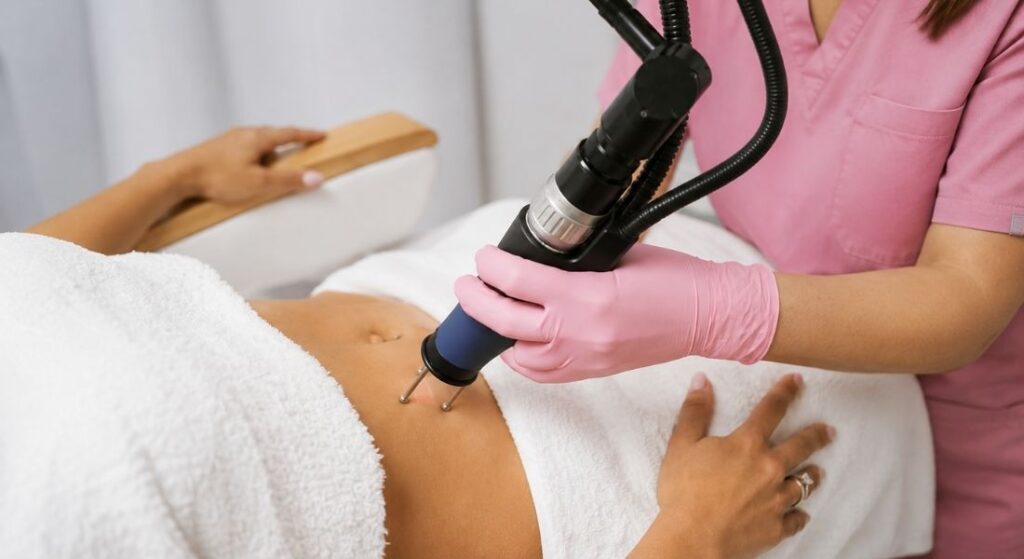
You will usually need a course of CO₂ laser treatments rather than just one session. Your number of appointments depends on your stretch marks, the area being treated, your skin response and how intensive each treatment is.
You should be cautious about claims that everyone needs exactly the same number of sessions. Your practitioner should review your progress and recovery after each treatment and decide with you whether further sessions are worthwhile.
When Will You See the Results?
You may notice some early changes after fractional CO₂ laser, but redness and swelling immediately after treatment are not your final result. Genuine improvement develops gradually as your skin heals and collagen remodelling takes place.
1. Early Appearance: Temporary swelling can initially make your stretch marks look smoother than they will once your skin has fully settled.
2. Gradual Remodelling: Improvements in texture and width may become more noticeable over the following weeks as collagen remodels.
3. Continued Improvement: Your skin can continue changing between treatment sessions, so you should allow enough time before judging the overall result.
4. Track Your Progress: Taking photographs in similar lighting and from the same distance can help you compare changes more accurately.
You should not expect your final result immediately after treatment or judge progress from day-to-day changes. Your practitioner can review your improvement between sessions and advise whether further treatment is likely to be worthwhile.
What Does Recovery After CO₂ Laser Feel Like?
You should expect some redness, swelling, warmth and tenderness after fractional CO₂ laser, with crusting or peeling possible depending on how intensely your skin is treated. Your practitioner should explain how to care for the treated area while it heals and which products you should avoid temporarily.
During healing, follow the aftercare plan given by your practitioner and avoid picking or rubbing crusted or peeling skin. Keeping the area protected and minimising unnecessary sun exposure are particularly important because inflammation and ultraviolet exposure can contribute to pigmentation changes. If healing is worsening rather than improving, contact your treatment provider for advice.
You may find recovery easier or more difficult depending on where your stretch marks are treated. If the area is regularly rubbed by tight clothing, you should take extra care to reduce friction and irritation while your skin recovers.
What Are the Main Risks and Side Effects?
You can expect temporary redness, swelling, sensitivity and discomfort after fractional CO₂ laser, with crusting or colour changes also possible. You should be particularly aware of post-inflammatory hyperpigmentation if your skin tends to develop dark marks after inflammation.
You can also experience less common problems such as infection, prolonged redness, lighter pigmentation or scarring. Your practitioner should therefore choose the settings and aftercare carefully for your skin to reduce unnecessary risk.
Treatment may need to be postponed if you have an active skin infection, open wound or significant inflammation in the area being treated. You should also tell your practitioner about previous poor wound healing or abnormal scarring and any medicines or recent treatments that could affect healing. If you are pregnant, elective cosmetic laser resurfacing is generally deferred because pregnancy-specific safety data for cosmetic use are limited.
UK Guidance Note
Regulation of cosmetic laser treatment in England depends partly on how the treatment is provided. Laser treatment used exclusively for cosmetic purposes does not automatically require CQC registration, although some local councils require laser practitioners or premises to register. England is also developing a wider licensing scheme for non-surgical cosmetic procedures, but the proposed national framework has not yet been fully implemented.
Is CO₂ Laser Suitable for Darker Skin?
Having darker skin does not automatically rule out fractional CO₂ laser, but your suitability should be assessed carefully because post-inflammatory hyperpigmentation can be an important risk. If you often develop dark marks after acne, cuts or other treatments, tell your practitioner before treatment.
You may still benefit from CO₂ laser with carefully chosen settings and aftercare. However, you could also compare microneedling, radiofrequency microneedling or non-ablative laser if you want to reduce the risk of pigmentation.
Clinical Tip
Tell your practitioner whether acne, cuts, burns, waxing or previous cosmetic procedures have left persistent dark marks on your skin. Your own history of post-inflammatory hyperpigmentation can help guide treatment intensity and whether a non-ablative or non-thermal alternative deserves consideration.
How Can You Decide Whether CO₂ Laser Is Worth It for Your Stretch Marks?

You should consider your stretch marks’ age, colour, width, depth and your skin tone before choosing CO₂ laser. If you develop dark marks easily after inflammation, you may want to discuss gentler options with your practitioner, particularly as microneedling can offer similar improvement in some studies.
You should also consider the full treatment course, including cost, downtime and potential side effects. CO₂ laser may be worthwhile for you if you want noticeable improvement in texture and width and are comfortable with a more intensive recovery, but you should expect improvement rather than permanent removal.
Myth vs Fact
| Myth | Fact |
| CO₂ laser completely removes stretch marks. | It can improve their width, texture and visibility but cannot guarantee complete removal. |
| CO₂ laser is always better than microneedling. | Pooled comparative evidence shows similar overall clinical improvement. |
| More aggressive laser settings always produce better results. | Higher intensity can also increase inflammation, downtime and pigmentary complications. |
| CO₂ laser causes no pigmentation problems if performed correctly. | PIH remains a recognised risk and was more frequent than with microneedling in comparative evidence. |
| Darker skin can never be treated with fractional CO₂ laser. | Treatment may be possible in selected patients, but pigmentation risk and settings require careful assessment. |
| RF microneedling is automatically more effective than CO₂ laser. | Current pooled evidence has not established clear superiority. |
| One CO₂ laser session should permanently remove stretch marks. | Several sessions may be needed, and complete permanent removal cannot be guaranteed. |
| New red and mature white stretch marks should receive identical treatment. | Their vascular and structural characteristics differ, so treatment choice may also differ. |
Key Takeaways
1. Fractional CO₂ laser can make established stretch marks narrower, smoother and less noticeable.
2. Complete or permanent removal cannot be guaranteed.
3. Mature white stretch marks may be treated with CO₂ laser because collagen and textural remodelling are important treatment goals.
4. CO₂ laser and microneedling have shown similar overall improvement in pooled comparative evidence.
5. Post-inflammatory hyperpigmentation is an important consideration, particularly if your skin is pigment-prone.
6. RF microneedling and non-ablative fractional laser may provide alternatives for selected patients.
7. Results develop gradually as collagen remodels, and several treatment sessions may be needed.
8. Your treatment should be based on stretch-mark type, skin tone, pigmentation history, downtime and realistic expectations.
Frequently Asked Questions
1. Can CO₂ Laser Completely Remove Stretch Marks?
No, CO₂ laser cannot reliably remove stretch marks completely. You may see a meaningful improvement in their colour, width and texture, but faint lines can remain because stretch marks involve structural changes within the dermis.
2. Is CO₂ Laser Effective for White Stretch Marks?
Yes, fractional CO₂ laser can be effective for mature white stretch marks, particularly when your main concern is their depressed or uneven texture. It stimulates collagen remodelling, which can make the marks smoother and less noticeable.
3. How Many CO₂ Laser Treatments Do You Need for Stretch Marks?
You may need several treatment sessions because collagen remodelling develops gradually. The number of sessions depends on the age, depth and extent of your stretch marks, as well as the treatment settings and how your skin responds.
4. How Long Does It Take to See Results from CO₂ Laser?
You may notice temporary changes immediately after treatment because of redness and swelling, but these are not your final results. Genuine improvement develops gradually as your skin heals and produces new collagen over the following weeks and months.
5. Is CO₂ Laser Better Than Microneedling for Stretch Marks?
Neither treatment is universally better for everyone. Research has found significant improvement with both fractional CO₂ laser and microneedling, while microneedling may have an advantage if you are particularly concerned about pigmentation and downtime.
6. Is CO₂ Laser Safe for Darker Skin?
You can have fractional CO₂ laser treatment with darker skin, but you may have a higher risk of post-inflammatory hyperpigmentation. If you develop dark marks easily after inflammation, your practitioner should consider this when selecting treatment settings and discussing alternatives.
7. Can CO₂ Laser Treat New Red Stretch Marks?
CO₂ laser can stimulate collagen remodelling in stretch marks at different stages, but newer red or purple marks may require a different treatment approach. If redness is your main concern, your practitioner may consider treatments that specifically target the vascular component of early stretch marks.
8. What Are the Side Effects of CO₂ Laser for Stretch Marks?
You may experience redness, swelling, tenderness, warmth, peeling or crusting after treatment. Temporary or persistent pigmentation changes can also occur, while infection, prolonged redness, hypopigmentation and scarring are less common but recognised risks.
9. Can Stretch Marks Return After CO₂ Laser Treatment?
The treated stretch marks can remain improved after your treatment course, but CO₂ laser does not prevent you from developing new stretch marks. Pregnancy, significant changes in body size and other factors associated with rapid skin expansion can cause new marks to appear.
10. Is CO₂ Laser Worth It for Stretch Marks?
CO₂ laser may be worthwhile if you want to reduce the visibility and improve the texture of established stretch marks and are comfortable with a more intensive recovery. You should discuss your skin tone, stretch-mark type, pigmentation risk, expected improvement and alternative treatments before deciding whether it is the right option for you.
Final Thoughts: What Can You Expect from CO₂ Laser for Stretch Marks?
Fractional CO₂ laser can make established stretch marks less noticeable by stimulating collagen remodelling and improving their texture, width and overall appearance. Results can vary depending on the age, depth and colour of your stretch marks, your skin tone and how your skin responds to treatment.
If you are considering treatment, you can learn more about CO2 laser treatment for stretch marks in London and contact our team to discuss whether it may be suitable for your skin and treatment goals. You may need several sessions, and while meaningful improvement is possible, the aim is to reduce the visibility of stretch marks rather than guarantee their complete or permanent removal.
References:
1. Algarra Sahuquillo, J. and Martín-Gorgojo, A. (2026) ‘Stretch marks: Systematic review of its therapeutic approach’, Actas Dermo-Sifiliográficas, 117(4), article 104553. Available at: https://www.sciencedirect.com/science/article/pii/S0001731025008294
2. Mustafa, A. et al. (2025) ‘Evaluating CO₂ laser and micro-needling therapies for striae distensae: A comprehensive meta-analysis and systematic review’, Lasers in Medical Science, 40(1), article 161. Available at: https://pubmed.ncbi.nlm.nih.gov/40131559/
3. Aktoz, F. and Yilmaz, N. (2024) ‘Comparing fractional microneedle radiofrequency and fractional CO₂ laser for striae distensae treatment: A systematic review and meta-analysis’, Lasers in Medical Science, 39(1), article 271. Available at: https://pubmed.ncbi.nlm.nih.gov/39516426/
4. Wu, Y. and Wang, H. (2026) ‘Advances in the treatment of striae distensae’, Journal of Cosmetic Dermatology, 25(1), article e70683. Available at: https://pmc.ncbi.nlm.nih.gov/articles/PMC12820439/
5. Yang, Y.J. and Lee, G.Y. (2011) ‘Treatment of striae distensae with nonablative fractional laser versus ablative CO₂ fractional laser: A randomized controlled trial’, Annals of Dermatology, 23(4), pp. 481-489. Available at: https://pmc.ncbi.nlm.nih.gov/articles/PMC3229942/