


You can improve stretch marks with both CO₂ laser and microneedling, as both stimulate collagen and skin repair. You may find CO₂ laser more intensive, while microneedling creates tiny injuries with fine needles.
You should not assume CO₂ laser is always better, as comparative research has found meaningful improvement with both treatments. Post-inflammatory hyperpigmentation has been reported more frequently after fractional CO₂ laser than conventional microneedling in pooled striae-distensae research, although these findings are not specific only to people with darker skin. If you are pigmentation-prone, your skin tone, previous pigmentary reactions and treatment settings should all be considered when choosing between them.
What Is the Main Difference Between CO₂ Laser and Microneedling?
You get controlled skin injury from both treatments, but they work differently. CO₂ laser uses heat to create tiny areas of ablation, while microneedling uses fine needles to create small mechanical punctures.
You can expect CO₂ laser to be more intensive, while conventional microneedling creates mechanical micro-injuries without using thermal energy. Your skin tone, stretch marks and tolerance for downtime can help you and your dermatologist decide which treatment suits you better.
CO₂ Laser vs Microneedling at a Glance
| Factor | Fractional CO₂ laser | Microneedling |
| Treatment method | Ablative thermal injury | Mechanical micro-injury |
| Stretch-mark improvement | Can be effective | Can be effective |
| Downtime | Usually greater | Usually shorter |
| PIH risk | Higher in comparative evidence | Lower than CO₂ laser |
| Darker skin | Requires careful selection/settings | Often considered where PIH is a concern |
| Sessions | Usually a course | Usually a course |
How Does Fractional CO₂ Laser Treat Stretch Marks?
You get tiny columns of controlled heat from fractional CO₂ laser, leaving surrounding skin untouched to support healing. This encourages your skin to produce collagen and remodel the stretch mark, helping it look smoother and less noticeable over time.
You should not expect your stretch marks to disappear immediately after treatment. Your skin needs time to repair itself, so you may see gradual improvement as new collagen develops.
How Does Microneedling Treat Stretch Marks?
You get tiny controlled punctures from microneedling, which trigger your skin’s natural repair process. This can stimulate collagen and elastic fibres, helping your stretch marks look smoother and less noticeable.
You may prefer microneedling if you are concerned about pigmentation because it does not use ablative heat. You should still expect some temporary redness, sensitivity and inflammation after treatment.
Which Treatment Is More Effective Overall?
You should not assume that CO₂ laser is more effective simply because it is more intensive. Current research suggests both CO₂ laser and microneedling can improve stretch marks, with no clear overall winner.
You can therefore consider factors beyond results, such as your skin tone, downtime, pigmentation risk and treatment comfort. Your dermatologist can help you choose the option that best fits your skin and goals.
Evidence Note
A 2025 meta-analysis of six randomised controlled trials involving 166 patients found no significant overall difference in clinical improvement or patient satisfaction between fractional CO₂ laser and conventional microneedling. Post-inflammatory hyperpigmentation was significantly more frequent after CO₂ laser. However, the included trials used different protocols and were not limited to one stretch-mark stage, treatment area or skin type, so these pooled results should guide treatment discussions rather than predict your individual outcome.
Which Is Better for Old White Stretch Marks?
You should not assume CO₂ laser is better just because your stretch marks are old and white. Both CO₂ laser and microneedling can improve mature stretch marks, although older white marks can be harder to treat.
You can still get meaningful improvement with microneedling, while CO₂ laser may suit you if you need a more intensive treatment. Your skin type, stretch marks and tolerance for downtime can help you choose the right option.
Which Is Better for New Red Stretch Marks?
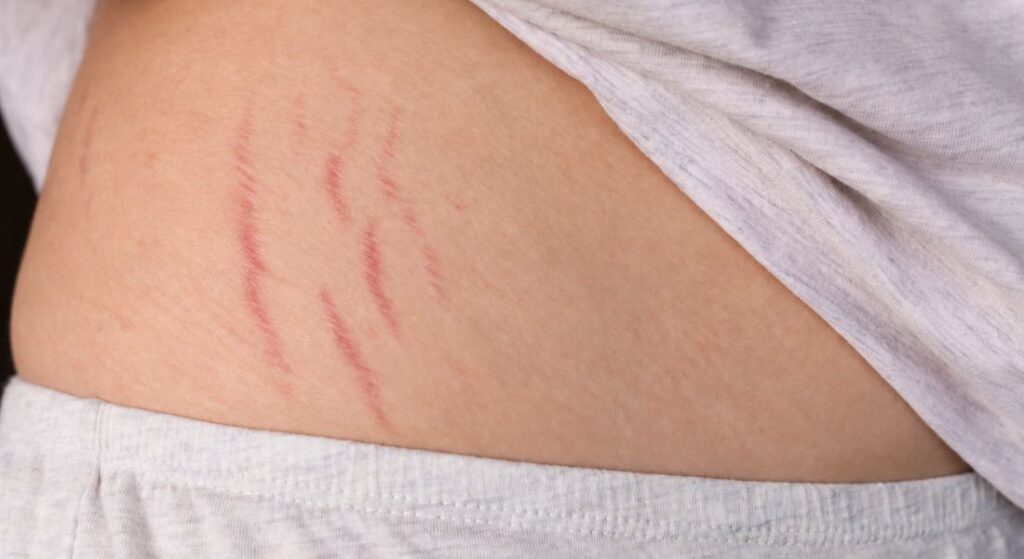
Newer red or purple stretch marks, known as striae rubra, may respond more favourably to treatment overall than mature white striae alba. Microneedling can be used for both stages, but the presence of redness may also lead your clinician to consider treatments that specifically target the vascular or colour component of newer marks.
You should not assume CO₂ laser is automatically better for you. If your stretch marks are still red, your dermatologist may consider treatments that target colour as well as texture.
Which Treatment Gives Faster Results?
You should not expect either CO₂ laser or microneedling to produce final results immediately. Both treatments depend on gradual collagen and tissue remodelling, so improvements usually become clearer over time.
1. Early Changes: You may initially notice redness, swelling or sensitivity rather than an immediate improvement in your stretch marks.
2. Gradual Remodelling: Your skin needs time to produce and reorganise collagen after either treatment.
3. Several Sessions: You may need a course of treatments before the improvement in texture and visibility becomes more noticeable.
4. Treatment Strength: A more intensive treatment does not automatically mean you will achieve your final result more quickly.
You may see gradual improvement over the following weeks and months with either option. It is better to compare the full treatment course and recovery period rather than judging your results after a single session.
Which Treatment Usually Involves More Downtime?
You may have more noticeable downtime with fractional CO₂ laser because it uses controlled heat to resurface your skin. You can expect redness, swelling, sensitivity, crusting or peeling while your skin heals.
You may have a quicker recovery with microneedling, with redness, tenderness or mild swelling usually settling sooner. If you need to return to work or social activities quickly, you may prefer microneedling.
Clinical Tip
Choose treatment based on the full recovery period rather than treatment intensity alone. If downtime is important to you, ask how long redness, swelling, crusting or sensitivity is expected with the settings being considered.
Which Treatment Is More Painful?
You may feel prickling, scratching or pressure during microneedling, while CO₂ laser can feel warm, stinging or burning. Both treatments can be uncomfortable, and your clinician may use a numbing cream to make the procedure easier.
You should not assume microneedling is always less painful because it is less intensive. Your needle depth, laser settings, treatment area and numbing method can all affect how much discomfort you feel.
Which Is Safer for Darker Skin?
Microneedling may offer a more favourable pigmentary risk profile if you have darker or pigmentation-prone skin because it does not create the same ablative thermal injury as fractional CO₂ laser. Comparative research across striae distensae overall has found less post-inflammatory hyperpigmentation after conventional microneedling, although these pooled findings were not limited specifically to darker-skin patients.
You should not assume CO₂ laser is unsuitable for you if you have darker skin. Your skin type, treatment settings and tendency to develop dark marks can help your dermatologist choose the safer option.
Does CO₂ Laser Give Better Collagen Remodelling?
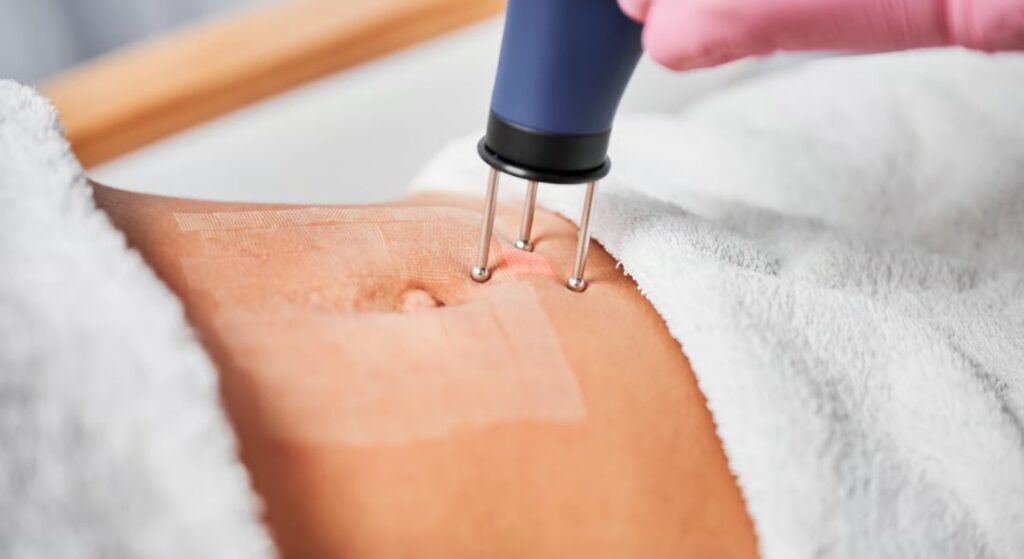
You can stimulate collagen and elastin production with both CO₂ laser and microneedling, but they use different types of controlled injury. You should not assume that the stronger thermal effect of CO₂ laser automatically means better collagen remodelling.
You can get visible improvement with either treatment, and studies have shown collagen changes after microneedling. Your final results depend more on how your skin responds, your stretch marks and the treatment settings than on which procedure sounds more intensive.
Research Insight
Comparative evidence across striae distensae found significantly more post-inflammatory hyperpigmentation after fractional CO₂ laser than conventional microneedling. These pooled trials were not restricted to darker-skin patients, but the finding is still relevant when discussing treatment with someone who already has a higher tendency to develop pigmentation after inflammation.
How Many Sessions Might You Need?
You may need several sessions of CO₂ laser or microneedling rather than just one. Clinical studies have used different treatment schedules, often involving repeated sessions separated by several weeks, but there is no universal number or interval that is right for everyone. Your treatment plan should depend on your stretch marks, skin type, treatment settings and how your skin responds.
You should not assume you need a fixed number of sessions. Your dermatologist can review your progress after each treatment and adjust your plan based on your results, recovery and skin sensitivity.
What Risks Should You Consider with CO₂ Laser?
You may have redness, swelling, tenderness and peeling after CO₂ laser as your skin heals. You may also have a higher risk of pigmentation changes, particularly if you have darker or pigmentation-prone skin.
You should also consider less common risks such as infection or scarring. Your skin tone, treatment settings and aftercare can affect your risk, so you should choose an experienced practitioner who can tailor the treatment to you.
UK Guidance Note
In England, purely cosmetic laser treatment does not automatically require CQC registration, as registration depends on how the service is provided. Separate local licensing or registration requirements may also apply, including special-treatment licensing for laser or IPL services in some London boroughs. Practitioner training, experience and treatment protocols should therefore also be considered.
What Risks Should You Consider with Microneedling?
You may have temporary redness, swelling, tenderness, pain or pinpoint bleeding after microneedling. You may also develop pigmentation changes or, less commonly, an infection if your skin is not treated with proper hygiene.
You may have a lower pigmentation risk with microneedling than with CO₂ laser, but the risk is not zero. Your practitioner should choose the needle depth based on your skin and stretch marks rather than assuming deeper treatment will give you better results.
Is Radiofrequency Microneedling the Same as Conventional Microneedling?
No, you should not treat them as the same procedure. Conventional microneedling uses fine needles to create mechanical micro-injuries, while radiofrequency microneedling also delivers heat into your skin through the needles.
You may consider radiofrequency microneedling if you want additional thermal stimulation without ablative CO₂ laser resurfacing. However, you should check which device and settings are being used, as results, discomfort and pigmentation risk can vary.
How Can You Decide Which Treatment Is Better for You?
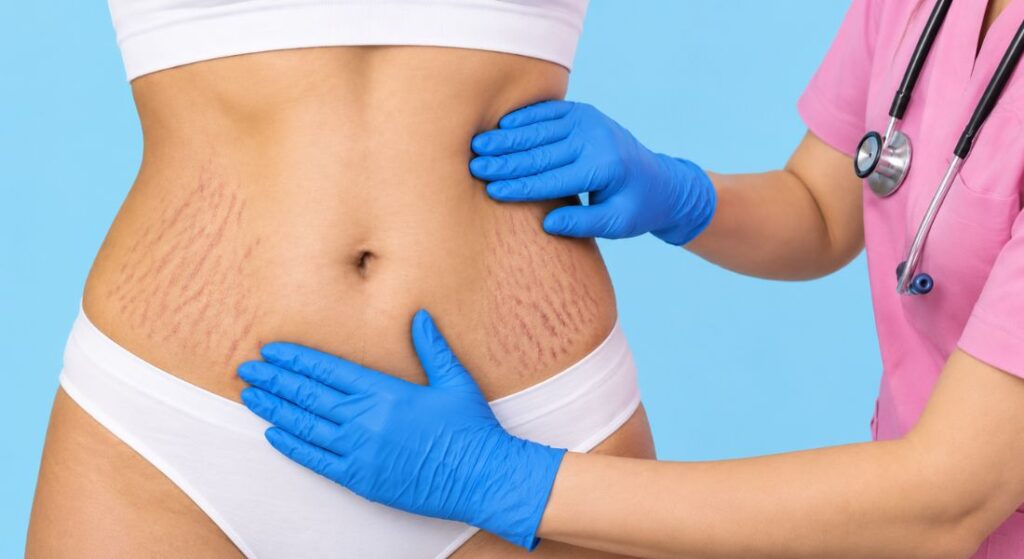
You should consider your stretch marks, skin tone and pigmentation history when choosing a treatment. If you develop dark marks easily, you may prefer microneedling because it generally has a lower risk of pigmentation changes than CO₂ laser.
You should also think about how much downtime you can manage. CO₂ laser usually involves more recovery, while microneedling may be easier for you if you want a gentler recovery, and your dermatologist can help you choose the safest option for your skin.
Myth vs Fact
| Myth | Fact |
| CO₂ laser is always more effective. | Research has not shown a clear overall winner. |
| Microneedling cannot treat white stretch marks. | It can improve mature striae alba. |
| Stronger treatment means faster results. | Collagen remodelling takes time with both treatments. |
| Microneedling causes no pigmentation. | PIH is still possible, although risk is generally lower than with CO₂. |
| CO₂ laser cannot be used on darker skin. | It may suit selected patients with appropriate settings. |
| Either treatment completely removes stretch marks. | Both aim for improvement rather than complete removal. |
Key Takeaways
1. Both CO₂ laser and microneedling can improve stretch marks.
2. Current pooled evidence does not show a clear overall efficacy winner.
3. CO₂ laser generally involves more surface injury and downtime.
4. Microneedling has shown a lower PIH risk than CO₂ laser in comparative evidence.
5. Several sessions may be needed with either treatment.
6. Neither treatment can guarantee permanent or complete stretch-mark removal.
Frequently Asked Questions
1. Is CO₂ laser better than microneedling for stretch marks?
Neither treatment is proven to be universally better. Both can improve stretch marks, while your skin tone, pigmentation risk, stretch-mark type and tolerance for downtime can help determine which option is more suitable for you.
2. Can microneedling treat old white stretch marks?
Yes. Microneedling can stimulate collagen and elastin remodelling in mature white stretch marks and has shown meaningful clinical improvement in studies. You may need several treatment sessions before you see the full effect.
3. Is CO₂ laser effective for old white stretch marks?
Yes. Fractional CO₂ laser can improve the texture and appearance of mature white stretch marks by creating controlled thermal injury that stimulates collagen remodelling. However, it cannot guarantee complete removal.
4. Which treatment is safer for darker skin?
Microneedling may be preferable if you have darker or pigmentation-prone skin because it generally carries a lower risk of post-inflammatory hyperpigmentation than fractional CO₂ laser. CO₂ laser can still be used in some darker skin types, but careful treatment settings and patient selection are important.
5. Which treatment has more downtime?
Fractional CO₂ laser generally causes more noticeable downtime because it is an ablative treatment. You may experience redness, swelling, crusting, scaling and sensitivity, whereas microneedling usually causes a shorter period of redness, tenderness and mild swelling.
6. Is microneedling less painful than CO₂ laser?
Not necessarily. Both treatments can cause discomfort, and pain depends on factors such as treatment depth, laser settings, treatment area and the anaesthetic used. Clinical studies have reported discomfort with both procedures, so you should not assume microneedling will always be the more comfortable option.
7. How many CO₂ laser or microneedling sessions will you need?
Stretch marks may require a course of treatments rather than one session. Studies have used different numbers of sessions and treatment intervals, so there is no standard schedule for everyone. Your treatment plan should depend on the age and appearance of your stretch marks, your skin type, treatment settings and how you respond.
8. Can CO₂ laser and microneedling completely remove stretch marks?
No. Both treatments aim to make stretch marks less noticeable by improving their texture, width and appearance rather than guaranteeing complete removal. You should be cautious of any treatment promising that your stretch marks will disappear entirely.
9. Do CO₂ laser and microneedling produce permanent results?
Both treatments can produce visible improvement through collagen and tissue remodelling, but current research does not establish that the improvement will be permanent for everyone. Long-term follow-up is limited, your existing stretch marks may remain partly visible, and new stretch marks can develop if your skin undergoes further rapid stretching or other predisposing changes.
10. How can you decide between CO₂ laser and microneedling?
You should consider whether your stretch marks are red or white, your skin tone and pigmentation history, how much downtime you can accept and the level of treatment intensity you prefer. A personalised assessment can help you choose the option that offers a reasonable balance between expected improvement, recovery and potential risks.
Final Thoughts: CO₂ Laser vs Microneedling for Stretch Marks
Both fractional CO₂ laser and microneedling can improve the appearance of stretch marks by encouraging collagen and tissue remodelling, but neither is universally better for everyone. You can choose between them by considering the age and type of your stretch marks, your skin tone and pigmentation history, how much downtime you can accept and the level of treatment intensity that feels appropriate for you.
If you are considering CO2 laser treatment for stretch marks in London, you can contact our team at the London Medical & Aesthetic Clinic to discuss whether the treatment may be suitable for you and explore your treatment options.
References:
1. Mustafa, A. et al. (2025) ‘Evaluating CO2 laser and micro-needling therapies for striae distensae: a comprehensive meta-analysis and systematic review’, Lasers in Medical Science, 40(1), article 161. Available at: https://pubmed.ncbi.nlm.nih.gov/40131559/
2. Saki, N., Rahimi, F., Pezeshkian, F.S. and Parvar, S.Y. (2022) ‘Comparison of the efficacy of microneedling versus CO2 fractional laser to treat striae alba: a randomized clinical trial’, Dermatologic Therapy, 35(1), article e15212. Available at: https://pubmed.ncbi.nlm.nih.gov/34796595/
3. Lu, H., Guo, J., Hong, X., Chen, A., Zhang, X. and Shen, S. (2020) ‘Comparative effectiveness of different therapies for treating striae distensae: a systematic review and network meta-analysis’, Medicine, 99(39), article e22256. Available at: https://pmc.ncbi.nlm.nih.gov/articles/PMC7523784/
4. Huang, Q., Xu, L.L., Wu, T. and Mu, Y.Z. (2022) ‘New progress in therapeutic modalities of striae distensae’, Clinical, Cosmetic and Investigational Dermatology, 15, pp. 2101–2115. Available at: https://pmc.ncbi.nlm.nih.gov/articles/PMC9532256/
5. Marin, S., Watterson, A., Alqam, M.L., Jones, B.C. and Hitchcock, T.M. (2026) ‘A comparative study to evaluate the safety and efficacy of microneedling as a stand-alone treatment for striae rubrae and albae’, Aesthetic Surgery Journal, 46(5), pp. 530–542. Available at: https://academic.oup.com/asj/article/46/5/530/8381782