

If you’re trying to improve a stubborn area of fat, you may be weighing up SmartLipo and cryolipolysis and wondering how different the two treatments really are. Both target localised fat, but SmartLipo is minimally invasive and uses laser energy, while cryolipolysis is non-invasive and uses controlled cooling to damage fat cells.
SmartLipo may also involve physically removing disrupted fat, while cryolipolysis relies on your body gradually clearing the treated cells. The better option for you depends on your goals, desired fat reduction, recovery time and how comfortable you are with an invasive treatment.
What Is SmartLipo?
SmartLipo is a laser-assisted treatment for localised fat reduction. You may have a fine laser fibre inserted beneath your skin through a small entry point to heat and disrupt fat tissue.
The treated fat may then be removed through a small cannula. You should know that SmartLipo is minimally invasive, so it requires medical assessment and differs from non-invasive fat-freezing treatments.
What Is Cryolipolysis?
Cryolipolysis, often called “fat freezing”, is a non-invasive treatment that uses controlled cooling to target localised fat. You may have an applicator placed over the treatment area, where cooling damages selected fat cells that your body gradually clears.
Cryolipolysis can reduce localised fat thickness, but it is not a weight-loss treatment. You should also know that there are no surgical incisions or cannulas, so recovery is usually minimal and you can often return to normal activities quickly.
What Is the Main Difference Between SmartLipo and Cryolipolysis?
The main difference is invasiveness. SmartLipo works beneath your skin using a laser fibre and may remove fat with a cannula, while cryolipolysis uses controlled cooling from outside your body without an incision.
Because SmartLipo may include aspiration of treated fat, it can allow a more immediate contour change. However, it requires anaesthesia and involves more recovery than a non-invasive treatment. Cryolipolysis offers you minimal downtime, although results are more gradual. The right choice for you depends on your goals and expectations.
SmartLipo vs Cryolipolysis: Quick Comparison
| Feature | SmartLipo | Cryolipolysis |
| Treatment type | Minimally invasive | Non-invasive |
| Main method | Laser energy delivered beneath the skin; treated fat may also be aspirated | Controlled cooling applied externally |
| Incisions | Small access points are required | No surgical incision |
| Anaesthesia | Required; approach varies with the treatment plan | Usually not required |
| Results | Contour change may appear earlier when fat is aspirated, although swelling can temporarily affect appearance | Changes develop gradually over several weeks |
| Downtime | Usually greater because the procedure is minimally invasive | Usually limited |
| Skin tightening | Some improvement may occur, but it is variable | Primarily targets fat rather than significant skin laxity |
| Main considerations | Anaesthesia, recovery and procedure-related complications | Gradual results, applicator suitability and cryolipolysis-specific adverse effects |
How Does SmartLipo Reduce Fat?
SmartLipo uses laser energy delivered through a thin fibre inserted beneath your skin into the fatty layer. The heat disrupts fat tissue and can make it easier to remove with a cannula, while also affecting collagen-containing tissue.
You may see some skin tightening, but this is not guaranteed. Your results depend on factors such as skin quality, age, treatment area and the amount of fat removed, so you should have realistic expectations about the final contour.
How Does Cryolipolysis Reduce Fat?
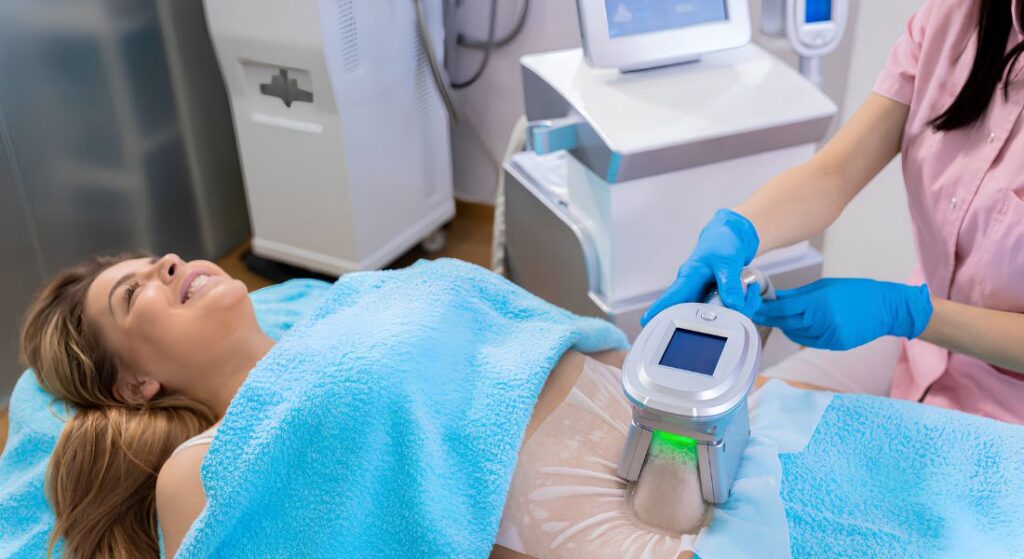
Cryolipolysis uses controlled cooling to damage fat cells without incisions or surgical fat aspiration. Depending on the device, an applicator may use vacuum to draw the treatment area into position while it is cooled. You may notice gradual changes as your body clears the affected cells over the following weeks and months, so the final result is not immediate.
Cryolipolysis is generally intended for localised, pinchable subcutaneous fat that can be appropriately positioned within the applicator. It cannot target deeper visceral fat, so you should have a proper assessment to decide whether cryolipolysis is suitable for you.
Which Treatment Removes More Fat?
When aspiration is included, SmartLipo may produce a more immediate or noticeable reduction in treated fat because some of the disrupted fatty tissue is physically removed. However, high-quality studies directly comparing SmartLipo with cryolipolysis are limited.
Cryolipolysis produces a gradual localised reduction in fat, although the amount of change varies between treatment areas, protocols and individuals. You should not expect a specific percentage, as outcomes depend on the treatment area, technique and your individual anatomy. The best choice for you depends on how much change you want.
Evidence Note
Research supports both laser-assisted lipolysis and cryolipolysis for localised fat reduction. However, there is limited high-quality evidence directly comparing the two, so one treatment cannot be considered universally better.
Much of the published evidence evaluates laser-assisted lipolysis as a broader treatment category rather than SmartLipo specifically. Different devices, laser wavelengths and treatment protocols may produce different outcomes, so findings from one laser-assisted technique should not automatically be applied to every SmartLipo procedure.
How Quickly Will You See Results?
SmartLipo can show an earlier contour change because fat may be removed during treatment, but you should expect some swelling at first. Your results will develop gradually as the tissues settle over the following weeks and months.
Cryolipolysis is slower because your body needs time to clear the treated fat cells. You may start seeing changes over several weeks, with results often assessed around two to three months. If you have an important event coming up, you should plan your treatment well in advance.
Which Treatment Is Better for Skin Tightening?
Laser-assisted lipolysis may provide some skin-tightening effect because thermal energy can affect collagen-containing tissue and tissue contraction. Cryolipolysis is primarily intended for fat reduction rather than treatment of significant skin laxity. However, the amount of tightening you may see varies and should not be guaranteed.
Cryolipolysis mainly targets fat and does not reliably tighten significantly loose skin. If you have substantial excess skin after weight loss, pregnancy or ageing, you should discuss whether a surgical skin-removal procedure is more suitable for you.
How Long Can the Results Last?
Both SmartLipo and cryolipolysis are designed to reduce localised areas of subcutaneous fat rather than control your overall weight. Once treated fat cells have been removed or damaged, you may maintain the resulting contour for some time, but your body shape can still change. If you gain weight, the remaining fat cells can become larger, while ageing, pregnancy and changes in skin or muscle tone may also affect your results.
You can help maintain your results by keeping your weight relatively stable and following a healthy lifestyle. However, results vary from person to person, so you should ask your clinician when you can expect to see your final outcome and whether you may need any additional treatment in the future.
Which Areas Can Be Treated?
Both treatments can target localised fat around areas such as your abdomen, flanks, waist and thighs. SmartLipo may be considered for smaller or more defined areas of localised fat, while cryolipolysis requires an area that can be treated appropriately with the selected applicator.
Neither treatment targets visceral fat inside your abdomen. If most of your fullness comes from this deeper fat, you may see less change from treating the superficial fat beneath your skin.
What Does Each Treatment Feel Like?
SmartLipo involves anaesthesia because instruments are placed beneath your skin, but you may still feel pressure or pulling. Afterwards, you can expect some tenderness, swelling and bruising.
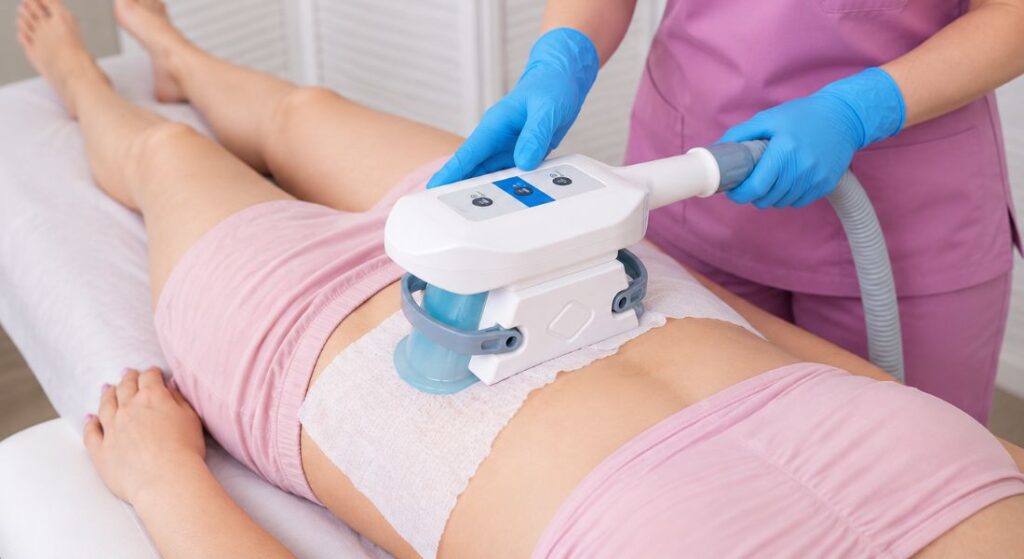
Cryolipolysis is non-invasive, although you may feel intense cold, pulling, pressure or tingling before the area becomes numb. You may also experience temporary redness, swelling, bruising or altered sensation, but recovery is usually lighter than with invasive fat removal.
How Does Recovery Compare?
Cryolipolysis usually involves less downtime because there are no incisions. You may experience temporary tenderness, numbness, redness or swelling, but you can often return to normal activities quickly.
SmartLipo requires more aftercare, as you may have swelling, bruising, tenderness and small access sites. You may also need compression garments or temporary activity restrictions. Recovery for you will depend on the number and size of areas treated.
What Are the Risks of SmartLipo and Cryolipolysis?
Both SmartLipo and cryolipolysis can cause side effects, although the type and severity of risk differ because one is minimally invasive and the other is non-invasive. Understanding these differences can help you make a more informed decision before treatment.
1. Swelling and bruising: SmartLipo can cause temporary swelling, bruising and tenderness because instruments are placed beneath your skin.
2. Infection and contour irregularities: As a minimally invasive procedure, SmartLipo carries risks such as infection, bleeding, numbness, uneven contours and, rarely, thermal injury from the laser.
3. Temporary effects after cryolipolysis: Cryolipolysis may cause redness, swelling, tenderness, numbness, tingling or altered sensation in the treated area.
4. Rare paradoxical adipose hyperplasia: In uncommon cases, cryolipolysis can cause the treated fatty area to enlarge rather than shrink, a complication known as paradoxical adipose hyperplasia.
Neither treatment is completely risk-free, so your medical history and suitability should be assessed before treatment. Your clinician should also explain the potential side effects, complications and expected recovery so you know what to expect.
Who Might Be Better Suited to SmartLipo?
SmartLipo may suit you if you have a defined area of subcutaneous fat and prefer a minimally invasive approach in which treated fat can be aspirated. Some skin tightening may occur, but the amount varies and should not be guaranteed. You should also be comfortable with anaesthesia, aftercare and the associated recovery.
You would generally be expected to have a relatively stable weight and localised fat rather than be looking to the procedure as a treatment for significant weight loss. Your clinician will also consider your health, medicines, bleeding risk and healing before deciding whether SmartLipo is suitable for you.
Who Might Be Better Suited to Cryolipolysis?
Cryolipolysis may suit you if you want to avoid an invasive procedure and are happy with a more gradual, modest change. You may be a suitable candidate if you have localised, pinchable subcutaneous fat and cannot easily accommodate the recovery associated with a minimally invasive procedure.
You should have realistic expectations, as larger areas may need repeated treatments. Your clinician should also review your health and the treatment area because certain cold-related medical conditions, impaired sensation or a hernia in or near the proposed treatment area may affect whether cryolipolysis is appropriate.
So, Which Is Better for Fat Reduction?
If you are looking for a treatment in which disrupted fat can be aspirated during the procedure, SmartLipo may be more aligned with your goals. It may also provide some skin-tightening effect, although this varies and comes with the additional recovery and risks of a minimally invasive procedure.
If avoiding incisions and downtime matters most to you, cryolipolysis may be more suitable. You should remember that it provides a more gradual, modest change. The best treatment for you depends on your anatomy, goals and expectations.
What Should You Ask at Your Consultation?

Before you choose a treatment, ask how each option would work for your particular area rather than comparing the treatment names alone. If you are considering SmartLipo, ask whether your treated fat would be aspirated, what type of anaesthesia would be used, what aftercare you would need and what degree of skin tightening is realistic for you.
If you are considering cryolipolysis, ask how many treatment cycles or sessions may be needed, whether the applicator is suitable for your body shape and when you can realistically assess your result. Your consultation should also establish whether the area that concerns you is mainly subcutaneous fat, loose skin, muscle separation or visceral fat, because each may require a different approach.
Myth vs Fact
| Myth | Fact |
| SmartLipo is always better. | The best option depends on your goals, anatomy and recovery preferences. |
| Cryolipolysis gives immediate results. | Results develop gradually over several weeks. |
| SmartLipo always tightens skin. | Some tightening may occur, but it is not guaranteed. |
| Cryolipolysis is risk-free. | Side effects can occur, including rare paradoxical adipose hyperplasia. |
| These treatments cause major weight loss. | Both are intended for localised body contouring, not weight loss. |
Key Takeaways
1. SmartLipo is minimally invasive and may allow more direct fat removal.
2. Cryolipolysis is non-invasive and usually involves less downtime.
3. SmartLipo may provide some skin tightening, but results vary.
4. Neither treatment is designed for significant weight loss or visceral fat.
5. Both treatments have risks, so suitability should be assessed individually.
Frequently Asked Questions
1. What is the difference between SmartLipo and cryolipolysis?
SmartLipo is minimally invasive and uses laser energy to disrupt fat beneath your skin; the treated fat may then be removed with a cannula. Cryolipolysis is non-invasive and uses controlled cooling to damage fat cells, which your body gradually clears.
2. Which treatment removes more fat?
There is not enough high-quality direct evidence to say that one treatment universally removes more fat. When aspiration is included, SmartLipo physically removes some treated fat and may produce an earlier contour change, while cryolipolysis produces a more gradual localised reduction.
3. Which treatment has less downtime?
Cryolipolysis usually involves minimal downtime because there are no incisions. SmartLipo requires more recovery due to its minimally invasive nature.
4. Which treatment gives faster results?
SmartLipo may show earlier contour changes, although swelling can temporarily affect the appearance. Cryolipolysis takes longer as your body gradually clears the treated fat cells.
5. Can SmartLipo tighten your skin?
SmartLipo may provide some skin tightening because the laser energy can affect collagen-containing tissue. However, the amount of tightening varies between individuals.
6. What areas can be treated with SmartLipo or cryolipolysis?
Both treatments can target localised fat around areas such as your abdomen, waist, flanks and thighs. The suitability of each treatment depends on your fat distribution and anatomy.
7. Is cryolipolysis safer than SmartLipo?
Cryolipolysis avoids some risks associated with incisions, cannulas and anaesthesia because it is non-invasive. However, it has its own potential side effects and complications, including the rare possibility of paradoxical adipose hyperplasia. Neither option should be described as risk-free.
8. Who is SmartLipo suitable for?
SmartLipo may suit you if you have localised fat and are comfortable with a minimally invasive treatment that can include direct aspiration of treated fat. You would generally be expected to have a relatively stable weight rather than be seeking treatment for significant weight loss.
9. Who is cryolipolysis suitable for?
Cryolipolysis may suit you if you want to avoid surgery and have pinchable areas of localised fat. You should also be comfortable with gradual, more modest results.
10. How should you choose between SmartLipo and cryolipolysis?
You should consider your desired results, recovery time, amount of fat and comfort with invasive treatment. A consultation can help you decide which option is most suitable for your body-contouring goals.
Final Thoughts: Choosing Between SmartLipo and Cryolipolysis
SmartLipo and cryolipolysis can both reduce localised fat, but they suit different goals. SmartLipo may allow a more immediate contour change when treated fat is aspirated, while cryolipolysis offers a non-invasive option with limited downtime.
If you’re considering SmartLipo in London, you can contact the London Medical & Aesthetic Clinic to arrange a consultation and discuss whether the treatment may be suitable for your body-contouring goals.
References:
1. Lee, K.W.A., Chan, L.K.W., Lee, A.W.K., Lee, C.H., Wan, J. and Yi, K.-H. (2024) ‘Laser-Assisted Lipolysis Versus Surgical Fat Removal: A Review of Efficacy, Safety, and Patient Satisfaction’, Cosmetics, 11(5), article 164. Available at: https://www.mdpi.com/2079-9284/11/5/164
2. Hakami, A. et al. (2025) ‘Effectiveness of Cryolipolysis in Body Contouring and Fat Reduction: A Systematic Review and Meta-analysis’, World Journal of Plastic Surgery, 14(3), pp. 16–26. Available at: https://pubmed.ncbi.nlm.nih.gov/41607567/
3. Mah, A.E. et al. (2025) ‘Incidence of Paradoxical Adipose Hyperplasia After Cryolipolysis: A Systematic Review and Meta-Analysis’, Aesthetic Surgery Journal Open Forum, 7, ojaf142. Available at: https://pmc.ncbi.nlm.nih.gov/articles/PMC12662051/
4. Few, J. et al. (2020) ‘Cryolipolysis: Clinical Best Practices and Other Nonclinical Considerations’, Aesthetic Surgery Journal Open Forum, 2(2), ojaa010. Available at: https://academic.oup.com/asjopenforum/article/2/2/ojaa010/5808010
5. Murgia, R.D., Noell, C., Weiss, M. and Weiss, R. (2022) ‘Body Contouring for Fat and Muscle in Aesthetics: Review and Debate’, Clinics in Dermatology, 40(1), pp. 29–34. Available at: https://www.sciencedirect.com/science/article/pii/S0738081X21001656