


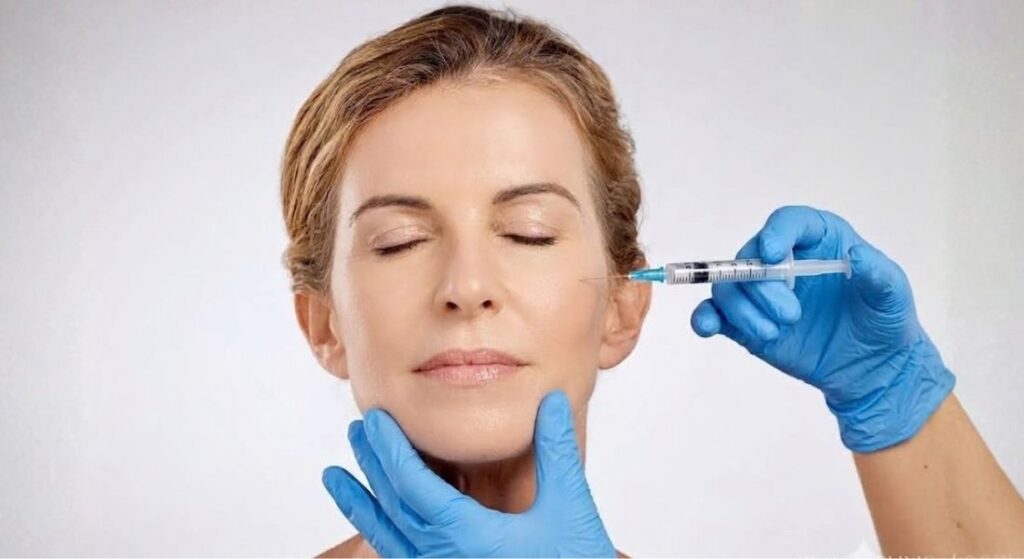
Your skin can change during perimenopause and menopause, and you may notice more dryness, thinning, reduced elasticity and fine lines. Your expression lines may also become more visible as your skin loses some of its ability to bounce back.
Your expression lines are still influenced by facial muscle movement during and after menopause, while changes in skin quality can make some lines more noticeable at rest. A consultation can help distinguish movement-related lines from changes in your skin, facial volume and deeper structures so that appropriate treatment options can be discussed.
What Happens to Your Skin During Perimenopause and Menopause?
Your skin can change noticeably during perimenopause and menopause as hormone levels fluctuate and overall oestrogen exposure declines. You may notice that your skin becomes thinner, drier and less elastic, with fine lines and crepey texture becoming more visible around areas such as your eyes.
Your skin is also affected by your age, sun exposure, genetics, skincare and changes in deeper facial tissues. Your anti-wrinkle injections can reduce selected muscle movement, but they cannot replace lost collagen or reverse every change occurring in your skin.
Evidence Note
Research associates menopause-related hormonal changes with reductions in skin collagen, thickness, elasticity and hydration. However, facial ageing is also strongly influenced by chronological ageing, cumulative sun exposure, genetics and changes in deeper facial tissues.
This means a wrinkle that becomes more noticeable around menopause may reflect several changes occurring at the same time rather than hormone levels alone.
Expression Lines vs Lines Visible at Rest
| Feature | Dynamic expression lines | Static lines |
| Most visible | During facial movement | Even when the face is relaxed |
| Main contributors | Repeated muscle movement | Skin ageing, collagen change, sun exposure and repeated folding |
| Examples | Frown, smile and forehead movement lines | Established creases visible at rest |
| Menopause effect | Movement still contributes | Reduced skin elasticity may make lines remain visible for longer |
| Assessment | Examine during movement | Examine both at rest and during expression |
What Is the Difference Between Dynamic and Static Wrinkles?
Your dynamic wrinkles mainly appear when your facial muscles move, such as your frown lines when you frown, forehead lines when you raise your eyebrows or crow’s feet when you smile. Your anti-wrinkle injections can reduce this muscle movement, helping to soften these expression lines.
Your static wrinkles remain visible when your face is relaxed and can become more noticeable as your skin loses collagen and elasticity during menopause. Your injections may soften the movement-related part of a static crease, but they may not completely remove an established line.
What Should Be Assessed During a Consultation for Lines and Wrinkles?
Your consultation should look at how your lines appear both when your face is moving and when it is relaxed. This can help distinguish dynamic expression lines from established creases and wider changes in skin quality.
Your practitioner should also consider your facial anatomy, brow position, skin quality, treatment history and the amount of natural expression you want to maintain before discussing appropriate options.
Can Anti-Wrinkle Injections Still Treat Frown Lines During Menopause?
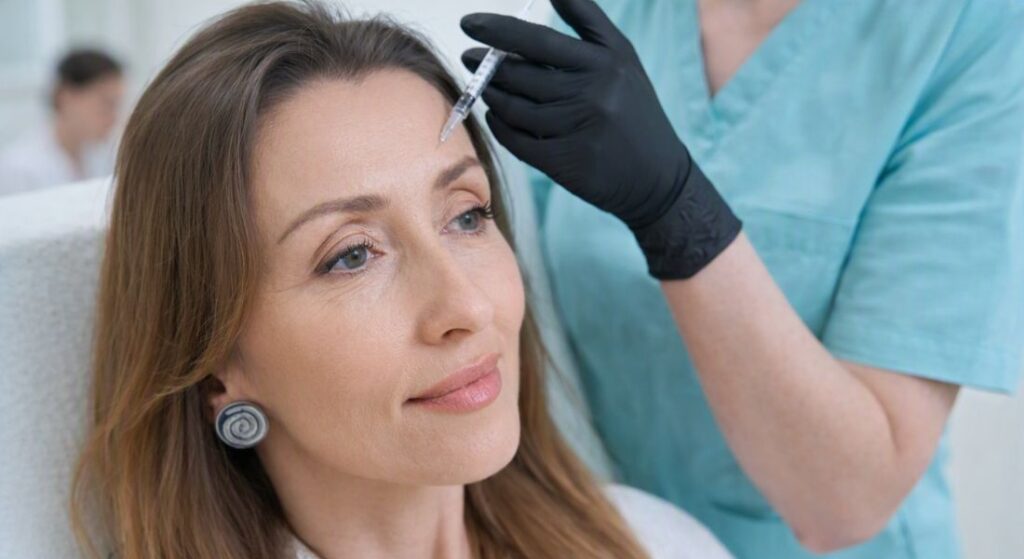
Frown lines are strongly influenced by repeated movement of the muscles between your eyebrows. During a consultation, your practitioner can assess how much of the line is related to movement and how much remains visible when your face is relaxed.
Your skin may become thinner and less elastic during menopause, which can make deeper creases remain visible when your face is relaxed. You should therefore consider how your frown lines look both when you are frowning and when your face is at rest.
What About Horizontal Forehead Lines?
Your horizontal forehead lines are strongly influenced by your frontalis muscle as it raises your eyebrows. Your anti-wrinkle injections can reduce this movement and soften the expression lines, but your treatment should be tailored to your facial movement and anatomy.
Your forehead muscle may also help support your brows as your facial tissues change with age. You should therefore have your brow position, eyelid area, muscle strength and lines assessed so your treatment can soften your forehead lines without making your brows feel unnecessarily heavy or reducing natural expression.
How Can Crow’s Feet Change After Menopause?
Crow’s feet remain strongly influenced by facial muscle movement during and after menopause. However, changes in skin thickness, elasticity and hydration can also affect how noticeable these lines are, particularly when your face is relaxed.
1. Muscle movement: Crow’s feet are strongly linked to repeated contraction of the muscles around your eyes when you smile or squint.
2. Thinner skin: Menopausal skin may become thinner and less elastic, which can make fine lines around your eyes remain visible even when your face is relaxed.
3. Dynamic versus static lines: Movement-related lines may respond well to injections, while established creases visible at rest may not disappear completely.
4. Skin quality matters: Dryness, texture changes and reduced collagen can also affect the eye area and may need a different treatment approach.
Your practitioner should assess your eye area both when you smile and when your face is relaxed. This helps separate movement-related crow’s feet from skin-quality changes that anti-wrinkle injections may not fully address.
Can Anti-Wrinkle Injections Remove Lines That Are Visible at Rest?
Your anti-wrinkle injections may soften lines that remain visible when your face is relaxed, but established static wrinkles are usually less predictable than dynamic lines. Your treatment reduces muscle movement, so it can help prevent the crease from being repeatedly reinforced.
Your menopausal skin may also have reduced collagen, thickness and elasticity, making some lines more persistent. Your practitioner should assess whether your wrinkle is dynamic, static or a combination, as you may need a separate approach for the skin-quality component.
Why Can Menopausal Skin Make Wrinkles Look More Established?
Your skin can become thinner, drier and less elastic as your oestrogen levels decline, while reduced collagen can affect how well your skin springs back after facial movement. You may therefore notice that your expression lines stay visible for longer, even when your face is relaxed.
Your sun exposure and natural ageing can also add to these changes by affecting your collagen and elastin. Your anti-wrinkle injections can reduce the muscle movement that repeatedly folds your skin, but they cannot replace lost collagen or address every change in your skin.
Research Insight
Menopause-related hormonal changes can influence collagen, elasticity and hydration, but facial ageing also involves changes in subcutaneous fat, supporting tissues and bone alongside cumulative environmental exposure. This helps explain why reducing one visible feature does not necessarily address every age-related facial change.
A useful facial assessment should therefore distinguish movement-related lines from changes in skin quality, volume and structural support rather than treating all wrinkles as the same concern.
Can Anti-Wrinkle Injections Improve Skin Quality as Well as Movement?
Skin quality and facial movement are separate considerations. Dryness, crepey texture, pigmentation, thinning and established lines may require a different approach from concerns that are mainly related to repeated facial movement. Your practitioner should therefore assess the underlying cause of your concern before discussing which treatment approach may be appropriate.
Your skin concerns after menopause may involve dryness, crepey texture, pigmentation or thinning as well as expression lines. You may therefore use anti-wrinkle injections for your frown lines while considering a different treatment for the wider changes in your skin.
What Changes Can Anti-Wrinkle Injections Not Correct?
Your anti-wrinkle injections cannot replace lost facial volume, lift substantial loose skin or restore changes in your underlying facial structure. You may therefore soften your frown lines but still notice changes such as flatter cheeks, altered facial contours or a different jawline.
Your injections also do not directly treat significant pigmentation, rough texture or general skin dryness. You should first identify what is causing your concern, as different concerns may require different treatment approaches.
Do You Need More Anti-Wrinkle Injections After Menopause?
Your menopause does not automatically mean you need a higher dose of anti-wrinkle injections. Your dose and injection pattern should be based on your facial anatomy, muscle strength, treatment history and the amount of movement you want to maintain.
Your facial anatomy can also change as you age, including your brow position and soft-tissue support. You may therefore need your treatment plan reassessed rather than simply using more product or repeating the same injection pattern.
How Quickly Do Results Develop and How Long Do They Last?
Expected onset and duration can vary according to the treatment selected, product, dose, treatment area and your individual response. If an injectable treatment is considered appropriate after consultation, your practitioner should explain when you may notice an effect and how long it may last.
Menopause alone does not determine how long your result will last. If your results appear different over time, changes in skin quality or established lines may also affect how complete the overall result looks.
What Should You Discuss About Risks During Your Consultation?
Every injectable cosmetic treatment has potential risks and side effects, which depend on the product, treatment area, dose, technique and your medical history. Your practitioner should explain the relevant risks, alternatives, expected recovery and aftercare before you decide whether to proceed.
Tell your practitioner about all medicines, medical conditions, neuromuscular problems, previous reactions and any previous cosmetic treatments. You should also tell them if you are pregnant, planning a pregnancy or breastfeeding, as this may affect which treatments are suitable for you.
Does HRT Affect Whether You Can Have Anti-Wrinkle Injections?
HRT is an important part of your medication history, so tell your practitioner which medicines and hormones you currently use. HRT may influence aspects of skin quality, including collagen and elasticity, but this does not determine which cosmetic treatment is appropriate for you.
Your practitioner should consider your full medical history, medicines, facial anatomy and treatment goals before discussing suitable options. HRT should be prescribed for appropriate menopause indications rather than primarily for cosmetic facial ageing.
Why Might You Need a Broader Facial Rejuvenation Plan During Menopause?
Your face may show several changes during menopause at the same time. You may still have dynamic frown lines while also noticing thinner skin around your eyes, changes in texture or reduced facial volume.
Your anti-wrinkle injections can target muscle movement, but they cannot address every change in your face. You may therefore consider skincare, resurfacing, skin-quality, volume or tightening treatments depending on your individual concerns, rather than automatically adding treatments because you are menopausal.
UK Guidance Note
Your cosmetic consultation should focus on your individual concern, suitability for treatment, expected results, limitations, risks, recovery and aftercare. The practitioner should assess your facial anatomy, medical history and treatment goals before recommending an appropriate approach.
You should also check who will prescribe and perform your treatment, their relevant training and experience, and whether they have appropriate insurance.
How Should You Choose Your Treatment and Practitioner?

Your practitioner should assess your face both when you are moving and when you are relaxed, including how you frown, smile and raise your eyebrows. You should also have your brow position, facial symmetry, skin quality and static lines considered before choosing your treatment.
Your consultation should clearly explain what your anti-wrinkle injections can and cannot change. You should check who is prescribing and performing your treatment, their training and experience, and whether the proposed approach matches the specific concern you want to address.
Myth vs Fact
| Myth | Fact |
| Every wrinkle after menopause is caused by collagen loss. | Facial movement, sun exposure, ageing and deeper structural changes also contribute. |
| Expression lines disappear completely when the face relaxes. | Established creases may remain visible at rest. |
| Menopause affects everyone’s skin in the same way. | Genetics, UV exposure, lifestyle and individual hormonal changes influence the pattern. |
| One treatment can correct every feature of menopausal facial ageing. | Movement, skin quality, pigmentation, volume and laxity are different concerns. |
| HRT should be taken to improve facial ageing. | HRT is used for appropriate menopause indications, not primarily as a cosmetic treatment. |
Key Takeaways
1. Menopause can contribute to dryness, reduced elasticity and changes in skin collagen.
2. Expression lines are still strongly influenced by repeated facial muscle movement.
3. Lines visible at rest also reflect skin ageing, photodamage and repeated folding.
4. Menopause does not affect every person’s skin or facial ageing in the same way.
5. Skin quality, facial volume and dynamic expression lines are separate concerns.
6. A consultation should identify what is causing the concern before treatment options are considered.
Frequently Asked Questions
1. Why can expression lines look different during menopause?
Menopause-related changes in skin thickness, hydration and elasticity may make some lines appear more established, while repeated facial movement continues to contribute to dynamic expression lines.
2. What is the difference between dynamic and static lines?
Dynamic lines are most noticeable during facial movement, while static lines remain visible when your face is relaxed. Some lines have both movement-related and skin-ageing components.
3. Why can frown lines become more noticeable during menopause?
Repeated muscle movement continues to contribute to frown lines, while changes in skin elasticity and collagen may make established creases more noticeable at rest.
4. Why should forehead lines be assessed individually?
Forehead lines are influenced by facial movement, but brow position, eyelid anatomy, skin quality and natural facial structure can also affect their appearance.
5. Why can crow’s feet remain visible when you are not smiling?
Repeated movement contributes to crow’s feet, but thinning, dryness, reduced elasticity and cumulative sun exposure can make lines around the eyes remain visible at rest.
6. Can anti-wrinkle injections remove wrinkles that are visible at rest?
They may soften static wrinkles but are less predictable than treating dynamic lines. Established creases can remain because skin ageing and collagen loss also contribute.
7. Do you need more anti-wrinkle injections after menopause?
Not necessarily. Your dose and injection pattern should be based on your facial movement, anatomy, muscle strength and treatment goals rather than menopause alone.
8. How long do anti-wrinkle injections last during menopause?
Onset and duration can vary according to the treatment selected, product, dose, treatment area and your individual response. Your practitioner should explain what to expect after assessing you, and menopause alone does not determine how long your result will last.
9. Can HRT affect anti-wrinkle injections?
Being on HRT does not automatically prevent you from having anti-wrinkle injections. Tell your practitioner about your HRT and other medicines during your consultation.
10. What can anti-wrinkle injections not treat during menopause?
They do not directly treat significant loose skin, facial volume loss, pigmentation, dryness or major changes in facial structure. Other skin or facial rejuvenation treatments may be more suitable for these concerns.
Final Thoughts: Anti-Wrinkle Injections During Menopause
Expression lines can remain influenced by facial movement during perimenopause and menopause, while changes in skin quality, collagen, elasticity and facial volume can also affect how your face looks.
If lines or wrinkles are bothering you, a consultation can help identify whether they are mainly related to facial movement, skin quality, volume or a combination of changes and allow appropriate options to be discussed.
References:
1. Calleja-Agius, J. and Brincat, M. (2012) ‘The effect of menopause on the skin and other connective tissues’, Gynecological Endocrinology, 28(4), pp. 273–277. Available at: https://pubmed.ncbi.nlm.nih.gov/21970508/
2. Lephart, E.D. and Naftolin, F. (2021) ‘Menopause and the skin: Old favorites and new innovations in cosmeceuticals for estrogen-deficient skin’, Dermatology and Therapy, 11(1), pp. 53–69. Available at: https://pubmed.ncbi.nlm.nih.gov/33242128/
3. Pivazyan, L. et al. (2023) ‘Skin rejuvenation in women using menopausal hormone therapy: A systematic review and meta-analysis’, Journal of Menopausal Medicine, 29(3), pp. 97–111. Available at: https://pmc.ncbi.nlm.nih.gov/articles/PMC10796198/
4. Camargo, C.P. et al. (2021) ‘Botulinum toxin type A for facial wrinkles’, Cochrane Database of Systematic Reviews, 2021(7), CD011301. Available at: https://pmc.ncbi.nlm.nih.gov/articles/PMC8407355/
5. Brin, M.F. et al. (2024) ‘Safety and tolerability of onabotulinumtoxinA in the treatment of upper facial lines from global registration studies in 5298 participants: A meta-analysis’, JAAD International, 14, pp. 4–18. Available at: https://www.sciencedirect.com/science/article/pii/S2666328723001451