



If you want to improve your body contours without surgical fat transfer or implants, you may be considering PowerFill for areas such as hip dips or areas where you’d like more volume. PowerFill uses poly-D,L-lactic acid (PDLLA) to provide an initial volumising effect and stimulate your body’s collagen production over time.
However, you should understand both the benefits and limitations before choosing treatment. You’ll need to consider your expected results, recovery and the limited large-scale clinical evidence specifically evaluating PowerFill for body contouring.
What Is PowerFill?
PowerFill is an injectable body biostimulator containing poly-D,L-lactic acid (PDLLA), designed to add soft-tissue volume and support body-contouring goals without fat harvesting or implant placement. It provides an initial volumising effect while stimulating your body’s collagen production, allowing your results to develop gradually.
Unlike hyaluronic acid fillers, PowerFill relies on a longer-term collagen response. You may consider it for areas such as your buttocks or hip dips, but you’ll still need a proper assessment, careful treatment and appropriate aftercare, as non-surgical treatment is not risk-free.
How Does PowerFill Work?
PowerFill uses poly-D,L-lactic acid (PDLLA) to stimulate collagen production in your treated tissues. As you age, your natural collagen production changes, which can affect your skin’s firmness, volume and body contours.
Once your practitioner injects PowerFill into your selected area, it can trigger a local tissue response that encourages new collagen formation. You may prefer this gradual approach to improving your contours, but you’ll need realistic expectations because swelling and the initial volumising effect can influence how your results look immediately after treatment.
What Is One of the Biggest Advantages of PowerFill?
PowerFill can add volume without fat harvesting or implants. It may appeal to you if you want a modest contour change, but results and recovery depend on the treatment technique. In England, some large-volume buttock filler procedures are regulated as surgical activity.
You can also discuss tailoring treatment to your chosen area, but you should remember that non-surgical does not mean risk-free. Your results can depend on factors such as the amount of product used, injection depth, treatment area and your practitioner’s experience, so you’ll need to consider whether PowerFill can realistically meet your goals.
Can PowerFill Produce a Gradual, Natural-Looking Change?
PowerFill combines initial volume enhancement with gradual collagen stimulation. Your final result depends on your anatomy, treatment plan and how your tissues respond.
1. Gradual development: Your contours can continue changing as collagen production increases.
2. Hip dips: Added volume may help create a smoother transition around your hips.
3. Buttock enhancement: Treatment may help improve fullness and overall contour.
4. Individual planning: Product amount and placement should be tailored to your body proportions.
Your practitioner can assess your goals and plan treatment to achieve a balanced result that suits your natural shape.
Can PowerFill Be Used for the Buttocks?
You may consider injectable PowerFill treatment for buttock contouring if you want to increase volume or improve projection without implants or surgical fat transfer, provided the proposed treatment is consistent with current UK product information and an appropriate clinical assessment. However, you should understand that PowerFill cannot provide the same level of enhancement as a surgical Brazilian butt lift or other major body-contouring procedures.
Your results will depend on your existing anatomy, muscle distribution, skin quality and body proportions. You should discuss your goals with your practitioner so they can assess what level of change is realistic for you and plan treatment around your natural shape.
Can PowerFill Help With Hip Dips?
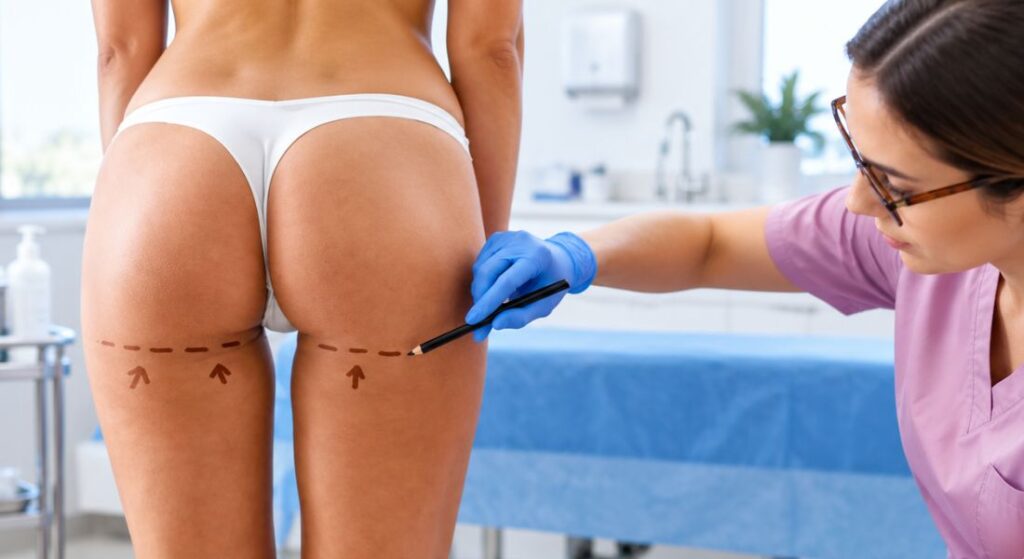
If you’d like a smoother hip contour, you may consider PowerFill to add volume around your hip dips. These inward curves between your hips and upper thighs are influenced by your pelvis and soft-tissue distribution, so they’re a normal part of your anatomy rather than something you need to fix.
Your practitioner can assess where adding volume may help soften the indentation and create a smoother transition. You should discuss the body shape you want to achieve, so your treatment plan reflects your anatomy and personal preferences rather than trying to copy someone else’s results.
Research Insight
A 2026 prospective study investigated a different PDLLA hyaluronic acid product for bilateral hip augmentation in 30 Korean women. At six months, 27 of 30 participants were rated as having moderate-to-significant aesthetic improvement, while transient swelling occurred in 43.3% and mild discomfort in 26.7%. No significant adverse events were reported.
The study is useful evidence that PDLLA-containing body contouring is being clinically investigated, but it used Juvelook GLAM not PowerFill and involved only 30 participants without a control group. It should therefore not be presented as proof of PowerFill’s effectiveness or safety.
Does PowerFill Remove Fat or Cause Weight Loss?
PowerFill is designed to add volume and stimulate collagen, so it won’t remove fat or help you lose weight. If excess body fat affects your contours, you may need to discuss whether liposuction or another approach is more suitable for you.
If you want to improve a specific contour or add volume, PowerFill may be worth considering, but it won’t replace healthy habits or appropriate weight-management treatment. You should also consider your weight stability, as significant changes after treatment can affect your body proportions and how satisfied you feel with your results.
What Are the Potential Pros of PowerFill?
PowerFill may add volume to areas such as the buttocks or hip dips while stimulating collagen. It avoids fat harvesting and implants, although injections still carry risks.
Your practitioner can explain the degree of change realistically achievable for your anatomy and treatment plan.
What Are the Main Cons of PowerFill?
PowerFill may not give you the level of volume or body-shape change you want from surgery, and you’ll need to wait for your results to develop gradually. Your response can also differ from someone else’s, so you shouldn’t expect your results to match another person’s photographs.
You should also consider the limited published evidence specifically evaluating PowerFill for body contouring. Unlike hyaluronic acid fillers, PDLLA does not have an equivalent dissolving treatment, making it important for you to discuss the potential risks, limitations and realistic outcomes with your practitioner before proceeding.
PowerFill: Potential Advantages and Limitations
| Consideration | Potential advantage | Important limitation |
| Procedure | Injectable rather than fat harvesting or implant placement | Some large-volume buttock filler procedures can fall within CQC-regulated surgical activity in England. |
| Results | Gradual collagen-stimulating response | Degree and timing of improvement vary |
| Volume | Can add soft-tissue volume | May not provide surgical-scale augmentation |
| Reversibility | PDLLA is biodegradable | Cannot be dissolved with hyaluronidase |
| Evidence | Direct PowerFill clinical studies exist | Most direct studies are not buttock/hip-dip trials |
| Recovery | May avoid recovery associated with liposuction | Injection reactions and serious complications remain possible |
| Regulation | Product marketed for body applications | Exact intended use and provider requirements must be verified |
What Side Effects Can You Expect?

You may experience temporary swelling, bruising, redness, tenderness or discomfort after PowerFill. More serious problems can include infection, persistent nodules or tissue injury. Early fullness may reflect swelling rather than your final result.
You should monitor how your symptoms change as you recover. If you notice worsening pain, swelling or redness, or persistent lumps, contact your practitioner for an assessment rather than trying to diagnose the problem yourself.
Seek urgent medical assessment if you develop severe or rapidly increasing pain, marked skin colour changes or rapidly worsening swelling after treatment. Call 999 or seek emergency care if you develop sudden breathlessness, chest pain, fainting or collapse.
How Strong Is the Evidence for PowerFill?
PDLLA has been studied for collagen stimulation, but results from facial applications or different products cannot establish PowerFill’s effectiveness for buttock or hip contouring.
Ask your practitioner which findings directly apply to your proposed product and treatment area, and which claims remain uncertain.
Evidence Note
PowerFill itself has been studied in randomised clinical trials, but those trials primarily concern penile augmentation. One 2020 randomised study followed patients receiving PowerFill or hyaluronic acid for 18 months, demonstrating that direct product evidence exists, but in a very different anatomical indication from buttock or hip contouring.
This means those findings cannot be used to promise the same efficacy, dose, duration or complication profile for buttock or hip-dip treatment.
How Does PowerFill Compare With Fat Transfer?
PowerFill and fat transfer can both help you enhance volume, but they work differently. Fat transfer involves removing fat from one area of your body and injecting it into another, while PowerFill uses an injectable PDLLA-based product to add volume and stimulate collagen without harvesting your own fat.
If you want to avoid surgery and the recovery associated with fat harvesting, you may prefer to explore PowerFill. However, fat transfer can offer a different level of volume enhancement, so you should discuss your anatomy, goals and expected results with your practitioner before deciding which approach suits you.
How Does PowerFill Compare With Implants?
If you want to enhance your body shape without having a solid implant placed in your body, PowerFill may be an option to discuss with your practitioner. It uses an injectable material designed to stimulate collagen and increase volume gradually, while implants provide a more structured and potentially more predictable change in shape.
You should also consider the differences in risks and reversibility. Implants can be surgically removed if needed, whereas PowerFill cannot simply be dissolved with an enzyme like hyaluronic acid. Your practitioner can help you understand which option may suit your goals, whether you want a moderate contour change or a more substantial increase in volume.
Who May Be Suitable for PowerFill?
You may consider PowerFill if you want to enhance a specific body area without surgery and have realistic expectations about your results. You might be interested in treating your buttocks, smoothing hip dips or improving selected areas affected by volume loss or reduced definition.
Your practitioner should assess your tissue quality, health and treatment goals. Tell them about previous fillers or implants, medicines and allergies, and whether you are pregnant or breastfeeding or have an active infection. These factors may make treatment unsuitable or require postponement.
Clinical Tip
Before agreeing to treatment, ask your practitioner to tell you the exact product name, vial size, intended treatment area, planned total amount and tissue plane. Ask whether the proposed use is covered by the current manufacturer instructions supplied for the UK product.
For buttock augmentation, also ask whether the proposed volume and technique bring the procedure within CQC-regulated activity and what emergency and follow-up arrangements are available if complications develop.
How Important Is Your Choice of Practitioner?
When you’re considering PowerFill, choosing an experienced practitioner is essential because the treatment involves injecting a collagen-stimulating material into your body tissues. You should ask who will perform your treatment, how they decide where to inject the product and how they would manage any complications.
You should also ask which product will be used and whether it’s intended for your chosen treatment area. Your practitioner should explain the relevant safety guidance and any uncertainties about its permitted use, so you can make an informed decision about your treatment.
UK Guidance Note
In England, CQC has clarified that it considers large-volume filler inserted into the buttocks by a healthcare professional to be a surgical procedure and therefore a regulated activity. This reflects the invasiveness of inserting substantial filler volumes through a large-bore cannula and the potential for serious harm.
The UK government has also stated its intention to place high-risk procedures including filler augmentation of the buttocks, breasts and genitals under stronger restrictions involving suitably qualified regulated healthcare professionals and CQC-registered providers. These wider proposed rules are part of an evolving regulatory framework and should not be described as fully implemented until the relevant legislation is in force.
What Should You Consider Before Choosing PowerFill?

Consider whether gradual contour enhancement meets your goals. PowerFill cannot remove fat or provide the same reshaping as surgery.
Before proceeding, ask about the evidence, complications, planned volume and alternatives. PDLLA cannot readily be dissolved with hyaluronidase.
Myth vs Fact
| Myth | Fact |
| Injectable buttock contouring is automatically non-surgical. | CQC considers some large-volume buttock filler procedures regulated surgical activity. |
| PowerFill has large clinical trials proving buttock and hip-dip results. | Direct PowerFill body-contouring evidence remains limited. |
| Evidence for AestheFill or another PDLLA product proves PowerFill works the same way clinically. | Products, particle characteristics, doses and anatomical uses differ. |
| PowerFill can be dissolved if the result is unwanted. | PDLLA cannot be dissolved with hyaluronidase like HA filler. |
| Avoiding implants means the treatment is low-risk. | Injectable body augmentation can still cause significant complications. |
Key Takeaways
1. PowerFill is a PDLLA injectable designed for body soft-tissue augmentation, but evidence varies substantially by treatment area.
2. Direct PowerFill clinical evidence exists mainly for penile augmentation rather than buttock and hip-dip contouring.
3. Evidence from other PDLLA or PLLA products should not be presented as if it were PowerFill-specific.
4. Large-volume buttock filler can fall within regulated cosmetic surgery in England.
5. PDLLA cannot be dissolved with hyaluronidase if the result or a complication needs correction.
6. Temporary injection reactions are possible, but infection, nodules and serious tissue or vascular complications also need to be discussed.
7. Ask about the exact product, intended use, total volume, practitioner’s qualifications and the clinic’s complication pathway before treatment.
Frequently Asked Questions
1. What is PowerFill and how does it work?
PowerFill is an injectable body biostimulator containing poly-D,L-lactic acid (PDLLA), designed to add volume and stimulate collagen production. Your results develop gradually as your body responds to the treatment.
2. What are the main benefits of PowerFill?
PowerFill offers an injectable option for enhancing selected body areas without implants or surgical fat transfer. It also stimulates collagen production, allowing your results to develop gradually.
3. Can PowerFill enhance your buttocks?
PowerFill may help increase buttock volume and improve projection without implants or surgical fat transfer, although the achievable change depends on your anatomy, treatment plan and the applicable UK product and regulatory requirements.
4. Can PowerFill help smooth hip dips?
PowerFill may help add volume around your hip dips to create a smoother transition between your hips and upper thighs. Your practitioner will assess your anatomy and determine whether treatment could help achieve your desired contour.
5. Does PowerFill remove fat or help with weight loss?
No, PowerFill is designed to add volume and stimulate collagen rather than remove fat or reduce your weight. If excess body fat affects your contours, your practitioner can discuss whether liposuction or another approach may be more suitable.
6. What are the main disadvantages of PowerFill?
PowerFill may not provide the level of volume or body-shape change you want from surgery, and your results develop gradually. Published evidence specifically evaluating PowerFill for body contouring is also limited, so you should understand the uncertainties before treatment.
7. What side effects can you experience after PowerFill?
You may experience temporary swelling, bruising, redness, tenderness or discomfort around your injection sites. Contact your practitioner if you notice worsening pain, swelling or redness, or persistent lumps.
8. How does PowerFill compare with fat transfer and implants?
PowerFill adds volume using an injectable PDLLA-based product, while fat transfer involves moving your own fat from one area to another and implants provide a more structured change in shape. Your practitioner can help you compare the options based on your goals, anatomy and desired level of enhancement.
9. Who may be suitable for PowerFill treatment?
You may consider PowerFill if you want an injectable approach to enhancing a selected body area and have realistic expectations about the results. Your practitioner will assess your body proportions, tissue quality and medical history to determine whether treatment is suitable.
10. What should you consider before choosing PowerFill?
You should consider your desired results, potential side effects and the limited published evidence specifically evaluating PowerFill for body contouring. As PDLLA cannot simply be dissolved using hyaluronidase, discuss the potential risks, limitations and realistic outcomes with your practitioner before proceeding.
Final Thoughts: PowerFill Pros and Cons
PowerFill may be an option if you want an injectable approach to enhancing selected body areas without surgical fat transfer or implants, with results that develop gradually through collagen stimulation. However, it has limitations, including variable outcomes, possible side effects and limited large-scale clinical evidence specifically for body contouring. Understanding these factors and discussing your expectations with an experienced practitioner can help you decide whether treatment is right for you.
If you’re considering PowerFill in London, you can contact us at the London Medical & Aesthetic Clinic.
References:
1. Yang, D.Y. et al. (2020). ‘Comparison of Clinical Outcomes between Hyaluronic and Polylactic Acid Filler Injections for Penile Augmentation in Men Reporting a Small Penis: A Multicenter, Patient-Blinded/Evaluator-Blinded, Non-Inferiority, Randomized Comparative Trial with 18 Months of Follow-up’. Journal of Clinical Medicine, 9(4), 1024. Available at: https://pmc.ncbi.nlm.nih.gov/articles/PMC7230452/
2. Lee, H.E. et al. (2026). ‘Non-Surgical Hip Augmentation With a PDLLA-Hyaluronic Acid’. Journal of Cosmetic Dermatology, 25(3), e70695. Available at: https://pubmed.ncbi.nlm.nih.gov/41777074/
3. Magacho-Vieira, F.N. et al. (2024). ‘Consensus Recommendations for the Reconstitution and Aesthetic Use of Poly-D,L-Lactic Acid Microspheres’. Clinical, Cosmetic and Investigational Dermatology, 17, pp. 2755–2765. Available at: https://pmc.ncbi.nlm.nih.gov/articles/PMC11626391/
4. Durairaj, K.K. et al. (2026). ‘Nonfacial Use of Injectable Poly-L-lactic Acid: Safety Data From a Multicenter Observational Study in the United States’. Aesthetic Surgery Journal Open Forum, 8, ojag053. Available at: https://academic.oup.com/asjopenforum/article/8540492
5. Ducati, E.P.J. et al. (2025). ‘Reviewing the Ultrasound Anatomy of the Gluteal Region and the Mapping of Fillers’. Journal of Cosmetic Dermatology, 24(10), e70499. Available at: https://pubmed.ncbi.nlm.nih.gov/41097881/