



If you want to improve your body contours with an injectable treatment, you may consider PowerFill for areas such as your buttocks or hip dips. It contains poly-D,L-lactic acid (PDLLA), which provides an initial volumising effect and stimulates your body’s collagen production over time.
However, PowerFill won’t remove fat or replace surgical treatments. You should also remember that evidence specifically evaluating PowerFill for body contouring remains limited.
What Is PowerFill?
PowerFill is an injectable body biostimulator containing poly-D,L-lactic acid (PDLLA), used to add volume and support gradual collagen stimulation in selected treatment areas. It provides an initial volumising effect while stimulating your body’s natural collagen production, allowing your results to develop gradually.
You may consider PowerFill for your buttocks, hip dips or areas where you want to restore volume. Your practitioner should tailor your treatment to your anatomy and proportions, as the aim is to create balanced contours rather than simply add more volume.
What Does PDLLA Mean?
PDLLA stands for poly-D,L-lactic acid, a biodegradable, biocompatible material used in aesthetic treatments to stimulate your body’s collagen production. You may also come across PLLA (poly-L-lactic acid), but you should know that these materials are not identical.
When you research PowerFill, check which product each study examines before using the findings to guide your decision. Research on PLLA or other collagen stimulators can help you understand how these treatments work, but you shouldn’t assume they guarantee the same results for you with PowerFill.
Evidence Note
PowerFill has direct peer-reviewed clinical evidence, including randomised studies comparing the product with hyaluronic acid. However, these studies focused on penile soft-tissue augmentation rather than buttock or hip-dip contouring.
This distinction matters because the anatomical area, treatment volume, injection technique and complication profile can differ substantially. A clinical result in one indication should not automatically be used to predict results in another.
How Does PowerFill Work?
When you have PowerFill, PDLLA is injected into your chosen treatment area, where it can stimulate fibroblasts involved in collagen production. As your body produces collagen over the following weeks and months, you may notice improved firmness, support and fuller contours.
You may see some fullness soon after treatment, but this early change can be temporary. Your longer-term results depend on how your body responds, as well as factors such as your age, skin quality and existing soft-tissue volume, so you shouldn’t expect the same outcome as everyone else.
Why Is Collagen Important for Body Contouring?
Collagen helps support your skin and soft tissues. Ageing and weight changes can affect firmness and contour, so stimulating collagen may gradually improve tissue support in selected areas.
However, PowerFill cannot remove excess fat or adequately tighten significant loose skin. Your practitioner should assess the underlying cause of your concern before recommending treatment.
Which Areas Can PowerFill Treat?

You may consider PowerFill for areas such as your buttocks, hip dips or other areas where you want to restore volume or improve definition. If you want fuller buttocks, you may aim for greater projection, while treating your hip dips may help soften the indentation between your hips and upper thighs.
Your practitioner should assess your anatomy and body proportions before choosing your treatment areas. This helps you work towards balanced contours that complement your waist, hips, thighs and buttocks rather than simply adding volume to one area.
How Can PowerFill Be Used for Hip Dips?
If you want to soften the appearance of your hip dips, PowerFill may offer an injectable option to consider. By adding volume around the area, your practitioner may help create a smoother transition between your hips and buttocks while taking your natural proportions into account.
The results depend on your anatomy and the depth of your hip dips, so you shouldn’t expect to remove every indentation completely. Research into other PDLLA-based products has shown potential for hip augmentation, but you should remember that these findings don’t directly prove the same results for PowerFill.
Research Insight
A 2026 prospective study evaluated bilateral hip augmentation with a PDLLA–hyaluronic acid product in 30 Korean women. The mean total injected volume was approximately 201.5 mL, and 27 of 30 participants were rated as moderately to significantly improved at six months. Transient swelling occurred in 43.3% and mild discomfort in 26.7%, with no significant adverse events reported during the study.
The study used Juvelook GLAM rather than PowerFill and had no control group. It therefore supports the broader investigation of injectable PDLLA hip contouring but does not establish PowerFill-specific effectiveness or safety.
Can PowerFill Add Volume to the Buttocks?
You may consider PowerFill if you want fuller buttocks, improved projection or a more rounded shape without using fat transfer or implants. However, you should understand that it works differently from a Brazilian butt lift or implants, as it uses PDLLA to stimulate your body’s collagen response.
If you’re considering PowerFill, discuss your desired results with your practitioner so you can understand what level of enhancement may be realistic for you. Research on related PLLA treatments may offer useful context, but you shouldn’t assume those findings guarantee the same results with PowerFill.
UK Guidance Note
In England, CQC considers large-volume filler inserted into the buttocks by a healthcare professional to be cosmetic surgery and therefore a regulated activity. This reflects the invasive technique and potential for serious harm. The government is also developing wider restrictions for high-risk cosmetic procedures, but these proposals should not be described as law until implemented.
Before proceeding, confirm that your practitioner’s qualifications, treatment setting and proposed technique meet the requirements currently in force.
Is PowerFill the Same as AestheFill?
Although PowerFill and AestheFill both use PDLLA technology, they’re designed for different treatment areas. If you want to restore facial volume or soften signs of facial ageing, AestheFill is primarily used for facial treatments, whereas PowerFill is designed to enhance body contours and add volume to larger areas.
You should also understand that research on AestheFill doesn’t automatically prove the effectiveness or safety of PowerFill for body contouring. Your practitioner should consider the specific product, your treatment area and your goals when deciding which approach may be suitable for you.
PowerFill, AestheFill and Other PDLLA Evidence
| Evidence source | What it can tell you | What it cannot prove |
| PowerFill penile studies | Direct information about the PowerFill product | Buttock or hip-dip efficacy |
| AestheFill facial studies | How another PDLLA product behaves in facial indications | PowerFill body dosing or safety |
| 2026 PDLLA hip study | Emerging evidence for PDLLA-based hip augmentation | PowerFill-specific results |
| Manufacturer information | Product composition, positioning and intended-use information | Independent proof of efficacy |
| Practitioner experience | Practical treatment planning | Population-level safety or effectiveness |
How Is PowerFill Different from a Traditional Filler?
Traditional hyaluronic acid fillers add volume mainly through the injected gel, while PowerFill uses PDLLA to provide initial fullness and stimulate your body’s collagen production over time. You may notice early changes after your appointment, but your final results can develop gradually as swelling settles and your tissues respond.
You should also consider how easily you can reverse the treatment if you’re unhappy with the result. Hyaluronic acid fillers can often be dissolved with hyaluronidase when appropriate, but PDLLA has no equivalent dissolving enzyme, so you should discuss your goals and treatment plan carefully with your practitioner.
What Happens During a PowerFill Treatment?
Your PowerFill treatment should begin with an assessment of your body shape, medical history and treatment goals. Your practitioner can then plan the amount and placement of product according to your needs.
1. Initial assessment: Your body proportions and desired changes are reviewed.
2. Medical history: Mention medicines, allergies, previous fillers, implants and relevant conditions.
3. Treatment planning: Your practitioner should explain where and how much product will be injected.
4. Early recovery: Temporary swelling, bruising, tenderness or fullness may occur afterwards.
Follow the aftercare instructions provided by your practitioner and contact the clinic if you develop unexpected or worsening symptoms.
What Side Effects and Complications Should You Know About?

Temporary swelling, bruising, tenderness and firmness can occur after injectable PDLLA treatment. Less commonly, problems such as persistent nodules, inflammatory reactions, infection, asymmetry or prolonged swelling can occur. Unlike many hyaluronic acid fillers, PDLLA cannot simply be dissolved with hyaluronidase if a complication develops.
Contact your practitioner promptly if pain, redness, warmth, swelling or a lump is new, persistent or worsening, or if you develop fever or changes in the treated skin’s colour. Seek urgent medical assessment for severe or rapidly increasing pain or marked skin colour changes. Call 999 for sudden breathing difficulty, chest pain, fainting or collapse.
When Will You See PowerFill Results?
You may notice initial fullness shortly after your PowerFill treatment, but this can partly reflect temporary swelling. Your longer-term results develop as PDLLA stimulates your body’s collagen production, so you’ll need to give your tissues time to respond.
Your results may develop at a different pace from someone else’s, depending on your treatment area and individual response. As there’s no established PowerFill-specific timeline that guarantees when you’ll see your final results, your practitioner can help you assess your progress.
How Many PowerFill Sessions Might You Need?
There is no well-established PowerFill-specific body-contouring schedule. The number of sessions may depend on your anatomy, treatment area, goals, treatment volume and how your tissues respond.
Your practitioner should assess your response before recommending more product rather than following an automatic timetable. Ask why another session is being advised and what evidence or product guidance supports the proposed interval and treatment volume.
Clinical Tip
Do not agree to another PowerFill session simply because a fixed number of weeks has passed. Allow the previous treatment response to be assessed and ask why additional product is being recommended.
For body treatment, also ask how much total product has already been placed and how much more is proposed. Treatment volume is an important part of both safety and regulatory assessment.
How Long Do PowerFill Results Last?
PowerFill aims to provide longer-lasting results by stimulating your body’s collagen production, but your results won’t last forever. As you age or experience weight changes, your body proportions and treated areas may change too.
You should know that evidence establishing the exact duration of PowerFill results remains limited. Your results will depend on your individual response, so your practitioner can assess your progress and advise whether further treatment is appropriate.
Can PowerFill Replace Weight Loss or Liposuction?
If you want to reduce body fat, PowerFill isn’t a substitute for weight loss or liposuction because it doesn’t remove fat from your body. Instead, it’s designed to enhance volume, improve body contours and support skin firmness in selected areas.
You should choose your treatment based on what you want to change. If you have excess fat around your abdomen, thighs or hips, a fat-reduction procedure may be more suitable, whereas PowerFill may be worth discussing if you want to add volume or create a smoother contour.
Who May Be Suitable for PowerFill?
You may consider PowerFill if you want to enhance a specific body area with an injectable treatment and have realistic expectations about your results. You should discuss your goals, weight stability and existing body shape with your practitioner to determine whether treatment is suitable for you.
Tell your practitioner about allergies, medicines, previous fillers or implants, and whether you are pregnant, breastfeeding, have an active skin infection, or have an autoimmune or collagen-related condition. These may affect suitability or require postponement.
What Should You Consider Before Choosing PowerFill?
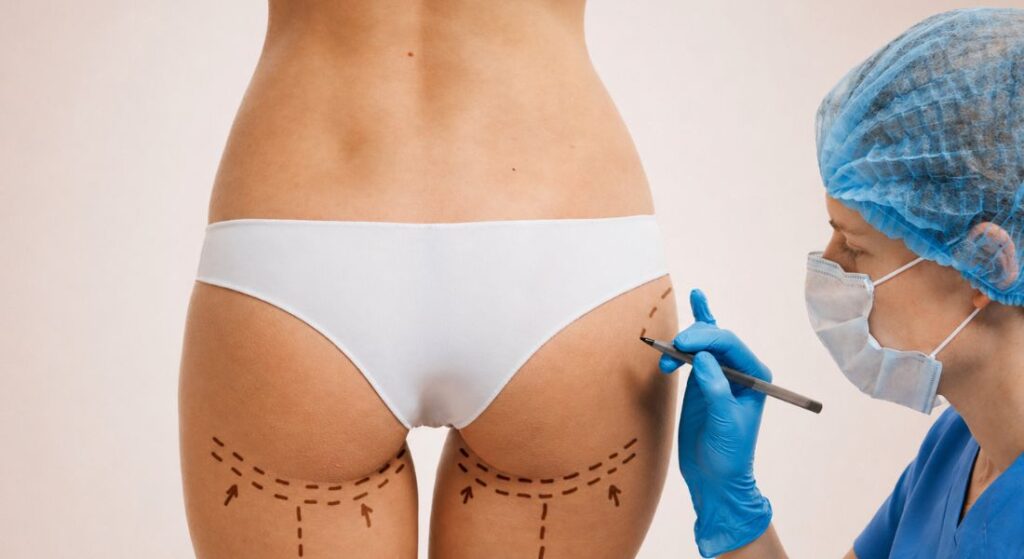
Before choosing PowerFill, think about what you want to change, whether you want to soften hip dips, add fullness to your buttocks or restore some lost volume. Your practitioner should understand your goals and explain what you can realistically expect from treatment.
You should also consider the available evidence, as research into body-contouring applications remains limited and direct clinical evidence for PowerFill is still developing. If you want gradual enhancement through an injectable approach, it may be worth discussing, but you shouldn’t expect guaranteed results or a dramatic transformation.
Before treatment, ask your practitioner to confirm the exact PowerFill product being used, whether the proposed treatment area and volume are consistent with the current product information applicable in the UK, and whether the procedure falls within their professional and regulatory scope.
Myth vs Fact
| Myth | Fact |
| PowerFill buttock treatment is automatically non-surgical. | Large-volume buttock treatment should not automatically be treated like a routine small-volume cosmetic injection; the regulatory requirements can depend on the procedure, technique and current rules. |
| PowerFill has large trials proving hip-dip and buttock results. | Direct PowerFill evidence for these areas remains limited. |
| AestheFill research proves PowerFill will behave the same way. | They are different products used in different anatomical contexts. |
| PDLLA can be dissolved if you dislike the result. | Hyaluronidase does not dissolve PDLLA. |
| Biodegradable means risk-free. | Biodegradable fillers can still cause infection, nodules, inflammation and other complications. |
Key Takeaways
1. PowerFill is an injectable PDLLA body filler that combines early volume with a longer-term collagen-stimulating response.
2. Direct PowerFill clinical research exists, but much of it concerns penile augmentation rather than buttock or hip-dip contouring.
3. Evidence from AestheFill, PLLA products or other PDLLA products should not be presented as PowerFill-specific proof.
4. PowerFill cannot remove fat and is not a substitute for weight-loss treatment or liposuction.
5. PDLLA cannot be dissolved with hyaluronidase like many hyaluronic acid fillers.
6. For large-volume buttock treatment, ask your practitioner to confirm the current regulatory requirements, treatment setting and professional scope before treatment.
7. Ask about the exact product, intended use, total volume, practitioner qualifications and complication pathway before treatment.
Frequently Asked Questions
1. What is PowerFill and how does it work?
PowerFill is an injectable body biostimulator containing poly-D,L-lactic acid (PDLLA), used to add volume and stimulate collagen in selected body-contouring treatments. It stimulates your body’s collagen production, allowing your results to develop gradually over time.
2. Which areas can PowerFill treat?
PowerFill may be used on your buttocks, hip dips and other areas where you want to restore volume or improve definition. Your practitioner will assess your anatomy and body proportions to create a balanced result.
3. What does PDLLA mean in PowerFill treatment?
PDLLA stands for poly-D,L-lactic acid, a biodegradable, biocompatible material used to stimulate collagen production. Although research on other collagen stimulators can provide useful context, it doesn’t guarantee the same results with PowerFill.
4. Can PowerFill help improve hip dips?
PowerFill may help soften the appearance of hip dips by adding volume around the area and creating a smoother transition between your hips and buttocks. Your results will depend on your anatomy and the depth of your hip dips.
5. Can PowerFill make your buttocks fuller?
PowerFill may help improve buttock volume, projection and shape through injectable treatment. However, it works differently from a Brazilian butt lift or implants, and your practitioner should explain what level of enhancement is realistic.
6. Is PowerFill the same as AestheFill?
Although both treatments use PDLLA technology, they are designed for different treatment areas. AestheFill is primarily used for facial treatments, whereas PowerFill is designed to enhance body contours and add volume to larger areas.
7. When will you see PowerFill results?
You may notice initial fullness shortly after treatment, partly due to temporary swelling. Longer-term improvements develop gradually as your body produces collagen, but the exact timeline varies and remains insufficiently established for PowerFill specifically.
8. How many PowerFill sessions might you need?
There is no well-established PowerFill-specific body-contouring schedule. The number of sessions may depend on your anatomy, treatment area, goals, treatment volume and individual response. Your practitioner should assess your progress before recommending additional treatment.
9. How long do PowerFill results last?
PowerFill aims to provide longer-lasting results by stimulating collagen production, but the effects will not last forever. Evidence establishing the exact duration of PowerFill results remains limited, and your individual response can influence how long they last.
10. Can PowerFill replace weight loss or liposuction?
No, PowerFill is designed to add volume and improve body contours rather than remove fat or reduce your weight. If excess body fat is your main concern, your practitioner can discuss whether weight management, liposuction or another approach may be more suitable.
Final Thoughts: What Is PowerFill?
PowerFill is an injectable body-contouring treatment that uses PDLLA to provide early volume and stimulate collagen production over time. It may help you enhance areas such as your buttocks or hip dips, but your results will depend on your anatomy and individual response. As evidence specifically evaluating PowerFill for body contouring remains limited, it’s important to understand its potential benefits and limitations before choosing treatment.
If you’re looking for PowerFill in London, you can get in touch with us at the London Medical & Aesthetic Clinic.
References:
1. Yang, D.Y. et al. (2019). ‘A Comparison of the Efficacy and Safety Between Hyaluronic Acid and Polylactic Acid Filler Injection in Penile Augmentation: A Multicenter, Patient/Evaluator-Blinded, Randomized Trial’. The Journal of Sexual Medicine, 16(4), pp. 577–585. Available at: https://pubmed.ncbi.nlm.nih.gov/30833149/
2. Yang, D.Y. et al. (2020). ‘Comparison of Clinical Outcomes between Hyaluronic and Polylactic Acid Filler Injections for Penile Augmentation in Men Reporting a Small Penis: A Multicenter, Patient-Blinded/Evaluator-Blinded, Non-Inferiority, Randomized Comparative Trial with 18 Months of Follow-up’. Journal of Clinical Medicine, 9(4), article 1024. Available at: https://www.mdpi.com/2077-0383/9/4/1024
3. Magacho-Vieira, F.N. et al. (2024). ‘Consensus Recommendations for the Reconstitution and Aesthetic Use of Poly-D,L-Lactic Acid Microspheres’. Clinical, Cosmetic and Investigational Dermatology, 17, pp. 2755–2765. Available at: https://pmc.ncbi.nlm.nih.gov/articles/PMC11626391/
4. Lee, H.E. et al. (2026). ‘Non-Surgical Hip Augmentation With a PDLLA-Hyaluronic Acid’. Journal of Cosmetic Dermatology, 25(3), article e70695. Available at: https://pubmed.ncbi.nlm.nih.gov/41777074/
5. Magacho-Vieira, F.N. and Ducati, E.P.J. (2025). ‘Clinical Management of Poly-D,L-Lactic Acid Nodules: A Guideline With Diagnostic and Treatment Flowchart’. Journal of Cosmetic Dermatology, 24(4), article e70158. Available at: https://pmc.ncbi.nlm.nih.gov/articles/PMC11956123/