



If you’re thinking about booking a HydraFacial, you might be wondering whether it really works, how long the results last and whether it’s worth the cost. You may notice smoother, fresher-looking skin afterwards, particularly if dryness, dullness or blocked pores bother you.
But HydraFacial isn’t a solution for every concern. Deep wrinkles, significant scars and stubborn pigmentation may need another approach, and temporary redness or sensitivity is possible. Understanding the benefits and drawbacks can help you decide whether the treatment suits your skin and expectations.
What Is HydraFacial?
HydraFacial is a non-invasive facial treatment that uses a specialised device to cleanse and exfoliate your skin, remove impurities and apply hydrating solutions. You can also have targeted boosters or LED light therapy added, depending on your skin concerns.
As the treatment works mainly on your skin’s surface, you may notice improvements in hydration, texture and overall appearance without significant downtime. However, it won’t create the deeper changes you may get from laser resurfacing or stronger chemical peels, so it’s best suited to improving your skin quality rather than treating every sign of ageing.
How Does HydraFacial Work?
Your HydraFacial usually starts with cleansing and exfoliation to remove surface impurities and dead skin cells. Controlled suction then helps clear debris from your pores before hydrating and targeted solutions are applied using the treatment handpiece.
You may also have boosters, LED light therapy or lymphatic drainage added, depending on your skin concerns. As your treatment can vary between appointments, it’s worth asking which steps are included and why they’re suitable for your skin.
What Are the Main Benefits of HydraFacial?
If your skin feels dry, looks dull or develops occasional blocked pores, HydraFacial offers cleansing, exfoliation, extraction and hydration in one appointment. You may notice a fresher appearance without needing a lengthy break from your usual routine.
Your practitioner can adjust the steps and products to suit your skin’s needs and sensitivity. This flexibility may be useful if you have several surface-level concerns, although visible improvement isn’t guaranteed and a consistent skincare routine remains important.
Evidence Note
A small controlled study published in the Journal of Cosmetic Dermatology in 2008 investigated hydradermabrasion in 20 women. Researchers compared six hydradermabrasion treatments with manual application of an antioxidant serum and reported improvements in several skin appearance and tissue measurements in the hydradermabrasion group.
However, this research examined a specific hydradermabrasion technique rather than every HydraFacial-branded treatment. Although the findings suggest potential improvements in selected aspects of skin appearance, the study involved only 20 participants, and long-term outcomes remain uncertain. Larger independent studies with longer follow-up are needed to establish how consistently these benefits occur and how long they last.
Can HydraFacial Improve Skin Hydration?
HydraFacial can help your skin feel more hydrated by combining gentle exfoliation with the application of hydrating solutions. If your skin feels tight, looks dull or has noticeable surface dryness, you may see a fresher, smoother and plumper appearance after treatment.
However, the hydration you gain does not mean your deeper skin structure has changed permanently. If you want to improve significant wrinkles or stimulate deeper collagen remodelling, you may need a different treatment alongside HydraFacial.
Can HydraFacial Help Congested Skin and Pores?
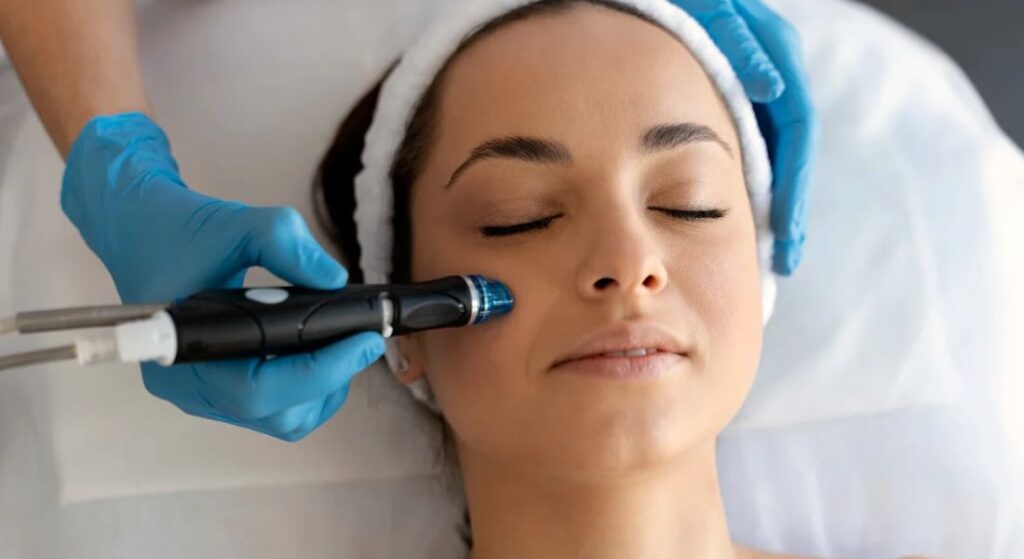
HydraFacial may help you manage clogged pores and mild congestion by combining exfoliation with controlled suction to remove surface debris. You may notice that your skin looks cleaner and feels smoother after treatment.
However, if you have persistent acne, painful spots or scarring, you may need medical treatment rather than relying on facials alone. HydraFacial may help with selected skin concerns, but it should not replace established acne care when you need it.
Research Insight
A 2022 study published in the Journal of Clinical and Aesthetic Dermatology investigated HydraFacial treatment in 20 adults with mild-to-moderate acne. Participants were scheduled to receive six treatments over twelve weeks, with one session every two weeks. The treatment combined cleansing, exfoliation, extraction and blue LED light therapy. Investigator assessments found that the proportion of participants with clear or almost clear skin increased from 20% at baseline to 65% after treatment.
These findings are encouraging but not conclusive. The study involved only 20 adults, lacked a control group and combined HydraFacial with blue LED light, so it cannot show which treatment step made the difference. One author was affiliated with The HydraFacial Company. Larger independent trials with longer follow-up are needed to establish how reliably acne improves and whether the results last.
How Soon Can You Notice Smoother Skin, and Will the Results Last?
If dullness or rough texture bothers you, your skin may feel smoother shortly after HydraFacial. But changes in appearance vary, and smoother skin immediately after treatment doesn’t necessarily mean lasting improvement.
A 2024 study of eight volunteers identified changes in the skin’s outer layer after hydradermabrasion, but found no visible difference in the quality or quantity of dermal collagen fibres at two weeks. The study was too small to establish how long cosmetic results last, so be cautious about promises of permanent rejuvenation.
Can HydraFacial Reduce Fine Lines and Signs of Ageing?
HydraFacial may help you soften the appearance of fine lines, especially when dryness makes them more noticeable. By exfoliating and hydrating your skin, it can leave your complexion looking smoother and fresher.
However, if you want to reduce deeper wrinkles, skin laxity or volume loss, you may need a treatment that works on deeper layers of your skin. HydraFacial can improve surface appearance, but you shouldn’t expect it to reverse deeper signs of ageing.
Is HydraFacial Suitable for Acne-Prone Skin?
If you get occasional blackheads or mild congestion, HydraFacial may help clear surface debris. But if your skin is inflamed, extractions could increase irritation rather than help.
If you frequently have painful spots, ongoing inflammation or signs of scarring, speak to your GP or another qualified healthcare professional. They can assess your acne and explain established treatments suited to its severity. A cosmetic facial should not replace medical acne care.
How Much Downtime Does HydraFacial Have?
HydraFacial usually requires little downtime, so you can often return to your usual activities soon afterwards. Your skin may still need a short period to settle.
1. Redness: Mild redness may appear temporarily after treatment.
2. Sensitivity: Your skin may feel more sensitive or tingly for a short time.
3. Dryness or tightness: Stronger exfoliation may temporarily affect how your skin feels.
4. Individual recovery: Your response depends on your skin sensitivity and treatment intensity.
If you have an important event coming up, consider booking your first treatment in advance to see how your skin responds.
What Should You Do After HydraFacial?
After treatment, keep your skincare routine gentle and follow your practitioner’s advice about cleansing, moisturising and sun protection. Your skin may be more sensitive for a short time, so ask when you can safely restart exfoliating acids, retinoids or other active products. Avoid scrubbing irritated areas, and contact your practitioner if redness, swelling or discomfort persists or worsens. Individual aftercare may vary depending on the solutions and any additional treatment steps used.
What Are the Main Disadvantages of HydraFacial?

The main drawbacks are that improvements may be subtle and temporary, and the cost of repeat sessions can add up. Your skin might feel fresher afterwards without meaningful changes to deeper wrinkles, scars or significant pigmentation.
Ask whether optional boosters or LED therapy are charged separately, and be realistic about the evidence: many studies are small and provide limited information about long-term results. Consider whether your expected benefit justifies the cost and possibility of irritation.
HydraFacial vs Other Skin Treatments: Key Differences
| Treatment | Main Purpose | Main Limitation |
| HydraFacial | Improving hydration and mild skin congestion | Temporary, surface-level improvements |
| Regular skincare | Maintaining skin hydration and barrier health | Results depend on suitable products and consistent use |
| Chemical peels | Selected pigmentation and texture concerns | Irritation and pigmentation risks vary with peel strength |
| Medical acne treatment | Managing persistent or inflammatory acne | May require prescription treatment, monitoring or specialist assessment |
| Microneedling or laser resurfacing | Selected scars and deeper texture concerns | Recovery time and risks vary according to the procedure and treatment depth |
When Might Another Skin Treatment Be Better?
If your main concern is deep acne scarring, significant skin laxity, facial volume loss or persistent inflammatory acne, HydraFacial may not address what bothers you most. Some pigmentation conditions also need specialist assessment rather than repeated facials.
Ask a qualified practitioner to explain the alternatives, likely improvement, risks and total cost. You may find that an appropriate skincare routine or medical treatment is more useful than a stronger cosmetic procedure.
Can HydraFacial Cause Side Effects?
HydraFacial is generally gentle, but you may still experience temporary redness, dryness, peeling, swelling, itching or sensitivity. Your skin may also feel tight or tingly, particularly if you have a more intensive treatment.
Your risk depends on your skin condition and the treatment intensity, so your practitioner should assess your skin beforehand. If you develop severe pain, blistering, significant swelling or persistent skin changes, seek medical advice.
UK Guidance Note
In the UK, persistent or inflammatory acne may require established medical treatments, including appropriate topical medicines or specialist assessment. HydraFacial should not replace medical treatment for acne that causes painful nodules, persistent inflammation or scarring. If you have these concerns, speak to a qualified healthcare professional before considering a cosmetic facial.
Before any cosmetic treatment, you should receive clear information about the expected benefits, possible risks, limitations, alternatives and costs. When choosing a HydraFacial provider, ask about practitioner training, the products being used, hygiene procedures and whom to contact if complications develop.
Is HydraFacial Suitable for Sensitive or Darker Skin?
HydraFacial may be suitable for some people with sensitive skin or darker skin tones, but your individual skin condition should be assessed before treatment. Your practitioner may recommend gentler exfoliation, lower suction or different products if your skin is prone to irritation. If you have active inflammation, rosacea flare-ups or a history of post-inflammatory hyperpigmentation, additional caution may be necessary.
If you have melasma or a history of dark marks after skin irritation, tell your practitioner before treatment. This helps them consider your pigmentation risk and decide whether a gentler approach would be more suitable.
When Should You Postpone or Avoid HydraFacial?
You may need to delay HydraFacial if you have sunburn, broken or infected skin, an active cold sore, or an eczema or rosacea flare-up in the treatment area. Recent peels, laser treatments or other procedures may also affect when another treatment is suitable.
Tell your practitioner about allergies, previous reactions and medicines, especially oral isotretinoin, prescription retinoids and exfoliating products. If you’re pregnant or breastfeeding, ask them to check the exact solutions and boosters rather than assuming every option is suitable. Do not stop prescribed medicines without medical advice.
Clinical Tip
Before your appointment, bring a list or photographs of the skincare products and acne medicines you use. This can help your practitioner check the ingredients and decide whether treatment needs adapting or delaying.
If your skin is already irritated, avoid extra scrubs or strong exfoliants. Keep your routine gentle, and ask your prescribing clinician before stopping any medicine.
How Often Should You Have HydraFacial?
You may choose to have HydraFacial occasionally for a quick skin refresh or follow a regular maintenance schedule. Some people book treatments around once a month, while others leave longer gaps depending on their skin’s needs.
Your practitioner should consider how your skin responds, especially if you use retinoids or exfoliating acids. You should also think about the ongoing cost and whether the temporary improvements are worth having repeated appointments.
What Should You Consider Before Booking HydraFacial?

Before booking, think about what you want to improve, whether that’s dryness, dullness, clogged pores or uneven texture. You should also ask what your treatment includes, which products will be used and how your practitioner will adjust it to suit your skin.
If you have sensitive skin, allergies or an important event coming up, discuss these beforehand. Most importantly, make sure you understand what results you can realistically expect so you can decide whether HydraFacial is worth the cost for you.
Myth vs Fact
| Myth | Fact |
| HydraFacial permanently shrinks enlarged pores. | It may reduce visible congestion, but cannot permanently change pore size. |
| One session removes deep wrinkles. | Hydration may soften superficial fine lines, not deeper wrinkles. |
| HydraFacial cures acne. | It may help selected cases of congestion, but does not replace medical acne treatment. |
| HydraFacial is completely risk-free. | Temporary redness, sensitivity and irritation can occur. |
| Everyone needs monthly treatments. | Treatment frequency should depend on your skin, goals and response. |
Key Takeaways
1. HydraFacial combines cleansing, exfoliation, extraction and hydration.
2. It may improve dullness, dehydration and mild skin congestion.
3. Results are generally temporary and vary between individuals.
4. It cannot reliably correct deep wrinkles, significant scars or skin laxity.
5. Sensitive or irritated skin requires careful assessment before treatment.
6. Consider the clinical evidence, ongoing costs and possible side effects before booking.
Frequently Asked Questions
1. What are the main benefits of HydraFacial?
HydraFacial may help improve skin hydration, texture, radiance and mild congestion. You may notice smoother, fresher-looking skin shortly after treatment, usually with minimal downtime.
2. How long do HydraFacial results last?
Results vary. You may notice a fresher appearance soon after treatment, but there is not enough strong evidence to promise a particular duration. Ask about realistic expectations before paying for repeat sessions.
3. Does HydraFacial help with clogged pores and blackheads?
HydraFacial uses exfoliation and controlled suction to remove surface debris from your pores. It may help with mild congestion, but persistent acne, painful spots or scarring may need medical treatment.
4. Can HydraFacial reduce fine lines and wrinkles?
HydraFacial may soften the appearance of fine lines, particularly when dryness makes them more noticeable. However, it cannot fully treat deeper wrinkles, significant skin laxity or volume loss.
5. Are HydraFacial boosters and LED therapy worth the extra cost?
They may be offered for different concerns, but evidence comparing every add-on is limited. Ask what the extra step is intended to do, whether it is appropriate for you and what it costs.
6. Does HydraFacial have any side effects?
You may experience temporary redness, dryness, peeling, swelling, itching or sensitivity after treatment. More intensive exfoliation or extraction may increase irritation, so your practitioner should adjust the treatment to your skin.
7. Is HydraFacial suitable for sensitive skin?
It may be suitable if you have sensitive skin, but your practitioner should consider gentler exfoliation, lower suction or different products. Tell them about previous skin reactions, allergies and any pigmentation concerns before treatment.
8. Should you book HydraFacial immediately before an important event?
It is better not to make your first session a last-minute appointment. Some people develop temporary redness or sensitivity, so allow time to see how your own skin responds.
9. How often should you have a HydraFacial?
Some people choose to have HydraFacial around once a month, while others leave longer gaps between appointments. Your practitioner should consider your skin’s response, skincare routine and whether regular treatments are worth the ongoing cost.
10. When should you avoid or postpone HydraFacial?
You may need to postpone treatment if your skin is infected, sunburnt, damaged or irritated, or if you’ve recently had another procedure such as a chemical peel or microneedling. If you’re pregnant or breastfeeding, discuss the products and boosters with your practitioner before booking.
Final Thoughts: HydraFacial Pros and Cons
HydraFacial may help improve hydration, skin texture, radiance and mild congestion, often with little downtime. However, its results are generally temporary, and it may not address deeper wrinkles, significant scarring or persistent acne. Considering the possible side effects, clinical evidence and ongoing costs can help you decide whether it’s right for your skin.
If you’d like to explore HydraFacial in London, the team at the London Medical & Aesthetic Clinic can talk you through the treatment and help you understand whether it may be suitable for your skin.
References:
1. Freedman, B.M. (2008) ‘Hydradermabrasion: an innovative modality for nonablative facial rejuvenation’, Journal of Cosmetic Dermatology. Available at: https://pubmed.ncbi.nlm.nih.gov/19146604/
2. Storgard, R. et al. (2022) ‘Efficacy and Tolerability of HydraFacial Clarifying Treatment Series in the Treatment of Active Acne Vulgaris’, Journal of Clinical and Aesthetic Dermatology. Available at: https://pmc.ncbi.nlm.nih.gov/articles/PMC9762628/
3. Razi, S. et al. (2024) ‘Hydradermabrasion through the lens of Line-Field Confocal Optical Coherence Tomography’, Skin Research and Technology. Available at: https://pmc.ncbi.nlm.nih.gov/articles/PMC10983707/
4. Chen, B. et al. (2024) ‘Mechanisms of Sensitive Skin and the Soothing Effects of Active Compounds: A Review’, Cosmetics. Available at: https://www.mdpi.com/2079-9284/11/6/190
5. Bhargava, S. et al. (2022) ‘Evaluating resurfacing modalities in aesthetics’, Clinics in Dermatology. Available at: https://www.sciencedirect.com/science/article/pii/S0738081X21000237