


If you are considering eyelid surgery, you may wonder whether you are too young, too old or at the right age to have it. There is no single best age for everyone, as your eyelid anatomy, skin quality, general health and the changes you want to address are usually more important than chronological age alone.
You may develop noticeable lower eyelid bags at a younger age because of genetics, while someone else may not develop troublesome upper eyelid skin until their 50s or 60s. The right time for blepharoplasty depends on what is happening around your eyes and whether surgery is appropriate for your individual concerns.
Is There Really a Best Age for Eyelid Surgery?
There is no universally accepted best age for blepharoplasty. If you are considering surgery, your eyelid changes, general health and the specific concern you want to improve are usually more important than your age. Two people of the same age can have very different eyelid changes.
You may notice loose upper eyelid skin in your 40s, while someone else may develop lower eyelid bags much earlier because of their genetics. Your expectations, willingness to go through recovery and understanding of the risks also matter. Instead of asking whether you are the right age, it can be more helpful to ask whether eyelid surgery is suitable for the concern you want to address.
Why Your Eyelid Anatomy Matters More Than Your Age
Your eyelid appearance is influenced by your skin, underlying muscle and fat, eyelid position, brow position and the supporting structures around your eyes. If your eyes look heavy or tired, the cause may be excess skin, eyebrow position or changes in the lower eyelids.
Your age does not tell the whole story. A specialist assessment can identify what is causing your concerns and whether eyelid surgery is suitable for you.
How Your Eyelids Change as You Get Older
As you get older, your eyelid skin may lose elasticity and the supporting tissues can change. You may notice more upper eyelid skin, a heavier appearance or lower eyelid bags as these changes develop.
Your eyebrows can also gradually move downwards, adding to upper eyelid heaviness. These changes can happen at different ages depending on your genetics, facial anatomy and lifestyle, so there is no fixed age when eyelid surgery becomes appropriate.
Can You Have Eyelid Surgery in Your 20s?
If you are in your 20s, blepharoplasty is less commonly considered for age-related skin laxity because significant age-related eyelid changes are usually limited at this stage. However, you may have inherited lower eyelid bags that are noticeable despite having otherwise youthful skin.
In this situation, the appearance may be related to your natural anatomy rather than premature ageing. A suitably qualified surgeon can assess whether the appearance is caused by inherited anatomy, eyelid position or another factor and determine whether surgery is appropriate or whether another approach may be more suitable.
What About Eyelid Surgery in Your 30s?
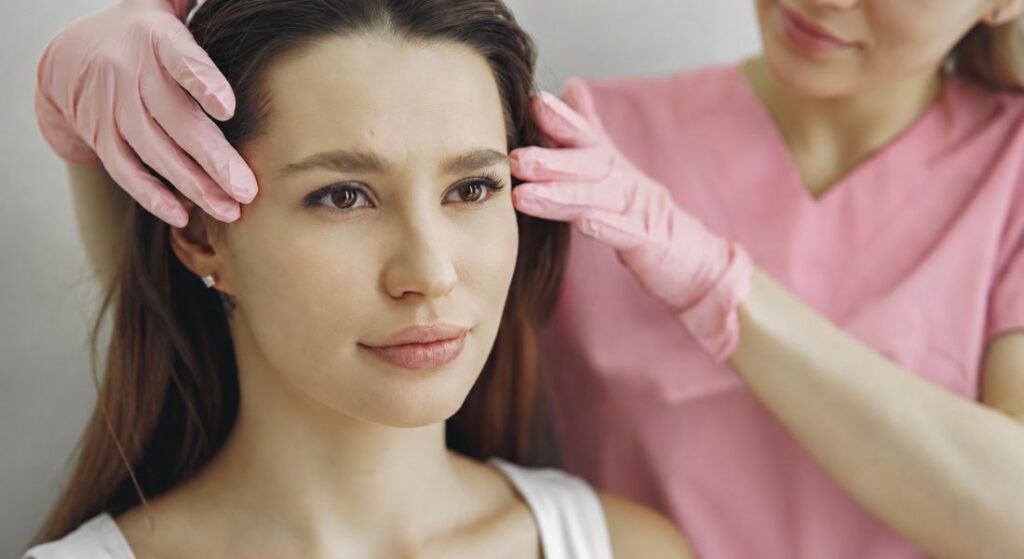
If you are in your 30s, your eyelid concerns may be influenced more by genetics and natural anatomy than significant ageing. You may notice upper eyelid hooding or lower eyelid bags that have been present for years.
Being in your 30s does not automatically make blepharoplasty inappropriate if there is a clear anatomical concern that surgery can reasonably address. Your surgeon should assess your eyelid anatomy, explain what surgery may realistically achieve and discuss how your eyelids may continue to change with age.
Are Your 40s a Common Time to Consider Blepharoplasty?
Your 40s can be a time when changes around the eyes become more noticeable, but age alone does not determine whether blepharoplasty is appropriate. A personalised assessment of your eyelid skin, brow position, eyelid support and eye health is more important.
| Factor | What You May Notice | Why It Matters |
| Upper eyelids | Increasing skin laxity or excess upper-eyelid skin. | May contribute to a heavier appearance |
| Lower eyelids | More noticeable bags or contour changes | May be one reason to consider lower-eyelid assessment |
| Eyelid laxity | Changes in skin firmness | May influence surgical planning |
| Individual suitability | Varies between people | Age alone does not determine whether surgery is appropriate |
Eyelid Surgery in Your 50s
If you are in your 50s, you may notice more loose upper eyelid skin, brow descent or under-eye bags. These changes may lead you to seek an assessment for blepharoplasty, but there is still no ideal age for everyone.
Your surgeon should assess your eyelid anatomy, brow position and eye function before recommending surgery. If eyelid changes are bothering you, your 50s can be an appropriate time to seek an assessment, but suitability still depends on your anatomy, eye health, general health and expectations rather than age alone.
Can You Have Eyelid Surgery in Your 60s, 70s or Later?
If you are in your 60s or 70s, you are not automatically too old for eyelid surgery. Your overall health, eye health, medicines and individual anatomy are usually more important than your age.
As you get older, eyelid laxity, brow position, ocular-surface health and general medical factors may become more relevant to surgical planning, so assessment needs to be individualised. Your surgeon can assess your suitability for surgery, discuss your individual risks and explain what results may realistically be achievable.
Myth vs Fact
| Myth | Fact |
| You should wait until your 50s before having eyelid surgery. | There is no fixed age at which blepharoplasty becomes appropriate. Anatomy, symptoms, eye health and expectations matter more. |
| People in their 20s or 30s are always too young for blepharoplasty. | Some younger adults have inherited lower eyelid bags or naturally hooded eyelids that may be suitable for treatment after specialist assessment. |
| You are too old for eyelid surgery once you reach your 60s or 70s. | Chronological age alone does not determine suitability. General health, eye health, medicines and eyelid anatomy are more important. |
| Having eyelid surgery stops the ageing process. | Blepharoplasty can address particular eyelid changes, but your skin, brows and surrounding tissues continue to age. |
| Heavy upper eyelids are always caused by excess eyelid skin. | Brow descent, eyelid ptosis and other anatomical or medical factors can also contribute, so examination is important before deciding on surgery. |
| Everyone with heavy upper eyelids needs blepharoplasty. | Brow ptosis, true eyelid ptosis or another eye condition can contribute, so the cause should be assessed before surgery is planned. |
Upper and Lower Eyelid Surgery May Have Different Timelines
Your upper and lower eyelids may change at different times. You might notice lower eyelid bags while your upper eyelids remain unchanged, or you may have upper eyelid hooding without significant lower eyelid concerns.
The treatment you need depends on your individual anatomy and concerns. You may only need upper or lower eyelid surgery, rather than both. A personalised assessment can help determine which areas, if any, should be treated.
Signs That It May Be the Right Time for You
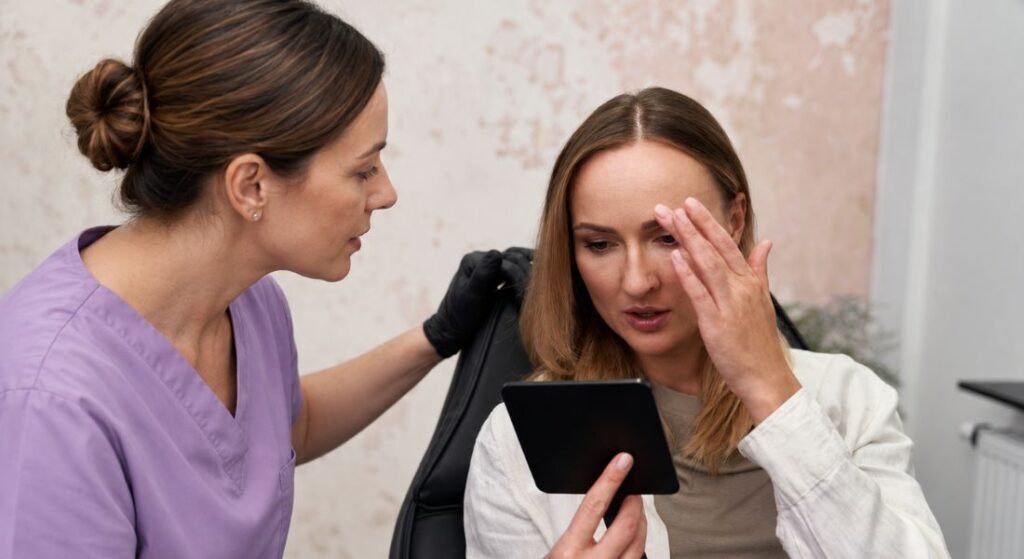
It may be worth considering eyelid surgery when you have a clear and lasting concern about your eyelids. You may notice persistent upper eyelid hooding or lower eyelid bags that have remained a concern over time.
Your expectations should also be realistic, and you should have enough time to recover comfortably. Your age is only one factor; your anatomy, health, expectations and personal circumstances are more important when deciding whether the timing is right for you.
When Might It Be Better to Wait?
If your eyelid appearance changes suddenly, you should not assume it is simply ageing. Your surgeon may recommend further assessment first, particularly if you have significant dry eyes, irritation or other eye concerns.
Sudden eyelid drooping, sudden double vision, eye pain or a change in your vision should be assessed promptly rather than assumed to be part of normal ageing. Sudden eyelid drooping or double vision may require urgent assessment through a GP, optician or NHS 111, while sudden severe eye pain or sudden loss of vision requires emergency assessment. Eye, neurological, muscular or thyroid-related conditions can sometimes alter eyelid appearance or position and may need investigation before cosmetic surgery is considered.
It may also be better to wait if you are unsure about your reasons or expectations for surgery. Taking time to understand what blepharoplasty can realistically achieve can help you make a more confident decision when you are ready.
Cosmetic and Functional Reasons for Considering Eyelid Surgery
Eyelid surgery may be considered for cosmetic or functional reasons, depending on the anatomical changes affecting your eyelids. An assessment can help identify whether your concern relates mainly to excess skin, brow position, eyelid ptosis or lower-eyelid changes.
1. Changes in Your Vision: Significant excess upper-eyelid skin may sometimes obstruct the upper or peripheral part of your field of vision, making the concern partly functional rather than purely cosmetic.
2. Heavy Eyelids and Brow Position: Brow descent or true eyelid ptosis can also contribute to a heavy appearance, so excess eyelid skin may not be the only cause.
3. Importance of an Examination: Your surgeon should assess your eyelid structure, brow position and eye function to identify what is contributing to your symptoms.
4. Lower Eyelid Concerns: Lower-eyelid blepharoplasty is more commonly considered for appearance-related concerns, although eyelid position, support and eye health still need careful assessment.
Whether you are considering eyelid surgery to improve your appearance, address a functional concern, or both, a personalised assessment is important. Your surgeon can help you understand what is causing your concerns and whether surgery is likely to provide a meaningful benefit.
Your Health Can Be More Important Than Your Birth Date
Your overall health may matter more than your age when considering eyelid surgery. Your medical history, medicines, eye health and smoking status can all affect whether surgery is suitable and how well you recover.
Make sure your surgeon knows about all medicines and supplements you take, particularly medicines that affect bleeding or clotting. Do not stop prescribed medicines yourself before surgery; your surgical team should give you individual instructions if any treatment needs to be adjusted.
What Should Be Assessed During Your Consultation?
During your consultation, your surgeon should assess your eyelid anatomy rather than focusing only on your age. This may include your skin laxity, brow position, upper-eyelid height and possible ptosis, fat distribution and, for the lower eyelids, eyelid support and the relationship between the lower lid and cheek.
Your eye health, dryness, previous procedures, medical conditions and medicines should also be discussed. You can use this appointment to explain what you want to improve and understand what surgery can realistically achieve for you.
Clinical Safety Note
Blepharoplasty is surgery around the eye, so your assessment should include more than the appearance of your eyelids. Pre-existing dry eye, difficulty closing your eyes, previous eye surgery, eyelid position and other eye conditions can affect surgical planning and your risk of symptoms afterwards.
Temporary dryness, irritation, watering or sensitivity can occur after blepharoplasty, and pre-existing ocular-surface problems may influence postoperative symptoms and surgical planning. Your surgeon should therefore ask about eye symptoms and previous eye treatment before recommending surgery. If you already have significant dryness, irritation or problems closing your eyes, these may need assessment or treatment before blepharoplasty is considered.
How Long Do the Results of Eyelid Surgery Last?
Blepharoplasty can produce long-lasting changes to the tissues that are treated, but it does not stop the natural ageing process. Your skin, eyebrows and surrounding tissues will continue to change over time, so your appearance will gradually evolve after surgery.
If you have surgery at a younger age, this does not mean the results will simply disappear after a set number of years. Your genetics, skin quality and ongoing ageing can influence how your eyelids change, so it is more useful to focus on whether surgery is right for your concerns now.
How to Choose the Right Time and the Right Surgeon

The right time for blepharoplasty depends on your concerns, health and whether you are ready for recovery. You do not need to wait until a certain age if you have a clear concern, and you should not feel pressured to have surgery simply because you have reached a particular birthday.
If you are considering blepharoplasty in the UK, check that your surgeon is registered with the General Medical Council (GMC), appropriately trained and experienced in the type of eyelid surgery you are considering. In England, independent clinics and hospitals providing cosmetic surgery must also be registered with the Care Quality Commission (CQC). Ask about the surgeon’s experience, complication rates, aftercare and what support is available if you have a problem after surgery.
Key Takeaways
1. There is no single best age for eyelid surgery. Your eyelid anatomy, eye health and the changes you want to address are more important than your birthday.
2. Some younger adults have inherited lower eyelid bags or naturally hooded upper eyelids, while others develop age-related changes much later.
3. Older age alone does not rule out blepharoplasty. Your general health, medicines, eye health and ability to recover safely also need to be considered.
4. Upper and lower eyelid surgery address different anatomical concerns, so you may need one procedure, both or neither.
5. Dry eye, brow position, eyelid support and existing eye conditions should be assessed before surgery.
6. Blepharoplasty does not stop ageing, so your eyelids and surrounding facial tissues will continue to change over time.
Frequently Asked Questions
1. What is the best age for eyelid surgery?
There is no single best age for eyelid surgery. Your eyelid anatomy, skin laxity, brow position, overall health and the specific concerns you want to address are generally more important than your age.
2. Can you have eyelid surgery in your 20s or 30s?
Yes, eyelid surgery can be appropriate for some younger adults. In these age groups, concerns such as inherited lower eyelid bags or naturally hooded upper eyelids may be more relevant than age-related changes.
3. Is 40 a good age for blepharoplasty?
Some people first seek assessment in their 40s as eyelid skin laxity or lower-eyelid changes become more noticeable. Whether blepharoplasty is appropriate depends on your eyelid anatomy, eye health, general health and individual concerns rather than turning 40 itself.
4. Is 50 too late to have eyelid surgery?
Eyelid surgery can be considered in your 50s if there is an anatomical concern that surgery can appropriately address. Your general health, eye health, eyelid anatomy and expectations remain more important than age alone.
5. Can you have eyelid surgery in your 60s or 70s?
Being in your 60s or 70s does not automatically prevent you from having eyelid surgery. Your surgeon will need to consider your overall health, medicines, eye health, eyelid support and ability to recover safely before recommending treatment.
6. Does eyelid surgery stop your eyes from ageing?
No. Blepharoplasty can improve specific changes around your eyelids, but it does not stop natural ageing. Your skin, eyebrows and surrounding facial tissues will continue to change over time.
7. Can dry eyes affect whether you can have blepharoplasty?
Yes. Pre-existing dry-eye symptoms are important because eyelid surgery can temporarily affect dryness, irritation or other ocular-surface symptoms in some people. Your surgeon should assess your eye health, eyelid closure and relevant medical history before recommending surgery. Having dry eyes does not automatically mean you cannot have blepharoplasty, but your individual risk and treatment plan need careful assessment.
8. When might it be better to wait before having eyelid surgery?
It may be better to wait if you are uncertain about your expectations, have untreated eye symptoms or are not currently in a good position to undergo surgery and recover. A sudden change around your eyes should also be assessed rather than automatically attributed to ageing.
9. Does your health matter more than your age when considering blepharoplasty?
Your overall health can be more important than your chronological age when assessing whether elective eyelid surgery is appropriate. Your medical history, medicines, eye health and factors that may affect healing should all be considered during your consultation.
10. How do you know when it is the right time for eyelid surgery?
The right time is usually when you have a clear, persistent concern that can realistically be addressed with surgery, while also being healthy enough for the procedure and having realistic expectations. A specialist assessment can help determine whether your anatomy, health and circumstances make eyelid surgery appropriate.
Final Thoughts: Choosing the Right Time for Eyelid Surgery
There is no single age that is right for eyelid surgery. Your eyelid anatomy, skin quality, brow position, eye health, general health and the specific concern you want to address are more useful when assessing suitability than chronological age alone. A personalised consultation can help determine whether blepharoplasty, another procedure or no surgery is the most appropriate option for you.
If you are considering eyelid surgery in London, you can contact our team at London Medical & Aesthetic Clinic to arrange a consultation and discuss your eyelid concerns, whether surgery may be suitable for you, what to expect during recovery and the results you may realistically expect.
References:
1. Tao, B.K. et al. (2025) ‘Periocular aging across populations and esthetic considerations: A narrative review’, Journal of Clinical Medicine, 14(2), article 535. Available at: https://www.mdpi.com/2077-0383/14/2/535
2. Hollander, M.H.J. et al. (2019) ‘Functional outcomes of upper eyelid blepharoplasty: A systematic review’, Journal of Plastic, Reconstructive & Aesthetic Surgery, 72(2), pp. 294–309. Available at: https://pubmed.ncbi.nlm.nih.gov/30528286/
3. Memon, S.F., Wilde, C.L. and Ezra, D.G. (2025) ‘Lower eyelid surgical anatomy and the implications for blepharoplasty surgery: A systematic review of anatomic studies in the literature’, Journal of Craniofacial Surgery, 36(2), pp. 709–716. Available at: https://pubmed.ncbi.nlm.nih.gov/39585706/
4. Kashkouli, M.B. et al. (2017) ‘Periorbital facial rejuvenation; applied anatomy and pre-operative assessment’, Journal of Current Ophthalmology, 29(3), pp. 154–168. Available at: https://www.sciencedirect.com/science/article/pii/S245223251630213X
5. Zhang, S-Y., Yan, Y. and Fu, Y. (2020) ‘Cosmetic blepharoplasty and dry eye disease: A review of the incidence, clinical manifestations, mechanisms and prevention’, International Journal of Ophthalmology, 13(3), pp. 488–492. Available at: https://pmc.ncbi.nlm.nih.gov/articles/PMC7154208/