

If you’re wondering whether you’re too young or too old to consider neck rejuvenation, there is no single age that gives you the answer. What matters is the change you want to address, whether a treatment is suitable for that concern and whether its likely benefits, risks and recovery fit your needs.
A consultation should focus on your skin, degree of laxity, anatomy and goals rather than your birthday alone.
Is There a Best Age for Neck Rejuvenation?
You do not need to reach a specific age before considering neck rejuvenation. Your skin, laxity and other changes matter more than your birthday.
You should focus on what has changed in your neck and what you want to improve. Your treatment should match your individual concerns.
Evidence Note
Ageing of the lower face and neck involves more than one tissue layer. A 2025 review of platysma prominence distinguishes muscle-related banding from concerns such as skin laxity and submental fat, while a 2021 review of facial ageing describes changes across bone, fat, muscle and skin.
This helps explain why two people of the same age can have different concerns and may need different treatment approaches.
When Do Signs of Neck Ageing Usually Become Noticeable?
You may notice early signs such as fine lines, dryness or crepey texture at different ages. Your skin, sun exposure and natural ageing can all affect when changes appear.
You may later notice more laxity, platysmal bands or changes in your jawline. Your treatment should focus on the specific change you want to improve.
The age ranges below are broad examples rather than fixed ageing milestones. Some people notice particular changes earlier or later because genetics, sun exposure, anatomy, skin characteristics and lifestyle can influence how the neck changes over time.
Can You Consider Neck Rejuvenation in Your 20s?
You can consider neck rejuvenation in your 20s if you have a specific concern, such as lines, pigmentation or skin-quality changes. Treatment at this stage should be based on the concern itself rather than age.
Skincare and sun protection may be enough for mild changes. If you consider a procedure, your practitioner should recommend an option suited to the specific issue you want to improve.
What Changes Might You Notice in Your 30s?
You may notice fine lines, creasing or subtle texture changes in your 30s. Your skin may still be firm, so you may not need intensive treatment.
If these changes bother you, first consider whether the main issue is dryness or texture, a visible line or early laxity. That distinction can make your consultation more useful because different concerns may need different approaches.
What About Neck Rejuvenation in Your 40s?
In your 40s, you may start noticing more visible changes in your neck, although these can vary considerably from person to person. Treatment should still depend on the concern rather than your age alone.
1. Fine lines: Horizontal lines and smaller wrinkles may become more noticeable as collagen and elasticity gradually change.
2. Creepy texture: Your neck skin may begin to look thinner or less smooth, particularly if sun exposure has affected skin quality over time.
3. Reduced firmness: Mild laxity can start to soften the neck or jawline, although significant loose skin may not yet be present.
4. Treatment options: Skincare or selected energy-based treatments may be considered depending on whether texture, lines or firmness are your main concerns.
Being in your 40s does not automatically mean you need treatment. Your skin quality, anatomy and specific concerns should guide any decision.
How Does Neck Rejuvenation Change in Your 50s?
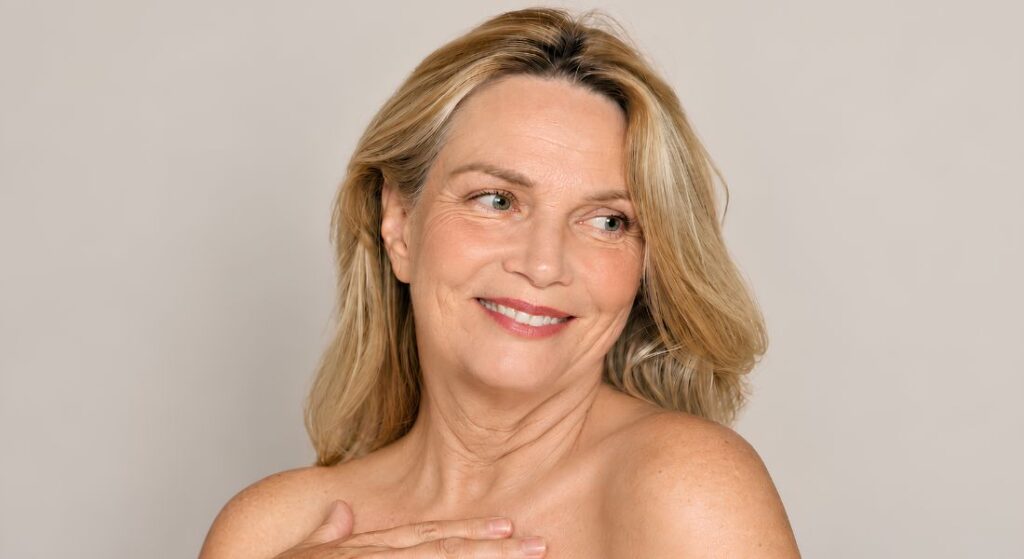
You may notice thinner or looser skin, neck bands, horizontal lines or reduced jawline definition in your 50s. Your neck contour may also change because of fat distribution or volume loss.
You may still be suitable for non-surgical treatment if your concerns are mild and appropriate for the treatment being considered. Significant excess skin may lead to a discussion about surgical options, while visible neck bands should be assessed separately because their treatment depends on muscle activity, surrounding laxity and other anatomical factors.
Is It Too Late to Consider Neck Rejuvenation in Your 60s or Beyond?
You can consider neck rejuvenation in your 60s or beyond if you are medically suitable and your goals are realistic. Your skin, laxity and overall health matter more than your age alone.
A skin-focused treatment may be suitable if you mainly want to improve texture, while significant loose skin may require a surgical discussion. Your practitioner should assess your health, medications and recovery needs before recommending treatment.
What Factors Matter When Choosing Neck Rejuvenation?
| What you notice | What should be assessed | Approaches that may be considered |
| Fine lines or rough texture | Skin quality, dryness and sun damage | Skincare or selected skin-focused treatments |
| Crepey skin | Skin thickness, texture and degree of laxity | Selected skin-focused or energy-based treatments |
| Mild laxity | Amount and location of loose skin | Selected radiofrequency or ultrasound-based treatment |
| Reduced jawline definition | Skin, fat, chin and jaw anatomy | Treatment depends on the structure causing the change |
| Platysmal bands | Muscle activity and surrounding laxity | Requires assessment of the muscle rather than skin alone |
| Significant loose skin | Amount of excess skin and deeper structural change | Surgical assessment may be appropriate |
These are general treatment categories rather than recommendations. Suitability depends on an individual assessment, and one treatment may not address every component of neck ageing.
Why Does Skin Quality Matter When Choosing Treatment?
You can have very different skin from someone your age because of your genetics, sun exposure and skin characteristics. Your neck may show fine lines, pigmentation or creepy texture even if your skin is not significantly loose.
You should focus on what you want to improve rather than your age alone. Your treatment can then target skin quality, firmness or deeper structural changes as needed.
How Important Is the Amount of Neck Laxity?
The amount of loose skin is an important factor when choosing treatment, because age alone does not determine how much laxity you have. Mild laxity may suit selected non-surgical treatment, while moderate or significant laxity may need a different approach.
Non-surgical treatments cannot physically remove significant amounts of excess skin, so treatment should match the degree of laxity rather than a particular age.
Why Does Your Individual Anatomy Matter?
Your neck is connected to your face, jaw and chin, so your anatomy can affect how your neck looks. Your chin shape, jawline, fat distribution and platysma muscle can all influence your neck definition.
You should identify what is actually causing your concern before choosing treatment. Your practitioner can then recommend an option that targets your specific anatomy rather than relying on your age alone.
Clinical Tip
Before choosing a treatment, try to identify whether your main concern is skin texture, loose skin, submental fullness, muscle banding or reduced jaw and chin definition.
These concerns can look similar in the mirror but involve different tissues. Research on neck assessment emphasises that skin, fat, muscle and underlying facial structure can all contribute to neck appearance.
Should You Have Treatment Before Ageing Becomes Severe?
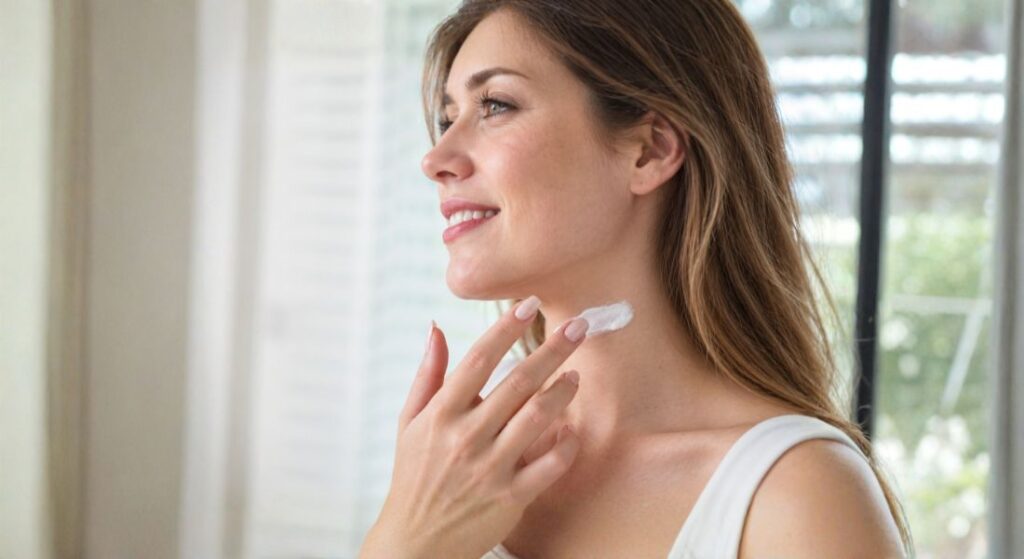
You do not need cosmetic treatment simply because you want to prevent future ageing. Sun protection and appropriate skincare can help support your skin over time, while procedures should be considered when you have a concern you want to address.
You should weigh your expected results, risks, costs and recovery before choosing treatment. Your decision should be based on your current needs rather than feeling that you need to start early.
When Are Non-Surgical Treatments Most Appropriate?
You may consider non-surgical treatment when you have a concern that can realistically be addressed without removing significant excess skin, such as selected changes in skin texture, fine lines or mild laxity. Muscle-related bands and other structural concerns require separate assessment because they may need a different treatment approach.
Depending on the concern, selected radiofrequency or ultrasound-based treatments may be considered for appropriate patients. Your age can provide context, but your anatomy, skin quality and the tissue causing the concern should guide treatment selection.
Research Insight
Evidence for non-surgical tightening treatments is developing, but results should not be assumed from age alone. A 2025 systematic review of microfocused ultrasound for skin sagging included 12 studies and reported promising improvements, although the authors concluded that better-quality, more standardised research is still needed. Only two randomised studies were included in the meta-analysis comparing ultrasound with radiofrequency for neck sagging, and no significant difference between the treatments was found across the assessed time periods.
A separate systematic review of radiofrequency treatments also found improvements in measures such as skin laxity and elasticity, although devices and study methods varied considerably.
When Might Surgery Be More Appropriate?
You may consider surgery if you have significant loose skin or deeper structural changes that non-surgical treatments cannot address. Your anatomy, including skin, fat, platysma and jawline, should guide this decision.
You should also consider your recovery, scars and surgical risks before choosing surgery. Your age does not determine whether you need it; your concerns and the results you want are more important.
Does Sun Damage Affect When You Might Seek Treatment?
You may notice neck ageing earlier if your skin has had significant sun exposure. Your neck can develop wrinkles, pigmentation and rough texture, especially if you have not protected it regularly.
You do not need treatment simply because you have sun damage. Your consistent sun protection and skincare may be enough, while more noticeable changes may lead you to consider other treatments.
How Do You Know Whether You Are Ready for Neck Rejuvenation?
You may be ready when you know what you want to change, such as wrinkles, loose skin, texture or neck fullness. Your expectations should also match what your chosen treatment can realistically achieve.
You should consider the benefits, limitations, risks and recovery before deciding. Your treatment should be a personal choice based on your needs, not pressure to look younger.
How Should You Choose a Practitioner and Treatment Plan?
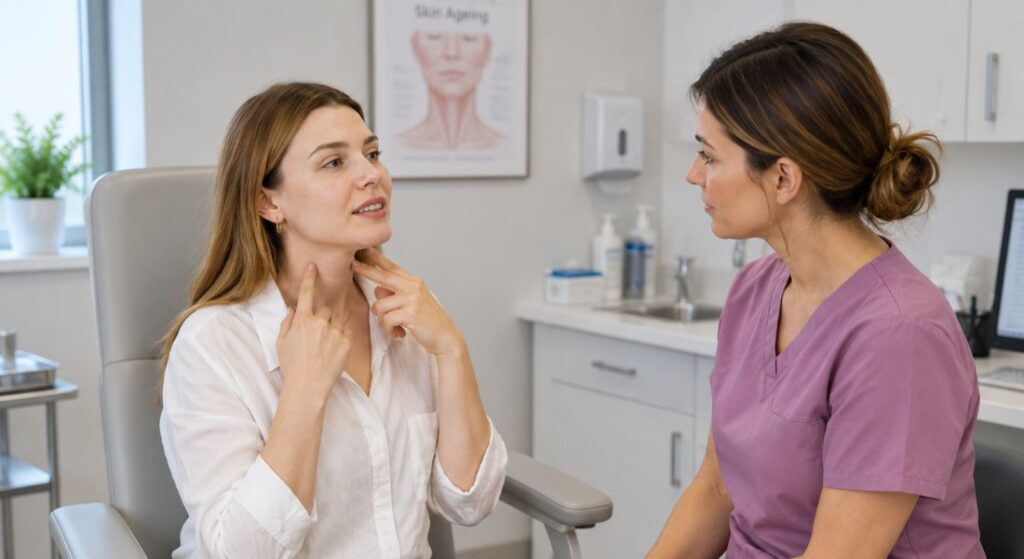
You should choose a practitioner who assesses your skin, anatomy and specific concerns rather than your age. Your consultation should cover realistic results, risks, downtime, aftercare and alternatives.
You should also check your practitioner’s qualifications, training and experience before deciding. Your treatment plan should match what you want to improve, with enough time for you to make an informed decision.
Myth vs Fact
| Myth | Fact |
| You should start neck rejuvenation at a particular age. | There is no single age at which cosmetic neck treatment becomes necessary or appropriate for everyone. |
| Everyone in their 40s or 50s develops the same neck changes. | Skin quality, anatomy, genetics, UV exposure, fat distribution and muscle changes vary considerably between individuals. |
| Starting procedures young will prevent your neck from ageing. | Cosmetic procedures do not stop natural ageing, and treatment is not required simply because you want to prevent future changes. |
| Non-surgical treatment works best simply because you are younger. | Suitability depends more directly on the concern being treated, particularly the amount of laxity and the tissues involved. |
| Being older automatically means you need surgery. | Age alone does not determine surgical suitability; anatomy, health, degree of excess skin, goals and recovery considerations all matter. |
Key Takeaways
1. There is no single best age for neck rejuvenation; treatment choice should reflect your skin quality and specific concerns rather than age alone.
2. Fine lines, laxity, muscle bands and jawline changes may need different treatment approaches.
3. You do not need cosmetic treatment simply because you reach a certain age.
4. Non-surgical treatments may suit mild concerns, while significant loose skin may need surgical assessment.
5. Sun protection and skincare can help support your neck skin over time.
6. A consultation should focus on your anatomy, goals, risks and realistic results.
Frequently Asked Questions
1. Is there a best age for neck rejuvenation?
There is no single best age for neck rejuvenation. You should consider it when a specific change bothers you and treatment is suitable for your needs.
2. Can you have neck rejuvenation in your 20s or 30s?
Yes, if you have a specific concern such as fine lines or sun damage. However, skincare and sun protection may be enough for mild changes.
3. What neck changes can you notice as you age?
You may notice fine lines, crepey skin, laxity, platysmal bands or reduced jawline definition. Changes in fat distribution can also affect your neck contour.
4. Why does your skin quality matter more than your age?
People of the same age can have very different skin quality. Sun exposure, genetics and lifestyle can affect how your neck ages and which treatment may suit you.
5. How does loose neck skin affect your treatment options?
Selected mild-to-moderate laxity may show some improvement with appropriate non-surgical treatment, although the degree of change varies. Significant excess skin may require a surgical assessment if a more substantial correction is wanted.
6. Can your anatomy affect your neck appearance?
Yes, your chin, jaw shape, fat distribution and platysma muscle can all affect your neck. Treatment should address the factor that is actually causing your concern.
7. Should you start neck treatment before visible ageing becomes severe?
Not necessarily. You can focus on sun protection and skincare first, then consider treatment when you have a specific concern you want to address.
8. When are non-surgical neck treatments suitable?
They may suit you if you have concerns such as fine lines, crepey texture or mild laxity. The right option depends on your skin and the specific change you want to improve.
9. When might you consider a surgical neck lift?
A neck lift may be considered when you have significant loose skin or deeper structural changes. It can create a more substantial change but involves surgery and recovery.
10. How do you know when you are ready for neck rejuvenation?
You should understand what you want to change and what treatment can realistically achieve. A consultation can help you decide whether treatment is appropriate for you.
Final Thoughts: the Best Age for Neck Rejuvenation
There is no single best age for neck rejuvenation. Treatment choice depends on your skin quality, anatomy, degree of laxity and the specific concern you want to improve, rather than your age alone.
You do not need treatment simply because you reach a certain age. A professional assessment can help you decide whether treatment is suitable and what approach may best match your goals.
References:
1. Modena, D.A.O. et al. (2025) ‘Systematic review and meta-analysis – microfocused ultrasound treatment for sagging skin’, Lasers in Medical Science, 40(1), 169. Available at: https://pubmed.ncbi.nlm.nih.gov/40167815/
2. Austin, G.K., Struble, S.L. and Quatela, V.C. (2022) ‘Evaluating the effectiveness and safety of radiofrequency for face and neck rejuvenation: a systematic review’, Lasers in Surgery and Medicine, 54(1), pp. 27–45. Available at: https://pubmed.ncbi.nlm.nih.gov/34923652/
3. Trindade de Almeida, A. et al. (2025) ‘Platysma prominence: review and expert analysis of clinical presentation, burden, and treatment considerations’, Plastic and Reconstructive Surgery – Global Open, 13(2), e6490. Available at: https://pmc.ncbi.nlm.nih.gov/articles/PMC11798379/
4. Rittié, L. and Fisher, G.J. (2015) ‘Natural and sun-induced aging of human skin’, Cold Spring Harbor Perspectives in Medicine, 5(1), a015370. Available at: https://pmc.ncbi.nlm.nih.gov/articles/PMC4292080/
5. Swift, A. et al. (2021) ‘The facial aging process from the “inside out”’, Aesthetic Surgery Journal, 41(10), pp. 1107–1119. Available at: https://academic.oup.com/asj/article/41/10/1107/6039054