


CO₂ laser resurfacing is still one of the most powerful treatments used in aesthetic dermatology. It can help improve fine lines, acne scarring, sun damage, uneven skin texture and some selected benign skin concerns. However, because it removes controlled layers of skin, you need careful assessment and planning before going ahead.
One clear message from international conferences is that your result does not depend on the laser device alone. Even the most advanced machine cannot make up for poor assessment, unrealistic expectations or weak aftercare planning. This is why choosing the right patient, the right settings and the right recovery plan matters so much.
If you are considering CO₂ laser treatment, safety starts before the first pulse touches your skin. Your skin type, medical history, pigmentation risk, healing pattern, lifestyle, sun exposure and ability to follow aftercare instructions all play an important role. The safest treatment plan is one that is customised around you, rather than a standard approach used for every skin type or concern.
Why CO₂ Laser Safety Starts with Patient Selection
CO₂ laser treatment can create noticeable skin improvement, but it is not suitable for everyone. Before choosing the right laser setting, your practitioner first needs to decide whether the treatment is right for you. This is why patient selection is one of the most important parts of safe CO₂ laser resurfacing.
Your practitioner should assess your skin type, treatment area, skin concerns, medical background and healing history before recommending treatment. This matters because ablative laser resurfacing can carry risks if it is poorly planned. These risks may include prolonged redness, pigmentation changes, infection or scarring.
Patient selection also helps you understand what CO₂ laser treatment can realistically achieve. It can improve skin texture, acne scarring and certain marks, but it cannot make your skin perfect. You may also need more than one session, depending on your skin condition and treatment goals.
Understanding How CO₂ Laser Treatment Works
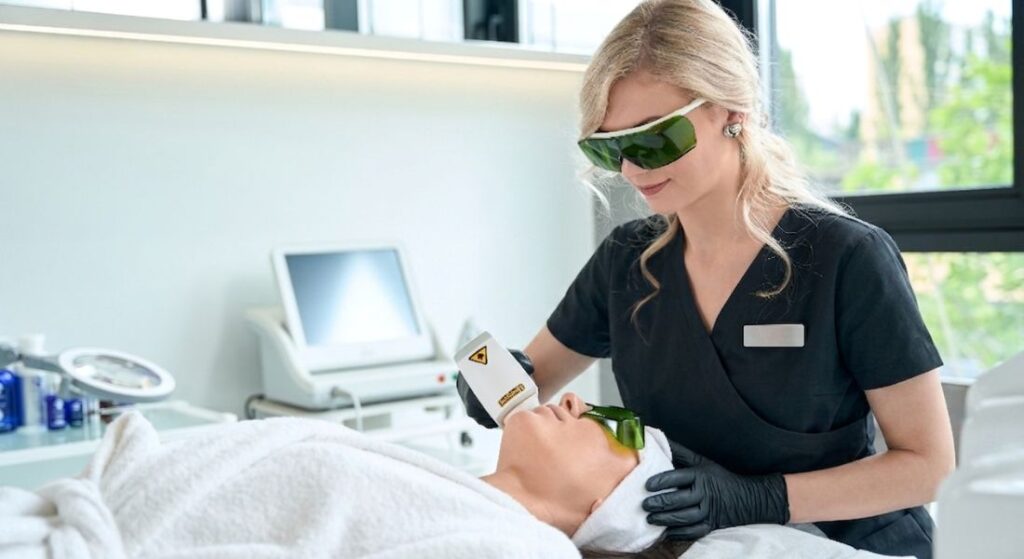
CO₂ laser treatment works by using a wavelength that is strongly absorbed by water in your skin. This allows the laser to remove controlled layers of skin with precision. At the same time, it encourages your skin to begin a healing response and support new collagen formation.
In simple terms, the treatment creates a carefully controlled injury. Your skin then repairs itself in a more organised way, which can help improve texture, fine lines and certain types of scarring. This is why CO₂ laser resurfacing can be effective when it is planned and performed correctly.
However, the strength of the treatment is also why it needs careful handling. If too much heat is delivered, or if your skin is treated too aggressively, the risk of complications can increase. This is why the right settings, patient selection and aftercare are all important for safer results.
Fully Ablative vs Fractional CO₂ Laser
A fully ablative CO₂ laser treats the entire surface of the selected area. This can create more dramatic improvement, especially for deeper lines, texture concerns or scarring. However, it usually involves more downtime and a higher level of risk, so it needs very careful patient selection.
Fractional CO₂ laser treats only part of the skin at a time. It creates tiny columns of controlled injury while leaving the surrounding skin intact. This can support faster healing and may reduce risk when the treatment is planned properly for your skin type and concern.
Conference experts often discuss fractional technology as a way to balance results with safety. However, fractional treatment does not mean risk-free treatment. Your settings still need to be carefully matched to your skin, your concern and your healing profile.
Skin Type Matters More Than Many Patients Realise
Your skin type plays a major role in how safely CO₂ laser treatment can be planned. If you have a lighter skin tone, your risk of pigmentation changes may be lower. If you have a medium or darker skin tone, your treatment may need to be planned more carefully. This is because your skin may be more reactive after heat-based resurfacing.
1. Your Fitzpatrick skin type helps guide safety: The Fitzpatrick scale helps practitioners understand how your skin may respond to laser energy. It looks at how easily your skin burns or tans, which can help estimate pigmentation risk. This matters because CO₂ laser treatment creates controlled heat in the skin, and not every skin type reacts in the same way.
2. Lighter skin types may have fewer pigmentation risks: Fitzpatrick skin types I and II are often considered more suitable for CO₂ resurfacing. These skin types may have a lower chance of developing post-inflammatory hyperpigmentation after treatment. However, this does not mean treatment is risk-free, as redness, sensitivity, and healing issues can still happen.
3. Medium and darker skin tones need more cautious planning: Fitzpatrick skin types III to VI may need more conservative settings and a more careful treatment approach. This is because darker skin has a higher risk of unwanted pigmentation changes after inflammation or heat exposure. Your practitioner may adjust the laser strength, treatment depth, and recovery plan to reduce this risk.
4. Darker skin does not automatically rule out CO₂ laser treatment: Having a darker skin tone does not always mean you cannot have CO₂ laser treatment. It simply means your practitioner needs to understand how to manage pigmentation risk properly. In some cases, fractional treatment, skin preparation, and careful aftercare may make treatment safer.
5. Preparation and aftercare are especially important: Your results do not only depend on what happens during the procedure. Pre-treatment skincare, sun protection, healing support, and post-treatment instructions all matter. When these steps are followed carefully, your skin has a better chance of healing evenly and safely.
Your skin type should always be assessed before any CO₂ laser treatment is recommended. You should not be treated with a one-size-fits-all approach, especially if you have medium or darker skin. A careful practitioner will look at your skin tone, pigmentation history, lifestyle, and treatment goals before choosing the right settings. This helps reduce unnecessary risk and gives your skin a safer path to improvement.
Pigmentation Risk Should Be Discussed Early
Pigmentation risk should always be discussed before CO₂ laser treatment, especially if your skin tans easily. Post-inflammatory hyperpigmentation can appear as darker patches after your skin has healed. This can be more likely when your skin is sensitive to inflammation or has a higher risk of marking.
Hypopigmentation, or lightening of the skin, can also happen after laser resurfacing. This may be harder to treat than darker pigmentation and, in some cases, may last for a long time. That is why your practitioner should explain both darkening and lightening risks clearly before treatment.
You should understand your personal pigmentation risk before deciding to go ahead. Your practitioner may discuss your skin type, previous healing history, sun exposure and aftercare plan. When these risks are reviewed early, your treatment can be planned more safely and realistically.
Sun Exposure Can Change Your Suitability
Sun exposure can affect whether CO₂ laser treatment is safe for you. If your skin is recently tanned, sunburnt or inflamed, it may react unpredictably to laser resurfacing. This can increase the risk of pigmentation changes, irritation or delayed healing.
Before treatment, your skin needs to be as calm and stable as possible. Excessive sun exposure should usually be avoided, and your practitioner should review your medical history, skin condition and expectations. This helps them decide whether treatment is suitable at that time.
You should always be honest about holidays, tanning, outdoor work and your usual sun habits. These details can change how your skin responds to treatment. A good practitioner would rather delay your procedure than treat skin that is not ready.
Active Infection Is a Red Flag
CO₂ laser treatment should not be performed over an active skin infection. This includes bacterial infections, viral infections or active cold sores in the treatment area. If your skin is already infected or irritated, treatment can increase the risk of complications.
Laser resurfacing temporarily disrupts your skin barrier, so infection risk needs to be taken seriously. When the barrier is weakened, bacteria or viruses may spread more easily during the healing stage. This is why your practitioner should check your skin carefully before treatment.
If you have a history of cold sores, you should tell your practitioner before your procedure. They may prescribe antiviral medication before and after treatment to reduce the risk of a flare-up. It is always safer to manage infection risk early rather than deal with complications after resurfacing.
Medical History Must Be Reviewed Carefully
Your medical history can affect how safely your skin heals after CO₂ laser treatment. Conditions that affect wound healing, immunity or scarring risk need to be discussed before treatment. This helps your practitioner understand whether laser resurfacing is suitable for you.
Your practitioner should ask about your medications, previous skin procedures, cold sores, diabetes, immune suppression and any history of keloid or hypertrophic scarring. They may also ask about recent isotretinoin use and current skincare or skin treatments. This is not just paperwork; it is an important part of reducing risk.
If your consultation feels rushed, you should treat that as a warning sign. Safe CO₂ laser treatment needs time for proper assessment, questions and planning. You should feel that your practitioner understands your skin, your health and your treatment goals before moving ahead.
Expectations Are Part of Safety

Your expectations are an important part of CO₂ laser safety. Even when the treatment is performed correctly, you may feel disappointed if you expected a result that the treatment could never realistically achieve. This is why clear communication matters before you agree to the procedure. You should understand the likely benefits, limits, downtime, and number of sessions before treatment begins.
1. Realistic expectations reduce disappointment: CO₂ laser treatment can improve several skin concerns, but it cannot make your skin perfect. If you expect complete removal of scars, wrinkles, or sun damage, you may feel unhappy even after a good clinical result. A proper consultation should help you understand what level of improvement is realistic for your skin.
2. Different concerns respond differently: Acne scars, fine lines, wrinkles, pigmentation, and sun damage do not all respond in the same way. Some concerns may improve noticeably, while others may need several sessions or a combined treatment plan. Your practitioner should explain what the treatment is likely to do for your specific concern.
3. You should know how many sessions may be needed: Some people may see improvement after one treatment, while others may need more than one session. This depends on your skin condition, treatment depth, healing response, and goals. Knowing this in advance helps you avoid expecting instant or complete results from a single appointment.
4. Downtime should be discussed clearly: CO₂ laser treatment usually involves redness, swelling, peeling, and a healing period. Your skin may look worse before it starts to look better, which can feel stressful if you are not prepared. This is why you should understand the recovery timeline before booking the treatment.
5. Timing matters before important events: CO₂ laser treatment should not be booked casually before a wedding, holiday, photoshoot, or work event. Your skin needs time to heal, settle, and recover from visible redness or peeling. Planning your treatment at the right time helps you avoid unnecessary pressure during recovery.
6. Good communication is part of safe treatment: Safety is not only about machine settings or technique. It also includes whether you fully understand the procedure, risks, benefits, and aftercare. When your practitioner communicates clearly, you can make a more informed and confident decision.
CO₂ laser treatment can be very effective, but it should always be approached with realistic expectations. You should know what can improve, what may not change completely, and what recovery may involve. When expectations are clear from the beginning, you are less likely to feel disappointed or rushed during healing. This makes the whole treatment journey safer, calmer, and more suitable for your skin.
Treatment Area Changes the Risk Profile
The treatment area can change how safe or suitable CO₂ laser resurfacing is for you. Not every part of the face or body heals in the same way. Areas such as the eyelids, neck, chest and hands may need more caution than thicker facial skin.
Some areas have thinner skin, slower healing or a higher risk of scarring. This means your practitioner should not copy the same settings from one area to another. Each area needs to be assessed separately so the treatment can be planned safely.
For example, treating acne scarring on your cheeks may need a very different approach from treating lines around your mouth or texture on your neck. Good planning respects the anatomy, thickness and healing behaviour of each area. This helps reduce risk while still aiming for meaningful improvement.
Energy Settings Should Be Individualised
Energy settings should always be chosen for your skin, your concern and your treatment area. Higher energy does not automatically mean a better result. In many cases, the safest result comes from using the right amount of energy, not the strongest setting.
Aggressive settings can create more heat, more downtime and a higher risk of side effects. This can be especially important if you have darker skin, a sensitive treatment area or a higher risk of pigmentation changes. A more conservative approach may be safer and still give you meaningful improvement over time.
Your practitioner should be able to explain why they are choosing a particular setting for you. The answer should be based on your skin type, healing pattern, treatment goal and risk profile. If they simply say, “this is our standard setting,” that may not be enough for safe, personalised care.
Heat Management Is Central to CO₂ Laser Safety
Heat management is one of the most important parts of CO₂ laser safety. Many complications happen when the skin receives too much thermal injury. The aim should be controlled resurfacing, not uncontrolled heat damage.
Several technical factors affect how much heat your skin receives. These include fluence, density, number of passes, pulse duration, spacing and cooling strategy. Although these terms may sound technical, they directly influence your healing, downtime and complication risk.
This is why practitioner experience matters so much. A trained practitioner understands not only how to operate the laser, but also how your skin responds to heat. With the right judgement, treatment can be adjusted to support safer healing and better results.
Eye Protection Is Non-Negotiable
Laser safety is not only about protecting your skin. Your eyes also need proper protection because lasers can cause serious injury if safety precautions are not followed. This is why eye protection should always be part of a safe CO₂ laser treatment.
During treatment, your practitioner should use suitable eye protection for you and appropriate wavelength-rated eyewear for staff. These measures help reduce the risk of accidental laser exposure. You should expect this to be handled as a basic part of the treatment setup.
If eye protection is not discussed or provided, that is a serious warning sign. A safe treatment room should follow clear laser safety standards before the procedure begins. You should never feel unsure about whether your eyes are being properly protected.
Smoke Plume Safety Should Not Be Ignored
Smoke plume safety is an important part of ablative laser treatment. When tissue is vaporised during CO₂ laser treatment, it can produce a visible or invisible plume. You may not think about this as a patient, but it matters for the safety of both you and the clinical team. A responsible clinic should manage this properly as part of its treatment protocol.
1. Ablative lasers can create smoke plume: CO₂ lasers work by vaporising controlled layers of skin, and this process can release smoke plume into the treatment room. This plume may contain tiny particles, tissue debris, and biological material. Because of this, it should not be treated as a minor issue or ignored during the procedure.
2. Smoke evacuation is part of professional safety: A proper smoke evacuation system helps remove plume from the treatment area as it is produced. This reduces the amount of airborne material in the room and supports a cleaner clinical environment. If a clinic performs ablative laser treatments, suitable plume extraction should be part of its safety setup.
3. Room protocols also matter: Laser safety is not only about the device itself. The treatment room should have sensible protocols for ventilation, protective equipment, and safe working practices. These measures help reduce unnecessary exposure for everyone involved in the procedure.
4. Masks and protective equipment may be used: Clinical teams may use appropriate masks and protective equipment during ablative laser treatment. This helps reduce direct exposure to airborne particles created during the procedure. It is another sign that the clinic is taking the treatment environment seriously, not just the visible skin result.
5. Patients can ask about plume safety: You may not naturally think to ask about smoke plume before treatment, but it is a fair question. You can ask whether the clinic uses smoke evacuation, ventilation, and suitable protective measures during CO₂ laser procedures. A professional clinic should be able to explain this clearly without making you feel uncomfortable.
6. Good safety standards protect everyone: Smoke plume control is important for both patient safety and staff safety. The clinical team may perform these treatments regularly, so repeated exposure matters for them too. A clinic that values safety should think about the whole environment, not only the laser settings.
Smoke plume safety may not be the first thing you think about when considering CO₂ laser treatment, but it should still be part of the clinic’s safety standards. You are not only choosing a treatment result; you are also choosing the environment where that treatment happens. A clinic with proper evacuation systems, ventilation, and protective protocols shows that it takes laser safety seriously. This can give you more confidence that your treatment is being handled responsibly.
Pre-Treatment Skin Preparation Can Reduce Risk
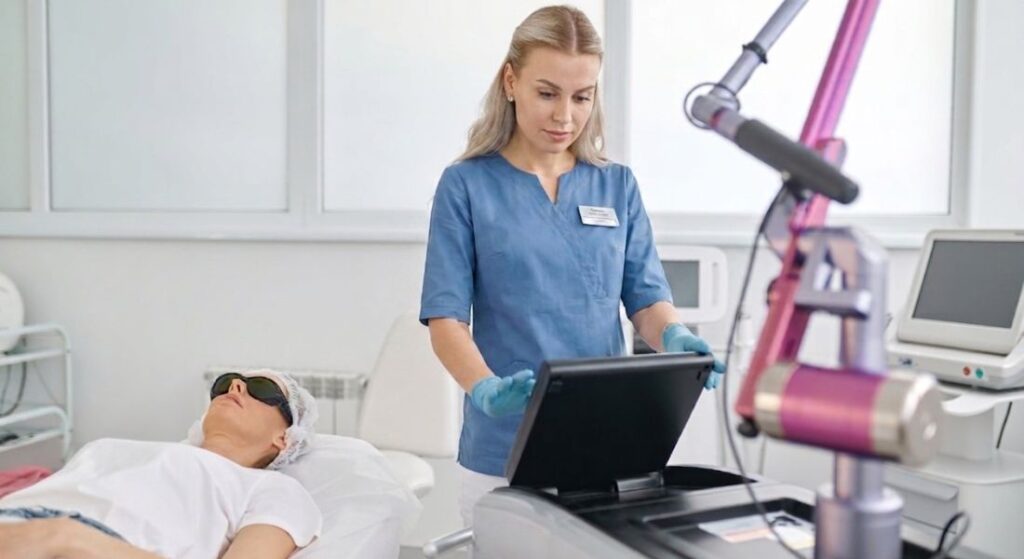
Some patients may need a preparation phase before CO₂ laser treatment. This may include avoiding sun exposure, adjusting your skincare, using pigment-supportive products or stopping irritating active ingredients. The goal is to make sure your skin is calm and ready before treatment.
If your skin is inflamed, recently tanned, irritated or sensitised, your risk of complications may increase. Treating unstable skin can make redness, pigmentation changes or delayed healing more likely. This is why your practitioner should check your skin condition carefully before going ahead.
Pre-treatment preparation is especially important if you are prone to pigmentation. You may need a slower and more cautious treatment plan rather than immediate laser resurfacing. Preparing your skin properly can help reduce risk and support a smoother recovery.
Aftercare Is Part of the Treatment
CO₂ laser aftercare is not optional. Once your treatment is complete, your healing depends heavily on how well you care for your skin. Good aftercare helps protect the treated area and supports a smoother recovery.
You may need to cleanse gently, apply prescribed ointments, avoid sun exposure, avoid picking, pause active skincare and attend follow-up appointments. If aftercare is ignored, your risk of infection, pigmentation changes and scarring may increase. This is why your practitioner should explain the recovery plan clearly before you leave the clinic.
Ablative laser resurfacing can carry a slightly higher scarring risk and is not suitable for everyone. This makes aftercare just as important as the procedure itself. When you follow your aftercare instructions properly, you give your skin a better chance to heal safely and evenly.
Downtime Should Be Planned Honestly
CO₂ laser treatment usually involves visible healing, so downtime should be discussed clearly before you book. Depending on the treatment intensity, you may experience redness, swelling, crusting, peeling and skin sensitivity. You may also notice ongoing pinkness even after the surface of your skin has healed.
You should understand how much time you may need away from work, social plans or intense exercise. This is especially important if you have an event coming up or cannot manage visible recovery. Planning honestly helps you avoid stress during the healing stage.
A safe consultation should always include a realistic downtime discussion. If you are told there is “no downtime” with an ablative CO₂ treatment, you should ask more questions. You deserve clear information so you can decide whether the treatment fits your skin, schedule and recovery needs.
Scarring Risk Must Be Taken Seriously
Scarring after CO₂ laser treatment is uncommon when your treatment is carefully planned and properly performed. However, it is still one of the more serious risks you need to understand before going ahead. Your skin type, treatment depth, healing response, aftercare, and medical history can all affect your risk. This is why safety should always come before aggressive results.
1. Aggressive treatment can increase risk: CO₂ laser treatment should be matched to your skin, concern, and healing ability. If the treatment is too strong or too deep, your skin may struggle to recover smoothly. A cautious approach is often safer than trying to achieve dramatic results too quickly.
2. Your scarring history should be checked: Your practitioner should ask whether you have ever developed keloid or hypertrophic scars. These are raised scars that can form when your skin produces too much collagen during healing. If you have this history, your treatment plan may need to be adjusted or avoided.
3. Infection can affect healing: Infection after treatment can increase the chance of delayed healing and scarring. This is why aftercare instructions are so important. You should keep the treated area clean, avoid picking, and follow the skincare guidance given by your practitioner.
4. Some areas may carry higher risk: Certain areas of the face or body may heal differently after laser treatment. Areas with thinner skin, reduced blood supply, or slower healing may need extra caution. Your practitioner should explain whether the area being treated has any added risk.
5. You should know the warning signs: Mild redness, swelling, and peeling can be normal after CO₂ laser treatment. However, increasing pain, spreading redness, discharge, or delayed healing should not be ignored. These signs may suggest irritation, infection, or another issue that needs early attention.
6. Early advice can prevent bigger problems: If something does not feel right during recovery, you should contact your clinic quickly. Waiting too long can allow a small problem to become more serious. Early treatment and proper guidance can reduce the chance of long-term marks or scarring.
Scarring risk should always be discussed honestly before CO₂ laser treatment. You should feel clear about your personal risk, how to care for your skin, and when to ask for help. A responsible practitioner will not rush this conversation or minimise your concerns. When treatment is planned carefully and recovery is monitored properly, your skin has a safer chance of healing well.
CO₂ Laser for Acne Scars Needs Careful Planning
CO₂ laser is often used for acne scarring because it can improve skin texture and support collagen remodelling. However, acne scars are not all the same, so your treatment plan should not be generic. Your practitioner needs to assess the scar type, depth, skin tone and healing risk before deciding whether laser is suitable.
Rolling scars, boxcar scars and general textural irregularities may respond differently from deep ice-pick scars. In some cases, you may need a combination approach, such as subcision, microneedling or other scar treatments alongside laser. This can help target different scar patterns more effectively than relying on CO₂ laser alone.
If you still have active acne, your practitioner may suggest controlling it before resurfacing. Treating inflamed or unstable skin can increase the risk of flare-ups, irritation and pigmentation problems. A safer plan focuses first on calming your skin, then treating the scars once your skin is more stable.
Choosing the Right Clinic Matters
Choosing the right clinic is one of the most important parts of safe CO₂ laser treatment. The device matters, but it is only one part of the process. Your safety also depends on proper assessment, treatment planning, operator training, emergency protocols, aftercare and follow-up.
You should feel comfortable asking questions before you agree to treatment. This includes questions about your suitability, risks, downtime, pigmentation changes, infection prevention and expected results. A good clinic will explain these points clearly instead of rushing you into a decision.
You should also feel that your skin has been properly assessed before any treatment is recommended. If a clinic pressures you or gives the same plan to everyone, that is a warning sign. Safe CO₂ laser treatment should feel personalised, careful and focused on your long-term skin health.
FAQs:
1. What is CO₂ laser treatment used for?
CO₂ laser treatment is commonly used to improve skin texture, fine lines, acne scarring, sun damage and selected benign skin concerns. It works by removing controlled layers of skin and encouraging new collagen formation. Because it is an ablative treatment, careful patient selection is very important.
2. Is CO₂ laser treatment suitable for everyone?
No, CO₂ laser treatment is not suitable for everyone. Your skin type, medical history, pigmentation risk, healing pattern and lifestyle all need to be assessed before treatment. A proper consultation helps reduce the risk of complications and sets realistic expectations.
3. Why does skin type matter before CO₂ laser treatment?
Skin type matters because some skin tones are more prone to pigmentation changes after laser resurfacing. If your skin tans easily or is more pigmentation-prone, your practitioner may need to use a more cautious treatment plan. This does not always mean you cannot have treatment, but it does mean your risk profile must be reviewed carefully.
4. What is the difference between fully ablative and fractional CO₂ laser?
Fully ablative CO₂ laser treats the full surface of the selected area, which can create more dramatic results but usually involves more downtime. Fractional CO₂ laser treats only tiny sections of the skin at a time, leaving surrounding skin intact to support healing. Both approaches still require careful settings and proper aftercare.
5. Can CO₂ laser treatment cause pigmentation problems?
Yes, pigmentation changes can happen after CO₂ laser treatment, especially in skin that is more prone to marking. Hyperpigmentation can appear as darker patches, while hypopigmentation can appear as lighter patches. This is why pigmentation risk should be discussed before treatment begins.
6. Why is sun exposure important before CO₂ laser treatment?
Recent tanning, sunburn or heavy sun exposure can make CO₂ laser treatment riskier. Your skin should be calm and stable before treatment so it heals more predictably. If you have recent sun exposure, your practitioner may advise delaying treatment.
7. Is aftercare important after CO₂ laser treatment?
Yes, aftercare is a major part of safe CO₂ laser treatment. You may need to cleanse gently, avoid sun exposure, pause active skincare, use prescribed ointments and attend follow-up appointments. Poor aftercare can increase the risk of infection, pigmentation changes and delayed healing.
8. How much downtime should I expect after CO₂ laser treatment?
Downtime depends on the intensity of treatment and the area treated. You may experience redness, swelling, peeling, crusting and sensitivity while the skin heals. A good consultation should explain the expected recovery period clearly before you decide to proceed.
9. Can CO₂ laser treatment be used for acne scars?
Yes, CO₂ laser treatment is often used for acne scarring because it can improve texture and support collagen remodelling. However, different scar types respond differently, so laser may not be the only treatment needed. If you still have active acne, your practitioner may recommend controlling it first.
10. How do I know if a clinic is safe for CO₂ laser treatment?
A safe clinic should assess your skin properly, explain risks, discuss downtime, provide eye protection and give clear aftercare advice. Your practitioner should also individualise settings rather than using the same approach for every patient. If the consultation feels rushed or risks are not discussed, it is worth asking more questions before treatment.
Final Thoughts: Why Safe CO₂ Laser Planning Matters
CO₂ laser resurfacing can improve skin texture, acne scarring, fine lines and overall skin quality, but your safety should always come first. International conference discussions continue to show that the best results are not just about using advanced technology, but about choosing the right treatment plan for your skin.
You should expect your practitioner to look carefully at your skin type, healing ability, pigmentation risk, medical history and expectations before treatment. A personalised plan can help reduce complications and support a smoother recovery, especially if your skin needs a more cautious approach. If you’re thinking about CO2 laser treatment in London, you can get in touch with us at the London Medical & Aesthetic Clinic.
References:
1. Choudhary, S., Khan, N.S. and Verma, R. (2023) ‘Exploring the molecular underpinning of psoriasis and its associated comorbidities through network approach: cross talks of genes and pathways’. https://pmc.ncbi.nlm.nih.gov/articles/PMC12748268/
2. Di Meglio, P., Villanova, F. and Nestle, F.O. (2014) ‘Psoriasis’, Cold Spring Harbor Perspectives in Medicine. https://pmc.ncbi.nlm.nih.gov/articles/PMC4817442/
3. Han, S.-J., Jung, G.-Y., Lee, G.-C., Ki, D.-H. and Kim, B.-S. (2026) ‘Current and emerging therapies targeting the IL-23/IL-17 axis in psoriasis’, Biomolecules & Therapeutics. https://www.sciencedirect.com/science/article/abs/pii/S0301211526002782
4. Singh, R.K., Patel, M., Sharma, A. and Verma, S. (2026) ‘Advances in nanocarrier-based drug delivery systems for dermatological disorders including psoriasis’. https://www.sciencedirect.com/science/article/abs/pii/S2468784725000303
5. Hawkes, J.E., Al-Saedy, M., Bouché, N., Al-Saedy, S., Song, E.J. and Feldman, S.R. (2024) ‘The psoriasis treatment pipeline: an overview and update’. https://pubmed.ncbi.nlm.nih.gov/39516426/