



Hair mesotherapy is not one standardised treatment. It is a scalp-injection technique that may use medicines or other preparations, and the evidence, expected results and risks vary with the formulation used and the underlying cause of hair loss.
You may see improvement in selected cases of pattern hair loss, but the evidence is less established than for treatments such as topical minoxidil. Your results will also depend on the underlying cause of your hair loss, so a proper assessment should come before treatment rather than relying on mesotherapy as a guaranteed solution.
What Is Hair Mesotherapy?
Hair mesotherapy involves multiple small injections into the scalp to deliver selected substances into the skin. Unlike a lotion or foam applied to the surface, the treatment bypasses the outer skin barrier, although the injection technique and depth can vary.
There is no single standard mesotherapy formula, and you may be offered substances such as minoxidil, dutasteride, growth-factor preparations or vitamins depending on the clinic and treatment protocol. You should also ask about the concentration, whether the medicine is being used within its UK licensed indication and route, and what ingredient-specific adverse effects need to be considered.
What Ingredients Can Be Used in Hair Mesotherapy?
Hair mesotherapy describes how the product is delivered rather than what you actually receive, so two clinics may offer very different injections under the same name. You may be offered substances such as minoxidil, dutasteride, peptides, vitamins or growth-factor preparations, but the evidence and potential risks depend on the specific ingredient and dose.
Some studies have investigated injectable minoxidil and dutasteride for pattern hair loss, while mixed vitamin, peptide and other multi-ingredient formulations are particularly difficult to compare because their composition, concentration and injection schedules vary. Before you agree to treatment, you should ask exactly what will be injected, how much will be used and what evidence supports that particular formulation.
How Is Hair Mesotherapy Supposed to Work?
How hair mesotherapy works depends mainly on what is injected into your scalp rather than the injections themselves. If minoxidil is injected intradermally, the aim is to deliver the medicine locally within the scalp rather than applying it to the skin surface.
Other formulations may contain peptides, vitamins or growth factors intended to influence your follicular environment, but the evidence varies between products. You should be cautious of claims that mesotherapy can simply “feed” your dormant follicles, as a permanently destroyed follicle cannot necessarily be restored through injections.
Which Type of Hair Loss Has Been Studied Most?
Most research into hair mesotherapy focuses on androgenetic alopecia, also known as male or female pattern hair loss, where genetically sensitive follicles gradually become finer. You may see some benefit from injectable treatments in this group, but studies are often small and use different ingredients, doses and treatment schedules.
You should not assume mesotherapy is suitable for every type of hair loss. If you have sudden shedding, patchy loss, scalp redness, scaling or pain, you may need an assessment to identify the underlying cause before considering injections.
Who May Be a Suitable Candidate?
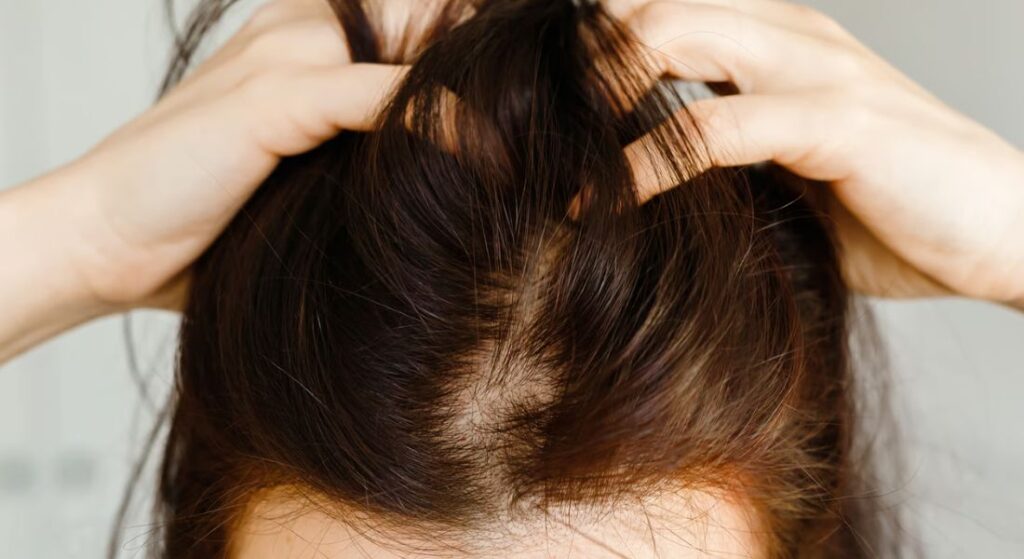
You may be considered for hair mesotherapy if you have diagnosed pattern hair loss and still have follicles that could potentially respond to treatment. You may be more likely to benefit when thinning is early or moderate, as strengthening existing hairs is generally more realistic than restoring an area that has been completely bald for many years.
Who May Not Be Suitable for Mesotherapy?
Hair mesotherapy is not suitable for everyone. Your practitioner should assess the cause of your hair loss, scalp condition, medical history and the ingredients being injected before recommending treatment.
1. Unexplained Hair Loss: Sudden shedding, patchy bald areas or rapidly worsening hair loss should be investigated before you consider mesotherapy.
2. Scalp Inflammation: Active infection, significant redness, scaling, pain or irritation may mean treatment needs to be postponed.
3. Medical Considerations: Pregnancy, medicines that affect bleeding and certain health conditions may influence whether treatment is suitable for you.
4. Previous Reactions: Tell your practitioner about allergies or previous reactions to injectable medicines or cosmetic treatments.
Your suitability depends on your hair-loss diagnosis and the product being injected. An assessment can help determine whether mesotherapy or another treatment is more appropriate.
What Results Can You Realistically Expect?
You should generally expect the goal of hair mesotherapy to be improving existing hair rather than creating completely new follicles. If you respond well, you may notice less shedding, thicker-looking hairs or improved hair density, but the amount of change can vary considerably between you and other patients.
Research has reported encouraging results with some injectable treatments, particularly certain dutasteride-based approaches, but the evidence remains limited by small studies, different treatment protocols and short follow-up periods. You should therefore avoid expecting a guaranteed percentage of regrowth, as your results will depend on your diagnosis, stage of hair loss, the product used and your individual response.
Evidence Note
Research into mesotherapy for androgenetic alopecia is growing, but studies use different medicines, doses, injection techniques and treatment schedules. A 2025 network meta-analysis of 33 eligible studies in male pattern hair loss included mesotherapy among several routes of minoxidil and 5-alpha-reductase inhibitor treatment and found dutasteride mesotherapy less effective than oral dutasteride.
A large retrospective study of 541 people receiving dutasteride mesotherapy reported treatment-related pain in 45.5% of patients. Only 86 patients could be assessed for one-year response to mesotherapy used alone, and 33 of those were classified as having marked improvement. Because this was not a randomised comparison and only a subgroup could be assessed for monotherapy effectiveness, these results should be interpreted cautiously.
How Long Does It Take to See Results?
You should not expect visible hair growth within days of your first mesotherapy sessions because your hair follicles need time to move through their growth cycle. You may notice reduced shedding before you see a clear improvement in density, while meaningful changes generally need to be assessed over several months.
You can track your progress with photographs taken under the same lighting, angle and distance each time. Your practitioner may also use trichoscopy or standardised hair measurements to give you a more objective comparison of whether the treatment is actually producing a benefit.
How Many Mesotherapy Sessions Will You Need?
There is no standard number of hair mesotherapy sessions because treatment schedules vary according to the product being injected and the available evidence. You may be offered sessions every few weeks or months, but a schedule used for one ingredient should not automatically be applied to another.
You should ask your practitioner what evidence supports the recommended number of sessions and when your progress will be reviewed. Standardised photographs or hair measurements can help you decide whether further injections are producing enough improvement to justify the additional cost and treatment.
How Long Do Mesotherapy Results Last?
You should be aware that the long-term durability of hair mesotherapy results is still uncertain because many studies only follow patients for relatively short periods. If you have androgenetic alopecia, the underlying tendency towards follicle miniaturisation can continue even when your hair initially improves.
You may therefore need maintenance sessions depending on the active ingredient and your response to treatment. Before you start, ask how long the expected benefit may last, whether ongoing treatment is likely and what the long-term cost could be if you need repeated sessions.
Is Mesotherapy Better Than Topical Minoxidil?

You should not assume that hair mesotherapy is better than topical minoxidil, as minoxidil has a longer history of use and remains an established treatment for pattern hair loss. Some studies have reported encouraging results with mesotherapy, but differences in ingredients, treatment methods and study quality make it difficult to conclude that injections are consistently more effective.
You may prefer mesotherapy if applying a topical product every day is difficult for you, but injections also involve clinic appointments, discomfort, cost and procedure-related risks. Your diagnosis, previous treatment, tolerance and personal preferences should all be considered before you choose between the two approaches.
Can Mesotherapy Regrow Hair on Completely Bald Areas?
You should be cautious about claims that hair mesotherapy can restore dense hair to completely bald areas. If you still have functioning or miniaturised follicles, treatment may potentially improve the thickness or appearance of existing hair, but a follicle that has been permanently destroyed cannot simply be recreated through injections.
Your practitioner should therefore assess the cause and extent of your hair loss before treatment, particularly if you have patchy or scarring hair loss. If follicles are no longer capable of producing hair, you may need to discuss other options, such as hair transplantation, rather than expecting mesotherapy to restore them.
Myth vs Fact
| Myth | Fact |
| Hair mesotherapy is one standard treatment. | Mesotherapy describes the injection technique; the ingredients, doses and treatment schedules can differ substantially between clinics and studies. |
| All hair mesotherapy products have the same evidence. | Evidence depends on the ingredient being injected, and vitamin or peptide mixtures cannot automatically be assumed to work like minoxidil or dutasteride. |
| Mesotherapy is proven to be better than topical minoxidil. | Current evidence does not establish mesotherapy as consistently superior to established topical minoxidil treatment. |
| Injecting a medicine into the scalp means it cannot cause systemic side effects. | Local administration may reduce systemic exposure in some circumstances, but it does not prove that systemic effects are impossible. |
| Hair mesotherapy can create new follicles in completely bald skin. | Treatment may help existing or miniaturised follicles in selected cases, but it cannot reliably recreate permanently destroyed follicles. |
| Everyone needs the same number of sessions. | There is no single evidence-based schedule because treatment protocols differ according to the injected substance and study design. |
| Vitamins injected into the scalp are automatically beneficial for hair loss. | A formulation should have evidence for the diagnosed cause of hair loss rather than being recommended simply because it contains vitamins or nutrients. |
Is Hair Mesotherapy Painful?
You should expect some discomfort because hair mesotherapy involves multiple injections into your scalp. You may feel repeated pinching, stinging or pressure, while mild redness, swelling, bruising or small spots of bleeding can occur around the injection sites.
Your level of discomfort will depend on the number and depth of injections, the formulation used and your individual sensitivity. Severe or worsening pain is not typical, particularly if you also develop increasing warmth, swelling, pus or significant crusting, and you should have these symptoms assessed.
What Side Effects and Complications Can Occur?
You may experience pain, redness, itching, swelling, bruising or small haematomas after hair mesotherapy, while folliculitis and headaches can also occur. You may also develop an allergic or inflammatory reaction to the injected substance, and infection is possible because your skin is being punctured.
Rare reports have described worsening hair loss and scarring after scalp mesotherapy. You should contact your clinic if you develop increasing pain, swelling, discharge, persistent redness or a new patch of hair loss, as these symptoms may need prompt assessment.
How Does Hair Mesotherapy Compare With Other Hair-Loss Treatments?
Different treatments have different levels of evidence, risks and practical commitments. The most appropriate option depends on the diagnosis rather than simply choosing the newest procedure available.
| Treatment | Evidence/role | Practical considerations | Main limitation |
| Topical minoxidil | Established treatment for male and female pattern hair loss | Applied regularly at home | Benefit requires continued treatment and not everyone responds |
| Oral finasteride | Licensed UK treatment for male pattern hair loss in suitable men | Tablet treatment | Sexual and psychiatric adverse effects require appropriate counselling |
| Hair mesotherapy | Emerging/procedural option with evidence varying according to injected ingredient | Repeated scalp injections and clinic visits | No single standard formulation, protocol or long-term evidence base |
| Dutasteride mesotherapy | Studied for androgenetic alopecia but used outside the standard UK licensed dutasteride indication | Periodic scalp injections | Long-term evidence remains limited and drug-specific safety issues apply |
| PRP | Procedural option studied for some forms of pattern hair loss | Requires blood collection and scalp injections | Protocols vary and outcomes are not uniform |
| Hair transplantation | Surgical redistribution of existing follicles | Procedure with recovery and cost considerations | Requires suitable donor hair and does not stop ongoing loss of untreated hair |
Topical minoxidil and finasteride have established UK roles in pattern hair loss, while dutasteride’s current UK licensed indication is benign prostatic hyperplasia rather than androgenetic alopecia.
How Can You Decide Whether Hair Mesotherapy Is Worth It?
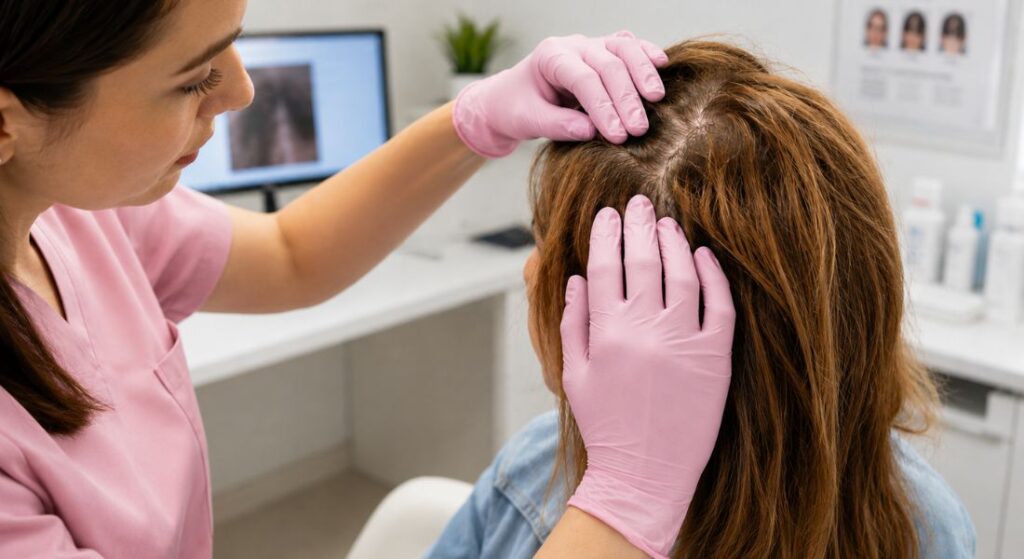
You should first find out why your hair is thinning before deciding whether mesotherapy is right for you. Ask exactly what will be injected, what evidence supports that specific ingredient and how your progress will be measured, rather than relying on general claims about hair mesotherapy.
You should also consider the full cost of the initial treatment and any maintenance sessions you may need. Standardised photographs or objective hair-density measurements can help you judge whether you are getting enough improvement to make continued treatment worthwhile.
Key Takeaways
1. Results depend heavily on the substance being injected and the underlying cause of your hair loss.
2. Mesotherapy may improve shedding, hair thickness or density in selected patients, but substantial regrowth cannot be guaranteed.
3. Side effects can include injection-site pain, swelling, bruising, itching and infection, while rare cases of worsening alopecia have been reported.
4. Sudden, patchy, painful or inflamed hair loss should be medically assessed before mesotherapy.
Frequently Asked Questions
1. Is hair mesotherapy worth it?
Hair mesotherapy may be worth considering if you have suitable pattern hair loss and want to improve the thickness or appearance of existing hair. However, results vary and the evidence depends on the substance injected, so it should not be viewed as a guaranteed treatment.
2. How effective is hair mesotherapy for hair loss?
Hair mesotherapy may reduce shedding and improve hair density in some people, particularly those with pattern hair loss. The evidence is still less established than for treatments such as topical minoxidil, and your results will depend on the cause and extent of your hair loss.
3. How many hair mesotherapy sessions will you need?
There is no standard number of sessions because treatment schedules vary according to the ingredients used and the clinic’s protocol. Your practitioner should explain how often you need treatment and when your progress will be reviewed.
4. How long does hair mesotherapy take to show results?
Hair growth takes time, so you should not expect immediate regrowth after treatment. Reduced shedding may occur earlier, while noticeable changes in hair thickness and density generally need to be assessed over several months.
5. Is hair mesotherapy painful?
Hair mesotherapy can cause some discomfort because it involves multiple injections into your scalp. You may experience brief pinching or stinging, followed by temporary tenderness, redness or swelling around the injection sites.
6. How long do hair mesotherapy results last?
The long-term durability of mesotherapy results is still uncertain because many studies have relatively short follow-up periods. If you have pattern hair loss, you may need maintenance treatment because the underlying tendency towards hair thinning can continue.
7. Can hair mesotherapy regrow hair on bald areas?
Hair mesotherapy is unlikely to recreate follicles that have been permanently destroyed. It may be more useful when follicles are still present but producing increasingly thin or weak hairs.
8. What are the side effects of hair mesotherapy?
Common side effects can include temporary pain, redness, itching, swelling, bruising and small areas of bleeding. Less common complications include infection, folliculitis, allergic reactions and inflammatory reactions to the injected substance.
9. Is hair mesotherapy better than minoxidil?
Hair mesotherapy cannot currently be considered consistently better than topical minoxidil. Minoxidil has a longer history of use and established evidence, while the effectiveness of mesotherapy varies depending on the injected ingredient and treatment protocol.
10. Who should avoid hair mesotherapy?
You should have unexplained or sudden hair loss assessed before considering mesotherapy, particularly if you have patchy bald areas, scalp pain, redness, scaling or inflammation. Treatment may also need to be postponed if you have an active scalp infection or other factors that could make injections unsuitable.
Final Thoughts: Is Hair Mesotherapy Right for You?
Hair mesotherapy may be worth considering if you want to improve the appearance of thinning hair and you have suitable pattern hair loss, but it is not a guaranteed solution. Your potential results depend heavily on the cause of your hair loss, the substance being injected and how your follicles respond, so you should have your hair loss properly assessed before starting treatment.
If you’re looking for hair mesotherapy treatment in London, you can get in touch with us at the London Medical & Aesthetic Clinic.
References:
1. Gupta, A.K., Bamimore, M.A., Williams, G. and Talukder, M. (2025) ‘Comparative efficacy of minoxidil and 5-alpha reductase inhibitors monotherapy for male pattern hair loss: network meta-analysis study of current empirical evidence’, Journal of Cosmetic Dermatology, 24(7), article e70320. Available at: https://pmc.ncbi.nlm.nih.gov/articles/PMC12207719/
2. Saceda-Corralo, D., Moustafa, F., Moreno-Arrones, Ó., Jaén-Olasolo, P., Vañó-Galván, S. and Camacho, F. (2022) ‘Mesotherapy with dutasteride for androgenetic alopecia: a retrospective study in real clinical practice’, Journal of Drugs in Dermatology, 21(7), pp. 742–747. Available at: https://pubmed.ncbi.nlm.nih.gov/35816059/
3. Uzel, B.P.C., Takano, G.H.S., Chartuni, J.C.N., Cesetti, M.V., Gavioli, C.F.B., Lemes, A.M. and Costa, I.M.C. (2021) ‘Intradermal injections with 0.5% minoxidil for the treatment of female androgenetic alopecia: a randomized, placebo-controlled trial’, Dermatologic Therapy, 34(1), article e14622. Available at: https://pubmed.ncbi.nlm.nih.gov/33269529/
4. Ferro, A., Alkhowailed, M., Porcello, A., Cerrano, M., Chemali, M., Lourenço, K., Marques, C., Raffoul, W., Applegate, L.A. and Laurent, A.E. (2026) ‘Advances in medicalized hair loss solutions: a review of current clinical practices and regenerative medicine-based protocols with focus on off-label injectable treatments’, Journal of Clinical Medicine, 15(5), article 1836. Available at: https://www.mdpi.com/2077-0383/15/5/1836
5. Duque-Estrada, B., Vincenzi, C., Misciali, C. and Tosti, A. (2009) ‘Alopecia secondary to mesotherapy’, Journal of the American Academy of Dermatology, 61(4), pp. 707–709. Available at: https://www.sciencedirect.com/science/article/pii/S0190962208024687