



When you choose a collagen-stimulating injectable such as Sculptra, you are usually looking for natural, progressive improvement rather than dramatic overnight change. The appeal lies in subtle enhancement that develops gradually and integrates with your existing features. However, one of the most common questions we hear is whether this type of treatment can be overdone. If collagen continues to build over time, it is reasonable for you to wonder whether excessive stimulation could eventually create heaviness or imbalance.
The honest answer is yes, overtreatment is possible. Because Sculptra works by encouraging your own tissue to regenerate, excessive product or poorly timed sessions can lead to more structural build-up than intended. This does not happen suddenly, and it is not the norm when treatment is approached with care. In fact, when we plan responsibly and assess between sessions, the likelihood of overcorrection remains low.
At London Medical & Aesthetic Clinic, we adopt a conservative, proportion-led strategy from the outset. Our priority is always harmony rather than exaggeration, and refinement rather than volume for its own sake. In this article, we guide you through how overtreatment can occur, the signs you should be aware of, and the measures experienced practitioners take to prevent imbalance when performing Sculptra.
Understanding How Sculptra Works
When you choose Sculptra, it is important to understand that it does not behave like a traditional dermal filler. We are not placing instant volume beneath the skin to create an immediate visible change. Instead, the treatment stimulates your fibroblasts to produce collagen gradually over time. This regenerative approach relies on your body’s own biological response.
Because collagen production is progressive, the volume you see develops slowly across weeks and months. You will not walk out of clinic with a final result on the same day. The improvement builds in layers as your tissue strengthens and remodels itself. We guide you through this process so your expectations align with the science behind it.
This delayed mechanism makes pacing absolutely crucial. Since results accumulate gradually, careful planning prevents imbalance. We assess your response before deciding on further treatment rather than rushing ahead. When you understand the timeline, you appreciate why patience and strategy are central to success.
Why “More” Is Not Always Better
In aesthetic medicine, it is easy to assume that adding more product will create a stronger or faster result. However, collagen stimulation follows a natural biological curve. Your body can only respond at a certain rate, and beyond that point, additional product does not automatically improve outcomes. We respect these physiological limits when planning your treatment.
If too much stimulation is introduced too quickly, facial balance can shift. Volume alone does not define attractiveness; proportion and harmony are far more important. When we focus purely on increasing fullness, we risk compromising natural structure. Subtlety is what keeps results elegant and believable.
We always prioritise proportion over sheer volume. The goal is not to look fuller, but to look structurally supported and refreshed. By applying restraint, we preserve your individuality. In our approach, precision consistently outweighs excess.
What Overtreatment Actually Means

When we talk about overtreatment, we are not referring to toxicity or a dangerous reaction. Instead, we mean that excessive structural build-up has occurred in specific areas. This can happen when too much collagen stimulation is encouraged without careful balance. It is typically a planning issue rather than a flaw in the product itself.
Overtreatment may cause the face to appear heavier or less defined than intended. Because Sculptra works gradually, this effect can develop slowly and become noticeable only over time. You might feel that certain areas look fuller than expected. This is why measured dosing is so important.
Technique and dosage play a critical role in preventing this outcome. We assess facial anatomy carefully before each session. By tailoring placement and quantity precisely, we reduce the likelihood of imbalance. Thoughtful execution protects natural-looking refinement.
The Risk of Facial Heaviness
Collagen stimulation is designed to restore structure and support, but balance is critical. If excessive stimulation occurs in areas such as the midface, added fullness can begin to blur natural contours. While volume can be beneficial, too much may soften transitions between the cheeks and surrounding regions. The result can feel less sculpted and less defined.
1. Over-Stimulation in the Midface – The midface is particularly sensitive to volume change. Excess collagen here can reduce contour clarity. Subtle architecture may become rounded rather than refined.
2. Gradual Onset of Heaviness – Collagen builds slowly, so heaviness does not appear immediately. It may only become noticeable months after treatment. This delayed visibility makes conservative planning essential.
3. Loss of Natural Transitions – When volume is excessive, the natural flow between cheek, jawline, and lower face can appear blurred. Definition may soften unintentionally. Facial harmony depends on proportion.
4. The Importance of Measured Placement – Careful dilution, depth, and pacing help control stimulation. Gradual layering reduces the risk of overcorrection. Precision protects refinement.
We prioritise enhancement without overwhelming your features. By respecting natural facial architecture and planning conservatively, we preserve lightness and definition. Thoughtful pacing ensures collagen supports your structure rather than dominating it.
Overcorrection and Loss of Definition
Overcorrection occurs when more structural support is created than the face requires. While the intention may be to strengthen or lift, excessive build-up can soften naturally sharp features. Jawlines that were once crisp may appear less defined. Subtle facial angles can become rounded.
Cheek projection, if overstimulated, may look disproportionate to the rest of your profile. This shift can change how light reflects across your face. Balanced treatment, by contrast, preserves the uniqueness of your bone structure. We aim to complement rather than override your natural characteristics.
When overcorrection alters facial character, the result feels less authentic. Our philosophy is always to refine rather than exaggerate. By prioritising proportion and individuality, we protect the integrity of your appearance. Careful planning ensures enhancement without distortion.
Why Gradual Results Can Be Misjudged
Because Sculptra works progressively, you may feel tempted to seek additional sessions before the full effect has developed. When changes appear subtle in the early weeks, it can create the impression that insufficient correction has occurred. This reaction is understandable, particularly if you are used to instant filler results. However, collagen maturation requires biological time.
Your fibroblasts continue producing and organising collagen long after the initial treatment. What seems minimal at first often strengthens quietly beneath the surface. If retreatment is performed too early, we risk adding stimulation before the previous response has fully declared itself. This is where overtreatment can begin.
Patience is therefore protective. When we allow the tissue to complete its natural cycle, we gain a clearer picture of what has truly developed. Waiting supports accuracy, balance, and long-term refinement.
The Importance of Proper Spacing Between Sessions
Spacing between sessions is not simply a scheduling detail; it is a clinical safeguard. Collagen stimulation requires time to initiate, develop, and stabilise before further treatment is added. We allow this interval so we can accurately assess how your tissue has responded. Without adequate spacing, true progress becomes difficult to judge.
1. Allowing Collagen to Settle – After each session, collagen begins forming gradually. This process continues for weeks beneath the surface. Giving it time ensures we evaluate real tissue change, not temporary effects.
2. Preventing Cumulative Overcorrection – If sessions are placed too close together, biological effects may compound unexpectedly. What seems conservative initially can accumulate into excess. Measured pacing protects proportion.
3. Improving Assessment Accuracy – Clear intervals allow us to distinguish between early swelling, developing collagen, and final integration. This clarity supports better clinical decisions. Reliable evaluation prevents reactive adjustments.
4. Maintaining Structural Balance – Gradual layering encourages harmonious enhancement. Structured timing reduces the risk of overload or heaviness. Each stage builds intentionally on the last.
By respecting appropriate spacing, we maintain control over progression and outcome. You benefit from thoughtful refinement rather than guesswork. Proper timing is one of the most effective safeguards for achieving balanced, natural-looking results.
Individual Collagen Response Variability
Not all patients respond to collagen stimulation in the same way. Some individuals produce new collagen very robustly, while others show a more conservative response. Your biology plays a central role in determining the pace and intensity of change. This variability is entirely natural.
If you are a strong responder, smaller doses may create noticeable structural build-up. In such cases, careful adjustment is necessary to avoid excess. Conversely, conservative responders may require gradual layering over time. Personalisation is therefore fundamental.
We never assume uniform outcomes. Each treatment plan is adapted to your unique regenerative capacity. Recognising this biological diversity protects proportion and prevents overtreatment.
Anatomical Areas More Prone to Overfilling
Certain areas of the face are more sensitive to excess structural stimulation. The lower face and cheeks, in particular, require exceptional precision. Even a subtle miscalculation in these zones can shift overall balance. Because these areas influence contour strongly, restraint is vital.
If too much support develops in the wrong plane, proportion may change unintentionally. The transition between midface and jawline can lose clarity. Strategic placement minimises this risk by respecting anatomical boundaries.
Our understanding of facial anatomy guides every injection decision. We consider depth, distribution, and regional behaviour carefully. This anatomical awareness is central to maintaining safety and harmony.
Signs That Sculptra May Have Been Overdone
One of the earliest indicators of overtreatment is persistent facial heaviness. You may feel that your features look fuller than intended, even if swelling has resolved. Another possible sign is reduced natural movement, particularly if structural density becomes excessive. These changes are typically subtle at first.
Imbalance between the upper and lower face can also develop gradually. The face may appear less defined or slightly disproportionate. Importantly, these signs rarely present immediately after treatment. They tend to emerge as collagen matures over months.
Because the onset is gradual, careful follow-up is essential. Early recognition allows us to monitor progression thoughtfully. Understanding these signs helps you seek review before imbalance becomes pronounced.
Why Sculptra Is Not Easily Reversible
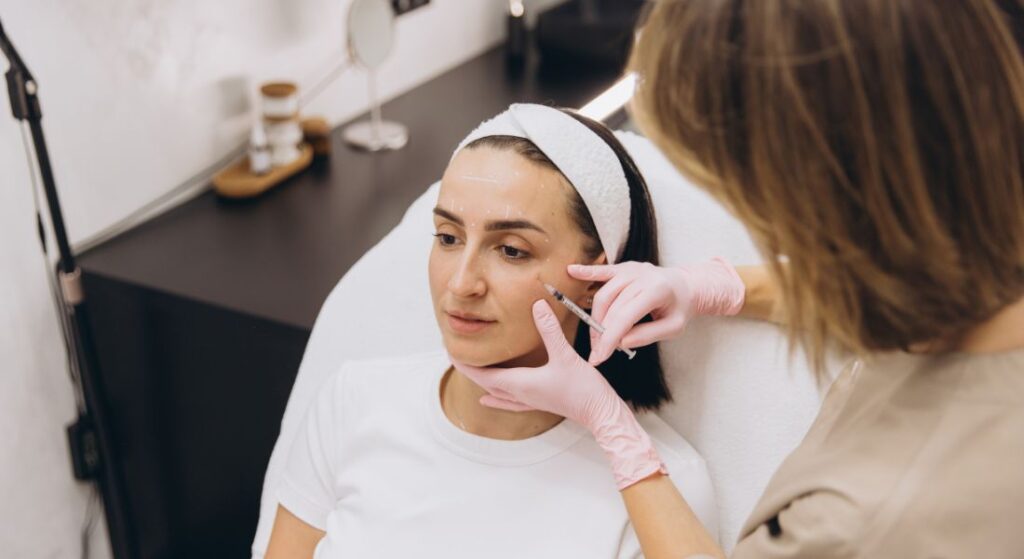
Sculptra works by stimulating your body to produce its own collagen rather than placing a dissolvable gel. Once collagen forms, it becomes integrated into your natural dermal structure. This means results are biologically embedded rather than temporarily placed. For this reason, prevention and precision are far more important than correction.
1. No Enzyme-Based Reversal – Unlike hyaluronic acid fillers, there is no enzyme that can immediately dissolve Sculptra. The effect comes from your own tissue response. This makes adjustments less straightforward.
2. Collagen Integration Into Skin Framework – The new collagen becomes part of your structural support system. It is not a separate material that can simply be removed. Integration makes results durable but less instantly adjustable.
3. Gradual Softening Over Time – If excess stimulation occurs, collagen may soften naturally over an extended period. However, this process is slow. There is no rapid correction pathway.
4. The Importance of Conservative Dosing – Careful dilution, placement, and session spacing protect against imbalance. Thoughtful planning reduces the likelihood of overcorrection. Precision at the outset is the safest strategy.
When we understand that outcomes cannot be instantly reversed, the value of measured treatment becomes clear. Conservative planning safeguards harmony and proportion. Caution early on prevents avoidable regret later.
How Experienced Injectors Prevent Overtreatment
The first safeguard against overtreatment is conservative dosing. We prefer to build results gradually rather than attempt dramatic correction in one phase. Incremental stimulation allows your tissue response to guide the next step. This approach reduces unpredictability.
Review appointments are equally important. They provide structured opportunities to assess balance before progressing further. Our evaluation focuses on proportion and harmony, not simply on adding more product.
This philosophy prioritises natural outcomes over speed. By respecting biological pacing and facial architecture, we protect refinement. Experience lies in knowing when to stop as much as when to continue.
Why Realistic Expectations Matter
Some patients understandably request dramatic or rapid change. However, Sculptra is designed for progressive refinement rather than instant transformation. When expectations exceed the biological mechanism, overtreatment becomes more likely. Education therefore plays a crucial role.
If you understand that improvement unfolds gradually, you are less likely to seek unnecessary additional sessions. Aligning goals with regenerative science protects both safety and aesthetics. We guide you toward enhancement that feels natural and proportionate.
When expectations and biology are aligned, satisfaction increases. Realistic goals reduce pressure to overcorrect. Informed patients make more confident, balanced decisions.
The Role of Facial Structure Assessment
Comprehensive assessment begins with your bone structure, which provides the foundational framework of your face. Fat pad distribution then influences contour and softness across different regions. Skin thickness further determines how visible structural changes will appear. Each of these elements must be considered together.
If we focus on one area in isolation, we risk disrupting overall balance. Treating the whole face ensures that support is distributed harmoniously. This broader perspective prevents isolated overcorrection.
We evaluate structure, volume, and tissue quality collectively before proceeding. This integrated assessment protects individuality and proportion. Precision begins long before injection.
How Age Influences Overcorrection Risk
Age affects how your skin responds to collagen stimulation. Younger tissue may respond more energetically, producing collagen efficiently and sometimes more rapidly. In such cases, conservative dosing is especially important. Excess stimulation can accumulate quickly.
Mature skin, by contrast, may require slightly more sessions to achieve structural reinforcement. However, this does not justify aggressive dosing. The response rate simply varies with age and tissue condition.
Tailored planning accounts for these differences. Uniform dosing across age groups is inappropriate and potentially risky. By adjusting strategy to your biological stage, we preserve natural balance and reduce the risk of overcorrection.
Combining Treatments Safely
Sculptra can be combined effectively with other aesthetic modalities, but this must be done with careful strategy. When we layer treatments such as skin tightening, resurfacing, or traditional fillers, sequencing becomes critically important. Each modality interacts with your tissue differently, and timing determines how harmoniously they integrate. Without coordination, results can become disproportionate.
If multiple sources of volume are introduced too closely together, the risk of facial heaviness increases. Overlapping stimulation or filler placement may compound effects beyond what was originally intended. This is why integrated planning is essential rather than optional. We always evaluate the cumulative impact, not just the individual treatment.
Coordination between procedures protects natural balance. We map out a phased approach so each intervention has space to settle before the next begins. By respecting how treatments build upon one another, we reduce the likelihood of overload. Careful sequencing preserves refinement.
Long-Term Planning Reduces Risk
Sculptra is rarely a single-session treatment; it is typically delivered over a structured series. Because collagen builds progressively, a long-term vision must guide each incremental step. We focus on where your face is heading, not just where it stands today. This broader perspective prevents reactive decision-making.
When transformation is rushed, imbalance becomes more likely. Gradual refinement allows your natural structure to adapt without appearing exaggerated. Each session builds gently upon the last, maintaining proportion throughout the process. Patience is built into the plan.
By committing to a measured pathway, you gain durability as well as elegance. The safest outcomes are those that evolve steadily rather than abruptly. Long-term planning is not restrictive; it is protective.
Why Subtlety Is the Gold Standard
In aesthetic medicine, the most successful outcomes are often the least conspicuous. When you appear refreshed rather than noticeably altered, harmony has been preserved. Subtle enhancement works with your natural anatomy instead of competing with it. This refined balance defines high-quality treatment.
1. Enhancement Without Overstatement – Measured adjustments support existing features. They improve proportion while maintaining authenticity. The result feels recognisable and natural.
2. Avoiding Disproportion – Excess volume or overt correction can disrupt facial harmony. Attention may shift toward the treatment rather than the person. Subtlety protects balance.
3. Preserving Individual Identity – Every face has unique character and movement. Gentle refinement respects this individuality. Authentic expression remains intact.
4. Building Quiet Confidence – When results align with your identity, satisfaction increases. Changes feel integrated rather than imposed. Confidence grows without drawing unwanted scrutiny.
We aim for improvement that feels effortless rather than obvious. Subtlety protects both beauty and individuality. In balanced aesthetic care, refinement always outweighs exaggeration.
When to Pause Instead of Add
If you can see improvement but feel it is not yet complete, the instinct may be to add more treatment immediately. However, this is often the moment when restraint is most important. Collagen continues to mature long after the initial session. What appears modest today may strengthen in the months ahead.
We encourage you to pause and allow biological processes to unfold fully. Reassessment after several months provides a clearer, more objective view. Acting too quickly can tip balance from refinement into excess. Time is an essential part of the mechanism.
In aesthetic medicine, restraint is a strength rather than a limitation. By waiting, we protect facial harmony and long-term integrity. Measured judgement prevents unnecessary correction.
Choosing an Experienced Clinic Matters

Experience shapes clinical judgement, and judgement directly influences dosing decisions. Every injection requires an understanding of anatomy, biology, and long-term proportion. When this expertise is lacking, the risk of imbalance increases. Skill is not only technical; it is strategic.
Dosing choices determine how collagen develops over time. Conservative, thoughtful application supports elegance, whereas excessive stimulation can alter character. When considering Sculptra London treatments, clinic expertise is not a luxury. It is fundamental to achieving safe and refined results.
We believe aesthetic integrity depends on experience-led planning. From consultation to follow-up, every stage requires informed decision-making. Choosing the right clinic safeguards both your outcome and your confidence.
FAQs:
1. Can Sculptra really be overdone if it works gradually?
Yes, Sculptra can be overdone, even though it works progressively rather than instantly. Because it stimulates your body’s own collagen production, excessive dosing or sessions placed too close together can lead to more structural build-up than intended. The gradual nature of collagen formation can make overcorrection less obvious at first, which is why careful pacing and review appointments are essential.
2. What are the early signs that Sculptra may have been overtreated?
Early signs of overtreatment often include a sense of facial heaviness or fullness that feels disproportionate to your natural structure. You may notice reduced definition along the jawline or midface, or feel that contours appear softer than expected. These changes usually develop gradually over months as collagen matures rather than appearing immediately after injection.
3. Does overtreatment mean the product is unsafe?
No, overtreatment does not indicate toxicity or a dangerous reaction to the product. It usually reflects excessive collagen stimulation due to dosing, placement, or timing decisions. The issue relates to aesthetic balance rather than safety, and it is typically preventable through conservative planning and experienced technique.
4. Why is Sculptra harder to reverse than traditional fillers?
Unlike hyaluronic acid fillers, Sculptra cannot be dissolved with an enzyme because it stimulates your own collagen rather than placing a gel-based substance. Once collagen forms and integrates into your skin’s framework, it becomes part of your natural structure. This means that prevention and precision are more important than correction, as adjustments are gradual rather than immediate.
5. Can overdone Sculptra soften over time on its own?
If overtreatment occurs, collagen may gradually remodel and soften over an extended period as part of the natural ageing and turnover cycle. However, this process is slow and cannot be accelerated easily. While the face may rebalance subtly over time, careful planning from the outset is far more reliable than waiting for natural softening.
6. Why does spacing between sessions matter so much?
Spacing allows collagen to fully develop and stabilise before additional stimulation is introduced. If sessions are performed too close together, biological effects can accumulate beyond what was originally intended. Proper intervals give practitioners the opportunity to assess real tissue response rather than temporary swelling, which reduces the risk of overcorrection.
7. Are certain facial areas more prone to overtreatment?
Yes, areas such as the midface and lower face are particularly sensitive to volume changes. Even small increases in structural density can alter contour definition in these regions. Because these zones strongly influence facial harmony, precise placement and conservative dosing are especially important to prevent heaviness or imbalance.
8. Can combining Sculptra with other treatments increase the risk of overdoing it?
Combining Sculptra with fillers, tightening treatments, or resurfacing procedures can enhance overall results when carefully planned. However, if multiple sources of volume or stimulation are layered too closely together without strategic timing, cumulative effects may create excess fullness. Integrated planning and sequencing are therefore essential to maintain proportional balance.
9. How can patients reduce the risk of overtreatment?
Patients can reduce risk by choosing an experienced practitioner, attending structured follow-up appointments, and resisting the urge to add more treatment too quickly. Understanding that collagen continues to build over several months encourages patience. Clear communication about goals and expectations also helps ensure that refinement, rather than excess, remains the priority.
10. How does an experienced clinic prevent Sculptra from being overdone?
At London Medical & Aesthetic Clinic, we prevent overtreatment through conservative dosing, thorough anatomical assessment, and careful spacing between sessions. We prioritise proportion and harmony over dramatic change, reviewing progress before recommending further stimulation. This structured, measured approach protects natural expression and long-term aesthetic balance.
Final Thoughts: Precision, Patience, and Proportion
Sculptra is designed to strengthen and refine your natural structure, not to overwhelm it. While overtreatment is possible, it is rarely the result of the product itself and far more often a matter of pacing, planning, or excessive layering. When collagen stimulation is approached conservatively and reviewed carefully between sessions, the risk of heaviness or imbalance remains low.
At London Medical & Aesthetic Clinic, we prioritise proportion over volume and subtlety over exaggeration. Our approach to Sculptra London treatments is guided by anatomical assessment, staged dosing, and long-term planning rather than short-term intensity. By respecting biology and allowing time for collagen to mature fully, we protect both harmony and individuality. If you’re thinking about Sculptra treatment in London, you can connect with us at the London Medical & Aesthetic Clinic to review your concerns and discuss suitable treatment options.
Reference:
1. Signori, R., et al. (2024), Efficacy and safety of poly-L-lactic acid (PLLA) treatment for aesthetic indications: a systematic review. Plastic and Reconstructive Surgery – Global Open. https://pmc.ncbi.nlm.nih.gov/articles/PMC11435306/
2. Ao, Y.J. (2024), Application of PLLA (poly-L-lactic acid) for rejuvenation and facial aesthetic corrections. Medical Journal (Dermatology research). https://pmc.ncbi.nlm.nih.gov/articles/PMC10939544/
3. Innocenti, A., et al. (2025), Injectable poly-L-lactic acid (PLLA-SCA™) as a versatile tool in aesthetic medicine: clinical guidance and outcomes. Cosmetics, 12(6), 264. https://www.mdpi.com/2079-9284/12/6/264
4. Aesthetic Surgery Journal (2005), Poly-L-lactic acid (Sculptra®) for aesthetic correction of facial volume loss. https://www.sciencedirect.com/science/article/abs/pii/S1090820X05004711
5. Kessler, D., et al. (2008), Skin augmentation and correction: the new generation of dermal fillers a dermatologist’s experience. Journal of Dermatological Treatment (Elsevier). https://www.sciencedirect.com/science/article/abs/pii/S0738081X08002502