


If your stretch marks are still noticeable after pregnancy, you may be wondering whether anything can be done once they have started to fade or become white. The good news is that treatment may still improve their appearance, whether your stretch marks are relatively new and red or purple, or older and paler.
You do not necessarily need to start treatment immediately after giving birth, as your skin and body can continue changing during your postpartum recovery. When treatment is appropriate for you, options such as microneedling, fractional CO₂ laser and radiofrequency microneedling may help improve the texture and visibility of your stretch marks. The aim is improvement rather than complete removal, and your results will depend on factors such as the age and appearance of your marks, your skin tone and the treatment you choose.
What Do Pregnancy Stretch Marks Look and Feel Like?
Pregnancy stretch marks, known as striae gravidarum, develop when changes within the deeper layers of your skin affect collagen and elastic fibres. You may notice them developing as your abdomen, breasts and other areas of your body change during pregnancy. You may also notice some itchiness as your skin changes, although stretch marks themselves are harmless and do not usually cause medical problems.
1. Common Areas: You may develop stretch marks on your abdomen, breasts, hips, thighs or buttocks during pregnancy.
2. Early Colour: Newer marks may appear red, pink, purple or reddish-brown depending on your skin tone.
3. Colour Changes: Your stretch marks often become paler, white or silvery as they mature after pregnancy.
4. Deeper Skin Changes: Pregnancy stretch marks involve changes in collagen and elastic fibres rather than simply dryness at the skin’s surface.
Moisturisers can help keep your skin hydrated and comfortable, but they cannot reliably remove established stretch marks. If your marks remain noticeable after pregnancy, treatments that encourage collagen remodelling may help improve their texture and visibility.
Why Do Stretch Marks Develop During Pregnancy?
During pregnancy, your skin stretches as your abdomen, breasts and body shape change, while hormonal changes may also affect your connective tissue. Your genetics, family history, age and body changes can also influence how likely you are to develop stretch marks.
You may develop stretch marks even if you use creams and follow healthy pregnancy advice, because factors such as your genetics and individual skin characteristics also play an important role. Your risk is influenced by your individual skin biology, so having stretch marks does not mean you have done anything wrong.
What Happens to Stretch Marks After You Give Birth?
Your pregnancy stretch marks may naturally fade after you give birth, with red or purple marks gradually becoming paler or white. You may notice they become less visible over time, but they are unlikely to disappear completely.
Your skin can also continue changing during the postpartum period, so you should not judge your final appearance too quickly. You may still notice differences in the texture, width or depth of your stretch marks even after their colour has faded.
Evidence Note
Stretch marks often become less conspicuous naturally as red or purple striae mature into paler marks, so improvement in colour after pregnancy is not always caused by treatment. A 2024 systematic review covering 151 studies and 4,806 treatment outcomes also found considerable variation between therapies and relatively uncommon complete responses, supporting realistic expectations rather than promises of complete removal.
When Can You Consider Stretch Mark Treatment After Pregnancy?
Published evidence does not establish one standard postpartum waiting period that applies to every stretch-mark treatment. Your timing should be individualised according to your postpartum recovery, whether the treatment area has fully healed, whether your body shape is still changing, whether you are breastfeeding and the specific procedure being considered.
You can discuss treatment with your clinician once you feel ready and your recovery is progressing well. Your stretch marks may still be red or may have matured into white marks, which can help you and your clinician decide whether treatment now or later is more suitable.
Can You Have Stretch Mark Treatment While Breastfeeding?
You should tell your clinician if you are breastfeeding before having stretch mark treatment. Your treatment may still be possible, but you may need to consider the specific procedure, any numbing cream or aftercare products used, and where your stretch marks are located.
Breastfeeding does not automatically rule out every cosmetic procedure, but treatment should be considered individually. Your clinician should review the treatment site, the procedure itself, any local anaesthetic or numbing cream, prescribed topical medicines and aftercare products, particularly if your stretch marks are on or close to your breasts.
Clinical Tip
If you are breastfeeding, tell your practitioner exactly where your stretch marks are and which products your baby’s skin may contact. This is particularly important for breast stretch marks because treatment reactions, topical medicines and aftercare products may affect how and when that area can safely be treated.
Can You Treat Stretch Marks on Your Breasts While Breastfeeding?
Breast stretch marks need additional planning while you are breastfeeding because your baby’s mouth and skin may come into direct contact with the treatment area. Before treatment, your clinician should know exactly where the marks are and whether the nipple or areola would be involved, as well as which anaesthetic, topical medicines and aftercare products would be used.
Topical tretinoin should not be applied directly to the nipple or areola, and your baby’s skin should not come into direct contact with areas treated with it. If a procedure is likely to cause significant redness, crusting or discomfort in an area involved in feeding, waiting may be more practical until that area can heal without interfering with breastfeeding.
Does It Matter Whether Your Stretch Marks Are Red or White?

Yes, the colour of your stretch marks can help you understand their stage, but it does not mean every treatment works better on newer marks. Red, pink or purple stretch marks are at an earlier and more vascular stage, while older white or silvery marks have more established structural changes.
Some treatments may be particularly useful for the vascular redness of newer marks, while mature white stretch marks generally require greater emphasis on collagen and texture remodelling. Your clinician can assess the age, colour, texture and skin tone to decide which approach is most appropriate for you.
How Can Fractional CO₂ Laser Treat Post-Pregnancy Stretch Marks?
Fractional CO₂ laser creates controlled microscopic injuries in your skin to stimulate healing and collagen remodelling. You may gradually see your pregnancy stretch marks become smoother, narrower and less noticeable as your skin repairs itself.
You should not expect CO₂ laser to erase your stretch marks immediately. Your results develop gradually as your skin remodels, and you may need several sessions to achieve the improvement you want.
How Effective Is CO₂ Laser After Pregnancy?
Fractional CO₂ laser can improve your pregnancy stretch marks, but your results depend on their age, depth, width and your skin type. You may see smoother, narrower and less noticeable marks, but you should not expect complete removal.
You should also know that CO₂ laser is not automatically the best option for you. Comparative research across striae distensae overall has found similar clinical improvement with fractional CO₂ laser and conventional microneedling, while post-inflammatory hyperpigmentation was more frequent after CO₂ laser. These pooled findings are not specific only to pregnancy-related stretch marks, so your individual skin and pigmentation risk still matter.
Research Insight
A 2025 meta-analysis of six randomised controlled trials involving 166 patients found significant stretch-mark improvement with both fractional CO₂ laser and microneedling, without a significant difference in overall clinical improvement or patient satisfaction. Post-inflammatory hyperpigmentation was significantly more frequent after fractional CO₂ laser, making your individual pigmentation risk relevant when choosing between the treatments. The trials included striae distensae generally rather than only postpartum striae gravidarum, so these findings should guide treatment discussions rather than predict your individual post-pregnancy result.
Can Microneedling Treat Stretch Marks After Pregnancy?
Yes, microneedling can improve your pregnancy stretch marks by creating controlled micro-injuries that stimulate collagen remodelling. You may gradually see your marks become smoother, narrower and less noticeable after several sessions.
You may find microneedling useful if you want to avoid the ablative heat of CO₂ laser. Compared with fractional CO₂ laser, microneedling may carry a lower risk of post-inflammatory hyperpigmentation, although you can still experience redness, sensitivity or temporary pigment changes after treatment.
What About Radiofrequency Microneedling?
Radiofrequency microneedling combines fine needles with controlled heat to stimulate collagen remodelling deeper in your skin. You may consider it for pregnancy stretch marks if you want collagen stimulation without the surface ablation of CO₂ laser.
You should ask which device will be used and why it is suitable for you. Your results can vary between devices and treatment settings, so you should not assume every radiofrequency microneedling treatment will produce the same improvement.
Can Other Lasers Help Pregnancy Stretch Marks?
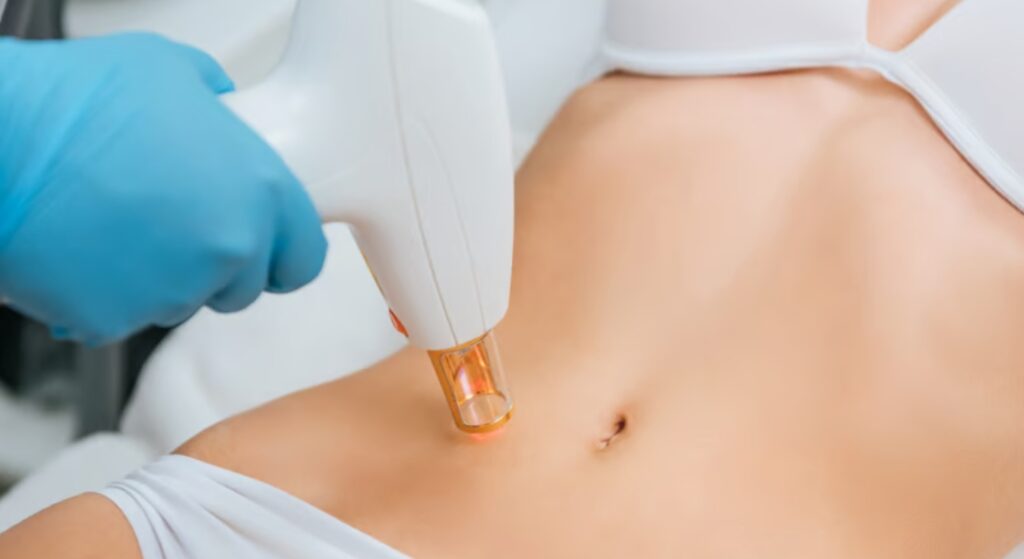
Yes, you can consider other laser treatments besides CO₂ laser for pregnancy stretch marks. Non-ablative fractional lasers can stimulate collagen remodelling with less surface injury, while vascular lasers may be considered if your marks are still red.
You may need a different approach once your marks become white and mature, as collagen remodelling becomes more important than targeting redness. Your clinician can assess your stretch marks and choose the laser that is most suitable for you.
How Do Post-Pregnancy Stretch-Mark Treatments Compare?
| Treatment | Main treatment focus | Potential advantage | Important consideration |
| Fractional CO₂ laser | Collagen remodelling and resurfacing | Can improve texture and width of mature marks | More downtime and a higher risk of post-inflammatory pigmentation than microneedling in comparative research |
| Conventional microneedling | Mechanical collagen induction | Comparable overall improvement to CO₂ in pooled evidence | Several sessions may be required |
| RF microneedling | Needling plus controlled thermal energy | May improve stretch-mark texture while combining microneedling with controlled thermal energy | Results and settings vary between devices |
| Non-ablative fractional laser | Dermal remodelling with less surface injury | May involve easier surface recovery than ablative CO₂ | Multiple sessions may be needed |
| Vascular/light treatments | Redness in newer striae rubrae | Targets the vascular component of early marks | Less relevant once stretch marks have matured to white |
| Tretinoin | Selected newer stretch marks | Topical option for some early striae | Limited role in mature marks; breastfeeding use needs individual consideration |
Can Creams Improve Stretch Marks After Pregnancy?
Creams and oils may make your skin feel softer and more comfortable, but they cannot reliably remove established pregnancy stretch marks. You may see more benefit from tretinoin with newer marks, while older white marks are generally harder to improve with creams alone.
You should not use tretinoin during pregnancy, and you should speak to your clinician if you are breastfeeding. If your stretch marks are mature and you want a more noticeable change, you may need to consider professional treatments that stimulate deeper collagen remodelling.
UK Guidance Note
If you are breastfeeding, do not assume that a topical product is suitable simply because it is applied to your skin. UK prescribing information for tretinoin-containing topical medicines is cautious about their use during breastfeeding, so you should discuss tretinoin with your clinician before using it on stretch marks. It should not be applied to the nipple or areola, and your baby should not have direct skin contact with treated areas.
Will Treating Stretch Marks Tighten Loose Post-Pregnancy Skin?
Not necessarily. Treatments such as laser or microneedling may improve your stretch marks and skin texture, but they are not designed to correct significant loose skin or changes in abdominal shape.
If loose skin is your main concern, you should discuss this with your clinician before choosing treatment. You may improve your stretch marks but still feel dissatisfied if skin laxity is the issue that bothers you most.
Does Skin Tone Affect Post-Pregnancy Treatment?
Yes, your skin tone and history of pigmentation can affect which treatment is safest for you. You may have a higher risk of dark marks after treatments that cause inflammation, particularly with fractional CO₂ laser.
If pigmentation is a particular concern for you, your clinician may discuss microneedling as one option, as comparative studies have reported less post-inflammatory hyperpigmentation than with fractional CO₂ laser. Pigment changes can still occur with microneedling, however, so your individual skin response remains important.
How Many Treatments Might You Need and When Will You See Results?
You may need several treatment sessions because your skin remodels collagen gradually. The number of sessions you need depends on your treatment, the severity of your stretch marks and how your skin responds.
You may start noticing improvement over the following weeks or months rather than immediately. You should compare your results after healing, using similar lighting and photographs, so you can judge your progress accurately.
How Can You Choose the Right Treatment After Pregnancy?

You should first consider what concerns you want to treat, whether you have red or white stretch marks, loose skin or pigmentation. Your clinician can also consider how long ago you gave birth, whether you are breastfeeding and how your skin has responded to previous treatments.
You may choose treatments such as microneedling, fractional CO₂ laser or radiofrequency microneedling depending on your needs. You should also discuss realistic results and recovery time, so the treatment you choose is appropriate for you.
Myth vs Fact
| Myth | Fact |
| You need to start stretch-mark treatment immediately after giving birth. | There is no single evidence-based waiting period that applies to everyone. |
| Pregnancy stretch marks disappear completely once your body recovers. | They may fade naturally, but structural differences can remain. |
| Breastfeeding automatically means every cosmetic procedure is forbidden. | Evidence is limited, so suitability depends on the procedure, products used, treatment site and individual circumstances. |
| CO₂ laser is always the best treatment after pregnancy. | Comparative evidence has not established it as universally superior to microneedling. |
| Microneedling cannot cause pigmentation. | Pigment changes remain possible even though the risk of post-inflammatory pigmentation may be lower than with CO₂ laser. |
| Red and white pregnancy stretch marks should receive identical treatment. | Newer red marks have a vascular component, while mature white marks require greater emphasis on collagen remodelling. |
| Laser treatment will tighten significant loose abdominal skin. | Stretch-mark improvement and correction of significant skin laxity are different treatment goals. |
| Creams can rebuild mature pregnancy stretch marks. | Moisturisers can improve comfort, but they cannot reliably reverse established dermal changes. |
| One session should permanently remove pregnancy stretch marks. | Several sessions may be needed, and complete removal cannot be guaranteed. |
Key Takeaways
1. Pregnancy stretch marks can still be treated after you give birth.
2. There is no universal evidence-based postpartum waiting period for every procedure.
3. Your body shape and stretch marks may continue changing naturally during postpartum recovery.
4. Newer red or purple marks may respond differently from mature white striae.
5. Fractional CO₂ laser, microneedling and RF microneedling can all improve stretch marks, but no treatment guarantees complete removal.
6. CO₂ laser and microneedling have shown similar overall improvement in pooled research, with post-inflammatory pigmentation occurring more often after CO₂ laser.
7. If you are breastfeeding, treatment should be considered individually because evidence for elective cosmetic procedures during lactation remains limited.
8. Topical tretinoin requires special consideration during breastfeeding and should not be applied to the nipple or areola.
9. Significant loose skin and abdominal contour changes are different concerns from stretch marks and may need a different assessment.
10. Skin tone, pigmentation history, downtime and treatment area should all influence your treatment choice.
Frequently Asked Questions
1. Can you treat stretch marks after pregnancy?
Yes. Pregnancy-related stretch marks can be treated after giving birth, with options including fractional CO₂ laser, microneedling, radiofrequency microneedling and other fractional laser treatments.
2. When can you start stretch mark treatment after pregnancy?
There is no single waiting period that applies to everyone. Your timing should take into account your postpartum recovery, whether your body and skin are still changing, whether you are breastfeeding and the specific treatment being considered.
3. Can you treat stretch marks while breastfeeding?
Some aesthetic procedures may be considered during breastfeeding, but the evidence is limited and the decision depends on the treatment, medications or topical products involved and the area being treated. You should tell your practitioner that you are breastfeeding so these factors can be assessed before treatment.
4. Are red stretch marks easier to treat after pregnancy?
Not necessarily with every treatment. Newer red, pink or purple stretch marks are at an earlier and more vascular stage, so some treatments may be particularly useful while redness is still present. Mature white marks usually require greater emphasis on collagen remodelling. Red marks can also fade naturally after pregnancy, so treatment results should be assessed against this natural change.
5. Can fractional CO₂ laser improve pregnancy stretch marks?
Yes. Fractional CO₂ laser creates controlled microscopic areas of thermal injury that stimulate the skin’s healing and collagen-remodelling processes. This can make pregnancy stretch marks smoother, narrower and less noticeable, although complete removal cannot be guaranteed.
6. Is microneedling an alternative to CO₂ laser after pregnancy?
Yes. Microneedling stimulates collagen through controlled mechanical micro-injuries and does not produce the same ablative thermal injury as CO₂ laser. Research suggests both treatments can improve stretch marks, while microneedling may have a lower risk of post-inflammatory hyperpigmentation.
7. Can old white stretch marks after pregnancy still be treated?
Yes. Mature white stretch marks can be more resistant than newer red marks, but treatments that encourage collagen remodelling may still reduce their visibility and improve their texture.
8. Will stretch mark treatment tighten loose skin after pregnancy?
Not necessarily. Treatments such as laser and microneedling primarily target the appearance and texture of stretch marks, so they should not be expected to correct significant loose skin, abdominal-muscle separation or changes in abdominal contour.
9. Does your skin tone affect stretch mark treatment after pregnancy?
Yes. Your skin tone and tendency to develop pigmentation after inflammation are important when choosing and adjusting treatment. Procedures such as fractional CO₂ laser can cause post-inflammatory hyperpigmentation, so your practitioner should consider your individual pigmentary risk.
10. How long does it take to see results from postpartum stretch mark treatment?
Results develop gradually because treatments rely on collagen remodelling rather than an immediate change. You may notice progressive improvements over the following weeks and months, and several treatment sessions may be needed to achieve the best possible result.
Final Thoughts: Treating Stretch Marks After Pregnancy
Stretch marks after pregnancy can often be improved, even if they have become pale or white over time. You can consider treatments such as fractional CO₂ laser, microneedling or radiofrequency microneedling depending on the age, appearance and depth of your marks, while keeping in mind that treatment aims to reduce their visibility rather than remove them completely.
If you are considering CO2 laser treatment for stretch marks in London, you can contact our team at the London Medical & Aesthetic Clinic to discuss whether the treatment may be suitable for you and explore your options.
References:
- Zhu, C.K., Mija, L.A., Koulmi, K., Barankin, B. and Mukovozov, I. (2024) ‘A systematic review on treatment outcomes of striae’, Dermatologic Surgery, 50(6), pp. 546–552. Available at: https://pubmed.ncbi.nlm.nih.gov/38452322
- Mustafa, A. et al. (2025) ‘Evaluating CO₂ laser and micro-needling therapies for striae distensae: A comprehensive meta-analysis and systematic review’, Lasers in Medical Science, 40(1), article 161. Available at: https://pubmed.ncbi.nlm.nih.gov/40131559
- Farahnik, B., Park, K., Kroumpouzos, G. and Murase, J. (2017) ‘Striae gravidarum: Risk factors, prevention, and management’, International Journal of Women’s Dermatology, 3(2), pp. 77–85. Available at: https://pmc.ncbi.nlm.nih.gov/articles/PMC5440454
- Moore, H. and Stevenson, A. (2025) ‘Breast and nipple dermatoses during lactation’, Australasian Journal of Dermatology, 66(7), pp. e386–e407. Available at: https://pmc.ncbi.nlm.nih.gov/articles/PMC12633704
- Algarra Sahuquillo, J. and Martín-Gorgojo, A. (2026) ‘Stretch marks: Systematic review of its therapeutic approach’, Actas Dermo-Sifiliográficas, 117(4), article 104553. Available at: https://www.sciencedirect.com/science/article/pii/S0001731025008294