

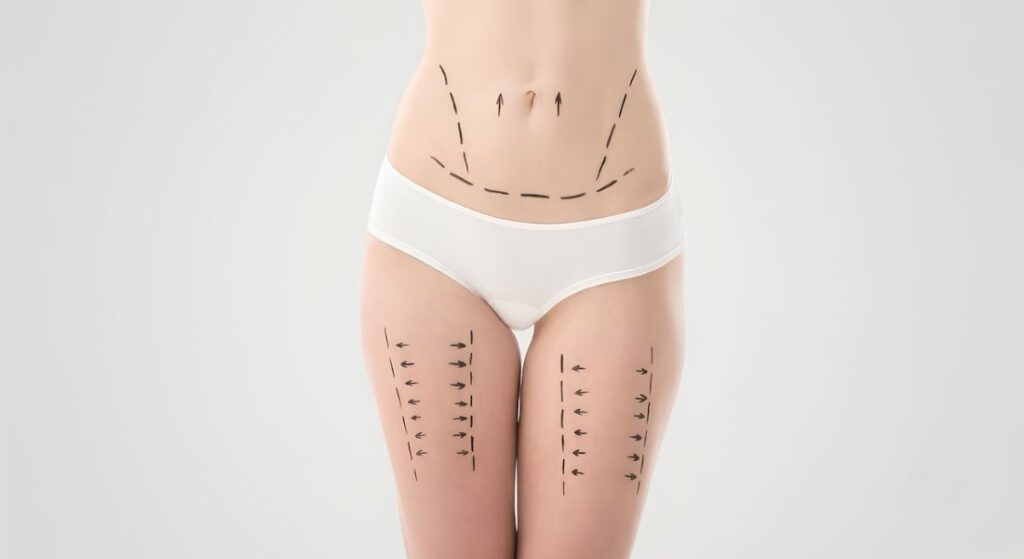
If you’re considering VASER liposuction, you may also be wondering whether the fat removed can be used to add volume somewhere else. In suitable cases, VASER liposuction can be combined with fat transfer, allowing your surgeon to reduce localised fullness in one area and use some of the harvested fat to enhance another.
Not all of the fat removed will necessarily be suitable for transfer, and combined treatment is not right for everyone. Your surgeon will assess your available donor fat, the area you want to enhance, the amount of volume that may realistically be achieved and whether the overall plan suits your anatomy and goals.
What Is VASER Liposuction?
VASER liposuction is a form of ultrasound-assisted liposuction that helps remove selected areas of subcutaneous fat. Your surgeon uses ultrasound energy to help separate fat cells from surrounding tissues before removing them with suction, with the aim of improving your body contour.
VASER liposuction is not a weight-loss treatment and does not remove visceral fat inside your abdominal cavity. Your treated areas may include your abdomen, flanks, thighs, hips or arms, and in suitable cases, some of your harvested fat may also be processed for fat transfer to another area.
What Is Fat Transfer?
Fat transfer involves removing fat from one area of your body, processing it and injecting it into another area to add volume or improve your contour. Your own fat may be used for areas such as your buttocks, breasts or face.
Your body naturally reabsorbs some of the transferred fat during healing. Your final result can therefore vary depending on how your fat is processed, injected and how your body heals.
How Can VASER Liposuction and Fat Transfer Be Combined?
VASER liposuction can remove selected fat from one area, while suitable harvested fat may be processed and transferred to another area to add volume or improve contour. This can allow your surgeon to reduce fullness in areas such as your abdomen or flanks while enhancing shape elsewhere.
Your suitability depends on having enough suitable fat and the right anatomy for both procedures. Your surgeon also needs to balance how much fat is removed and transferred to create a proportionate contour while keeping the procedure within appropriate safety limits.
Why Is VASER Sometimes Used for Fat Harvesting?
Your surgeon may use VASER to harvest fat for transfer because it can help selectively remove subcutaneous fat. However, your fat transfer result depends on more than the liposuction method.
How your fat is handled, processed and injected, as well as the recipient area, can all affect how much transferred fat survives.
Research Insight
One 2013 laboratory study using third-generation ultrasound-assisted liposuction reported mean acute adipocyte viability of 85.1% using one laboratory measure and 88.7% using another. A separate small laboratory and preclinical study published in 2016 found that adipose-derived stem cells harvested using ultrasound-assisted liposuction had similar yield and viability, with broadly comparable regenerative characteristics to those obtained using standard suction-assisted liposuction.
However, the 2013 study assessed immediate cell viability rather than long-term graft survival and was sponsored by manufacturers of products used in the research. These findings support that VASER-harvested fat can contain viable cells at the point of harvesting, but they do not prove that VASER produces better or more predictable long-term fat retention.
Where Can Transferred Fat Be Used?
Your transferred fat can be used in areas such as your buttocks, breasts or face, depending on your goals and anatomy. The amount needed varies between areas, with larger enhancements generally requiring more suitable donor fat.
Your surgeon will assess whether you have enough usable fat for the result you want. Your treatment should work with your natural body proportions rather than aiming to create an entirely different shape.
Fat Transfer Areas at a Glance
| Area | What fat transfer may help with | Important consideration |
| Buttocks | Adding volume and changing contour | Gluteal fat transfer has specific safety requirements around injection depth and ultrasound guidance |
| Breasts | Adding volume or refining contour | Some transferred fat is reabsorbed, so final volume can differ from the early result |
| Face | Adding volume to selected areas | The amount and placement of fat depend on the facial area being treated and your anatomy |
How Can VASER Liposuction with Fat Transfer Change Your Body Proportions?

The change comes from treating both the donor and recipient areas together. For example, if fat is removed from your abdomen and flanks and some of it is transferred to your buttocks, reducing fullness around your waist while adding volume elsewhere may alter your overall proportions more than either procedure would on its own.
The aim is not simply to transfer as much fat as possible. Your surgeon needs to consider your existing frame, skin characteristics, muscle definition, available donor fat and how much volume can be added safely and proportionately.
Who May Be Suitable for Combined VASER and Fat Transfer?
You may be considered for combined VASER and fat transfer if you have suitable areas of subcutaneous fat, enough donor fat, a relatively stable weight and realistic expectations. Your overall health, skin characteristics, previous surgery, smoking and medications can also affect your suitability.
Your treatment is designed for body contouring rather than major weight loss. Your surgeon will assess your anatomy and healing factors to decide whether your goals can be achieved safely and realistically.
Is There Enough Fat for Transfer?
Your available donor fat depends on your body composition and how much enhancement you want. Your surgeon will assess whether areas such as your abdomen or flanks provide enough suitable fat for transfer.
Your harvested fat also needs to be processed, so not all of the removed fat can be transferred. Your surgeon must balance fat removal and transfer carefully to avoid creating unevenness in your donor areas.
What Factors Affect Fat Survival After Transfer?
Your transferred fat needs to develop a new blood supply to survive, and some of it will naturally be reabsorbed during healing. How much remains can vary from one person to another.
1. How your fat is processed: Careful handling and preparation can affect the condition of the fat before it is transferred.
2. How your fat is injected: Your surgeon’s injection technique and the way the fat is distributed can influence how well it settles.
3. Where your fat is transferred: Different treatment areas have different tissue characteristics and blood supply, which can affect fat survival.
4. How your body heals: Your individual healing response can influence how much transferred fat remains over time.
Your final volume cannot be predicted precisely because several factors influence how your transferred fat settles. Your surgeon should explain that some absorption is expected and discuss what this may mean for your final result.
Evidence Note
Research shows that fat retention after transfer can vary considerably. A 2026 systematic review and meta-analysis of 40 clinical studies involving 5,684 patients reported pooled 12-month volume retention of 61.3% after breast fat grafting. However, retention varied substantially between studies, reflecting differences in techniques, processing methods, assessment methods and patient factors.
These figures relate specifically to breast fat grafting and should not be used to predict exactly how much fat you will retain in another treatment area. They help explain why your surgeon cannot promise that a fixed percentage of transferred fat will survive.
Can Transferred Fat Be Used for Buttock Enhancement?
Your transferred fat can be used to add volume and shape to your buttocks while reducing fullness from donor areas such as your abdomen or flanks. However, buttock fat transfer has specific safety considerations, particularly around how and where your fat is injected.
Pulmonary fat embolism is a rare but potentially life-threatening complication of gluteal fat grafting. This is why the depth of fat placement and the use of real-time ultrasound are particularly important when fat is transferred to your buttocks.
Your surgeon should explain their technique, safety measures and experience with buttock fat transfer. Your desired level of enhancement also needs careful planning, as a subtle contour change and a larger increase in volume require different considerations.
Can Fat Transfer Be Combined With Abdominal and Flank VASER?
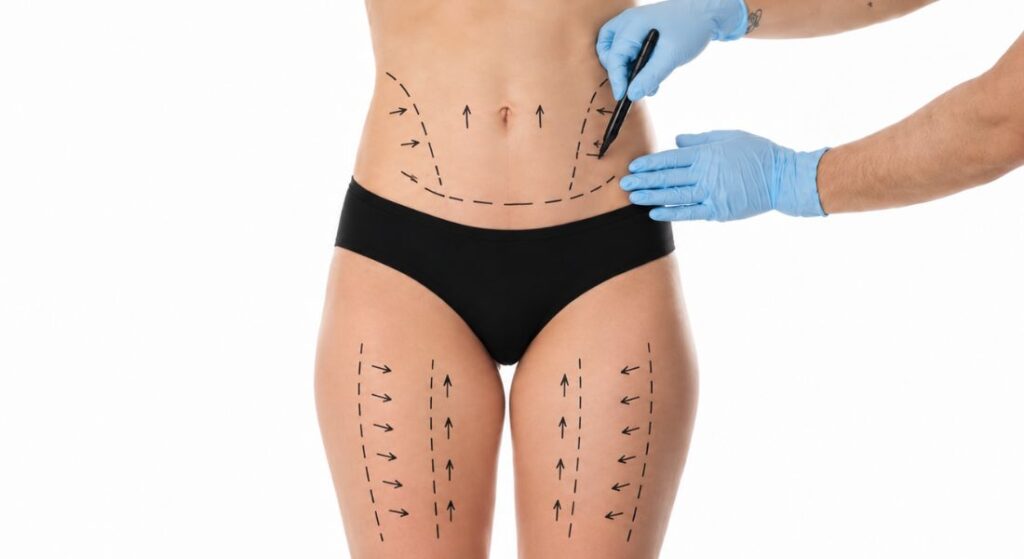
Your abdomen and flanks can provide donor fat for transfer while VASER reduces fullness around your waist. This can allow your surgeon to address fat reduction and volume enhancement in one treatment plan.
Your recovery may be more involved because both your donor and recipient areas need care. Your surgeon can advise you on sleeping positions, pressure on treated areas and when you can safely return to exercise.
What Is Recovery Like After Combined Treatment?
Your recovery after combined VASER and fat transfer may involve swelling, bruising, tenderness, numbness and tightness in both your donor and recipient areas. Your transferred fat also needs time to settle, so your surgeon may ask you to avoid pressure on certain areas.
Your compression garment may be recommended for your liposuction areas but may not suit every recipient area. Your recovery plan will therefore be tailored to your procedure, including when you can sit, sleep in certain positions and return to exercise.
Clinical Tip
Your recovery instructions will depend on where your fat has been removed and where it has been transferred. For example, a compression garment that is appropriate for a liposuction area may not be suitable over an area where fat has just been transferred.
Follow the instructions your surgical team gives you about compression, sitting, sleeping, exercise and pressure on the treated area rather than relying on another patient’s recovery routine.
What Are the Risks of Combining VASER and Fat Transfer?
Combining VASER liposuction with fat transfer means you need to consider the risks associated with both parts of the procedure. Liposuction risks can include infection, bleeding, fluid collections, contour irregularities, altered sensation and blood clots. Fat transfer risks can include fat absorption, asymmetry, infection, fat necrosis, oil cysts and contour irregularities. If fat is transferred to your buttocks, pulmonary fat embolism is an additional rare but serious risk.
Your specific risks depend on the areas treated and where your fat is transferred. Your surgeon should explain the risks relevant to your procedure, including whether combining treatments may increase your operating time or affect your recovery.
When Should You Seek Medical Advice After Surgery?
Contact your surgical team promptly if you develop rapidly increasing swelling, severe or worsening pain, increasing redness or warmth, fever, unusual discharge or a sudden significant change in one of your treated areas.
Pain or swelling in one leg, particularly if it is accompanied by redness or warmth, should be assessed promptly because these can be signs of deep vein thrombosis. If you become suddenly breathless, develop chest pain, cough up blood or collapse, call 999 or go to A&E immediately, as these can be signs of a pulmonary embolism.
UK Guidance Note
If you are considering buttock fat transfer, BAAPS guidance states that fat should be injected into the subcutaneous plane only and that intraoperative ultrasound should be used during fat placement to confirm that the cannula remains in the subcutaneous plane. Your surgeon should explain these safety measures and the specific risks of gluteal fat grafting during your consultation.
How Long Do Fat Transfer Results Last?
Fat that successfully establishes a blood supply can remain in its new location and may change with future weight gain or loss. Maintaining a relatively stable weight may therefore help you maintain your result.
Your final volume develops over the first few months as swelling settles and some transferred fat is naturally absorbed. Your surgeon can explain this process so you understand why your early result may change over time.
Can Fat Transfer Be Repeated?
Your fat transfer can sometimes be repeated if you want more volume, but it depends on your goals, anatomy and available donor fat. Your surgeon may also recommend a staged approach when a larger change is planned.
Your second procedure is not always necessary, and previous liposuction may leave less donor fat available. Your first treatment should therefore be planned with your longer-term goals in mind.
How Should You Decide If Combined Treatment Is Right for You?

Your decision starts with your goals: whether you want to reduce fullness, add volume elsewhere or improve your overall proportions. Your surgeon can assess your donor fat, skin characteristics, anatomy, medical history and expectations.
Your consultation should also cover how much volume is realistic, how much transferred fat may remain, the risks of your chosen treatment area and how recovery may differ from liposuction alone. Your treatment plan should be based on your body and goals rather than a particular trend or shape.
Myth vs Fact
| Myth | Fact |
| All transferred fat will stay permanently. | Some fat is naturally reabsorbed during healing, so your final volume may be lower than your early result. |
| VASER guarantees better fat survival. | Fat survival depends on harvesting, processing, injection technique, the treatment area and how your body heals. |
| More transferred fat always gives a better result. | The amount transferred needs to suit your anatomy, available donor fat and safety considerations. |
| Fat transfer is the same for every treatment area. | Your risks, recovery and aftercare can differ depending on whether fat is transferred to your face, breasts or buttocks. |
| Buttock fat transfer only depends on how much volume you want. | Injection depth and technique are important safety considerations, and your surgeon should discuss these with you before treatment. |
Key Takeaways
1. VASER liposuction and fat transfer may be combined when you have suitable donor fat and realistic treatment goals.
2. Not all fat removed during liposuction will be suitable for transfer, and not all transferred fat will remain long term.
3. Your final fat retention depends on several factors, including harvesting, processing, injection technique, the recipient area and how you heal.
4. Fat can be transferred to different areas, but the risks and safety considerations are not the same for your face, breasts and buttocks.
5. Buttock fat transfer requires particular safety precautions, including careful attention to injection depth and real-time ultrasound guidance.
6. Your surgeon should assess your anatomy, health, available donor fat and expectations before deciding whether combined treatment is appropriate for you.
Frequently Asked Questions
1. What is VASER liposuction with fat transfer?
It combines fat removal from selected areas with transferring some suitable fat to another part of your body. This can reduce unwanted fullness while adding volume elsewhere.
2. Can VASER liposuction provide enough fat for transfer?
It depends on your body composition, donor areas and the amount of enhancement you want. Not all harvested fat is suitable for transfer after processing.
3. Where can fat removed during VASER be transferred?
Fat may be transferred to areas such as the buttocks, breasts or face. The suitable recipient area depends on your anatomy and treatment goals.
4. Can VASER and fat transfer improve body proportions?
Combining the procedures may help reduce fullness in one area while adding volume elsewhere. Your results depend on your existing anatomy, skin characteristics and available donor fat.
5. Who may be suitable for combined VASER and fat transfer?
You may be considered if you have suitable donor fat, a relatively stable weight, good overall health and realistic expectations. Your surgeon will assess your individual suitability during consultation.
6. How much fat survives after a fat transfer?
Not all transferred fat cells survive, and some are naturally absorbed during healing. The amount retained varies between patients and depends on several factors.
7. Can VASER fat transfer be used for buttock enhancement?
Yes, but buttock fat transfer has specific safety considerations. Your surgeon should discuss the technique, risks and appropriate injection approach with you.
8. What is recovery like after VASER with fat transfer?
You may experience swelling, bruising, tenderness, tightness or temporary numbness in the treated areas. Recovery can be more involved because both the donor and recipient areas need to heal.
9. How long do fat transfer results last?
Fat that successfully establishes a blood supply can remain in its new location. However, your early result can change as swelling settles and some transferred fat is absorbed.
10. Can you have another fat transfer later?
Sometimes, particularly if you want further enhancement after the initial results have stabilised. Whether this is possible depends on your goals, anatomy and the amount of suitable donor fat remaining.
Final Thoughts: VASER Liposuction with Fat Transfer
Combining VASER liposuction with fat transfer may help you reduce localised fat in one area while adding volume elsewhere using your own tissue. However, your available fat, anatomy, skin characteristics and desired outcome all affect whether this approach is suitable for you.
If you’re considering VASER lipo in London, you can contact us at London Medical & Aesthetic Clinic.
References:
1. Schafer, M.E., Hicok, K.C., Mills, D.C., Cohen, S.R. and Chao, J.J. (2013). ‘Acute adipocyte viability after third-generation ultrasound-assisted liposuction’. Aesthetic Surgery Journal, 33(5), pp. 698–704. https://pubmed.ncbi.nlm.nih.gov/23718978/
2. Duscher, D. et al. (2016). ‘Ultrasound-Assisted Liposuction Does Not Compromise the Regenerative Potential of Adipose-Derived Stem Cells’. Stem Cells Translational Medicine, 5(2), pp. 248–257. https://pmc.ncbi.nlm.nih.gov/articles/PMC4729547/
3. Mahani, S., DiCaro, M.V., Tak, N., Hartnett, S., Cyrus, T. and Tak, T. (2024). ‘Venous Thromboembolism: Current Insights and Future Directions’. International Journal of Angiology, 33(4), pp. 250–261.
https://pmc.ncbi.nlm.nih.gov/articles/PMC11534468/
4. Tillo, O., Nassab, R. and Pacifico, M.D. (2023). ‘The British Association of Aesthetic Plastic Surgeons (BAAPS) Gluteal Fat Grafting Safety Review and Recommendations’. Aesthetic Surgery Journal, 43(6), pp. 675–682. https://academic.oup.com/asj/article/43/6/675/6887101
5. Schafer, M.E., Hicok, K.C., Mills, D.C., Cohen, S.R. and Chao, J.J. (2013). ‘Acute adipocyte viability after third-generation ultrasound-assisted liposuction’. Aesthetic Surgery Journal, 33(5), pp. 698–704. Available at: https://pubmed.ncbi.nlm.nih.gov/23718978/