


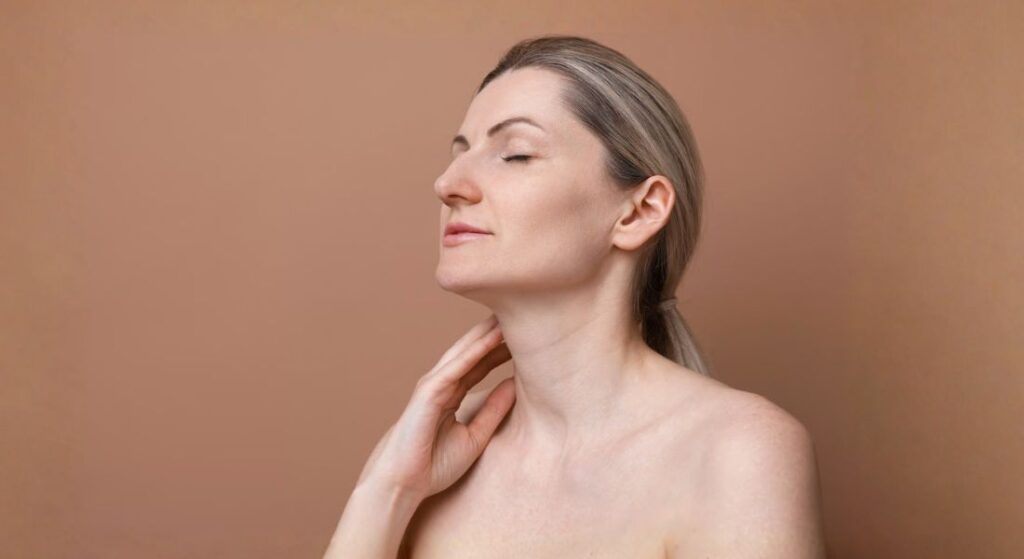
You may notice your neck developing fine lines, crepey skin or reduced firmness even when your face still looks relatively smooth. Your neck is regularly exposed to sunlight and moves constantly, which can make signs of ageing more noticeable.
Your neck skin is also relatively thin and can lose elasticity as you age. Ageing can affect the skin, muscles, fat and deeper tissues, so you may notice changes in both the texture and definition of your neck.
Does the Neck Really Age Faster Than the Face?
Your neck doesn’t necessarily age faster than your face, but you may notice changes there sooner. Thinner skin, reduced elasticity, sun exposure and constant movement can make wrinkles and laxity more visible.
Ageing also affects more than your skin. Changes in your neck muscles, fat and deeper tissues can alter its firmness and definition over time.
Why Neck Ageing May Look Different From Facial Ageing
| Factor | How it can affect the neck |
| Skin structure | Neck skin has different biomechanical characteristics from facial skin, which can make changes in firmness and elasticity more noticeable |
| Collagen and elastin changes | Ageing reduces structural support and resilience, contributing to fine lines and laxity |
| UV exposure | Cumulative sun exposure contributes to pigmentation, collagen damage and photoageing |
| Repeated movement | Turning and bending the neck repeatedly creates natural folds that may become more visible as elasticity changes |
| Platysma muscle | Age-related changes can make vertical neck bands and reduced definition more noticeable |
| Fat and deeper tissues | Changes in fat distribution and underlying anatomy can alter the jawline and neck contour |
Why Is Neck Skin More Vulnerable to Visible Ageing?
Your neck skin has different thickness and biomechanical properties from facial skin, and it moves repeatedly as you turn and bend your head. As you age, these differences can make changes in elasticity, fine lines and crepey texture more noticeable.
You may also find your neck skin feels drier or reacts differently from your facial skin. This doesn’t mean it is unhealthy, but its structure can make signs of ageing easier for you to notice.
Evidence Note
A study of 58 Korean women aged 25 to 64 found differences between neck, cheek and forearm skin in thickness, elasticity and other biomechanical properties. Neck elasticity showed a stronger association with age than the other areas assessed, which may help explain why changes in firmness can become particularly noticeable around your neck.
However, skin characteristics differ between individuals and populations, so these findings should help explain general ageing patterns rather than predict exactly how your own neck will age.
What Happens to Collagen as Your Neck Ages?
As you age, your skin produces less collagen and existing collagen becomes less organised. You may notice this as fine lines, softer texture, reduced firmness or crepey skin around your neck.
Sun exposure can speed up collagen breakdown, making these changes more noticeable. Protecting your neck from UV exposure can therefore help you maintain its skin quality as you age.
Why Does Loss of Elastin Matter?
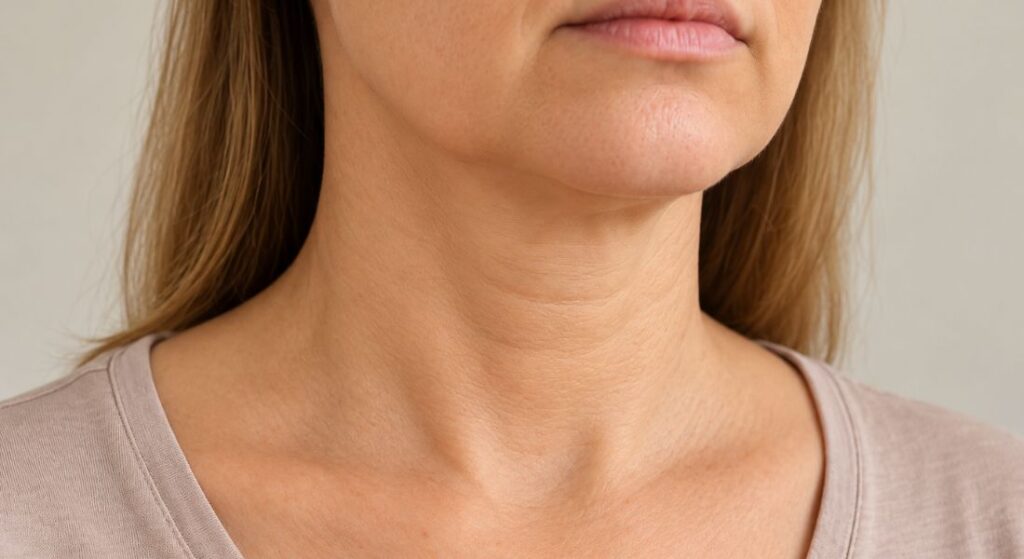
Elastin helps your skin stretch and return to its normal position. As you age, this elastic support decreases, so your neck skin may become less resilient and lines may stay visible for longer.
You may notice more horizontal creases, looser skin or a softer appearance beneath your chin. Along with collagen loss, reduced elastin can make your neck look thinner, less firm and more lined.
Why Can Neck Skin Feel Different From Facial Skin?
Your neck has a relatively thin dermis and different biomechanical properties from facial skin. You may notice that it feels drier or reacts differently to skincare products, particularly as your skin changes with age.
This doesn’t mean your face is naturally protected from ageing. However, you may need to treat your neck more gently and avoid assuming that every facial product will suit your neck.
How Important Is Sun Exposure in Neck Ageing?
Sun exposure can speed up visible ageing by affecting the collagen, elastin and pigmentation in your skin. Because your neck is often exposed to UV rays, you may notice wrinkles, pigmentation and reduced elasticity over time.
UV-related damage builds up gradually over many years. Protecting your neck from the sun can help reduce further photoageing and support healthier-looking skin.
Why Is the Neck So Often Missed When You Apply Sunscreen?
You may have a good skincare routine for your face but still stop applying products at your jawline. Your neck is often exposed to UV rays too, so you should extend your sunscreen down to your neck whenever it is exposed.
You can’t reverse existing laxity with sunscreen, but protecting your neck can help reduce further sun-related damage. Your genetics, anatomy and natural ageing still matter, but regular sun protection is one factor you can control.
UK Guidance Note
In the UK, your need for sun protection varies with the season, weather, time spent outdoors and level of UV exposure. When your neck is exposed to meaningful UV levels, use broad-spectrum sun protection and remember that clothing, shade and appropriate sunscreen can all help reduce cumulative UV damage.
Does Constant Neck Movement Make Lines More Noticeable?
Your neck moves constantly when you turn, bend or look up and down. You may notice lines becoming more visible as your skin loses some of its natural elasticity and doesn’t bounce back as easily.
You can’t avoid normal neck movement, and you don’t need to. As you age, repeated movement combined with changes in collagen and elastin can make creases that once appeared only during movement more noticeable at rest.
Does Looking Down at Your Phone Make Your Neck Age Faster?
You may notice horizontal lines more clearly when you look down at your phone because your neck naturally folds in that position. However, you shouldn’t assume that phone use is the main cause of neck ageing.
Your genetics, skin structure, natural ageing, sun exposure and everyday neck movement all play a role. You can adjust your screen position for better posture and comfort, but this won’t prevent normal age-related changes in your neck.
How Does the Platysma Change the Appearance of an Ageing Neck?
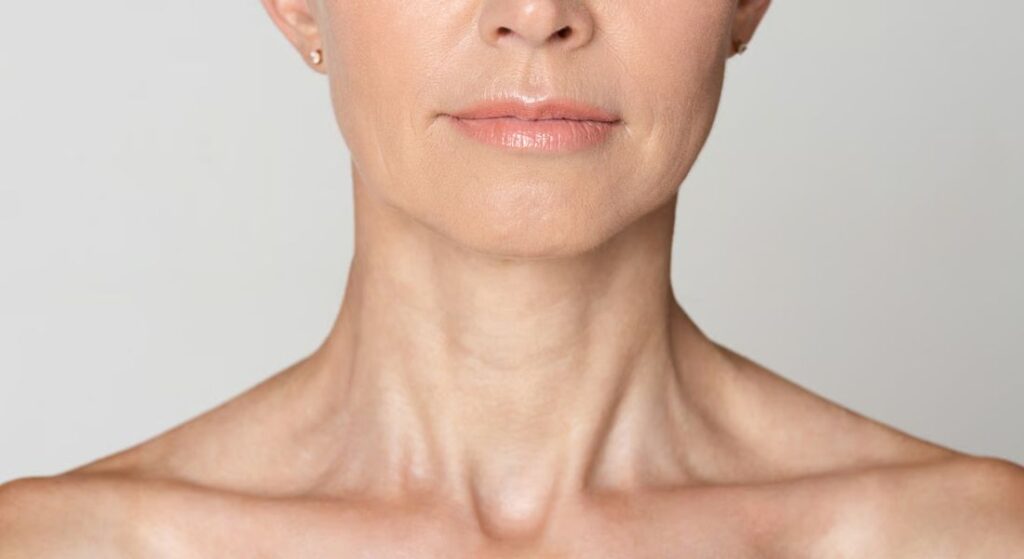
Your platysma is a thin muscle beneath the skin of your neck, and changes in it can affect how your neck looks as you age. You may notice vertical bands or cords becoming more visible, especially when you tense your neck or make certain facial expressions.
These bands can sometimes remain visible even when your neck is relaxed. Not every visible sign of neck ageing comes from your skin, so skincare alone may not address changes caused by deeper tissues.
Clinical Tip
Changes in your neck may come from several tissues at the same time. Fine lines and crepey texture relate mainly to the skin, while vertical bands can involve the platysma muscle and reduced definition may also reflect fat distribution or jawline changes.
Understanding which structure is contributing most can help you make sense of why skincare alone may not address every visible sign of neck ageing.
What Happens to Fat Around the Neck as You Age?
As you age, fat around your lower face and neck can shift in both volume and position. You may notice more fullness beneath your chin, or reduced volume that makes your skin look less supported and laxity more visible.
Changes in body weight can affect this appearance, but you can have submental fullness even without being overweight. Your genetics, anatomy, skin laxity and platysma can all contribute, which is why neck ageing cannot be explained by fat or skin alone.
Research Insight
A 2026 review proposed an S-F-M framework that assesses three parts of neck ageing separately: Skin, Fat and Muscle. Each area is graded from 0 to 3, reflecting how different combinations of skin laxity, fat distribution and platysmal activity can create very different ageing patterns.
This is a proposed clinical classification rather than a prediction of how your neck will age, but it helps explain why two people of the same age can have very different concerns.
Why Does an Ageing Jawline Make the Neck Look Older?
Your jawline and neck are closely connected, so changes in your lower face can affect how your neck looks. As tissues shift and support changes with age, your jawline may become less defined and the transition between your chin and neck can look softer.
You may also notice jowling, submental fullness or skin laxity that makes your neck appear older. This is why neck ageing involves more than skin alone, with changes in facial support, fat and platysma also influencing your overall profile.
Why Do Some People Develop Neck Ageing Earlier Than Others?
Your neck may show signs of ageing earlier or later than someone else’s because several individual factors influence how it changes over time.
1. Genetics: Your inherited skin characteristics can affect how quickly ageing becomes visible.
2. Anatomy: Chin shape, bone structure and fat distribution can influence neck definition.
3. Sun exposure: Long-term UV exposure can make lines and pigmentation more noticeable.
4. Lifestyle: Smoking can contribute to visible skin ageing, while weight changes can alter your neck contour and make laxity more noticeable.
These factors often overlap, so there is no single age when neck ageing should become noticeable.
Can Hormonal Changes Affect the Neck?
Hormonal changes can affect your skin more broadly, particularly during and after menopause. Falling oestrogen levels are associated with changes in collagen, skin thickness and elasticity, which may also make age-related changes around your neck more noticeable.
However, hormones are only one part of how your neck ages. Your genetics, UV exposure, lifestyle and deeper tissue changes also matter, so you should speak with a healthcare professional if you have broader menopause-related concerns.
Can Lifestyle Make the Neck Look Older Than the Face?
Your lifestyle can influence how visible ageing develops, although genetics and natural ageing also play major roles. Smoking is associated with extrinsic skin ageing, while significant weight changes can alter your neck contour and make laxity more noticeable.
Good nutrition, sleep and general health can support your skin, but no specific food, supplement or neck exercise can guarantee a youthful appearance. Visible neck ageing also does not mean you have taken poor care of yourself.
Can You Slow Down Visible Neck Ageing?
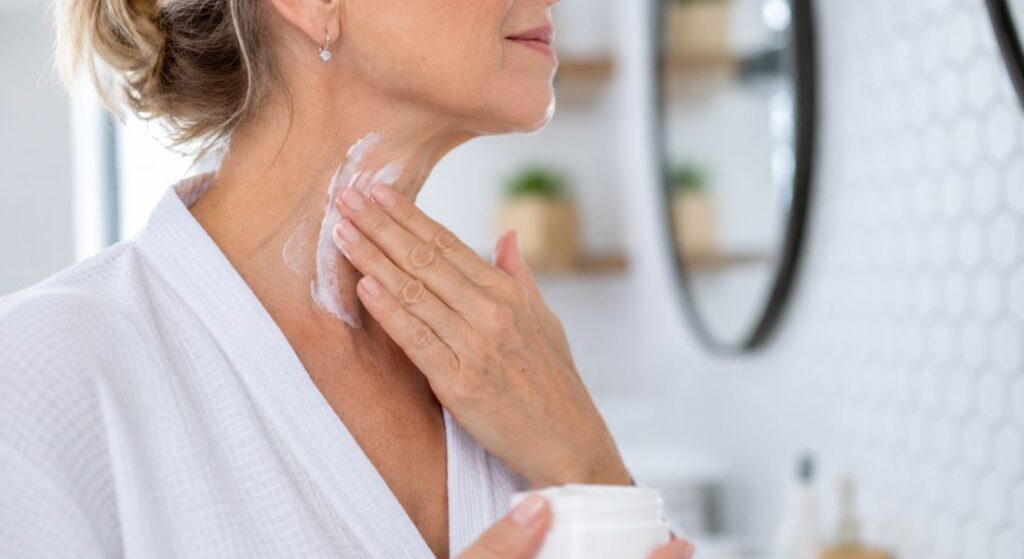
You cannot stop your neck from ageing, but you can reduce some avoidable damage. Regular sun protection is one of the most useful steps, including on your neck whenever it is exposed.
You may also use a suitable moisturiser to help with dryness and temporary crepey texture. If you choose active skincare ingredients, introduce them gradually because your neck can be more sensitive, and irritation does not mean the product is working better.
Myth vs Fact
| Myth | Fact |
| Your neck always biologically ages faster than your face. | Not necessarily. Ageing may simply become more noticeable because the neck has different skin properties, movement patterns and deeper anatomy. |
| Looking down at your phone is the main cause of neck wrinkles. | Phone posture may emphasise existing folds, but evidence that it is a major cause of premature skin ageing is limited. |
| Neck ageing is caused only by loose skin. | Muscle activity, fat distribution, jawline changes and underlying anatomy can also affect your neck. |
| Sunscreen can reverse an ageing neck. | Sunscreen cannot reverse established laxity, but it helps reduce further UV-related skin damage. |
| Everyone develops neck ageing in the same way. | Genetics, anatomy, hormones, environmental exposure and lifestyle all influence how and when changes become visible. |
Key Takeaways
1. The neck does not necessarily age biologically faster than the face, but differences in skin structure, movement and anatomy can make ageing more noticeable there.
2. Age-related changes in collagen and elastic fibres can contribute to fine lines, crepey texture and reduced firmness over time.
3. UV exposure is an important contributor to photoageing, so regular sun protection should include the neck as well as the face.
4. Neck ageing involves more than skin alone, as changes in the platysma muscle, fat distribution and jawline can also affect definition.
5. Hormonal changes, genetics, smoking and changes in body weight can influence how and when visible neck ageing develops.
6. You cannot stop natural ageing, but suitable skincare, sun protection and healthy lifestyle choices can help support your skin over time.
Frequently Asked Questions
1. Does the neck really age faster than the face?
Not necessarily. The neck and face age through similar biological processes, but the neck’s thinner, more flexible skin, constant movement and frequent sun exposure can make ageing more noticeable.
2. Why is neck skin more prone to visible ageing?
Neck skin is relatively thin and extensible and has different structural characteristics from facial skin. These differences can make fine lines, crepiness and reduced firmness easier to see as you age.
3. How does collagen loss affect an ageing neck?
Ageing reduces the amount and quality of collagen and affects how it is organised within the skin. This can reduce structural support and contribute to fine lines, laxity and a crepey appearance.
4. Does loss of elastin contribute to neck wrinkles?
Yes. Changes to the elastic fibre network can make neck skin less resilient, so it may not return to its previous position as effectively after repeated stretching and folding.
5. How does sun exposure contribute to neck ageing?
UV exposure can damage collagen and elastic fibres and contribute to wrinkles, pigmentation and reduced elasticity. Because the neck is often exposed, cumulative sun damage can become particularly noticeable over time.
6. Does looking down at your phone cause the neck to age faster?
Looking down can make horizontal neck folds more noticeable and may emphasise existing creases, but there is limited evidence that smartphone use is a main cause of premature neck ageing. Intrinsic ageing, genetics, UV exposure and normal neck movement are more established factors.
7. How do the platysma muscle and neck fat affect ageing?
Age-related changes in the platysma can contribute to visible vertical bands, while changes in fat distribution can create fullness beneath the chin or make laxity more noticeable. These deeper changes can affect the appearance of the neck independently of the skin.
8. Why can an ageing jawline make the neck look older?
Changes such as jowling, reduced lower-face support, submental fullness and skin laxity can soften the boundary between the jaw and neck. This can make the neck appear older even when the skin itself has not changed dramatically.
9. Why does the neck age earlier in some people than others?
Genetics, skin characteristics, facial and neck anatomy, fat distribution, sun exposure, smoking, weight changes and hormonal factors can all influence when and how visible neck ageing develops.
10. Can you slow down visible ageing of the neck?
You cannot stop natural ageing, but consistent sun protection, suitable moisturising and carefully selected skincare may help reduce or manage some visible changes. Neck skin can be sensitive, so stronger products should be introduced cautiously.
Final Thoughts: Why the Neck Ages Faster Than the Face
If you’ve noticed more lines, crepiness or reduced definition on your neck than on your face, several factors may be contributing. Differences in skin structure, repeated movement, sun exposure and age-related changes in collagen, elastin, muscle and fat can all make neck ageing more noticeable, while genetics, hormones and lifestyle can influence when these changes appear.
Although you cannot stop your neck from ageing, protecting it from the sun and maintaining a suitable skincare routine can help support skin health over time. If you are concerned about lines, laxity or changes in your neck, a professional assessment can help you understand the underlying causes and explore appropriate options.
References:
1. Kim, E., Cho, G., Won, N.G. and Cho, J. (2013) ‘Age-related changes in skin bio-mechanical properties: the neck skin compared with the cheek and forearm skin in Korean females’, Skin Research and Technology, 19(3), pp. 236–241. Available at: https://pubmed.ncbi.nlm.nih.gov/23441628/
2. de Lima Faria, G.E. and Humphrey, S. (2026) ‘Anatomical-functional-aesthetic classification of cervical aging: Development of the S-F-M score and visual mandala model’, Aesthetic Plastic Surgery, 50(1), pp. 233–240. Available at: https://pubmed.ncbi.nlm.nih.gov/41060405/
3. Wong, Q.Y.A. and Chew, F.T. (2021) ‘Defining skin aging and its risk factors: a systematic review and meta-analysis’, Scientific Reports, 11(1), 22075. Available at: https://pmc.ncbi.nlm.nih.gov/articles/PMC8586245/
4. Pivazyan, L., Avetisyan, J., Loshkareva, M. and Abdurakhmanova, A. (2023) ‘Skin rejuvenation in women using menopausal hormone therapy: A systematic review and meta-analysis’, Journal of Menopausal Medicine, 29(3), pp. 97–111. Available at: https://pmc.ncbi.nlm.nih.gov/articles/PMC10796198/
5. Diffey, B.L. (2023) ‘Sun protection: false beliefs and misguided advocacy’, British Journal of Dermatology, 188(4), pp. 552–554. Available at: https://academic.oup.com/bjd/article/188/4/552/6880690