



Facial aesthetics are never one-size-fits-all. If you are considering collagen stimulation treatments, understanding how facial structure influences technique is essential. In Asian patients, anatomical characteristics and aesthetic goals often differ from traditional Western volume strategies.
Sculptra works by stimulating your own collagen production gradually over time. Unlike immediate volumising fillers, it relies on strategic placement and long-term tissue response. Because collagen forms where it is stimulated, planning must reflect the natural contours of your face.
In this article, you will explore how facial structure, projection goals, and collagen distribution strategies differ in Asian facial anatomy. You will also understand why treatment planning may vary significantly from Western approaches. Precision, harmony, and cultural aesthetic preferences guide decision-making.
Understanding Asian Facial Structural Characteristics
When considering Asian facial structural characteristics, it’s important to recognise that baseline anatomy often differs in predictable ways. You may naturally have wider zygomatic arches, a flatter midface projection, or a lower nasal bridge compared with many Western facial structures. The anterior maxilla may also project less. These structural features influence how volumisation or contouring treatments should be planned.
Soft tissue thickness can vary as well, particularly in the lower face. This affects how treatments such as fillers or collagen-stimulating procedures translate visually on you. The same product placed at the same depth in two different individuals may produce very different results, which is why strategic depth selection and product choice matter.
Understanding your structural baseline allows for precise, respectful planning. The goal isn’t to alter ethnic identity or impose external ideals, but to enhance in a way that complements your natural proportions. When anatomy is carefully considered, outcomes tend to look balanced, harmonious and authentic to you.
Cultural Aesthetic Preferences and Projection Goals
In many Asian patients, aesthetic goals often centre on balanced forward projection rather than increasing width. You may prefer subtle enhancement of midface support rather than pronounced lateral cheek prominence. The emphasis is usually on refinement creating gentle structure without looking overly sculpted.
By contrast, some Western aesthetic strategies focus more on cheek contouring and lateral lift to create angular definition. That approach doesn’t always align with the preferences or anatomical balance seen in Asian faces. If applied without adjustment, it can unintentionally widen the face rather than enhance projection.
That’s why volume placement needs to reflect cultural context as well as anatomy. Forward structural support in areas such as the medial cheek or anterior midface may be more appropriate, depending on your goals. Precision in vector and depth makes a significant difference.
Ultimately, your treatment plan should reflect what you personally want to achieve. Cultural awareness enhances customisation, but individual preference remains central. The most successful outcomes happen when anatomy, technique and your aesthetic vision are aligned.
How Sculptra Differs from Traditional Fillers

Sculptra works very differently from traditional hyaluronic acid fillers. You won’t see an instant change in shape because it doesn’t simply “fill” an area. Instead, it stimulates your own collagen production gradually over several months. That means distribution and planning become especially important, as the result unfolds over time rather than appearing immediately.
Because collagen builds in a more diffuse way, placement has to anticipate how your tissue will evolve. You can’t instantly reverse overcorrection, so strategic restraint is essential. In many Asian facial structures, where balanced projection and subtle support are often preferred, this gradual strengthening can feel more harmonious than dramatic contour shifts. With Sculptra, long-term planning not instant volume defines success.
Midface Strategy Differences
When you’re planning midface enhancement, facial structure and aesthetic goals matter enormously. What creates lift and contour in one face may not translate well to another. In many Western facial types, adding volume laterally along the cheek can enhance lift and definition. However, if you have an Asian facial structure, too much lateral augmentation may visually widen your face which may not align with your desired outcome.
1. Lateral cheek augmentation in Western faces: In patients with narrower midfaces, adding volume to the outer cheek can create lift, contour, and a more sculpted appearance. This strategy supports the lateral vector and can enhance definition along the cheekbone.
2. Avoiding excessive width in Asian faces: If your facial structure already has broader zygomatic width, adding too much lateral volume may make your face appear wider. In these cases, lateral expansion may reduce refinement rather than improve it.
3. Prioritising central midface projection: Instead of widening, focusing on the anterior (central) cheek can enhance forward projection. Supporting this area improves facial balance from a profile view and maintains harmony without increasing horizontal width. You achieve refinement without unnecessary expansion.
4. Medial placement of Sculptra in selected cases: With Sculptra, placement strategy is crucial. In patients where width control is important, injections may be concentrated more medially. This allows collagen stimulation in the central midface while avoiding lateral overcorrection.
5. Controlled depth and dilution matter: The depth of placement and dilution of the product influence how collagen spreads. Precise technique helps ensure gradual, controlled volumisation rather than excessive expansion. Precision is what keeps results natural and proportionate.
In summary, midface strategy isn’t one-size-fits-all. Your facial structure, proportions, and aesthetic goals determine whether lateral lift or central projection should be prioritised. By adjusting placement, depth, and distribution, clinicians can enhance contour while preserving balance and refinement.
Lower Face Considerations
The lower face requires especially thoughtful planning. In many Asian patients, widening the jawline doesn’t necessarily align with aesthetic goals. You may prefer gentle definition and refinement rather than increased breadth or angular enlargement. Understanding that distinction makes a significant difference in treatment design.
Collagen stimulation in this region must also take soft tissue thickness into account. If too much product is placed or stimulation is excessive, it can create unwanted bulk rather than crisp contour. That’s why careful assessment of depth and distribution is essential balanced placement helps avoid heaviness.
Strategic micro-deposition techniques allow subtle contour improvement without adding width. By stimulating collagen in a controlled and measured way, you support structure while maintaining elegance. In the lower face especially, moderation isn’t just sensible it’s fundamental to achieving harmonious results.
Nasolabial and Anterior Support
Anterior facial support plays a central role in overall balance. If your midface has mild projection restored, nasolabial folds can soften naturally without directly filling the fold itself. In many cases, improving structure at its source creates a more harmonious and subtle correction.
Because Sculptra works by stimulating collagen rather than adding instant volume, placing it strategically in structural zones allows gradual smoothing over time. This indirect approach respects the way your face moves and avoids the stiffness that can sometimes occur with heavy superficial filling.
By strengthening anterior support, you enhance balance without overfilling. The collagen forms progressively, preserving your natural expression and maintaining fluid facial dynamics. Over time, the integration tends to look smooth, refined and in keeping with your unique anatomy.
Collagen Distribution Strategy
Sculptra works through biological stimulation rather than mechanical filling. After injection, collagen gradually forms around the placement points and diffuses over time. That means the eventual result depends not just on how much is used, but exactly how and where it’s distributed. Understanding this pattern is fundamental to good planning.
In Asian facial anatomy, thoughtful layering becomes particularly important. Over-concentration in one area can create unwanted fullness, so a wider and more even distribution may be preferable in selected zones to maintain softness. Dilution also plays a role, as it influences how broadly the product spreads and how subtly collagen is stimulated.
If distribution isn’t carefully mapped, collagen formation can become uneven. That may affect contour, projection and overall harmony. Strategic spacing helps ensure the stimulation remains balanced rather than focal.
Ultimately, refinement comes from proportion. When collagen builds in a controlled and symmetrical way, your natural facial architecture is supported rather than altered. With Sculptra especially, subtlety isn’t accidental it’s designed.
Skin Thickness and Collagen Response
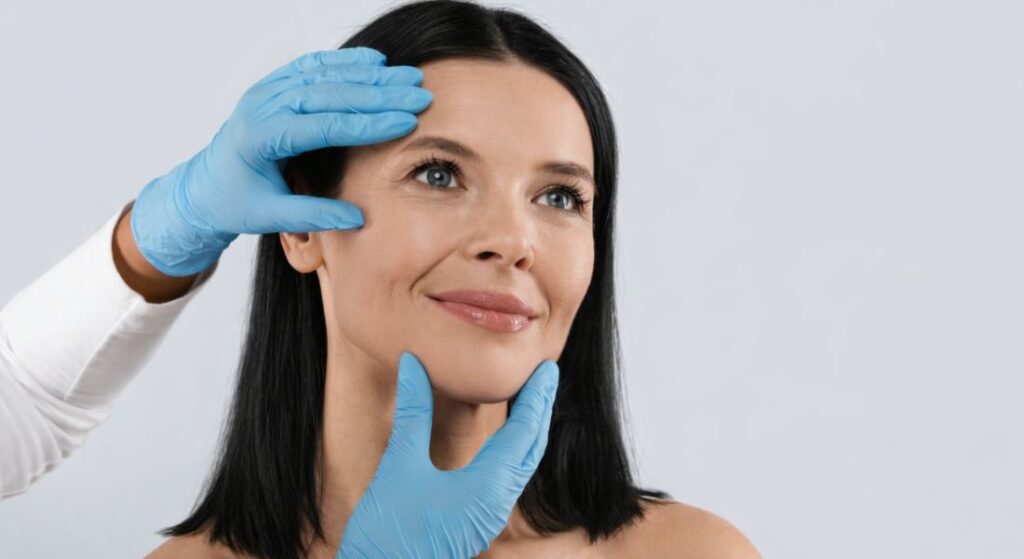
Your dermal thickness can influence how collagen stimulation translates visually. If your skin is thicker, placement depth may need to be adjusted to achieve a smooth, natural result. Superficial placement in thicker tissue can increase the risk of irregularity, which is why depth selection matters just as much as product choice.
Deeper structural placement often supports a smoother contour and more stable long-term integration. That said, biological response varies from person to person. Careful assessment of your tissue quality and anatomy guides technique selection, ensuring the approach is personalised and optimised for the way your skin responds.
Avoiding Over-Projection
When you’re enhancing the midface, more isn’t always better. Over-projection can disrupt facial harmony, especially if your natural bone structure is already well defined. In many Asian patients, excessive forward or lateral volume can look artificial rather than refined. That’s why strategic restraint matters just as much as technical skill.
1. Why over-projection happens: If too much product is placed too far forward or laterally, it can exaggerate width or create an overly prominent profile. Even subtle excess can shift balance.
2. The value of gradual staging: Spacing treatment across sessions allows you to assess how your face responds. Incremental enhancement protects proportion. You get the chance to refine rather than rush.
3. Letting time guide adjustments: Because Sculptra stimulates collagen gradually, the full effect isn’t immediate. Reviewing your results after each session helps ensure you’re building harmony, not excess.
4. Measured progression protects elegance: Small, controlled increases maintain softness and balance. Overcorrection is much harder to reverse than undercorrection. A conservative approach keeps your features natural and proportionate.
In the end, refinement comes from precision and patience. When you enhance thoughtfully and assess carefully, you preserve elegance while still achieving meaningful improvement.
The Importance of Staged Treatment
Sculptra is usually performed as a staged treatment rather than a single session, and that approach is especially valuable in Asian facial planning. Because collagen builds gradually, spacing appointments allows you and your clinician to assess how your tissue is responding before adding more stimulation. It’s a progressive strategy rather than an immediate transformation.
Leaving several weeks between sessions ensures enhancement remains controlled. If your collagen response is stronger or more subtle than expected, adjustments can be made along the way. This staged approach increases safety and reduces the risk of overcorrection.
It also aligns well with aesthetic preferences that favour subtle, natural refinement. Gradual change preserves your facial identity and maintains authenticity. With Sculptra in particular, patience isn’t a drawback it’s part of what produces a balanced, high-quality result.
Balancing Midface and Chin Projection
In some Asian patients, chin projection may be naturally more subtle. If you only enhance the midface without considering the lower third, overall balance may not feel quite right. That’s why assessing your chin and jaw proportions alongside the midface is so important facial harmony depends on how each region relates to the others.
Sculptra can provide indirect structural support by stimulating collagen in key areas, but the approach needs to remain conservative. Because the change develops gradually, it’s easy to underestimate how much cumulative projection can occur. Over-enlargement, particularly in the chin, can shift identity rather than refine structure.
Balanced projection is what ultimately enhances harmony. A comprehensive, whole-face evaluation ensures that no single area is treated in isolation. When placement is guided by proportion rather than trend, the result supports your natural features rather than overpowering them.
Addressing Ageing Patterns
Ageing patterns vary between individuals and across ethnicities. In many Asian faces, volume loss tends to occur more centrally rather than laterally, and skin laxity may develop in a unique pattern. Recognising these differences helps you and your clinician plan more effectively.
Sculptra works by stimulating collagen gradually, which can counteract this depletion over time. But to get the best outcome, the distribution strategy must reflect your specific ageing pattern rather than following a standard template. Customisation is key to natural-looking results.
Considering ethnic and individual factors ensures your treatment complements your features. There’s no one-size-fits-all approach, so a thorough analysis guides placement and dosing decisions. Personalised planning always produces the most harmonious outcome.
Risk Management and Safety
Sculptra’s safety depends largely on correct injection depth and appropriate dilution. While complications like nodules are uncommon, they can occur if technique isn’t precise. Working with an experienced injector helps minimise these risks.
Massage protocols after treatment help ensure even collagen distribution, and patient education is important for supporting results. Structured follow-up allows your clinician to monitor progress and make adjustments, while technical expertise and understanding of your unique facial anatomy ensure the best possible outcome.
Why Western Volume Templates Cannot Be Applied Universally
Many training models and aesthetic guidelines are based on Western facial anatomy. If these templates are applied directly to Asian faces, they can create disproportion or unnatural contours. Customisation is essential to maintain harmony.
Asian facial structures often feature flatter midfaces and subtler jawlines. Enhancements should work with these characteristics, not against them. Respecting baseline anatomy preserves natural balance.
Facial harmony relies on amplifying your identity rather than imposing an external ideal. Subtle adjustments often achieve more elegant results than dramatic changes. Cultural nuance plays a key role in planning.
Ultimately, volume placement should reflect your personal goals and preferences. There is no universal “perfect” face, so individualisation defines true aesthetic excellence.
Long-Term Integration and Maintenance
When you’re using Sculptra, it’s important to remember that results don’t appear overnight. The product works gradually, stimulating your own collagen over several months. How quickly your skin responds can vary, so maintenance schedules are often tailored to you and in many Asian patients, slower, more measured reinforcement is preferred to preserve natural balance.
1. Gradual development of results: Sculptra works by encouraging your skin to produce collagen slowly. This means your enhancements emerge subtly, avoiding sudden or exaggerated changes. Patience is key to achieving harmonious results.
2. Tailored maintenance schedules: Because collagen formation differs from person to person, follow-up sessions may be spaced differently. A slower reinforcement schedule helps prevent overcorrection and keeps your facial proportions balanced.
3. Subtle top-up sessions: Small, planned touch-ups maintain volume and contour without risking disproportion. Incremental adjustments allow your clinician to refine your look over time rather than making dramatic changes all at once.
4. Natural integration of collagen: Since the product relies on your body’s own collagen production, the results blend seamlessly with your existing tissues. This supports a natural, authentic appearance that evolves with you.
5. Structured review for stability: Regular check-ins allow your clinician to monitor progress, assess symmetry, and plan future sessions. This structured approach ensures that enhancements remain harmonious and long-lasting.
In conclusion, long-term Sculptra treatment is about patience, precision, and maintenance. By progressing gradually and monitoring results carefully, you can achieve balanced, natural outcomes that integrate beautifully over time.
The Role of Expertise in Ethnic Aesthetic Planning

Treating different facial anatomies requires a deep understanding of structural variation. An experienced practitioner recognises differences in projection, facial width, and how your tissues respond, all of which influence where and how collagen stimulators are placed.
A thorough consultation allows for detailed assessment of your unique features. Your personal goals should guide every aspect of the treatment plan. Working together ensures your expectations are met safely.
Ethnic sensitivity is key to achieving natural-looking results. Respecting your individuality helps build trust between you and your clinician.
Precision planning is central to modern collagen stimulation techniques. Careful evaluation and expert technique ensure subtle, harmonious outcomes that suit your face.
FAQs:
1. What makes Sculptra different from traditional dermal fillers?
Sculptra works by stimulating your body’s own collagen gradually over several months, rather than instantly adding volume. This means results appear subtly over time, and careful placement is essential to ensure natural, balanced enhancement. It’s less about immediate “filling” and more about long-term structural support.
2. Why does Sculptra treatment differ for Asian faces?
Asian facial anatomy often features flatter midfaces, wider zygomatic arches, subtler jawlines, and different soft tissue distribution. Because of these structural differences, treatment strategies focus more on forward projection and medial volume rather than lateral cheek expansion, which might widen the face unnecessarily.
3. How is midface enhancement planned differently?
For Asian faces, emphasis is usually on central midface projection rather than lateral expansion. Strategic medial placement stimulates collagen in areas that improve forward support, maintaining harmony and avoiding excessive width. Depth and dilution are carefully controlled to ensure gradual, even volumisation.
4. What about the lower face and jawline?
In the lower face, Sculptra is used for gentle contouring rather than widening. Controlled micro-deposition and careful depth selection prevent bulkiness and maintain subtle refinement, ensuring the jawline and chin remain proportionate to the rest of the face.
5. How does Sculptra help soften nasolabial folds?
Rather than directly filling the fold, Sculptra strengthens anterior structural support. By improving midface projection and collagen stimulation, nasolabial folds gradually appear less pronounced, resulting in a natural and harmonious correction.
6. How important is staged treatment?
Very important. Because collagen forms slowly, treatments are typically spread across multiple sessions. This allows your clinician to monitor response, adjust placement, and gradually enhance volume without over-projection, ensuring subtle and natural results.
7. Does skin thickness affect Sculptra results?
Yes. Thicker skin may require deeper placement to achieve smooth, even contouring. Individual tissue response also varies, so your clinician will assess your skin carefully to optimise technique, depth, and distribution.
8. Why can’t Western filler templates be applied to Asian faces?
Western templates often prioritise lateral cheek enhancement and angular definition, which may conflict with Asian facial anatomy and aesthetic preferences. Applying them directly can create disproportion or unwanted widening. Customisation is essential for natural-looking results.
9. How long does it take to see full results?
Sculptra works gradually over several months. Most patients notice progressive improvement as collagen builds, with full effects typically visible after 3–6 months. Follow-up sessions help maintain balance and refine volume as needed.
10. Is safety different for Asian facial treatments?
Safety is universal, but technique matters. Correct depth, product dilution, and placement are crucial to avoid nodules or irregularities. Experienced injectors who understand ethnic anatomy ensure that treatments are both safe and aesthetically harmonious.
Final Thoughts: Achieving Natural Harmony with Sculptra in Asian Faces
Sculptra offers a unique approach to facial rejuvenation by gradually stimulating your own collagen, rather than instantly adding volume. For Asian facial anatomy, careful planning of midface projection, lower face contour, and anterior support ensures enhancements remain balanced, refined, and culturally harmonious. Staged treatments, precise placement, and attention to tissue response allow results to integrate naturally over time, avoiding over-projection and preserving your individual features.
If you’re thinking about sculptra treatment in London, you can get in touch with us at the London Medical & Aesthetic Clinic to book a consultation. Our specialists will assess your facial structure thoroughly and design a personalised treatment plan to achieve subtle, long-lasting, and natural-looking results.
References:
1. Fabi, S., Hamilton, T., LaTowsky, B., Kazin, R., Marcus, K., Mayoral, F., Shridharani, S., Hicks, J., Brasater, D. and Weinberg, F. (2024). https://pubmed.ncbi.nlm.nih.gov/38206151/
2. Signori, R., Barbosa, A.P., Cezar‑Dos‑Santos, F., Carbone, A.C., Ventura, S. and de Souza Nobre, B.B. (2024) Efficacy and safety of poly‑L‑lactic acid in facial aesthetics: A systematic review. https://pubmed.ncbi.nlm.nih.gov/39339028/
3. Angelo‑Khattar, M. (2025) Poly‑L‑lactic acid in facial rejuvenation: Volumetric data supporting regenerative outcomes, Clinical, Cosmetic and Investigational Dermatology. https://pubmed.ncbi.nlm.nih.gov/41488550/
4. Ferreira, A.C.M., et al. (2025) Efficacy, durability, and safety of collagen biostimulators based on poly‑L‑lactic acid (PLLA). https://pubmed.ncbi.nlm.nih.gov/41184662/
5. (Prospective study) Exploring the safety and satisfaction of patients injected with collagen biostimulators injectable poly‑L‑lactic acid (Rennova Elleva) (2025). https://pubmed.ncbi.nlm.nih.gov/39663956/