



If you’ve been looking into skin tightening treatments, you may have come across High-Intensity Focused Ultrasound, commonly known as HIFU. You might also have noticed something that can feel a bit confusing not everyone gets the same results. You may see one person notice a visible lift within weeks, while someone else experiences a slower and more subtle improvement over a longer period. This variation is completely normal.
If you’re wondering why this happens, you’re not alone. The key thing to understand is that your results are influenced by your individual skin and how your body responds to treatment. You may share the same procedure as someone else, but your skin condition, ageing pattern, and collagen response will not be identical. Once you understand these differences, it becomes much easier to set realistic expectations for your own outcome.
HIFU works by delivering focused ultrasound energy deep into your skin layers. This process stimulates collagen production, which gradually tightens and lifts the treated areas over time. However, how effectively your skin responds depends on several personal and technical factors, including your skin quality, age, and treatment settings.
Why No Two Faces Respond the Same Way
Your skin is biologically unique, even if you are the same age as someone else. You may notice that factors like collagen density, skin elasticity, and fat distribution can vary a lot from person to person. These differences play a major role in how lifted or tightened your skin appears after HIFU. Even small variations in skin structure can influence your final result.
Some people naturally produce collagen more efficiently, which means their skin may respond more quickly and show clearer tightening. You may also find that others have a slower regenerative response, where improvements build more gradually over time. This difference in healing and collagen production can create noticeable variation in outcomes. It is simply how individual biology works.
Even if identical treatment settings are used, the results can still look different between patients. Your skin does not behave in exactly the same way as anyone else’s, even under the same conditions. This is why variation in results is not only expected but completely normal. Understanding this helps you avoid comparing your outcome directly with others.
Skin Laxity at the Time of Treatment
When you are considering HIFU, one of the most important factors is your skin laxity, which simply means how firm or loose your skin already is before treatment. This plays a big role in how noticeable your results will be. If your skin has only mild laxity, you are more likely to see clearer and quicker improvements. However, if the laxity is more advanced, your results may be more gradual and less dramatic, even though improvement is still possible.
1. Mild skin laxity responds best: If you are just starting to notice slight looseness, your skin usually responds very well to HIFU. You may see a more defined jawline and firmer texture because your skin still has strong underlying support.
2. Moderate to severe laxity needs more support: If your skin feels looser or sagging is more noticeable, you may need more time to see results, or in some cases, more than one session. The improvement can still be meaningful, but it tends to develop more gradually.
3. Stronger structural support gives better results: If your skin still has good firmness and elasticity, HIFU can enhance and lift it more effectively. This is when the tightening effect often looks more noticeable and defined.
4. Advanced collagen loss leads to subtle changes: If collagen breakdown is more significant, your skin may not respond as strongly. In this case, improvements are still possible, but they are usually softer and more refined rather than dramatic.
5. Your starting point matters most: You might notice that two people of the same age can get very different results. That is because your skin condition before treatment is one of the biggest factors in your final outcome.
6. Assessment is essential before treatment: This is why a proper consultation is so important. Your practitioner will assess your skin laxity and guide you on what results you can realistically expect.
Overall, your skin’s starting condition plays a key role in how effective HIFU will be for you, and it helps determine the level of improvement you are likely to achieve.
Age and Biological Response
Age is one of the strongest factors that influences how your skin responds to HIFU. If you have younger skin, you may notice that it has more active collagen production, which allows for quicker and more visible tightening effects. This can lead to faster improvements in firmness and overall lift after treatment. Your skin’s natural regenerative ability plays a big role in how soon you see results.
As you get older, your body naturally produces less collagen. This means your skin may not respond as quickly or as strongly to stimulation. You might notice that improvements still occur, but they tend to develop more gradually over time. The overall tightening effect can also be slightly less pronounced compared to younger skin.
However, age does not stop you from seeing results with HIFU. It simply affects how quickly and how strongly your skin responds to treatment. You may still experience noticeable improvement, just on a different timeline and with varying intensity. This is why it is important to align your expectations with your skin’s natural biological behaviour.
Collagen Quality and Density
Collagen is the main structural protein that keeps your skin firm and supported. You may find that when your collagen network is strong and healthy, your skin responds more effectively to HIFU stimulation. This usually leads to more noticeable tightening and a smoother, lifted appearance over time. The better your collagen quality, the more efficient the skin’s response tends to be.
If your collagen is already weakened, fragmented, or reduced due to ageing or lifestyle factors, your response may be slower. In this case, your skin may need more time to rebuild its internal structure before visible changes appear. You might still see improvement, but it tends to develop more gradually. This is part of your skin’s natural repair process.
The condition of your collagen is not something you can easily see from the outside. However, it plays a major role in determining how well your skin responds to treatment. Even if your skin looks similar to someone else’s, the underlying collagen quality can be very different. This is why results can vary significantly between individuals.
Treatment Customisation
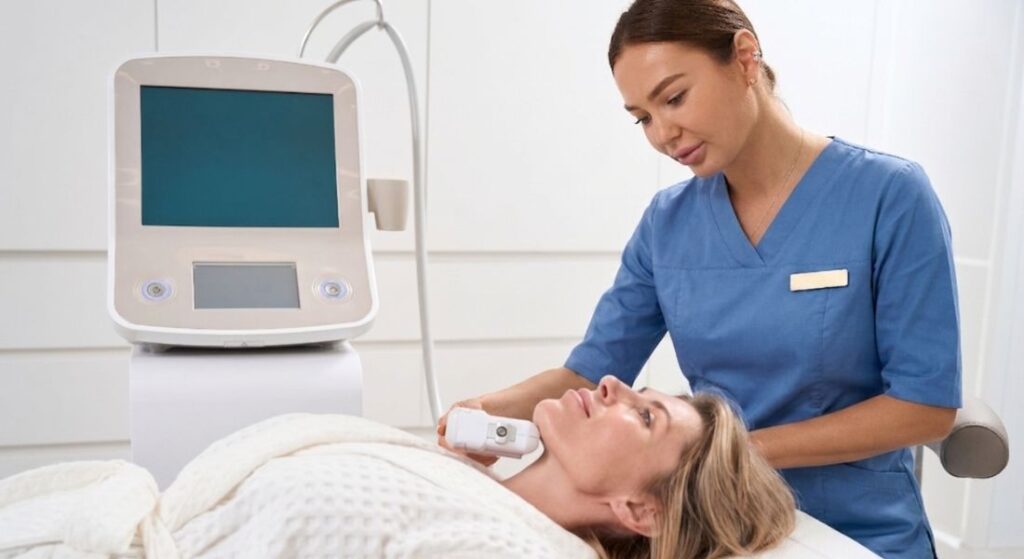
No two HIFU treatments should be exactly the same, because your facial structure is unique to you. You may find that personalised planning is essential to achieving the best possible outcome. By tailoring the treatment to your specific features, the energy can be directed more precisely where it is needed. This helps improve both effectiveness and overall balance in your results.
Some people may need more focus on jawline definition, while others benefit more from cheek lifting or even mild brow tightening. Your treatment plan should reflect your individual concerns rather than following a fixed pattern. You might notice that addressing the right areas makes a big difference to how natural and harmonious your results look. This targeted approach helps ensure the improvements match your expectations.
A standardised or one-size-fits-all approach may not deliver the same level of results for everyone. You may find that without customisation, certain areas are under-treated or over-treated. Personalisation allows for a more refined and accurate outcome that suits your face specifically. This is why tailored treatment planning is key to achieving higher satisfaction with HIFU.
Depth of Energy Delivery
HIFU works by targeting specific layers beneath your skin, rather than just the surface. You may find that the treatment is most effective when the ultrasound energy reaches the correct depth for your individual anatomy. If the energy is delivered too shallow or too deep, the tightening effect can be reduced. This is why accurate depth selection is so important for good results.
Different areas of your face naturally require different treatment depths. For example, your jawline, cheeks, and neck all have different skin thickness and structural support. Because of this, the energy needs to be carefully adjusted depending on the area being treated. Proper mapping of your facial structure helps ensure each zone receives the right level of stimulation.
Even small changes in depth settings can influence your overall outcome. You might notice that precision plays a key role in how consistent and effective the results appear. When the energy is delivered accurately, you are more likely to see balanced and even improvement. This is why technical precision is essential in achieving predictable HIFU results.
Technology Differences Between Devices
Not all HIFU machines work in exactly the same way. You may find that some devices use more advanced focusing systems, while others are older and less precise. This difference in technology can have a direct impact on how effective and consistent your results are. The quality of the device used plays a key role in your overall outcome.
Modern HIFU devices are designed to target multiple skin layers more accurately. This allows for more controlled energy delivery, which can improve both the consistency and safety of the treatment. You may also find that newer systems feel more comfortable during the procedure. Better precision often leads to a more even and natural-looking result.
Lower-quality or outdated devices may not deliver energy as evenly across the treatment area. This can sometimes result in uneven stimulation of collagen and less noticeable improvement. You might also experience more variation in results depending on the area being treated. This is why the type of device used is an important factor in your final outcome.
Practitioner Skill and Mapping Ability
Even though HIFU is an advanced technology, your results still depend a lot on the skill and experience of the practitioner performing the treatment. When it is done correctly, you can achieve smoother, more lifted and natural-looking results. When it is not, the outcome may be less balanced. A trained practitioner understands how to plan and map your face carefully before starting the treatment.
1. Understanding facial anatomy: If your practitioner has strong knowledge of facial structure, they can target the right layers and areas more accurately. This helps ensure the energy is delivered exactly where it is needed for lifting and tightening.
2. Accurate treatment mapping: Before starting, your face is usually mapped into different zones. Good mapping means you get even coverage across all treated areas, which supports a balanced and natural result.
3. Avoiding uneven results: If mapping is not done properly, you may end up with areas that are over-treated or under-treated. This can sometimes lead to uneven tightening or subtle asymmetry, which is why precision matters so much.
4. Customised approach for your face: Every face is different, so a skilled practitioner will adjust the treatment based on your unique features, concerns, and skin condition. This personalisation helps improve overall harmony and definition.
5. More natural-looking outcomes: When the treatment is carried out with experience and care, the results tend to look subtle and well-balanced, rather than artificial or overdone.
Overall, the expertise of the person performing your HIFU treatment plays a major role in how smooth, even, and natural your final results will be.
Fat Distribution in the Face
Facial fat distribution has a big impact on how lifting results appear after HIFU. You may notice that areas with more fat can show slower or less obvious tightening at first. This is because the tissue is heavier and needs more time for the underlying skin tightening effect to become visible. As a result, improvements may appear more gradual in fuller areas.
If you have a thinner face, you might see results more quickly. Structural changes tend to be easier to notice when there is less soft tissue covering the underlying framework. However, you may also find that the overall change looks more subtle, simply because there is less volume to lift or redefine. The improvement is still present, but it may be less dramatic in appearance.
Fat distribution also naturally changes as you age, which can influence how your results are perceived over time. You may notice shifts in volume that affect symmetry, contour, and definition in different areas of the face. This means that the same treatment can look different depending on how fat is distributed at the time of your procedure. Understanding this helps you better interpret and appreciate your individual results.
Importance of Proper Consultation

A detailed consultation is essential before you go ahead with HIFU treatment. You may find that this step helps determine whether the procedure is genuinely suitable for your skin concerns and goals. It also allows you to understand what kind of improvement you can realistically expect. This helps you make a more informed and confident decision.
During your consultation, your skin condition will be carefully assessed. You may notice that factors like skin laxity, fat distribution, and overall facial structure are evaluated in detail. This information is then used to plan your treatment in a way that best suits your individual needs. Proper planning ensures that the right areas are targeted with the correct settings for better results.
Without a proper assessment, outcomes can become less predictable and more variable. You might find that incorrect expectations or unsuitable treatment planning can affect satisfaction with results. A well-structured consultation helps reduce this risk by tailoring the approach specifically to you. Overall, good planning plays a key role in achieving safer, more consistent, and more effective outcomes.
Skin Thickness Variations
Skin thickness can significantly influence how your HIFU results appear. If you have thicker skin, you may find that it requires stronger or deeper energy delivery to achieve noticeable tightening. Thicker skin can also be slightly more resistant to change, which may mean results develop more gradually. As a result, visible improvements might take a bit longer to become clear.
If you have thinner skin, you may respond more quickly to treatment. You might notice early tightening sooner because the energy can reach the target layers more easily. However, the overall improvement may appear more subtle in comparison. This is because thinner skin often has less structural change to show, even when tightening has occurred.
Skin thickness also varies naturally across different areas of your face and neck. You may notice that some regions respond faster or more visibly than others due to these differences. This variation adds complexity to predicting exact outcomes from HIFU. It also helps explain why results can look slightly different from one area to another, even within the same treatment session.
Natural Healing Response
Your body’s natural healing ability plays a major role in how well you respond to HIFU. You may notice that some people experience faster skin regeneration, while others take a bit longer for visible changes to appear. This difference is completely normal and is part of your individual biology. Your overall result depends heavily on how efficiently your body repairs and rebuilds tissue after treatment.
Inflammation levels and tissue repair speed also vary from person to person. You might find that these internal processes influence how quickly new collagen forms in the treated areas. Since collagen production is what creates tightening and lift, any variation in healing response can directly affect when you start to see improvements. This is why timing of results is not the same for everyone.
If your healing response is strong and efficient, you may notice better and more consistent tightening over time. On the other hand, if your body heals more slowly, visible results may take longer to develop. The final outcome can still be effective, but the progression simply happens at a different pace. Understanding this helps you appreciate that results are closely linked to your body’s natural recovery process.
Lifestyle and Daily Habits
Your lifestyle plays a big role in how healthy your skin looks and how well it responds to HIFU. Even though the treatment stimulates collagen production, your daily habits can either support or limit the results you achieve. If you take care of your body and skin, you are more likely to see smoother, firmer and longer-lasting improvements.
1. Smoking affects skin healing: If you smoke, you may notice slower skin improvement. This is because smoking reduces oxygen flow to your skin, which can directly impact collagen production and delay the natural repair process.
2. Sleep is essential for skin repair: You might not realise it, but your skin does most of its regeneration while you sleep. If you are not getting enough rest, your skin has less time to repair and rebuild, which can make HIFU results appear less effective or slower to develop.
3. Healthy habits support better results: If you maintain a balanced lifestyle good nutrition, regular hydration, and sun protection you give your skin a better environment to produce collagen and respond to treatment.
4. Collagen rebuilding is influenced daily: You may think results depend only on the treatment itself, but your everyday choices continue to influence how your skin behaves long after your session.
Overall, if you support your skin with healthy lifestyle habits, you can enhance the natural collagen-building process and get more consistent, longer-lasting results from HIFU.
Sun Exposure History
Long-term sun exposure can have a significant impact on your skin’s collagen levels. You may not always see it immediately, but UV rays gradually break down collagen and weaken the skin’s overall structure. This can lead to reduced firmness, loss of elasticity, and more visible signs of ageing over time. As a result, your skin may not respond to tightening treatments as efficiently.
If your skin has accumulated sun damage, you may find that your response to HIFU is slightly slower. This is because your skin often needs to first repair underlying damage before it can fully respond to collagen stimulation. You might still achieve improvement, but the process can take longer as your tissue works to rebuild its baseline quality. This can also influence how quickly visible results begin to show.
Consistent sun protection plays an important role in both treatment response and long-term results. You may notice that protecting your skin from UV exposure helps preserve collagen and maintain firmness over time. This also supports the longevity of your HIFU results after treatment. Overall, good sun habits can significantly improve both your immediate response and long-term skin health.
Hormonal Influence on Skin Behaviour
Hormones play an important role in how your skin behaves and responds to treatments like HIFU. You may not always notice it directly, but hormones influence collagen production, skin elasticity, and overall firmness. As you age or go through periods of stress, hormonal shifts can gradually affect how your skin looks and how well it repairs itself. This is often an overlooked factor when considering treatment outcomes.
If there is a hormonal imbalance, you may find that your skin heals more slowly after treatment. It can also affect how firm or resilient your skin feels over time. Because collagen production is closely linked to hormonal activity, any disruption in balance can lead to variation in results. This means your improvement may take longer to appear or may feel less pronounced in some cases.
When your hormonal health is more balanced, your skin is generally better able to regenerate and respond to stimulation. You may notice improved elasticity and a more efficient healing process, which can support better HIFU outcomes. While it is not the only factor involved, hormonal balance does contribute to overall skin quality. This is why it can indirectly influence both the speed and quality of your results.
Stress Levels and Skin Regeneration
High stress can have a noticeable impact on how well your skin responds to treatments like HIFU. You may not realise it, but when stress levels are high, your body produces more cortisol, which can interfere with normal skin repair processes. Over time, this can reduce collagen production and affect how firm your skin appears. This means your overall response to treatment may not be as strong as it could be.
If you experience chronic stress, you may also notice that your healing process feels slower. Increased stress can affect inflammation levels in the body, which in turn can influence how efficiently your skin regenerates. You might find that results take longer to appear or develop more gradually. This doesn’t stop the treatment from working, but it can influence the pace of improvement.
When your body is in a more relaxed state, your skin is generally better able to repair and respond to stimulation. You may notice that stress management supports a healthier overall environment for collagen production. While it is not a direct treatment factor, it does play an indirect role in your results. Managing stress can therefore help support a more consistent and effective skin response over time.
Hydration and Skin Health

Well-hydrated skin tends to respond more effectively to HIFU treatment. You may notice that when your skin is properly hydrated, it has better elasticity and flexibility, which allows it to contract and tighten more efficiently. Hydration also supports healthy collagen function, which is essential for achieving firmer and more lifted results. This means your overall response to treatment can be improved with good skin hydration.
On the other hand, if your skin is dry, you may find that it appears less responsive. Dry skin often lacks the same level of resilience and suppleness, which can make tightening effects seem more limited. You might still get results, but they may develop more slowly or appear less noticeable at first. This is because dehydrated skin does not behave as efficiently during the healing and remodelling process.
Hydration is a simple yet important factor that can influence your outcome. You may find that maintaining good water intake and using appropriate skincare helps support better skin performance overall. While it is not the only factor affecting results, it does play a meaningful supporting role. Keeping your skin well-hydrated can help enhance both the quality and visibility of your HIFU results.
Treatment Area Differences
If you are considering HIFU, it is helpful to know that not all areas of your face respond in the same way. Different parts of your face and neck have different skin thickness, structure, and sensitivity, which means the results can vary from one area to another. Understanding this helps you set realistic expectations about how your final outcome may look.
1. Jawline usually responds very well: You may notice that the jawline often shows one of the most visible improvements. This area tends to tighten and define more clearly, giving a more sculpted lower face.
2. Forehead changes are more subtle: If you are treating the forehead, the improvements are usually gentler. You may notice a slight lifting or smoothing effect, but it is typically less dramatic compared to the lower face.
3. Neck requires extra care: The skin on your neck is thinner and more delicate. Because of this, it may need adjusted settings during treatment to ensure safety and comfort. Results are still effective, but they often develop more gradually.
4. Different anatomy, different response: Each area of your face has a unique structure and level of collagen support. This naturally leads to variation in how each area responds to the treatment.
5. Results vary across the face: You might notice that some areas lift more quickly or noticeably than others. This is completely normal and expected with HIFU.
Overall, treatment results are not uniform across the face, but this variation actually helps create a more natural and balanced overall improvement.
Number of Treatment Sessions
Some people may only need one HIFU session to achieve noticeable improvement, especially if their skin concerns are mild. You might see a subtle lift and some tightening after a single treatment, particularly if your skin is in good condition. However, the extent of change can vary depending on your individual response. For some, one session is enough to achieve a satisfactory result.
Others may benefit from multiple sessions to reach optimal improvement. If your skin laxity is more advanced or your concerns are more pronounced, repeated treatments can help build stronger collagen stimulation over time. You may notice that each additional session gradually enhances firmness and definition. This cumulative effect often leads to more refined and longer-lasting results.
Treatment planning plays a major role in your final outcome. You cannot assume that one approach will suit everyone, as your skin condition and goals are unique to you. A tailored plan ensures the number of sessions matches what your skin actually needs. This personalised approach helps you achieve more consistent and realistic results over time.
Time Needed for Results to Appear
HIFU does not give instant results, so you should not expect an immediate visible change straight after treatment. You may notice a slight initial tightening effect, but this is usually very subtle. The real improvement develops gradually as your skin starts producing new collagen over time. This process is part of your body’s natural healing response.
Collagen regeneration typically takes several weeks to a few months. Most people begin to see more noticeable results after around 8 to 12 weeks, as the skin gradually becomes firmer and more lifted. In some cases, improvements can continue to develop even beyond this period. This slow progression is completely normal for HIFU treatments.
If you expect immediate changes, you might feel disappointed with the early results. You may find it more helpful to understand that timing plays a key role in the outcome. The treatment is designed to work gradually, not instantly, so patience is important. This allows the full collagen-building process to take effect and deliver more natural-looking results over time.
Maintenance and Longevity of Results
HIFU results are not permanent, because your skin continues to age naturally after treatment. You may find that collagen production gradually slows over time, and the tightened effect slowly softens as part of this normal ageing process. This means that while results can be long-lasting, they are not permanent. Understanding this helps you set realistic expectations from the start.
To help maintain your results, you may benefit from occasional maintenance sessions. These follow-up treatments can help stimulate collagen again and support ongoing skin firmness. You might notice that regular maintenance helps prolong the lifting and tightening effects for longer. It can also help keep your jawline definition more consistent over time.
Your lifestyle also plays an important role in how long your results last. Healthy habits such as good skincare, sun protection, and a balanced lifestyle can help extend the benefits of treatment. You may find that taking care of your skin overall helps preserve firmness for longer. In general, consistency in maintenance and lifestyle choices works together to support longer-lasting results.
Comparison with Surgical Options
HIFU is not a surgical facelift, and it’s important to understand the difference between the two. You may notice that HIFU focuses on gradual lifting and tightening by stimulating your body’s natural collagen production. Because of this, the changes tend to be subtle and build up over time rather than happening all at once. Your expectations should therefore match this slower, more natural process.
Surgical procedures, on the other hand, provide an immediate and more dramatic structural change. You may see a clear difference straight after surgery because tissue is physically repositioned. In contrast, HIFU works biologically, encouraging your skin to improve itself gradually from within. These are completely different approaches with different levels of intensity and recovery.
Understanding this distinction can help you avoid unrealistic expectations and potential disappointment. You may find that HIFU is better suited if you prefer a non-invasive, natural-looking improvement. However, surgery may be more appropriate if you are looking for more significant or immediate correction. Knowing the difference allows you to make a more informed and confident decision.
Psychological Perception of Results
How you feel about your HIFU results can be just as important as the physical changes themselves. Even small improvements in skin firmness or contour can seem more noticeable or more subtle depending on what you were expecting beforehand. Your perception of results is influenced by several everyday factors, not just the treatment itself.
1. Expectations shape your satisfaction: If you are expecting dramatic changes, you might feel disappointed by subtle improvements. However, if you understand that HIFU works gradually, even small changes can feel meaningful and satisfying.
2. Lighting and facial expressions matter: You may notice that your results look different depending on lighting, angles, or even your facial expression. A lifted jawline or smoother skin can appear more or less visible depending on how you are viewing yourself.
3. Day-to-day variation is normal: Your face naturally looks slightly different from day to day due to factors like hydration, sleep, and stress. This can affect how you perceive the outcome of treatment.
4. Changes are not always immediately obvious: You might not always “see” the improvement clearly in the mirror every day, even though gradual tightening is still happening beneath the skin.
5. Perception vs actual biological change: It is important to remember that your perception does not always match what is actually happening in the skin. Collagen rebuilding and tightening can continue even when changes feel subtle.
Overall, understanding how perception works can help you appreciate gradual improvements more clearly and avoid underestimating the real, ongoing benefits of the treatment.
FAQs:
1. Why do HIFU results vary from person to person?
HIFU results vary because everyone’s skin is different. Your age, skin elasticity, collagen levels, and healing response all influence how your skin reacts to treatment, even if the same settings are used.
2. Does age affect how well HIFU works for you?
Yes, age plays an important role in how your skin responds. Younger skin usually produces collagen more efficiently, so you may see quicker and more noticeable results, while older skin may respond more gradually.
3. Why does skin laxity matter for HIFU results?
Skin laxity affects how much lifting you can achieve. If your skin is only mildly loose, you’re more likely to see a visible improvement. If laxity is more advanced, results may be softer and take longer to develop.
4. Can two people get different results from the same HIFU treatment?
Yes, even with identical treatment settings, results can differ. Your skin’s structure, fat distribution, and natural collagen production mean your response will never be exactly the same as someone else’s.
5. How long does it take to see the full results of HIFU?
You’ll usually start noticing changes within a few weeks, but full results develop over 2 to 3 months as new collagen forms. In some cases, improvement can continue for longer.
6. Does practitioner skill affect HIFU results?
Yes, it makes a big difference. A skilled practitioner understands facial anatomy and adjusts the depth and placement of energy correctly, which helps improve consistency and overall results.
7. Can lifestyle affect how well HIFU works?
Absolutely. Factors like smoking, sun exposure, stress, sleep, and hydration all affect your skin’s ability to produce collagen. Healthier habits usually support better and longer-lasting results.
8. Why do some areas of the face respond better than others?
Different parts of your face have different skin thickness and structure. For example, the jawline often responds well, while the neck or forehead may show more subtle changes.
9. Do you need more than one HIFU session?
Some people achieve good results after one session, while others benefit from additional treatments. This depends on your skin condition and the level of improvement you’re looking for.
10. Is it normal if your HIFU results look subtle?
Yes, that’s completely normal. HIFU is designed to create gradual, natural-looking improvement rather than dramatic change. Subtle tightening often builds over time as collagen develops.
Final Thoughts: Why Understanding HIFU Variation Matters
HIFU results are never identical from one person to another, and that’s completely expected. Your skin has its own structure, ageing pattern, and healing response, which all influence how much lifting or tightening you see. Factors like age, collagen quality, skin laxity, and lifestyle habits work together to shape your outcome. This is why two people having the same treatment can still experience very different results.
What’s important to understand is that HIFU is a gradual collagen-stimulating treatment, not an instant transformation. The best outcomes usually develop over weeks and months as your body naturally rebuilds and strengthens the skin from within. Some people notice quicker improvements, while others see slower but steady changes, depending on how responsive their skin is. If you’re thinking about HIFU treatment in London, you can get in touch with us at the London Medical & Aesthetic Clinic.
References:
1. Wu, S., Liu, J., Tang, Y., Yang, L. and Han, Y. (2025) Skin burns after high-intensity focused ultrasound ablation: a retrospective control study. Scientific Reports, 15, 28127. https://pmc.ncbi.nlm.nih.gov/articles/PMC12317018/
2. Zhang, H., Li, Y., Chen, J., Wang, X. and Liu, Q. (2023) Clinical efficacy and safety of high-intensity focused ultrasound (HIFU) for benign thyroid nodules: a systematic review and meta-analysis. International Journal of Hyperthermia, 40(1), 2261456. https://pmc.ncbi.nlm.nih.gov/articles/PMC10288204/
3. Welc, N., Owczarek, M., Jałowska, M. and Dańczak-Pazdrowska, A. (2025) High-intensity focused ultrasound application, effects and complications. Australasian Journal of Dermatology, 66(3), pp. e120-e125. https://pubmed.ncbi.nlm.nih.gov/40095285/
4. Alam, M., White, L.E., Martin, N., Witherspoon, J., Yoo, S.S., West, D.P. and Gladstone, H.B. (2017) Ultrasound tightening of facial and neck skin: a rater-blinded prospective cohort study. Journal of the American Academy of Dermatology, 77(1), pp. 115-122. https://pubmed.ncbi.nlm.nih.gov/29074037/
5. Zhang, Y., Liu, H., Wang, X., Chen, Z. and Li, J. (2025) Advances in high-intensity focused ultrasound (HIFU) therapy for tumour treatment: mechanisms and clinical applications. Journal of Biomedical Engineering, 49(6), pp. 1025-1034. https://www.sciencedirect.com/science/article/pii/S2352587825002451