

For many years, facial ageing was viewed mainly as a problem of loose skin. The common belief was that as you aged, your skin gradually stretched and dropped because of gravity, leading to wrinkles, folds, and sagging. This understanding shaped many early approaches to facial rejuvenation.
However, research into facial anatomy revealed that ageing is much more complex. The face does not age as a single layer, and changes beneath the skin play a major role in how your appearance changes over time.
One of the most influential contributions to this modern understanding came from the research of Dr Rod Rohrich and his colleagues, who studied facial fat compartments and how they change with age. Their work helped transform the way clinicians approach facial rejuvenation.
The Rohrich Facial Fat Compartment Study showed that facial fat is not simply one continuous layer that disappears evenly over time. Instead, the face contains separate fat compartments that age differently, creating specific patterns of volume loss and facial change.
Understanding Facial Fat Compartments
Your face contains several distinct fat compartments located beneath your skin, and each one contributes to your facial structure, softness and youthful contours. These compartments help create the natural shape of your face and influence how your features appear at different stages of life.
For many years, facial fat was viewed as one continuous layer. Research by Rohrich and colleagues helped demonstrate that understanding the individual behaviour of different fat compartments provides a clearer explanation of how your face changes with ageing.
This anatomical knowledge has become an important foundation for modern aesthetic treatments. By understanding how your facial fat compartments change over time, specialists can develop more precise approaches that aim to restore balance, volume and natural-looking facial harmony.
Who Is Dr Rod Rohrich?
Dr Rod Rohrich is a recognised plastic surgeon and researcher known for his influential work in facial anatomy and aesthetic surgery. His research has helped improve the understanding of how your facial structures change over time and how these changes affect the ageing process.
Through his studies, Dr Rohrich explored the relationship between your facial tissues, fat compartments and underlying structures. His work focused on developing treatment approaches that respect your natural anatomy and help create balanced, natural-looking outcomes.
His contributions have influenced both surgical and non-surgical approaches to facial rejuvenation. By improving knowledge of facial anatomy, his research has helped specialists plan treatments that are more personalised and designed around your individual facial features.
What Did the Original Rohrich and Pessa Study Examine?
The landmark research commonly called the Rohrich Facial Fat Compartment Study was published in 2007 under the title “The Fat Compartments of the Face: Anatomy and Clinical Implications for Cosmetic Surgery”.
The researchers performed 30 hemifacial cadaver dissections after injecting methylene blue into selected areas of facial fat. The dye helped reveal anatomical boundaries between regions that had previously been treated as parts of one continuous subcutaneous layer.
The study identified multiple independent compartments, including separate regions within the cheek, forehead, orbital area, nasolabial region and jowl. It also described septal boundaries that help separate and support these compartments.
This was primarily an anatomical study. It did not follow living patients over time or directly measure how much individual compartments lost volume, migrated or changed with age. Instead, it provided an anatomical framework and proposed that separate compartments might contribute differently to facial ageing.
Rohrich and Pessa Study: Key Facts
1. The primary study was published in 2007.
2. The principal authors were Rod J. Rohrich and Joel E. Pessa.
3. It used 30 hemifacial cadaver dissections.
4. Methylene-blue injections helped identify compartment boundaries.
5. The study demonstrated that subcutaneous facial fat is divided into separate anatomical units.
6. It challenged the idea that the facial-fat layer should always be treated as one continuous mass.
7. It did not directly prove how every compartment changes during ageing.
8. Later imaging, anatomical and clinical studies developed the ageing model further.
Why the Study Changed Facial Ageing Concepts
Before facial-fat-compartment research became widely incorporated into aesthetic practice, facial fat was often approached as a more continuous layer during treatment and surgery. Rohrich and Pessa’s anatomical findings demonstrated that this layer contains distinct regions separated by septal boundaries.
This helped clinicians consider whether visible hollows, folds and contour changes might reflect regional anatomical differences rather than uniform ageing across the entire face.
The original study proposed that compartments could change independently. Later imaging and anatomical research added evidence of compartment-specific volume loss, redistribution and inferior movement.
The Difference Between Fat Loss and Fat Redistribution
One of the important findings from facial fat research is that ageing is not simply a process where your face loses fat evenly across all areas. Instead, different fat compartments can behave differently as you get older, leading to complex changes in your facial appearance.
Some compartments may gradually shrink, while others may become more noticeable because of changes in surrounding tissues and facial balance. This means that the way you age is influenced not only by how much fat is lost, but also by how your facial structures shift and interact over time.
This understanding helps explain why ageing can create changes such as hollow cheeks, deeper folds and altered facial proportions. By recognising the difference between fat loss and redistribution, specialists can better assess your facial changes and plan treatments that restore harmony rather than simply adding volume.
Research Insight: How the Evidence Developed After 2007
The original Rohrich and Pessa study established that facial fat is anatomically compartmentalised. Later research examined how these compartments may change in position, volume and structural support during ageing.
A histological study published in 2008 identified fascial septa that separate and help retain the subcutaneous compartments. This supported the idea that adjacent regions can behave differently rather than moving as one uniform layer.
Research into the deep medial cheek compartment also introduced the concept of pseudoptosis. In this model, loss of deeper structural volume may reduce support for the overlying tissues and create the appearance of excess or descended superficial tissue.
A later computed-tomography study reported inferior movement and inferior volume shifts within midfacial compartments, together with compartment-specific changes. This suggests that facial ageing can involve both deflation and displacement rather than one process alone.
How Facial Fat Loss Affects Appearance
Loss of volume in specific areas of your face can significantly influence your overall appearance as you age. Rather than affecting every area equally, changes in facial fat compartments can alter your natural contours, support and the way light reflects across your features.
Reduced volume in your cheeks may contribute to a flatter or less defined appearance, while changes around your eyes can create hollows that make you look more tired. These changes are not only related to your skin surface but also involve deeper alterations in the structures that support your face.
Understanding these ageing patterns allows specialists to focus on the underlying causes rather than only treating visible signs such as wrinkles. By assessing your individual facial changes, treatments can be planned to restore balance, improve proportions and maintain a natural-looking appearance.
The Role of Midface Volume Loss
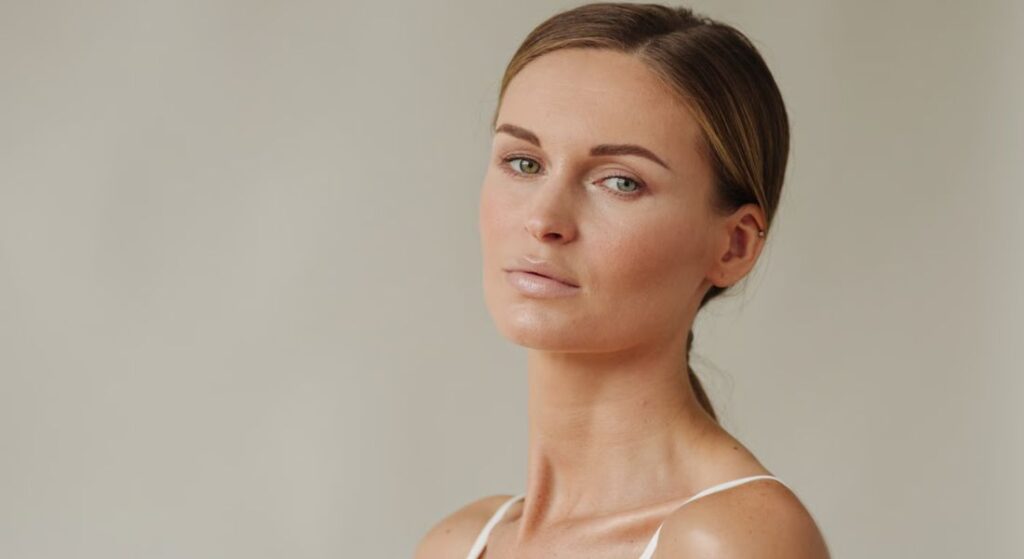
Your midface is one of the areas where ageing changes often become noticeable. This region plays an important role in supporting your facial contours, and changes in volume can affect the overall balance and harmony of your appearance.
Loss of volume in your cheek compartments can reduce youthful fullness and alter the smooth transition between your lower eyelid and cheek. These changes may contribute to a more tired appearance or create shadows that make ageing signs more visible.
Modern rejuvenation techniques often focus on restoring balanced midface support rather than simply adding volume. By understanding your individual facial anatomy, specialists can use targeted approaches to improve proportions and help you achieve a refreshed, natural-looking appearance.
The Importance of Deep and Superficial Fat Compartments
Your facial fat is organised into different compartments that are generally divided into deeper and more superficial areas. Each layer has a specific role in maintaining your facial structure, volume and overall appearance as you age.
Deep and superficial facial-fat compartments occupy different anatomical planes and have different relationships with muscles, ligaments, vessels and the underlying skeleton. Some deeper compartments contribute to projection and support, while superficial compartments influence visible contour and the way the skin surface moves.
Their behaviour is not identical in every region. Some compartments may lose volume, while others may descend, expand, redistribute or appear more prominent because neighbouring areas have changed.
Deep and Superficial Facial Fat Compartments
| Feature | Deep facial-fat compartments | Superficial facial-fat compartments |
| General location | Situated in deeper anatomical planes, closer to muscles, ligaments or the facial skeleton | Situated closer to the skin within the superficial soft tissues |
| Main contribution | May contribute to facial projection, structural support and the shape of deeper contours | Helps influence visible fullness, surface contour and how the skin moves |
| Possible age-related change | May lose volume or provide less support to the tissues above | May lose volume, redistribute, descend or appear more prominent as neighbouring structures change |
| Possible visible effect | Reduced cheek projection, under-eye hollowing or a loss of deeper support | Changes in facial folds, jowling, uneven fullness or altered surface contours |
| Relationship with other tissues | Closely related to the underlying skeleton, retaining structures, muscles, nerves and blood vessels | Closely related to the skin, superficial connective tissues and facial expression |
| Treatment relevance | Deep treatment may be considered when loss of projection or structural support is identified | Superficial treatment may be considered when the main concern involves visible contour or localised volume change |
| Important limitation | Adding deep volume does not automatically lift loose or descended tissue | Filling a superficial hollow without identifying its cause may create heaviness or an unnatural contour |
| Safety consideration | Deeper placement still requires detailed knowledge of anatomy, product behaviour and vascular structures | Superficial placement can also cause irregularities, visibility, lumps and vascular complications |
How the Study Influenced Dermal Fillers
Knowledge of facial compartments has influenced how clinicians assess potential filler placement. Instead of treating every visible line directly, a practitioner may consider whether the appearance reflects a deeper loss of projection, superficial contour change, tissue displacement or another anatomical factor.
However, compartment-based planning does not make filler risk-free or guarantee a natural result. Safe injection also requires detailed knowledge of facial blood vessels, nerves, product behaviour, appropriate depth and complication management.
Adding volume to the wrong area or using too much product can worsen heaviness, distort proportions or create an unnatural contour. Not every hollow or fold requires filler.
Improving Fat Grafting Techniques
Facial fat grafting involves transferring fat from one area of your body to another area of your face where volume may have reduced over time. This technique has become an important approach in facial rejuvenation because it uses your own tissue to help restore lost fullness and improve facial balance.
Understanding your facial fat compartments has improved how surgeons plan and perform fat grafting procedures. Instead of adding volume broadly across the face, specialists can consider the specific areas where your facial structures have changed and place fat more strategically.
This compartment-based approach allows treatments to focus on restoring areas affected by ageing while maintaining natural proportions. By considering your unique facial anatomy, surgeons can create results that enhance your features and support a more harmonious appearance.
Moving Towards Natural Facial Rejuvenation
A major goal of modern aesthetic treatments is to help you achieve a refreshed appearance while maintaining your natural identity. Rather than creating noticeable changes, the focus has shifted towards improving facial balance and enhancing the features that make your face unique.
The understanding of facial fat compartments helped specialists move away from excessive filling or overly tightened results. By recognising how your facial structures change with ageing, treatments can be planned more carefully to address specific areas where volume or support may have changed.
Today, rejuvenation approaches focus on restoring harmony and preserving your natural facial movement. This allows treatments to work with your anatomy rather than against it, helping you achieve subtle and balanced results that still look like you.
The Connection Between Fat Compartments and Facial Harmony
Your face is made up of a complex relationship between different structures, including your bones, fat compartments, muscles and skin. Each element works together to create your unique facial shape, balance and expressions.
When changes occur in one area of your face, they can influence how surrounding features appear. For example, volume changes in your cheeks can affect the way your lower eyelids, midface and overall facial proportions look over time.
Considering these connections helps specialists create more harmonious rejuvenation plans for you. By understanding how each part of your face interacts with the others, treatments can be designed to restore balance while maintaining your natural appearance and facial character.
Why Facial Anatomy Matters Before Treatment
A detailed understanding of your facial anatomy is essential before choosing any facial rejuvenation procedure. Your face has a unique combination of bone structure, fat compartments, muscles and skin characteristics, which means the way you age can be different from someone else.
Even if two people have similar concerns, they may require completely different treatment approaches because their facial structures and ageing patterns are not the same. Factors such as your volume distribution, facial proportions and areas of change all influence which techniques may be most suitable for you.
Personalised assessment has therefore become a key part of modern aesthetic medicine. By carefully evaluating your individual facial anatomy, specialists can recommend treatments that are designed to restore balance, enhance your natural features and achieve more harmonious results.
Influence on Collagen-Stimulating Treatments
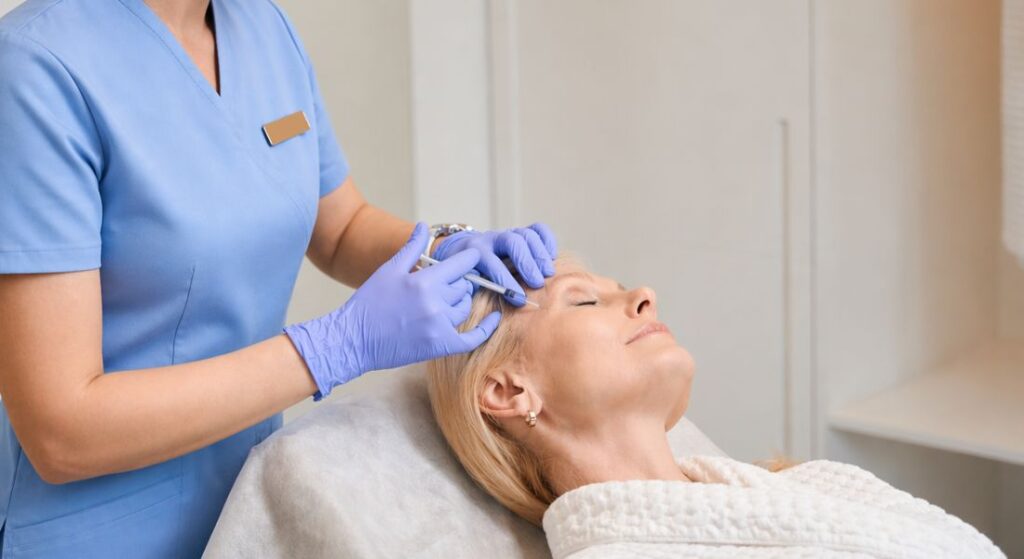
The principles from facial ageing research have also influenced the development of treatments designed to improve your skin quality and stimulate collagen production. Understanding that ageing involves changes beyond surface wrinkles has encouraged specialists to look at ways of supporting the deeper structures of your skin.
Rather than only replacing lost volume, some treatments focus on encouraging your skin to gradually improve its own structure over time. These approaches aim to support collagen formation, improve firmness and enhance overall skin quality as part of a broader rejuvenation strategy.
This approach allows for more subtle and progressive results that work with your natural ageing process. By combining an understanding of facial anatomy with collagen-focused treatments, specialists can create personalised plans that help you maintain a refreshed and balanced appearance.
Combining Different Rejuvenation Approaches
Modern facial rejuvenation often involves combining different techniques to address the various changes that occur as you age. Since ageing affects multiple layers of your face, a single treatment may not always address every concern or provide the most balanced improvement.
Depending on your individual needs, specialists may combine approaches such as volume restoration, collagen stimulation, skin treatments and energy-based procedures. Each technique can target different aspects of ageing, including changes in facial structure, skin quality and overall texture.
The aim is to create a more comprehensive treatment plan that considers your entire face rather than focusing on one isolated feature. By addressing multiple factors together, rejuvenation approaches can help you achieve results that look natural, balanced and suited to your unique facial characteristics.
Facial Ageing Is Not the Same for Everyone
The Rohrich research highlighted that your ageing process is unique and can vary significantly from person to person. Although everyone experiences changes over time, the way your face ages depends on a combination of factors that influence your skin, facial structure and overall appearance.
Your genetics, lifestyle, skin type, facial anatomy and environmental factors all play a role in how your face changes as you get older. These influences can affect areas such as your facial volume, skin quality and the way different structures adapt over time.
This is why personalised treatment planning has become so important in modern aesthetic medicine. By understanding your individual facial characteristics and ageing pattern, specialists can create approaches that are designed specifically for you rather than applying the same treatment strategy to everyone.
The Impact on Non-Surgical Aesthetic Medicine
The Rohrich Facial Fat Compartment Study contributed to the evolution of modern non-surgical facial treatments. By improving understanding of your facial anatomy, the research helped specialists move towards approaches that consider the deeper structures responsible for changes in your appearance.
Clinicians increasingly use anatomical knowledge when planning injectable treatments and other rejuvenation procedures. By assessing your facial fat compartments, volume changes and individual features, specialists can select techniques that are more targeted and suited to your needs.
This approach has helped improve safety, precision and aesthetic outcomes. By understanding how your face is structured and how it changes with age, treatments can be planned more carefully to create natural-looking results while maintaining your facial balance and expressions.
How Research Continues to Shape Aesthetic Treatments
The Rohrich Facial Fat Compartment Study demonstrates the importance of anatomy-based research in shaping modern aesthetic medicine. By improving your understanding of how facial structures change with age, this research has helped specialists move towards more precise and personalised treatment approaches.
Continued research allows clinicians to refine techniques and develop a clearer understanding of how your face changes over time. As knowledge of facial anatomy, volume changes and tissue behaviour improves, treatments can be adapted to better address your individual ageing process.
Scientific progress continues to influence safer and more effective aesthetic treatments. By combining research with clinical experience, specialists can create approaches that focus on enhancing your natural features while maintaining facial balance and harmony.
Myth vs Fact: What the Rohrich Facial-Fat Research Really Showed
| Myth | Fact |
| The original study followed people as they aged. | The 2007 study used cadaveric dissections and dye injections to map facial-fat anatomy. It did not longitudinally follow living participants. |
| The study proved exactly how every fat compartment changes with age. | It established that separate compartments exist and proposed that they may contribute independently to ageing. Later imaging and anatomical studies examined age-related movement and volume change more directly. |
| All facial fat gradually disappears with age. | Some areas may lose volume, while others may descend, redistribute or appear more prominent because surrounding tissues have changed. |
| Every hollow or fold should be filled. | A hollow or fold can reflect volume loss, tissue position, ligament change, bone remodelling, skin laxity or several factors together. Filler is not automatically appropriate. |
| Injecting directly into a fat compartment guarantees a natural result. | Anatomical knowledge can support planning, but results also depend on diagnosis, product, dose, injection depth, vascular safety, technique and individual healing. |
| Deep filler always lifts the overlying face. | Deep augmentation may change projection or support in selected areas, but the effect varies and cannot correct every form of tissue laxity or descent. |
| Fat grafting produces permanent and predictable volume. | Some grafted fat may be reabsorbed, and retained volume varies. Further treatment may be needed, and surgical complications are possible. |
| More comprehensive treatment means combining several procedures. | Combining treatments can also combine risks, costs and recovery. The appropriate plan may involve one procedure, staged treatment or no treatment. |
| Anatomy-based treatment is risk-free. | Detailed anatomy is essential but cannot eliminate complications. Dermal fillers can cause infection, nerve injury and rare visual loss, while fat transfer carries surgical and vascular risks. |
The Role of Facial Assessment
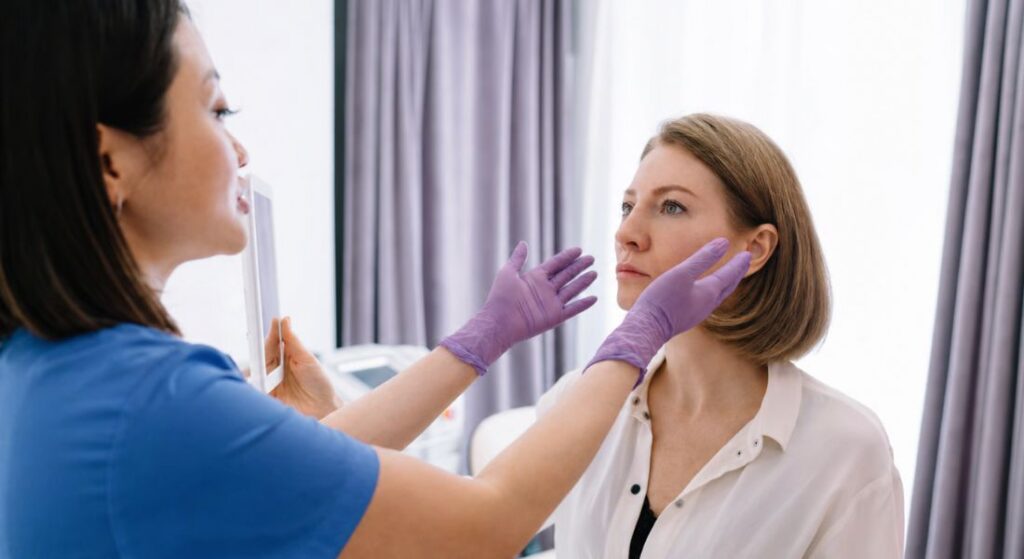
Modern aesthetic consultations often begin with a detailed assessment of your facial structure. Instead of looking only at one visible concern, the practitioner considers how different areas of your face work together and how ageing has affected your overall balance.
1. Facial Proportions: The practitioner assesses how your features relate to one another and whether ageing has altered facial harmony.
2. Volume Loss: Areas such as the cheeks, temples, or lower face may be checked for changes in soft-tissue support.
3. Structural Changes: Bone, fat, and skin changes are considered to understand the deeper causes of visible ageing.
4. Personalised Treatment Planning: Your treatment plan is designed around your anatomy, concerns, and natural facial features.
Overall, facial assessment helps ensure that aesthetic treatment is tailored to you rather than based on a standard approach. By considering your unique structure and ageing pattern, specialists can plan treatment that aims to restore balance and support natural-looking results. This careful assessment also helps avoid over-treatment and improves the overall quality of decision-making.
Choosing Evidence-Based Facial Rejuvenation
If you are considering facial rejuvenation, understanding the science behind how your face ages can help you make more informed choices. Knowing that ageing involves changes in volume, structure and skin quality allows you to look beyond simple solutions and consider treatments that address the underlying causes.
Treatments based on your facial anatomy are more likely to support natural-looking results. By assessing your unique features, specialists can understand where changes have occurred and recommend approaches that work with your facial proportions rather than altering them.
A personalised consultation allows treatment options to be selected according to your concerns, goals and individual ageing pattern. This tailored approach helps you choose procedures that are designed to enhance your natural appearance while maintaining balance, expression and harmony.
Clinical Safety Note: Anatomy Knowledge Does Not Remove Procedure Risk
Facial fillers, fat grafting, surgery and energy-based treatments all have potential complications. The fact that a treatment is descr0069bed as anatomical or compartment-based does not guarantee safety or a particular cosmetic result.
Dermal-filler effects can include swelling, bruising, tenderness, asymmetry, lumps, infection and delayed inflammatory reactions. Rare vascular complications can cause skin injury, nerve damage or permanent visual loss.
Fat grafting commonly causes bruising and swelling, and some transferred fat may be absorbed. Possible complications include haematoma, infection, fat necrosis, contour irregularity and vascular blockage.
Before treatment, the practitioner should explain the expected outcome, limitations, alternatives, recovery, aftercare and possible complications. You should know who will perform the procedure, what qualifications and experience they have, and what support is available if something goes wrong.
You should also be given adequate time to consider the information rather than feeling pressured to proceed immediately. A personalised consultation should assess your medical history, previous procedures, facial anatomy, expectations and psychological wellbeing
The Lasting Influence of the Rohrich Study
The Rohrich Facial Fat Compartment Study changed the way many professionals understand your facial ageing process. By identifying how individual fat compartments behave over time, the research helped move away from the idea that ageing is simply a result of overall fat loss or tissue sagging.
The study improved understanding of how changes within your facial fat compartments can influence volume, contours and facial balance. This knowledge has helped reshape modern approaches to fillers, fat grafting and other rejuvenation techniques by encouraging specialists to focus on restoring specific areas rather than applying generalised treatments.
Today, the principles from the Rohrich Study continue to influence facial rejuvenation strategies. By considering your unique anatomy, ageing pattern and structural changes, specialists can create more personalised treatments that aim to enhance your natural features while maintaining harmony and proportion.
Key Takeaways:
1. Rohrich and Pessa’s landmark facial-fat-compartment paper was published in 2007.
2. The original research used 30 hemifacial cadaver dissections with methylene-blue injections.
3. It demonstrated that subcutaneous facial fat is divided into separate anatomical compartments.
4. It did not directly measure how every compartment changes throughout ageing.
5. Later histological, imaging and clinical research identified compartment-specific volume change, migration and structural relationships.
6. Facial ageing involves more than uniform fat loss and may include redistribution, descent, ligament change, skeletal remodelling and skin ageing.
7. Compartment anatomy can inform filler and fat-grafting planning but does not dictate one correct treatment.
8. Filling every hollow or fold may create heaviness, distortion or an unnatural result.
9. Dermal fillers and fat transfer can cause complications, including rare serious vascular events.
10. Treatment results cannot be guaranteed, and informed consent, practitioner competence and appropriate aftercare are essential.
FAQs:
1. What is the Rohrich Facial Fat Compartment Study?
The Rohrich Facial Fat Compartment Study explored how different areas of facial fat change as you age. The research showed that facial fat is not one continuous layer but is divided into separate compartments that age in different ways. These findings changed how specialists understand facial ageing and plan rejuvenation treatments.
2. Who is Dr Rod Rohrich?
Dr Rod Rohrich is a plastic surgeon and researcher known for his work in facial anatomy and aesthetic surgery. His research has helped improve understanding of how facial structures change over time. His contributions have influenced both surgical and non-surgical approaches to facial rejuvenation.
3. How did the Rohrich study change the understanding of facial ageing?
Before this research, ageing was often explained mainly as skin loosening and overall facial fat loss. The study showed that ageing involves selective changes in different fat compartments, with some areas losing volume while others may become more prominent. This created a more detailed understanding of why facial appearance changes with age.
4. What are facial fat compartments?
Facial fat compartments are separate areas of fat located beneath the skin that provide structure, softness, and youthful contours. They are arranged in different layers, including deep and superficial compartments. Understanding these areas helps specialists identify where volume changes occur during ageing.
5. Is facial ageing caused only by losing fat?
No, facial ageing is not simply caused by losing fat from the face. Research has shown that ageing involves fat redistribution, changes in bone structure, skin changes, and alterations in soft tissues. Different facial areas can experience different patterns of volume change over time.
6. How does facial fat loss affect your appearance?
Loss of volume in specific fat compartments can contribute to hollow cheeks, changes around the eyes, and deeper facial folds. These changes may create a tired or aged appearance. Understanding where volume loss occurs allows treatments to target the underlying structural changes.
7. How did the study influence the use of dermal fillers?
The Rohrich study changed how clinicians approach dermal filler treatments. Instead of simply filling wrinkles, practitioners began focusing on restoring volume in specific facial compartments based on anatomy. This helped create more balanced and natural-looking results.
8. What role does the study play in facial fat grafting?
The research improved understanding of where transferred fat should be placed during facial fat grafting procedures. Rather than adding volume randomly, surgeons can use anatomical knowledge to restore areas affected by ageing. This approach helps create more personalised and harmonious outcomes.
9. Why is facial anatomy important before having aesthetic treatments?
Every face ages differently due to factors such as genetics, lifestyle, and individual anatomy. A detailed facial assessment helps specialists understand your unique areas of volume loss and structural changes. This allows treatments to be selected according to your specific needs rather than using a one-size-fits-all approach.
10. Why is the Rohrich Facial Fat Compartment Study still important today?
The study remains influential because it transformed modern facial rejuvenation by highlighting the importance of facial anatomy. Its findings continue to guide techniques involving fillers, fat grafting, and other aesthetic treatments. Today, many approaches focus on restoring facial balance while maintaining natural expression and appearance.
Final Thoughts: Understanding Facial Ageing Through Modern Anatomy
The Rohrich Facial Fat Compartment Study transformed the understanding of facial ageing by showing that changes beneath the skin play a major role in how your appearance evolves over time. Rather than viewing ageing as a simple process of skin sagging or overall fat loss, modern research highlights the importance of individual fat compartments, structural support and facial harmony.
If you are considering facial rejuvenation, a personalised assessment based on your unique anatomy can help identify the factors contributing to your concerns and guide more tailored treatment decisions. To learn more about evidence-based aesthetic treatments and personalised facial assessment, you can contact us at the London Medical and Aesthetic Clinic and explore the services.
References:
1. Rohrich, R.J. and Pessa, J.E. (2007) ‘The fat compartments of the face: anatomy and clinical implications for cosmetic surgery’, Plastic and Reconstructive Surgery, 119(7), pp.2219–2227. Available at: https://pubmed.ncbi.nlm.nih.gov/17519724/
2. Gierloff, M., Stöhring, C., Buder, T. and Wiltfang, J. (2012) ‘Aging changes of the midfacial fat compartments: a computed tomographic study’, Plastic and Reconstructive Surgery, 129(1), pp.263–273. Available at: https://pubmed.ncbi.nlm.nih.gov/21915077/
3. Wan, D., Amirlak, B., Rohrich, R.J. and Davis, K. (2014) ‘The clinical importance of the fat compartments in midfacial aging’, Plastic and Reconstructive Surgery Global Open, 1(9), e92. Available at: https://pmc.ncbi.nlm.nih.gov/articles/PMC4174112/
4. Gornitsky, J., Viezel-Mathieu, A., Alnaif, N., Azzi, A.J. and Gilardino, M.S. (2019) ‘A systematic review of the effectiveness and complications of fat grafting in the facial region’, JPRAS Open, 19, pp.87–97. Available at: https://pmc.ncbi.nlm.nih.gov/articles/PMC7061561/
5. Hînganu, M.V., Cucu, R.P. and Hînganu, D. (2024) ‘Personalized research on the aging face: a narrative history’, Journal of Personalized Medicine, 14(4), 343. Available at: https://www.mdpi.com/2075-4426/14/4/343