


You may notice that the skin around your intimate areas is darker than elsewhere on your body. This is very common and is often simply part of your natural skin tone, influenced by factors such as genetics, hormones and melanin production.
Pigmentation can become more noticeable due to friction, hair removal, irritation, hormonal changes or certain skin conditions. If it bothers you, professional treatment may help, but it is important to understand the cause and have any unusual changes assessed first.
Key Takeaways
1. Intimate skin is naturally darker in many people and there is no single “normal” shade.
2. Genetics, hormones, friction, hair removal and inflammation can all influence pigmentation.
3. New, changing or symptomatic pigmented areas should be medically assessed before cosmetic treatment.
4. Acquired or uneven hyperpigmentation may sometimes improve with suitable treatment, but treatment should not be expected to remove your natural skin colour.
5. Results vary, and ongoing friction or inflammation may contribute to pigmentation returning.
6. Harsh scrubs, strong acids and unregulated lightening products may irritate the skin and make pigmentation worse.
What Is Intimate Pigmentation?
Intimate pigmentation refers to differences in skin colour around intimate areas. Darker skin does not mean the area is unhealthy, dirty or damaged, as melanin naturally varies across different parts of the body.
The groin, external genital area and skin folds can naturally appear darker than nearby skin. There is also no single ‘normal’ shade for intimate skin, and treatments generally focus on suitable external skin rather than internal areas such as the vagina.
Why Is Intimate Skin Often Naturally Darker?
Intimate skin can naturally be darker because different areas respond differently to hormones, irritation and melanin production. Genetics also plays an important role, and pigmentation can vary with every skin tone.
Colour may also change during life, particularly around puberty, pregnancy or other hormonal changes. Because natural pigmentation varies between people and even between sides of the body, darker skin is not automatically abnormal. However, new, unusual or changing pigmentation should be assessed before cosmetic treatment is considered.
How Do Genetics Affect Intimate Pigmentation?
Genetics can influence your natural skin colour and how readily your skin produces melanin, so darker intimate skin may simply be something you have inherited. You may also notice similar pigmentation on areas such as your underarms, knees, elbows or other skin folds.
Some people are more prone to developing post-inflammatory pigmentation after irritation, particularly when their skin tends to produce more noticeable pigment after inflammation. This is important when considering treatments such as peels or lasers, as your natural skin tone and previous reactions should be considered to reduce the risk of further darkening.
Can Hormones Make Intimate Areas Darker?
Hormones can influence the activity of pigment-producing cells called melanocytes, so pigmentation may become more noticeable during puberty, pregnancy or other hormonal changes.
Pregnancy-related pigmentation may gradually fade after birth, although some areas can remain darker. If you notice sudden or widespread darkening, it is worth speaking to your GP rather than assuming it is purely a cosmetic concern.
How Does Friction Cause Intimate Pigmentation?
Repeated friction around the groin and inner thighs can cause ongoing irritation or inflammation. Rubbing from skin-to-skin contact, clothing, exercise or everyday movement may then lead to post-inflammatory hyperpigmentation.
Heat and moisture can make this irritation worse, so addressing the cause is important before treating the pigmentation itself. If friction continues, the darker colour may return, making prevention an important part of maintaining any improvement.
Can Shaving or Hair Removal Make the Skin Darker?
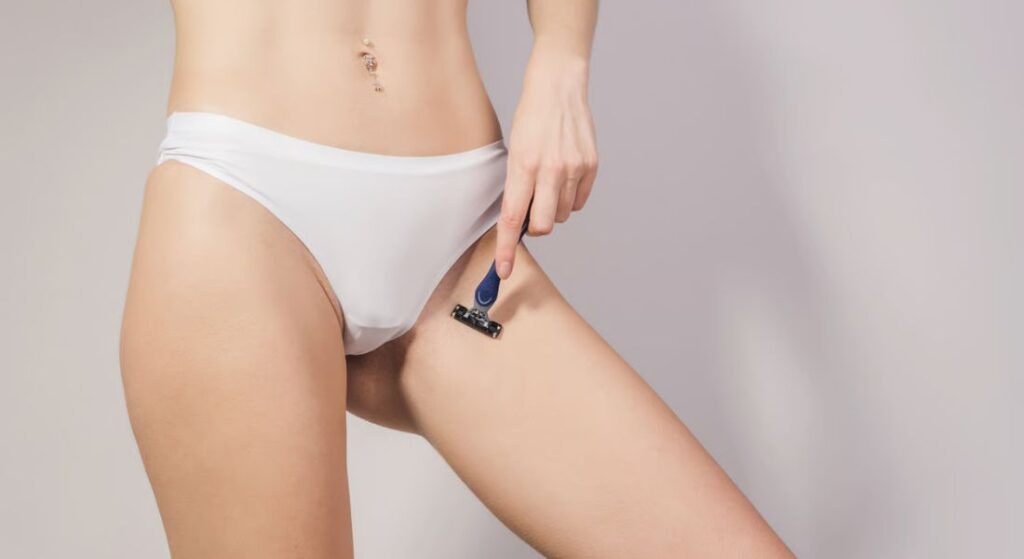
Hair removal does not automatically cause pigmentation, but irritation from shaving, waxing or epilating can sometimes contribute. Small cuts, razor burn, ingrown hairs and inflamed follicles may trigger post-inflammatory hyperpigmentation.
If you regularly experience bumps, itching or irritation after hair removal, changing your routine may help prevent further pigmentation. Allow irritated skin to recover and avoid harsh or fragranced products, and seek professional advice if the problem keeps returning.
Can Skin Inflammation Leave Dark Marks?
Inflammation can contribute to acquired hyperpigmentation when irritation, injury or skin conditions make melanocytes produce more pigment. This can happen after dermatitis, scratching, folliculitis or ingrown hairs, and the darker marks may be more noticeable in darker skin tones.
Treating the underlying irritation is important before focusing on the pigmentation itself. If the area remains itchy, sore, scaly or inflamed, speak to a medical professional, as controlling the trigger may allow the pigmentation to fade gradually.
Does Ageing Affect Intimate Skin Colour?
Your intimate skin can change as you age due to hormonal changes, previous inflammation, irritation and natural changes in the skin. This does not mean everyone develops darker skin, as changes vary between individuals.
During menopause, lower oestrogen levels can also make vulval skin drier or more sensitive. Gradual changes can be normal, but new or changing dark patches, moles or unusual areas should be checked by a medical professional.
Can Clothing and Everyday Habits Contribute?
Your daily routine can affect irritation around intimate skin, particularly if tight clothing, exercise, heat or moisture cause repeated rubbing. If you notice chafing, itching or soreness alongside darker skin, reducing these triggers may help prevent further irritation.
Gentle skin care is usually better than vigorous scrubbing or heavily fragranced intimate products. Scrubbing can damage the skin barrier, cause more inflammation and potentially make post-inflammatory pigmentation more noticeable.
Can Medical or Skin Conditions Cause Pigmentation?
Many differences in intimate skin colour are benign and reflect normal variation, but a new or changing area of pigmentation should not automatically be assumed to be cosmetic. Conditions such as contact dermatitis and other inflammatory skin problems can affect the colour or texture of intimate skin. Acanthosis nigricans can also cause darker, thicker patches, particularly around skin folds such as the groin. Because it can sometimes be associated with an underlying health condition, new or unexplained thickened dark patches should be discussed with your GP.
If pigmentation is accompanied by itching, pain, soreness, thickening or other changes, it should be medically assessed before cosmetic treatment. Some vulval skin conditions can also alter the colour or texture of the area. For example, lichen sclerosus more typically causes white patches and itching, although genital inflammation and associated skin changes can sometimes alter the overall appearance. If these symptoms persist, speak to a healthcare professional rather than assuming the change is purely cosmetic.
Intimate Pigmentation: Causes, Signs and What to Do
| Possible reason for darker skin | What you might notice | What to do |
| Natural pigmentation/genetics | Long-standing, stable colour without symptoms | If the colour is long-standing, stable and symptom-free, medical treatment is usually not necessary. |
| Friction or chafing | Darkening where skin or clothing repeatedly rubs | Reduce irritation and allow the skin barrier to recover |
| Hair-removal irritation | Razor bumps, ingrown hairs or inflammation followed by darker marks | Modify hair removal and treat recurrent irritation appropriately |
| Hormonal change | Gradual changes during puberty, pregnancy or other hormonal periods | Seek advice if the change is sudden, extensive or accompanied by other symptoms |
| Dermatitis or inflammation | Itching, soreness, scaling or redness as well as pigment change | Treat the underlying skin problem before considering cosmetic treatment for the pigmentation. |
| A new or changing lesion | Change in colour, shape or texture; persistent itch; lump; ulceration or bleeding | Arrange medical assessment before cosmetic treatment |
When Should Intimate Pigmentation Be Checked by a Doctor?
Pigmentation that has been stable for a long time and causes no other symptoms is generally less concerning than a new area or one that is changing in colour, shape, size or texture. Even so, you should seek medical advice if you are uncertain about a pigmented lesion before attempting cosmetic treatment.
See your GP if you notice a new dark patch, changing mole, persistent itching, soreness, thickened or raised skin, a lump, ulceration or bleeding. Many causes of genital or vulval pigmentation are benign, but new, unusual or rapidly changing pigmentation should be medically assessed before cosmetic treatment is considered.
UK Guidance Note
A new pigmented area does not mean you have cancer, and many vulval skin changes have benign causes. However, unexplained vulval lumps, ulceration or bleeding require prompt medical assessment. Persistent itching, a changing mole or noticeable changes in skin colour or texture should also be discussed with your GP rather than treated cosmetically first.
How Do Professional Intimate Lightening Treatments Work?
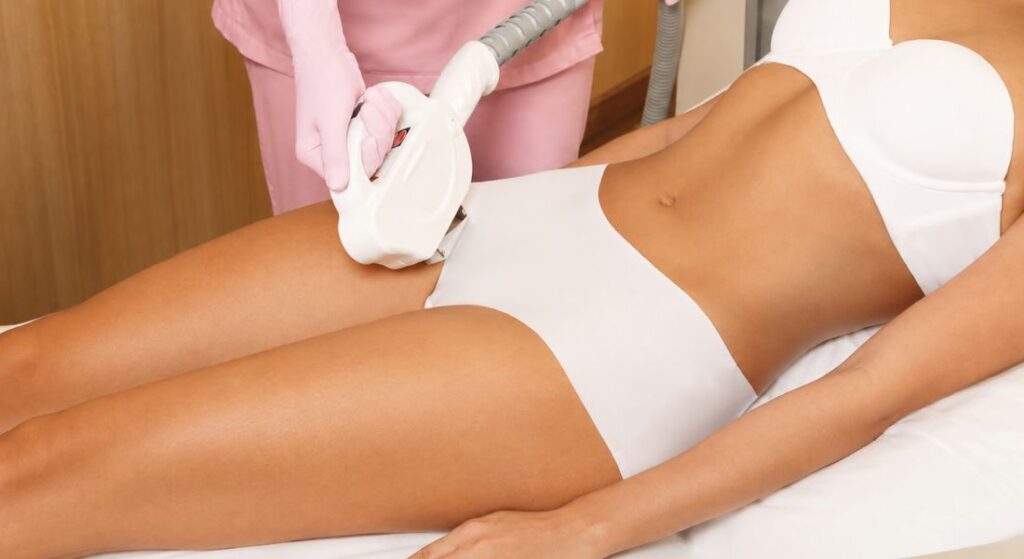
Professional pigmentation treatments are intended to reduce the appearance of excess or uneven pigment rather than simply ‘bleach’ the skin. Depending on the approach, they may use controlled exfoliation or topical ingredients, with suitable homecare sometimes included.
Treatment should be chosen according to your skin type and the specific intimate area being treated. Stronger treatments are not always better, and peels or lasers can sometimes trigger further pigmentation, so products for external skin should never be assumed to be suitable for internal genital areas.
Can Intimate Pigmentation Be Treated?
Some forms of acquired intimate hyperpigmentation may improve with suitable treatment, but the right approach depends on the cause, location, depth of pigment and your skin type. Treatment is generally aimed at acquired or uneven pigmentation rather than your natural genetic skin colour.
Depending on the cause and the exact external skin site, selected topical treatments or superficial peels may sometimes be considered by an appropriately qualified practitioner. Evidence specifically relating to genital pigmentation is limited, and treatments suitable elsewhere on the body should not automatically be considered suitable for vulval or vaginal tissue. Evidence for treating hyperpigmentation elsewhere on the skin is considerably broader than the evidence specifically for intimate or genital skin, so treatment choice and expected results should be discussed individually. Results vary, so treatment should be tailored to your skin and carried out after the cause of the pigmentation has been assessed.
Evidence Note
Research on post-inflammatory hyperpigmentation supports treating ongoing inflammation or irritation before focusing on the remaining pigmentation. This matters in intimate areas because continuing friction, folliculitis or dermatitis may cause further pigment changes even after cosmetic treatment.
Research specifically examining cosmetic treatment of intimate pigmentation is more limited. For example, a 2024 prospective study involving 17 Chinese women examined fractional CO₂ laser for vulval rejuvenation, with pigmentation among the outcomes assessed. However, the small sample size means the findings should be interpreted cautiously and cannot predict how all patients will respond.
Does Your Natural Skin Tone Affect Treatment?
Your natural skin tone can affect how your skin responds to inflammation and cosmetic procedures. Post-inflammatory hyperpigmentation can be more noticeable and persistent in darker skin tones, so avoiding unnecessary irritation is particularly important.
This does not mean that treatment is automatically unsuitable for darker skin. It means that the choice of product or procedure, its strength and your history of pigmentation after irritation should be considered carefully before treatment begins.
How Long Does It Take to See an Improvement?
Pigmentation usually changes gradually, and improvement depends on how deep or long-standing it is and whether the original trigger is still present. Ongoing friction, inflammation or hair-removal irritation can lead to new pigmentation and reduce the lasting benefit of treatment.
Some treatment plans may combine a clinic procedure with appropriate homecare, depending on the treatment used and the individual patient. The aim is usually to create a more even appearance rather than make intimate skin match another area of your body, and some natural pigmentation will normally remain.
What Can Intimate Lightening Treatment Realistically Achieve?
Treatment should not be expected to remove your natural skin colour or make intimate skin identical to another part of your body. The realistic aim, where treatment is appropriate, is usually to reduce acquired or uneven pigmentation while preserving healthy skin.
The degree of improvement varies according to the cause, depth and duration of the pigmentation, your natural skin tone and whether triggers such as friction or inflammation continue. A consultation should therefore focus on realistic expectations rather than promising a particular shade or permanent result.
Can Intimate Pigmentation Return After Treatment?
Yes, pigmentation can return, particularly if the factors that caused it are still present. Ongoing friction, shaving irritation or inflammation may contribute to new or recurrent pigmentation, while hormonal factors and an individual tendency to develop pigmentation may also influence skin colour over time. Long-term care involves managing irritation and following your practitioner’s aftercare advice rather than simply using stronger products. If pigmentation returns quickly, it may be worth reviewing the underlying cause before repeating treatment.
What Should You Avoid When Trying to Lighten Intimate Skin?
Do not assume a product is safe because it is marketed as ‘natural’, ‘intimate’ or ‘whitening’. Strong acids, exfoliants and unregulated lightening products can irritate sensitive skin and may make pigmentation worse.
Avoid scrubbing, combining several products or treating sore skin, as irritation can trigger further pigmentation. If you notice a new, irregular or changing pigmented area, seek medical advice before trying to treat it cosmetically.
Myth vs Fact
| Myth | Fact |
| Darker intimate skin means the area is unhealthy or unclean. | Intimate skin is naturally darker in many people. Genetics, hormones and normal melanin distribution can all influence skin colour, and darker pigmentation does not automatically indicate poor hygiene or disease. |
| Scrubbing intimate skin will make it lighter. | Vigorous scrubbing can irritate the skin and damage the skin barrier. This inflammation may actually contribute to post-inflammatory hyperpigmentation and make darkening more noticeable. |
| Stronger lightening treatments always give better results. | More aggressive treatment is not necessarily more effective. Strong acids, chemical peels, lasers or unsuitable products can cause irritation and may worsen pigmentation in some people. |
| Intimate lightening can permanently remove your natural skin colour. | Treatment should not be expected to remove your genetically determined skin colour permanently. Where treatment is appropriate, the aim is usually to improve acquired or uneven pigmentation while maintaining healthy skin. |
| Every dark patch can be treated cosmetically. | New, changing or unusual pigmented areas should be medically assessed first, especially if there is persistent itching, a changing mole, thickening, a lump, ulceration or bleeding. |
| If pigmentation returns, the treatment has failed. | Pigmentation can return if triggers such as friction, inflammation or hair-removal irritation continue. Hormonal factors and an individual tendency to develop pigmentation may also influence skin colour over time. Recurrence does not necessarily mean the original treatment was ineffective. |
Frequently Asked Questions
1. Is intimate lightening suitable for every skin type?
Not necessarily. Your natural skin tone, the cause of the pigmentation, the area being treated and your tendency to develop pigmentation after irritation all need to be considered. A treatment that is appropriate for one person may not be suitable for another.
2. Is intimate pigmentation normal?
Yes. It is very common for the groin, external genital area and skin folds to be naturally darker than surrounding skin. There is no single ‘normal’ shade for intimate skin.
3. Can hormones cause darker intimate skin?
Hormonal changes can influence pigmentation, particularly during puberty and pregnancy. Around menopause, lower oestrogen levels can also change the condition and sensitivity of vulval skin. Not every hormonal change causes darkening, and any new or unusual pigmentation should be assessed if you are concerned.
4. Can shaving cause intimate pigmentation?
Shaving itself does not necessarily cause pigmentation, but razor burn, ingrown hairs, cuts and follicle irritation can trigger post-inflammatory hyperpigmentation. Reducing irritation may help prevent further darkening.
5. Can friction cause pigmentation around the groin?
Yes. Repeated rubbing from clothing, exercise, skin-to-skin contact, heat and moisture can cause inflammation that leaves the skin darker. Managing friction is therefore an important part of preventing recurrence.
6. When should intimate pigmentation be checked by a doctor?
New, rapidly changing or unusual pigmentation should be assessed, particularly if it is accompanied by itching, pain, thickening, a lump, ulceration, bleeding or changes to a mole.
7. Can intimate pigmentation be treated?
Some forms of acquired hyperpigmentation may improve with appropriately selected treatments. The appropriate option depends on the cause, location, depth of pigmentation and individual skin type.
8. What treatments can help with intimate pigmentation?
Depending on the cause and the exact external skin area, selected topical treatments or superficial peels may sometimes be considered by an appropriately qualified practitioner. Evidence specifically for treating genital pigmentation is limited, so treatment should be individually assessed and products or procedures suitable elsewhere on the body should not automatically be considered suitable for genital skin.
9. Can intimate pigmentation come back after treatment?
Yes. Pigmentation may return if triggers such as friction, inflammation or hair-removal irritation continue. Hormonal factors and your individual tendency to develop pigmentation may also influence skin colour over time. Managing irritation and following appropriate aftercare may help maintain improvement.
10. What should I avoid when trying to lighten intimate skin?
Avoid harsh scrubs, strong acids, unregulated whitening products and combining multiple active ingredients without professional guidance. Irritation can damage the skin barrier and potentially make pigmentation more noticeable.
Final Thoughts: Understanding and Treating Intimate Pigmentation
Intimate pigmentation is common and can be influenced by genetics, hormones, friction, hair removal, inflammation and natural changes in the skin. While some pigmentation is simply part of your natural skin tone, new or changing areas should be assessed before considering cosmetic treatment. If treatment is appropriate, a personalised approach can help improve uneven pigmentation while reducing the risk of irritation and further darkening.
If you’re considering professional intimate lighting treatment in London, you can arrange a consultation with the London Medical & Aesthetic Clinic to discuss your pigmentation, skin type and whether treatment may be appropriate for you.
References
1. Thawabteh, A.M., Jibreen, A., Karaman, D., Thawabteh, A. and Karaman, R. (2023) ‘Skin pigmentation types, causes and treatment—A review’, Molecules, 28(12), article 4839. Available at: https://www.mdpi.com/1420-3049/28/12/4839
2. Musbahi, E., Kamp, E., Ashraf, M. and DeGiovanni, C. (2022) ‘Menopause, skin and common dermatosis. Part 3: Genital disorders’, Clinical and Experimental Dermatology, 47(12), pp. 2123–2129. Available at: https://pmc.ncbi.nlm.nih.gov/articles/PMC10092407/
3. De Giorgi, V. et al. (2020) ‘Clinical and dermoscopic features of vulvar melanosis over the last 20 years’, JAMA Dermatology, 156(11), pp. 1185–1191. Available at: https://pmc.ncbi.nlm.nih.gov/articles/PMC7658736/
4. James, M.L., Kravvas, G., Lallas, A. and Bunker, C.B. (2024) ‘The clinical and dermatoscopic features of penile pigmentation in men with genital lichen sclerosus’, Skin Health and Disease, 4(5), article ski2.435. Available at: https://academic.oup.com/skinhd/article/4/5/ski2.435/7896863
5. Chaowattanapanit, S., Silpa-Archa, N., Kohli, I., Lim, H.W. and Hamzavi, I.H. (2017) ‘Postinflammatory hyperpigmentation: A comprehensive overview: Treatment options and prevention’, Journal of the American Academy of Dermatology, 77(4), pp. 607–621. Available at: https://www.sciencedirect.com/science/article/pii/S0190962217301299