


If you’ve recently had VASER liposuction, you might be wondering why your new shape isn’t as noticeable as you’d hoped. Your treated areas may still look swollen, feel firm or appear uneven during the first few weeks, even though fat has already been removed.
This can be frustrating, but your contour usually becomes clearer as your body heals. You may notice improvements within weeks, while deeper swelling can take several months, sometimes around six months, to settle. Understanding this recovery process can help you know when to assess your results and when to ask your surgeon for advice.
Why Don’t You See Your Final VASER Contour Straight Away?
After VASER liposuction, your body needs time to heal from the procedure. Inflammation and fluid build-up can temporarily make your treated area look fuller, even when fat has already been removed.
You may also notice bruising, tenderness, firmness or temporary changes in sensation, making it harder to judge your results. You should remember that your early appearance reflects the healing process, not your final contour, so avoid worrying if the change is not immediately clear.
When Will You Start to Notice a Difference?
You may notice an early change in your body shape soon after VASER, even while swelling is still present. However, your new contours may look softer or less defined until the swelling reduces and your tissues begin to settle.
During the first few weeks, your appearance may vary from day to day as swelling fluctuates. You should judge your progress over several weeks rather than comparing your body each day, as these temporary changes do not necessarily mean your results are getting worse.
What Happens During the First Few Weeks?
During the first few weeks, your recovery is more about healing than judging your final shape. You may notice several changes:
1. Swelling and bruising: Your treated areas may look fuller than expected, even after fat removal.
2. Tightness or firmness: Your tissues may feel harder while inflammation settles.
3. Temporary numbness: Some areas may feel less sensitive as the nerves recover.
4. Unevenness: One side may look more swollen than the other because tissues can heal at different rates.
Follow your surgeon’s instructions for activity, compression and wound care. Keep your follow-up appointments rather than relying only on how your body looks. Contact your surgical team if symptoms become worse instead of gradually improving.
What Might Your VASER Results Look Like Around One Month?
Around one month after VASER, you may notice less bruising, reduced swelling and clearer definition in your treated areas. However, your results are still developing, and some firmness, swelling or unevenness may remain beneath the skin.
You should not expect your final contour at this stage, particularly if you have had a larger area treated. Compare your progress with your own preoperative appearance and your surgeon’s guidance rather than someone else’s results, as your recovery time can vary.
How VASER Results Can Change During Recovery
| Recovery stage | What you may notice | How to interpret your contour |
| First few days | Swelling, bruising, tenderness and tightness | Much too early to assess the result |
| First few weeks | Early shape change but fluctuating swelling | Contour may look uneven from day to day |
| Around 1 month | Less bruising and more visible definition | Residual swelling and firmness can still mask the result |
| 2–3 months | Tissues often softer and contour easier to see | Improvement may be clearer, but healing can continue |
| 3–6 months | Residual swelling continues to settle | Final shape usually becomes more meaningful to assess |
| Around 6 months | Many treated areas have largely settled | Persistent concerns can be reviewed against the expected final result |
These stages are a general recovery guide rather than a fixed VASER timetable. Your swelling, tissue firmness and contour can settle earlier or later depending on the areas treated, treatment extent and your individual healing response.
Why Can Your VASER Results Look Uneven During Recovery?
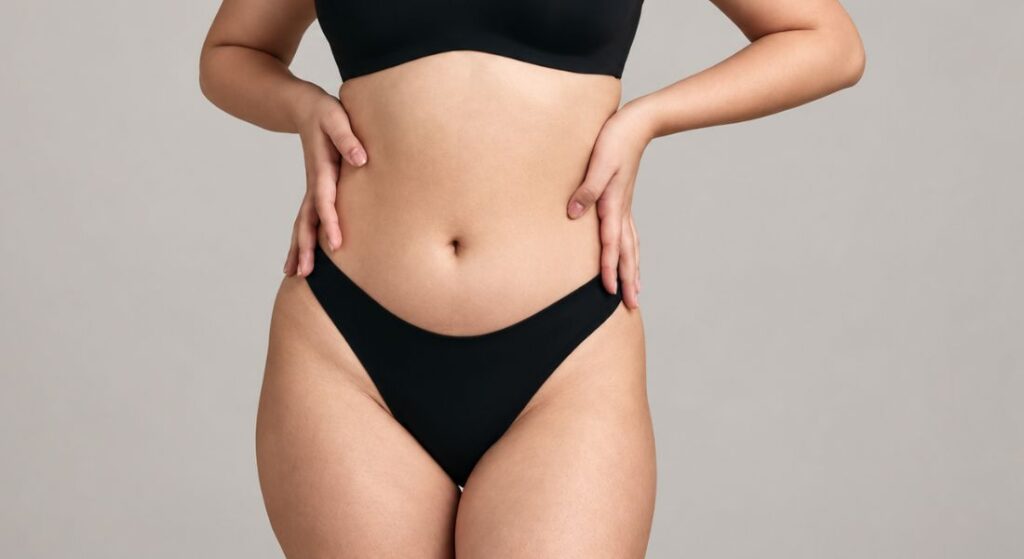
Your VASER results may look uneven because different parts of your body can swell and heal at different rates. One side of your waist may appear fuller, or one area may feel firmer than another, particularly when several adjoining areas have been treated.
Mild unevenness can improve as your tissues settle, but you should not ignore sudden or worsening changes. Contact your surgical team if you develop increasing pain, redness, wound discharge or fever, as these symptoms may need prompt assessment.
When Does Swelling Usually Start to Settle?
You may first notice less puffiness during the initial few weeks, although deeper swelling can remain after your bruising has faded.
Your swelling may fluctuate as you become more active, so one day’s appearance isn’t always a reliable measure of progress. Look for gradual improvement across several weeks rather than expecting a perfectly steady recovery. If swelling suddenly increases, becomes painful or affects one area unusually, contact your surgical team.
Evidence Note
Published liposuction literature indicates that swelling and tissue changes can continue for several months after surgery, and final contour assessment may become more meaningful over approximately three to six months. Mild residual swelling can persist longer in some patients, so six months should be treated as a general guide rather than a fixed deadline.
These timeframes refer to liposuction generally rather than guaranteeing that every VASER patient follows exactly the same pattern. The amount treated, number of areas, skin characteristics and individual healing response can all influence when your contour becomes stable enough to judge.
What Happens Between Two and Three Months?
Between two and three months after VASER, your contour may become easier to appreciate as swelling reduces and your treated tissues gradually soften. You may notice clearer definition around your waist, abdomen, thighs, arms or back.
However, some areas may remain firmer or more swollen than others, as your tissues do not heal at the same rate. You should continue following your surgeon’s aftercare advice and attend your follow-up appointments so they can assess whether your recovery is progressing as expected.
UK Guidance Note
NHS guidance explains that liposuction results may not be fully visible until swelling settles, which can take up to six months. This is general liposuction guidance rather than a fixed recovery timetable specifically for VASER.
Your recovery may be shorter or longer depending on the areas treated, the extent of surgery and how your tissues heal. Follow your surgeon’s individual advice and attend your review appointments rather than relying on a fixed online deadline.
How Can You Tell Your VASER Contour Is Settling?
As your recovery progresses, you may notice that your treated areas feel softer, look less puffy and show a more consistent shape between photographs. Your contours may also become easier to assess as everyday fluctuations in swelling reduce.
These changes are useful signs of progress, but they cannot confirm your final result on their own. Your surgeon can assess residual swelling, skin quality and any persistent unevenness during follow-up.
Does VASER Make the Final Result Appear Faster?
VASER uses ultrasound-assisted liposuction, and some research suggests it may improve skin retraction compared with traditional liposuction. However, this does not guarantee faster recovery, less swelling or an earlier final result for you.
Your body still needs time to heal, and VASER cannot guarantee that loose skin will tighten fully. Your final contour will depend on factors such as your skin elasticity, the areas treated and your individual healing response, so discuss realistic expectations with your surgeon.
Research Insight
A randomised comparative study involving 20 women and 33 paired treatment sites reported greater measured skin retraction on the VASER-treated side than on the conventional suction-assisted side. However, subjective pain, swelling, appearance and patient or physician preference were not significantly different at the six-month assessment.
A 2026 systematic review of contemporary liposuction techniques found that comparative evidence for recovery, skin tightening and longer-term durability remains limited and heterogeneous. The certainty of evidence for longer-term durability was rated very low, and the review did not support definitive claims that one technique provides consistently superior long-term contour outcomes. This supports discussing VASER as one liposuction technique rather than promising a faster or better final result.
How Does Skin Quality Affect Your Final Contour?

Your final VASER contour depends on both fat removal and your skin’s ability to contract afterwards. If your skin has good elasticity, it may adapt more smoothly to the reduced volume, while loose skin may remain even after fat removal.
Your age, genetics, previous pregnancies and significant weight changes can all affect your skin’s response. If you want a tighter abdomen, you should discuss your skin quality with your surgeon beforehand, as liposuction removes fat but does not remove excess skin.
Can Compression Garments Affect How Your Results Look?
After VASER liposuction, your surgeon may recommend a compression garment to support the treated areas during recovery. It may help manage discomfort or swelling, but evidence that compression improves the final contour is limited.
Your garment should fit as advised without causing excessive discomfort or skin problems. Don’t tighten it yourself in the hope of seeing faster results. Follow your surgeon’s instructions about how long to wear it, and contact your surgical team if it causes significant pain, numbness or skin irritation.
Does Lymphatic Drainage Make Final Results Appear Faster?
Manual lymphatic drainage may help with swelling or discomfort during recovery, but the evidence is limited. One small study involving 18 women reported improvements after treatment combining lymphatic drainage with therapeutic ultrasound. Because both treatments were used together, the study could not establish how much benefit came from lymphatic drainage alone.
There is also insufficient evidence that lymphatic drainage makes your final VASER contour appear sooner. If your surgeon recommends it, choose a suitably trained practitioner and avoid aggressive massage. Seek medical advice if swelling suddenly increases instead of assuming further massage will help.
How Can Photographs Help You Track Your VASER Results?
Your before-and-after photographs can help you recognise gradual changes that may be difficult to notice in the mirror. However, swelling, posture and lighting can make early comparisons misleading.
Use photographs as one way of following your progress, not as proof of your final result. Your surgeon can assess your healing, skin firmness and contour alongside the images during follow-up appointments.
Clinical Tip
If you use photographs to monitor progress, take them under similar conditions each time. Try to use the same lighting, camera distance, posture, clothing and time of day so that changes in presentation do not look like changes in your surgical result.
Monthly comparisons are usually more useful than checking photographs every day. Your surgeon can also interpret your photographs alongside examination findings and your stage of recovery rather than relying on appearance alone.
What If You Still Have Swelling at Three or Six Months?
Some swelling or firmness can persist for several months after VASER, and this does not automatically mean something has gone wrong. Your treated areas should generally become softer and more defined as healing progresses, although recovery times vary.
If your swelling persists or concerns you, you should arrange a review with your surgeon, as causes can include normal healing, scar tissue or a seroma (a collection of fluid). Seek prompt medical advice if swelling suddenly increases or you develop worsening pain, redness or other new symptoms.
Can Your VASER Contour Change After the Final Result?
Your VASER results can be long-lasting because treated fat cells are removed, but your body can still change over time. The remaining fat cells can enlarge with significant weight gain, while ageing and pregnancy may also affect your contours.
You are more likely to maintain your results if you keep your weight relatively stable and follow a healthy lifestyle. VASER can improve your body shape, but it cannot prevent future changes or freeze your body at one particular stage.
When Should You Contact Your Surgeon About Your Results?

Contact your surgeon if you are concerned about persistent swelling, significant asymmetry, unusual firmness or an area that is not healing as expected. You don’t need to wait six months if something worries you.
Seek prompt medical advice for worsening pain, redness, wound discharge, fever or rapidly increasing swelling. New calf pain or swelling, particularly on one side, requires urgent assessment because it could indicate a blood clot.
If you develop chest pain, severe or sudden breathlessness, or collapse, call 999 or go to A&E immediately. These may be signs of a pulmonary embolism, which needs emergency treatment.
Myth vs Fact
| Myth | Fact |
| Your VASER result should be final after a few weeks. | Swelling and deeper tissue changes can continue for several months. |
| Looking uneven at one month means the result has gone wrong. | Mild early unevenness can occur because different areas swell and settle at different rates. |
| VASER always heals faster than standard liposuction. | Evidence does not establish a universally faster recovery or final-result timeline. |
| Compression immediately creates your final contour. | Compression can help manage swelling, but your tissues still need time to heal and settle. |
| Lymphatic drainage guarantees faster final results. | Evidence is limited, and it has not been proven to make every patient’s final contour appear sooner. |
Key Takeaways
1. Early swelling can temporarily hide the contour created by VASER liposuction.
2. Your shape may become clearer gradually over the first few months.
3. Liposuction-treated areas can take up to around six months to settle fully.
4. Mild early firmness or unevenness does not automatically indicate a poor result.
5. VASER has not been proven to give every patient a faster final-result timeline than other liposuction techniques.
6. Seek prompt advice for worsening pain or sudden swelling. Call 999 for chest pain, severe breathlessness or collapse.
Frequently Asked Questions
1. When will you see your final VASER liposuction results?
Your final contours often become clearer between three and six months after VASER liposuction. Swelling and tissue changes can continue during recovery, so your results may take time to settle fully.
2. Why does your treated area look swollen after VASER?
Swelling and inflammation are normal parts of the healing process after VASER liposuction. Your treated area may temporarily look fuller than expected, even though fat has already been removed.
3. What should your VASER results look like after one month?
You may notice reduced bruising, less swelling and some improvement in your body shape after one month. However, firmness, unevenness and deeper swelling may remain while your tissues continue to heal.
4. Can your VASER results look uneven during recovery?
Yes, different areas can swell and heal at different rates, making your contours look temporarily uneven or asymmetrical. If you notice sudden changes, worsening pain, redness or fever, contact your surgical team promptly.
5. Can your swelling increase after you’ve been more active?
Your swelling may fluctuate as you become more active during recovery. A temporary change does not necessarily mean your contour has worsened. However, sudden, marked or painful swelling needs medical assessment rather than reassurance based on the recovery timeline alone.
6. Will your VASER results improve between two and three months?
Your contours may become more noticeable as swelling reduces and your tissues soften. However, your recovery will depend on the areas treated, your skin quality and your individual healing response.
7. Does VASER liposuction help your skin tighten faster?
VASER uses ultrasound-assisted technology, which may influence skin retraction in some patients. However, it cannot guarantee faster recovery or complete skin tightening, particularly if you already have loose skin.
8. Can compression garments improve your final VASER results?
Compression garments can help manage swelling and support your treated areas during recovery. You should follow your surgeon’s instructions about how long to wear your garment, as compression does not instantly remove swelling or guarantee a particular contour.
9. Can lymphatic drainage make your VASER results appear sooner?
Manual lymphatic drainage may help manage fluid build-up and discomfort when recommended by your surgeon. However, it cannot guarantee faster final results, and you should avoid aggressive massage while your tissues are healing.
10. When should you contact your surgeon after VASER liposuction?
Arrange a review if you’re concerned about persistent swelling, unusual firmness or significant asymmetry. Seek prompt medical advice for worsening pain, redness, fever or rapidly increasing swelling. New calf pain or swelling, particularly on one side, needs urgent assessment. For chest pain, sudden or severe breathlessness, or collapse, call 999 immediately.
Final Thoughts: Giving Your VASER Results Time to Develop
It can be frustrating when your body doesn’t look exactly as you’d expected after VASER liposuction. Remember that swelling and firmness can hide early improvements, and your shape may continue changing for several months. If something concerns you, you don’t need to wait until six months to speak to your surgeon.
If you’re looking for Vaser lipo in London, you can get in touch with us at the London Medical & Aesthetic Clinic.
References:
1. Nagy, M.W. and Vanek, P.F. Jr (2012) ‘A multicenter, prospective, randomized, single-blind, controlled clinical trial comparing VASER-assisted lipoplasty and suction-assisted lipoplasty’, Plastic and Reconstructive Surgery, 129(4), pp. 681e–689e. Available at: https://pubmed.ncbi.nlm.nih.gov/22456382/
2. Masson, I.F.B. et al. (2014) ‘Manual lymphatic drainage and therapeutic ultrasound in liposuction and lipoabdominoplasty post-operative period’, Indian Journal of Plastic Surgery, 47(1), pp. 70–76. Available at: https://pubmed.ncbi.nlm.nih.gov/24987208/
3. Yang, C. (2026) ‘Safety and clinical outcomes of contemporary liposuction techniques: evidence from a systematic review’, Frontiers in Surgery, 13, 1892614. Available at: https://pmc.ncbi.nlm.nih.gov/articles/PMC13591073/
4. Ormseth, B.H., Livermore, N.R., Schoenbrunner, A.R. and Janis, J.E. (2023) ‘The use of postoperative compression garments in plastic surgery—necessary or not? A practical review’, Plastic and Reconstructive Surgery – Global Open, 11(9), e5293. Available at: https://pmc.ncbi.nlm.nih.gov/articles/PMC10519563/
5. Gentile, P. and Sterodimas, A. (2026) ‘Long-Term Outcomes and Complication Profile After Modern Liposuction: A Multicenter Prospective Cohort Study With 5-Year Follow-Up’, Aesthetic Surgery Journal, sjag193. Available at: https://academic.oup.com/asj/advance-article/doi/10.1093/asj/sjag193/8790549