


Eyelid surgery is generally associated with short-term soreness or mild-to-moderate discomfort rather than severe pain. During the procedure, local anaesthetic usually keeps the area numb, although you may briefly feel stinging from the injection or some pressure and pulling while you are awake.
Once the anaesthetic wears off, your eyelids may feel sore, tight, tender or bruised, with discomfort often settling within the first few days. Severe or rapidly worsening pain, particularly with increasing swelling or changes in your vision, is not typical and should be assessed urgently by your surgical team.
Why Does Eyelid Surgery Cause Discomfort?
Blepharoplasty involves surgical incisions and tissue adjustment around the eyelids, so temporary inflammation during healing can contribute to swelling, bruising, tightness and tenderness. These sensations may be more noticeable when you blink, close your eyes or move the surrounding facial muscles.
Mild discomfort is therefore a normal part of recovery and should gradually become easier as your eyelids heal. However, severe or increasingly painful symptoms are different from ordinary postoperative soreness and should be reported to your surgical team.
What Type of Anaesthesia Is Used for Blepharoplasty?
Many blepharoplasty procedures can be performed under local anaesthetic, which numbs your eyelids while you remain awake. You may still notice pressure, movement or pulling, but you should not normally feel sharp surgical pain once the area is adequately numb.
Depending on your procedure, medical history and individual circumstances, you may instead have sedation, general anaesthesia or a combination of local anaesthetic and sedation. The anaesthetic approach will depend on the type and extent of surgery, your health and the clinical setting.
Does the Local Anaesthetic Injection Hurt?
The local anaesthetic injection can cause a brief needle prick, followed by some stinging or pressure as the medicine enters your eyelid. This sensation is usually brief and may be one of the more noticeable parts of an otherwise numbed procedure.
Once the anaesthetic has taken effect, your eyelid should be numb and you should not normally feel sharp surgical pain. Your surgeon can also adjust the anaesthetic if you experience unexpected discomfort during the operation.
Research Insight
A prospective study by Lee et al. followed 30 patients after upper-eyelid blepharoplasty and found that postoperative pain was most noticeable during the immediate postoperative period and early hours after surgery, before declining over the following days. Average immediate pain scores remained in the mild-to-moderate range in the study population.
A separate prospective study by Parbhu et al. involving 51 patients found that pain peaked at approximately four hours after bilateral upper blepharoplasty, while swelling and bruising peaked later at around 24 hours. These relatively small studies are useful for understanding general patterns, but they cannot predict exactly how much discomfort an individual patient will experience.
What Does Eyelid Surgery Feel Like Once You Are Numb?
Once your local anaesthetic is working, you should not normally feel sharp pain from the incision. You may still feel your eyelid being touched, moved or gently pulled, which can feel unusual but should not be painful.
If you experience sharp, burning or clearly painful sensations during the procedure, tell your surgeon straight away. Your surgical team can pause and reassess whether the area is adequately numb before continuing.
Is Upper Eyelid Surgery Painful?
Upper blepharoplasty is generally associated with mild discomfort rather than significant pain, particularly because local anaesthetic is commonly used during the procedure. Once the anaesthetic wears off, you may notice some tightness, tenderness or soreness around the incision and swollen eyelids.
Your discomfort should usually remain manageable and gradually improve over the first few days. If your pain becomes severe, increasingly intense or does not respond to the pain relief recommended by your surgical team, you should contact them for assessment.
Is Lower Eyelid Surgery More Painful?

Lower blepharoplasty is not automatically more painful than upper-eyelid surgery, but the pattern of discomfort can differ according to the tissues treated and the surgical technique. You may notice swelling, pressure, tenderness or eye-surface irritation during recovery. Fat may be removed or repositioned, and additional lower-eyelid structures may sometimes need treatment.
You may also develop chemosis, which is swelling of the conjunctiva and can cause irritation or discomfort during recovery. Your experience depends on the technique and extent of surgery, so your surgeon should explain what sensations and recovery symptoms you can reasonably expect.
What Will You Feel When the Anaesthetic Wears Off?
As your local anaesthetic wears off, you may gradually notice soreness, tightness, tenderness and a bruised feeling around your eyelids. The discomfort is often more noticeable when you blink, touch the area or make facial expressions, but it should remain manageable.
You may also feel that your eyelids are heavy because of swelling, with mild postoperative pain or soreness often most noticeable during the first 24 to 48 hours. Use only the pain relief recommended by your surgical team, particularly if you take other medicines or have conditions that could affect bleeding.
How Uncomfortable Are the First 24 to 48 Hours?
During the first 24 to 48 hours, your eyelids may feel tight, heavy, tender and mildly sore as swelling and bruising become more noticeable. Your eyes may also water or feel irritated, while ointment and swelling can temporarily make your vision feel blurred.
The discomfort is usually manageable, and measures such as cold compresses and keeping your head elevated may help reduce swelling when recommended by your surgeon. Severe or rapidly worsening pain, increasing swelling or sudden changes in your vision are not typical and require prompt medical assessment.
How Does Pain Usually Change During the First Week?
| Stage | What may be expected | What is concerning |
| During anaesthetic injection | Brief sting/sharp sensation | Persistent significant pain after numbness should have developed |
| During surgery | Pressure or pulling | Sharp surgical pain |
| First 24–48 hours | Mild soreness, tightness, tenderness | Severe or rapidly increasing pain |
| Following days | Gradually improving tenderness | Pain becoming progressively worse |
| With swelling | Heaviness or pressure sensation | Rapidly increasing one-sided swelling |
| Eye surface | Dry, gritty or watery feeling | Severe eye pain or worsening redness |
| Vision | Temporary blur from ointment/swelling | Sudden or worsening loss of vision |
Is Swelling More Uncomfortable Than Pain?
For many people, swelling and tightness can feel more noticeable than the actual pain after blepharoplasty. Your eyelids may feel heavy or difficult to open fully, particularly during the first few mornings, even when your soreness is relatively mild.
Temporary asymmetry and tenderness from bruising can also make your eyes feel uncomfortable while they heal. These symptoms should gradually improve, although visible swelling and bruising can remain for several weeks after the pain has largely settled.
Can Your Eyes Feel Dry, Gritty or Watery?
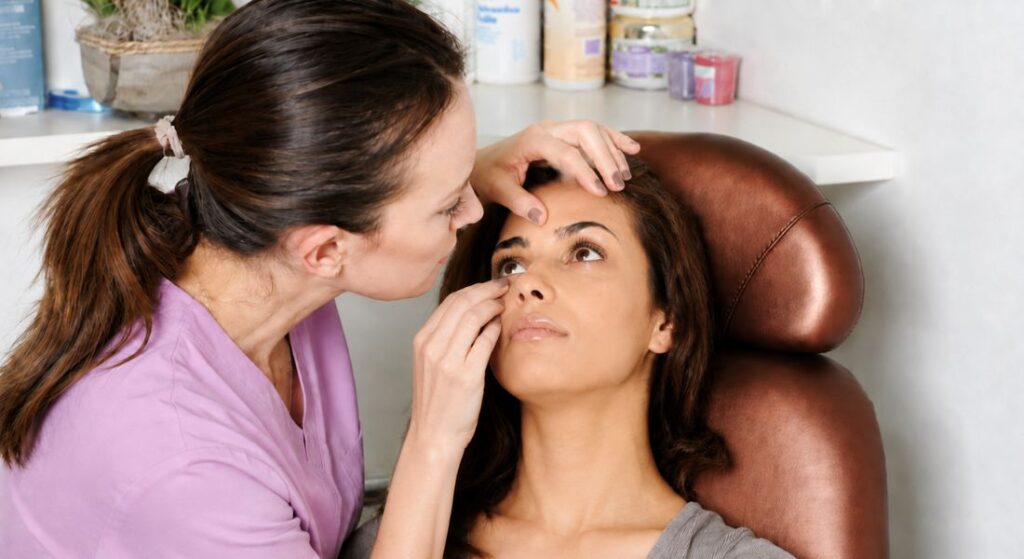
Yes. After eyelid surgery, your eyes may feel dry, gritty, watery or more sensitive because swelling can temporarily affect blinking and tear-film distribution. These symptoms can be uncomfortable even when the eyelid incisions themselves are only mildly sore.
Your surgeon may recommend lubricating drops or ointment to support your eyes while they recover. However, significant or worsening eye pain, pronounced redness or new changes in your vision are not symptoms to ignore and should be assessed promptly.
Evidence Note
Not all discomfort after blepharoplasty comes from the surgical incision. Postoperative swelling and temporary changes in blinking or eyelid closure can disturb the tear film and make the surface of the eye feel dry, gritty, irritated or watery. BAAPS specifically notes that swollen, stiff eyelids can temporarily close more slowly and contribute to dry-eye symptoms.
This distinction matters because persistent eye-surface pain, worsening redness or difficulty closing the eyelids may need treatment rather than simply more painkillers. Pre-existing dry-eye symptoms should therefore be discussed before surgery and reviewed if they worsen afterwards.
How Long Does Soreness Usually Last?
The most noticeable soreness after blepharoplasty is generally concentrated in the first few days and is usually manageable with the pain relief recommended by your surgical team. You may continue to notice tenderness, tightness or sensitivity for longer, particularly around the incision and swollen tissues.
Tightness can persist for weeks or months as your scars and eyelids continue to heal, even after the initial soreness has settled. If your pain is not improving, suddenly becomes much worse or returns after previously settling, you should contact your surgical team for assessment.
What Can Make Eyelid Surgery Feel More Comfortable?
Good anaesthesia is the main way to control discomfort during the operation, and your surgeon should make sure the area is adequately numb before starting. Careful injection techniques and appropriate anaesthetic preparations can also help make the brief injection stage more comfortable.
After surgery, following your recovery instructions can help reduce discomfort from swelling and tightness. Keeping your head elevated, using cold compresses when advised and taking only the recommended pain relief can make the early recovery period easier.
Does More Pain Mean the Surgery Is Working Better?
No, experiencing more pain does not mean that your eyelid surgery has been more effective or that you will achieve a better cosmetic result. Blepharoplasty is carefully planned to adjust specific eyelid tissues, and severe pain is not required for successful healing.
1. Pain Does Not Predict Results: The amount of discomfort you experience does not determine how successful your final eyelid appearance will be.
2. Recovery Varies: You may experience more or less soreness than someone else even if you have had a similar blepharoplasty procedure.
3. Improvement Matters: Normal postoperative tenderness should gradually become easier rather than progressively more painful.
4. Severe Pain Needs Review: Significant or rapidly worsening pain should be reported to your surgical team rather than accepted as a sign of effective treatment.
You should focus on whether your swelling, tenderness and discomfort are gradually improving during recovery. Your final result should be assessed after the tissues have had enough time to heal rather than judged by how much pain you experienced.
When Is Pain After Blepharoplasty Not Normal?
Mild soreness, bruising and tightness are expected during the early stages of recovery, but severe or rapidly worsening pain is different. Pain accompanied by sudden visual changes, rapidly increasing swelling or intense pressure around the eye can indicate a rare but serious complication and requires urgent assessment.
Increasing redness, pus, fever or worsening of the wound can also indicate infection and should be reviewed promptly. Your surgical team should provide clear instructions on who to contact if concerning symptoms develop after you return home.
When Will You Feel Comfortable Returning to Normal Activities?
You may feel physically comfortable before your eyelids look completely recovered. Mild pain often settles within the first few days, while bruising, swelling and redness can remain visible for several weeks.
Many people take around two weeks away from work, although your job and the extent of surgery can affect this timeline. Even when you feel well, follow your surgeon’s advice about driving, exercise, contact lenses, make-up and other activities because your tissues are still healing.
How Can You Prepare for a More Comfortable Blepharoplasty?

Before surgery, tell your surgeon about any previous problems with local anaesthetic, dry eyes, eye procedures or medicines you take. You should also ask which type of anaesthesia will be used and what sensations you are likely to notice, so you know what to expect.
Ask your surgical team which pain relief is suitable for you and how to manage swelling or eye irritation at home. Make sure you also understand which symptoms require urgent contact, as knowing what is normal can make your recovery feel more reassuring.
Myth vs Fact
| Myth | Fact |
| Eyelid surgery should be very painful because the eyelids are sensitive. | Most uncomplicated recovery involves short-term soreness rather than severe pain. |
| Local anaesthetic means you will feel nothing at all. | Sharp pain should be blocked, but pressure or pulling may still be noticeable. |
| The anaesthetic injection cannot hurt. | A brief sharp or stinging sensation is expected during injection. |
| Lower blepharoplasty is always more painful. | Lower surgery may cause different swelling or pressure, but it is not automatically more painful. |
| Combined surgery must cause severe pain. | It may involve more swelling or discomfort, but severe pain is not an expected requirement. |
| Swelling means your surgery is painful. | Swelling and tightness can be more noticeable than actual pain. |
| Dry or watery eyes mean the operation has failed. | Temporary eye-surface symptoms are recognised during recovery. |
| Pain lasting months is normal after blepharoplasty. | Scar tightness may last months, but persistent or worsening pain needs assessment. |
| More pain means a better result. | Pain severity does not predict the cosmetic result. |
| Sudden severe pain and vision loss can wait until your next appointment. | These symptoms require urgent assessment. |
Key Takeaways
1. Blepharoplasty is usually associated with short-term soreness rather than severe pain.
2. Local anaesthetic injection can cause brief stinging before the eyelid becomes numb.
3. During surgery, pressure or pulling may be noticeable, but sharp surgical pain should not normally be felt once the area is adequately numb.
4. Postoperative soreness is often most noticeable during the first 24–48 hours and should gradually improve.
5. Swelling, bruising and tightness can remain after the initial pain has largely settled.
6. Lower-eyelid surgery is not automatically more painful than upper blepharoplasty.
7. Dryness, grittiness and watering can occur because surgery temporarily affects the eyelids and ocular surface.
8. Significant or progressively worsening pain is not a sign of a better surgical result.
9. Severe increasing eye pain, rapidly worsening swelling or sudden deterioration in vision requires urgent assessment.
Frequently Asked Questions
1. Is Eyelid Surgery Painful?
Eyelid surgery is generally associated with mild to moderate discomfort rather than severe pain. Local anaesthetic usually prevents you from feeling the surgery itself, although you may notice some pressure or pulling.
2. Does the Local Anaesthetic Injection Hurt?
You may feel a brief prick, stinging or pressure when the local anaesthetic is injected. This usually lasts only a few moments before the area becomes numb.
3. Is Lower Eyelid Surgery More Painful Than Upper Eyelid Surgery?
Lower eyelid surgery is not necessarily more painful, although you may experience more swelling or pressure around the lower eyelids and upper cheeks. Your discomfort depends on the technique used and the extent of treatment.
4. How Long Does Pain Last After Blepharoplasty?
Most soreness is noticeable during the first 24 to 48 hours and gradually improves afterwards. Mild tenderness or tightness may continue for longer as your eyelids heal.
5. What Does Eyelid Surgery Feel Like When You Are Awake?
With local anaesthetic, you should not normally feel sharp pain during surgery. You may still notice pressure, movement or gentle pulling around your eyelids while the surgeon works.
6. Can Eyelid Surgery Cause Dry or Gritty Eyes?
Yes, you may experience temporary dryness, watering, sensitivity or a gritty sensation after surgery. These symptoms usually improve as swelling settles and normal blinking and tear-film function return.
7. What Can You Do to Make Recovery More Comfortable?
Following your surgeon’s instructions, keeping your head elevated and using cold compresses when advised can help manage swelling and discomfort. You should also avoid rubbing or putting unnecessary pressure on your eyelids.
8. When Is Pain After Eyelid Surgery a Concern?
Severe or rapidly worsening pain is not typical and should be assessed promptly, particularly if you also develop sudden visual changes or rapidly increasing swelling. Contact your surgical team or seek urgent medical attention if these symptoms occur.
9. Does More Pain Mean You Will Get a Better Result?
No, the amount of pain you experience does not indicate how successful your eyelid surgery will be. A good result can be achieved with relatively little discomfort when the procedure and recovery progress normally.
10. When Can You Return to Normal Activities After Eyelid Surgery?
You may feel comfortable before your eyes look completely recovered, with many people taking around two weeks away from work. Your surgeon will advise you when it is safe to resume exercise, driving, contact lenses and eye make-up.
Final Thoughts: What Can You Expect from Eyelid Surgery Pain?
Eyelid surgery is generally associated with manageable discomfort rather than severe pain, particularly once the local anaesthetic has taken effect. You may notice some soreness, tightness, bruising or sensitivity during the first few days, while swelling and tenderness can take longer to settle. Following your surgeon’s aftercare advice can help you stay comfortable and support a smooth recovery.
If you are considering eyelid surgery in London, understanding what to expect can make the experience feel more reassuring and predictable. If you have questions about the procedure, recovery or whether blepharoplasty is suitable for you, you can get in touch with us at the London Medical & Aesthetic Clinic for further guidance and personalised advice.
References:
1. Zhang, S.Y., Yan, Y. and Fu, Y. (2020) ‘Cosmetic blepharoplasty and dry eye disease: A review of the incidence, clinical manifestations, mechanisms and prevention’, International Journal of Ophthalmology, 13(3), pp. 488–492. Available at: https://pmc.ncbi.nlm.nih.gov/articles/PMC7154208/
2. Gimenez, A.R. et al. (2025) ‘Safety and complications in lower eyelid blepharoplasty: A systematic review’, Plastic and Reconstructive Surgery – Global Open, 13(9), article e7102. Available at: https://pmc.ncbi.nlm.nih.gov/articles/PMC12456572/
3. Lee, H. et al. (2012) ‘Postoperative pain assessment for upper lid blepharoplasty in Asians’, Annals of Plastic Surgery, 69(3), pp. 244–246. Available at: https://pubmed.ncbi.nlm.nih.gov/21811149/
4. Parbhu, K.C. et al. (2011) ‘Patient experience with blepharoplasty’, Ophthalmic Plastic and Reconstructive Surgery, 27(3), pp. 152–154. Available at: https://pubmed.ncbi.nlm.nih.gov/20924304/
5. Pool, S.M.W. et al. (2015) ‘First versus second eyelid and lidocaine versus prilocaine with epinephrine for local anaesthesia in upper blepharoplasty’, Journal of Plastic, Reconstructive & Aesthetic Surgery, 68(5), pp. 659–665. Available at: https://www.sciencedirect.com/science/article/abs/pii/S1748681515002028