

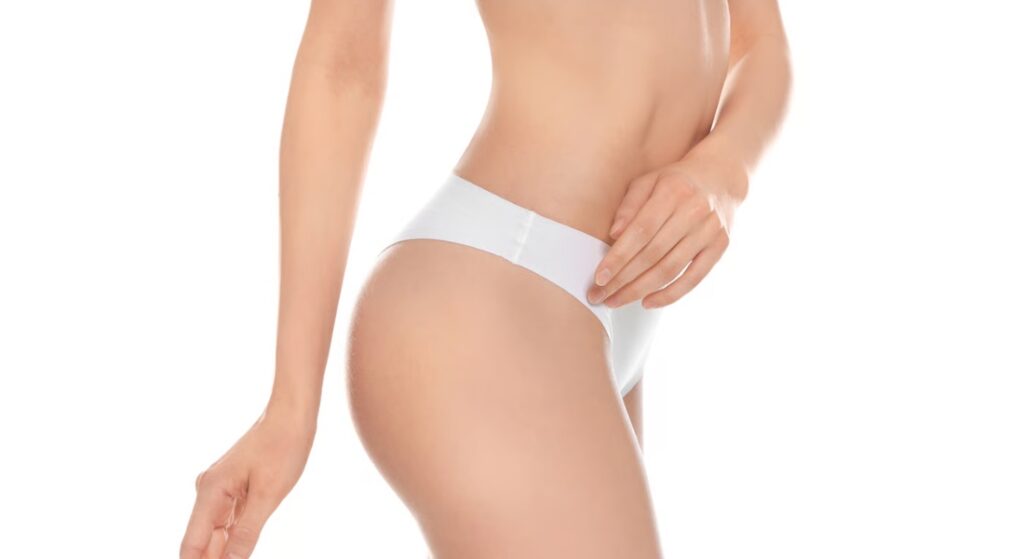
Yes, you can still treat old white stretch marks, even if you have had them for many years. Because mature marks are more established, you may need several treatments to make them smoother, narrower and less noticeable, while moisturisers alone are unlikely to change their deeper structure.
You may consider treatments such as fractional CO₂ laser, microneedling or radiofrequency microneedling to stimulate collagen remodelling. Your results will depend on the age, depth and location of your stretch marks and your skin type, so you should aim for noticeable improvement rather than complete removal.
What Are Old White Stretch Marks?
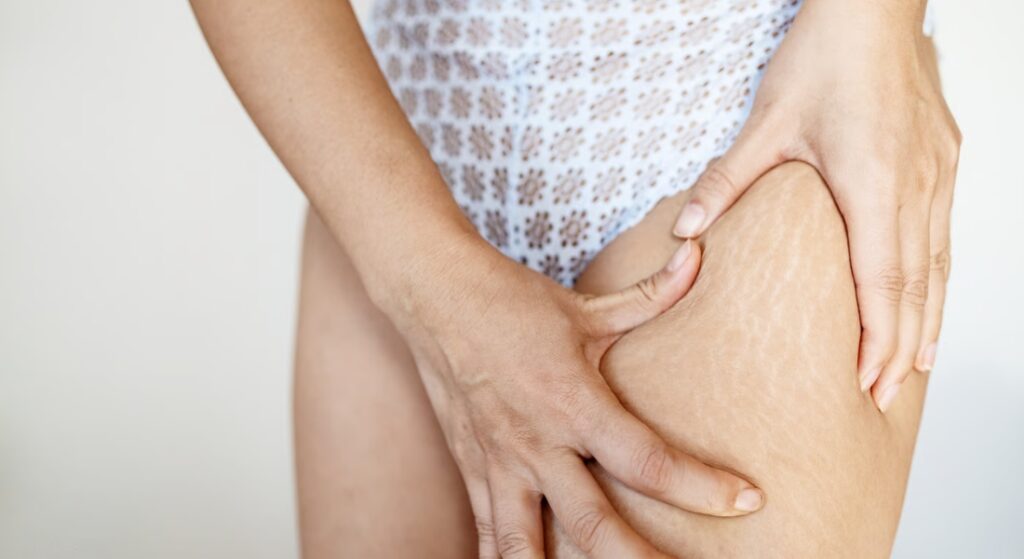
Old white stretch marks, medically known as striae albae, are mature stretch marks that have usually developed from earlier red, pink or purple marks. They may appear white, silvery or noticeably lighter than your surrounding skin.
1. Mature Stage: White stretch marks represent a later stage of stretch-mark development after the earlier redness has faded.
2. Lighter Colour: Your marks may appear pale, white or silvery and can contrast more noticeably with some skin tones.
3. Changed Texture: Mature stretch marks can look thinner, softer, flatter or slightly depressed compared with the surrounding skin.
4. More Established Changes: Older marks have more established structural changes, which can make them harder to improve than newer stretch marks.
You can still improve old white stretch marks even when they have been present for many years. Treatment usually focuses on collagen remodelling and improving texture, width and visibility rather than trying to remove the marks completely.
Why Do Stretch Marks Turn from Red to White?
Your stretch marks usually start as red, pink or purple because of increased vascular and inflammatory activity in the skin. As your marks mature, this activity decreases, so you may notice their colour gradually fading to pale, white or silvery.
You may still have changes in the deeper skin even after the redness has disappeared. Your mature stretch marks can remain different in width, texture, depth and pigmentation, which is why treatment usually focuses on improving their structure rather than simply changing their colour.
When Should Old Stretch Marks Be Medically Assessed?
Most old white stretch marks are harmless and do not require medical treatment. However, you should tell your clinician if your stretch marks developed while you were using steroid creams or tablets, as some corticosteroids can contribute to their formation.
You should speak to your GP before cosmetic treatment if you have unusually large or widespread stretch marks without an obvious cause, particularly if you also have symptoms such as easy bruising, muscle weakness, a rounded or puffy face or increased fat around your chest, abdomen, neck or shoulders. These features can rarely occur with conditions involving excess cortisol, such as Cushing’s syndrome. Do not stop prescribed steroid treatment without medical advice.
Are Old White Stretch Marks Permanent?
Your old white stretch marks are usually permanent changes in the skin, so you should not expect complete removal. However, you can still improve their appearance and make them flatter, smoother and less noticeable.
You may still see your marks when you look closely, but treatment may produce a meaningful cosmetic improvement.
Does It Matter How Many Years Old Your Stretch Marks Are?
Your stretch marks can still be treated even if they are several years old. Older white marks may be harder to improve than newer red marks, but treatments such as microneedling and fractional laser can still stimulate collagen remodelling.
You should focus less on how many years you have had your marks and more on their depth, width, location and your skin type. Your expectations also matter, as older stretch marks are usually improved rather than completely removed.
Evidence Note
Age alone does not make a longstanding stretch mark impossible to treat. A clinical study of 51 people with Fitzpatrick skin types II–IV treated both striae rubrae and striae albae ranging from one to 40 years in duration with a 1540-nm non-ablative fractional laser and reported improvement after treatment. However, the study included both red and white stretch marks, was relatively small and used nonblinded clinical assessment for the full study group, with blinded photographic assessment performed only in a subset. It therefore cannot predict how much improvement you will achieve in an individual decades-old white stretch mark.
How Can Fractional CO₂ Laser Improve White Stretch Marks?
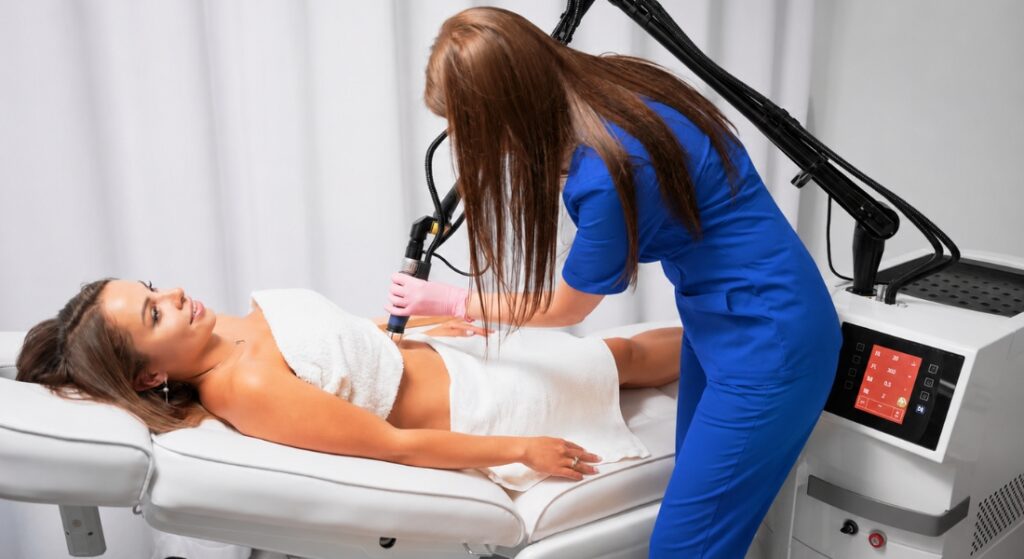
Fractional CO₂ laser creates controlled microscopic injuries that stimulate your skin’s healing and collagen remodelling process. You may gradually see your white stretch marks become smoother, narrower and less noticeable as your skin repairs itself.
You should know that CO₂ laser does not erase your stretch marks completely. Because it is an ablative treatment, you may experience downtime and a higher risk of pigmentation, particularly if your skin is prone to dark marks.
How Effective Is CO₂ Laser for Old White Stretch Marks?
Fractional CO₂ laser can improve your old white stretch marks, but your results can vary. You may see smoother, narrower and less noticeable marks, but you should not expect them to disappear completely.
You should also know that CO₂ laser is not always better than microneedling or other treatments. Your skin type, stretch marks and treatment settings can all affect how much improvement you achieve.
Can Microneedling Improve Old White Stretch Marks?
Yes, microneedling can improve your old white stretch marks by creating controlled micro-injuries that stimulate collagen remodelling. You may gradually see your marks become smoother, narrower and less noticeable after several treatments.
You may consider microneedling if you want collagen stimulation without the ablative heat of CO₂ laser. Your results will vary depending on the age, depth and location of your stretch marks, so you should aim for improvement rather than complete removal.
Is CO₂ Laser Better Than Microneedling for White Stretch Marks?
CO₂ laser is not automatically better than microneedling for your white stretch marks. Comparative evidence across striae distensae overall has found no significant difference in clinical improvement or patient satisfaction between fractional CO₂ laser and conventional microneedling. However, this pooled evidence is not specific to every type of longstanding white stretch mark, so your individual result can still differ.
Your choice may depend on your skin type, pigmentation risk and recovery time. If you are prone to dark marks, microneedling may be a more suitable option for you because CO₂ laser has a higher risk of post-inflammatory hyperpigmentation.
Research Insight
A 2025 systematic review and meta-analysis comparing fractional CO₂ laser with conventional microneedling found meaningful improvement with both treatments and no significant difference in overall clinical improvement or patient satisfaction. Post-inflammatory hyperpigmentation was more frequent with CO₂ laser, so treatment choice should consider pigmentation risk as well as the expected resurfacing effect. Because the meta-analysis assessed striae distensae overall rather than only longstanding striae albae, these findings should guide treatment selection rather than predict your individual result.
Treatment Options for Old White Stretch Marks
| Treatment | Main aim | Potential advantage | Important limitation |
| Fractional CO₂ laser | Collagen remodelling and resurfacing | Can improve texture and width of mature striae | More downtime and PIH risk |
| Conventional microneedling | Mechanical collagen induction | Comparable overall improvement to CO₂ in pooled evidence | Several sessions may be needed |
| RF microneedling | Mechanical needling plus controlled thermal energy | Comparable improvement with potentially lower PIH risk than CO₂ | Devices and settings vary |
| Non-ablative fractional laser | Dermal remodelling without ablating the surface | Less surface injury than CO₂ | Improvement may require repeated sessions |
| Tretinoin | Topical collagen-related effects | More relevant to relatively recent striae | Limited role for old white marks; avoid during pregnancy or when planning pregnancy |
| Combination approaches | Address different treatment targets | May improve results in selected cases | More treatment does not automatically mean better results |
Can Radiofrequency Microneedling Treat Mature Stretch Marks?
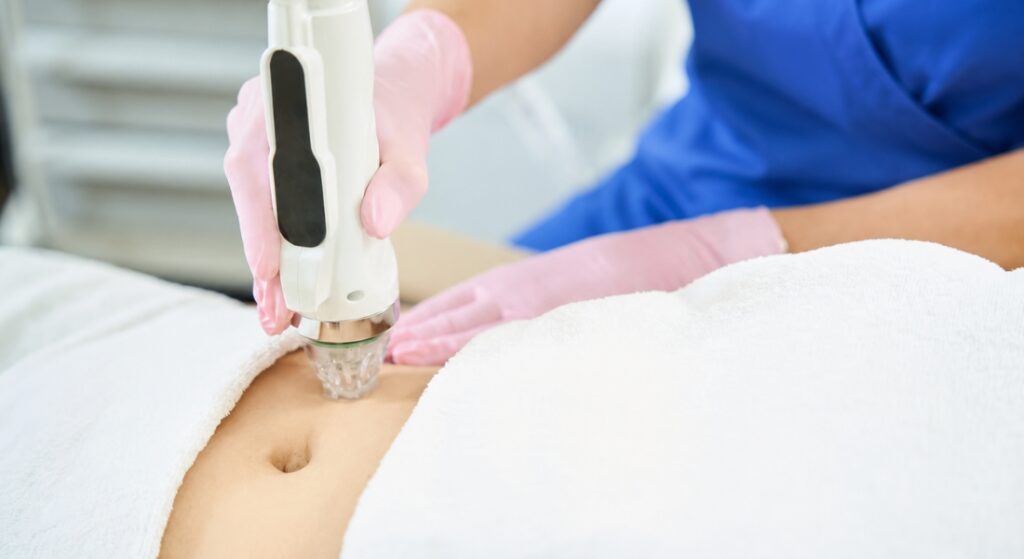
Yes, radiofrequency microneedling can improve your mature stretch marks by combining tiny needles with controlled heat to stimulate collagen remodelling. You may gradually see your marks become smoother, narrower and less noticeable.
Radiofrequency microneedling may be considered when pigmentation risk is an important concern. In pooled comparative studies of striae distensae, fractional microneedle radiofrequency produced similar improvement to fractional CO₂ laser but was associated with significantly less post-inflammatory hyperpigmentation. These findings are not limited specifically to longstanding white stretch marks, so your treatment still needs to be individualised.
What About Non-Ablative Fractional Lasers?
Non-ablative fractional lasers can improve your mature stretch marks by stimulating controlled heat-based collagen remodelling without removing the skin’s surface. You may consider them if you want a laser treatment with less surface injury than ablative CO₂ laser.
You may achieve improvement in the texture and appearance of white stretch marks with repeated sessions. Your skin type, stretch marks and treatment settings will influence the results, so you may have several options rather than needing one specific treatment.
Can Creams Remove Old White Stretch Marks?
Creams cannot reliably remove your old white stretch marks or rebuild the deeper skin changes. You may find moisturisers and oils make your skin softer and more comfortable, but they will not restore altered collagen.
Tretinoin may help you more with newer stretch marks than mature white ones. You should be cautious of creams claiming to permanently remove your marks, as treatments such as microneedling or laser are usually considered when you want greater structural improvement.
UK Guidance Note
If you are considering treatment in the UK, ask exactly which procedure and device will be used, what improvement is realistic for mature white stretch marks, what recovery to expect and how pigmentation or other complications would be managed. Tretinoin should not be used during pregnancy, so pregnancy or plans to conceive should also be discussed before topical retinoid treatment.
Can Combination Treatments Produce Better Results?
Combination treatments may help you improve stubborn white stretch marks by targeting collagen remodelling in different ways. You may benefit from combining treatments such as microneedling, radiofrequency or fractional CO₂ laser, depending on your marks.
You do not automatically need several procedures, as more treatment can mean more inflammation, cost and recovery. Your clinician may start with one treatment and consider a combination later if your stretch marks need further improvement.
Is Treatment Different for Darker Skin?
Your skin tone can affect which stretch-mark treatment is safest for you because inflammation may trigger pigmentation. You can still consider CO₂ laser, but you may have a higher risk of dark marks after treatment.
You may prefer microneedling or radiofrequency microneedling if pigmentation is a concern for you. If your skin often develops dark marks after acne, scratches or procedures, you should tell your clinician before choosing treatment.
Clinical Tip
Tell your clinician if acne, burns, cuts or previous cosmetic procedures have left persistent dark pigmentation. Your own history of post-inflammatory hyperpigmentation can be particularly useful when deciding how aggressively mature white stretch marks should be treated.
How Many Sessions Might Old White Stretch Marks Need?
You may need several sessions to improve your old white stretch marks because collagen remodelling happens gradually. There is no fixed number of treatments that will work for you, as your results depend on the depth, width and extent of your marks.
Your clinician can review your progress after each session and adjust your treatment if needed. You may need more sessions for deeper or widespread marks, while smaller areas may respond with fewer treatments.
When Will You See the Final Result?
You may notice changes after treatment, but your final result will take time to develop. Your skin may initially look red, swollen, darker or irritated before collagen remodelling gradually improves your stretch marks.
You may see your marks become smoother, narrower and less noticeable over the following weeks or months. You should compare your before-and-after photos under similar lighting and positioning so you can judge your results fairly.
How Can You Decide Whether Treatment Is Worth It?
You should start with realistic expectations, as you should not expect complete removal of old white stretch marks. If you would be happy with smoother, narrower and less noticeable marks, treatment may be worth considering for you.
Your skin tone, pigmentation risk and the depth and location of your marks can help you choose the right option. You should also consider the full treatment course, recovery time and cost before deciding what approach is most suitable for you.
Myth vs Fact
| Myth | Fact |
| Stretch marks become impossible to treat after a few years. | There is no established age cut-off that makes mature striae untreatable. |
| White stretch marks can be completely erased. | Treatment can reduce their visibility, but complete removal cannot be guaranteed. |
| CO₂ laser is always the best treatment for old marks. | Comparative evidence does not show universal superiority over microneedling. |
| Microneedling cannot improve mature white marks. | Randomised studies have demonstrated improvement in striae alba. |
| RF microneedling is automatically more effective than CO₂ laser. | Current pooled evidence shows comparable improvement rather than clear superiority. |
| Stronger treatment always means better results. | Greater intensity can also mean more inflammation, downtime and pigmentation risk. |
| Creams can rebuild established white stretch marks. | Topical treatment has a limited role in mature striae compared with procedural remodelling. |
| Darker skin cannot have procedural stretch-mark treatment. | Treatment may still be possible, but pigmentary risk and settings require careful assessment. |
| Ten-year-old stretch marks cannot improve. | Longstanding striae have been included in treatment studies, but results still vary considerably. |
Key Takeaways
1. Old white stretch marks, or striae albae, are mature structural skin changes.
2. They can still be treated even when they have been present for many years.
3. No current procedure can reliably guarantee complete removal.
4. Fractional CO₂ laser can improve mature striae through collagen remodelling.
5. Conventional microneedling can also improve striae alba and has shown comparable overall results to CO₂ laser in pooled research.
6. RF microneedling is another option and may have a lower PIH risk than fractional CO₂ laser.
7. There is no single treatment that is best for every patient.
8. Skin tone and previous pigmentation should influence treatment selection.
9. Tretinoin is more relevant to newer striae than long-established white marks.
10. Several sessions may be needed, and realistic success means making the marks smoother, narrower or less noticeable rather than removing them completely.
Frequently Asked Questions
1. Can old white stretch marks still be treated?
Yes. Although old white stretch marks are more established and usually harder to improve than newer red marks, treatments such as fractional CO₂ laser, microneedling and radiofrequency microneedling can reduce their visibility.
2. Can old white stretch marks disappear completely?
Complete removal cannot be reliably guaranteed. Treatment may make your stretch marks flatter, narrower, smoother and less noticeable, but some difference in colour or texture can remain.
3. Is CO₂ laser effective for old white stretch marks?
Fractional CO₂ laser can improve the appearance and texture of mature white stretch marks by stimulating collagen remodelling. However, research does not show that CO₂ laser is always better than treatments such as microneedling.
4. Is microneedling better than CO₂ laser for white stretch marks?
Neither treatment can be considered universally better. Comparative research across striae distensae overall has found similar clinical improvement with fractional CO₂ laser and conventional microneedling, while post-inflammatory hyperpigmentation was more frequent after CO₂ laser. These findings are not specific to every longstanding white stretch mark, so your skin type, pigmentation history, downtime and treatment goals should also guide the choice.
5. Can you treat 10-year-old stretch marks?
Yes. There is no specific age at which stretch marks become impossible to treat. Older marks may be more resistant, but collagen-remodelling procedures can still improve their appearance depending on their depth, width, location and your skin characteristics.
6. Can creams remove old white stretch marks?
Creams and moisturisers are unlikely to remove established white stretch marks because they cannot reliably reverse the deeper structural changes within the dermis. Tretinoin may have more potential for relatively recent stretch marks, but evidence for treating mature white striae is limited.
7. How many treatments will you need for old white stretch marks?
You will usually need several treatment sessions rather than a single appointment. The exact number depends on the treatment used and the characteristics of your stretch marks, so your clinician should create a plan based on how your skin responds.
8. Is radiofrequency microneedling suitable for old white stretch marks?
Radiofrequency microneedling combines mechanical needling with controlled thermal energy to stimulate dermal remodelling. Comparative evidence across striae distensae suggests that fractional microneedle radiofrequency can provide similar overall improvement to fractional CO₂ laser with a lower rate of post-inflammatory hyperpigmentation, although this evidence does not specifically predict results for every longstanding white stretch mark.
9. Does treatment work on old stretch marks on darker skin?
Treatment can still be effective on darker skin, but your risk of pigmentation changes needs careful consideration. Your clinician may adjust the treatment type and settings according to your skin tone and whether you have previously developed dark marks after inflammation or procedures.
10. When will you see results from treatment for old white stretch marks?
You should not expect the final result immediately after treatment because collagen remodelling develops gradually. You may notice progressive changes in texture and visibility over the following weeks and months, with the final improvement assessed after your skin has had sufficient time to heal and remodel.
Final Thoughts: Treating Old White Stretch Marks
Old white stretch marks can still be treated, even when they have been present for many years. While mature striae albae are more established and may be harder to improve, treatments that encourage collagen remodelling can make them smoother, narrower and less noticeable, so you can focus on realistic improvement rather than complete removal.
If you’re looking for CO2 laser treatment for stretch marks in London, you can get in touch with our team at the London Medical & Aesthetic Clinic.
References:
- de Angelis, F., Kolesnikova, L., Renato, F. and Liguori, G. (2011) ‘Fractional nonablative 1540-nm laser treatment of striae distensae in Fitzpatrick skin types II to IV: Clinical and histological results’, Aesthetic Surgery Journal, 31(4), pp. 411–419. Available at: https://academic.oup.com/asj/article-abstract/31/4/411/2801325
- Mustafa, A. et al. (2025) ‘Evaluating CO₂ laser and micro-needling therapies for striae distensae: A comprehensive meta-analysis and systematic review’, Lasers in Medical Science, 40(1), article 161. Available at: https://pubmed.ncbi.nlm.nih.gov/40131559
- Aktoz, F. and Yilmaz, N. (2024) ‘Comparing fractional microneedle radiofrequency and fractional CO₂ laser for striae distensae treatment: A systematic review and meta-analysis’, Lasers in Medical Science, 39(1), article 271. Available at: https://pubmed.ncbi.nlm.nih.gov/39516426
- Naeini, F.F., Behfar, S., Abtahi-Naeini, B., Keyvan, S. and Pourazizi, M. (2016) ‘Promising option for treatment of striae alba: Fractionated microneedle radiofrequency in combination with fractional carbon dioxide laser’, Dermatology Research and Practice, 2016, article 2896345. Available at: https://pmc.ncbi.nlm.nih.gov/articles/PMC4812348
- Algarra Sahuquillo, J. and Martín-Gorgojo, A. (2026) ‘Stretch marks: Systematic review of its therapeutic approach’, Actas Dermo-Sifiliográficas, 117(4), article 104553. Available at: https://www.sciencedirect.com/science/article/pii/S0001731025008294