


If you are planning VASER liposuction, you may want to know what your recovery will feel like after the procedure. Your swelling, bruising and comfort can change over the first few weeks, and you may gradually return to work, exercise and your normal routine.
Your recovery will depend on the areas treated, how much fat was removed and how your body heals. Your final contour will also develop gradually, as your swelling settles and your treated tissues become softer, so your surgeon’s aftercare advice should always guide your recovery.
VASER Liposuction Recovery Timeline at a Glance
| Recovery stage | What you may notice | Activity |
| First 24–48 hours | Swelling, tenderness, tightness, bruising and some incision drainage | Rest with short, gentle walks as advised |
| First week | Swelling and bruising remain noticeable; numbness or tightness may occur | Gentle everyday movement, no strenuous exercise |
| Week two | Discomfort may begin to ease, but swelling and firmness can remain | Gradually increase normal daily activity |
| Weeks three to four | Bruising and discomfort may reduce further | Gentle exercise may be considered if your surgeon clears you |
| Weeks five to eight | More of your contour may become visible, although swelling can remain | Gradually increase activity without assuming you are ready for strenuous exercise |
| Months two to three | Tissues may feel softer and swelling may continue to settle | Continue progressing according to your surgeon’s advice |
| Months three to six | Your contour may become clearer as residual swelling settles | Continue your usual activities according to your surgeon’s advice while your final contour continues to settle |
The First 24 to 48 Hours After VASER Liposuction
Your treated areas may feel swollen, tender, tight and bruised during the first 24 to 48 hours. Your compression garment may help manage swelling, while some fluid can drain from your small incision sites as your body begins to heal.
Gentle movement is usually encouraged, but you should still rest and avoid overexertion. Your swelling can also make you look less defined or temporarily larger, so your early appearance should not be taken as your final result.
What to Expect During the First Week
Your swelling and bruising can still be noticeable during your first week, and your treated areas may feel tender, tight or numb. Your bruising may also change colour as it gradually fades, while your altered sensation can take several weeks to improve.
Gentle walking is usually encouraged, but you should avoid strenuous exercise while your body heals. Your compression garment may also remain important during this stage, so you should wear it for the time recommended by your surgical team.
Week Two: Becoming More Mobile
By your second week, your discomfort may start to ease and everyday movements may feel easier. Your swelling, bruising, firmness or unevenness can still be noticeable, especially if you had larger treatment areas.
Your energy may also take time to return, and your return to work will depend on what you do and how you are healing. Your recovery should follow your surgeon’s advice rather than another person’s timeline.
Weeks Three to Four: When Swelling May Start to Feel More Manageable
By weeks three and four, your discomfort and bruising may have reduced, and your everyday activities may feel easier. Your treated areas can still have some swelling, firmness, numbness or unevenness, so your final contour may not be visible yet.
Gentle exercise may be suitable around this stage if your surgeon clears you to resume it. Your return should be gradual, as your tissues are still healing and you should avoid intense exercise, aggressive massage or tighter compression unless advised.
Weeks Five to Six: Seeing More of Your Developing Contour

By weeks five and six, your swelling may have reduced enough for more of your developing contour to become visible. Your treated areas may look less puffy, although some unevenness or residual swelling can still remain.
Your compression garment may still be part of your recovery, depending on your surgeon’s advice and how much swelling you have. Your schedule can vary between procedures, so you should follow your own surgeon’s guidance rather than changing your compression based on someone else’s recovery.
Weeks Seven to Eight: Returning Towards Your Usual Routine
By weeks seven and eight, your bruising may have mostly faded and your swelling may be much less noticeable. Your treated areas can still feel firm, sensitive or slightly numb as your tissues and nerves continue to settle.
Your everyday routine may feel easier, but your return to more demanding activities should still follow your surgeon’s advice. Your final result can continue to develop even when your recovery starts to feel slower.
Months Two to Three: Why Your Shape Can Continue Changing
During months two and three, your swelling may continue to reduce gradually and your treated areas may start to feel softer. Your appearance can still vary from day to day depending on your activity, how long you have been standing and where you were treated.
Your minor firmness or unevenness at this stage does not necessarily mean it is permanent, as your tissues can continue to settle for several months. Your surgeon can check whether your recovery is progressing as expected or whether any area needs further assessment.
Months Three to Six: When Results Become Clearer
By months three to six, your bruising and most of your swelling may have settled, but your treated areas can continue to refine. Residual swelling and firmness can take several months to settle after liposuction.
Your result should therefore be judged over time rather than from early photographs. Your stable weight can also help you maintain your contour, as future weight changes can affect both treated and untreated areas.
Evidence Note
Published evidence provides useful recovery timeframes, but your body does not have to follow an exact weekly schedule. Post-liposuction swelling, firmness and tissue changes can continue to improve over several weeks or months, and the time needed for your treated areas to settle can vary considerably.
This means you may feel much better before your final contour is visible. The size and number of areas treated, the amount of fat removed, your individual healing response and whether you have had another procedure at the same time can all influence your recovery. Use the week-by-week stages as a general guide rather than comparing your progress with another patient.
How Swelling Changes Throughout Recovery
Your swelling can change your appearance considerably during VASER recovery, making your treated areas look fuller or less defined at first. Your swelling may be greater when larger areas are treated and can vary between different parts of your body or from one day to another.
Your swelling should gradually settle as your tissues heal, rather than disappearing on one specific day. If your swelling suddenly becomes much worse or you notice a new localised area of fullness, you should contact your surgical team for assessment.
Research Insight
VASER uses ultrasound-assisted technology, but it should not be assumed that you will automatically have less pain or swelling than with other forms of liposuction. In a randomised study of 20 women involving 33 treated regions, VASER-assisted liposuction produced 26% less blood loss and a 53% relative improvement in measured skin retraction compared with suction-assisted liposuction. However, pain and swelling did not differ significantly between the techniques at the six-month follow-up.
The study was relatively small, so these findings cannot predict how you personally will recover. They also show why the device itself should not be treated as the only factor affecting recovery. The extent of treatment, areas treated, volume removed, your individual healing response and your surgeon’s technique and aftercare plan can all influence how your recovery progresses.
How Long Can Bruising Last?
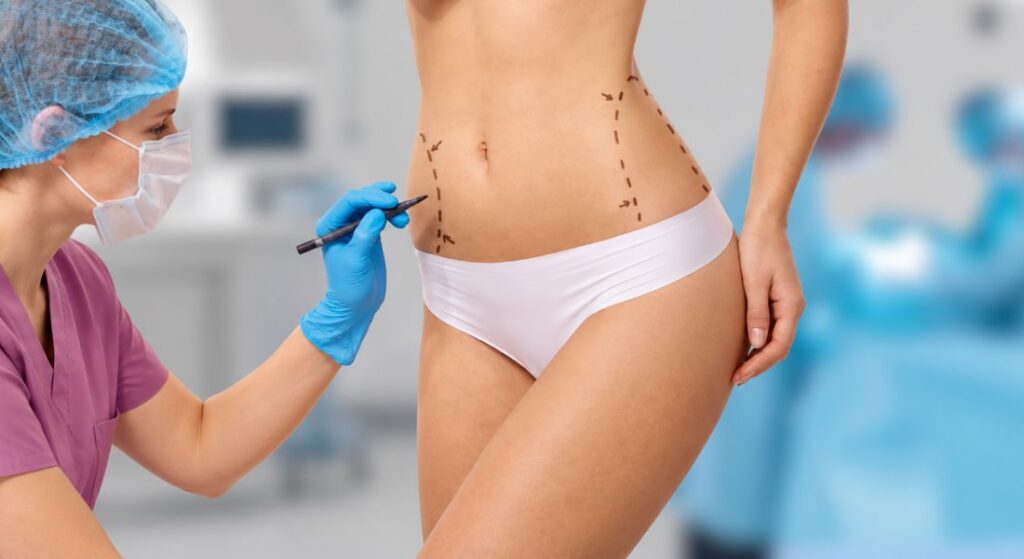
Bruising is common after VASER because small blood vessels can be affected during surgery. Your bruising may look dark at first, spread slightly due to gravity and gradually change colour as it fades.
Your visible bruising may last for several weeks, while deeper bruising can take longer to settle. If your bruising suddenly becomes much worse or comes with increasing swelling or significant pain, you should contact your surgical team.
How Long Will You Need to Wear Compression?
Compression garments are commonly used for several weeks after liposuction, although the exact schedule varies between procedures and surgical teams. A 2023 expert consensus on VASER recommended full-day compression for approximately 1.5 months, with the duration influenced by the degree of swelling. A separate practical review found that evidence for postoperative compression remains mixed and varies between procedures. This is not a fixed VASER protocol, so your surgeon’s individual instructions should take priority.
Your exact schedule can vary depending on your procedure, treated areas and recovery. Your garment should feel supportive rather than excessively tight, so you should ask your surgical team if it rolls, folds, digs into your skin or becomes uncomfortable.
UK Guidance Note
General UK liposuction aftercare advice commonly encourages early walking and gradual movement while delaying more strenuous activity until recovery has progressed. Compression garments are also frequently used after liposuction, although the duration can vary between procedures and surgical teams.
These timeframes should be treated as general guidance rather than a fixed VASER recovery programme. Your surgeon may give you a different compression schedule or activity plan depending on the areas treated and how you are healing, so follow your personalised instructions rather than changing your aftercare plan yourself.
Walking and Everyday Activity During Recovery
Gentle movement is usually an important part of your early recovery after VASER liposuction. You should gradually increase your activity while paying attention to how your treated areas feel.
1. Start with short walks: Gentle walking can help you stay mobile without placing too much strain on your healing tissues.
2. Increase activity gradually: You can build up your everyday movement as your comfort and energy improve.
3. Avoid doing too much too soon: If an activity noticeably increases your pain or swelling, you may need to reduce your activity.
4. Follow your surgeon’s advice: Your recovery timeline can vary, so your surgical team should guide when you can become more active.
Your activity should progress at a pace that suits your individual recovery rather than someone else’s timeline. Giving your body enough time to heal can help you return to your normal routine more comfortably.
Clinical Tip
Walking during your early recovery is different from being ready for exercise. Short, comfortable walks can help you stay mobile, but feeling able to walk normally does not necessarily mean your tissues are ready for running, heavy lifting or intense gym sessions.
When you start increasing your activity, pay attention to how the treated areas respond. If an activity produces a noticeable increase in pain or swelling, stop and discuss your recovery with your surgical team rather than pushing through the symptoms. Your surgeon should guide when you can progress from everyday movement to gentle exercise and eventually more strenuous training.
Returning to Work and Driving
Your return to work after VASER depends on how much treatment you have had and what your job involves. You may be able to return to light or desk-based work within a few days, while physically demanding work may require more time.
You should wait to drive until you feel comfortable and can safely control your vehicle and wear a seat belt. Your surgeon can advise when you are ready, and you should also check any requirements from your motor insurer.
Returning to the Gym and Strenuous Exercise
Your return to the gym after VASER should be gradual, even when you start feeling better. Gentle exercise may be suitable after a few weeks, but your surgeon will advise when you can safely increase your activity.
Being able to walk comfortably does not mean you are ready for heavy lifting, intense cardio or demanding abdominal exercises. Your treated areas also matter, so you should follow your surgeon’s advice on when to return to your usual workout intensity.
Numbness, Firmness and Lumpiness During Healing
Your skin and treated tissues may feel numb, firm or uneven for a while after VASER liposuction. Your numbness can take several weeks to improve, while areas of firmness or lumpiness may gradually soften as your swelling and bruising settle.
Your early irregularities do not necessarily reflect your final result. If an area becomes increasingly painful, red, hot or suddenly more swollen, you should contact your surgical team for assessment.
When Should You Contact Your Surgical Team?

Your recovery can involve pain, swelling and other changes, but you should contact your surgical team if you notice increasing pain, redness, swelling, wound discharge or a sudden change on one side. A fever or feeling unwell should also be reported rather than assumed to be part of normal healing.
New pain or swelling in one calf or leg should be assessed promptly because it can be a sign of a blood clot. If you develop severe difficulty breathing, chest or upper-back pain, or collapse, call 999 or go to A&E.
Your clinic should give you clear contact details before your procedure so you know who to speak to if something unexpected happens.
Myth vs Fact
| Myth | Fact |
| You should look close to your final result after the first week. | Early swelling can hide your developing contour, and your result may continue to change for several months. |
| If you can walk normally, you can return to the gym. | Everyday movement and strenuous exercise place very different demands on your healing tissues. |
| Everyone should stop wearing compression at the same time. | Your compression schedule depends on your procedure, treated areas and your surgeon’s aftercare plan. |
| Swelling should disappear at the same rate every week. | Swelling can fluctuate and may settle at different rates in different areas of your body. |
| You should be back to strenuous exercise by six weeks. | Your return to strenuous exercise depends on your procedure and recovery. Current UK guidance suggests avoiding strenuous activity for around 10 to 12 weeks, although your surgeon may give you different advice based on your individual recovery. |
Key Takeaways
1. Your VASER recovery happens gradually rather than following one exact timetable.
2. Swelling, bruising, tenderness, firmness and temporary numbness can change over the first few weeks.
3. Gentle movement usually starts earlier than strenuous exercise.
4. Your compression schedule should be based on your surgeon’s individual aftercare plan.
5. Your contour may continue to become clearer for several months as swelling settles.
6. Do not judge your final result from your first few weeks of recovery.
7. Worsening pain, redness, discharge or rapidly increasing swelling should be reported to your surgical team.
8. If you develop severe breathing difficulty, chest or upper-back pain, or collapse, call 999 or go to A&E.
Frequently Asked Questions
1. What is VASER liposuction recovery like?
Recovery is gradual, with swelling, bruising, tenderness, firmness and numbness often improving over several weeks. Your final contour can take several months to develop.
2. How much swelling can you expect after VASER liposuction?
Swelling is common, especially during the first few weeks. It usually settles gradually, although subtle swelling can remain for several months.
3. How long does bruising last after VASER liposuction?
Bruising often fades over several weeks and may last around a month in some patients. Deeper bruising and lumpiness can take longer to settle.
4. How long do you need to wear a compression garment after VASER?
Compression is commonly worn for several weeks, but the exact duration depends on your surgeon’s advice. Follow your individual compression plan rather than copying someone else’s.
5. When can you return to work after VASER liposuction?
Some people return to light or desk-based work within a few days, while more extensive procedures may require longer. Your type of work and how you are healing will affect your timing.
6. When can you start exercising after VASER liposuction?
Gentle exercise may be possible at around 3 to 4 weeks, but the timing depends on your procedure and how you are healing. Current UK guidance advises avoiding strenuous activity for around 10 to 12 weeks, although your surgeon may recommend a different timeline for you.
7. When can you drive after VASER liposuction?
You should only drive when you can control the vehicle safely and comfortably, including wearing a seat belt. Your surgeon and motor insurer may also have specific requirements.
8. Is numbness and firmness normal after VASER liposuction?
Yes, temporary numbness, firmness and lumpiness can occur as your tissues heal. These changes can take several weeks or months to improve.
9. When will you see your final VASER liposuction results?
Your contour develops gradually as swelling settles and tissues soften. Your treated areas may continue to settle over several months.
10. When should you contact your surgeon after VASER liposuction?
Contact your surgical team if you develop worsening pain, redness, rapidly increasing swelling, unusual discharge or other concerning changes. New pain or swelling in one calf or leg should also be assessed promptly. If you develop severe difficulty breathing, chest or upper-back pain, or collapse, call 999 or go to A&E.
Final Thoughts: VASER Liposuction Recovery Week by Week
Your VASER liposuction recovery is gradual, with swelling, bruising, firmness and numbness usually improving over several weeks. You may start feeling more comfortable before your final contour becomes clear, so give your body time to heal.
If you’re thinking about Vaser lipo in London, you can get in touch with us at the London Medical & Aesthetic Clinic.
References:
1. Nagy, M.W. and Vanek, P.F. Jr (2012). ‘A multicenter, prospective, randomized, single-blind, controlled clinical trial comparing VASER-assisted Lipoplasty and suction-assisted Lipoplasty’. Plastic and Reconstructive Surgery, 129(4), pp. 681e–689e. https://pubmed.ncbi.nlm.nih.gov/22456382/
2. Ruff, P.G. IV, Garcia, O. Jr, Nykiel, M.J. and Galanis, C.J. (2023). ‘Consensus-based Recommendations for Vibration Amplification of Sound Energy at Resonance Ultrasound-assisted Liposuction’. Plastic and Reconstructive Surgery – Global Open, 11(7), e5110. https://pmc.ncbi.nlm.nih.gov/articles/PMC10335824/
3. Ormseth, B.H., Livermore, N.R., Schoenbrunner, A.R. and Janis, J.E. (2023). ‘The Use of Postoperative Compression Garments in Plastic Surgery—Necessary or Not? A Practical Review’. Plastic and Reconstructive Surgery – Global Open, 11(9), e5293. https://pubmed.ncbi.nlm.nih.gov/37753333/
4. Zingaretti, N. et al. (2023). ‘Evaluation of Kinesio Taping for Edema, Ecchymosis, and Pain After Liposuction: A Prospective Pilot Study’. Aesthetic Surgery Journal, 43(10), pp. NP787–NP796. https://academic.oup.com/asj/article/43/10/NP787/7209358
5. Pacifico, M., Kanapathy, M., Dancey, A., MacQuillan, A., Ross, G. and Mosahebi, A. (2022). ‘Summary document on safety and recommendations for aesthetic liposuction: Joint British Association of Aesthetic Plastic Surgeons (BAAPS)/British Association of Plastic Reconstructive and Aesthetic Surgeons (BAPRAS) expert liposuction group’. Journal of Plastic, Reconstructive & Aesthetic Surgery, 75(3), pp. 941–947. https://www.sciencedirect.com/science/article/pii/S174868152100499X