


Does your face become shiny soon after cleansing, or do blackheads keep returning despite your skincare routine? If you have oily or acne-prone skin, you may be wondering whether HydraFacial could help without leaving your skin feeling stripped or irritated.
HydraFacial combines cleansing, exfoliation, suction-based extraction and hydration. It may temporarily improve visible congestion and surface shine, but it won’t stop your skin producing oil, prevent every breakout or remove established acne scars. Knowing the benefits and limitations can help you decide whether it’s worth booking.
What Is HydraFacial?
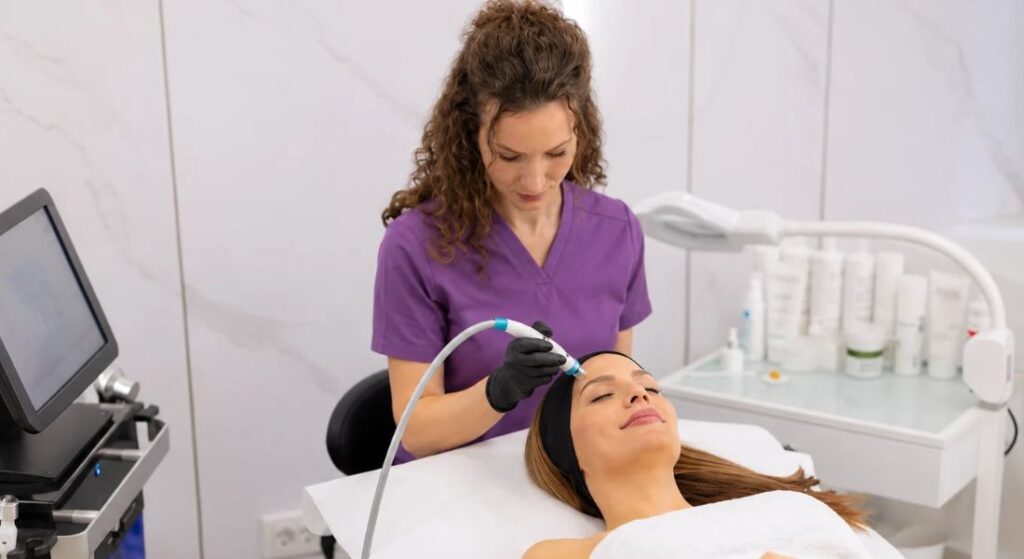
HydraFacial is a non-invasive facial treatment that uses specialised tips and controlled suction to cleanse, exfoliate and extract impurities while applying hydrating solutions. You can also have the treatment customised with products such as salicylic acid to target oily or congested skin.
This makes HydraFacial useful for improving your skin’s surface appearance, but it isn’t a medical acne treatment. If you have persistent breakouts, painful spots or acne scarring, you may need a more targeted approach.
How Does HydraFacial Work on Oily Skin?
HydraFacial can help remove excess surface oil, dead skin cells and debris that contribute to congestion. You may notice cleaner, smoother-looking skin after treatment.
1. Cleansing: Helps remove surface oil and impurities.
2. Exfoliation: Removes dead skin cells that can contribute to blocked pores.
3. Controlled suction: Helps clear debris from congested pores.
4. Temporary improvement: Surface oil may look reduced, but sebum production continues.
A suitable daily skincare routine is still important for managing oily skin between treatments.
How Should You Care for Oily Skin Between HydraFacial Sessions?
HydraFacial doesn’t replace the routine you follow between appointments. Wash your face gently twice a day rather than repeatedly scrubbing away oil, and choose a lightweight, non-comedogenic moisturiser and sunscreen suitable for acne-prone skin. Oily skin still needs moisture, and over-cleansing can cause irritation.
If you use benzoyl peroxide, prescription retinoids or other acne treatments, continue to follow your clinician’s instructions. Ask your practitioner when to restart active skincare ingredients after HydraFacial rather than stopping prescribed products yourself. If painful spots, scarring or persistent breakouts are a problem, speak to your GP or dermatologist.
Can HydraFacial Help Clogged Pores?
When oil, dead skin cells and debris build up in your pores, you may notice more blackheads and congestion, particularly around your nose, chin and forehead. HydraFacial combines exfoliation and controlled suction to help you clear this surface build-up and leave your skin feeling smoother.
However, it won’t permanently shrink your pores or stop them from becoming clogged again. Your natural oil production, genetics and skin condition will continue to influence how visible your pores look.
HydraFacial for Oily and Acne-Prone Skin: What Can It Help?
| Skin Concern | Potential Benefit | Main Limitation |
| Excess surface oil | May temporarily reduce shine | Does not control long-term sebum production |
| Blackheads | May remove some surface congestion | Blackheads can return |
| Whiteheads | May improve selected blocked pores | Persistent comedones may need medication |
| Inflamed acne | A small combined-treatment study reported improvement | HydraFacial’s independent effect is uncertain; irritation is possible |
| Acne scars | May improve superficial appearance | Cannot substantially remodel established scars |
Can HydraFacial Help Blackheads?
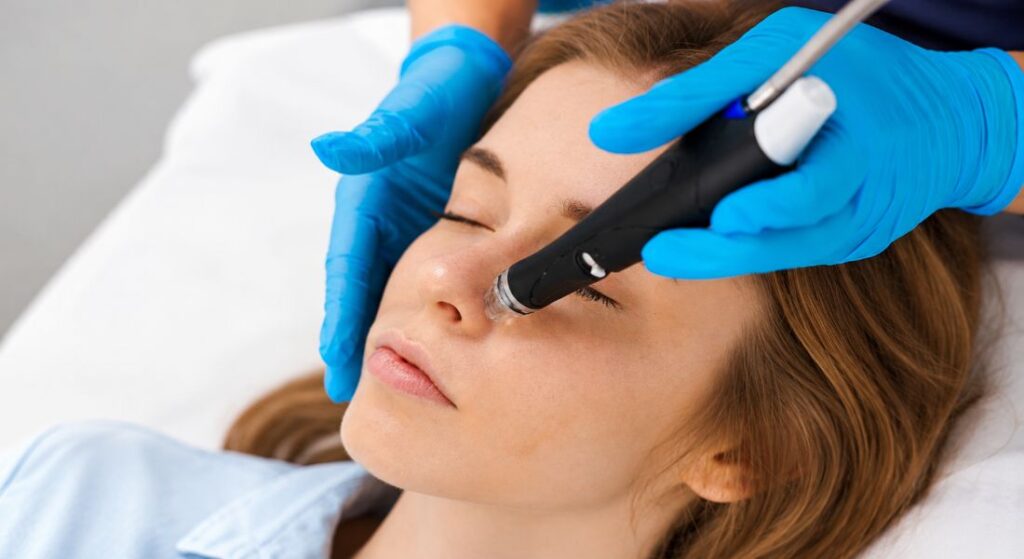
Blackheads develop when sebum and dead skin cells block your pores, creating small dark spots on your skin. HydraFacial may help you clear some of this build-up through gentle exfoliation and suction-based extraction, leaving your complexion looking smoother.
However, blackheads can return because your skin continues producing oil. You should also avoid excessive extraction, as irritating your skin may lead to redness and unwanted dark marks.
Can HydraFacial Reduce Excess Oil?
HydraFacial can help you remove excess surface oil and reduce shine, leaving your skin feeling cleaner after treatment. Certain products, including salicylic acid formulations, can also help you manage oil and pore congestion.
However, it won’t permanently reduce the amount of sebum your skin produces. You still need a gentle skincare routine to manage excess oil without stripping your skin or damaging its natural barrier.
Evidence Note
Acne develops through several interacting factors, including increased sebum production, blocked hair follicles, bacteria and inflammation. Hormonal changes and individual skin characteristics can also influence how much oil your skin produces.
HydraFacial may remove oil and debris from your skin’s surface, but this does not mean it corrects the underlying causes of acne or permanently reduces sebaceous gland activity. If you experience persistent congestion or recurring breakouts, your clinician may recommend evidence-based skincare or medical treatment alongside any cosmetic procedures.
Can HydraFacial Help Acne-Prone Skin?
If blackheads and small whiteheads are your main concern, you may notice less visible congestion after HydraFacial. But clearer-looking pores are not the same as controlling acne, particularly if you also develop inflamed spots. Ask your practitioner whether extraction is appropriate for your skin alongside your usual acne treatment.
The research is still limited. The small study explained in the Research Insight below tested HydraFacial together with blue LED light, so it cannot tell us whether the facial’s cleansing and extraction steps would have the same effect on their own.
What About Active Inflammatory Acne?
When you have red, swollen or painful spots, your skin needs more careful treatment than simple pore congestion. Aggressive exfoliation or extraction may increase irritation and discomfort, particularly when your acne is already inflamed.
For widespread breakouts, painful nodules or recurring cyst-like spots, you may need medical acne treatment rather than a facial. HydraFacial may complement your skincare routine in selected cases, but it shouldn’t replace appropriate treatment or delay medical advice.
Research Insight
A 2022 study published in the Journal of Clinical and Aesthetic Dermatology investigated HydraFacial Clarifying Treatment in 20 adults with mild-to-moderate acne. Participants underwent up to six treatments over twelve weeks, including cleansing, exfoliation, suction-based extraction and blue LED light therapy. Investigator assessments found that the proportion with clear or almost clear skin increased from 20% at baseline to 65% by the final treatment.
The study was small, had no control group and included a researcher affiliated with The HydraFacial Company. Eighteen participants completed all six treatments, but only eight attended the two-week follow-up. Because blue LED light was included, the results cannot isolate the effects of exfoliation and extraction. The increase from 20% to 65% should not be treated as your personal chance of clear skin. Larger independent studies are needed to assess longer-term results and compare this approach with established acne treatments.
Can HydraFacial Help Whiteheads?
Whiteheads develop when dead skin cells and oil block your pores, creating small bumps beneath the skin’s surface. HydraFacial may help you improve this congestion through gentle exfoliation and extraction, while salicylic acid can help loosen blocked pores.
However, not every whitehead is suitable for extraction, as repeated manipulation can irritate your skin. If you have persistent whiteheads, you may benefit more from a targeted acne treatment recommended by a clinician.
Can HydraFacial Improve Acne Scars?
HydraFacial may help you achieve smoother, more hydrated-looking skin, but it won’t remove established acne scars. Depressed or raised scars involve deeper structural changes that a superficial facial cannot substantially remodel.
If you want to improve your acne scars, you may need treatments such as microneedling, lasers or subcision, depending on your scar type and skin condition. You should therefore view HydraFacial as a skin-maintenance treatment rather than a scar-removal solution.
Can HydraFacial Help Acne Marks and Uneven Tone?
After acne clears, you may notice flat red or brown marks that make your skin tone look uneven. Red marks may be caused by post-inflammatory erythema, while brown marks may result from post-inflammatory hyperpigmentation. These marks are different from the depressed or raised scars that can develop after acne.
HydraFacial may temporarily improve your skin’s surface appearance, but it is unlikely to remove persistent acne marks on its own. If you continue developing breakouts, treating the underlying acne remains important. Your clinician may recommend targeted treatments, such as azelaic acid, to help manage acne and selected types of post-inflammatory pigmentation.
Does HydraFacial Have Benefits for Skin Texture?
If excess oil, dead skin cells and congestion make your skin feel rough, exfoliation and hydration may leave it feeling smoother. A 2024 imaging study of eight volunteers observed changes in the skin’s outer layer after hydradermabrasion, but no visible difference in dermal collagen fibres at the two-week follow-up.
The study did not test acne clearance or establish lasting improvement in texture. You may notice a temporary change in how your skin feels, but depressed or raised acne scars require a separate assessment and, where appropriate, more targeted treatment.
Is HydraFacial Suitable for Sensitive Acne-Prone Skin?
Acne-prone skin can also be dry or sensitive, so your practitioner should assess more than just oil production. Strong exfoliation may irritate your skin, particularly if you already use active ingredients such as retinoids, benzoyl peroxide or salicylic acid.
A gentler HydraFacial approach may be more suitable, depending on your skin’s condition and current routine. If your skin barrier is already irritated, postponing treatment may be better than risking further sensitivity.
Clinical Tip
Before your appointment, tell your practitioner if you use prescription retinoids, benzoyl peroxide, salicylic acid, oral isotretinoin or other acne medicines. Combining exfoliating treatments with an already irritating skincare routine may increase your risk of redness, dryness or damage to your skin barrier.
Ask whether any active skincare ingredients should be temporarily avoided before or after HydraFacial, and follow the advice specific to your treatment. Do not stop prescribed acne medication without consulting the clinician responsible for your care. If your skin is already sore, peeling or inflamed, postponing the facial may be more appropriate.
What Are the Possible Side Effects?
HydraFacial generally involves little downtime, but you may experience temporary redness, dryness, tightness, tingling or sensitivity. Your skin’s reaction can depend on the treatment intensity and whether you’re already using acne medication or exfoliating products.
If your skin is painful, inflamed or broken, your practitioner may recommend postponing treatment. Significant swelling, blistering, severe pain or persistent irritation should be medically assessed rather than treated as a normal post-facial reaction.
How Often Can You Have HydraFacial for Oily Skin?
There is no fixed schedule for HydraFacial, as the right frequency depends on your skin’s condition, treatment intensity and existing skincare routine. You may benefit from occasional sessions or a longer-term maintenance plan, depending on how your skin responds.
However, having treatments more frequently won’t necessarily give you clearer skin and may cause dryness or irritation. If you need regular sessions to manage persistent or severe acne, you may benefit from reviewing your treatment plan and considering medical acne treatments.
UK Guidance Note
In the UK, acne treatment depends on your skin condition and the severity of your breakouts. Established treatments may include topical retinoids, benzoyl peroxide or other medicines. If you have persistent acne, scarring or significant psychological distress related to your skin, your GP or dermatologist can assess whether specialist care may be appropriate.
HydraFacial is a cosmetic procedure and should not delay necessary medical acne treatment. Before booking, ask about the expected benefits, possible risks, alternatives, your practitioner’s qualifications and the products being used. You should also understand whether a medical assessment would be more appropriate for your skin concerns.
When Should You Choose Medical Acne Care Instead?
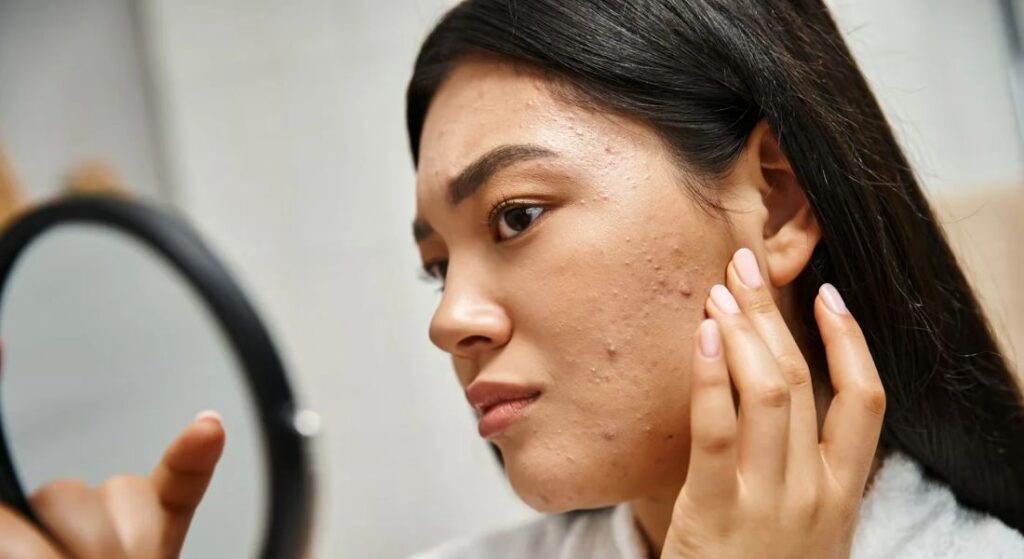
If you have repeated painful breakouts, deep nodules, developing scars or acne that is affecting your confidence or wellbeing, don’t rely on a facial as your main treatment. Your GP can assess the severity of your acne, discuss suitable medicines and consider specialist referral when needed.
HydraFacial may still be something to discuss for surface congestion once your skin has been assessed, but it cannot prevent future breakouts or permanently control oil production. Before paying for more sessions, consider whether your main concern is cosmetic shine or acne that needs ongoing medical care.
What Should You Consider Before Booking HydraFacial?
Consider whether your main concern is oily skin, blackheads or mild congestion, as these may respond better to HydraFacial than painful acne or significant scarring. More severe or persistent breakouts may need medical assessment.
Tell your practitioner about your current skincare products and ask how the treatment will be adjusted to suit your skin. Make sure you also understand the realistic results, as HydraFacial won’t permanently clear acne or shrink pores.
Myth vs Fact
| Myth | Fact |
| Blackheads develop because your skin is dirty. | They are caused by blocked pores, not poor hygiene. |
| HydraFacial permanently stops oily skin. | It may remove surface oil but does not permanently control sebum production. |
| HydraFacial permanently shrinks pores. | Pore visibility may improve temporarily, but natural pore size is not permanently changed. |
| HydraFacial can remove deep acne scars. | Established scars usually require more targeted treatment. |
| More frequent treatments always improve acne. | Excessive treatment may cause irritation without improving the underlying condition. |
Key Takeaways
1. HydraFacial may improve mild congestion, blackheads and surface oiliness.
2. Its results are generally temporary and vary between individuals.
3. A small acne study reported improvement, but stronger evidence is needed.
4. HydraFacial does not permanently reduce sebum production or pore size.
5. Active inflammatory acne and established scars may need medical treatment.
6. Your skin sensitivity, medication and treatment goals should guide suitability.
Frequently Asked Questions
1. Is HydraFacial good for oily skin?
HydraFacial may help remove excess surface oil, reduce shine and clear pore congestion through cleansing, exfoliation and controlled suction. However, it won’t permanently reduce your skin’s natural oil production.
2. Can HydraFacial help with clogged pores and blackheads?
Yes, HydraFacial may help clear surface build-up of oil, dead skin cells and debris, improving the appearance of blackheads and clogged pores. However, congestion can return as your skin continues producing oil.
3. Can HydraFacial reduce acne breakouts?
HydraFacial may help manage mild acne, particularly when blackheads and blocked pores are your main concerns. However, it is not a medical acne treatment and may not be suitable for persistent or severe breakouts.
4. Does HydraFacial help with active inflammatory acne?
You should be cautious if you have red, swollen or painful spots, as aggressive exfoliation and extraction may increase irritation. Widespread breakouts, painful nodules or recurring cyst-like spots may need medical acne treatment instead.
5. Can HydraFacial remove whiteheads?
HydraFacial may improve whiteheads through gentle exfoliation and extraction, while salicylic acid can help loosen blocked pores. However, repeated extraction can irritate your skin, so persistent whiteheads may need targeted acne treatment.
6. Can HydraFacial reduce acne scars and marks?
HydraFacial may improve hydration and surface texture, but it cannot remove established acne scars or substantially remodel deeper skin damage. Red or brown acne marks may also need targeted treatment, such as azelaic acid for post-inflammatory pigmentation.
7. Is HydraFacial suitable for sensitive acne-prone skin?
It may be suitable if your practitioner uses a gentler approach based on your skin’s condition. If you’re already using retinoids, benzoyl peroxide or salicylic acid, discuss your routine beforehand to reduce the risk of irritation.
8. What are the possible side effects of HydraFacial?
You may experience temporary redness, dryness, tightness, tingling or sensitivity after treatment. If you develop severe pain, significant swelling, blistering or persistent irritation, seek medical advice.
9. How often should you have HydraFacial for oily skin?
There is no fixed treatment schedule, as frequency depends on your skin condition, treatment intensity and existing skincare routine. More frequent sessions won’t necessarily improve your acne and may cause dryness or irritation.
10. Can HydraFacial replace your usual acne medication?
No. Even if your skin looks less oily or congested after treatment, HydraFacial does not address all the causes of acne. Continue medication as prescribed and ask your clinician about any changes to your routine around a facial.
Final Thoughts: HydraFacial for Acne-Prone and Oily Skin
If you’re hoping to reduce shine or clear occasional blackheads, HydraFacial may leave your skin feeling smoother and more refreshed. But the effect can be temporary, and a facial isn’t a substitute for the treatment you need if breakouts are painful, persistent or leaving scars. Think about the result that matters most to you before committing to repeat appointments.
If you’re considering a HydraFacial in London, the team at the London Medical & Aesthetic Clinic can answer your questions and help you explore whether the treatment may suit your skin.
References:
1. Storgard, R. et al. (2022) ‘Efficacy and Tolerability of HydraFacial Clarifying Treatment Series in the Treatment of Active Acne Vulgaris’, Journal of Clinical and Aesthetic Dermatology. Available at: https://pmc.ncbi.nlm.nih.gov/articles/PMC9762628/
2. Razi, S. et al. (2024) ‘Hydradermabrasion through the lens of Line-Field Confocal Optical Coherence Tomography’, Skin Research and Technology. Available at: https://pmc.ncbi.nlm.nih.gov/articles/PMC10983707/
3. Kim, H.J. and Kim, Y.H. (2024) ‘Exploring Acne Treatments: From Pathophysiological Mechanisms to Emerging Therapies’, International Journal of Molecular Sciences. Available at: https://www.mdpi.com/1422-0067/25/10/5302
4. Shucheng, H. et al. (2024) ‘Effects of 15% Azelaic Acid Gel in the Management of Post-Inflammatory Erythema and Post-Inflammatory Hyperpigmentation in Acne Vulgaris’, Dermatology and Therapy. Available at: https://pubmed.ncbi.nlm.nih.gov/38734843/
5. Renzi, M. et al. (2024) ‘Procedural and surgical treatment modalities for acne scarring: Part II’, Journal of the American Academy of Dermatology. Available at: https://www.sciencedirect.com/science/article/pii/S0190962222006788