


Breakouts, shaving irritation and dull-looking skin can be frustrating, even when you follow a consistent skincare routine. You may still notice spots around your beard, redness on your neck or a tired-looking complexion and wonder whether LED light therapy could help.
LED light therapy uses selected wavelengths of light to influence processes within your skin. It may help reduce some acne lesions and improve skin texture, although the evidence is stronger for acne than for shaving rash or general dullness. Understanding its benefits and limitations can help you decide whether it’s suitable for your skin concerns.
Why Do Men Experience Breakouts, Shaving Irritation and Dull Skin?
Your skin can be affected by hormones, shaving habits, environmental exposure and everyday skincare products. Testosterone can increase oil production, which may contribute to blocked pores and acne, while close shaving, excessive pressure or repeated razor strokes can cause irritation and ingrown hairs.
Your complexion may also look dull if your skin is dry, rough or uneven, with sun exposure, smoking, inadequate moisturising and ageing all playing a role. As you may experience several concerns at once, it’s important to understand their causes before deciding whether LED light therapy is suitable.
Clinical Tip
Before choosing LED light therapy, try to identify what’s causing your skin concerns. If you develop spots mainly after shaving, you may be dealing with razor irritation or ingrown hairs rather than acne. Consider using a guarded trimmer, shaving in the direction of hair growth and applying a gentle moisturiser. If you have persistent breakouts, painful bumps or dark marks, ask your practitioner whether LED therapy is suitable or whether another treatment would better address the underlying problem.
What Is LED Light Therapy and How Does It Work for Men’s Skin?
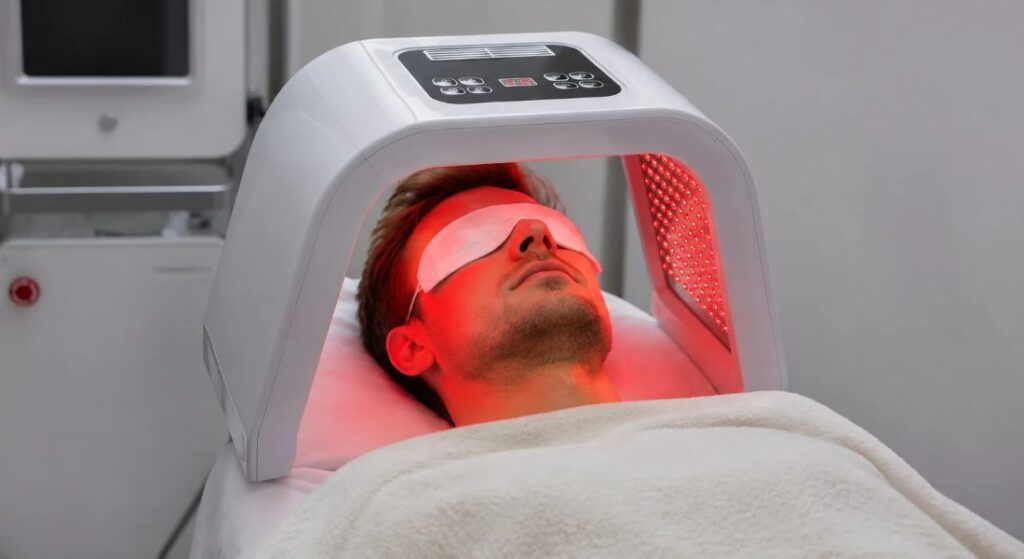
LED light therapy uses selected wavelengths of visible or near-infrared light to influence activity within your skin without deliberately damaging tissue. Blue light targets light-sensitive compounds produced by Cutibacterium acnes, while red and near-infrared light may help influence inflammation and processes involved in your skin’s repair.
During treatment, a mask or panel delivers light to your skin. LED and laser treatments use different technologies, so ask which light source and wavelengths your clinic will use. You may feel mild warmth or temporary sensitivity, but conventional LED therapy won’t remove your facial hair or physically clear blocked pores. Results depend on your skin’s response and the device used.
Which LED Light Colours May Benefit Your Skin?
If you’re concerned about breakouts, blue light (around 405 to 450 nanometres) may help reduce acne-associated bacteria and selected inflammatory spots. Red light (around 630 to 670 nanometres) may help with inflammation and support processes linked to collagen activity and your skin’s appearance.
Your practitioner may also recommend near-infrared light, sometimes combined with red light, to target concerns such as skin texture and signs of ageing. Although some devices offer green, yellow or amber light, evidence for many of their claimed benefits is less established, so your choice should depend on your skin concerns and the treatment’s supporting evidence.
Can LED Light Therapy Help Men With Acne Breakouts?
If you have mild to moderate acne, LED light therapy may help reduce visible spots. Blue light targets acne-associated bacteria, while red light may help reduce inflammation. A 2025 review found improvements in acne lesion counts with portable and home-use LED devices.
You may notice fewer breakouts after four to twelve weeks, although results vary. If you have painful cysts, deep acne or scarring, seek medical advice rather than relying on LED treatment alone.
Evidence Note
A 2025 systematic review published in JAMA Dermatology examined six studies involving 216 participants with mild to moderate acne. Researchers found that home-use red, blue and combined LED devices improved inflammatory and non-inflammatory acne lesions compared with control treatments, with benefits generally appearing after four to twelve weeks. However, the studies used different devices and schedules, so these findings don’t establish how well a particular professional LED treatment will work for you or how many appointments you may need.
Is Shaving Rash the Same as Acne or Ingrown Hair Bumps?
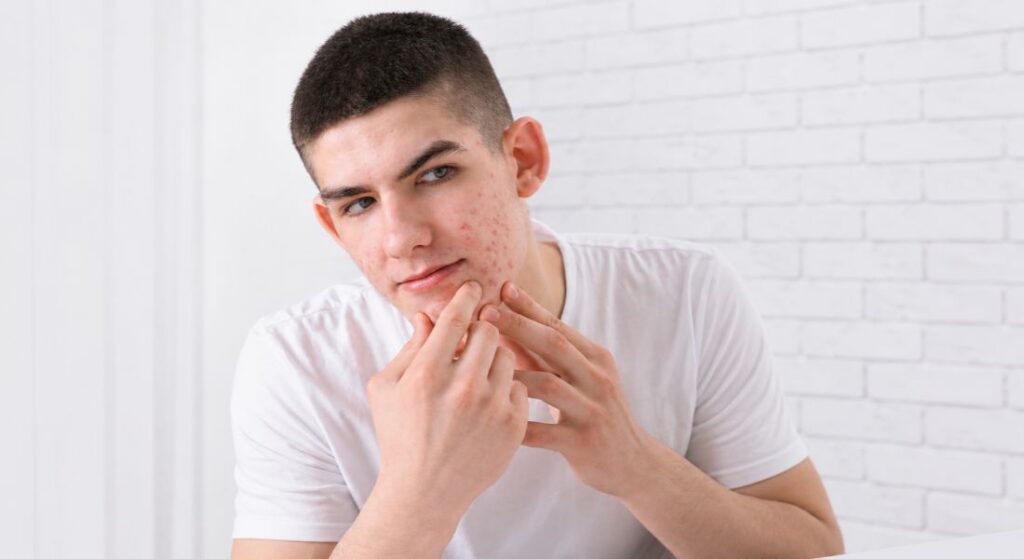
Shaving rash may cause redness, burning or stinging after shaving, while ingrown hairs can create inflamed bumps when cut hairs grow back into your skin. This can lead to pseudofolliculitis barbae, an inflammatory condition caused by trapped hairs rather than an infection. Folliculitis barbae is different because it usually involves infected hair follicles and may cause pus-filled spots around your beard and neck.
Acne has different causes, including blocked follicles and excess oil, although you can experience both conditions together. Identifying what’s causing your symptoms helps you choose the right treatment.
Can LED Light Therapy Reduce Shaving Rash and Irritation?
If shaving leaves your skin sore or red, red LED light may help influence inflammation and skin repair. However, there isn’t enough direct clinical evidence to show that it reliably treats shaving rash.
You may get more benefit from changing your shaving technique and avoiding irritating aftershaves or cleansers. LED therapy should only be considered a possible complementary approach, not an established cure.
Can LED Light Therapy Help Prevent Razor Bumps and Ingrown Hairs?
Razor bumps develop when cut hairs grow back into your skin, causing inflammation. Red LED light has not been proven to prevent these bumps, so you may benefit more from shaving in the direction of hair growth, avoiding close shaves and using a guarded trimmer.
If you keep developing ingrown hairs, your dermatologist may recommend medication or laser hair reduction. There’s limited evidence that LED therapy can treat or prevent these bumps.
Can LED Light Therapy Help With Beard-Area Spots and Folliculitis?
Spots beneath your beard can have several causes, including acne, ingrown hairs and folliculitis. Identifying the cause is important because LED light therapy may help some acne-related spots but is not an established treatment for bacterial folliculitis. You may therefore need a different approach depending on your symptoms.
1. Acne-related spots: Blue LED light may help reduce some mild-to-moderate acne breakouts.
2. Ingrown hairs: LED therapy does not address hairs growing back into your skin.
3. Folliculitis: Bacterial folliculitis may require medical treatment rather than LED sessions alone.
4. Shaving habits: Changing your shaving technique may help if irritation or ingrown hairs are contributing to your spots.
If your beard-area spots are painful, spreading or repeatedly return, speak to your GP or dermatologist. They can identify the likely cause and advise whether medication, shaving changes or another treatment would be more appropriate for you.
Can LED Light Therapy Improve Facial Redness and Inflammation?
Facial redness may result from acne, shaving irritation, rosacea or reactions to skincare products. Red LED light may help with inflammation linked to acne, but it isn’t proven to treat every cause of redness.
If your redness persists or causes discomfort, seek an assessment to identify the underlying cause. You may need a different treatment rather than LED therapy.
Can LED Light Therapy Make Dull-Looking Skin Appear Healthier?
If your skin looks tired, rough or uneven, red and near-infrared LED light may help improve its texture and appearance. A 2026 review of eight studies involving 365 participants reported improvements in several measures of facial rejuvenation, although the evidence had limitations.
You may notice smoother-looking skin after repeated sessions, but results aren’t guaranteed. If dryness or pigmentation is affecting your complexion, you may benefit more from a suitable moisturiser or targeted treatment.
Can LED Light Therapy Reduce Acne Marks, Scars and Signs of Ageing?
If you’ve developed dark marks or redness after acne or shaving bumps, LED therapy isn’t proven to remove established pigmentation. You also shouldn’t expect it to release deep acne scars or correct significant facial sagging.
You may notice modest improvements in early fine lines and skin texture with red or near-infrared light. However, if your main concern is persistent pigmentation or scarring, a dermatologist can help you find a more suitable treatment.
Research Insight
A 2026 systematic review published in Aesthetic Plastic Surgery examined eight studies involving 365 participants using at-home LED devices for facial rejuvenation. Researchers reported improvements in several measures of skin ageing, including texture, wrinkles and elasticity. However, treatment schedules varied, and participants with diverse skin tones were underrepresented. These findings suggest that red and near-infrared LED therapy may improve some aspects of your skin’s appearance, but they don’t guarantee the same results from every professional device.
Does LED Light Therapy Work for Different Skin Tones and Beard Types?
Your skin tone and history of dark marks matter when choosing LED treatment. Certain visible-light exposures, particularly blue light at sufficient doses, can contribute to pigmentation changes in darker skin tones. If you develop dark marks after acne, ingrown hairs or shaving irritation, ask your practitioner how they will assess your skin and select appropriate treatment settings.
Coarse or tightly curled beard hair can increase your risk of ingrown hairs. Dense facial hair might also affect how evenly light reaches the underlying skin, although this hasn’t been well studied for professional LED treatments. Your practitioner should consider your beard type, skin sensitivity and pigmentation history before recommending treatment.
UK Guidance Note
NICE guideline NG198 recommends established acne treatments, including suitable topical medicines, according to your acne severity and medical history. It also allows clinicians to consider photodynamic therapy for certain adults with moderate-to-severe acne when other treatments are unsuitable or ineffective. However, photodynamic therapy is not the same as conventional LED treatment, and NICE identifies a need for further research into physical treatments such as light devices. If you have persistent acne, scarring or painful breakouts, speak to your GP or dermatologist about appropriate treatment. You can discuss LED therapy as a possible additional option, but it shouldn’t replace established care.
What Happens During a Professional LED Light Therapy Session?
Your appointment usually starts with a skin assessment, including your acne, shaving concerns, skincare products and medical history. Your practitioner will cleanse your skin, position the LED mask or panel and provide suitable eye protection.
Treatment is generally comfortable, with sessions often lasting around 10 to 20 minutes, depending on the device. You can usually return to your normal activities afterwards, but make sure you understand your aftercare instructions and how to report any unexpected reaction.
How Many LED Light Therapy Sessions Might Men Need?
The number of LED sessions you need depends on your skin concern, the device and how you respond. Acne studies have reported improvements after four to twelve weeks, but this doesn’t establish a fixed number of professional appointments.
Your practitioner should review your progress rather than automatically recommending more sessions. As there’s no established LED schedule for shaving rash or ingrown hairs, you should have realistic expectations before purchasing a treatment package.
LED Light Therapy: Benefits for Common Men’s Skin Concerns
| Skin Concern | Potential LED Benefit | Main Limitation |
| Mild-to-moderate acne | May reduce some spots | Results vary |
| Shaving irritation | Possible soothing effect | Direct evidence is limited |
| Razor bumps | No proven preventive benefit | Doesn’t stop ingrown hairs |
| Beard-area folliculitis | Not an established treatment | May require medical treatment |
| Dull skin | May improve texture | Results aren’t guaranteed |
| Fine lines | Possible modest improvement | Repeated sessions may be needed |
Is LED Light Therapy Safe, and What Side Effects Should You Know About?
LED therapy is generally low risk when used appropriately, but you may experience temporary redness, dryness, irritation or mild discomfort. Your practitioner should provide eye protection suitable for the device and ask about medicines that increase light sensitivity or medical conditions, such as photosensitive lupus, that may make treatment unsuitable.
Avoid extending treatment beyond the recommended duration, as more exposure doesn’t guarantee better results. Stop treatment and seek advice if you develop significant pain, blistering or unusual eye symptoms.
How Can You Combine LED Light Therapy With a Simple Men’s Skincare Routine?
You can support your skin with a gentle cleanser, suitable moisturiser and daily broad-spectrum SPF 30 or higher. If shaving causes irritation, try shaving in the direction of hair growth and avoiding excessively close shaves.
For persistent acne, treatments such as benzoyl peroxide or topical retinoids may be more appropriate than relying on LED therapy alone. Before booking sessions at LMA Clinic, ask which light technology is used, what evidence supports it and whether it suits your skin concerns.
Myth vs Fact
| Myth | Fact |
| LED therapy can cure every type of acne. | It may improve some mild-to-moderate acne, but results vary. |
| Red LED light prevents ingrown beard hairs. | LED therapy hasn’t been proven to prevent razor bumps. |
| LED light removes facial hair. | Conventional LED treatment doesn’t remove your beard hair. |
| One session will make dull skin brighter. | Visible improvements generally require repeated treatment. |
| LED therapy removes deep acne scars. | Established scars may need other treatments. |
| More light exposure gives better results. | Treatment settings must follow the device’s safety guidance. |
Key Takeaways
1. LED therapy may help reduce mild-to-moderate acne breakouts.
2. Red light may improve some aspects of your skin’s texture.
3. Evidence for treating shaving rash and razor bumps remains limited.
4. LED therapy doesn’t remove facial hair or established deep scars.
5. Your skin tone, sensitivity and treatment settings matter.
6. A suitable skincare routine and professional assessment can support better results.
Frequently Asked Questions
1. Can LED light therapy help men with acne?
Yes, blue and red LED light may help reduce mild to moderate acne by targeting acne-associated bacteria and inflammation. You may notice improvements after four to twelve weeks, although results vary.
2. Which LED light colour is best for men’s skin?
Blue light may help if you have acne, while red light may influence inflammation and skin repair. Near-infrared light may help improve your skin’s texture and signs of ageing. The best choice depends on your skin concern.
3. Can LED light therapy reduce shaving rash?
Red LED light may help influence inflammation, but there isn’t enough clinical evidence to confirm that it reliably treats shaving rash. Improving your shaving technique and avoiding irritating products may be more helpful.
4. Can LED light therapy prevent razor bumps and ingrown hairs?
No, LED therapy hasn’t been proven to prevent ingrown hairs or razor bumps. You may lower your risk by shaving in the direction of hair growth and avoiding excessively close shaves.
5. Can LED light therapy treat spots beneath your beard?
LED therapy may help reduce acne-related spots beneath your beard, but it isn’t proven to treat bacterial folliculitis or ingrown hairs. If your spots are painful, spreading or persistent, ask a healthcare professional to assess them.
6. Can LED light therapy improve facial redness?
Red LED light may help with acne-related inflammation, but it isn’t proven to treat every cause of your facial redness. If your redness persists, ask a clinician whether rosacea, shaving irritation or another condition may be responsible.
7. Can LED light therapy make dull skin look healthier?
Red and near-infrared LED light may improve your skin’s texture and appearance after repeated sessions. However, your results aren’t guaranteed, and dryness or pigmentation may need more targeted skincare.
8. Does LED light therapy work for different skin tones and beard types?
Your skin tone, pigmentation history and beard density can influence how your skin responds to treatment. Your practitioner should consider these factors when selecting suitable wavelengths and settings.
9. How many LED light therapy sessions do men need?
The number of sessions depends on your skin concern, the device and your response to treatment. Although acne improvements have been reported after four to twelve weeks, there isn’t an established schedule for shaving rash or ingrown hairs.
10. Is LED light therapy safe for men, and are there any side effects?
LED therapy is generally low risk, but you may experience temporary redness, dryness, irritation or mild discomfort. Suitable eye protection and checks for medicines or conditions that increase light sensitivity are important.
Final Thoughts: LED Light Therapy for Men
LED light therapy may help men manage mild to moderate acne and improve aspects of skin texture, but its benefits for shaving rash, razor bumps, folliculitis and persistent facial redness are less established. Understanding what’s causing your skin concerns is important, as changes to your shaving habits, skincare routine or other targeted treatments may be more effective.
If you’re considering LED light therapy in London, you can speak with the team at London Medical & Aesthetic Clinic about whether the treatment is suitable for your skin, what results you might expect and any concerns you may have.
References:
1. Ershadi, S. and Barbieri, J.S. (2025) ‘At-Home LED Devices for the Treatment of Acne Vulgaris: A Systematic Review and Meta-Analysis’, JAMA Dermatology, 161(5), pp. 552–555. Available at: https://pmc.ncbi.nlm.nih.gov/articles/PMC11883593/
2. Das, R.K. et al. (2026) ‘Efficacy and Safety of At-Home Light-Emitting Diode Photobiomodulation for Facial Rejuvenation: A Systematic Review’, Aesthetic Plastic Surgery. Available at: https://pubmed.ncbi.nlm.nih.gov/42875609/
3. Parać, E. et al. (2023) ‘Acne-like Eruptions: Disease Features and Differential Diagnosis’, Cosmetics, 10(3), 89. Available at: https://www.mdpi.com/2079-9284/10/3/89
4. He, X. et al. (2023) ‘The Emerging Role of Visible Light in Melanocyte Biology and Skin Pigmentary Disorders: Friend or Foe?’, Journal of Clinical Medicine, 12(23), 7488. Available at: https://www.mdpi.com/2077-0383/12/23/7488
5. Mavranezouli, I. et al. (2022) ‘A systematic review and network meta-analysis of topical pharmacological, oral pharmacological, physical and combined treatments for acne vulgaris’, British Journal of Dermatology, 187(5), pp. 639–649. Available at: https://academic.oup.com/bjd/article-abstract/187/5/639/6966388