


CO₂ laser and pulsed dye laser (PDL) treat different features of rosacea, so they are not interchangeable. If your main concern is persistent redness or visible blood vessels, PDL may be considered because it targets haemoglobin within blood vessels. Other vascular treatments, including IPL or KTP laser, may also be appropriate depending on the vessel pattern, skin characteristics and available expertise.
Ablative CO₂ laser may be used to reduce and reshape established phymatous tissue, particularly rhinophyma. You should have a thorough assessment so that the clinician can identify the feature requiring treatment, discuss appropriate alternatives and explain the expected benefits, limitations and risks of each option.
What Are the Main Differences Between the Two Lasers?
PDL and CO₂ laser work in different ways and are designed to treat different rosacea symptoms. If your main concern is facial redness or visible blood vessels, PDL may target that feature more directly than an ablative CO₂ laser. If you have established rhinophyma, CO₂ laser may be considered as one of several tissue-reduction techniques.
The recovery is also different. You can usually expect less downtime after PDL, while CO₂ laser requires a longer healing period because it creates a controlled wound in the skin. The proposed treatment should address the specific feature affecting you, and the clinician should explain why it is being recommended, which alternatives are available and which symptoms it is unlikely to improve.
How Does Pulsed Dye Laser Work?
PDL delivers light at a wavelength that is absorbed primarily by oxyhaemoglobin within superficial blood vessels. The absorbed energy heats the targeted vessels through selective photothermolysis. This may reduce the appearance of persistent erythema and telangiectasia over time. Your practitioner will adjust the laser settings to suit your skin type and the pattern of your rosacea.
During treatment, you may feel a brief snapping or stinging sensation, although contact cooling, cryogen spray or another cooling method may be used according to the device and treatment protocol to reduce epidermal heat and procedural discomfort. Unlike CO₂ laser, PDL does not remove layers of skin, so you can usually expect a shorter recovery period. Your results will depend on the severity of your rosacea, and you may need more than one session to achieve the best improvement.
CO₂ Laser and Pulsed Dye Laser Compared
| Feature | Pulsed dye laser | CO₂ laser |
| Main target | Haemoglobin within blood vessels | Water within skin and thickened tissue |
| Main rosacea use | Persistent redness and visible vessels | Rhinophyma and phymatous tissue overgrowth |
| Removes skin tissue? | No ablative tissue removal | Yes, at ablative settings |
| Typical treatment plan | Often a course of sessions | May involve one main procedure or further refinement |
| Early recovery | Redness, swelling or bruising | Rawness, oozing, crusting, swelling and wound care |
| Main risks | Purpura, blistering and pigment changes | Infection, delayed healing, pigment changes and scarring |
| Does it cure rosacea? | No | No |
| Main limitation | Cannot remove thickened tissue | Does not directly treat vascular redness |
The treatments address different features and should not be viewed as competing versions of the same procedure.
How Does CO₂ Laser Work?
CO₂ laser works by targeting the water within your skin, allowing the practitioner to remove or reshape tissue in a controlled way. If you have thickened skin or rhinophyma, the laser can gradually reduce the excess tissue while also helping to control bleeding during the procedure. Your practitioner will choose a fractional ablative or fully ablative approach according to the extent of the tissue overgrowth. These approaches remove different amounts of tissue and are not interchangeable.
Unlike pulsed dye laser, CO₂ laser is designed to resurface or remove tissue rather than target blood vessels. You may also benefit from collagen remodelling as your skin heals, but you should not expect CO₂ laser to be the first choice if your main concern is facial redness or visible blood vessels.
Which Rosacea Symptoms Can PDL Improve?
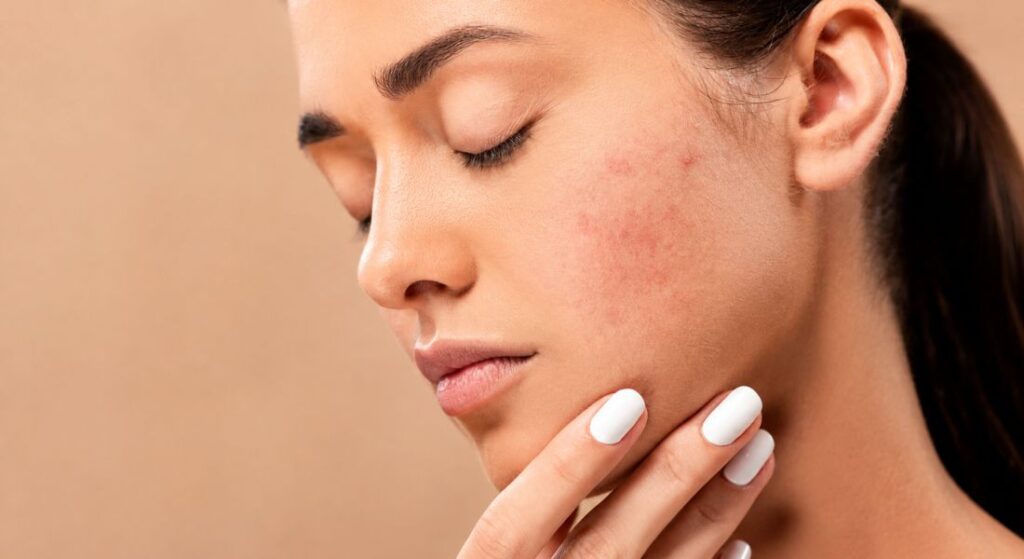
PDL is most commonly used when your main concerns are persistent facial redness and visible blood vessels. It can help reduce background redness and make thread veins less noticeable, and some people also notice an improvement in burning or skin sensitivity. Your results will depend on the type and depth of the blood vessels being treated.
You may need more than one treatment session because not all vessels respond at the same time. You should also remember that PDL does not cure rosacea, so new blood vessels and redness can develop over time, making ongoing management important.
Which Rosacea Symptoms Can CO₂ Laser Improve?
CO₂ laser is mainly used when your rosacea has caused thickened skin, particularly rhinophyma. If you have a bulbous nose, enlarged pores or irregular tissue caused by phymatous rosacea, the laser can remove excess tissue and improve the shape and contour of your nose. In some cases, you may also notice better airflow if tissue overgrowth has narrowed your nostrils.
CO₂ laser is not usually recommended if your only concern is facial redness. You should have a clear structural problem before considering this treatment, and your practitioner should explain why CO₂ laser is more appropriate for you than a vascular laser or another treatment option.
Why Is PDL Usually More Appropriate for Facial Redness?
Between these two lasers, PDL is usually more appropriate for facial redness because it targets the blood vessels that cause persistent redness in rosacea. Instead of removing layers of skin, it delivers energy directly to the unwanted vessels, helping to reduce redness while causing less damage to the surrounding tissue. You can usually expect a shorter recovery compared with CO₂ laser.
CO₂ laser is designed to remove or reshape tissue rather than treat blood vessels, so it is not normally recommended if your main concern is redness alone. You should have your skin assessed carefully, as you may benefit from PDL, another vascular laser or IPL depending on the type of redness and the pattern of your rosacea.
Why Is CO₂ Laser Usually More Appropriate for Rhinophyma?
Between these two lasers, CO₂ laser is usually more appropriate for rhinophyma because it removes the excess tissue that causes your nose to become enlarged, uneven or bulbous. Unlike vascular lasers, which mainly treat redness, CO₂ laser can reshape your nose by removing thickened tissue in a controlled and precise way. This allows your practitioner to improve the contour while preserving as much healthy tissue as possible.
CO₂ laser also helps control bleeding during the procedure, making it easier for your practitioner to sculpt the treated area. You should know that it is one of several treatment options for rhinophyma, and your practitioner will recommend the most suitable approach based on the severity of your condition and your individual needs.
Can Either Laser Treat Papules and Pustules?
Neither PDL nor CO₂ laser is usually the first treatment for rosacea papules and pustules. If your main concern is inflammatory spots, your practitioner will usually recommend topical or oral medication to control the inflammation before considering any laser treatment. You may also need to improve your skincare routine and avoid personal triggers that make your rosacea worse.
Once your rosacea is more stable, you may benefit from laser treatment for any remaining redness or thickened tissue. Your practitioner should assess your skin carefully and explain whether PDL, CO₂ laser or another treatment is the most appropriate option for your specific symptoms.
What Results Can You Expect from PDL?

PDL can noticeably reduce facial redness and visible blood vessels, but you should not expect your skin to become completely free of redness after one treatment. You may need several sessions before you see the best results, and your improvement will depend on the severity of your rosacea and how your skin responds to treatment.
You may also notice temporary redness, swelling or bruising before the final result becomes visible. Although PDL can provide long-lasting improvement, it does not prevent future flushing or new blood vessels from developing, so you may need maintenance treatment if your symptoms return.
What Results Can You Expect from CO₂ Laser?
CO₂ laser can significantly improve the shape and contour of your nose if you have rhinophyma or thickened skin caused by rosacea. After the excess tissue is removed, you may notice a smoother and more balanced appearance, although your skin will be red and swollen while it heals. You should understand that the final result develops gradually over several weeks to months as your skin continues to recover.
You should also have realistic expectations, as some enlarged pores or surface irregularities may remain. Although the results are often long-lasting, CO₂ laser does not cure rosacea, so you may still need ongoing treatment and regular follow-up to help manage the condition.
Evidence Note
PDL evidence mainly evaluates reductions in erythema and visible vessels, while CO₂ studies mainly evaluate tissue reduction and contour improvement in rhinophyma. Because the treatments address different outcomes, there is little meaningful head-to-head evidence showing that one is generally better than the other. The appropriate treatment depends on the feature being treated.
What Does Each Treatment Feel Like?
During PDL treatment, you may feel a brief snapping or stinging sensation as each laser pulse is delivered. Cooling is often used to improve your comfort, and most sessions are relatively quick, depending on the size of the area being treated. You can usually return to your normal routine soon afterwards.
CO₂ laser treatment generally requires more pain control because it removes layers of tissue. You may receive local anaesthetic or another form of pain relief, depending on the procedure. After treatment, you can expect the area to feel hot, sore or similar to a graze, and your recovery will depend on the depth and extent of the treatment.
How Do Recovery and Downtime Compare?
PDL usually has a shorter recovery period because it targets blood vessels without removing the surface of your skin. CO₂ laser requires more healing time because it creates a controlled wound while removing or reshaping thickened tissue.
1. PDL Recovery: You may experience temporary redness, swelling or bruising, but you can often return to your usual non-strenuous activities quickly.
2. CO₂ Laser Recovery: You can expect redness, swelling, soreness, crusting and detailed wound care while the treated skin heals.
3. Time Away From Activities: PDL usually involves less disruption, while CO₂ laser may require you to plan time away from work and social events.
4. Aftercare Requirements: You should protect your skin from sunlight and follow your practitioner’s specific cleansing, skincare and recovery instructions after either treatment.
Your recovery will depend on the treatment settings, the size of the area and how your skin responds. Your practitioner should explain the likely downtime before treatment so you can prepare properly and recognise any symptoms that require medical advice.
What Risks and Side Effects Should You Consider?
PDL commonly causes temporary redness, swelling and bruising, while CO₂ laser carries a higher risk of prolonged redness, infection, pigment changes and scarring because it removes the skin’s surface. You should understand that neither treatment is completely risk-free, although serious complications are uncommon when the procedure is performed by an experienced practitioner.
You should also receive clear aftercare instructions and know when to seek medical advice. If you notice increasing pain, pus, spreading redness or delayed healing, you should contact your clinic promptly so the problem can be assessed and treated early.
How Do Skin Tone and Pigmentation Affect Treatment?
Your skin tone plays an important role in choosing the safest laser settings. If you have darker skin, your practitioner may use more cautious settings because your skin has a higher risk of developing temporary dark or light patches after treatment. You should also tell your practitioner if you have previously developed pigmentation changes after cuts, spots or cosmetic procedures.
Both PDL and CO₂ laser can be used in suitable patients, but they require careful planning. You should have an individual assessment so your practitioner can select the safest treatment approach and reduce the risk of pigmentation changes while achieving the best possible result.
How Many Treatments Might You Need?
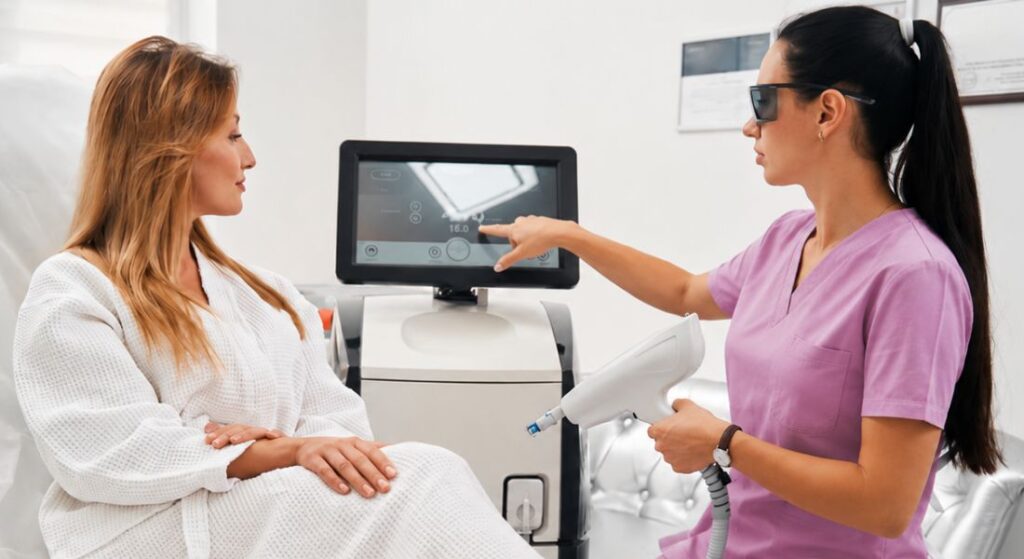
You may need several PDL sessions to reduce facial redness and visible blood vessels, as the exact number depends on the severity of your rosacea and how your skin responds to treatment. Your practitioner will usually leave enough time between sessions so your skin can heal and your progress can be properly assessed.
CO₂ laser for rhinophyma is often performed as a single major procedure, although you may need additional sessions if your condition is extensive or further refinement is required. You should discuss your personalised treatment plan with your practitioner rather than expecting the same number of sessions as someone else.
How Will Your Clinician Choose Between Them?
Your clinician will first identify the main feature of your rosacea before recommending a treatment. If your main concern is persistent redness or visible blood vessels, you may be a better candidate for PDL. If you have thickened skin or rhinophyma, CO₂ laser may be the more appropriate option. You may also have more than one rosacea feature, so your treatment plan should be tailored to your individual needs.
In some cases, you may benefit from a staged approach rather than having both treatments at the same time. Your clinician should also consider your skin tone, medical history, healing ability and any tendency to scar before recommending the safest and most effective treatment for you.
UK Guidance Note
UK professional guidance requires the practitioner responsible for a cosmetic intervention to explain the expected benefits, limitations, alternatives, recovery and material risks. You should receive enough information and time to make a voluntary decision, and the treatment should be performed only within the practitioner’s competence.
Myth vs Fact
| Myth | Fact |
| One laser treats every feature of rosacea. | Different rosacea features require different treatments. |
| PDL removes thickened rhinophyma tissue. | It targets vessels and cannot adequately debulk substantial tissue. |
| CO₂ laser is the best option for facial redness. | Vascular devices such as PDL are generally more appropriate for vascular redness. |
| PDL has no downtime. | Redness, swelling and purpura or bruising may occur. |
| Fractional and fully ablative CO₂ are interchangeable. | They treat different amounts and depths of tissue. |
| One treatment permanently cures rosacea. | Rosacea remains chronic and symptoms or tissue changes may recur. |
Key Takeaways
1. PDL and CO₂ laser treat different rosacea features.
2. PDL mainly targets persistent vascular erythema and visible telangiectasia.
3. Ablative CO₂ laser mainly removes established phymatous tissue such as rhinophyma.
4. PDL does not adequately debulk substantial tissue overgrowth.
5. CO₂ laser is not generally selected for uncomplicated vascular redness.
6. Fractional and fully ablative CO₂ techniques are not interchangeable.
7. PDL may cause redness, swelling, purpura, blistering or pigment changes.
8. Ablative CO₂ treatment requires wound care and has risks including infection, delayed healing, pigment change and scarring.
9. Neither treatment cures the underlying rosacea.
Frequently Asked Questions
1. Which laser is better for rosacea, CO₂ laser or pulsed dye laser?
It depends on your symptoms. Pulsed dye laser (PDL) is generally more appropriate than CO₂ laser for persistent redness and visible blood vessels, while CO₂ laser is mainly used for rhinophyma, where the skin has become thickened and irregular. Your clinician will recommend the most suitable option based on your skin changes.
2. Can CO₂ laser treat facial redness?
CO₂ laser is not usually the first choice for facial redness alone. Vascular lasers such as PDL are designed to target blood vessels more directly, making them more appropriate than ablative CO₂ laser for reducing redness and thread veins.
3. Is pulsed dye laser effective for rhinophyma?
PDL may reduce redness around the nose, but it cannot remove thickened tissue caused by rhinophyma. When significant tissue overgrowth is present, CO₂ laser or another tissue-removal procedure is generally more appropriate.
4. Which treatment has the shorter recovery time?
PDL usually has a shorter recovery, although temporary redness, swelling or bruising may occur and purpura can last longer depending on the settings used. CO₂ laser creates a controlled wound, so healing takes longer and requires more detailed aftercare.
5. How many treatment sessions are usually needed?
PDL often requires a course of treatments to achieve the best improvement in redness and visible blood vessels. CO₂ laser for rhinophyma may sometimes be completed in one procedure, although additional treatment may be needed depending on the severity of the condition.
6. Can you have both CO₂ laser and pulsed dye laser?
Yes. If you have both rhinophyma and persistent redness, your clinician may recommend CO₂ laser to reshape thickened tissue and PDL later to improve remaining redness or visible blood vessels once healing is complete.
7. Are the results of these laser treatments permanent?
Both treatments can provide long-lasting improvements, but they do not cure rosacea. New blood vessels or tissue changes may develop over time, so some people require maintenance treatment or ongoing medical management.
8. Which treatment is more uncomfortable?
PDL is generally associated with mild discomfort, often described as a snapping sensation against the skin. CO₂ laser is a more intensive procedure, so it usually requires more extensive pain control or anaesthesia and involves greater discomfort during the healing period.
9. Are there risks with both laser treatments?
Yes. PDL may cause temporary redness, swelling or bruising, while CO₂ laser carries additional risks such as infection, pigment changes and scarring because it removes the skin’s surface. Choosing an experienced practitioner and following aftercare instructions can help reduce these risks.
10. How do I know which laser is right for me?
The right treatment depends on the type of rosacea you have rather than the diagnosis alone. A thorough consultation should assess whether your main concern is redness, visible blood vessels or thickened skin before recommending the most appropriate laser.
Final Thoughts: Choosing the Right Laser for Your Rosacea Concerns
CO₂ laser and pulsed dye laser may both play a role in rosacea management, but they are designed to treat different skin changes. If your main concern is persistent redness or visible blood vessels, a vascular laser such as PDL is often the more appropriate option. If rosacea has caused thickened, irregular skin or rhinophyma, CO₂ laser may provide the structural improvement you are looking for.
If you are considering C02 laser treatment in London, contact London Medical & Aesthetic Clinic to discuss your suitability and treatment options.
References:
1. Szwach, J., Szwajkowski, M., Makówka, J., Pyrkosz, J., Łyko, M., Grzech-Leśniak, K. and Jankowska-Konsur, A. (2026) ‘Laser-based therapies in rosacea: a comprehensive review of mechanisms, clinical efficacy, and future directions’, Journal of Clinical Medicine, 15(5), article 1771. Available at: https://pmc.ncbi.nlm.nih.gov/articles/PMC12986484/
2. Zhai, Q. et al. (2024) ‘Meta-analysis of the efficacy of intense pulsed light and pulsed-dye laser therapy in the management of rosacea’, Journal of Cosmetic Dermatology, 23(12), pp. 3821–3827. Available at: https://pmc.ncbi.nlm.nih.gov/articles/PMC11626304/
3. Chauhan, R., Loewenstein, S.N. and Hassanein, A.H. (2020) ‘Rhinophyma: prevalence, severity, impact and management’, Clinical, Cosmetic and Investigational Dermatology, 13, pp. 537–551. Available at: https://pmc.ncbi.nlm.nih.gov/articles/PMC7429105/
4. Kang, B.Y. et al. (2025) ‘Consensus statement on the prevention and management of complications of fully ablative laser resurfacing of the face’, Lasers in Surgery and Medicine, 57(6), pp. 477–489. Available at: https://pubmed.ncbi.nlm.nih.gov/40495549/
5. Madan, V., Ferguson, J.E. and August, P.J. (2009) ‘Carbon dioxide laser treatment of rhinophyma: a review of 124 patients’, British Journal of Dermatology, 161(4), pp. 814–818. Available at: https://pubmed.ncbi.nlm.nih.gov/19624541/
6. General Medical Council (2024) ‘Guidance for doctors who offer cosmetic interventions’. Updated 13 December 2024. Available at: https://www.gmc-uk.org/professional-standards/the-professional-standards/cosmetic-interventions