



If you’re considering Dermapen, it is natural to look at before-and-after photos and wonder whether your own skin could change in the same way. You may be hoping for smoother texture, softer acne scars or less noticeable fine lines, but Dermapen results usually develop gradually rather than appearing immediately after treatment.
Your results will depend on your skin, the concern you want to improve and the treatment plan recommended for you. Before-and-after photographs can be useful for showing the type of change that may be possible, but they cannot predict exactly how your own skin will respond.
What Is Dermapen and How Does It Work?
Dermapen is an automated microneedling device that uses fine needles to create controlled micro-injuries in your skin. This triggers your skin’s natural healing process and encourages collagen production over time.
The treatment does not change your skin instantly, as the repair process continues after your session. Your treatment depth can also be adjusted to suit your skin concern, including different types of acne scars.
Evidence Note
Most published research has investigated microneedling as a treatment category rather than the exact Dermapen device and protocol used by every clinic. The evidence discussed in this article therefore helps explain what microneedling may achieve generally. It should not be interpreted as evidence that every Dermapen device, treatment depth or treatment course will produce the same results.
What Does Your Skin Look Like Immediately After Dermapen?
Immediately after Dermapen, your skin will usually look pink or red, similar to mild sunburn. You may also notice mild swelling, sensitivity or occasional pinpoint bleeding, depending on the treatment depth and area treated.
This reaction is a normal part of the healing process and is not your final result. Your skin will gradually settle over the next few days as it starts to repair itself.
What Changes Can You See During the First Week?
During the first few days, your redness and sensitivity should start to settle, although your skin may feel dry, tight or slightly rough. You may notice a fresher or smoother appearance, but these early changes do not show your final result.
Your skin is still healing and beginning the collagen remodelling process, which takes longer. Follow your aftercare advice, protect the treated skin from excessive sun exposure and avoid harsh exfoliation or potentially irritating active skincare until your practitioner advises that it is appropriate to restart them.
Clinical Tip
Do not judge your result while your skin is still red, dry or mildly swollen. Wait until these temporary effects have settled, and compare photographs taken under similar lighting and camera conditions rather than relying on how your skin looks during early healing.
When Do Dermapen Results Start Becoming Noticeable?
You may notice some smoother or more even-looking skin within the first few weeks, but your main results develop gradually as collagen remodelling continues. Fine lines and scars may become less noticeable over the following weeks and months.
How Can Skin Texture Change?
Dermapen can gradually make uneven skin texture look smoother by encouraging your skin’s natural repair and collagen remodelling. You may notice a more even surface, although deeper scarring usually takes longer to improve.
What Can Dermapen Do for Acne Scars?
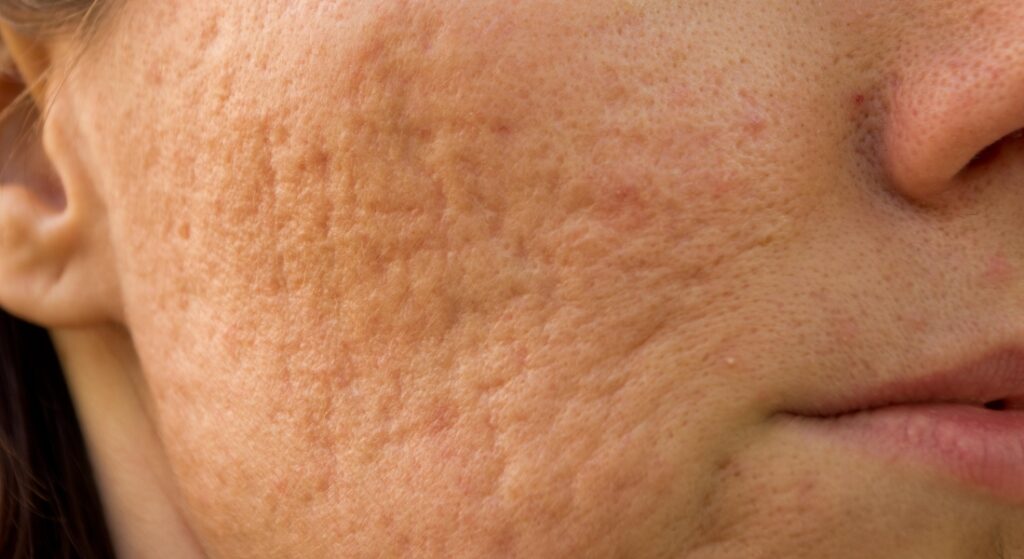
Dermapen may help make some atrophic (depressed) acne scars look softer and less noticeable by encouraging collagen remodelling. It may be particularly useful for certain depressed scars, although different scar types can respond differently.
Your result will depend on the type, depth and number of scars you have. The aim is usually to improve the appearance of your skin rather than remove acne scars completely.
Do Different Types of Acne Scars Respond Differently?
Rolling, boxcar and ice-pick scars (narrow, deep scars) have different shapes and depths, so they may not respond equally to microneedling. Some depressed scars can become softer or less noticeable, while deeper or more tightly tethered scars may require another treatment or a combination approach.
This is why scar assessment matters before starting treatment. Your practitioner should look at the type, depth, location and extent of your scarring rather than assuming that one Dermapen protocol will produce the same improvement across every scar.
Should Active Acne Be Treated Before Dermapen for Scars?
Microneedling for acne scarring is generally aimed at established scars rather than actively inflamed or infected spots. If you have painful pustules, an active skin infection or a herpes outbreak in the treatment area, Dermapen may need to be delayed until the skin has been assessed and the active problem has settled.
Treating active acne and treating the scars it has left behind are different goals. If you still develop frequent inflammatory breakouts, your practitioner may recommend controlling the active acne first to reduce irritation and the risk of developing further scars.
Why Do Acne Scars Usually Need More Than One Session?
Acne scar improvement is gradual because your skin needs time to remodel collagen after each Dermapen treatment. You may need several sessions to build on the changes and achieve a more noticeable improvement.
The number of sessions you need depends on your scar type, depth and how your skin responds. Your practitioner can review your progress between treatments and decide whether further Dermapen sessions or another approach would be more suitable.
Can Dermapen Improve Fine Lines?
Dermapen may help soften some fine lines by encouraging collagen production and improving your skin’s texture. Results usually develop gradually as your skin heals and remodels.
It is less likely to remove deeper lines caused by facial movement, volume loss or changes in facial structure. Your practitioner can assess the cause of your lines and decide whether Dermapen is suitable for you.
Evidence Note
A clinical study of 35 adults found improvement in facial and neck fine lines after four monthly microneedling treatments, with assessment continuing after the treatment course. However, this was a relatively small single-centre study, so results should not be treated as a guaranteed outcome for every patient.
Will Your Skin Look Firmer?
Dermapen may make your skin look slightly firmer by improving texture and supporting collagen remodelling. The effect develops gradually rather than creating an immediate tightening effect.
It is not designed to remove significant loose skin or replace surgical procedures. Your results are more likely to show improved skin quality than major changes to your facial shape.
Can Dermapen Make Pores Look Smaller?

Some people may notice that enlarged pores look less prominent as overall skin texture improves, but evidence specifically for pore reduction with standard microneedling is more limited than the evidence for acne scars. Dermapen cannot remove pores, and any improvement is usually a change in their appearance rather than their disappearance.
Your pore appearance can also be affected by oil production, genetics and sun damage. If these factors are contributing to your concern, you may need other treatments alongside Dermapen.
How Might Your Overall Skin Quality Change?
Dermapen may improve several aspects of your skin, including texture, firmness, fine lines and overall smoothness. Because these changes can happen together, your skin may appear smoother or more even in texture rather than dramatically different in one specific area.
Your results usually develop gradually as your skin heals and remodels. Instead of expecting to look years younger, focus on whether the particular concerns you wanted to improve have become less noticeable.
What Changes Can Dermapen Realistically Make?
| Concern | Realistic expectation |
| Uneven texture | May become smoother gradually |
| Atrophic acne scars | Some depressed scars may become softer or less noticeable |
| Fine lines | May soften modestly as collagen remodelling develops |
| Skin firmness | Subtle improvement may occur, but it is not a lifting procedure |
| Enlarged pores | May look less prominent in some people, but evidence is less established |
| Deep wrinkles or major skin laxity | Usually require a different or additional treatment |
| Acne scars overall | Improvement rather than complete removal is the realistic goal |
The degree of improvement depends on your starting skin condition, treatment settings, number of sessions and individual healing response.
How Many Dermapen Sessions Might You Need?
The number of Dermapen sessions you need depends on your skin, the concern being treated and how well you respond. Some people may notice improvement after one session, while others may need a course of treatments.
Your practitioner should allow enough time between sessions for your skin to recover and review your progress. You should not assume that a fixed number of treatments will be right for everyone.
How Long Can Dermapen Results Last?
There is no fixed period for how long a Dermapen result will remain visible. Collagen remodelling can continue after a treatment course, and improvements in an established acne scar do not suddenly disappear after a set number of months. However, your skin will continue to age and change naturally.
For concerns such as fine lines and overall skin quality, the appearance may gradually change again over time. New acne can also create new scars, so future treatment needs should be based on how your skin changes rather than on a guaranteed maintenance schedule.
Why Can Results Differ From Person to Person?
Your Dermapen results can vary because your skin, concerns and healing response are unique. Factors such as your age, skin condition, scar type, previous treatments and the treatment depth can all influence the outcome.
When Might Dermapen Need to Be Delayed or Reconsidered?
Microneedling should generally be postponed if you have an active skin infection, a herpes outbreak or significantly inflamed acne in the treatment area. Needling compromised or infected skin may increase irritation or the risk of complications, so your skin should be assessed before treatment goes ahead.
Tell your practitioner about previous pigmentation problems, abnormal or keloid scarring, known metal allergies, current skin conditions, medicines and previous cosmetic treatments. Some of these factors may make Dermapen unsuitable, while others may require additional precautions or changes to the treatment plan. Your practitioner should assess them before deciding whether treatment is appropriate.
Is Dermapen the Same as Radiofrequency Microneedling?
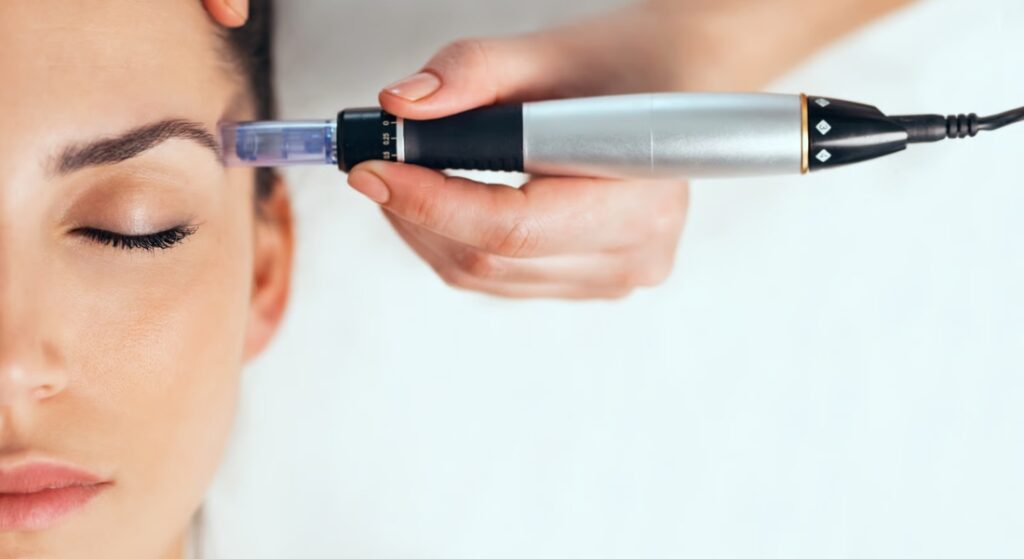
No. If you are considering Dermapen, it is useful to know that traditional microneedling uses fine needles to create controlled micro-injuries in your skin, while radiofrequency microneedling also delivers heat energy into the deeper tissue.
Because these treatments work differently, you should not expect the same results from both. When comparing before-and-after photographs, check which type of treatment and device was used so you have a more realistic idea of what you might achieve.
What Are the Possible Side Effects and Downtime?
If you are considering Dermapen, you should expect some temporary redness, sensitivity or mild swelling after treatment. Your skin may also feel dry or tight while it recovers, although the amount of downtime varies from person to person.
Your risk of side effects depends on your skin, medical history, treatment depth and aftercare. Temporary dryness, tightness, mild peeling or pinpoint bleeding can occur, while less common problems may include infection, prolonged irritation or changes in pigmentation. If you develop increasing pain, marked swelling, spreading redness, unusual discharge or symptoms that are worsening rather than settling, contact your practitioner promptly for assessment.
Can Dermapen Cause Changes in Pigmentation?
Temporary changes in pigmentation can occur after microneedling, although they are not expected in everyone. Post-inflammatory hyperpigmentation is particularly important to discuss if your skin has previously developed dark marks after acne, irritation or cosmetic treatments.
Your practitioner should consider your skin history, treatment intensity and recent sun exposure when planning treatment. Following appropriate aftercare and protecting healing skin from excessive sun exposure can also help reduce avoidable irritation and pigmentation problems.
How Can You Get a Realistic Before-and-After Comparison?
If you want to track your Dermapen results, take a clear baseline photo before treatment. Use similar lighting, camera angle, distance and facial expression each time so you can make a fair comparison.
You should also wait until your skin has fully settled before judging the result, as early redness or swelling can affect how your skin looks. Focus on genuine changes in your scars, fine lines or texture rather than photographs that may look better because of lighting or filters.
UK Guidance Note
UK advertising guidance treats before-and-after photographs as visual claims about treatment effectiveness. Marketers should hold signed and dated proof that the photographs are genuine and have not been manipulated, and they must also hold appropriate evidence to substantiate the level of treatment effectiveness implied by the images.
Myth vs Fact: Dermapen Before-and-After Results
| Myth | Fact |
| The result you see immediately after Dermapen is the final result. | No. Early redness and swelling are part of healing, while collagen remodelling develops gradually. |
| Every acne scar responds in the same way. | No. Scar type, depth and tethering can affect the response. |
| More Dermapen sessions always mean better results. | No. The number and timing of treatments should depend on your skin and response. |
| Dermapen permanently removes enlarged pores. | No. Pores may appear less prominent, but they do not disappear. |
| A before-and-after photograph predicts exactly how your skin will look. | No. Results vary between individuals and photographs can only illustrate possible outcomes. |
What Do Before-and-After Photos Not Tell You?
A photograph shows how the skin looked at two particular points in time, but it does not tell you everything about the treatment journey. You may not know how many sessions were performed, the needle settings used, when the “after” photograph was taken or how much redness, discomfort or downtime occurred between the two images.
Key Takeaways
1. Dermapen results develop gradually rather than immediately after treatment.
2. Dermapen may be particularly useful for selected atrophic acne scars and uneven skin texture, although the amount of improvement varies from person to person.
3. Different scar types can respond differently, and deeper or tethered scars may need another approach.
4. Several sessions may be required, but there is no fixed treatment number that is right for everyone.
5. Temporary redness, swelling, dryness and sensitivity are common, while pigmentation changes and infection are less common risks.
6. Active inflammatory or infected skin may mean treatment should be postponed.
7. Before-and-after photographs should be taken consistently and should not be treated as a guarantee of your own result.
Frequently Asked Questions
1. How soon can you see Dermapen before-and-after results?
You may notice some improvement in skin smoothness within the first few weeks, but Dermapen results usually develop gradually. Collagen remodelling continues for weeks and months after treatment, so your final improvement may take longer to become noticeable.
2. How many Dermapen treatments do you need to see results?
The number of treatments varies depending on your skin concern, the depth of acne scars and how your skin responds. Some people notice improvement after one session, while others need a course of treatments to achieve more noticeable changes.
3. Can Dermapen completely remove acne scars?
Dermapen can make some acne scars look softer, shallower and less noticeable, particularly certain depressed scars. However, it is unlikely to remove scars completely, and the results depend on the type, depth and extent of your scarring.
4. When should you take Dermapen before-and-after photos?
Take your baseline photograph before your first treatment and use similar conditions for later photographs. Try to keep the lighting, camera angle, distance and facial expression consistent so that you can make a more reliable comparison.
5. Can Dermapen improve fine lines and wrinkles?
Dermapen may soften some fine lines by stimulating collagen production and improving skin texture. Deeper wrinkles caused by facial movement, volume loss or structural changes may require a different treatment approach.
6. Does Dermapen make your skin look tighter?
Dermapen may make your skin appear firmer and more refined as collagen remodelling takes place. However, it is not designed to treat significant loose skin or provide the same degree of tightening as a surgical procedure.
7. Can Dermapen make enlarged pores look smaller?
Dermapen may make enlarged pores appear less noticeable by improving skin texture and collagen support. It cannot remove pores, however, and factors such as genetics, oil production and sun damage can continue to affect their appearance.
8. How long does redness last after Dermapen?
Redness and sensitivity commonly occur immediately after Dermapen and usually settle as your skin heals. You may also experience mild swelling, dryness or tightness, with the duration depending on your skin and the intensity of treatment.
9. Can Dermapen results continue to improve after treatment?
Yes. Your skin continues to remodel collagen after the treatment session, so improvements may become more noticeable over the following weeks and months. This is why you should avoid judging your final result immediately after treatment.
10. How can you tell whether your Dermapen results are genuine?
Use consistent before-and-after photographs taken under similar lighting, at the same distance and from the same angle. Wait until temporary redness, swelling and irritation have settled, and avoid comparing an unfiltered photograph with one affected by different lighting or image enhancement.
Final Thoughts: Understanding Your Dermapen Before-and-After Results
Dermapen results develop gradually as your skin heals and collagen remodelling continues. You may notice improvements in skin texture, acne scars, fine lines, firmness and overall skin quality, but the extent of change will depend on your individual skin and the concern being treated.
If you’re looking for Dermapen in London, you can get in touch with us at the London Medical & Aesthetic Clinic to discuss your skin concerns and whether Dermapen may be suitable for you.
References:
1. Măgerușan, Ș.E., Hancu, G. and Rusu, A. (2024) ‘Current understanding of microneedling procedures for acne skin: a narrative review’, Cosmetics, 11(6), article 193. Available at: https://www.mdpi.com/2079-9284/11/6/193
2. Abdelhay, R.M., Ali, M.S., Gad, L.Z. and Mahran, N.M. (2025) ‘Microneedling with topical insulin versus microneedling with placebo in the treatment of postacne atrophic scars: a randomized control trial’, Dermatologic Surgery, 51(3), pp. 251–256. Available at: https://pubmed.ncbi.nlm.nih.gov/39442178/
3. Sitohang, I.B.S., Sirait, S.A.P. and Suryanegara, J. (2021) ‘Microneedling in the treatment of atrophic scars: a systematic review of randomised controlled trials’, International Wound Journal, 18(5), pp. 577–585. Available at: https://pmc.ncbi.nlm.nih.gov/articles/PMC8450803/
4. Ramaut, L., Hoeksema, H., Pirayesh, A., Stillaert, F. and Monstrey, S. (2018) ‘Microneedling: Where do we stand now? A systematic review of the literature’, Journal of Plastic, Reconstructive & Aesthetic Surgery, 71(1), pp. 1–14. Available at: https://www.sciencedirect.com/science/article/pii/S1748681517302504
5. Wamsley, C.E., Kislevitz, M., Barillas, J., Basci, D., Kandagatla, V., Hitchcock, T., Akgul, Y. and Kenkel, J. (2021) ‘A single-center trial to evaluate the efficacy and tolerability of four microneedling treatments on fine lines and wrinkles of facial and neck skin in subjects with Fitzpatrick skin types I–IV: an objective assessment using noninvasive devices and 0.33-mm microbiopsies’, Aesthetic Surgery Journal, 41(11), pp. NP1603–NP1618. Available at: https://pubmed.ncbi.nlm.nih.gov/33656167/