



If you are considering Dermapen, you may wonder how many sessions you will need. The number depends on your skin concern, its severity and how your skin responds to treatment.
You may need a different number of sessions for mild texture changes than for established acne scars or fine lines. Your practitioner can assess your skin and recommend a suitable treatment plan rather than following a fixed number.
Why Is There No Single Number of Dermapen Sessions?
There is no fixed number of Dermapen sessions because your treatment plan depends on your skin concern, its severity and how your skin responds. Mild texture changes may need fewer sessions, while deeper acne scars may require a longer course.
Your skin also needs time to heal and remodel between treatments. Your practitioner can review your progress and adjust the number and timing of sessions to suit your individual needs.
Is One Dermapen Session Enough?
Some people may notice a modest improvement in skin smoothness or texture after one Dermapen session, but a single treatment may not achieve the full improvement they are hoping for. Established acne scars, fine lines and more noticeable texture concerns may require a course of treatments before a clearer improvement becomes apparent.
Each treatment creates one cycle of healing and skin remodelling, so improvements can build gradually. Your practitioner can review your progress after the first session and decide whether further treatment is likely to provide additional benefit.
How Many Sessions Are Commonly Recommended?
Published microneedling studies commonly use a course of several treatment sessions, but there is no universally recommended number that is suitable for everyone. Some studies use three or four sessions, while others use different schedules, so these numbers should not be treated as a fixed Dermapen recommendation. The appropriate course depends on the concern being treated, treatment technique, treatment depth and how your skin responds.
Your practitioner should review your progress throughout the course rather than treating a fixed number as a rule. If your skin is responding well, they can decide whether further sessions are worthwhile or whether another approach may suit you better.
Evidence Note
A 2022 systematic review and meta-analysis examined 12 randomised controlled trials involving 414 participants with acne scarring. The review found evidence supporting microneedling for acne scars, but the included studies used different treatment protocols and comparison treatments. This means the research does not establish one ideal number of sessions for every patient. Most published studies assess microneedling as a treatment technique rather than the Dermapen brand specifically, so study schedules should not be treated as fixed Dermapen protocols.
How Many Dermapen Sessions Might You Need for Acne Scars?
If you are treating atrophic acne scars, you may need a course of Dermapen sessions because these scars involve structural changes within the skin, including changes to collagen in the dermis. The number depends on the type, depth and extent of your scarring, with some scars responding better than others.
Your practitioner can assess your scars and suggest a suitable treatment plan. If your improvement begins to slow, they may consider whether another scar treatment or combination approach would be more suitable.
Does the Severity of Acne Scarring Affect the Number of Treatments?
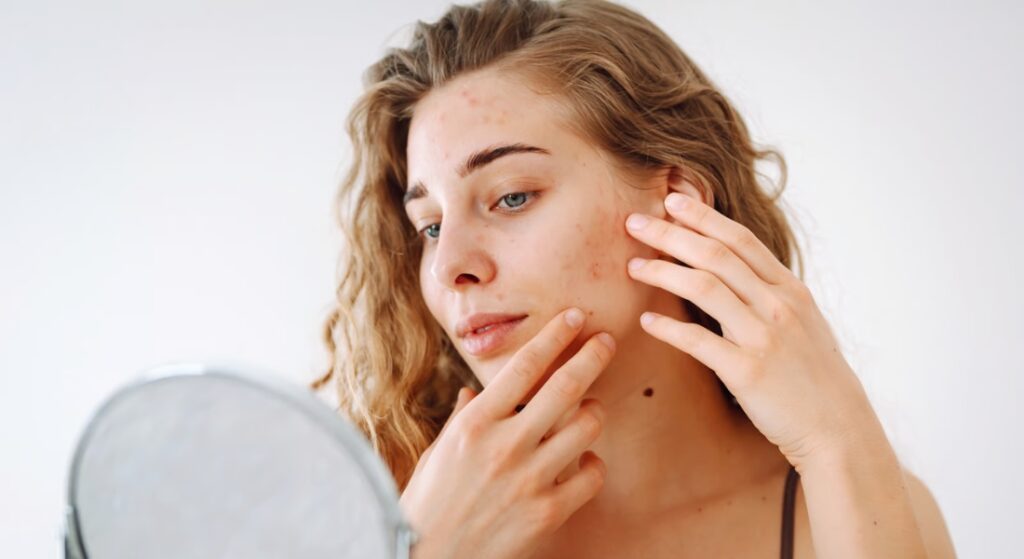
Yes. If your acne scars are deeper or more extensive, you may need more sessions than someone with mild, superficial scarring. The type of scar also matters, as rolling, boxcar and ice-pick scars can respond differently.
Microneedling may gradually improve the appearance and texture of some atrophic acne scars through skin remodelling, but it is unlikely to remove acne scars completely. Your practitioner can assess your scars and help you set a realistic goal for improvement.
How Many Sessions Might You Need for Fine Lines?
If fine lines are your main concern, a course of Dermapen treatments may gradually improve aspects of skin texture and the appearance of fine lines through your skin’s remodelling response. The exact number depends on how noticeable the lines are and how your skin responds to treatment.
Dermapen mainly improves skin quality, so it may be less effective for deeper lines caused by facial movement or volume loss. Your practitioner can assess the cause of your lines and recommend whether further sessions are likely to help.
What Does Research Suggest About Fine-Line Treatment Courses?
One small clinical study included 35 adults aged 44 to 65 who received four monthly microneedling treatments to the face and neck. Researchers assessed changes during treatment and again one and three months afterwards. The findings suggest that improvement may continue to develop after a treatment course, although the study was relatively small and should not be interpreted as a guarantee of individual results.
What About Uneven Texture and Enlarged-Looking Pores?
If you want to improve uneven texture or enlarged-looking pores, the number of sessions you may need will depend on the severity of the concern, the treatment settings used and how your skin responds. Dermapen may help your skin look smoother, but the number of treatments depends on your starting skin condition and how well you respond.
Pores cannot be removed, as they are a normal part of your skin. If you have active inflammatory acne, a skin infection or significant irritation in the treatment area, Dermapen treatment may need to be postponed until your skin has been assessed and the problem has settled.
Why Are Dermapen Sessions Spaced Apart?
Your Dermapen sessions are spaced apart because your skin needs time to heal and remodel after treatment. Even when redness settles within a few days, deeper changes can continue for several weeks.
Having treatments too close together does not necessarily give faster results and may increase irritation. Your practitioner will recommend an appropriate interval based on your skin, treatment depth and the concern being treated.
Why Can Results Continue After Your Last Session?

Changes following microneedling do not necessarily stop when visible redness has settled. Skin healing and remodelling continue after treatment, which is why some clinical studies assess outcomes several weeks or months after the final session rather than immediately afterwards.
This is why you should not judge your final result immediately after treatment. Give your skin time to settle, then review your progress with your practitioner to decide whether further treatment is actually needed.
Can You Have Too Many Dermapen Sessions?
More Dermapen sessions do not always mean better results. Your skin needs enough time to recover between treatments, and repeatedly treating skin that remains irritated or has not adequately healed may increase irritation and the risk of adverse effects.
If your progress starts to plateau, your practitioner should reassess whether further sessions are worthwhile. Sometimes a different treatment may be more suitable for the remaining concern.
Why Does Treatment Depth Affect Your Course?
Your Dermapen sessions can vary in depth depending on the area being treated and the concern you want to improve. A lighter treatment for general skin texture is not the same as a deeper treatment for established acne scars.
Deeper treatment may require more recovery time, but deeper does not automatically mean better results. Your practitioner should choose the appropriate depth and treatment schedule for your skin rather than focusing only on the number of sessions.
What Happens If Your Skin Responds Quickly?
If your skin responds well to Dermapen, you may not need every session originally considered. Your practitioner can review your progress and adjust the plan based on how much improvement you have achieved.
The aim is not to complete a fixed number of treatments at all costs. If you are happy with your results sooner, further sessions should only be considered if they are likely to provide meaningful additional improvement.
What If You Do Not See Enough Improvement?
If you do not notice much improvement after your first Dermapen session, it does not necessarily mean the treatment has failed. Your skin needs time to heal and remodel, and some concerns may need several sessions before changes become noticeable.
If you have completed a suitable course and still see little improvement, your practitioner should reassess your skin. They may recommend a different treatment or combination approach if Dermapen alone is unlikely to address the remaining concern.
Do You Need Maintenance Sessions?

There is no single evidence-based maintenance schedule that applies to everyone after a course of Dermapen treatment. Some people may consider further sessions if they would like additional improvement or if their skin concerns change over time, but regular maintenance treatment should not automatically be considered necessary.
Your practitioner can reassess your skin as it changes and decide whether another session is worthwhile. If you are happy with your results, there may be no need to continue treatment simply because time has passed.
When Should Dermapen Treatment Be Delayed or Reassessed?
Your next Dermapen session may need to be delayed if your skin has not fully recovered from the previous treatment. Ongoing redness, irritation, swelling or unusual sensitivity should be discussed with your practitioner before continuing.
Your skin’s condition matters more than sticking to a fixed schedule. If you develop worsening pain, significant swelling, spreading redness or unusual discharge, contact your treating clinician before your next appointment.
How Is Your Personal Dermapen Treatment Plan Decided?
Your Dermapen plan should start with the concern you want to improve, not simply a standard treatment package. Your practitioner should assess your skin, previous treatments and how you are likely to respond before recommending the number and spacing of sessions.
You should also understand what results are realistic and when your progress will be reviewed. Your plan can then be adjusted if you respond quickly, see limited improvement or need a different approach.
Myth vs Fact
| Myth | Fact |
| Everyone needs the same number of Dermapen sessions. | Your treatment course depends on your skin concern, its severity, treatment depth and how your skin responds. |
| One Dermapen session should be enough for acne scars. | Some people may notice early changes after one session, but established atrophic acne scars may require several treatments. |
| More Dermapen sessions always produce better results. | Additional sessions are not automatically beneficial, particularly if your improvement has plateaued or your skin has not fully recovered. |
| Deeper treatment means you will get better results faster. | Treatment depth should be selected for your skin and treatment area; deeper treatment does not automatically mean a better result. |
| You must complete every session originally planned. | Your practitioner can adjust the course if you reach your goal sooner or if another approach becomes more appropriate. |
| Everyone needs regular maintenance sessions. | There is no single evidence-based maintenance schedule that applies to everyone after microneedling. |
Key Takeaways
1. There is no single number of Dermapen sessions that is appropriate for everyone.
2. Published microneedling studies usually involve several treatments, but protocols and treatment intervals vary.
3. Acne-scar type, scar severity, fine lines, skin texture and your individual response can all influence your treatment course.
4. Your skin needs adequate recovery time between sessions, and having treatments too close together does not necessarily produce faster results.
5. More sessions or deeper treatment do not automatically mean better results.
6. Your practitioner should review your progress during treatment and adjust the plan when necessary.
7. Ongoing maintenance sessions are not automatically required once you have completed a suitable treatment course.
Frequently Asked Questions
1. How many Dermapen sessions do you usually need?
The number of Dermapen sessions varies depending on your skin concern, its severity and how your skin responds. Published studies commonly use several treatment sessions, but there is no fixed number that is appropriate for everyone, so your practitioner should tailor the treatment plan to you.
2. Can you see results after one Dermapen session?
Some people may notice an improvement in skin smoothness or texture after one session, but this varies and should not be expected in every case. Established acne scars, fine lines and more noticeable texture concerns may require several treatments before clearer changes develop.
3. How many Dermapen sessions might you need for acne scars?
You may need several Dermapen sessions to improve the appearance of acne scars. The number depends on the type, depth and extent of your scarring, as different scar types can respond differently to microneedling.
4. How many Dermapen sessions are needed for fine lines?
Fine lines may improve gradually over a course of Dermapen treatments as your skin remodels collagen. The number of sessions depends on how noticeable the lines are and whether they are mainly related to skin texture or deeper changes such as facial movement or volume loss.
5. How long should you wait between Dermapen sessions?
There is no single interval that is suitable for everyone. Published microneedling studies use different treatment schedules; for example, some research on facial fine lines has used monthly treatments. The appropriate timing for you depends on treatment depth, the area being treated, the device protocol and whether your skin has fully recovered.
6. Can you have too many Dermapen sessions?
More sessions do not necessarily produce better results. Your skin needs adequate time to recover, and repeatedly treating skin that has not fully healed may increase irritation or other unwanted reactions.
7. Do deeper acne scars always require deeper Dermapen treatment?
Not necessarily. Your practitioner may adjust the treatment depth according to the type and location of your scars, but deeper treatment does not automatically mean better results.
The aim is to use an appropriate treatment intensity for your skin while allowing sufficient recovery between sessions.
8. What happens if you do not see enough improvement after several Dermapen sessions?
If you see limited improvement after a suitable course, your practitioner should reassess your skin and the original treatment plan. They may determine that further Dermapen sessions could help or that another treatment or combination approach would be more appropriate.
9. Do you need Dermapen maintenance sessions?
You may consider an occasional additional session if you would like further improvement or if your skin concerns change over time, but ongoing maintenance treatment is not automatically necessary. Your practitioner can reassess your skin and recommend further treatment only when it is likely to provide meaningful additional benefit.
10. Can your Dermapen treatment plan change during your course?
Yes. Your treatment plan can be adjusted according to how your skin responds. If you achieve the desired improvement sooner than expected, you may not need further sessions, while limited progress may lead your practitioner to reconsider the treatment approach.
Final Thoughts: Finding the Right Number of Dermapen Sessions
The number of Dermapen sessions you need depends on your skin concern, its severity and how your skin responds to treatment. While some people may notice improvement after one session, others may benefit from a course of treatments, particularly when addressing established acne scars or more noticeable skin changes.
Your treatment plan should be personalised rather than based on a fixed number of sessions. If you’re considering Dermapen in London, you can contact us at the London Medical & Aesthetic Clinic to discuss your skin concerns and find out whether Dermapen may be suitable for you.
References:
1. Măgerușan, Ș.E., Hancu, G. and Rusu, A. (2024) ‘Current understanding of microneedling procedures for acne skin: a narrative review’, Cosmetics, 11(6), article 193. Available at:
https://www.mdpi.com/2079-9284/11/6/193
2. Shen, Y.-C., Chiu, W.-K., Kang, Y.-N. and Chen, C. (2022) ‘Microneedling monotherapy for acne scar: systematic review and meta-analysis of randomized controlled trials’, Aesthetic Plastic Surgery, 46(4), pp. 1913–1922. Available at: https://pubmed.ncbi.nlm.nih.gov/35426044/
3. Sitohang, I.B.S., Sirait, S.A.P. and Suryanegara, J. (2021) ‘Microneedling in the treatment of atrophic scars: a systematic review of randomised controlled trials’, International Wound Journal, 18(5), pp. 577–585. Available at: https://pmc.ncbi.nlm.nih.gov/articles/PMC8450803/
4. Ramaut, L., Hoeksema, H., Pirayesh, A., Stillaert, F. and Monstrey, S. (2018) ‘Microneedling: Where do we stand now? A systematic review of the literature’, Journal of Plastic, Reconstructive & Aesthetic Surgery, 71(1), pp. 1–14. Available at: https://www.sciencedirect.com/science/article/pii/S1748681517302504
5. Wamsley, C.E., Kislevitz, M., Barillas, J., Basci, D., Kandagatla, V., Hitchcock, T., Akgul, Y. and Kenkel, J. (2021) ‘A single-center trial to evaluate the efficacy and tolerability of four microneedling treatments on fine lines and wrinkles of facial and neck skin in subjects with Fitzpatrick skin types I–IV’, Aesthetic Surgery Journal, 41(11), pp. NP1603–NP1618. Available at: https://pubmed.ncbi.nlm.nih.gov/33656167/