



If you are beginning to notice fine lines, slightly rougher texture or skin that looks less firm, you may be considering Dermapen. Microneedling can be useful when you want to improve skin quality without changing the shape or volume of your face.
Dermapen treatment uses an automated microneedling device with fine needles to create controlled microscopic injuries in the skin. This stimulates the skin’s natural repair process, including collagen remodelling and other changes within the supporting tissue.
What Happens to Your Skin During Early Ageing?
As skin ages, collagen production and organisation gradually change, while changes in elastin and other supporting structures can affect firmness, elasticity and texture. You may start to notice fine lines, rougher texture or slightly less plump-looking skin. These changes can be accelerated by cumulative sun exposure, which contributes to photoageing.
These early changes are a normal part of ageing, but you may want to improve how your skin looks and feels. Dermapen aims to support your skin’s natural repair process and improve selected signs of early ageing without adding volume.
What Is Dermapen Microneedling?
Dermapen is a powered microneedling device that uses multiple fine needles to create controlled microscopic channels in your skin. The treatment can be adjusted for different areas of your face, while the small injuries trigger your skin’s natural healing response and support collagen remodelling.
The aim of treatment is not the temporary microchannels themselves, but the repair response they trigger. Changes in collagen and other components of the extracellular matrix develop gradually as the skin remodels after treatment.
How Can Collagen Induction Affect Fine Lines?
As you age, changes in collagen and skin structure can make fine lines more noticeable. Dermapen stimulates your skin’s natural healing response, which can support collagen remodelling and improve skin texture over time.
Dermapen does not physically fill your wrinkles, but it may help the surrounding skin look smoother and better supported. You should expect fine lines to look softer rather than disappear completely.
Which Fine Lines May Be More Suitable for Microneedling?
Microneedling may be more suitable for superficial lines associated with changes in skin texture and quality than for deep folds caused mainly by volume loss or repeated muscle movement. Suitability also depends on the treatment area, skin condition and the depth of the lines.
Dynamic wrinkles caused by repeated muscle movement may not respond as well, as microneedling does not stop your facial muscles moving. A consultation can help determine whether the lines are mainly related to skin quality, repeated facial movement, volume loss or a combination of these factors.
What Does Research Say About Microneedling for Ageing Skin?
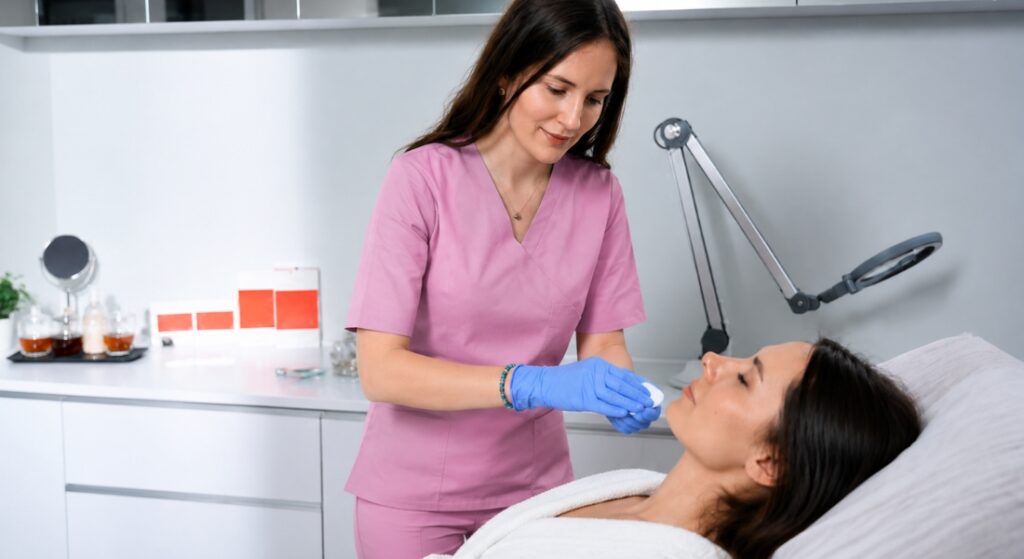
Research suggests that microneedling can improve selected signs of facial ageing, but the evidence is not strong enough to predict an exact result for every person. A 2025 systematic review included 21 studies involving 723 patients and found that wrinkles were the most commonly assessed outcome, followed by skin texture, photoageing and skin laxity. Most published research evaluates microneedling generally rather than the Dermapen brand specifically, so results from these studies cannot guarantee the same outcome with every device or treatment protocol.
The review also found that treatment schedules and methods varied considerably between studies, and there was no standardised way of measuring cosmetic improvement. This means the research supports microneedling as a possible facial rejuvenation treatment, but results should still be discussed cautiously rather than presented as guaranteed.
Can Dermapen Improve Skin Texture as Well as Lines?
Changes in surface texture may make the skin appear smoother, although natural pores, lines and variations in skin texture will remain.
You may also find that your make-up sits more evenly on smoother skin. However, Dermapen cannot remove every pore or natural skin variation, so the aim is to refine your texture rather than make it completely flawless.
Does Dermapen Add Facial Volume?
No, Dermapen does not add facial volume like dermal fillers. Instead, microneedling acts within the treated skin by triggering a controlled repair and remodelling response.
If you are mainly concerned about lost cheek, temple or under-eye volume, Dermapen may have limited effect. It can be a suitable option if you want to improve your skin quality without deliberately changing your facial shape or contours.
Can Dermapen Make Your Skin Look Firmer?
If your skin has started to look slightly less firm, Dermapen may help improve its appearance. By supporting collagen remodelling, it can create a modest improvement in skin firmness and texture.
You should not expect Dermapen to remove excess skin or lift your face like surgery. Microneedling may produce some improvement in the appearance of mild skin laxity, but the response varies and significant sagging is unlikely to be corrected by microneedling alone.
Can Dermapen Help with Sun-Related Ageing?
If cumulative sun exposure has contributed to fine lines and rougher skin texture, microneedling may improve some aspects of visible photoageing. Pigmentation changes are more complex, however, and should be assessed before treatment rather than assuming that microneedling is appropriate for every uneven or darkened area.
You still need good sun protection before and after treatment. If you notice any unusual, scaly, crusted or changing areas of sun-damaged skin, you should have them medically assessed rather than treating them cosmetically.
How Is Dermapen Different from Treatments for Facial Movement?
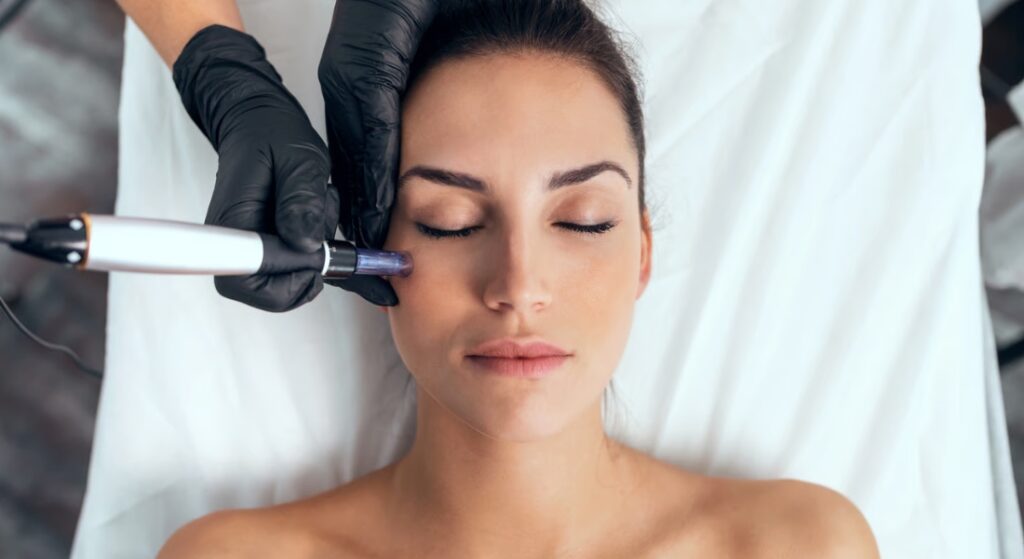
If your fine lines are mainly caused by repeated facial movement, Dermapen may not address the main cause. Dermapen works on your skin and does not weaken or relax the muscles that create expression lines when you smile, frown or squint.
You may still see smoother skin around these lines, especially when ageing and sun damage are also involved. A consultation can help you understand whether your concern is mainly related to skin quality, muscle movement or a combination of both.
When Will You Start Seeing Results?
You should not expect to see the final Dermapen results straight away. Your skin may look red or slightly swollen at first, then gradually feel smoother and look fresher as the initial reaction settles.
Collagen remodelling takes time, so improvements can continue developing over the following weeks and months. Taking before-and-after photos in similar lighting and positions can help you see your progress more accurately.
How Many Sessions Might You Need?
You may need a course of Dermapen treatments rather than a single session. The number of sessions can vary depending on your skin, the type and severity of the concern being treated.
Your practitioner may adjust the treatment for different areas and review your progress as you go. Rather than aiming for a fixed number, you should focus on a treatment plan that is suitable for your individual needs.
What Is Recovery Like After Dermapen?
After microneedling, temporary redness, warmth, tenderness, tightness or mild swelling can occur. Dryness or light flaking may also develop as the skin settles. The intensity and duration of these effects vary with treatment depth, the area treated and individual skin response.
Follow the aftercare instructions provided by the practitioner, including appropriate sun protection and gentle skincare while the skin barrier recovers. Avoid deliberately irritating or exfoliating the treated skin in an attempt to produce a stronger reaction, as more inflammation does not mean a better cosmetic result.
Are There Risks or Reasons to Delay Treatment?
Microneedling is minimally invasive but is not risk-free. Expected short-term effects include redness, swelling, tenderness and dryness. Less commonly, people may develop post-inflammatory pigmentation changes, an acne flare or infection. Rare inflammatory reactions have also been reported after microneedling.
Microneedling should generally be postponed if there is an active skin infection, significant inflammation, an open wound or another untreated problem in the treatment area. Relevant medical history, previous abnormal scarring, pigmentation problems, recurrent cold sores and medicines or treatments that could affect healing or bleeding should be discussed during the consultation.
| Main concern | Possible role of Dermapen |
| Fine superficial lines | May soften their appearance gradually |
| Uneven or rough skin texture | May improve smoothness and skin quality |
| Mild early loss of firmness | May produce modest improvement |
| Deep folds caused by volume loss | Limited effect; does not replace lost facial volume |
| Dynamic expression lines | Does not stop the underlying muscle movement |
| Significant loose or sagging skin | Unlikely to provide a surgical-style lifting effect |
| Suspicious or changing sun-damaged lesion | Requires medical assessment rather than cosmetic microneedling |
| Active infection or significant inflammation | Treatment should generally be postponed until the area has been assessed and the active problem has settled |
Who Might Consider Dermapen for Early Skin Ageing?
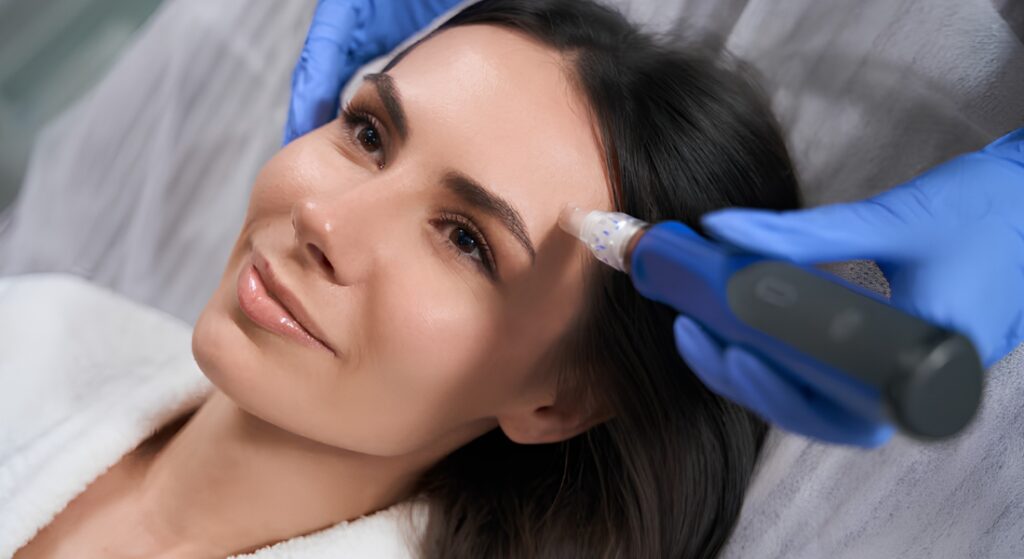
Dermapen may be considered if you have fine superficial lines, mildly uneven texture or early loss of skin firmness, including some textural changes associated with photoageing. It may also suit you if you want to improve your skin quality without adding facial volume.
Your age alone does not determine whether Dermapen is right for you. What matters is whether your skin is suitable for treatment and whether your concerns are ones that microneedling can realistically improve.
How Should You Decide Whether Dermapen Is Right for You?
Start by being clear about what you want to improve, whether that is fine lines, rough texture or mild loss of firmness. Dermapen may suit you if improving your skin quality is your main goal.
During your consultation, you should discuss your skin, medical history, expected results and recovery time with your practitioner. You should also understand what Dermapen cannot do, such as adding facial volume, stopping muscle movement or removing loose skin.
What Dermapen Cannot Correct
Microneedling can improve aspects of skin quality, but it does not replace lost facial volume, permanently stop expression lines, remove significant excess skin or erase every wrinkle. It also does not treat every form of pigmentation or every visible sign of sun damage. Identifying the main cause of the cosmetic concern helps determine whether Dermapen is appropriate or whether another treatment would be more suitable.
Frequently Asked Questions
1. Can Dermapen reduce fine lines?
Yes, Dermapen may soften the appearance of fine lines by stimulating collagen remodelling and improving skin texture. It is more likely to help early, superficial lines than deeper wrinkles.
2. How long does it take to see Dermapen results?
You may notice some improvement in skin texture as your skin settles, but collagen remodelling takes time. Visible improvements usually develop gradually over the weeks and months following treatment.
3. How Many Dermapen Treatments May Be Needed for Fine Lines?
A course of treatments may be recommended rather than a single session. The number and spacing of treatments depend on the skin condition, the type and severity of the concern, treatment settings and individual response. There is no fixed number that is suitable for everyone.
4. Can Dermapen Be Used Around the Eyes?
The skin around the eyes is relatively delicate, so treatment settings and suitability require particular care. The practitioner should assess whether microneedling is appropriate for the specific area and avoid treating irritated, damaged or otherwise unsuitable skin.
5. Can Fine Lines Return After Dermapen?
Microneedling does not stop the natural ageing process or the continuing effects of sun exposure. Improvements may remain noticeable for a period, but the skin continues to age, so ongoing sun protection and realistic expectations remain important.
6. What Happens If Dermapen Does Not Address the Main Cause of a Line?
Lines caused mainly by repeated facial movement, significant volume loss or loose skin may respond only partially to microneedling. Assessment of the underlying cause helps determine whether Dermapen is appropriate or whether another treatment approach may be more suitable.
7. Can Dermapen Be Used If the Skin Is Irritated?
Treatment may need to be postponed if the skin is actively inflamed, infected, broken or unusually sensitive. The treatment area should be assessed before microneedling rather than proceeding over an active skin problem.
8. What does the skin look like after Dermapen?
Your skin may initially appear red and feel warm, tight or sensitive. Mild swelling, dryness or flaking can also occur while your skin recovers.
9. Can Dermapen improve sun-damaged skin?
Dermapen may improve some visible changes associated with sun-related ageing, such as uneven texture and fine lines. However, it does not reverse all UV damage, so ongoing sun protection remains important.
10. Will Dermapen completely remove my fine lines?
No, you should not expect Dermapen to remove fine lines completely. The realistic aim is to make suitable lines look softer while improving the overall smoothness and quality of your skin.
Final Thoughts: Is Dermapen Right for Fine Lines and Early Skin Ageing?
Dermapen can be a useful option if you want to improve fine lines, uneven texture and mild early skin ageing without adding facial volume. By encouraging collagen remodelling, it may gradually help your skin look smoother, fresher and more refined, although results vary and fine lines will not necessarily disappear completely.
The most suitable approach depends on your skin, the type of ageing changes you want to address and your expectations from treatment. A consultation can help you understand whether Dermapen is appropriate for you and what results and recovery you can realistically expect.
If you’re looking for Dermapen in London, you can get in touch with us at the London Medical & Aesthetic Clinic.
References:
1. Pająk, J., Szepietowski, J.C. and Nowicka, D. (2022) ‘Prevention of ageing—The role of micro-needling in neck and cleavage rejuvenation: a narrative review’, International Journal of Environmental Research and Public Health, 19(15), article 9055. Available at: https://www.mdpi.com/1660-4601/19/15/9055
2. Foppiani, J.A., Fanning, J.E., Beltran, K., Raska, O., Hernandez Alvarez, A., Taritsa, I., Kim, E., Escobar, M.J., Lee, D., Choudry, U. and Lin, S.J. (2025) ‘Microneedling for facial rejuvenation: a systematic review’, Aesthetic Plastic Surgery, 49(17), pp. 4949–4960. Available at: https://pubmed.ncbi.nlm.nih.gov/40542236/
3. Jaiswal, S. and Jawade, S. (2024) ‘Microneedling in dermatology: a comprehensive review of applications, techniques, and outcomes’, Cureus, 16(9), article e70033. Available at: https://pmc.ncbi.nlm.nih.gov/articles/PMC11499218/
4. Ramaut, L., Hoeksema, H., Pirayesh, A., Stillaert, F. and Monstrey, S. (2018) ‘Microneedling: Where do we stand now? A systematic review of the literature’, Journal of Plastic, Reconstructive & Aesthetic Surgery, 71(1), pp. 1–14. Available at: https://www.sciencedirect.com/science/article/pii/S1748681517302504
5. Wamsley, C.E., Kislevitz, M., Barillas, J., Basci, D., Kandagatla, V., Hitchcock, T., Akgul, Y. and Kenkel, J. (2021) ‘A single-center trial to evaluate the efficacy and tolerability of four microneedling treatments on fine lines and wrinkles of facial and neck skin in subjects with Fitzpatrick skin types I–IV: an objective assessment using noninvasive devices and 0.33-mm microbiopsies’, Aesthetic Surgery Journal, 41(11), pp. NP1603–NP1618. Available at: https://academic.oup.com/asj/article/41/11/NP1603/6154362