



If you are choosing between Dermapen and fractional CO₂ laser, it is important to understand how differently they treat your skin. Dermapen uses fine needles to create controlled micro-injuries, while CO₂ laser uses thermal energy to resurface your skin more intensively.
You may see stronger resurfacing with CO₂ laser for some acne scars, but you may also face more downtime and a higher risk of pigmentation changes. Dermapen can be a more conservative option for you, particularly if you are concerned about post-inflammatory hyperpigmentation, although you may need several sessions to achieve noticeable improvement.
How Does Dermapen Work?
If you choose Dermapen, fine needles create controlled microscopic injuries in your skin at selected depths. Your skin then begins its natural healing response, which can encourage collagen remodelling and gradually improve scars, fine lines and uneven texture.
Unlike CO₂ laser, Dermapen does not use thermal energy to remove or resurface skin. You may therefore need several sessions to see meaningful improvement, with results developing gradually as your skin remodels.
Much of the comparative research evaluates microneedling or needling-based treatments generally rather than the Dermapen brand specifically. Results can therefore vary according to the device, needle depth, treatment protocol and practitioner technique, so findings from general microneedling studies should not automatically be treated as Dermapen-specific results.
How Does Fractional CO₂ Laser Work?
If you choose fractional CO₂ laser, controlled laser energy creates microscopic columns of thermal injury in your skin while leaving surrounding areas untreated. Your skin then repairs these areas, encouraging collagen remodelling and resurfacing.
You may benefit from CO₂ laser when stronger treatment is needed for certain acne scars or texture concerns. However, because it uses heat and ablation, you may experience more downtime and a higher risk of pigmentation changes than with conventional Dermapen.
Dermapen vs Fractional CO₂ Laser at a Glance
| Factor | Dermapen microneedling | Fractional CO₂ laser |
| How it works | Creates controlled mechanical micro-injuries | Creates fractional columns of thermal and ablative injury |
| Main acne-scar use | Can improve selected rolling and boxcar scars | Can provide stronger resurfacing for some atrophic scars |
| Heat used | No | Yes |
| Typical approach | Usually performed as a course of sessions | May produce greater change per session in some patients |
| Visible downtime | Generally shorter | Generally longer and more noticeable |
| PIH risk | PIH can occur, especially in pigment-prone skin | Comparative evidence shows a higher PIH risk than standard microneedling |
| Darker skin | May be a more conservative option | Requires particularly careful selection and settings because of pigmentary risk |
| Pain | Depends on depth, area and anaesthetic | Depends on laser settings, area and anaesthetic |
| Main limitation | Improvement can be gradual and several sessions may be required | More downtime and greater pigmentary risk |
| Best choice | Depends on scar type, skin tone and treatment goals | Depends on scar type, skin tone and treatment goals |
Which Is Better for Atrophic Acne Scars?
If you have atrophic acne scars, both Dermapen and fractional CO₂ laser can improve their appearance. CO₂ laser may provide a stronger improvement for some scars, while Dermapen can still offer useful results with a generally more conservative treatment approach.
You should consider your scar type, skin tone and tolerance for downtime before choosing between them. If you are prone to pigmentation, Dermapen may be more appealing to you, while CO₂ laser may be considered when you want a more intensive resurfacing effect.
Evidence Note
A 2026 systematic review and meta-analysis included 17 studies comparing fractional CO₂ laser with needling-based treatments for facial atrophic acne scars. It found no statistically significant difference in average scar-score or quantitative scar reduction, although categorical treatment success modestly favoured CO₂ laser. Fractional CO₂ also showed a significantly higher risk of post-inflammatory hyperpigmentation than standard microneedling, with a pooled relative risk of 3.04. However, the efficacy studies showed substantial heterogeneity, so the results should not be interpreted as meaning one treatment will be better for every patient or scar type.
Does Acne Scar Type Affect Which Treatment Is Better?
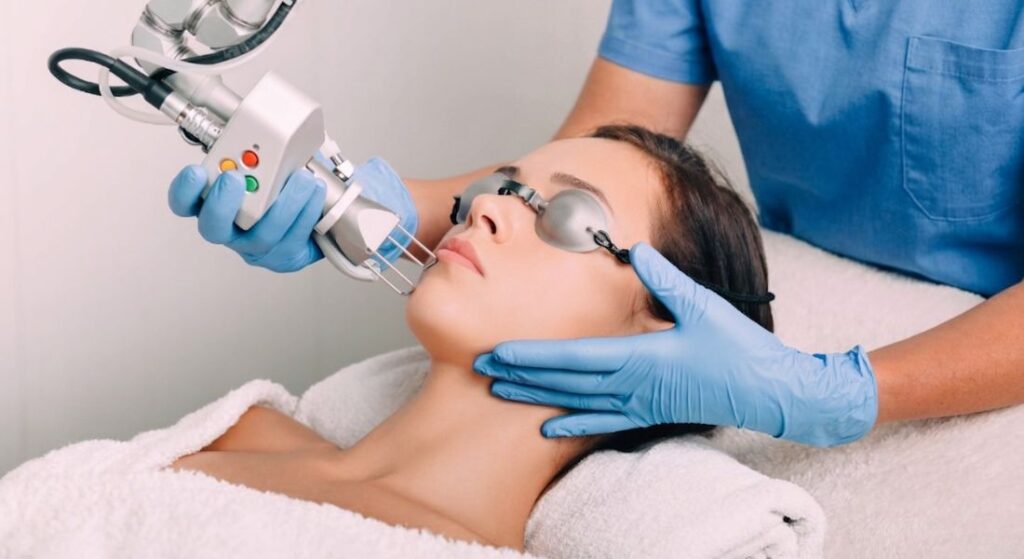
Yes, your acne scar type can influence which treatment is most suitable. Rolling and some boxcar scars may respond to both Dermapen and fractional CO₂ laser, while deep ice-pick or tethered scars may need a more targeted approach.
You may therefore need a combination of treatments rather than simply choosing the stronger option. Your practitioner should assess your individual scars and decide whether Dermapen, CO₂ laser or another procedure is likely to give you the most useful improvement.
Which Treatment Gives Stronger Results?
Fractional CO₂ laser may provide a stronger resurfacing effect for some acne scars because it combines controlled ablation with thermal collagen remodelling. However, a more intensive treatment does not automatically mean that it will be the better option for your individual skin.
1. Stronger Resurfacing: CO₂ laser may produce a more noticeable improvement in some deeper acne scars and textural concerns.
2. Gradual Dermapen Results: Dermapen generally provides more gradual improvement as collagen remodels over a course of treatment sessions.
3. Scar Type Matters: Your results will depend on whether you have rolling, boxcar, ice-pick or tethered scars and how severe they are.
4. Balance Results and Recovery: You should consider pigmentation risk, downtime and your skin type alongside the amount of improvement you want.
Dermapen may suit you better if you prefer a more conservative approach with generally less visible recovery. Your practitioner should recommend the treatment that offers the most appropriate balance between expected improvement, risks and downtime for your skin.
Which Is Better for Fine Lines and Skin Rejuvenation?
If your main concern is fine lines, uneven texture or mild signs of ageing, Dermapen may offer gradual improvement with a more conservative approach. You may need several sessions, as collagen remodelling develops over time rather than immediately.
If you have more noticeable photoageing or deeper textural changes, fractional CO₂ laser may provide stronger resurfacing. You should remember that neither treatment can significantly lift loose or sagging skin, so your choice should depend on the type of improvement you want.
Which Treatment Is Better for Uneven Skin Texture?
If you have mild uneven texture, Dermapen may be a suitable option for gradual skin refinement. You may need several sessions, with improvements developing as your skin produces and remodels collagen.
If your texture is linked to deeper acne scars or more noticeable photoageing, fractional CO₂ laser may provide stronger resurfacing. You should choose the treatment according to the depth and cause of your texture rather than assuming the most intensive option will always be best for you.
Which Is Safer for Darker Skin?
If you have darker or pigment-prone skin, Dermapen may be the more conservative option because it does not use thermal ablation. You may still develop post-inflammatory hyperpigmentation, but the risk can be lower than with fractional CO₂ laser.
Fractional CO₂ laser may give you stronger scar improvement, but you may also face a greater risk of pigmentation changes. Your practitioner should consider your skin tone, previous pigment reactions and the results you want before recommending either treatment.
What Does Research Show About CO₂ Laser and Microneedling in Skin of Colour?

A 2024 split-face study in 30 patients with skin of colour found greater acne-scar improvement with fractional CO₂ laser, but post-inflammatory hyperpigmentation occurred in 30% of CO₂-treated sides compared with 6.67% of microneedling-treated sides. The study was small and had short follow-up, so the percentages should not be treated as universal risk estimates.
Can Dermapen Still Cause Pigmentation?
Yes. If you have darker or pigment-prone skin, Dermapen can still cause post-inflammatory hyperpigmentation because the treatment creates controlled inflammation. You may be more likely to develop dark marks if your skin has reacted this way after acne, cuts or previous cosmetic treatments.
You should therefore protect your skin from the sun and avoid unnecessary irritation while it heals. Dermapen may have a lower pigmentation risk than fractional CO₂ laser, but you should not consider it completely free from pigment changes.
Which Treatment Has More Downtime?
If you want less visible downtime, Dermapen may be easier for you to accommodate. You may experience redness, warmth, mild swelling and sensitivity, although recovery can last longer after deeper treatment for acne scars.
Fractional CO₂ laser generally causes a more intensive recovery because it creates thermal injury and ablation. You may experience more noticeable redness, swelling, peeling or crusting, so you should allow more recovery time before returning to work or social activities.
Clinical Tip
Compare the entire recovery period rather than only the day of treatment. Ask how long redness, swelling, peeling or sensitivity typically lasts with the specific settings being proposed and when you can safely restart active skincare, exercise, make-up and sun exposure.
Which Treatment Is More Painful?
If you choose Dermapen, you may feel prickling, scratching, pressure or vibration during treatment. You may be offered a topical anaesthetic for deeper treatment, which can make the procedure more comfortable.
Fractional CO₂ laser can feel hotter and more intense because it delivers thermal energy into your skin. Your comfort will depend on the treatment settings and anaesthetic used, so you should ask your practitioner what to expect before choosing between the two.
How Many Sessions Might You Need?
If you choose Dermapen, you will usually need a course of several sessions rather than expecting everything from one treatment. You may need more or fewer sessions depending on your scar severity, treatment depth and whether another procedure is included.
Fractional CO₂ laser may sometimes produce a stronger change per session, but you may need longer recovery between treatments.
Which Treatment Has More Risks?
If you are comparing the two, both Dermapen and fractional CO₂ laser can cause temporary redness, swelling and discomfort. You may also experience complications such as infection, scarring or pigmentation changes, although the overall risk depends on your skin and how the treatment is performed.
Fractional CO₂ laser generally carries a higher risk of post-inflammatory hyperpigmentation, particularly if you have darker skin. Dermapen may be the more conservative choice for you, but it is not risk-free, so your practitioner should assess your skin and choose appropriate treatment settings.
UK Guidance Note
In England, the government has committed to introducing local-authority licensing for lower-risk non-surgical cosmetic procedures, but the national scheme has not yet been implemented. Microneedling was included among the proposed lower-risk procedures, while proposed laser categories vary according to treatment type and risk. Extensive fully ablative CO₂ resurfacing was identified among the proposed highest-risk procedures. You should therefore check your practitioner’s qualifications, device-specific training, insurance and any applicable local-authority or healthcare-regulatory requirements rather than assuming all microneedling and laser treatments currently follow the same national licensing pathway.
Who May Need Extra Caution Before Either Treatment?
You may need to delay Dermapen or fractional CO₂ treatment if you have an active skin infection, significant inflammation or another problem affecting the treatment area. You should also tell your practitioner if you have previously developed abnormal scarring, persistent pigmentation or a significant reaction after another cosmetic procedure.
You should discuss your medicines, recent skin treatments and relevant medical history before either procedure. Your practitioner can then assess whether treatment should be postponed, modified or avoided and whether Dermapen, CO₂ laser or another acne-scar treatment would be safer for you.
Which Treatment Is Better If You Want Faster Results?
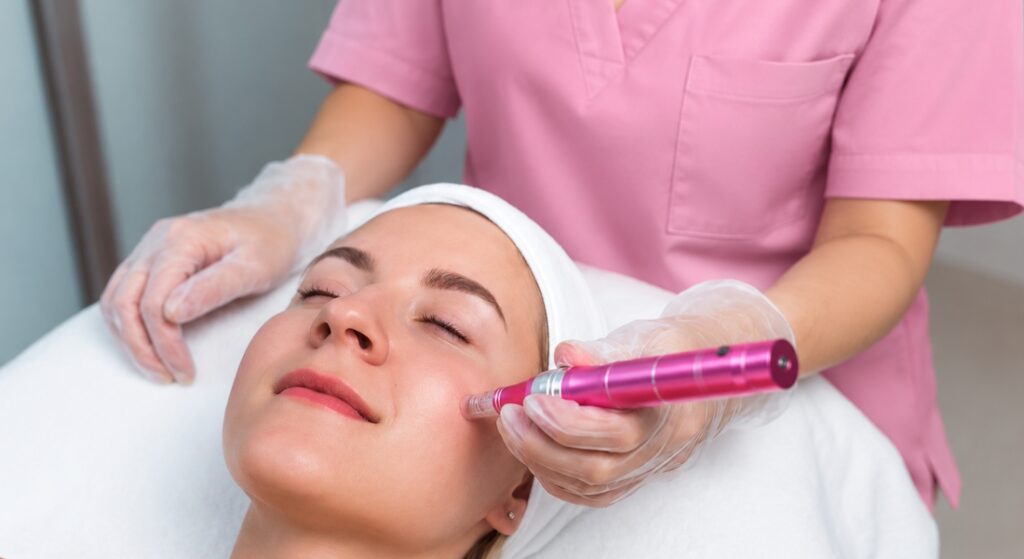
Fractional CO₂ laser may produce a more noticeable change per session for some people with deeper acne scars or significant textural concerns, but this is not guaranteed. Comparative evidence does not show that CO₂ laser is universally superior for average scar improvement, so you should balance the potential treatment effect against recovery time and pigmentation risk.
Dermapen usually gives you a more gradual improvement because collagen remodelling develops over time. You may need several sessions, but the shorter recovery can make it easier for you to fit treatment around work and everyday life.
Can Dermapen and CO₂ Laser Ever Be Used Together?
Yes, you may sometimes benefit from using Dermapen and fractional CO₂ laser as part of a personalised acne-scar treatment plan. You may have different scar types across your face, so your practitioner could choose different techniques for specific areas rather than treating everything in exactly the same way.
You should not assume that combining both treatments will automatically give you better results. Your practitioner needs to consider your skin, recovery time and risk of pigmentation before deciding whether combining or spacing treatments is appropriate for you.
How Can You Choose Between Dermapen and CO₂ Laser?
If you have mild texture concerns, early signs of ageing or selected acne scars, Dermapen may be a suitable option for you. If you have deeper scars or want stronger resurfacing, fractional CO₂ laser may be worth considering, but you should also weigh the longer recovery.
If you have darker or pigment-prone skin, you should discuss your pigmentation history before choosing either treatment. Your practitioner should consider your skin tone, scar type, desired results and downtime so you can choose the option that offers the best balance for you.
Myth vs Fact
| Myth | Fact |
| CO₂ laser is always better because it is more intensive. | Greater treatment intensity does not automatically make a treatment more appropriate for your skin or scar type. |
| Dermapen cannot cause pigmentation. | Microneedling can cause PIH, particularly in darker or pigment-prone skin. |
| CO₂ laser always produces better acne-scar results. | Some studies favour CO₂, but recent pooled evidence found broadly comparable average scar improvement between CO₂ and needling-based treatments. |
| Dermapen has no downtime. | Redness, swelling, sensitivity and dryness can occur after microneedling. |
| CO₂ laser is unsuitable for everyone with darker skin. | It may be used in selected patients, but pigmentation risk and treatment settings require careful consideration. |
| More bleeding during Dermapen means better results. | Excessive injury does not guarantee greater collagen remodelling or better results. |
| One treatment works equally well for every acne-scar type. | Rolling, boxcar, ice-pick and tethered scars may respond differently and can require different or combined approaches. |
| Dermapen and RF microneedling are the same. | RF microneedling additionally delivers thermal energy, so its evidence should not automatically be applied to conventional Dermapen. |
Key Takeaways
1. Dermapen creates mechanical micro-injuries, while fractional CO₂ laser uses ablative thermal energy.
2. Both can improve atrophic acne scars, but neither is universally better.
3. Fractional CO₂ may provide stronger improvement for some scars, while pooled comparative evidence shows broadly similar average scar improvement overall.
4. Fractional CO₂ has a higher risk of post-inflammatory hyperpigmentation than standard microneedling in comparative studies.
5. Dermapen usually involves a more conservative recovery but may require several sessions.
6. Darker or pigment-prone skin requires careful treatment selection with either procedure.
7. Scar type, pigmentation history, downtime and treatment goals should guide the choice.
8. Evidence for standard microneedling should not automatically be treated as Dermapen-brand-specific evidence.
Frequently Asked Questions
1. Is Dermapen better than CO₂ laser for acne scars?
Both treatments can improve atrophic acne scars, but neither is universally better. CO₂ laser may provide stronger improvement for some scars, while Dermapen offers a more conservative approach with generally less downtime and pigmentary risk.
2. Which treatment is safer for darker skin?
Dermapen may be preferable for darker or pigment-prone skin because it does not use thermal energy. However, it can still cause post-inflammatory hyperpigmentation, so treatment settings and aftercare remain important.
3. Does CO₂ laser give better results than Dermapen?
CO₂ laser can produce stronger resurfacing and may provide greater improvement for certain acne scars. However, comparative research suggests that overall results can be broadly similar, depending on your scars and treatment plan.
4. Which treatment has more downtime?
Fractional CO₂ laser generally causes more noticeable downtime because it creates controlled thermal injury. Dermapen usually causes temporary redness, swelling and sensitivity with a shorter recovery period.
5. Which treatment is more painful?
Both treatments can cause discomfort, although the experience varies with your treatment settings and anaesthetic used. Dermapen may feel like repeated prickling or pressure, while CO₂ laser can cause heat and stinging.
6. Can Dermapen cause pigmentation?
Yes, Dermapen can cause post-inflammatory hyperpigmentation, particularly if you are prone to dark marks. Careful treatment intensity and suitable aftercare can help reduce the risk.
7. How many Dermapen or CO₂ laser sessions will you need?
The number of sessions depends on your skin concern, scar type and treatment intensity. Dermapen commonly requires several sessions, while CO₂ laser may produce more noticeable improvement in fewer treatments for some patients.
8. Is Dermapen good for uneven skin texture?
Yes, Dermapen can gradually improve uneven texture, fine lines and mild acne scarring by stimulating collagen remodelling. You will usually need a course of treatments rather than expecting a complete change after one session.
9. Can Dermapen and CO₂ laser be combined?
They may sometimes be used as part of a personalised acne-scar treatment plan. Your practitioner should decide whether combining or spacing treatments is appropriate based on your scar types, skin tone and recovery.
10. How do you choose between Dermapen and CO₂ laser?
Your choice should consider your acne-scar type, skin tone, pigmentation risk, desired results and tolerance for downtime. A consultation can help determine which treatment offers the most suitable balance between improvement and recovery.
Final Thoughts: How Can You Choose Between Dermapen and CO₂ Laser?
Neither Dermapen nor fractional CO₂ laser is universally better for every skin concern. Dermapen may suit you if you prefer a more conservative treatment with generally less visible recovery, while fractional CO₂ laser may be considered when stronger resurfacing is appropriate. Your acne-scar type, skin tone, pigmentation history, desired improvement and tolerance for downtime should all influence the decision.
If you are considering Dermapen in London for acne scarring or uneven skin texture, you can contact London Medical & Aesthetic Clinic to discuss whether microneedling or another treatment approach may be suitable for your skin and treatment goals.
References:
1. Batool, A. et al. (2026) ‘Comparing fractional CO₂ laser and needling-based modalities in facial acne scar treatment: a comprehensive systematic review and meta-analysis’, Lasers in Medical Science, 41, article 124. Available at: https://pubmed.ncbi.nlm.nih.gov/42334669/
2. Agrawal, K. et al. (2024) ‘Evaluating the pros and cons of fractional CO₂ laser versus microneedling in atrophic acne scars in the skin of color: A split face study’, Indian Dermatology Online Journal, 15(6), pp. 942–948. Available at: https://pmc.ncbi.nlm.nih.gov/articles/PMC11616935/
3. Chu, S., Foulad, D.P. and Atanaskova Mesinkovska, N. (2021) ‘Safety profile for microneedling: A systematic review’, Dermatologic Surgery, 47(9), pp. 1249–1254. Available at: https://pubmed.ncbi.nlm.nih.gov/34448760/
4. Cohen, B.E. and Elbuluk, N. (2016) ‘Microneedling in skin of color: A review of uses and efficacy’, Journal of the American Academy of Dermatology, 74(2), pp. 348–355. Available at: https://www.sciencedirect.com/science/article/pii/S0190962215021970
5. Ptaszek, B., Czernecka, M. and Podsiadło, S. (2025) ‘The use of a fractional laser in acne scar treatment: A systematic review’, Life, 15(6), article 915. Available at: https://www.mdpi.com/2075-1729/15/6/915