


After CO₂ laser resurfacing, makeup needs to wait until the treated surface has healed. Timing varies with the treatment intensity, area treated and individual healing; lighter fractional treatments may recover in around a week, while stronger resurfacing can take longer.
Before using foundation or concealer, the skin should have re-epithelialised, meaning the surface has closed with no raw, open, weeping or actively crusting areas. Your clinician’s advice should come first because they can confirm when the skin barrier has recovered enough for makeup.
When Can You Usually Wear Makeup After CO₂ Laser?
Avoid makeup while the treated area is raw, open, weeping, crusted or actively peeling, as applying cosmetics too early can irritate fragile healing skin.
Lighter fractional CO₂ treatment may allow makeup sooner than stronger resurfacing. Rather than relying on a fixed number of days, use the condition of the skin and your practitioner’s advice as the guide.
Why Should You Avoid Makeup Immediately After CO₂ Laser?
CO₂ resurfacing temporarily disrupts the skin barrier, so the treated area may be red, swollen, tender or weeping. Makeup can irritate this sensitive surface and may interfere with healing.
Applying and removing foundation also creates friction, which can disturb fragile new skin. Allow the area to heal before restarting makeup and follow the aftercare advice you were given.
What Does It Mean for Your Skin to Be Healed Enough for Makeup?
Your skin may still look pink or red after CO₂ laser, even when the surface has healed enough for makeup. Your treated area should have fully re-epithelialised, meaning new skin has formed a continuous surface barrier.
Your skin should not have open, weeping, cracked or actively crusting areas before you apply cosmetics. Your practitioner can confirm when your skin is ready, especially if you are unsure whether healing is complete.
Makeup After CO₂ Laser: Recovery at a Glance
| Skin stage | Makeup? |
| Raw, open or weeping skin | No |
| Active crusting or broken skin | No |
| Significant active peeling | No; wait until the peeling has settled and the skin barrier has healed |
| Surface fully closed and healed | May be possible with clinician approval |
| Residual pinkness/redness but healed surface | Camouflage makeup may be possible |
| Burning, discharge or worsening inflammation | Delay makeup and seek advice |
How Long Does Fractional CO₂ Laser Usually Take to Heal?
Your fractional CO₂ laser treatment usually heals faster than fully ablative resurfacing because untreated areas help your skin recover. Your skin may remain red, swollen, dry or rough for several days, with peeling often becoming more noticeable around five to seven days.
Your skin may be ready for makeup at around one week after a lighter treatment, but this is not a fixed deadline. Your treated area should have no raw patches, crusting or significant tenderness before you restart makeup.
Evidence Note
Clinical studies show that re-epithelialisation begins soon after CO₂ resurfacing, but complete wound closure depends on treatment intensity and wound care. In one fractional ablative CO₂ study, all treated areas had completed wound healing by day 14.
The practical point is that calendar days alone should not determine when you restart makeup; the condition of the skin surface matters more.
Does More Intensive CO₂ Resurfacing Require a Longer Wait?
Yes, your deeper or more intensive CO₂ resurfacing usually requires more recovery time. A more intensive treatment creates a greater controlled injury, so your skin needs longer to restore its surface before you can safely apply makeup.
Your skin may take around one to two weeks to re-epithelialise after more intensive resurfacing, although healing can take longer depending on the treatment depth, area treated, aftercare and your individual response. Your clinician can advise when your skin is ready for makeup, especially if you have an important event coming up.
Can You Wear Makeup While Your Skin Is Still Red?
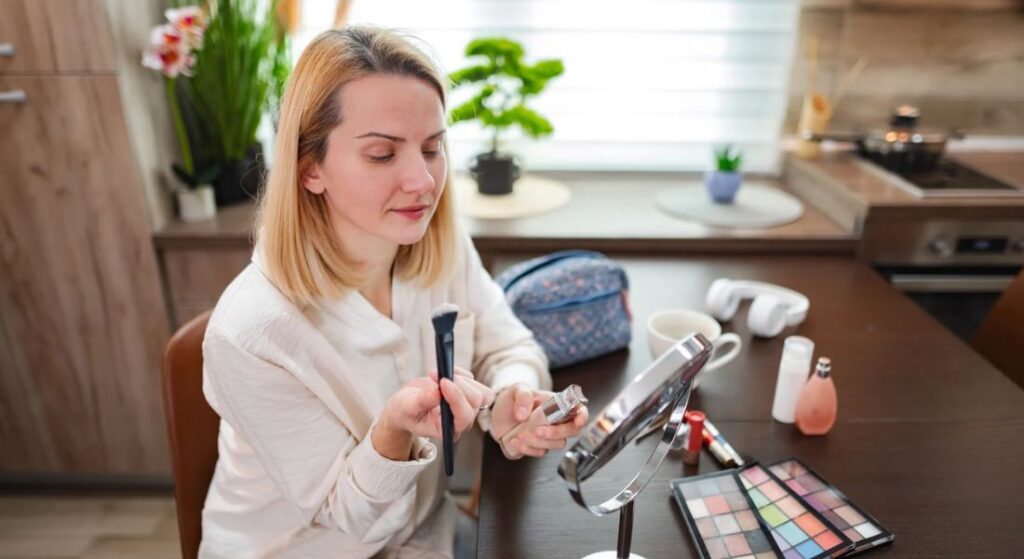
Your skin can remain pink or red after CO₂ laser even when the surface has healed. Your redness alone does not mean you must avoid makeup, provided your skin is smooth, closed and no longer raw or weeping.
Your practitioner may allow suitable makeup once your skin has healed, even if some redness remains. However, you should not cover skin that is broken or actively inflamed until it has recovered.
Research Insight
Surface healing and redness do not necessarily resolve at the same time. Recovery after ablative fractional CO₂ varies with treatment intensity, and corrective makeup should wait until the skin barrier has recovered rather than being restarted simply because a certain number of days has passed.
This explains why your skin may be healed enough for approved camouflage makeup while some pinkness or redness is still visible.
Why Can Applying Makeup Too Early Be a Problem?
Your freshly treated skin is more sensitive, so makeup ingredients may cause stinging, irritation or increased redness. Your skin barrier is also more vulnerable to contamination while it is still healing.
Your application and removal of makeup can involve rubbing, which may irritate fragile new skin. Your skin should therefore be given enough time to heal before you try to cover early redness.
What Type of Makeup Should You Use First?
Once your practitioner confirms that the surface has healed enough for makeup, choose simple, gentle and preferably fragrance-free products. If you are prone to acne or blocked pores, a non-comedogenic product may also be appropriate.
A green-toned colour corrector may help reduce the appearance of redness without the need for heavy foundation. Your skin should feel comfortable when you apply makeup, so stop using any product that causes burning, stinging or increased redness.
Clinical Tip
When you restart makeup, consider trying a small amount on one healed area before applying it across the whole treated region. If you develop persistent stinging, burning or increasing redness, remove it gently and wait before trying again.
Should You Use New Makeup and Clean Brushes?
Your makeup does not always need to be new, but you should avoid old, expired or contaminated products after CO₂ laser. Your brushes and sponges should be thoroughly clean, and you should wash your hands before applying makeup.
Your skin has only recently rebuilt its protective barrier, so you should avoid sharing cosmetics or applicators. Your clean, well-maintained products can help reduce unnecessary irritation or microbial exposure.
How Should You Apply Makeup After CO₂ Laser?
Once your practitioner confirms that your skin has healed enough, you should restart makeup gently. Your skin may still be sensitive, so reducing friction and irritation is important.
1. Use a light touch: Apply makeup by gently tapping or pressing it onto your skin rather than rubbing or buffing the treated area.
2. Keep coverage light: A thin layer of makeup may feel more comfortable on recently healed skin and can also be easier to remove without excessive rubbing.
3. Use clean applicators: Make sure your brushes, sponges and hands are clean before they touch your skin to reduce unnecessary exposure to bacteria.
4. Watch for irritation: Stop using the product if you notice persistent burning, stinging or increasing redness after application.
Your skin may need time to adjust even after the surface has healed. Keep your makeup routine simple at first and follow your practitioner’s aftercare advice.
How Should You Remove Makeup After Laser Resurfacing?

Your makeup should be removed gently without scrubbing or using exfoliating brushes and cloths. Your gentle cleanser, lukewarm water and fingertips can help minimise friction while your skin continues to recover.
Your skin should be patted dry rather than rubbed with a towel. If your makeup removal causes burning, bleeding or new raw areas, stop and contact your practitioner.
When Can You Restart Your Normal Skincare?
Your makeup may be restarted before your active skincare, once your skin has healed. Your retinoids, glycolic acid and other irritating ingredients may need to be avoided for longer, depending on your treatment intensity and your practitioner’s advice.
Your early skincare routine should usually stay simple, focusing on gentle cleansing, moisturisation and sun protection. Your active products can then be reintroduced gradually once your skin has fully recovered.
When Can You Start Wearing Sunscreen Again?
Your sunscreen timing depends on how well your skin has healed and your clinician’s aftercare instructions. Your early recovery may require hats, shade and avoiding direct sunlight before your skin is ready for sunscreen.
Your broad-spectrum SPF 30 or higher can become an important part of your routine once your skin has healed enough for application. Your sunscreen should feel comfortable, so ask your practitioner about alternatives if your usual product causes stinging or irritation.
What If Your Skin Is Still Peeling When You Want to Wear Makeup?
Your active peeling usually means your skin is still healing, so you should avoid picking, pulling or scrubbing the flakes away. Your makeup may also settle around dry edges and make peeling more noticeable.
Your moisturiser or prescribed wound-care routine should continue while your skin recovers. If your skin is still raw or crusted, you should wait before applying makeup; your practitioner can confirm when it is safe.
What Signs Mean You Should Delay Makeup and Contact Your Practitioner?
Your normal recovery may include redness, swelling, dryness, tenderness and peeling. Increasing pain, spreading redness, significant swelling, pus-like discharge, blistering or worsening crusting should be assessed by your practitioner.
New blisters or grouped sores, rapidly worsening pain, fever or a sudden deterioration after your skin had started improving can also warrant prompt medical advice, as infection can sometimes complicate ablative laser healing.
Your treated skin should not be covered with makeup if it starts breaking down or looks infected. Your practitioner can check the area and advise whether you need treatment or should continue delaying cosmetics.
UK Guidance Note
Before having a cosmetic procedure, check your practitioner’s relevant training, experience and insurance, and ask who will provide aftercare if something goes wrong.
This is particularly useful after resurfacing because your practitioner should give you clear instructions about wound care, makeup, skincare and who to contact if healing does not progress as expected.
How Can You Plan CO₂ Laser Around Work and Social Events?
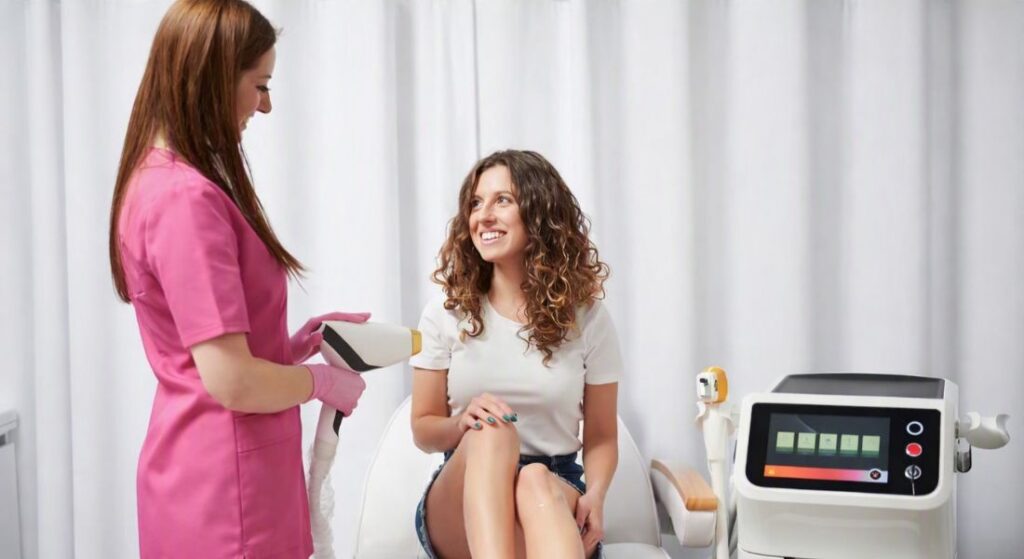
Your skin may be healed enough for makeup while still showing redness, dryness or sensitivity. Your lighter fractional CO₂ treatment may have less visible downtime, while stronger resurfacing can require a couple of weeks or longer before important events.
Your clinician can give you a more realistic recovery estimate based on your treatment settings. Your redness may also continue after your skin has healed, so you should allow extra time before an important work or social event.
Myth vs Fact
| Myth | Fact |
| You can always wear makeup seven days after CO₂ laser. | Healing varies, so the condition of your skin matters more than a fixed day. |
| Red skin means makeup is never allowed. | Residual redness can persist after the surface has healed. |
| Makeup can safely hide crusting or raw areas. | Cosmetics should not be applied over open, weeping or actively crusted skin. |
| Stronger resurfacing has the same recovery as a light fractional treatment. | More intensive treatment generally requires longer healing. |
| Once makeup is allowed, every skincare product can also be restarted. | Irritating active skincare may need to be delayed for longer. |
Key Takeaways
1. Wait until your treated skin has healed before restarting makeup after CO₂ laser.
2. Lighter fractional treatment may heal sooner, while more intensive resurfacing can require longer recovery.
3. Open, weeping, actively crusted or broken skin should not be covered with cosmetics.
4. Residual redness can remain after the surface has healed and does not always prevent makeup use.
5. Restart products gently and avoid anything that causes burning, stinging or increasing irritation.
6. Follow your own clinician’s aftercare instructions rather than relying only on a fixed number of days.
Frequently Asked Questions
1. How soon can you wear makeup after CO₂ laser resurfacing?
You can usually restart makeup once the treated surface has re-epithelialised and there are no raw, open, weeping or actively crusting areas. This may be around a week after lighter fractional treatment, while more intensive resurfacing may take around one to two weeks or longer, depending on how your skin heals.
2. Can you wear makeup while your skin is still red after CO₂ laser?
Redness alone does not necessarily mean you need to avoid makeup. If your skin is fully closed and your practitioner has cleared you, you may be able to use makeup to camouflage residual redness.
3. Why should you avoid makeup immediately after CO₂ laser?
Your skin barrier is temporarily weakened and may be raw, weeping or sensitive. Makeup and the friction involved in applying and removing it can cause irritation and interfere with healing.
4. What does healed skin look like after CO₂ laser?
The treated surface should be closed without raw, open, weeping or actively crusting areas. Your skin may still look pink or red even after it has healed enough for makeup.
5. Does fractional CO₂ laser heal faster than more intensive resurfacing?
Generally, yes. Lighter fractional treatments often have a shorter recovery, while deeper or more extensive CO₂ resurfacing can require a longer makeup-free period.
6. What type of makeup should you use after CO₂ laser?
Once approved by your practitioner, start with simple, gentle products such as oil-free or non-comedogenic makeup. Avoid strongly fragranced products and stop using anything that causes burning or increased redness.
7. Should you use clean makeup brushes after CO₂ laser?
Yes. Use clean brushes or fresh applicators and avoid old, expired or contaminated cosmetics to reduce unnecessary exposure to bacteria while your skin is recovering.
8. How should you apply and remove makeup after CO₂ laser?
Use a light touch and avoid rubbing, dragging or buffing the skin. Remove makeup with a gentle cleanser recommended by your practitioner and pat your skin dry rather than rubbing it.
9. When can you restart your normal skincare after CO₂ laser?
Makeup may be restarted before active skincare products such as retinoids or exfoliating acids. Your practitioner should advise when to reintroduce these products based on your treatment and healing.
10. What should you do if your skin is still peeling or becoming more irritated?
Do not pick or scrub peeling skin just to make makeup easier to apply. If you develop increasing pain, spreading redness, pus-like discharge, blistering or worsening swelling, contact your practitioner and delay makeup until you have been assessed.
Final Thoughts: Wearing Makeup After CO₂ Laser
You should wait until the treated surface has re-epithelialised and is no longer raw, open, weeping or actively crusting before wearing makeup after CO₂ laser resurfacing. While redness may continue after the surface has closed, applying cosmetics too early can irritate fragile skin and interfere with recovery.
If you’re thinking about CO2 laser in London, you can get in touch with us at the London Medical & Aesthetic Clinic.
References:
1. Araviiskaia, E., Le Pillouer Prost, A., Kosmadaki, M., Kerob, D. and Roo, E. (2022) ‘Recommendations for the use of corrective makeup after dermatological procedures’, Journal of Cosmetic Dermatology, 21(4), pp. 1554–1558. Available at: https://pmc.ncbi.nlm.nih.gov/articles/PMC9291946/
2. Heise, R. et al. (2019) ‘Accelerated wound healing with a dexpanthenol-containing ointment after fractional ablative CO₂ laser resurfacing of photo-damaged skin in a randomized prospective clinical trial’, Cutaneous and Ocular Toxicology, 38(3), pp. 274–278. Available at: https://pubmed.ncbi.nlm.nih.gov/30897983/
3. Ramsdell, W.M. (2012) ‘Fractional CO₂ laser resurfacing complications’, Seminars in Plastic Surgery, 26(3), pp. 137–140. Available at: https://pmc.ncbi.nlm.nih.gov/articles/PMC3580977/
4. Amici, J.-M. et al. (2023) ‘Expert recommendations on supportive skin care for non-surgical and surgical procedures’, Journal of the European Academy of Dermatology and Venereology, 37(Suppl. 3), pp. 16–33. Available at: https://pubmed.ncbi.nlm.nih.gov/36635618/
5. Ratner, D. et al. (1999) ‘Cutaneous laser resurfacing’, Journal of the American Academy of Dermatology, 41(3), pp. 365–392. Available at: https://www.sciencedirect.com/science/article/abs/pii/S0190962299701106