

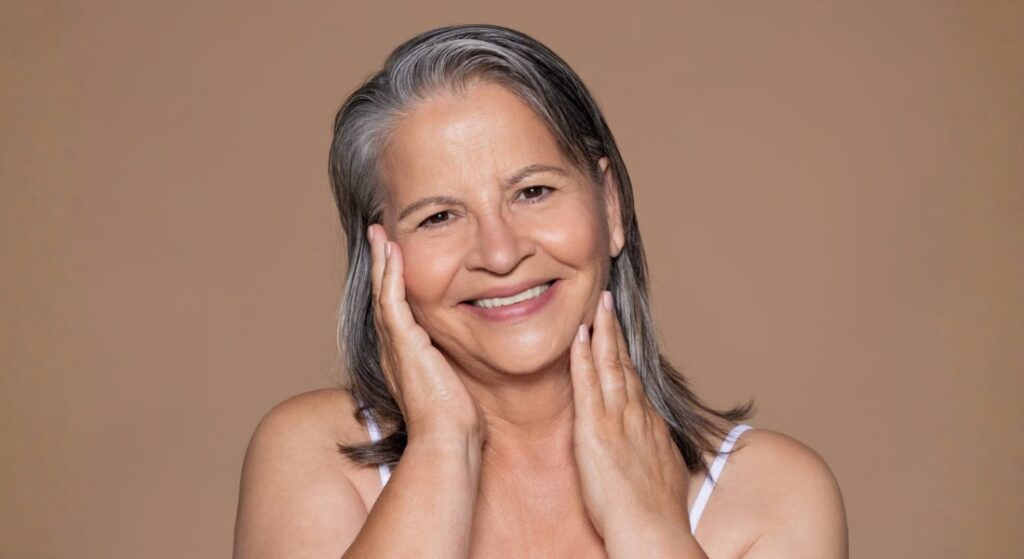
Skin sagging is one of the most common changes you may notice as you get older. It can appear as softer cheeks, looser skin around the jawline, a crepey texture on the neck, or a gradual loss of firmness across the face. Although these changes may seem sudden, they usually develop slowly over many years.
Your skin stays firm because it is supported by a complex network of structural proteins and moisture-binding substances. Collagen provides structural strength, elastin contributes to flexibility and recoil, and water-binding molecules within the skin help maintain hydration and resilience. As the quality and quantity of these components decline, your skin becomes less able to hold its shape.
Ageing also affects the way your skin repairs itself and responds to daily movement. Sun exposure, smoking, hormonal changes, genetics, and repeated facial expressions can all contribute to the breakdown of collagen and elastin. Over time, you may notice that the skin feels thinner, less elastic, and slower to bounce back.
Gravity plays a role, but it is not the only reason skin begins to sag. Changes also occur in facial fat compartments, ligaments, muscles, bones, and other deeper support structures, making facial ageing a layered process rather than a surface problem alone. Understanding this can help you make more realistic decisions about skincare and aesthetic treatments, as one cream, injectable, or device may not address every cause of laxity.
What Skin Elasticity Really Means
Skin elasticity is your skin’s ability to stretch and then return to its original shape. You can think of it as the natural bounce-back quality that helps your skin feel firm, smooth, and resilient. When elasticity is strong, the skin is better able to recover after movement or pressure.
Most of this support comes from the dermis, which is the deeper layer beneath the visible surface of your skin. It contains collagen, elastin, fibroblasts, blood vessels, and other structures that help maintain strength and flexibility. These components work together to support your skin from within.
As the dermis changes with age, your skin becomes less able to resist stretching and recover as quickly. You may begin to notice folds, looseness, or a softer facial outline as this support gradually weakens. These changes usually develop slowly rather than happening all at once.
Collagen Provides the Skin’s Strength
Collagen is the main structural protein found in the dermis, the deeper layer beneath the surface of your skin. It acts like an internal framework, helping your skin maintain its strength, thickness, and resistance to everyday movement.
As you get older, collagen production gradually declines, while existing collagen fibres can become fragmented and less organised. This weakens the supportive network within your skin and reduces its ability to remain firm and resilient.
When collagen levels decline, your skin has less internal scaffolding to support its shape. You may begin to notice deeper folds, wrinkles, thinning, or sagging as these changes progress. The process develops gradually and is influenced by age, genetics, sun exposure, and lifestyle factors.
Elastin Gives Skin Its Bounce
Elastin is an important protein found in the dermis, the deeper layer beneath the surface of your skin. While collagen gives your skin strength and structure, elastin allows it to stretch and return to its original position.
Healthy elastin fibres help your skin recover after facial movement, swelling, or stretching. As elastin fibres become damaged and their organisation changes with age, your skin may gradually lose some of its ability to recoil.
Although elastin makes up a smaller proportion of the dermis than collagen, it plays a crucial role in maintaining firmness and flexibility. When elastin support declines, you may notice that your skin feels looser, less resilient, and more prone to visible sagging.
The Dermal Matrix Acts Like Internal Scaffolding
Collagen and elastin do not work alone within your skin. They sit inside the extracellular matrix, a supportive network made up of proteins, water-binding molecules, and other structural components. This matrix helps organise and strengthen the deeper layers of your skin.
The dermal matrix also helps your skin stay hydrated, flexible, and able to repair everyday damage. It supports communication between skin cells and creates the environment needed for collagen and elastin fibres to function properly.
As you get older, this internal support network gradually becomes weaker and less organised. Your skin may then become thinner, less resilient, and less able to maintain its shape. This can make looseness, fine lines, and sagging appear more noticeable over time.
Fibroblasts Become Less Active with Age

Fibroblasts are specialised cells within the dermis that produce collagen, elastin, and other molecules needed to support your skin. They help maintain firmness, strength, and flexibility while also contributing to normal repair.
As you get older, fibroblast activity generally declines, reducing the skin’s ability to produce and maintain structural components. Your skin may then produce less new collagen and repair existing damage more slowly, making it harder to maintain the same level of resilience.
Ageing is also associated with increased collagen breakdown within the dermis. As these changes continue, your skin may become thinner, weaker, and less elastic. You may then notice that looseness, fine lines, and sagging become more visible over time.
Intrinsic Ageing Changes the Skin from Within
Intrinsic ageing is the natural process that gradually changes your skin over time. It is influenced by genetics, cellular ageing, slower repair processes, and changes within the deeper structures that support your skin.
As you get older, the dermis gradually becomes thinner and produces less structural support. Collagen levels decline, elastin fibres become less organised, and your skin may retain less moisture than it did previously.
These internal changes reduce your skin’s strength, flexibility, and ability to hold its shape. You may begin to notice greater dryness, thinner texture, reduced firmness, and more visible laxity. Although intrinsic ageing cannot be stopped, understanding it can help you set realistic expectations for skincare and treatment.
Sun Exposure Speeds Up Elasticity Loss
Sun exposure is one of the main external causes of premature skin ageing. Ultraviolet radiation can damage the collagen and elastin fibres that help keep your skin firm, while also increasing the activity of enzymes that break down this support network.
This process is known as photoageing and can develop gradually after repeated exposure. You may notice wrinkles, uneven skin tone, rough texture, pigmentation, and increasing laxity as the damage builds over time.
Protecting your skin from ultraviolet exposure is one of the most effective long-term ways to preserve firmness. You can reduce further damage by using broad-spectrum sunscreen, seeking shade, and wearing protective clothing when sunlight is strong. These habits cannot reverse all existing changes, but they may help slow further loss of elasticity.
Oxidative Stress Damages Your Skin’s Support System
Oxidative stress happens when unstable molecules, known as free radicals, damage your skin cells and proteins. Everyday factors such as UV radiation, air pollution, smoking, and ongoing inflammation can all increase this damage over time.
As oxidative stress builds up, it gradually weakens your skin’s collagen, elastin, and protective barrier. This makes it harder for your skin to repair itself, maintain its firmness, and stay resilient, which can contribute to sagging as you get older.
Your skin is also affected by a process called chronic low-grade inflammation, often referred to as inflammageing. This ongoing low-grade inflammation may contribute to collagen breakdown and changes in the skin’s support structure.
Gravity Becomes More Visible When Support Weakens
Gravity is often blamed for sagging skin, but it is not the only reason your face changes with age. Gravity may contribute to visible sagging, but its effects become more apparent when skin elasticity and deeper facial support structures change with age.
As your collagen, elastin, and facial support tissues weaken, they become less able to hold everything in place. This can lead to visible changes such as sagging cheeks, jowls, and looser skin around your jawline.
Facial ageing is caused by several changes happening at the same time. Along with the effects of gravity, your face also loses volume in the fat pads and other supporting tissues, and together these changes contribute to a more noticeable loss of firmness and definition.
Facial Fat Compartments Also Change
Your face contains several fat compartments that help create smooth, youthful contours. These fat pads support areas such as your cheeks, temples, under-eye region, and jawline, giving your face its natural shape and volume.
As you get older, facial fat compartments may change in size, position, and distribution. This can make certain areas of your face appear hollow while others look heavier, contributing to changes in your overall facial appearance.
Sagging is not caused by loose skin alone. The way your skin sits over the deeper facial structures also changes as facial volume is lost, which is why both volume loss and tissue descent are important when assessing facial ageing.
Bone Structure Changes with Age
Your facial bones also change gradually as you get older. Certain areas of the facial skeleton may undergo gradual remodelling and changes in volume and projection.
As this underlying framework changes, your cheeks may appear flatter, the area around your eyes can become more hollow, and your jawline may lose some of its definition. These changes often make sagging skin more noticeable, even if your skin itself is still relatively healthy.
Facial ageing is not caused by skin changes alone. It also involves gradual changes to the underlying bone structure, along with fat redistribution, muscle changes, and reduced skin elasticity, all of which work together to alter the shape and support of your face.
Research Insight: Facial Ageing Happens in Layers
Research describes facial ageing as a three-dimensional process involving changes to the facial skeleton, fat compartments, muscles, supporting tissues and skin. A visible concern such as a softer jawline may therefore reflect several changes occurring together rather than a problem with skin elasticity alone.
This layered understanding helps explain why treating only the skin surface may improve texture without fully correcting facial descent or volume loss. Treatment planning should identify which anatomical changes are most relevant rather than applying the same procedure to every patient.
Skin Hydration Affects Firmness
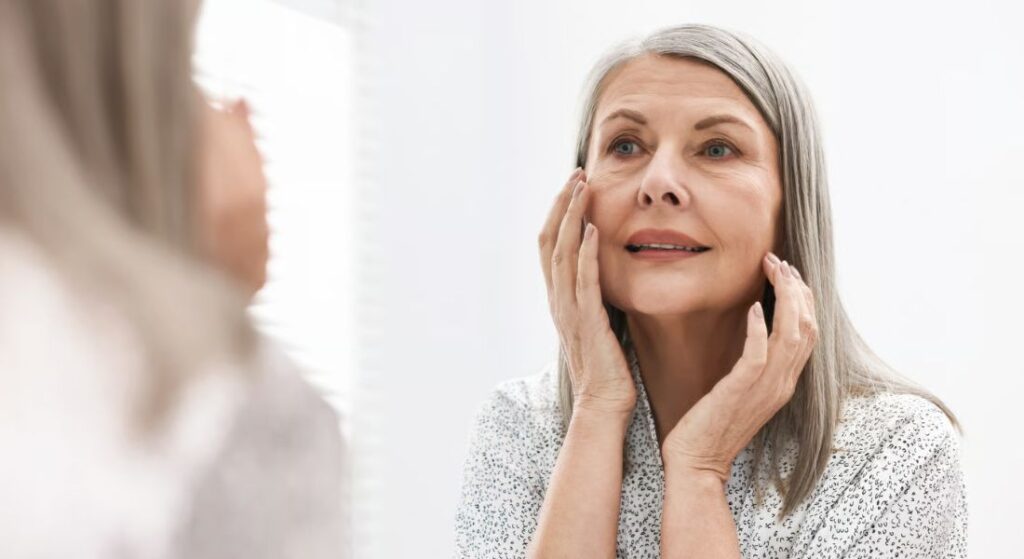
Hydrated skin generally looks smoother, healthier, and more resilient because water helps support its natural structure. Molecules within the deeper layers of your skin bind water, helping your skin stay plump, flexible, and comfortable.
As you get older, your skin becomes less able to retain moisture effectively. The skin barrier may become drier, and the deeper layers gradually lose some of their ability to hold water, which can make your skin feel rougher and appear less firm.
Although dryness is not the main cause of sagging skin, it can make fine lines and skin laxity more noticeable. Keeping your skin well hydrated will not reverse deeper structural ageing, but it can improve your skin’s texture, comfort, and overall appearance.
Hormonal Changes Can Influence Skin Elasticity
Hormones play an important role in maintaining your skin’s thickness, collagen production, and hydration. This is why many people notice more rapid changes in their skin during perimenopause and menopause.
As oestrogen levels decline, particularly around menopause, the skin may become thinner, produce less collagen, and show changes in elasticity and hydration. These natural changes can make sagging, wrinkles, and dryness more noticeable over time.
If you are experiencing significant hormonal symptoms alongside changes in your skin, it is important to discuss them with your healthcare professional. Aesthetic treatments may help improve your skin’s appearance and quality, but they should complement, not replace, appropriate medical advice about your overall hormonal health.
Weight Changes Can Stretch the Skin
Weight changes can have a noticeable effect on your skin. When you gain weight, your skin stretches to accommodate the extra volume, and after weight loss there may be less underlying tissue to support it.
How well your skin tightens afterwards depends on several factors, including your age, genetics, skin quality, the amount of weight you have lost, and how long your skin was stretched. Younger skin with healthier collagen and elastin often recovers more effectively than skin that has already lost some of its natural elasticity.
This is why some people notice loose or sagging skin after significant weight loss. The change is not simply caused by losing fat, but also by your skin’s reduced ability to contract and adapt once its supporting structures have weakened.
Smoking Can Accelerate Skin Ageing
Smoking is an important modifiable factor associated with premature skin ageing. Tobacco smoke can impair blood flow, increase oxidative stress and contribute to collagen and elastin damage, reducing the skin’s ability to remain firm and resilient.
Over time, the chemicals in tobacco smoke can speed up the breakdown of your skin’s support structure. This contributes to wrinkles, dullness, reduced elasticity, and sagging that may become more noticeable than would be expected with ageing alone.
Although stopping smoking cannot reverse all existing skin damage, it can help slow further ageing and improve your skin’s overall health. If you are considering aesthetic treatments in the future, quitting smoking may also support better healing and treatment outcomes.
Why Sagging Appears in Some Areas First
Sagging does not usually develop evenly across your face. You may notice it first in areas where the skin is thinner or where the underlying support structures naturally weaken sooner, such as the lower face, neck, eyelids, cheeks, and under the chin.
The lower face often shows some of the earliest changes because reduced cheek support, shifting facial fat, skin laxity, and changes in the jawline all occur together. As these changes develop, you may begin to notice jowls or a softer, less defined jawline.
Your neck is also prone to showing signs of ageing because the skin is relatively thin and is often exposed to sunlight over many years. As a result, treating the neck may require a different approach from treating areas such as your cheeks or jawline.
When a Change May Not Be Normal Skin Ageing
Age-related sagging usually develops gradually. Seek medical advice if you notice a new lump, persistent swelling, unexplained skin thickening, significant inflammation or a rapid change affecting only one area.
Call emergency services if facial drooping appears suddenly, particularly when it occurs with arm weakness, speech difficulty, confusion, severe headache or loss of balance. These symptoms should not be assumed to be part of normal facial ageing.
Collagen-Stimulating Treatments May Support Firmness
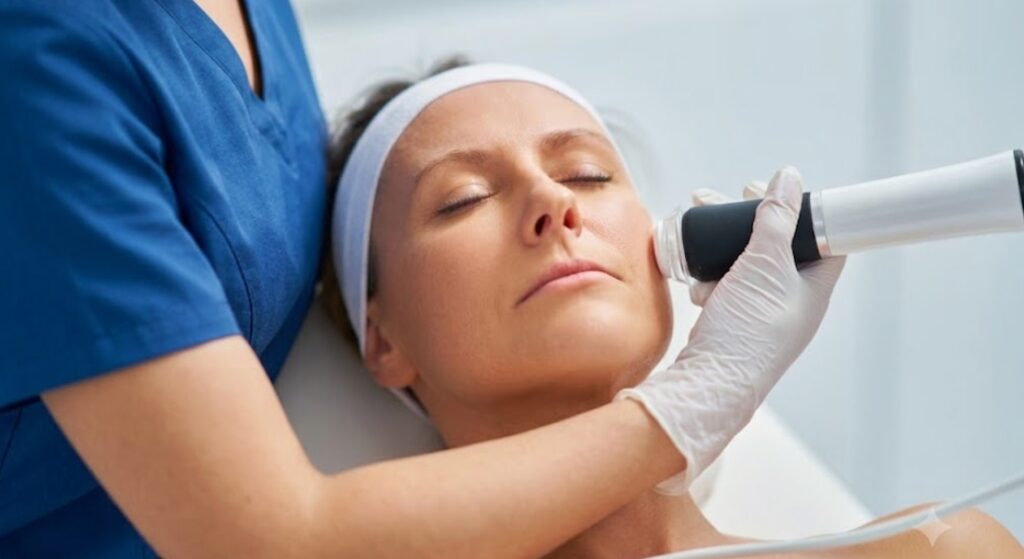
Some aesthetic procedures aim to encourage collagen production or tissue remodelling within the skin. Depending on the treatment, these may include microneedling, selected collagen-stimulating injectables, radiofrequency, microfocused ultrasound and certain laser procedures.
These treatments do not all work in the same way, and the strength of evidence varies between individual products, devices and treatment protocols. Results are usually gradual and may range from subtle to moderate rather than producing an immediate surgical-style lift.
Suitability depends on factors such as your skin type, degree of laxity, medical history, previous procedures and treatment expectations. More advanced skin laxity may not respond sufficiently to a non-surgical approach, and a responsible practitioner should explain the likely limitations before treatment.
Skincare Can Help, But It Has Limits
Evidence-based skincare may help protect your skin and improve hydration, texture and selected signs of sun damage. Daily broad-spectrum sunscreen is particularly important, while topical retinoids may improve some signs of photoageing, such as fine lines and uneven texture, when suitable and used correctly. Antioxidant products vary considerably, so their effects depend on the active ingredient, concentration, stability and overall formulation.
However, creams and serums cannot restore lost facial fat, reverse bone remodelling, reposition descended tissues or remove significant excess skin. Skincare remains valuable for maintaining skin health, but expectations should be realistic.
Retinoids can cause dryness, irritation, redness and increased sensitivity. Topical retinoids are not suitable during pregnancy, and anyone who is pregnant or planning a pregnancy should discuss their skincare products with an appropriate healthcare professional.
What Different Approaches May and May Not Address
| Approach | What It May Help With | Important Limitations |
| Sunscreen and skincare | Hydration, skin-barrier support, texture and prevention of further sun damage | Cannot reposition tissues or correct significant laxity |
| Retinoid treatment | Selected signs of photoageing, fine lines and skin texture | Can cause irritation and is not suitable for everyone |
| Microneedling | Texture, fine lines and gradual collagen remodelling | Results are usually subtle and several sessions may be needed |
| Radiofrequency or ultrasound | Mild to moderate laxity in selected patients | Results vary by device and cannot reproduce a surgical lift |
| Laser treatment | Texture, pigmentation, fine lines and selected degrees of laxity | Downtime and pigmentation risk depend on the laser and skin type |
| Injectable collagen-stimulating treatments | May support collagen production and improve selected aspects of skin quality or volume loss depending on the product used | Product-specific risks include swelling, nodules, infection and rare vascular complications |
| Volume-restoring treatment | Selected age-related volume loss and changes in facial support | Does not remove loose skin and can look unnatural if overused |
| Surgery | More advanced laxity or excess skin | Involves anaesthesia, surgical risks, scarring and a longer recovery |
The appropriate approach depends on whether the main concern is surface damage, reduced skin elasticity, volume loss, tissue descent or excess skin. Several factors may be present at the same time, but this does not automatically mean that multiple treatments are necessary.
How Energy-Based Treatments Stimulate Remodelling
Energy-based treatments use carefully delivered light, heat, radiofrequency or ultrasound to create a controlled stimulus at selected depths within the skin and supporting tissues. Depending on the technology, this may stimulate a controlled wound-healing response and encourage gradual tissue remodelling.
The depth, effect and recovery period depend on the particular device, settings and treatment technique. Lasers, radiofrequency and ultrasound treatments are not interchangeable, and not every device is suitable for every skin type, facial area or degree of laxity.
Possible short-term effects include redness, swelling, tenderness, bruising and temporary changes in sensation. Less commonly, burns, pigmentation changes, infection, scarring, unwanted changes in facial fat or nerve-related symptoms may occur. Your practitioner should explain the risks associated with the exact device being proposed rather than discussing energy-based treatments as a single category.
Evidence Note
A 2025 systematic review and meta-analysis examined 42 studies of microfocused ultrasound with visualisation. In the pooled analyses, investigators reported improvement according to the assessment methods used in the included studies, while 84% of 312 patients reported improvement themselves.
These percentages should be interpreted carefully. Results varied substantially between studies, many of the included studies were non-randomised, different body areas and assessment methods were used, and neutral responses may sometimes have been classified as improvement. The pooled average pain score was approximately 4.9 out of 10, indicating moderate discomfort.
The findings suggest that treatment may provide improvement for selected patients, but they do not predict the degree of tightening an individual patient will achieve and should not be interpreted as a guaranteed success rate.
Clinical Tip
Before choosing a treatment, ask your practitioner to identify whether your main concern is reduced skin quality, true skin laxity, volume loss, tissue descent or excess skin. These problems may look similar but do not necessarily respond to the same procedure.
Ask for the exact name of the proposed device or injectable product, why it is suitable for you, the realistic degree of improvement, expected discomfort and downtime, possible complications, how long results may last and what support is available if something goes wrong.
UK Safety Note
In the UK, cosmetic procedures are elective treatments and should still be approached as medical or procedural decisions with possible risks. NHS advice recommends choosing a suitably qualified and experienced practitioner who can explain how the procedure is performed, expected recovery, possible complications, result duration and aftercare.
Regulation of non-surgical aesthetic procedures in England continues to develop, with ongoing work aimed at improving safety standards. Patients should still check the qualifications, experience and training of any practitioner before undergoing treatment.
Why Personalised Assessment Matters
Skin sagging is rarely caused by a single factor. Changes in collagen and elastin, sun exposure, hydration, facial fat, bone structure, gravity, and lifestyle all play a role, and the balance is different for every person.
This is why a personalised assessment is an important first step before choosing any treatment. Your practitioner will carefully assess your skin, facial structure, and the underlying causes of the changes you have noticed rather than focusing on one feature alone.
By understanding whether your main concern is skin laxity, volume loss, changes in skin texture, facial descent, or a combination of these factors, your practitioner can recommend a treatment plan that is tailored to your individual needs and goals.
Myth vs Fact
| Myth | Fact |
| Gravity is the only reason skin sags. | Sagging reflects changes in skin, fat, ligaments, muscles, bone and other supporting structures. |
| Drinking more water can tighten significantly loose skin. | Maintaining hydration supports skin comfort and appearance but cannot reverse structural laxity. |
| Collagen creams replace lost dermal collagen. | A moisturiser may improve hydration, but topical collagen does not rebuild the deeper facial support system. |
| More treatment creates a better lift. | Excessive or poorly selected treatment can produce unnatural results or unnecessary risk. |
| Every energy-based device works in the same way. | Lasers, radiofrequency and ultrasound use different mechanisms, depths and treatment protocols. |
| Non-surgical means risk-free. | Non-surgical treatments can still cause pain, burns, pigment changes, infection, scarring or other complications. |
| One procedure can correct every sign of ageing. | Different treatments address different layers and concerns. |
| A cream can provide the same result as surgery. | Skincare can improve skin quality but cannot remove substantial excess skin or reposition descended tissues. |
Key Takeaways
1. Skin elasticity is the ability of your skin to stretch and return towards its original shape.
2. Collagen provides strength, while elastin contributes to flexibility and recoil.
3. Skin sagging is influenced by ageing, ultraviolet exposure, smoking, hormones, weight changes and genetics.
4. Facial fat compartments, supporting tissues and bone structure also change with age.
5. Hydration can improve skin texture but cannot reverse deeper structural laxity.
6. Sunscreen is one of the most important ways to limit further photoageing.
7. Retinoids may improve selected signs of photoageing but are not suitable for everyone.
8. Microneedling, radiofrequency, ultrasound, lasers and injectable biostimulators are not interchangeable treatments.
9. Non-surgical treatment usually produces gradual and limited improvement rather than a surgical-style lift.
10. Every aesthetic procedure carries possible risks and limitations.
11. A personalised assessment should identify the underlying cause of the visible change before treatment is recommended.
12. Sudden facial drooping or weakness requires urgent medical assessment and should not be attributed to ageing.
Frequently Asked Questions
1. Why does skin start to sag with age?
Skin gradually loses firmness because collagen and elastin production decline over time. At the same time, changes in facial fat, ligaments, bone structure, and hydration reduce the skin’s natural support, making sagging more noticeable.
2. At what age does skin typically begin to lose elasticity?
Skin ageing develops gradually throughout adulthood, but there is no single age at which everyone begins to notice reduced elasticity. Visible changes may appear earlier or later depending on genetics, skin type, cumulative sun exposure, smoking, hormonal changes, weight fluctuations and general health.
3. Can sagging skin be prevented?
Ageing cannot be prevented, but protecting your skin from ultraviolet exposure and avoiding smoking may help reduce preventable damage. A balanced diet, adequate hydration and suitable skincare can support general skin health, although they cannot prevent all the deeper structural changes associated with ageing.
4. Is collagen loss the only reason skin sags?
No. Although collagen loss is a major contributor, skin sagging is also influenced by reduced elastin, facial fat redistribution, bone remodelling, gravity, hormonal changes, sun damage, and lifestyle factors. These changes work together rather than occurring independently.
5. Does losing weight cause loose skin?
Significant or rapid weight loss can leave excess skin because the underlying fat volume decreases faster than the skin can retract. The degree of loose skin depends on factors such as age, genetics, the amount of weight lost, and the skin’s existing elasticity.
6. Can skincare products tighten sagging skin?
Skincare products can improve hydration, strengthen the skin barrier, and enhance the appearance of skin texture. However, creams and serums cannot reverse significant skin laxity or restore deeper structural support that has been lost with ageing.
7. Which aesthetic treatments may help improve skin firmness?
Depending on your skin and the degree of laxity, treatments such as microneedling, selected radiofrequency or ultrasound-based procedures, laser treatments, and some injectable collagen-stimulating treatments may improve selected aspects of skin quality or firmness in appropriate patients. The most suitable option depends on a professional assessment. These treatments may provide gradual improvement in selected patients, but they cannot reproduce the degree of lifting or excess-skin removal achieved through surgery.
8. Does sun exposure make skin sag faster?
Yes. Ultraviolet (UV) radiation damages collagen and elastin fibres and accelerates photoageing. Regular use of broad-spectrum sunscreen and limiting excessive sun exposure are among the most effective ways to help preserve skin elasticity.
9. Why does the jawline and neck often sag first?
The jawline and neck are particularly prone to visible ageing because of thinner skin, reduced collagen, facial fat changes, gravity, and repeated movement. These areas are also commonly exposed to sunlight, which can accelerate the loss of skin elasticity.
10. When should I seek professional advice for sagging skin?
If skin laxity is becoming a cosmetic concern or you are considering treatment, a consultation with a qualified practitioner can help identify the underlying causes and discuss realistic treatment options. A personalised assessment is important because skin sagging is usually caused by several age-related changes rather than a single factor. Seek medical assessment rather than an aesthetic consultation if the change appeared suddenly, affects only one side or is accompanied by weakness, speech difficulty, swelling, pain or another new symptom.
Final Thoughts: Understanding Skin Ageing and Your Next Steps
Skin sagging is a natural part of ageing, but it is influenced by far more than gravity alone. Changes in collagen, elastin, facial fat, bone structure, hormones, sun exposure and lifestyle all contribute to how your skin looks and feels over time. Understanding these processes can help you make informed decisions about skincare and aesthetic treatments while setting realistic expectations for what different approaches can achieve.
If you are concerned about skin laxity or would like personalised advice on treatments that may help improve skin firmness, you can get in touch with the London Medical and Aesthetic Clinic to arrange a consultation and discuss the most suitable options for your skin and facial structure.
References:
1. Farage, M.A., Miller, K.W., Elsner, P. and Maibach, H.I. (2008) ‘Intrinsic and extrinsic factors in skin ageing: a review’, International Journal of Cosmetic Science, 30(2), pp. 87–95. Available at: https://pubmed.ncbi.nlm.nih.gov/18377617/
2. Krutmann, J., Bouloc, A., Sore, G., Bernard, B.A. and Passeron, T. (2017) ‘The skin aging exposome’, Journal of Dermatological Science, 85(3), pp. 152–161. Available at: https://pubmed.ncbi.nlm.nih.gov/28002701/
3. Yin, L. et al. (2019) ‘Skin aging and smoking: mechanisms and prevention’, Dermato-Endocrinology, 11(1), article e1551461. Available at: https://pmc.ncbi.nlm.nih.gov/articles/PMC6369617/
4. Mukherjee, S. et al. (2006) ‘Retinoids in the treatment of skin aging: an overview of clinical efficacy and safety’, Clinical Interventions in Aging, 1(4), pp. 327–348. Available at: https://pmc.ncbi.nlm.nih.gov/articles/PMC2699641/
5. Dreno, B. et al. (2021) ‘The science of skin ageing and rejuvenation: Current concepts and future perspectives’, Cosmetics, 8(4), article 104. Available at: https://www.mdpi.com/journal/cosmetics