



You can be fit and at a relatively stable weight while still having stubborn areas of fat around your abdomen, waist, flanks, back or thighs. Some areas may also feel firmer or denser because of the connective tissue within your subcutaneous fat.
“Fibrous fat” is a cosmetic term often used to describe denser fat that can be more resistant during liposuction. VASER liposuction uses ultrasound energy to help break up fat before it is removed, but your results still depend on your anatomy, skin quality and the amount and location of fat.
What Does “Fibrous Fat” Actually Mean?
Your “fibrous fat” is not a formal medical diagnosis. Your subcutaneous fat also contains connective tissue, blood vessels and nerves, and some areas may naturally feel denser or firmer than others.
Your practitioner may use “fibrous” to describe tissue that feels more resistant during liposuction. This is different from fibrosis, which refers to excess fibrous tissue that can develop after injury or healing.
Why Can Some Areas Feel Harder Than Others?
You may notice that fat feels softer in some parts of your body and firmer in others. This can happen because the structure of your skin, connective tissue and underlying tissues varies between different areas.
1. Your connective tissue can vary: Some areas naturally contain denser supporting tissue, which can make them feel firmer.
2. Previous weight changes can affect tissue: Weight gain or loss may change how your fat and skin feel in certain areas.
3. Pregnancy and ageing can make a difference: These changes can affect your skin elasticity and the structure of the tissues underneath.
4. Previous surgery can alter the area: Scar tissue or healing changes may make previously treated areas feel firmer or less even.
A firm area does not automatically mean you have “fibrous fat” or need more aggressive treatment. Your surgeon should assess what is causing the firmness before recommending the most appropriate approach.
Are Athletic People More Likely to Have Fibrous Fat?
Not necessarily. Being athletic does not automatically mean that your fat is more fibrous or harder to remove. You may simply have a smaller amount of subcutaneous fat, making a remaining pocket more noticeable.
Your underlying muscle definition and the thickness of your fat layer can also affect how your body contour looks. In these cases, the challenge may be precise contouring rather than treating unusually “hard” fat.
Why Can Diet and Exercise Leave Small Resistant Areas?
Your diet and exercise can reduce your overall body fat, but they cannot control exactly where your body stores or loses fat. Genetics can influence where your body tends to store fat, so a small pocket may remain around your lower abdomen, flanks, hips or thighs even when you are fit.
Liposuction may be considered for these localised areas when lifestyle changes are no longer making a noticeable difference. It is a body-contouring treatment rather than a replacement for a healthy diet and regular exercise.
Which Areas Can Contain More Fibrous Tissue?
Your firmer or more fibrous-feeling fat can occur in different parts of your body, including your upper back, flanks, abdomen or chest. The exact tissue characteristics can vary between your body areas, so there is no single area that always contains more fibrous fat.
Your surgeon will assess how thick your fat layer is, how the tissue feels and how much contouring you want before choosing a technique. VASER may be considered for some denser areas, but conventional liposuction can also be suitable depending on your anatomy.
How Does VASER Work on Dense Fat?
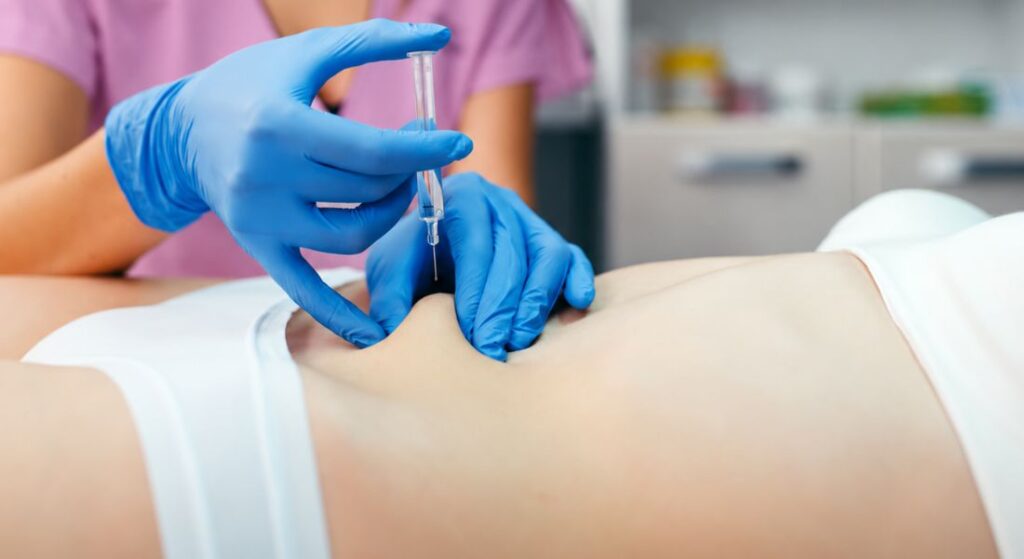
VASER liposuction uses ultrasound energy to help loosen or emulsify fat before it is removed with a suction cannula. The treatment area is first infiltrated with fluid, followed by a specialised probe that delivers ultrasound energy within the fat layer.
VASER may be useful when the tissue is denser or more resistant, but it does not automatically produce better results than conventional liposuction. Your surgeon’s technique, planning and understanding of your anatomy remain important to achieving a balanced contour.
Evidence Note
Ultrasound-assisted liposuction has historically been used in areas where tissue is relatively dense or fibrous. Studies involving gynaecomastia, for example, have described ultrasound-assisted techniques as useful for treating fatty tissue mixed with denser fibrous tissue. However, these studies mainly involve male breast tissue and should not be assumed to prove that VASER gives superior results in every firm abdominal, back or thigh area.
For you, the important question is therefore not simply whether an area feels “fibrous”. Your surgeon needs to establish what is actually creating the fullness or firmness: subcutaneous fat, scar tissue, skin laxity, muscle anatomy or a combination before deciding whether ultrasound-assisted liposuction offers a useful advantage.
Does VASER Remove More Fat Than Traditional Liposuction?
Not necessarily. VASER is designed to help your surgeon loosen and contour fat before removal, rather than simply allowing more fat to be removed than with traditional liposuction.
Your surgeon will focus on removing an appropriate amount of fat while maintaining a smooth, balanced contour. Removing too much from your treated area can increase the risk of unevenness or contour irregularities.
Why Can Fibrous Areas Be More Technically Challenging?
Areas with denser connective tissue can be more difficult to treat because they may create greater resistance as the surgeon moves the cannula through the fat. VASER may help loosen this tissue before the fat is removed.
Your surgeon also needs to avoid removing too much fat from one area, as this can lead to unevenness or contour irregularities. Your treatment therefore focuses on controlled fat removal and a smooth transition with the surrounding areas.
Can VASER Help With Athletic Body Contouring?
VASER may be considered if you are already relatively lean but have small areas of localised fat that reduce the definition you would like to see. The treatment can be used to refine areas such as your abdomen or flanks rather than for general weight loss.
Your result depends on your existing muscle definition, skin quality and fat distribution. Removing too much fat from your superficial layers can make your result look uneven or unnatural, so your surgeon should focus on revealing and enhancing your existing contours rather than simply removing more fat.
Why Does Low Body Fat Make Precision More Important?
When you already have low body fat, small changes in your fat layer can make a noticeable difference to your body shape. Your abdomen, flanks and other defined areas may therefore need more careful and conservative contouring.
Your surgeon may focus on creating smooth transitions rather than removing every last bit of superficial fat. Your skin quality, muscle definition and natural anatomy all help determine how much fat can be safely removed while maintaining a smooth contour.
Can VASER Treat Fibrosis After Previous Surgery?
Fibrosis after previous surgery is different from naturally dense or fibrous-feeling fat. A previously treated area may feel firm or uneven because of scar tissue, residual fat, fluid or other healing changes, which can make further liposuction more complicated.
VASER may be considered in selected cases, but it does not automatically remove postoperative fibrosis. Your surgeon should first identify what is causing the firmness and review your previous procedures before deciding on the most appropriate treatment.
Dense Fat, Fibrosis or Loose Skin: What Is the Difference?
| Concern | What it may mean | Why it matters |
| Dense or fibrous-feeling fat | Subcutaneous fat mixed with firmer connective tissue | May influence the liposuction technique used |
| Postoperative fibrosis | Scar-like tissue after previous surgery or healing | Revision treatment can be more technically complex |
| Residual fat | Fat remaining after previous treatment or weight change | May sometimes be suitable for further contouring |
| Loose skin | Reduced skin elasticity or excess skin | Removing more fat may not correct the main problem |
| Muscle structure | Underlying anatomy creating shape or fullness | Liposuction cannot remove or redesign muscle anatomy |
Clinical Tip
If an area feels firm after previous liposuction, do not assume that the problem is simply more stubborn fat. Postoperative firmness can relate to scar tissue or fibrosis, residual fat, contour irregularity or other healing changes, and these do not all require the same treatment.
Revision liposuction can also be technically more complex because the normal tissue planes may have changed. Research on secondary liposculpture has highlighted the importance of assessing and classifying postoperative fibrosis before planning revision treatment, because different patterns of fibrosis and contour irregularity may require different approaches.
What About Skin Tightening With VASER?
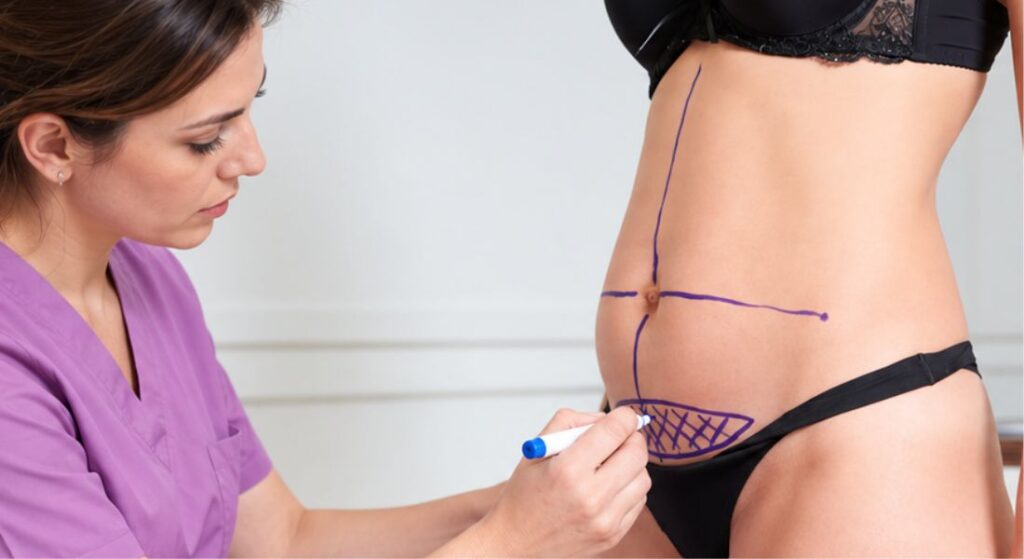
VASER may be associated with some skin retraction, but it does not guarantee that loose skin will become tighter. Your skin elasticity, age and the amount of excess skin all affect how your tissues respond after fat removal.
Your surgeon can assess whether your skin is likely to contract sufficiently after VASER. If you have significant excess skin, VASER alone may not give you the tighter contour you want.
Research Insight
A small randomised controlled study compared VASER-assisted lipoplasty with standard suction-assisted lipoplasty on opposite sides of the same patients. The researchers reported greater measured skin retraction and lower blood loss on the VASER-treated side, but they found no statistically significant difference in subjective measures such as pain, swelling or appearance at six months.
These findings suggest that VASER may influence tissue behaviour, but they do not mean you can expect a predictable amount of skin tightening. Your skin elasticity, age, previous weight changes and the amount of loose skin remain important, and significant excess skin may need a different treatment approach.
What Results Can You Expect From Treating Resistant Fat?
Your result depends on what is causing the fullness in the first place. If a small pocket of subcutaneous fat is the main issue and your skin has good elasticity, VASER may create a noticeable improvement in your body contour.
Its effect will be more limited if the fullness is mainly due to loose skin, muscle structure or deeper fat. Your result may be subtle, particularly when you are already lean, and the degree of visible change will vary between individuals.
How Long Does It Take to See the Final Contour?
Your result after VASER may not be clear immediately because swelling, bruising and temporary firmness can make the treated area look fuller or uneven. Your tissues need time to heal and settle after the fat has been removed.
Your final contour can continue to develop over several months as the swelling reduces and your skin adapts. Your surgeon can monitor your progress during follow-up and advise you if any ongoing changes need further assessment.
What Are the Risks of Treating Fibrous Areas?
VASER liposuction is still a surgical procedure, so you may experience swelling, bruising, numbness, discomfort or changes in skin sensation. Possible complications include infection, bleeding, seroma, contour irregularity and thermal injury, while less common serious complications can include blood clots.
Areas with dense or previously scarred tissue may require particularly careful treatment. Your surgeon’s experience, treatment planning and follow-up are therefore important parts of managing your individual risks.
When Should You Seek Medical Advice After VASER?
Contact your clinic promptly if you develop severe or worsening pain, increasing redness or swelling, discharge from a wound, fever or other unexpected symptoms after your procedure.
Seek urgent medical help if you develop sudden shortness of breath, chest pain or pain and swelling in one leg, as these symptoms can require urgent assessment.
UK Guidance Note
VASER liposuction is a surgical cosmetic procedure, so careful assessment, treatment planning and appropriate follow-up are important. If you are considering treatment in the UK, your consultation should help you understand what the procedure involves, what results may realistically be achievable and what risks or limitations may apply to you.
If VASER is being recommended because an area is described as “fibrous”, ask what that means in your individual case and why this technique is being considered instead of another liposuction approach.
How Should You Decide Whether VASER Is Appropriate?

VASER may be worth discussing if you are already fit and have a small, localised pocket of subcutaneous fat. If an area feels unusually firm, your surgeon should first establish whether this is naturally denser fat, fibrosis from previous surgery or another cause.
Your surgeon should also explain whether conventional liposuction could achieve your desired result. The liposuction technique should be chosen according to your anatomy and treatment goals rather than simply because an area is described as “stubborn”.
Myth vs Fact
| Myth | Fact |
| Athletic people naturally have more fibrous fat. | Being lean or athletic can simply make a small remaining fat pocket more noticeable. |
| Any firm area is fibrous fat. | Firmness may come from fat, connective tissue, previous surgery, fibrosis, skin or underlying anatomy. |
| VASER always removes more fat than traditional liposuction. | VASER assists fat fragmentation and contouring, but the aim is safe, balanced fat removal rather than maximum volume. |
| VASER guarantees tighter skin. | Some skin retraction may occur, but significant loose skin cannot reliably be corrected by liposuction alone. |
| Fibrosis after previous surgery is the same as naturally dense fat. | Postoperative fibrosis is scar-related tissue change and may require a different assessment and treatment plan. |
Key Takeaways
1. “Fibrous fat” is an informal cosmetic term rather than a formal diagnosis.
2. Firm tissue does not always mean you have unusually dense fat.
3. VASER uses ultrasound energy to assist fat fragmentation before suction.
4. VASER does not automatically remove more fat or guarantee better results.
5. Postoperative fibrosis is different from naturally dense fatty tissue.
6. Your anatomy, skin quality and treatment goals should guide the choice of liposuction technique.
Frequently Asked Questions
1. What is fibrous fat?
Fibrous fat is a term used to describe fat that contains more fibrous connective tissue or feels denser during liposuction. It is not a formal medical diagnosis.
2. Why can some areas of fat feel harder than others?
The composition and structure of your subcutaneous tissue can vary between different areas of your body. Genetics, previous weight changes, ageing and previous surgery can also affect how the tissue feels.
3. Are athletic people more likely to have fibrous fat?
Not necessarily. If you are already lean, a small amount of remaining fat may simply be more noticeable because there is less overall subcutaneous fat.
4. Why can diet and exercise leave stubborn areas of fat?
Diet and exercise can reduce overall body fat but cannot control exactly where your body stores or loses fat. You may therefore retain small pockets around areas such as your abdomen, flanks or thighs.
5. How does VASER liposuction treat fibrous fat?
VASER uses ultrasound energy to help emulsify or fragment fat before it is removed with suction. This may be useful when the tissue is denser or more fibrous.
6. Does VASER remove more fat than traditional liposuction?
Not necessarily. VASER is designed to assist fat removal and contouring, rather than allow unlimited or greater fat removal in every case.
7. Can VASER help with athletic body contouring?
VASER may be considered if you are already relatively lean but have localised fat affecting your desired definition. Your underlying muscle structure and skin quality also influence the result.
8. Can VASER treat fibrosis after previous surgery?
It may be considered in selected cases, but fibrosis is different from naturally fibrous fat. Your surgeon needs to establish whether the firmness is caused by scar tissue, residual fat, fluid or another change before treatment.
9. Can VASER tighten loose skin?
VASER may be associated with some skin retraction, but it cannot guarantee skin tightening. If you have significant excess skin, you may need to discuss other treatment options with your surgeon.
10. How long does it take to see the final VASER contour?
Swelling and bruising can temporarily hide the results after surgery. Your contour can continue to change over several months as swelling reduces and the treated tissues gradually settle.
Final Thoughts: Treating Fibrous Fat with VASER
Fibrous or dense areas of fat can be more challenging to contour, particularly when you are already relatively lean and have a small amount of stubborn subcutaneous fat. VASER may help your surgeon treat these areas by using ultrasound energy to assist with fat removal, but it is still a surgical procedure and cannot guarantee a specific result.
If you’re looking for Vaser lipo in London, you can get in touch with us at the London Medical & Aesthetic Clinic.
References:
1. Nagy, M.W. and Vanek, P.F. Jr (2012) ‘A multicenter, prospective, randomized, single-blind, controlled clinical trial comparing VASER-assisted lipoplasty and suction-assisted lipoplasty’, Plastic and Reconstructive Surgery, 129(4), pp. 681e–689e. Available at: https://pubmed.ncbi.nlm.nih.gov/22456382/
2. Rohrich, R.J. et al. (2003) ‘Classification and management of gynecomastia: defining the role of ultrasound-assisted liposuction’, Plastic and Reconstructive Surgery, 111(2), pp. 909–923. Available at: https://pubmed.ncbi.nlm.nih.gov/12560721/
3. Ferry, A.M. et al. (2021) ‘Avoidance and correction of deformities in body contouring’, Seminars in Plastic Surgery, 35(2), pp. 110–118. Available at: https://pmc.ncbi.nlm.nih.gov/articles/PMC8186988/
4. Mera-Cruz, G. et al. (2024) ‘Fibrosis management algorithm in secondary liposculpture’, Aesthetic Surgery Journal, 44(8), pp. 859–868. Available at: https://academic.oup.com/asj/article/44/8/859/7609646
5. Wong, K.Y. and Malata, C.M. (2014) ‘Conventional versus ultrasound-assisted liposuction in gynaecomastia surgery: a 13-year review’, Journal of Plastic, Reconstructive & Aesthetic Surgery, 67(7), pp. 921–926. Available at: https://www.sciencedirect.com/science/article/abs/pii/S1748681514001156