


If you have a stubborn pocket of fat that does not respond to diet and exercise, you may consider treatments such as VASER or CoolSculpting. VASER liposuction physically removes fat through surgery, while CoolSculpting uses controlled cooling to reduce selected fat cells without surgery.
Your choice can depend on how much fat reduction you want, whether you are comfortable with surgery and how much downtime you can accept. There is no single option that is better for everyone, so your suitability and expected results should be discussed with a qualified practitioner.
What Is VASER Liposuction?
VASER liposuction uses ultrasound-assisted energy to disrupt fat before it is removed through a small cannula. It remains a surgical procedure, so small incisions and appropriate anaesthesia are required.
VASER may help reduce localised fat and improve body contours, but it is not a weight-loss treatment. Your results depend on factors such as your fat distribution, skin quality, anatomy and your surgeon’s approach.
What Is CoolSculpting?
CoolSculpting is a non-surgical cryolipolysis treatment that uses controlled cooling to target selected fat cells beneath the skin. Your body gradually clears the affected cells over time, so fat is not physically removed during the treatment.
CoolSculpting is intended for localised fat reduction rather than overall weight loss. Results develop gradually over the following weeks and months, and more than one treatment may be needed depending on the area and treatment plan.
Evidence Note
Research supports cryolipolysis for localised body contouring rather than overall weight loss. A 2025 systematic review and meta-analysis found reductions in local circumference and fat thickness, while overall body weight did not change significantly. However, the results varied substantially between body areas and studies, and the authors called for more long-term and comparative research.
These findings should not be interpreted as a guaranteed reduction from one CoolSculpting session. Studies have used different body areas, follow-up periods and methods of measuring fat reduction, so your expected result can vary according to your anatomy and treatment plan.
Direct head-to-head evidence comparing VASER with CoolSculpting remains limited. This means differences in expected results should be discussed cautiously rather than assuming that one treatment is universally better.
What Is the Biggest Difference Between VASER and CoolSculpting?
The biggest difference is that VASER removes fat through surgery, while CoolSculpting reduces selected fat cells using controlled cooling without surgery. VASER also allows the surgeon to remove fat directly and contour planned treatment areas during the procedure.
CoolSculpting results develop gradually as the body clears the treated fat cells, while VASER removes fat during surgery. The amount of fat reduction can vary with both treatments, so your practitioner should explain what you can realistically expect from each option.
How Do VASER and CoolSculpting Compare at a Glance?
| Comparison | VASER Liposuction | CoolSculpting |
| Treatment type | Surgical ultrasound-assisted liposuction | Non-surgical cryolipolysis |
| How fat is reduced | Fat is loosened and physically removed | Selected fat cells are cooled and gradually cleared |
| Incisions | Small incisions are required | No surgical incisions |
| Anaesthesia | Local or general anaesthesia may be used | Usually no surgical anaesthesia |
| Contouring | Allows direct surgical fat removal and contouring across planned treatment areas | Provides more localised fat reduction within the treated zones |
| Results | Change begins after surgery but swelling can hide the early result | Develop gradually over weeks and months |
| Downtime | You need a recovery period | Usually little disruption to daily activities |
| Compression | Commonly used after liposuction | Not usually required in the same way |
| Repeat treatment | Several planned areas may be treated during one operation when clinically appropriate | Multiple sessions may be needed |
| Main consideration | More intervention and recovery | Less invasive but generally more gradual and localised results |
Which Treatment Is More Suitable for a Small Pocket of Fat?
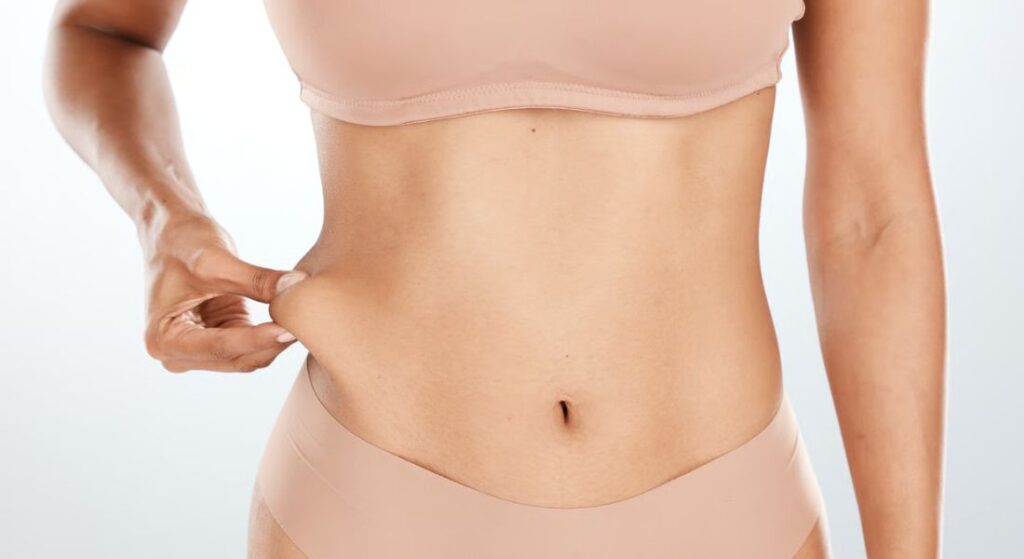
CoolSculpting may be considered when you have a small, well-defined pocket of fat and want a non-surgical option. VASER can also be considered for smaller areas when direct fat removal or surgical contouring is appropriate.
Your practitioner will assess whether the fat is suitable for the treatment and whether the expected change matches your goals. The size and location of your fat pocket, along with the degree of reduction you want, can influence which treatment is appropriate.
How Do the Treatments Differ for Broader Body Contouring?
VASER may be considered when direct surgical fat removal across a broader planned area or more detailed contouring is appropriate. Because fat is removed during the procedure, the surgeon can actively shape selected areas as part of the surgical plan.
CoolSculpting treats defined applicator zones and produces gradual localised fat reduction without surgery. These differences describe how the treatments work; they do not establish that one will produce a better cosmetic result for every patient.
Which Treatment Removes More Fat?
VASER removes a measurable volume of fat during surgery, whereas CoolSculpting gradually reduces the thickness of the treated fat layer after treatment. These outcomes are measured differently, so there is no reliable universal percentage that directly compares how much fat the two treatments remove.
With VASER, the amount removed also needs to remain within what your surgeon considers safe and appropriate for your anatomy and treatment plan. The more useful comparison is therefore the degree and type of contour change you want rather than simply which treatment can remove the largest amount of fat.
Clinical Tip
When you compare the two options, ask what the complete treatment plan would involve. One CoolSculpting appointment should not automatically be compared with one VASER operation if several cryolipolysis sessions or multiple applicator placements would be needed to achieve the planned reduction.
Ask about the expected degree of change, total number of sessions, recovery, possible complications and what happens if the result is smaller or less even than expected. This gives you a more useful comparison than deciding purely on whether one treatment is described as “surgical” or “non-surgical”.
How Does Contouring Control Differ Between the Two Treatments?
If you want several connected areas, such as your abdomen, waist, flanks or back, to be contoured as part of one treatment plan, VASER allows your surgeon to physically remove fat from selected areas and adjust the pattern of removal during the procedure.
With CoolSculpting, your practitioner positions applicators over selected areas of fat. They can plan the treatment zones around your concerns, but the treatment does not involve directly removing or sculpting fat during the session.
How Quickly Will You See Results?
Fat is physically removed during VASER surgery, so a change is created at the time of the procedure. However, swelling and bruising can hide the early contour, and the treated areas may continue to settle for several months as your body heals.
Your CoolSculpting results develop more gradually because your body needs time to clear the treated fat cells. Your visible changes can appear over the following weeks and months, so neither treatment should be planned around an expectation of an immediate final result.
How Much Downtime Is Involved?
CoolSculpting is generally associated with little or no downtime, although temporary redness, swelling, tenderness, bruising, aching, tingling or numbness can occur in the treated area.
VASER involves a surgical recovery, with swelling, bruising, tenderness and changes in sensation possible afterwards. You may also need to wear a compression garment for several weeks. How quickly you return to work will depend on the extent of treatment and the type of work you do.
What Does Each Treatment Feel Like?
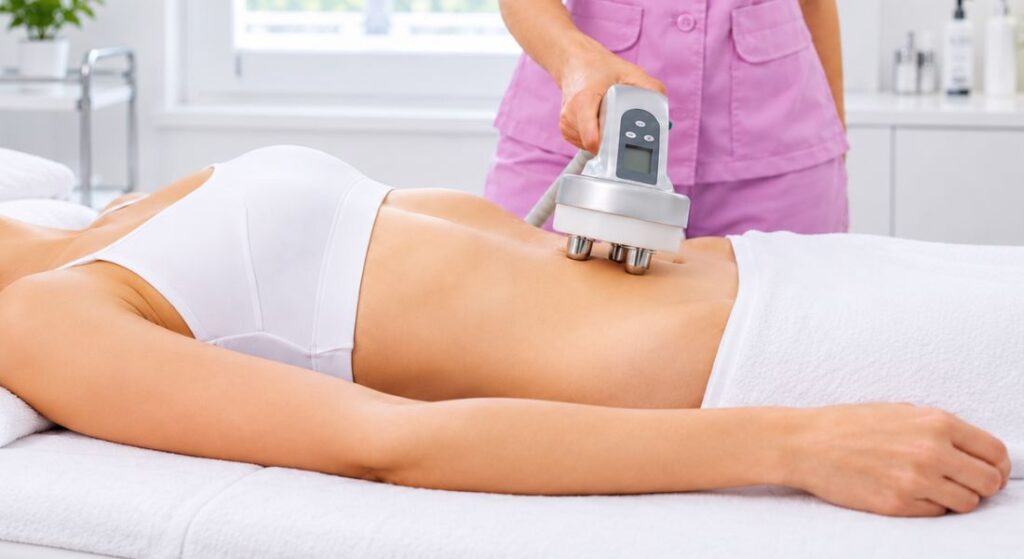
During CoolSculpting, you may feel intense cold, pulling or pressure while the applicator is in place. Temporary tenderness, aching, numbness or swelling can occur afterwards.
VASER is performed with anaesthesia because instruments are inserted beneath the skin. Anaesthesia is used to control pain, but what you feel can vary depending on the type of anaesthesia and the extent of treatment. Soreness, tenderness and discomfort can occur during recovery as the anaesthetic wears off.
What About Loose Skin and Skin Tightening?
If loose skin is one of your main concerns, reducing fat alone may not give you the result you expect. Your skin quality and elasticity can influence how your treated area looks after either procedure.
1. VASER may allow some skin retraction: You may notice some tightening as your tissues settle, but this cannot be guaranteed.
2. CoolSculpting mainly targets fat: Your treatment is designed for localised fat reduction rather than significant skin tightening.
3. Your skin elasticity matters: Your age, previous pregnancies and weight changes can affect how well your skin adapts after fat reduction.
4. Significant loose skin may need another approach: If you have hanging or substantial excess skin, fat reduction alone may not fully address it.
Your practitioner should assess both your fat distribution and your skin quality before recommending treatment. This can help you understand whether VASER, CoolSculpting or another approach is more appropriate for your concerns.
Research Insight
Evidence that VASER produces meaningful skin tightening remains limited. A 2025 evidence-based review identified only five studies that specifically compared ultrasound-assisted liposuction with traditional suction-assisted liposuction. The authors concluded that there is still insufficient convincing long-term evidence to confirm superior aesthetic outcomes or skin tightening with ultrasound-assisted liposuction.
This means VASER should not be presented as a predictable skin-tightening treatment. If loose or hanging skin is your main concern, your skin elasticity and the amount of excess skin need to be assessed separately because removing fat cannot reliably correct significant skin laxity.
How Do the Risks Compare?
Both treatments carry risks, but the type of risk you need to consider is different. If you have VASER, potential complications include infection, contour irregularity, fluid collections, altered sensation, blood clots and risks associated with anaesthesia.
CoolSculpting avoids surgical incisions and anaesthesia, but you may still experience temporary redness, swelling, bruising, pain, numbness or altered sensation. You should also be aware of a rare delayed complication called paradoxical adipose hyperplasia (PAH), where the treated area becomes larger and firmer rather than smaller, sometimes several months after treatment.
A 2025 systematic review and meta-analysis estimated a pooled PAH incidence of 0.22%. However, the certainty of the evidence was low and follow-up was often too short to identify every delayed case. If PAH develops, surgical treatment may sometimes be needed to correct it.
UK Guidance Note
UK safety guidance from the British Association of Aesthetic Plastic Surgeons (BAAPS) and the British Association of Plastic, Reconstructive and Aesthetic Surgeons (BAPRAS) emphasises that safe aesthetic liposuction depends on appropriate patient selection, careful surgical technique and appropriate peri-operative management.
VASER is still a form of liposuction surgery, so your suitability, planned extent of treatment, recovery and potential complications should be discussed before you proceed. CoolSculpting avoids surgical incisions and anaesthesia but has a different risk profile, including the rare possibility of paradoxical adipose hyperplasia. Comparing the full treatment pathway can therefore be more useful than assuming that “non-surgical” means risk-free.
Will You Need More Than One Treatment?
A CoolSculpting treatment plan may involve more than one session depending on the area being treated and the result you want. Ask how many sessions and applicator placements are likely to be needed so you are comparing the complete treatment plan rather than the cost of one session with one VASER operation.
With VASER, several areas may sometimes be treated during one operation when this is clinically appropriate. However, your surgeon may limit how much can safely be treated at one time. The final plan will depend on your goals, treatment areas, health and individual surgical assessment.
Are the Results Permanent?
Both treatments can produce long-lasting changes in the treated area, but neither makes your body shape permanently fixed. VASER removes fat cells surgically, while cryolipolysis damages selected fat cells that are subsequently cleared by the body. Remaining fat cells can still enlarge with weight gain, and ageing, pregnancy and other body changes can alter your contour.
Your results are therefore easier to maintain when you keep your weight relatively stable and follow healthy habits. Neither treatment should be viewed as a replacement for long-term weight management.
How Do You Decide Between VASER and CoolSculpting?

Your choice can start with what you want to change and how much treatment you are comfortable with. If avoiding surgery is a priority and the area is suitable for applicator-based treatment, CoolSculpting may be discussed. If direct surgical fat removal or more extensive contouring is being considered, VASER may be discussed instead.
CoolSculpting usually involves less downtime but may require more than one session, while VASER involves surgery, anaesthesia, compression and a recovery period. Your anatomy, skin quality and the amount of change you want should all be considered when you discuss your options with your practitioner.
Myth vs Fact
| Myth | Fact |
| CoolSculpting is completely risk-free because it is non-surgical. | It avoids surgical incisions and anaesthesia, but temporary side effects occur and rare complications such as PAH can require further treatment. |
| VASER gives you your final result immediately. | Fat is removed during surgery, but swelling can hide your developing contour for weeks or months. |
| One CoolSculpting session gives everyone the same reduction. | Results vary according to the treatment area, anatomy and treatment plan, and some people need more than one session. |
| VASER automatically tightens loose skin. | Some skin retraction may occur in selected patients, but significant loose skin cannot reliably be corrected by fat removal alone. |
| Whichever treatment removes more fat is automatically better. | The right approach depends on your anatomy, desired degree of change, tolerance for surgery, recovery time and treatment risks. |
Key Takeaways
1. VASER removes fat surgically, while CoolSculpting uses controlled cooling.
2. Neither treatment is a weight-loss solution.
3. CoolSculpting usually involves less downtime but may need repeat sessions.
4. VASER allows more direct body contouring but requires surgical recovery.
5. Both treatments have risks and do not reliably correct significant loose skin.
Frequently Asked Questions
1. What is the main difference between VASER and CoolSculpting?
VASER is surgical liposuction that physically removes fat, while CoolSculpting uses controlled cooling to reduce selected fat cells without surgery.
2. Which treatment is better for a small pocket of stubborn fat?
Both may be suitable, depending on the size and location of the fat pocket and your desired level of change. CoolSculpting may suit those wanting a non-surgical approach, while VASER allows direct fat removal.
3. How do VASER and CoolSculpting differ for broader body contouring?
VASER allows the surgeon to remove fat directly across planned treatment areas and adjust the contour during surgery. CoolSculpting uses applicators to reduce fat within selected treatment zones without surgery. Which approach is appropriate depends on your anatomy, goals and treatment plan.
4. How quickly will you see results with VASER and CoolSculpting?
Fat is removed during VASER surgery, but swelling can hide the early contour while the treated area heals. CoolSculpting works gradually as your body clears the affected fat cells over the following weeks and months.
5. Which treatment has more downtime?
VASER involves surgery, so you will need time to recover from swelling, bruising and tenderness. CoolSculpting is non-invasive and usually involves little to no downtime.
6. Does VASER or CoolSculpting remove more fat?
VASER directly removes fat during surgery, while CoolSculpting gradually reduces the treated fat layer. Because studies measure these outcomes differently and direct comparative evidence is limited, there is no universal figure showing how much more fat one treatment removes than the other.
7. Can VASER or CoolSculpting tighten loose skin?
Neither treatment should be considered a replacement for surgery when you have significant excess skin. VASER may produce some skin retraction in selected patients, but results vary.
8. Are VASER and CoolSculpting results permanent?
Both treatments can produce lasting reduction of fat cells in the treated area. However, remaining fat cells can enlarge with significant weight gain, so maintaining a stable weight is important.
9. Do you need more than one CoolSculpting treatment?
You may need multiple treatment sessions depending on the area and your goals. Your provider should explain the complete treatment plan before you decide.
10. How do you choose between VASER and CoolSculpting?
Consider the amount of fat you want to reduce, the degree of contouring you want, your preference regarding surgery and your available recovery time. A consultation can help determine which approach is appropriate for your anatomy and goals.
Final Thoughts: VASER vs CoolSculpting
VASER and CoolSculpting can both help reduce stubborn, localised fat, but they offer very different treatment experiences. VASER physically removes fat through surgery and allows direct surgical contouring across planned treatment areas, while CoolSculpting offers gradual, applicator-based fat reduction without surgery and usually with less downtime.
If you’re considering Vaser lipo in London, you can get in touch with us at the London Medical & Aesthetic Clinic to discuss your suitability and treatment options.
References:
1. Hakami, A. et al. (2025). ‘Effectiveness of Cryolipolysis in Body Contouring and Fat Reduction: A Systematic Review and Meta-analysis’. World Journal of Plastic Surgery, 14(3), pp. 16–26. Available at: https://pmc.ncbi.nlm.nih.gov/articles/PMC12843028/
2. Mah, A.E. et al. (2025). ‘Incidence of Paradoxical Adipose Hyperplasia After Cryolipolysis: A Systematic Review and Meta-Analysis’. Aesthetic Surgery Journal Open Forum, 7, ojaf142. Available at: https://pmc.ncbi.nlm.nih.gov/articles/PMC12662051/
3. Atieh, B. et al. (2025). ‘Literature Review and Evidence-Based Comparative Analysis of Traditional Suction-Assisted Lipectomy (SAL) vs. Ultrasound-Assisted Liposuction (UAL) Reported Outcomes’. Aesthetic Plastic Surgery, 49(16), pp. 4648–4655. Available at: https://pubmed.ncbi.nlm.nih.gov/40268767/
4. Pacifico, M. et al. (2022). ‘Summary document on safety and recommendations for aesthetic liposuction: Joint British Association of Aesthetic Plastic Surgeons (BAAPS)/British Association of Plastic Reconstructive and Aesthetic Surgeons (BAPRAS) expert liposuction group’. Journal of Plastic, Reconstructive & Aesthetic Surgery, 75(3), pp. 941–947. Available at: https://pubmed.ncbi.nlm.nih.gov/34776388/
5. Comerci, A.J. et al. (2024). ‘Risks and Complications Rate in Liposuction: A Systematic Review and Meta-Analysis’. Aesthetic Surgery Journal, 44(7), pp. NP454–NP463. Available at: https://academic.oup.com/asj/article/44/7/NP454/7639008