

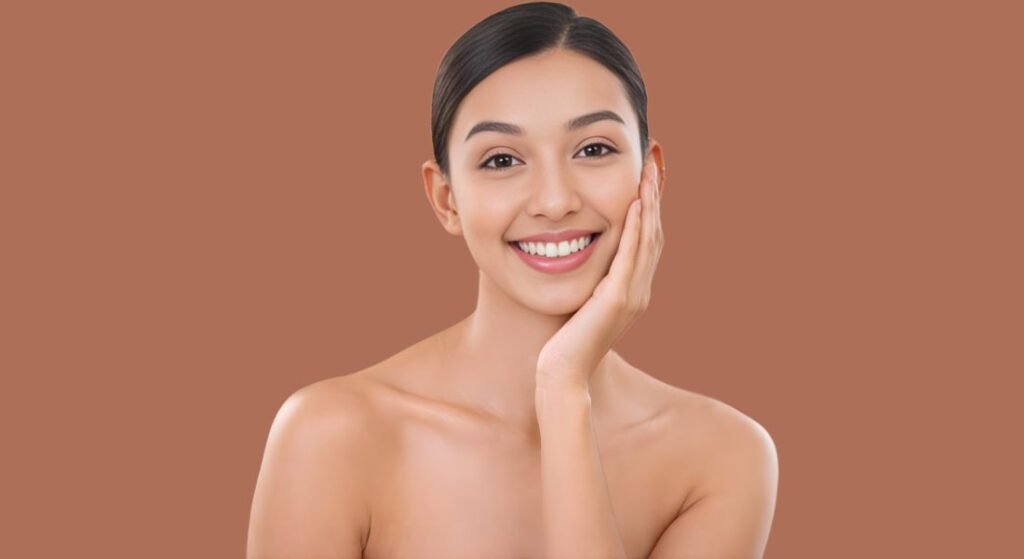
If you have Asian skin, you may have been advised to be cautious about laser resurfacing. You may have heard concerns about pigmentation changes or uneven healing. So it is entirely reasonable to ask whether CO₂ laser behaves differently in Asian patients.
The short answer is that it can be performed safely, but it must be approached differently. Melanin distribution and inflammatory response patterns require technical adjustment. At London Medical & Aesthetic Clinic, we tailor every resurfacing plan to respect pigment biology rather than applying generic settings.
In this guide, we explain melanin behaviour, post-inflammatory hyperpigmentation risk, energy and density adjustments, and how experienced practitioners modify C02 laser treatment strategies for Asian skin.
Understanding Where Asian Skin Sits on the Fitzpatrick Scale
Many Asian patients fall between Fitzpatrick III and V, which means your skin naturally contains more melanin than lighter skin types. This higher melanin content gives you certain protective advantages, particularly against ultraviolet exposure. However, it also means your skin can be more sensitive to inflammation.
Your skin is resilient and often ages well, yet you may notice it responds strongly to thermal injury. When heat or trauma is introduced, pigment cells can react more actively. That responsiveness is biological and important for us to consider.
By understanding where your skin sits on the Fitzpatrick scale, we can plan treatments that respect its strengths and sensitivities. We tailor our approach so you benefit from results without triggering unnecessary pigment changes. Careful assessment always guides safe strategy.
Melanin Distribution in Asian Skin
In many Asian skin types, melanin is more evenly distributed, contributing to a smooth and uniform complexion. However, your melanocytes can be highly reactive when trauma or inflammation occurs. This means your pigment system may respond quickly to injury.
When inflammation is triggered, excess pigment production can follow. This response is protective in nature, as your skin attempts to shield itself. Yet for you, it can increase the risk of post-inflammatory hyperpigmentation after aggressive procedures.
We take this biology seriously when planning your treatment. By reducing inflammatory stress and avoiding excessive heat, we help protect your natural skin tone. Thoughtful technique minimises pigment disruption while still supporting regeneration.
How CO₂ Laser Creates Controlled Injury
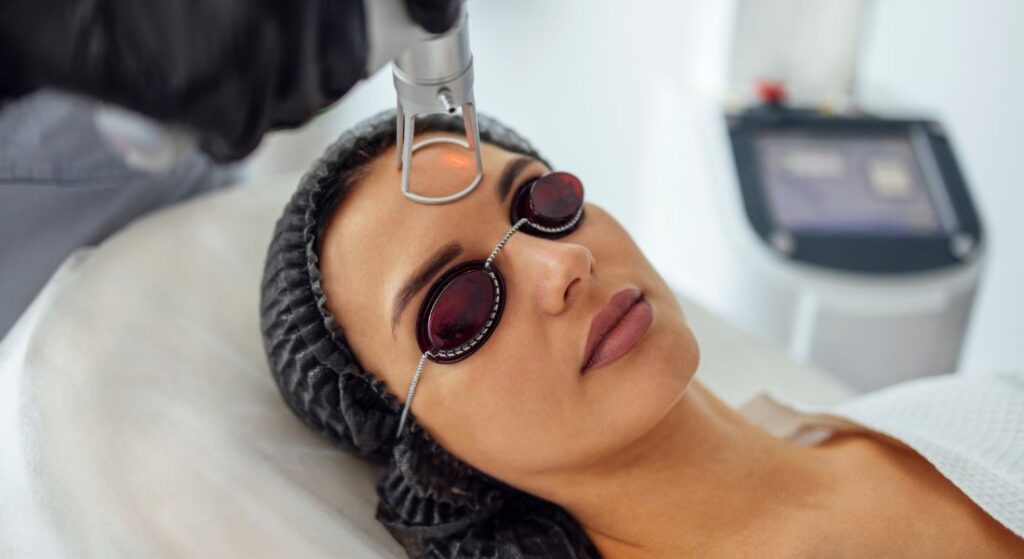
When you undergo CO₂ laser treatment, focused thermal energy is delivered precisely into your skin. The laser vaporises microscopic columns of tissue to stimulate controlled regeneration. This intentional injury encourages collagen remodelling and new skin formation.
The process is therapeutic because your body responds by repairing and strengthening the treated areas. Over time, you may see improvements in texture and overall skin quality. The benefit comes from structured healing rather than random damage.
However, if excessive heat is used, pigment stimulation can increase. That is why we carefully calibrate energy settings for you. Precision ensures you receive collagen benefits without unnecessary inflammatory burden.
Why Post-Inflammatory Hyperpigmentation (PIH) Is a Key Concern
Post-inflammatory hyperpigmentation is one of the most common concerns for Asian skin after resurfacing. You may notice darker patches appearing weeks after initial healing, even when the surface seems settled. This occurs due to melanocyte overactivation during recovery.
Although PIH is usually temporary, it can persist for several months and cause understandable frustration. For you, prevention is always preferable to correction. Managing inflammation from the outset significantly lowers this risk.
We focus on conservative energy settings, careful technique, and structured aftercare. By controlling each stage of your healing process, we reduce pigment stimulation. Thoughtful prevention protects your long-term results.
Fractional vs Fully Ablative in Asian Skin
Fully ablative resurfacing removes the entire epidermis, creating widespread inflammation. While effective, this intensity can significantly increase pigment risk for you. Extended healing often means greater melanocyte activation.
Fractional CO₂ works differently by leaving untreated islands of skin between microscopic columns. Because you retain healthy tissue, healing is faster and inflammation is reduced. This approach substantially lowers the likelihood of PIH.
For most Asian patients, we prioritise fractional strategies. By preserving surrounding skin, we support safer recovery and better pigment stability. Treatment choice is always aligned with what best protects your skin biology.
Energy Density Adjustments for Safety
When performing laser treatments, energy density plays a critical role in safety. Lower energy and reduced density settings decrease the thermal burden placed on the skin. This means fewer microthermal zones are created with each pass, limiting cumulative inflammation. Reduced inflammation directly lowers the risk of pigment overstimulation, particularly in deeper skin tones.
1. Reduced Thermal Load – Lower settings generate less heat within the tissue. This minimises unnecessary stress on melanocytes. Controlled energy protects pigment stability.
2. Fewer Microthermal Zones – Lower density creates fewer treatment columns per session. This decreases overall inflammatory response. Healing becomes more manageable and predictable.
3. Gradual Collagen Stimulation – Conservative parameters still stimulate collagen effectively. The difference lies in pacing rather than potency. Gradual correction supports safer regeneration.
4. Improved Healing Predictability – When inflammation is controlled, recovery is smoother. The risk of post-inflammatory pigmentation decreases. Stability enhances long-term results.
Conservative energy selection is not a compromise; it is a deliberate safety strategy. By adjusting intensity thoughtfully, we protect pigment balance while still achieving meaningful improvement. Controlled, steady progression delivers results that are safer, more predictable, and more sustainable over time.Top of Form
Pulse Duration and Thermal Spread Control
Pulse duration plays a crucial role in how heat spreads within your skin. Shorter pulses limit collateral thermal damage by confining energy more precisely. This reduces unnecessary stimulation of your melanocytes.
For you, thermal discipline often matters more than sheer intensity. Even powerful devices can be used safely when pulses are carefully controlled. Precision in timing significantly influences pigment stability.
When we fine-tune pulse settings, we protect surrounding tissue while still achieving regeneration. Safer healing begins with controlled heat delivery. Thoughtful calibration supports better long-term outcomes for you.
Staged Resurfacing Instead of Single Aggressive Session
You are often safer with multiple lighter sessions rather than one aggressive treatment. Staging allows your skin to recover fully between procedures, reducing cumulative inflammation. This approach also gives us time to observe how your pigment responds.
By monitoring your healing carefully, we can adjust each session according to your individual response. Progression offers flexibility that a single deep pass does not. For you, this measured strategy significantly lowers risk.
We consistently prefer progression over aggression. When improvements build gradually, your skin remains stable and resilient. Consistency delivers safer, more reliable refinement.
Pre-Treatment Conditioning for Asian Skin
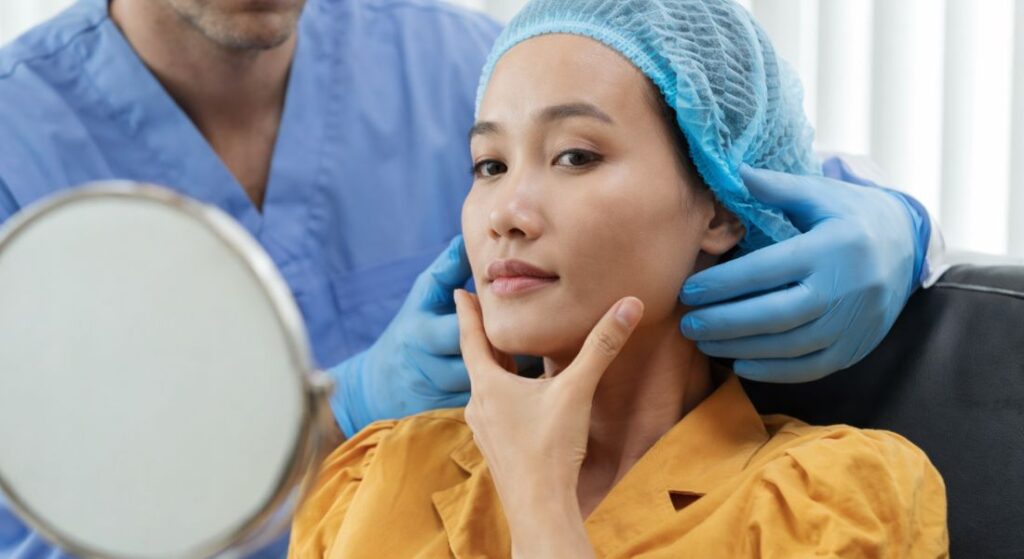
Preparation plays a key role in protecting your skin before laser treatment. Reducing baseline inflammation can lower your risk of post-treatment pigment flare. Strict sun avoidance is especially important to stabilise melanocyte activity.
Depending on your profile, we may recommend specific topical regimens prior to treatment. These preparations help strengthen your skin barrier and reduce reactive pigment behaviour. For you, planning begins well before the laser session itself.
When we condition your skin properly, we create a safer foundation for resurfacing. Preparation reduces surprises during healing. Careful groundwork supports smoother recovery and improved results.
Healing Response Differences in Asian Skin
Asian skin often heals efficiently, and you may notice that surface recovery appears smooth and reassuring. Redness can settle quickly, giving the impression that healing is complete. However, pigment activity beneath the surface may continue even after visible signs have improved. Understanding this delayed response allows us to guide your recovery more safely.
Here’s what you should be aware of:
1. Surface Healing Can Be Deceptively Quick – You may see redness fade and texture normalise within a short period. While this is encouraging, deeper inflammatory processes may still be active.
2. Pigment Changes Can Appear Later – Inflammatory pigmentation sometimes develops after the skin looks externally healed. This delayed melanocyte response means pigment shifts may emerge days or even weeks later.
3. Ongoing Monitoring Is Important – Even if you feel fully recovered, melanocyte activity can continue quietly beneath the surface. Regular review allows us to detect subtle pigment changes early and adjust care if necessary.
4. Follow-Up Protects Long-Term Results – For you, follow-up appointments are not just routine they are protective. By assessing your progress over time, we help maintain pigment stability and ensure your recovery stays on track.
With continued observation and thoughtful guidance, we support healing that is not only smooth on the surface but stable in the long term.Top of Form
Aftercare as a Critical Safety Layer
Your aftercare is a vital part of treatment safety, not just an optional extra. We focus on restoring your skin barrier quickly and reducing residual inflammation. How you care for your skin at home directly influences pigment stability.
Strict SPF use is non-negotiable, especially in melanin-rich skin. Even brief sun exposure during healing can trigger excess pigmentation. When you protect your skin consistently, you significantly reduce the risk of post-inflammatory hyperpigmentation.
Inflammation control supports smooth, even recovery. By following guidance carefully, you actively safeguard your results. You play an essential role in ensuring your outcome remains balanced and predictable.
Risk of Hypopigmentation
If laser settings are too aggressive, melanocytes can become damaged rather than stimulated. This may result in lighter patches that disrupt your natural skin tone. Although less common than hyperpigmentation, hypopigmentation can be more challenging to correct.
For you, prevention is always preferable to attempting reversal. Conservative energy selection helps preserve melanocyte function and maintain uniformity. Excessive heat offers no advantage when it compromises pigment cells.
We prioritise restraint to protect your natural complexion. By controlling depth and intensity carefully, we reduce unnecessary thermal trauma. Thoughtful treatment keeps your skin tone even and stable.
Scar Risk Considerations
Keloid scarring is uncommon with fractional CO₂, yet your individual history still matters. If you have previously developed raised or abnormal scars, we must discuss this openly. Genetic predisposition can influence how your skin heals.
Laser technique alone does not determine your risk. Your biological healing response plays a significant role in outcome safety. That is why we take time to assess your background thoroughly.
For you, safety begins with detailed consultation and honest dialogue. When we understand your scar history clearly, we can decide whether treatment is appropriate. Careful screening prevents unsuitable procedures.
Depth Adjustment Based on Concern
Not every skin concern requires the same level of treatment. While some conditions respond well to superficial correction, others may need deeper intervention. In Asian skin especially, we must always balance treatment depth with pigment safety. Our goal is to improve your concern without creating unnecessary inflammatory stress.
Here’s how we approach this carefully:
1. Different Concerns Require Different Depths – Acne scars, for example, often need deeper penetration than fine lines or mild texture irregularities. We assess your specific concern to determine what level of correction is truly necessary.
2. Depth Must Be Balanced With Pigment Risk – In Asian skin, increasing depth also increases the potential for pigment disruption. That is why we carefully weigh benefit against risk before adjusting intensity.
3. Precision Prevents Unnecessary Inflammation – Rather than treating aggressively, we calibrate depth according to the severity of your condition while maintaining strict safety margins. This precision helps limit avoidable inflammatory responses.
4. Customisation Protects Your Results – By tailoring treatment depth specifically to your skin and goals, we reduce complications and support predictable healing. Your plan is always aligned with both your aesthetic objectives and your biological needs.
When we combine moderation with precision, we create improvements that are effective, controlled, and respectful of your skin’s natural balance.
Why Not All Asian Skin Is the Same
Asian skin is not a single category, and you may fall anywhere along a broad spectrum. Some individuals behave more like Fitzpatrick III, while others resemble type V in pigment response. Variation is normal and expected.
Because of this diversity, general assumptions can be misleading. We assess your individual pigment behaviour, healing history, and sensitivity before selecting parameters. Personal biology always overrides broad classification.
For you, tailored planning is far safer than standardised settings. When we evaluate your skin as unique, we can adjust energy, density, and depth appropriately. Individual assessment ensures balanced and responsible treatment.
Comparing CO₂ Laser to Other Modalities
You may hear that some alternative lasers carry a lower risk of post-inflammatory hyperpigmentation. While that can be true, they may also deliver less dramatic resurfacing results. For you, the decision is rarely about risk alone, but about balancing safety with meaningful improvement.
CO₂ laser provides strong collagen stimulation and deeper structural renewal. If your goal involves acne scarring or significant texture change, you may benefit from its regenerative strength. However, intensity must always be adapted to your skin biology.
We help you choose the correct modality based on your priorities and tolerance for downtime. Safety and benefit must work together, not compete. When we balance both carefully, you achieve results without unnecessary compromise.
Realistic Expectations in Asian Patients
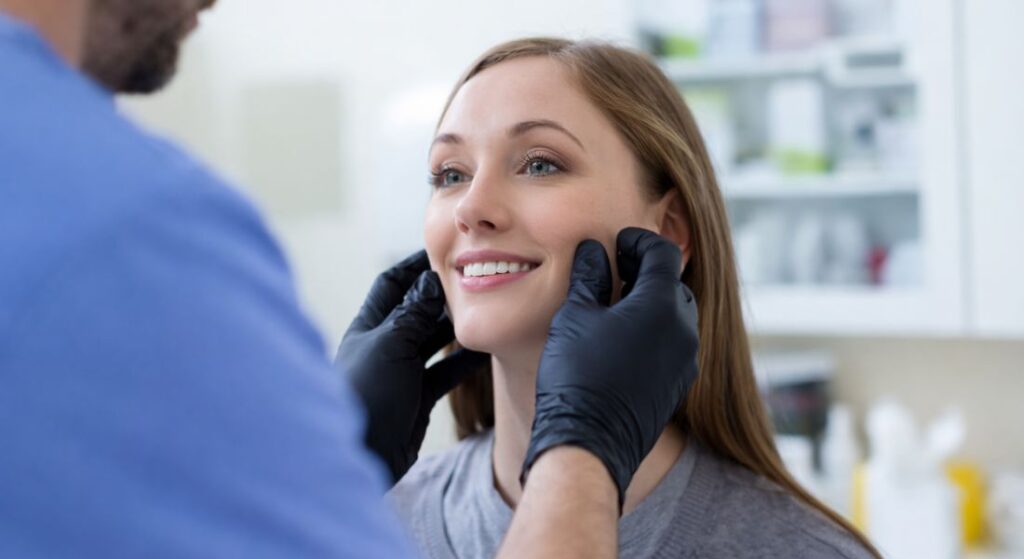
When you undergo resurfacing, it is important to understand that improvement often develops gradually rather than instantly. Your skin needs time to remodel collagen and adjust safely after each session. In melanin-rich skin, this measured pace helps protect pigment stability while still delivering visible refinement. Our focus is always on building results in a way that respects your biology.
Here’s what you can expect:
1. Improvement Builds Progressively – You may notice changes developing step by step rather than dramatic transformation after one session. Collagen remodelling is a gradual process, and your skin improves steadily over time.
2. Multiple Sessions Support Safer Results – We often recommend a series of treatments spaced appropriately. This allows us to enhance texture and clarity without overwhelming your pigment system.
3. Patience Reduces Unnecessary Risk – Moving too quickly with aggressive settings can increase inflammation and pigment disruption. When you allow steady progression, your skin remains more balanced and resilient.
4. Measured Progress Delivers Durable Outcomes – Faster does not always mean better, particularly in melanin-rich skin. By guiding you towards consistent, controlled improvement, we help ensure your results are not only visible but also stable long term.
With a calm, structured approach, we support refinement that is safe, purposeful, and sustainable for your skin.
Emotional Concerns Around Pigmentation
Fear of long-lasting pigmentation is very common among Asian patients. If you feel anxious about developing dark marks, that concern is entirely understandable. Past experiences or online stories can easily amplify uncertainty.
Clear, honest communication helps reduce that anxiety. When you understand why certain precautions are taken, you feel more secure in your decisions. Transparency allows you to approach treatment with confidence rather than fear.
We believe education is empowering for you. When you know the strategy behind conservative planning, you can make informed choices calmly. Knowledge replaces uncertainty with reassurance.
Why Expertise Is Essential
When you consider laser treatment, it is easy to focus on the device itself. However, technology alone does not determine whether your procedure is safe or successful. What truly shapes your outcome is how the device is used including parameter selection, depth control, and energy calibration. For you, clinical experience makes the critical difference.
Here’s why expertise matters so much:
1. The Device Is Only a Tool – Even advanced technology depends on skilled hands. Without precise adjustments and thoughtful planning, the same device can produce very different outcomes.
2. Settings Matter More Than Marketing – When treating Asian skin, clinic expertise outweighs promotional claims. Appropriate staging, conservative energy levels, and careful depth selection are what protect your pigment stability.
3. Judgement Prevents Avoidable Complications – Skilled assessment allows us to tailor your treatment safely. Thoughtful calibration helps reduce unnecessary inflammation and lowers the risk of pigment disruption.
4. Experience Ensures Safer, Predictable Results – We rely on clinical insight rather than intensity alone. Careful decision-making at every stage transforms technology into a safe, controlled, and effective tool for your skin.
With the right expertise guiding your care, your treatment becomes not just powerful, but precise and protective.
Is CO₂ Laser Suitable for Asian Skin?
Yes, CO₂ laser can be suitable for you when planned conservatively and customised carefully. Fractional technology, adjusted energy levels, and staged sessions significantly reduce pigment risk. Your individual assessment always determines final suitability.
We prioritise pigment preservation alongside collagen stimulation. By respecting your melanin biology, we aim to deliver regeneration without destabilising your natural tone. Custom protocols are central to this balance.
With structured planning and close follow-up, you can benefit from resurfacing safely. When we combine precision, restraint, and experience, your results become both effective and responsible.
FAQs:
1. Is CO₂ laser safe for Asian skin types?
Yes, CO₂ laser can be safe for Asian skin when it is performed with careful technique, conservative energy settings, and structured aftercare. Asian skin often sits between Fitzpatrick III and V, which means there is higher melanin activity and therefore a greater sensitivity to inflammation. When treatment is customised to respect pigment biology rather than using generic settings, resurfacing can be performed responsibly and effectively.
2. Why is post-inflammatory hyperpigmentation more common in Asian skin?
Asian skin tends to have more reactive melanocytes, which are the pigment-producing cells in the skin. When inflammation occurs after laser resurfacing, these cells can become overstimulated and produce excess pigment as part of the healing process. This biological response increases the risk of temporary darkening known as post-inflammatory hyperpigmentation, particularly if energy settings are too aggressive.
3. How long does pigmentation last if it occurs after CO₂ laser?
If post-inflammatory hyperpigmentation develops, it usually appears several weeks after treatment rather than immediately. In most cases, it is temporary and gradually fades over months with proper sun protection and appropriate skincare support. Early monitoring allows intervention to begin promptly, which often shortens recovery time and improves overall pigment stability.
4. Is fractional CO₂ better than fully ablative CO₂ for Asian skin?
Fractional CO₂ is generally preferred for Asian skin because it leaves surrounding tissue intact between microscopic treatment zones. This preserved tissue accelerates healing and reduces overall inflammatory load, which lowers pigment risk. Fully ablative resurfacing removes the entire epidermis and creates more widespread inflammation, making it less commonly recommended for melanin-rich skin unless carefully justified.
5. Does using lower energy mean weaker results?
Lower energy settings do not necessarily mean weaker results; they simply mean results are achieved more gradually and safely. Collagen stimulation can still occur effectively with conservative parameters, but improvement may require staged sessions rather than a single aggressive treatment. This measured approach prioritises pigment stability while still delivering meaningful refinement over time.
6. Can Asian skin experience hypopigmentation after CO₂ laser?
Although less common than hyperpigmentation, hypopigmentation can occur if melanocytes are damaged by excessive thermal injury. This results in lighter patches of skin and may be more difficult to reverse than darkening. Preventing hypopigmentation depends on careful energy calibration, appropriate depth control, and avoiding overly aggressive resurfacing strategies.
7. Why is pre-treatment skin preparation important for Asian patients?
Pre-treatment conditioning helps stabilise melanocyte activity and strengthen the skin barrier before introducing thermal energy. When baseline inflammation is reduced and sun exposure is avoided, pigment cells are less reactive during recovery. Thoughtful preparation lowers the likelihood of unpredictable pigment shifts and supports smoother healing.
8. How important is aftercare in preventing pigmentation issues?
Aftercare is a critical part of safety, particularly in Asian skin. Strict sun protection, barrier repair support, and inflammation control significantly reduce the risk of pigment flare during healing. Even minor UV exposure during recovery can trigger melanocyte activation, so consistent adherence to aftercare instructions plays a central role in protecting results.
9. Are multiple lighter sessions safer than one aggressive treatment?
For Asian skin, multiple lighter sessions are often safer than a single high-intensity treatment. Staging allows the skin to recover fully between sessions and gives practitioners the opportunity to assess pigment response before proceeding further. Gradual correction reduces cumulative inflammatory stress and leads to more predictable long-term outcomes.
10. How does experience influence safety in Asian skin resurfacing?
At London Medical & Aesthetic Clinic, we emphasise that practitioner expertise is the most important factor in treating Asian skin safely. Understanding melanin behaviour, inflammatory thresholds, and appropriate energy adjustments allows us to tailor each CO₂ laser protocol precisely to your skin type. Experienced calibration transforms a powerful device into a controlled and protective tool for melanin-rich skin.
Final Thoughts: Respecting Pigment, Refining Safely
CO₂ laser resurfacing is not automatically unsafe for Asian skin — it simply requires a more thoughtful, calibrated approach. When we understand melanin behaviour, adjust energy density carefully, prioritise fractional strategies, and stage sessions conservatively, the risk of pigmentation complications can be significantly reduced. Precision, not avoidance, is what protects your results.
At London Medical & Aesthetic Clinic, every C02 laser treatment plan is tailored to your Fitzpatrick profile, healing response, and specific concern. We balance collagen stimulation with pigment preservation so that improvement develops gradually, safely, and predictably. Conservative technique is not a compromise it is a strategy designed to safeguard your natural skin tone while still delivering meaningful refinement. If you’re considering CO2 laser treatment in London, contact us at the London Medical & Aesthetic Clinic to learn more about your options.
Reference:
1. Clementi, A., Naranjo García, S., Belletti, L., et al., 2025. Sequential fractional CO₂ and 1540/1570 nm lasers for atrophic acne scars: clinical outcomes and safety profile. Journal of Clinical Medicine, 14(11), pp.3867–3879. https://www.mdpi.com/2077-0383/14/11/3867
2. Dattola, A., 2025. Fractional CO₂ laser and hyperpigmentation: principles and applications in dermatological practice. Cosmetics, 12(6), pp.199–212. https://www.mdpi.com/2079-9284/12/6/251
3. Tan, J., Lei, Y., Ouyang, H.-W. and Gold, M.H., 2014. The use of fractional CO₂ laser resurfacing in the treatment of photoaging in Asians: long-term clinical results. Lasers in Surgery and Medicine, 46(10), pp.750–756. https://pubmed.ncbi.nlm.nih.gov/25400224/
4. Huang, L., 2013. A new modality for fractional CO₂ laser resurfacing for acne scars in Asian skin. Lasers in Medical Science, 28(2), pp.627–632. https://pubmed.ncbi.nlm.nih.gov/22618157/
5. CO₂ Laser Resurfacing: Still a Good Treatment, Aesthetic Surgery Journal, Volume 28, Issue 4, July–August 2008, Pages 456–462. https://www.sciencedirect.com/science/article/abs/pii/S1090820X08001660