

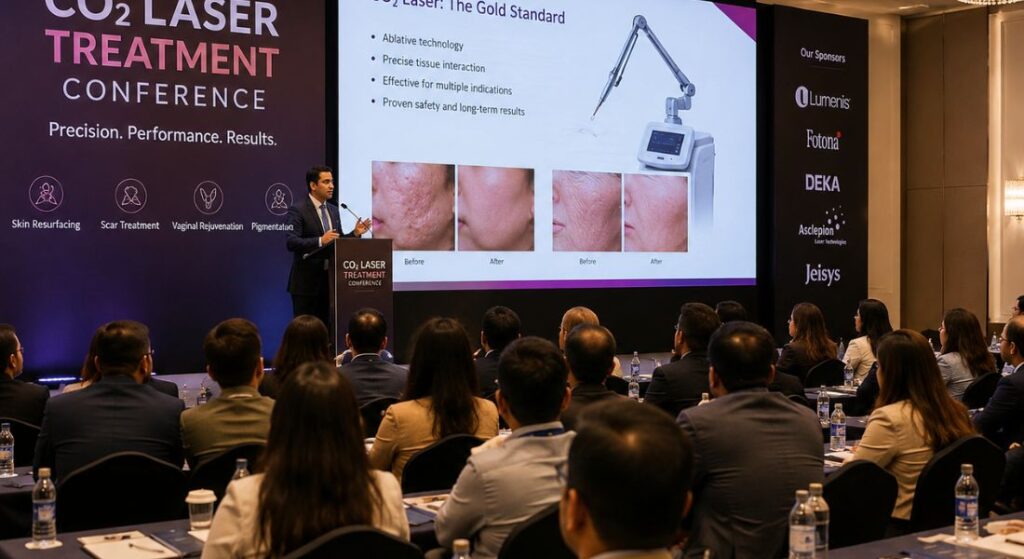
IMCAS 2026 was one of the major international meetings where you could see aesthetic specialists, dermatologists, and laser experts discussing the latest developments in skin treatments, cosmetic technology, and regenerative medicine. Among the many topics presented, fractional CO₂ laser resurfacing remained one of the most widely discussed areas within aesthetic dermatology sessions.
You’ll find that many presentations focused on how CO₂ laser technology continues evolving to improve skin resurfacing, scar management, pigmentation treatment, and recovery optimisation. Experts also explored how laser settings, treatment intensity, and patient selection may influence both results and downtime, reflecting the growing demand for effective treatments with safer and more personalised recovery experiences.
For you as a patient, these conference discussions matter because they help shape how clinicians approach CO₂ laser treatments in everyday practice. The conversations held at IMCAS 2026 highlighted ongoing efforts to improve safety, refine treatment strategies, and combine laser resurfacing with other modern aesthetic approaches to achieve more balanced and natural-looking outcomes.
Why CO₂ Laser Technology Remains Important
Even with the rapid development of newer skin treatment technologies, you’ll often hear at aesthetic conferences that CO₂ laser resurfacing still plays a very important role in modern dermatology. During discussions at IMCAS 2026, specialists highlighted that fractional CO₂ lasers continue to be widely used for improving skin texture, treating acne scars, softening wrinkles, and supporting overall skin resurfacing.
You’ll notice that experts no longer view CO₂ technology as an older treatment being replaced, but rather as a system that continues evolving alongside newer innovations. Conference presentations frequently focused on how modern CO₂ platforms are becoming more precise, safer, and increasingly tailored to individual skin concerns and recovery expectations.
This continued refinement is one of the main reasons CO₂ lasers remain highly relevant within aesthetic practice today. For you as a patient, it means clinicians are still actively improving how these treatments are performed, with greater emphasis on balancing visible results, safety, and more personalised treatment planning.
Fractional CO₂ Lasers Continue Dominating Discussions
Fractional laser technology remained one of the central topics discussed during presentations at IMCAS 2026. You’ll often hear specialists explain that fractional CO₂ systems work by treating microscopic columns within the skin while leaving surrounding tissue untouched, which may help support faster healing compared with older fully ablative resurfacing techniques.
Conference discussions frequently focused on how fractional delivery allows clinicians to balance treatment effectiveness with reduced downtime and a more manageable recovery experience. You’ll notice that many experts now prioritise approaches that still achieve meaningful skin improvement while minimising unnecessary tissue trauma and prolonged healing.
Fractional technology continues to shape how modern laser resurfacing is performed internationally. For you as a patient, this ongoing refinement means treatments are increasingly designed to improve skin texture, scars, and signs of ageing while aiming for safer recovery and more personalised treatment intensity.
Focus on Personalised Treatment Settings
One of the strongest themes discussed at IMCAS 2026 was the growing importance of personalised laser treatment planning. You’ll often hear specialists emphasise that CO₂ laser settings should be adjusted carefully according to factors such as your skin type, treatment goals, scar severity, and how much downtime you are realistically comfortable with.
Conference experts repeatedly explained that modern resurfacing is moving away from rigid, standardised protocols. Instead, clinicians are increasingly customising pulse energy, treatment density, penetration depth, and overall intensity for each individual patient rather than applying the same settings universally.
This personalised approach reflects a much broader trend within aesthetic medicine overall. For you as a patient, it means treatments are becoming more tailored to your specific skin characteristics and recovery expectations, helping clinicians balance visible results with safety and healing more carefully than before.
Acne Scar Treatment Discussions
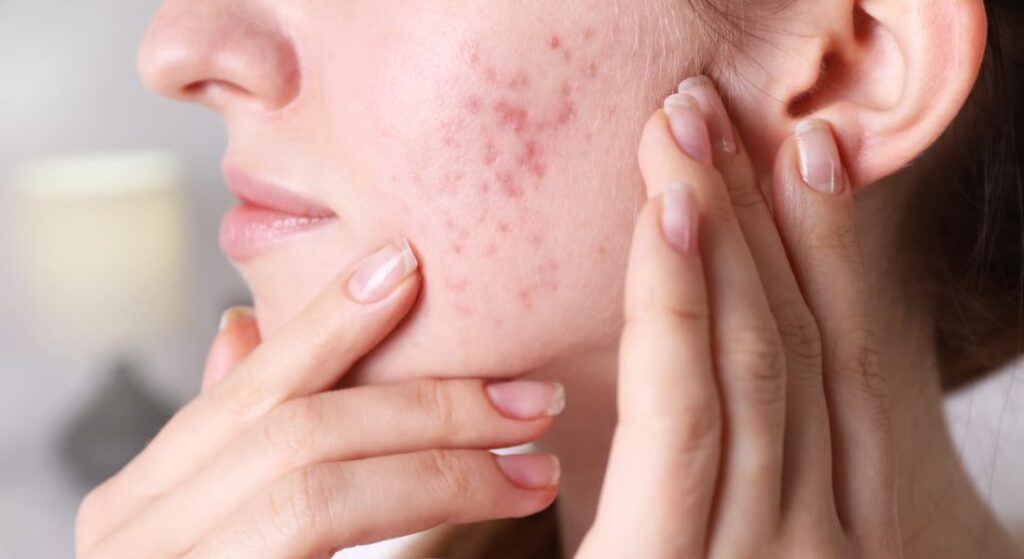
Acne scar treatment remained one of the most discussed uses of CO₂ laser technology at International Master Course on Aging Science World Congress 2026. Specialists explored how different scar patterns respond to treatment and how combination approaches may help improve results further. You’ll often find that acne scar management requires more than a single procedure, especially when scars vary in depth and texture. These discussions help clinicians refine treatment planning and set more realistic expectations for patients.
1. Different Scar Types Need Different Approaches: Rolling scars, boxcar scars, and mixed acne scars often respond differently to treatment. You may require a tailored approach depending on the depth, shape, and severity of your scars. Careful assessment helps determine which techniques are most suitable for your skin.
2. Combination Treatments May Improve Results: Specialists frequently discussed combining CO₂ laser resurfacing with treatments such as subcision, microneedling, platelet-rich plasma, or regenerative therapies. These combined approaches may support better collagen remodelling and texture improvement. Multimodal treatment is becoming increasingly common in acne scar revision.
3. Scar Improvement Usually Happens Gradually: You should understand that meaningful acne scar improvement often takes time and may require several treatment sessions. Most patients benefit from staged treatment planning rather than expecting immediate complete correction. Gradual progress is usually more realistic and safer for the skin.
4. Realistic Expectations Are Very Important: Conference discussions also highlighted the importance of clear patient counselling before treatment begins. While scars can often be improved significantly, complete removal is rarely possible. Understanding realistic outcomes usually leads to better long-term satisfaction with treatment.
Acne scar management continues to evolve as specialists explore newer technologies and combination treatment strategies. Conferences like IMCAS help clinicians stay updated on how to improve outcomes safely and effectively. You benefit when treatment plans are personalised carefully and expectations are discussed openly from the beginning.
Skin Tightening and Collagen Remodelling
At IMCAS 2026, you’ll often hear CO₂ laser resurfacing discussed in relation to collagen stimulation and skin tightening effects. The basic idea is that controlled laser energy creates a carefully measured thermal response within the skin, which then triggers a natural healing process that can encourage new collagen formation.
You’ll notice that conference speakers placed a lot of emphasis on how different treatment depths and energy settings can influence collagen remodelling over time. Deeper or more intensive settings may lead to stronger structural change, while lighter approaches may focus more on surface texture and gradual improvement, depending on the patient’s goals and skin tolerance.
Long-term skin quality improvement was a key topic throughout these discussions. For you as a patient, this means CO₂ laser treatments are often considered not just for immediate resurfacing effects, but also for their potential role in gradual skin tightening and longer-term collagen support as the skin continues to heal and remodel.
Combining CO₂ Lasers with Regenerative Treatments
Combination treatments were a major focus at IMCAS 2026, with many specialists discussing how regenerative approaches may work alongside CO₂ laser resurfacing. You’ll often hear reference to options such as platelet-rich plasma, exosomes, and growth-factor-based therapies being used to support the skin’s natural healing response after laser treatment.
The main idea behind these combinations is to potentially enhance recovery and improve overall outcomes. You’ll notice that conference discussions frequently highlight goals such as faster healing, reduced downtime, and improved tissue regeneration, particularly in patients undergoing more intensive resurfacing procedures.
These conversations reflect a wider shift in aesthetic medicine towards regenerative-focused care. For you as a patient, this means CO₂ laser treatments are increasingly being considered as part of a broader plan, where supporting the skin’s recovery process is just as important as the resurfacing procedure itself.
Downtime Reduction Strategies
At IMCAS 2026, recovery optimisation was a major focus, with specialists increasingly recognising that you value not only visible results but also manageable downtime after CO₂ laser resurfacing. A lot of the discussion centred around how to make healing smoother, more predictable, and more comfortable.
You’ll often hear experts talk about practical strategies such as controlled cooling protocols during and after treatment, improved barrier repair skincare, targeted anti-inflammatory products, and structured post-procedure care routines. These approaches are designed to support the skin’s natural healing process, helping reduce redness, irritation, and overall recovery time where possible.
Modern resurfacing is increasingly about balancing effectiveness with everyday convenience. For you as a patient, this means clinicians are placing greater emphasis on treatment planning that delivers meaningful skin improvement while also considering how quickly you can return to normal activities and how comfortable your recovery experience will be.
Advances in Laser Safety
At IMCAS 2026, patient safety remained a central focus across many laser-related sessions. You’ll often hear experts explain how newer CO₂ laser systems are being designed to improve precision while reducing the risk of complications such as burns, scarring, infection, or prolonged inflammation.
You’ll notice that educational presentations regularly covered important practical factors like treatment settings, careful skin assessment, the risk of post-inflammatory pigmentation, and the importance of selecting the right patient for the right level of treatment. These discussions help clinicians refine how they approach each case more safely and predictably.
Safety considerations were especially emphasised when treating darker skin tones, where the risk of pigmentation changes can be higher if settings are not carefully adjusted. For you as a patient, this ongoing focus on safety means laser treatments are becoming more thoughtfully planned, with greater attention to individual skin characteristics and responsible clinical practice.
Pigmentation Concerns in Different Skin Types
At IMCAS 2026, one of the key themes was safely treating a wide range of skin tones. You’ll often hear specialists emphasising that pigmentation risks can vary significantly between different skin types, meaning laser settings and treatment approaches need to be adjusted with care rather than applied in a uniform way.
You’ll notice that conference discussions frequently covered strategies for reducing post-inflammatory hyperpigmentation, particularly in higher-risk skin types. Experts also explored ways to better prepare the skin before CO₂ laser resurfacing, including careful assessment, pre-treatment planning, and tailored protocols to support safer outcomes.
Inclusive treatment planning has become an increasingly important part of aesthetic dermatology education. For you as a patient, this means clinicians are placing greater emphasis on personal skin characteristics, helping ensure that resurfacing treatments are not only effective but also safely adapted to your individual skin tone and response profile.
CO₂ Laser for Ageing Skin
At IMCAS 2026, ageing skin treatment was a major topic, with CO₂ laser resurfacing frequently discussed as a way to improve fine lines, uneven texture, photodamage, and overall skin quality. You’ll often hear specialists highlight how this treatment is used not just for surface changes, but also for deeper structural rejuvenation.
You’ll notice that conference sessions explored how ageing skin responds differently depending on factors like collagen levels, sun exposure history, and skin thickness. These biological differences can significantly influence both the intensity of treatment that’s appropriate and the expected healing and improvement process afterwards.
A growing trend in these discussions is the move towards subtle rejuvenation rather than overly aggressive resurfacing. For you as a patient, this means the focus is increasingly on achieving natural-looking improvements in skin quality and texture while maintaining safety, balance, and realistic expectations throughout the healing process.
Neck and Periorbital Resurfacing Techniques
At IMCAS 2026 and similar conferences, you’ll often see a strong focus on delicate areas like the neck and the skin around the eyes. These regions require extra care because the skin is thinner, more sensitive, and more prone to complications if energy settings are not carefully controlled.
You’ll hear experts discussing how fractional CO₂ laser techniques can be used in a more conservative and controlled way to improve issues like crepey skin texture, fine lines, and early wrinkles. The emphasis is usually on achieving visible rejuvenation while keeping treatment gentle enough to minimise risks and support safe healing.
As techniques continue to evolve, you’ll notice a growing focus on precision-based resurfacing in these sensitive areas. Newer approaches are increasingly designed to balance effectiveness with safety, helping you achieve natural-looking improvements without overly aggressive intervention.
Combination Therapy with Injectables
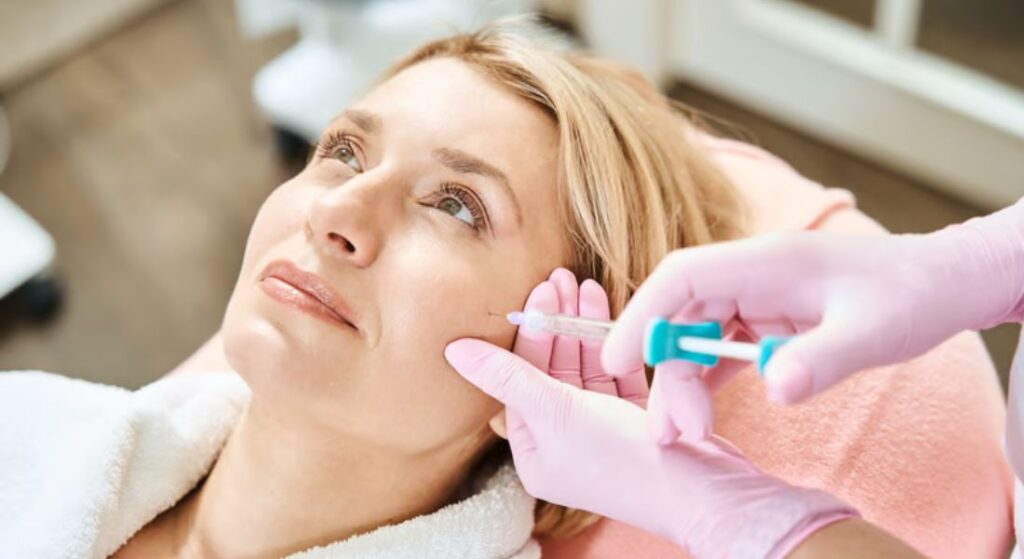
At IMCAS and other aesthetic conferences, you’ll often hear a lot of interest in combining resurfacing treatments with injectables such as biostimulators, skin boosters, and neuromodulators. The idea is to take a more comprehensive approach rather than relying on a single treatment type to address all signs of ageing.
You’ll see specialists discussing how these combination strategies may help improve overall rejuvenation by targeting different layers and concerns at the same time. For example, resurfacing can focus on skin texture, injectables can help restore or support volume, and neuromodulators can address dynamic wrinkles caused by muscle movement.
As a result, multimodal treatment planning has become increasingly common in modern aesthetic medicine. You’ll notice a stronger shift towards customised protocols that blend different techniques, allowing you to achieve more balanced and natural-looking results tailored to your individual facial structure and ageing pattern.
The Role of Artificial Intelligence and Imaging
Advanced imaging systems and artificial intelligence are becoming an increasingly important topic in modern dermatology conferences. Researchers are exploring how digital skin analysis could support you in treatment planning, monitoring progress, and objectively assessing outcomes after procedures such as laser resurfacing. While these technologies are still developing, they are already showing potential in helping clinicians make more precise and consistent decisions.
1. Supporting More Accurate Treatment Planning: Artificial intelligence tools can help analyse skin features such as texture, pigmentation, and scar depth. You may benefit from more detailed assessments that support tailored treatment planning. This can help clinicians choose more appropriate laser settings or combination approaches.
2. Tracking Progress Objectively Over Time: Digital imaging systems allow changes in your skin to be recorded and compared over time. This helps you and your clinician see measurable improvements rather than relying only on visual impression. It can make follow-up assessments more structured and consistent.
3. Improving Evaluation of Treatment Outcomes: AI-assisted analysis can help standardise how results are measured after procedures such as CO₂ laser resurfacing. This may reduce variability between different practitioners’ assessments. It also supports more evidence-based evaluation of results.
4. Future Integration into Routine Practice: Although still evolving, these technologies are expected to become more widely used in dermatology over time. Experts believe imaging and AI tools may eventually become a routine part of laser and aesthetic practice. This reflects a broader trend towards more data-driven medicine.
The integration of artificial intelligence and advanced imaging represents a growing shift in dermatology. While still in development, these tools may help improve accuracy, consistency, and treatment planning in the future. You are likely to see increasing use of digital assessment systems as technology continues to advance. Ultimately, this progress aims to support more precise and personalised patient care.
Managing Complications More Effectively
At IMCAS 2026, you’ll notice that a significant focus was placed on how to manage complications and more challenging resurfacing cases. Specialists openly discussed issues such as prolonged redness, post-inflammatory pigmentation changes, infection risk, delayed healing, and the potential for scarring, with the aim of improving overall safety and outcomes.
You’ll often hear experts emphasising that early recognition of these complications is key. Careful postoperative monitoring and timely intervention can make a major difference in how effectively these issues are managed, helping to reduce long-term effects and support better healing results.
This kind of transparent discussion plays an important role in strengthening global patient safety standards. By openly sharing experiences and learning from difficult cases, you’ll see how the wider medical community continues to refine techniques and improve care for future patients.
Lower-Downtime Treatment Trends
One of the strongest trends you’ll notice from IMCAS 2026 is the growing demand for lower-downtime resurfacing treatments. You’ll hear that patients are increasingly choosing gradual improvements with shorter recovery periods, rather than more aggressive procedures that require extended healing time.
You’ll often see specialists discussing how lower-density fractional treatments can still deliver meaningful improvements in skin quality while being much more tolerable. The focus is typically on achieving steady, natural-looking progress without significantly disrupting your daily routine or work schedule.
Overall, modern aesthetic medicine is moving towards greater flexibility and lifestyle compatibility. You’ll notice a clear shift in conference discussions towards treatments that balance effectiveness with convenience, ensuring you can maintain results without long recovery interruptions.
Male Skin Resurfacing Discussions
At IMCAS 2026, you’ll notice that male aesthetic treatments received increasing attention, especially in relation to skin resurfacing. Specialists highlighted that many men are now seeking treatments for concerns such as acne scarring, uneven texture, enlarged pores, and early signs of ageing, while still preferring results that look subtle and natural rather than overly “treated”.
You’ll often hear discussions focusing on how male skin differs biologically, including greater thickness, higher collagen density, and slightly different healing responses. These factors can influence how resurfacing treatments are planned and how energy settings are adjusted to achieve effective results while maintaining safety and natural-looking outcomes.
Overall, male aesthetic dermatology continues to grow globally, and you’ll see more emphasis on tailoring resurfacing approaches specifically for male patients. The goal in most cases is to improve skin quality in a way that enhances appearance without changing masculine features or creating an over-refreshed look.
Long-Term Skin Health and Maintenance
At recent conferences, you’ll notice a growing shift in focus towards long-term skin health rather than just individual procedures. Specialists are increasingly discussing how maintenance treatment schedules, consistent skincare routines, sun protection, and collagen preservation strategies all work together to support healthier skin over time.
You’ll often hear CO₂ laser resurfacing being described less as a one-time solution and more as part of an ongoing skin management plan. Instead of treating it as a standalone procedure, it’s now commonly integrated into a broader approach aimed at maintaining skin quality and slowing down visible ageing changes.
Overall, this reflects a clear move in aesthetic medicine towards long-term optimisation rather than short-term correction. You’ll see more emphasis on sustaining results, protecting skin health, and building treatment plans that support gradual, natural-looking improvement over time.
Ethical Discussions Around Laser Treatments
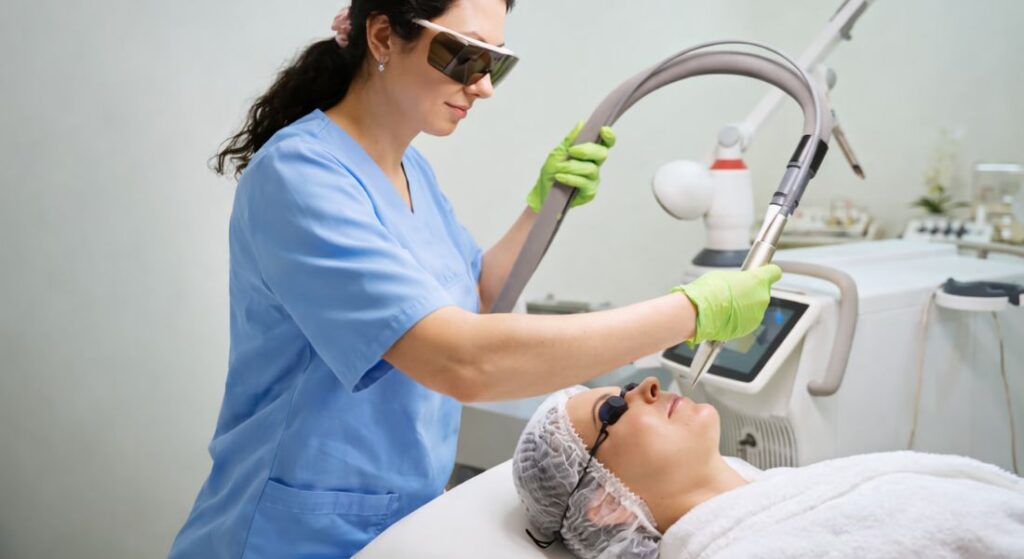
Ethical considerations were an important topic at International Master Course on Aging Science World Congress 2026, especially in relation to laser treatments and aesthetic procedures. Experts highlighted how social media trends can sometimes create unrealistic expectations about results, leading to pressure for unnecessary or overly aggressive treatments. These discussions focused on how you can be guided towards safer, more appropriate, and medically justified care.
1. Managing Unrealistic Expectations: You may be influenced by heavily edited or filtered images online, which can distort what is realistically achievable with laser treatments. Specialists emphasised the importance of honest counselling so you understand what results are possible for your skin type and condition. Clear communication helps prevent disappointment and dissatisfaction.
2. Avoiding Overtreatment Risks: Conferences highlighted concerns about patients being offered too many procedures or overly aggressive treatment plans. More is not always better when it comes to skin health, and excessive treatment can increase the risk of complications. Ethical practice focuses on doing what is necessary, not what is excessive.
3. Responsible Patient Counselling: You should receive balanced information about benefits, risks, and limitations before any laser procedure. Clinicians are encouraged to explain outcomes in a realistic and transparent way rather than focusing only on ideal results. This helps you make informed decisions based on your actual needs.
4. Prioritising Skin Health Over Cosmetic Trends: Experts stressed that treatment planning should be based on your skin condition rather than changing cosmetic trends. Ethical aesthetic medicine focuses on maintaining long-term skin health, not just achieving short-term visual effects. This approach helps ensure safer and more sustainable outcomes.
Ethical practice remains central to modern laser and aesthetic medicine. By focusing on realistic expectations and patient safety, clinicians aim to protect you from unnecessary or inappropriate treatment. Responsible decision-making helps ensure that procedures are guided by medical need rather than external pressure.
Why IMCAS Discussions Matter for Patients
Even though you may never attend IMCAS yourself, the discussions that take place there can still have a real impact on the treatments you receive. You’ll find that dermatologists and aesthetic specialists use these conferences to refine their techniques, evaluate new technologies, strengthen safety practices, and continuously improve the overall quality of patient care.
You’ll also see that international collaboration plays a major role in shaping everyday clinical decisions. By sharing real-world experiences and comparing long-term outcomes, clinicians are able to learn from each other and better understand how different treatments perform across diverse patient groups and settings.
Ultimately, these educational discussions feed directly into more evidence-based and safer aesthetic treatments. You benefit from this ongoing exchange of knowledge because it helps ensure that the procedures offered to you are based on the latest research, collective experience, and continuously improving global standards of care.
The Future of CO₂ Laser Resurfacing
At conferences, you’ll often hear that the future of CO₂ laser resurfacing is moving towards more personalised and precisely tailored treatments. The focus is increasingly on adapting energy settings, treatment depth, and protocols to suit your individual skin type, concerns, and healing response, rather than using a standardised approach.
You’ll also notice a strong trend towards combination and regenerative therapies. Specialists are exploring how CO₂ lasers can be paired with other treatments to enhance skin repair, support collagen regeneration, and improve overall outcomes, while also aiming for safer procedures with reduced downtime and more predictable recovery experiences.
Overall, conference discussions suggest that future resurfacing approaches will continue balancing visible improvement with comfort and practicality. As technology advances, you’ll see CO₂ lasers remaining an important tool in aesthetic dermatology, but used in a more refined, strategic, and patient-centred way to achieve natural-looking, long-term skin quality improvements.
FAQs:
1. What is CO₂ laser resurfacing and why is it discussed at IMCAS conferences?
CO₂ laser resurfacing is a skin treatment that helps improve texture, scars, wrinkles, and overall skin quality. At IMCAS conferences, experts discuss how the technology is evolving for safer and more effective results. You benefit because these discussions shape better clinical techniques. It’s one of the most important tools in modern dermatology.
2. Why is CO₂ laser still important despite newer technologies?
CO₂ laser remains important because it delivers strong, reliable skin resurfacing results. Even with newer treatments, it is still widely used for scars and ageing skin. You’ll see it constantly improved rather than replaced. This keeps it relevant in modern aesthetic medicine.
3. How does fractional CO₂ laser technology work?
Fractional CO₂ lasers treat tiny sections of skin while leaving surrounding tissue untouched. This helps your skin heal faster compared to older methods. It also reduces downtime while still improving texture and scars. The result is a balance between effectiveness and recovery.
4. Why is personalised treatment important in CO₂ laser procedures?
Personalised treatment ensures settings are adjusted to your skin type, concerns, and healing ability. No two patients need the same intensity or depth. This helps improve safety and results. It also makes recovery more predictable and comfortable for you.
5. Can CO₂ lasers help with acne scars?
Yes, CO₂ lasers are commonly used to improve acne scars. They work best when combined with other treatments like microneedling or subcision. You may need multiple sessions for gradual improvement. Complete removal isn’t always possible, but results can be significant.
6. How does CO₂ laser improve skin tightening?
CO₂ laser creates controlled heat that stimulates collagen production in your skin. Over time, this helps improve firmness and texture. The results depend on your skin type and treatment depth. You may notice gradual tightening as your skin heals.
7. What are the safety concerns with CO₂ laser treatments?
Safety concerns include burns, pigmentation changes, and delayed healing if settings are not correct. That’s why careful planning and skilled use are essential. You are assessed individually to reduce risks. Modern devices are designed to improve safety and precision
8. Why is recovery time important in CO₂ laser treatments?
Recovery time is important because your skin needs time to heal and regenerate after treatment. Modern approaches aim to reduce downtime while maintaining results. You may experience redness and sensitivity for a few days or weeks. Proper aftercare helps improve healing.
9. Can CO₂ lasers be combined with other treatments?
Yes, CO₂ lasers are often combined with treatments like PRP, injectables, or regenerative therapies. This can improve healing and enhance results. You benefit from a more comprehensive approach to skin rejuvenation. However, treatments must be carefully planned for safety.
10. What is the future of CO₂ laser resurfacing?
The future is moving towards more personalised, safer, and combination-based treatments. You can expect better precision, improved recovery, and more natural results. Technology will continue to refine how energy is delivered to your skin. The focus will remain on balance between results and safety.
Final Thoughts: CO₂ Laser Discussions at IMCAS 2026
CO₂ laser resurfacing continues to be one of the most important and widely discussed treatments in aesthetic dermatology, and the insights shared at IMCAS 2026 clearly reflect how the technology is evolving. You’ll see a strong shift towards more personalised treatment planning, where settings are carefully adjusted based on your skin type, concerns, and recovery expectations, helping to balance effectiveness with safety and downtime.
Another key takeaway is how CO₂ lasers are increasingly being used as part of combination and regenerative treatment approaches. Rather than focusing on a single procedure, clinicians are now looking at how resurfacing can work alongside other therapies to support better healing, improved collagen remodelling, and more natural-looking long-term results. You’ll also notice a growing emphasis on safety, ethical practice, and realistic expectations, ensuring treatments are both effective and responsibly delivered. If you’re looking for CO2 laser treatment in London, you can get in touch with us at the London Medical & Aesthetic Clinic.
References:
1. Hsu, C. et al. Resurfacing of atrophic facial acne scars with sequential CO₂ and non‑ablative laser treatment: Combination protocols produce measurable reductions in scar morphology with high patient satisfaction. https://pubmed.ncbi.nlm.nih.gov/38587296/
2. Naranjo, J. & López, F. Clinical improvement of facial atrophic acne scars using a multimodal CO₂ and 1570 nm laser system: Patients reported effective scar volume reduction with high satisfaction. https://www.mdpi.com/3042-6774/1/1/2
3. Kono, T. et al. Fractional Carbon Dioxide Laser Resurfacing Review of clinical outcomes showing measurable improvements in acne scarring. https://pmc.ncbi.nlm.nih.gov/articles/PMC3580980/
4. Zhang, X. et al. Efficacy and adverse reactions of fractional CO₂ laser for atrophic acne scars: A large retrospective analysis showing significant scar improvement. https://pubmed.ncbi.nlm.nih.gov/35181995/
5. Richichi, C. et al. Assessment of CO₂ plus 1540 nm laser wavelengths in skin resurfacing: Safety profile included mild erythema and oedema. https://www.mdpi.com/1648-9144/59/10/1857