


CO₂ laser treatment is widely used to address concerns such as acne scars, uneven skin texture, and signs of ageing. Advances in laser technology have made treatments more versatile, allowing practitioners to tailor procedures according to individual skin characteristics and treatment goals. As a result, treatment can often be customised more precisely than in the past.
When treating Black skin, careful planning becomes especially important. Higher levels of melanin can increase the risk of complications such as post-inflammatory hyperpigmentation if treatment is too aggressive. This means practitioners must carefully balance the desired level of improvement with the need to minimise unnecessary inflammation.
There is no single set of CO₂ laser settings that is considered ideal for every patient with Black skin. Factors such as skin tone, medical history, scar severity, and previous treatments all influence the treatment approach. If you are considering laser resurfacing, these individual factors will help determine the most appropriate settings for your skin.
Understanding how treatment settings are selected highlights the importance of professional assessment and personalised care. Experienced practitioners use a range of factors to guide treatment decisions rather than relying on a standard protocol. This tailored approach helps support both safety and effective outcomes.
The Relationship Between Laser Energy and Melanin
Laser treatments work by delivering controlled energy into the skin to create beneficial changes. This energy helps stimulate the skin’s natural repair processes, but it can also affect pigment-producing cells. If you have darker skin, understanding this interaction is an important part of treatment planning.
Melanin naturally absorbs laser energy, and this response can become more noticeable when inflammation occurs. In darker skin tones, melanocytes may become more active during healing, which can increase the likelihood of pigmentation changes. This is one reason why practitioners take extra care when selecting treatment settings.
Appropriate energy selection helps reduce unnecessary risk while still aiming for effective results. Your practitioner will consider factors such as skin type, treatment goals, and previous skin responses before deciding on the most suitable approach. Careful planning helps balance safety with the desired level of improvement.
Why Skin Type Matters in Laser Treatment
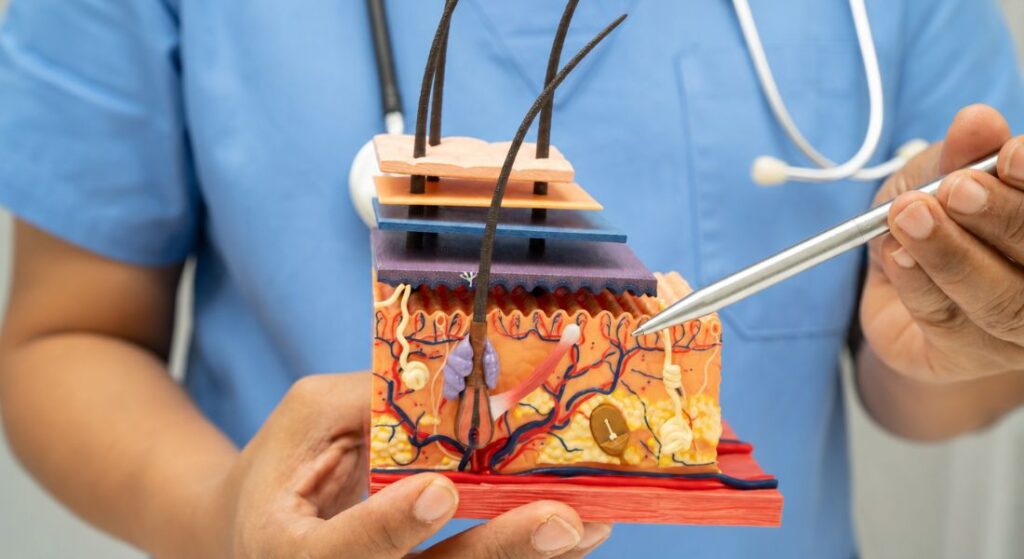
Skin type is one of the most important factors considered when planning laser treatment. Darker skin contains higher levels of melanin, which affects how laser energy interacts with the skin during a procedure. If you have Black skin, this is an important consideration when determining the most suitable treatment approach.
Melanin naturally absorbs laser energy, and excessive inflammation can sometimes lead to unwanted pigment changes. For this reason, practitioners often take extra precautions when treating darker skin tones. The aim is to achieve meaningful improvement while reducing unnecessary risk.
Understanding your skin type helps practitioners make informed treatment decisions. Factors such as pigmentation levels, skin sensitivity, and treatment goals are all carefully assessed. This personalised approach helps support both safety and effective outcomes.
Why There Is No Universal Setting
If you’re researching CO₂ laser treatment for Black skin, you may assume there is a single setting that works for everyone. In reality, there is no universal laser setting that can be safely applied to all patients. Every person’s skin is different, and a range of factors must be considered before treatment begins. This is why experienced practitioners place such a strong emphasis on individual assessment and personalised treatment planning.
1. Every Person’s Skin Responds Differently: Your skin characteristics are unique, which means your response to laser treatment may differ from someone else’s. Treatment settings need to reflect these individual differences.
2. Scar Severity Can Influence Settings: The depth and type of scarring being treated often affect how the laser is used. More complex concerns may require a different approach from milder skin issues.
3. Multiple Factors Are Considered: Elements such as your age, skin sensitivity, medical history, and treatment goals all play a role in decision-making. These factors help guide the treatment plan.
4. Personalisation Improves Safety and Effectiveness: A customised approach allows your practitioner to tailor the procedure to your specific needs. This helps balance treatment benefits with safety considerations.
Overall, there is no single CO₂ laser setting that is suitable for every person with Black skin. Treatment decisions are based on a variety of individual factors rather than a one-size-fits-all formula. By tailoring the approach to your skin and goals, practitioners can create a safer and more appropriate treatment plan. This personalised strategy is an important part of achieving the best possible outcome.
Understanding CO₂ Laser Parameters
CO₂ laser treatment involves several adjustable settings that can be tailored to your skin and treatment goals. These may include energy levels, treatment density, pulse duration, and the depth at which the laser works within the skin. Each setting plays a role in determining how the treatment is delivered.
Every parameter affects how the laser interacts with the skin and how the healing process unfolds afterwards. Even small adjustments can influence the level of improvement, recovery time, and risk of side effects. For patients with darker skin tones, careful selection of these settings is particularly important.
Experienced practitioners carefully balance these variables when developing a treatment plan. Factors such as your skin type, medical history, and specific concerns are all taken into account. This personalised approach helps maximise effectiveness while supporting safer and more predictable outcomes.
Lower Energy Approaches Are Often Preferred
When treating darker skin tones, many practitioners prefer to use lower energy settings during CO₂ laser treatment. This approach may help reduce the intensity of inflammation while still encouraging the skin’s natural remodelling processes. If you have Black skin, a more conservative treatment plan is often considered beneficial.
Lower energy treatments usually focus on gradual improvement rather than dramatic changes from a single session. Although results may develop more slowly, the skin is often given more opportunity to heal in a controlled manner. This can be an important consideration when balancing effectiveness and safety.
Using lower energy settings may help reduce the risk of complications such as post-inflammatory hyperpigmentation. Your practitioner will assess factors such as skin type, treatment goals, and previous skin responses before selecting the most appropriate settings. Careful planning helps support safer and more predictable outcomes.
The Importance of Fractional Technology
Fractional CO₂ laser technology has become an important part of modern dermatology. Rather than treating the entire skin surface, it creates microscopic treatment zones within targeted areas of the skin. If you are considering laser treatment, this approach allows treatment to be delivered in a more controlled and precise way.
One of the main benefits of fractional technology is that untreated skin remains between the treatment zones. These healthy areas help support the skin’s natural healing process and can contribute to a smoother recovery. As a result, healing is often more manageable than with more aggressive resurfacing techniques.
This approach can be particularly valuable for darker skin types. By treating only a portion of the skin at a time, practitioners can help reduce the risk of certain complications while still achieving noticeable improvement. This is one reason why fractional CO₂ laser techniques are widely used when treating patients with higher levels of melanin.
Density Settings and Their Role
Density refers to the percentage of skin treated during a single laser session. Higher density settings affect a larger proportion of the skin surface, which can increase both treatment intensity and recovery demands. Understanding density is important because it plays a major role in how the skin responds after treatment.
For darker skin tones, lower-density treatments may sometimes be preferred. By treating a smaller area of skin at one time, practitioners can help reduce inflammation and support a more controlled healing process. If you have Black skin, this approach may help lower the risk of unwanted pigment changes.
Treatment density is always selected according to individual requirements rather than using the same settings for every patient. Factors such as your skin type, treatment goals, and previous skin responses are carefully considered. This personalised approach helps balance effectiveness with safety.
Treatment Depth Considerations
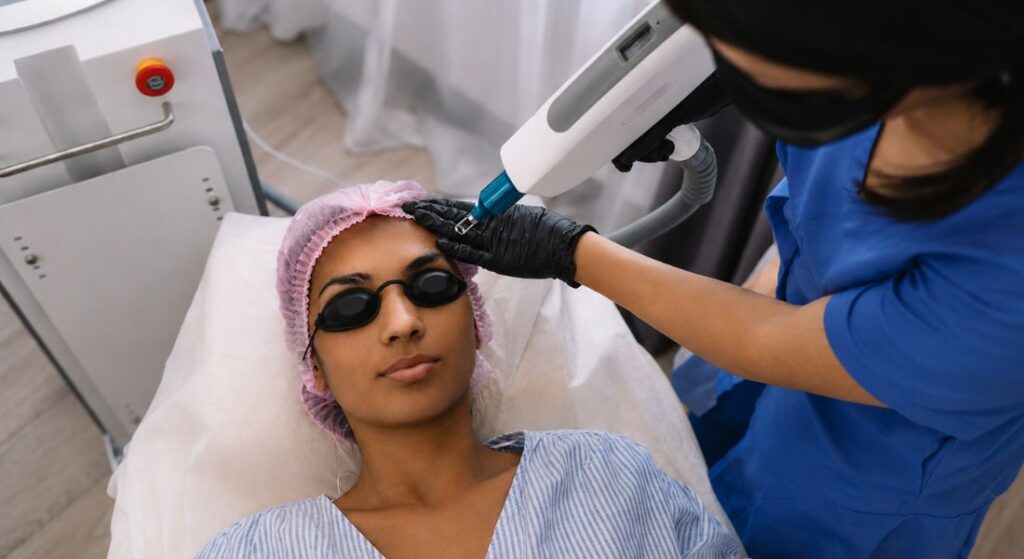
If you’re considering CO₂ laser treatment, the depth of treatment is one of the key factors your practitioner will assess. The laser can be adjusted to target different layers of the skin depending on the condition being treated and the desired outcome. While deeper treatments may produce more noticeable remodelling effects, they can also require a longer recovery period and carry additional risks. This is why careful planning is particularly important for darker skin tones.
1. Treatment Depth Influences Results: The depth at which the laser works can affect the level of skin remodelling achieved. Deeper treatments may provide more significant improvements in certain cases.
2. Deeper Treatments Can Increase Recovery Demands: As treatment depth increases, your skin may require more time to heal. Recovery can be more intensive compared with less aggressive approaches.
3. Darker Skin Requires Careful Assessment: If you have a darker skin tone, your practitioner will carefully evaluate whether deeper treatment is appropriate. This helps reduce the risk of unwanted side effects such as pigmentation changes.
4. Safety and Effectiveness Must Be Balanced: The goal is to achieve meaningful improvement while minimising unnecessary risk. Finding the right balance between treatment depth and safety is an important part of the planning process.
Overall, treatment depth is a significant consideration in CO₂ laser procedures. While deeper treatments may offer greater skin remodelling benefits, they also come with increased recovery requirements. For darker skin tones, practitioners often take a particularly cautious and personalised approach. By balancing effectiveness with safety, they can help create a treatment plan that is appropriate for your individual needs.
Why Conservative Approaches Are Common
Many experts advocate a conservative approach when treating Black skin with CO₂ laser. Rather than aiming for aggressive correction in a single session, gradual improvement is often prioritised to give the skin time to respond safely. If you are undergoing treatment, this approach helps ensure changes happen in a more controlled way.
This strategy can reduce the likelihood of unwanted side effects such as prolonged inflammation or pigment changes. It also allows your practitioner to closely monitor how your skin responds after each stage of treatment. Adjustments can then be made if needed to improve safety and outcomes.
Patient safety remains the primary goal in all treatment planning. A slower, more measured approach often provides a better balance between visible improvement and reduced risk. This is especially important when working with skin types that are more reactive to inflammation.
The Influence of Scar Severity
Acne scar severity plays an important role in determining CO₂ laser treatment settings. Mild scarring may require a gentler approach compared to more extensive or deeper textural changes. If you are assessing treatment options, your scar pattern is one of the key factors your practitioner will evaluate.
Deeper scars do not always mean stronger settings are used. In many cases, they may be better managed through additional treatment sessions rather than increasing intensity in a single session. This helps the skin respond more safely while still allowing gradual improvement.
This approach allows results to develop step by step over time. It also helps maintain a balance between visible improvement and safety considerations, especially in skin types that are more prone to pigmentary changes. Careful planning ensures treatment remains both effective and controlled.
Previous Skin Reactions Matter
A patient’s history of skin reactions provides important insight when planning CO₂ laser treatment. If you have experienced pigmentation issues or prolonged redness after previous procedures, this may indicate that your skin needs a more cautious approach. These past responses help guide how treatment is planned for you.
Previous healing patterns can help practitioners better understand how your skin is likely to respond. If you tend to develop pigmentation changes easily, your practitioner may adjust settings or recommend a more gradual treatment plan. This reduces the chance of triggering similar reactions again.
This information plays a key role in personalised treatment planning. By considering your individual history, practitioners can make more informed decisions about safety and effectiveness. The goal is always to tailor treatment in a way that suits your skin specifically.
The Importance of Test Areas
If you’re considering CO₂ laser treatment, your practitioner may sometimes suggest starting with a small test area before treating a larger section of skin. This is done to observe how your skin responds to the laser in a controlled and limited way. It can be especially helpful when there are concerns about sensitivity or pigmentation response. This cautious approach supports safer and more informed treatment planning.
1. A Small Area Is Treated First: You may have a small section of skin treated initially. This allows your practitioner to see how your skin reacts before proceeding further.
2. Helps Assess Skin Response: The test area gives useful information about healing, sensitivity, and pigmentation changes. This helps guide how the full treatment should be carried out.
3. Supports Safer Treatment Planning: By understanding your skin’s response in advance, your practitioner can adjust settings if needed. This reduces the likelihood of unwanted side effects.
4. Useful for Personalised Care: Test areas are part of a more tailored approach to treatment. They help ensure the procedure is adapted to your individual skin type and needs.
Overall, test areas can be an important step in planning CO₂ laser treatment. They allow your practitioner to evaluate how your skin responds before committing to full treatment. This approach helps improve safety and allows for more personalised adjustments. By starting cautiously, the treatment plan can be refined for better and more predictable results.
Pre-Treatment Skin Preparation
Preparing the skin before CO₂ laser treatment is often an important step in the overall process. The exact preparation routine will depend on your individual skin condition and the recommendations given by your practitioner. If you are planning treatment, this stage helps set the foundation for safer outcomes.
Optimising your skin health beforehand may support more predictable healing after the procedure. This can include improving skin barrier function and ensuring your skin is in a stable condition before treatment begins. A well-prepared skin environment often responds more consistently during recovery.
Pre-treatment preparation is considered part of a comprehensive treatment strategy. It works alongside the laser procedure itself to help reduce potential risks and support better results. Careful planning at this stage can make a meaningful difference to your overall outcome.
Why Multiple Sessions Are Often Recommended
Instead of relying on one aggressive CO₂ laser session, many practitioners prefer to use multiple lower-intensity treatments. This approach allows your skin to adjust gradually while still working towards visible improvement over time. If you are considering treatment, this staged method is often discussed during consultation.
A gradual approach also gives your skin enough time to recover between sessions. It allows your practitioner to assess how you are responding and make adjustments if needed. This helps ensure that each stage of treatment is better tailored to your skin’s healing pattern.
Many patients find this strategy reassuring because it feels more controlled and less intense. Rather than forcing rapid change, improvement develops step by step. This can make the overall treatment journey feel safer and more manageable.
Recovery Expectations Following Treatment
Recovery after CO₂ laser treatment varies depending on how intense the procedure is and how your skin typically heals. Temporary redness, swelling, and sensitivity are common during the initial healing phase. If you are planning treatment, it is important to understand that these effects are a normal part of the process.
Your recovery experience is also taken into account when selecting treatment settings. More conservative approaches are often chosen if a shorter or more comfortable downtime is preferred. This helps ensure that the treatment aligns with your lifestyle as well as your skin needs.
Careful planning helps balance visible results with realistic downtime expectations. Your practitioner will guide you on what to expect and how to care for your skin during recovery. This ensures the healing process is as smooth and predictable as possible.
The Role of Sun Protection
Sun protection is especially important after CO₂ laser treatment because your skin becomes more sensitive during the healing phase. Exposure to ultraviolet radiation can increase the risk of pigmentation changes and slow down the recovery process. If you are undergoing treatment, protecting your skin from the sun becomes a key part of aftercare.
You are usually advised to follow strict sun protection measures during this period. This may include avoiding direct sunlight, wearing protective clothing, and using a broad-spectrum sunscreen as directed by your practitioner. These steps help reduce unnecessary stress on healing skin.
Consistent sun protection supports a smoother and more predictable recovery process. It also helps maintain the results achieved from your treatment over time. With careful protection, your skin is more likely to heal evenly and safely.
Managing Expectations Around Results

If you’re considering laser treatment, it’s important to understand that results can vary from person to person. Your skin type, the condition being treated, and how your body heals all play a role in the final outcome. Some people may notice visible improvements after just one session, while others may need a series of treatments to achieve their desired results. This variation is completely normal and part of how laser procedures work.
1. Results Vary Between Individuals: You may respond differently to treatment compared with someone else. Factors like skin condition and healing response influence your outcome.
2. Some People See Faster Improvements: In certain cases, you might notice visible changes after a single session. However, this is not guaranteed for everyone.
3. Multiple Sessions May Be Needed: You may require more than one treatment to achieve optimal results. This is often planned as part of a longer treatment course.
4. Improvements Are Usually Gradual: Changes in your skin often develop slowly over time as healing progresses. This gradual process is a normal part of recovery.
Overall, managing expectations is an important part of laser treatment. While you may see noticeable improvements, results are not always immediate or identical for everyone. Understanding that progress is often gradual helps you approach treatment with realistic expectations. This can make your overall experience more positive and predictable.
Advances in Modern Laser Systems
Modern CO₂ laser systems offer significantly greater control over treatment parameters compared to earlier devices. This means practitioners can adjust settings more precisely to suit your individual skin type and treatment goals. If you are considering laser treatment, this improved precision plays an important role in safety and outcomes.
These technological improvements have contributed to safer treatment options for a wider range of skin types, including darker skin tones. By refining how energy is delivered to the skin, newer systems help reduce unnecessary damage while still promoting effective results. This balance is especially important in pigment-prone skin.
Ongoing research continues to refine best-practice approaches in laser dermatology. As understanding of skin biology improves, treatment protocols are becoming more tailored and predictable. This ensures that both safety and effectiveness continue to evolve together.
Why Practitioner Experience Is Essential
Perhaps the most important factor in CO₂ laser treatment is practitioner experience. Selecting appropriate laser settings requires a strong understanding of both laser physics and skin biology, especially when working with darker skin tones. If you are planning treatment, this expertise can make a significant difference to your outcome.
Experienced practitioners are better able to adjust treatment parameters according to your individual needs. They can interpret how your skin is likely to respond and make real-time decisions to support safety and effectiveness. This level of judgement is particularly important in pigment-prone skin.
Knowledge and clinical judgement remain central to treatment success. A skilled practitioner will balance improvement with risk reduction, ensuring your treatment plan is carefully tailored. This helps support more consistent and predictable results.
Choosing the Right Treatment Approach
If you have Black skin and are considering laser resurfacing, it is important to understand that there is no universal setting suitable for everyone. If you are exploring treatment, you will find that the safest approach always depends on a detailed assessment of your individual skin. This ensures that your plan is tailored rather than standardised.
Safe and effective treatment relies on personalised planning that takes into account your skin type, concerns, and medical history. You will usually find that your practitioner adjusts settings carefully to match your specific needs. This helps reduce unnecessary risk while still aiming for meaningful improvement.
Ongoing monitoring is also an important part of the process. Your skin’s response is reviewed throughout the treatment journey so adjustments can be made if needed. This step-by-step approach supports both safety and more predictable results.
FAQs:
1. What are the best CO₂ laser settings for Black skin?
There is no single set of CO₂ laser settings that is considered best for everyone with Black skin. Treatment parameters depend on factors such as your skin tone, scar severity, treatment goals, and medical history. Practitioners adjust settings based on individual assessment rather than using a standard approach. Personalisation is essential for achieving a balance between safety and effectiveness.
2. Why do CO₂ laser settings need to be adjusted for Black skin?
Black skin contains higher levels of melanin, which can increase the risk of pigmentation changes following inflammation. If treatment is too aggressive, the skin may respond with post-inflammatory hyperpigmentation. Adjusting laser settings helps minimise unnecessary inflammation while still encouraging skin remodelling. Careful planning is an important part of safer treatment.
3. Are lower energy settings safer for darker skin tones?
Many practitioners prefer lower energy settings when treating darker skin types. Lower energy levels may reduce the intensity of inflammation and lower the risk of pigment-related complications. While improvement may be more gradual, this approach often prioritises safety. Treatment plans are tailored according to your individual needs and skin response.
4. What is fractional CO₂ laser technology?
Fractional CO₂ laser technology treats only small sections of the skin at a time rather than the entire surface. This creates microscopic treatment zones surrounded by untreated skin that helps support healing. The approach can reduce downtime and improve recovery. It is commonly used because it offers a more controlled treatment option for a variety of skin types.
5. Why is treatment density important in CO₂ laser procedures?
Treatment density refers to the percentage of skin affected during a session. Higher densities treat more skin but may also increase inflammation and recovery time. For Black skin, lower-density approaches are often considered to help reduce potential complications. The most suitable density depends on your skin characteristics and treatment goals.
6. Can deeper CO₂ laser treatments be performed on Black skin?
Deeper treatments may sometimes be possible, but they require careful consideration. Greater treatment depth can increase both the benefits and the risk of side effects, including pigmentation changes. Practitioners will assess whether deeper treatment is necessary based on your specific concerns. In many cases, a more conservative approach is preferred.
7. Why are multiple treatment sessions often recommended?
Multiple lower-intensity sessions can allow gradual improvement while reducing the risk of excessive inflammation. This approach gives your skin time to recover between treatments and allows settings to be adjusted if needed. Many practitioners consider this safer than performing one highly aggressive session. Results often develop progressively over time.
8. Does previous skin reaction history affect laser settings?
Yes, your previous experiences with skin treatments can provide valuable information. If you have developed pigmentation changes or unusual healing responses in the past, your practitioner may adjust the treatment plan accordingly. Understanding how your skin has reacted before helps guide safer decision-making. This is why a detailed medical history is important.
9. How important is sun protection after CO₂ laser treatment?
Sun protection is extremely important after treatment, particularly for darker skin tones. UV exposure can increase melanocyte activity and raise the risk of hyperpigmentation during healing. Patients are usually advised to follow strict sun protection measures and avoid unnecessary sun exposure. Consistent protection supports healthier recovery and more predictable results.
10. Why is practitioner experience so important when treating Black skin?
Selecting appropriate CO₂ laser settings requires a detailed understanding of both laser technology and skin biology. Experienced practitioners can assess individual risk factors and make adjustments that support safer outcomes. They are also better equipped to recognise when a more conservative approach is appropriate. Expertise plays a major role in minimising complications and achieving effective results.
Final Thoughts: CO₂ Laser Settings for Black Skin
There is no universal CO₂ laser setting that is suitable for every person with Black skin. The safest and most effective approach depends on factors such as your skin tone, treatment goals, medical history, and how your skin responds to healing. This is why personalised assessment and careful treatment planning are so important.
Modern laser technology offers greater flexibility than ever before, but successful treatment still relies heavily on selecting appropriate settings and taking a conservative approach when necessary. Lower energy levels, fractional techniques, and gradual treatment plans are often used to help reduce the risk of complications while still achieving meaningful improvement. If you are considering CO₂ laser treatment in London, you can contact us at the London Medical & Aesthetic Clinic to discuss your suitability and treatment options.
References:
1. Cox, C., Bettiol, P., Le, A., MacKay, B.J., and colleagues (2022) CO₂ laser resurfacing for burn and traumatic scars of the hand and upper extremity. Scars, Burns & Healing, 8, pp.1–10. Available at: https://pubmed.ncbi.nlm.nih.gov/34342933/
2. Seganfredo, I.B., Bianchi, C., Tacla, M., Chedraui, P., Haddad, J.M., Simoes, R., Baracat, E.C. and Soares Jr, J.M. (2024) Comparison of promestriene with vaginal fractional CO₂ laser and radiofrequency treatments of genitourinary syndrome of menopause. Maturitas, 186, Article 108008. Available at: https://www.sciencedirect.com/science/article/abs/pii/S0378512224001038
3. Sigurðardóttir, H.B., Kirschner, B., Obel, J., Aziz, M., Stenz, C.B., Schroll, J.B. et al. (2025) ‘Vaginal CO₂ laser treatment for urinary stress incontinence: a randomised controlled trial’, Maturitas, 199, 108658. Available at: https://www.sciencedirect.com/science/article/abs/pii/S0301211526002782
4. Huang, C., Shen, X., Chen, M. and Wang, K. (2023) ‘An overview and update of CO₂ laser-assisted sclerectomy surgery in primary open-angle glaucoma’, Experimental and Therapeutic Medicine, 25(6), 270. Available at: https://pmc.ncbi.nlm.nih.gov/articles/PMC11697134/
5. Yumeen, S. and Khan, T. (2023) ‘Laser carbon dioxide resurfacing’, StatPearls [Internet]. Treasure Island (FL): StatPearls Publishing. Available at: https://pmc.ncbi.nlm.nih.gov/articles/PMC12361942/