


Skinimalism combines the ideas of skin and minimalism, encouraging a simpler approach to skincare and aesthetic treatments. Instead of relying on complicated routines or dramatic cosmetic changes, you focus on using suitable products that support healthy-looking skin and natural results.
This approach does not mean you should neglect your skin or avoid professional treatments altogether. Instead, it encourages you to understand what your skin truly needs and avoid products or procedures that offer little real benefit.
Skinimalism can shape both your daily skincare routine and the cosmetic treatments you choose. By focusing on consistency rather than excess, you may support healthier-looking skin and achieve more subtle results without unnecessary complexity.
Why the Skinimalism Movement Is Growing
Skincare routines have become increasingly complicated over the past decade. You have probably seen routines on social media that include multiple cleansers, toners, essences, serums, exfoliants and masks, even when your skin may not need every single step.
Many people find these routines expensive, time-consuming and difficult to maintain. You may also experience dryness, irritation or breakouts if you combine several active ingredients without understanding how they work together.
Skinimalism offers a simpler and more sustainable approach by prioritising consistency over constantly trying new products. You are often more likely to benefit from a small number of carefully chosen products than from an overcrowded routine that places unnecessary stress on your skin.
Moving Away From Cosmetic Perfection
Traditional beauty marketing has often encouraged you to see pores, fine lines, pigmentation and facial asymmetry as imperfections that need correcting. Filters and heavily edited images can reinforce this pressure by creating unrealistic standards that your skin cannot naturally achieve.
Skinimalism promotes a more balanced view of healthy skin. It encourages you to recognise that your skin will naturally have texture, visible pores, expression lines and variations in tone, and these features do not mean your skincare routine is failing.
This shift is also changing aesthetic medicine. You may now be more interested in treating one specific concern while preserving your natural appearance, with the goal of looking healthier, fresher and more radiant rather than completely transformed.
Placing Skin Health Before Appearance
Skinimalism is based on the idea that healthy skin is the foundation of a healthy appearance. You may achieve a temporary glow by using several exfoliating products, but if your routine causes burning, dryness or ongoing sensitivity, your skin barrier may be suffering.
Your skin does much more than influence how you look. It helps reduce water loss and protects your body from irritants, allergens and microorganisms, so keeping your skin barrier healthy should be one of your main priorities.
Supporting your skin generally requires consistent care rather than repeated disruption. A consistent routine may provide greater benefit by protecting and supporting your skin than by constantly chasing quick cosmetic results.
Understanding Your Skin Barrier
The outermost layer of your skin is often compared to a brick wall. Your skin cells act as the bricks, while lipids between them form a protective seal that helps prevent water loss and keeps irritants from entering.
When your skin barrier is healthy, your skin is more likely to feel comfortable, smooth and well hydrated. If the barrier becomes damaged, you may notice tightness, redness, stinging, roughness or increased sensitivity to products that your skin previously tolerated.
Harsh cleansers, frequent exfoliation and using too many active ingredients at once can irritate the skin and disrupt its normal barrier function, particularly when several exfoliating or irritating products are combined. Skinimalism encourages you to simplify your routine, introduce new products gradually and give your skin time to adapt before making further changes.
How Excessive Product Layering Can Affect Your Skin
Using more skincare products does not always mean your skin will achieve better results. You may unknowingly apply several products containing similar active ingredients, increasing your overall exposure without realising it.
For example, an exfoliating cleanser, acid toner, brightening serum and resurfacing mask can all remove surface skin cells. When you use these products together, your skin may become irritated, even if each one seems gentle on its own.
A complicated routine can also make it difficult to identify what is causing a reaction. If you introduce one product at a time, you can more easily see whether it benefits your skin or leads to dryness, breakouts or discomfort.
The Role of Moisturisation

A moisturiser helps keep your skin hydrated by reducing water loss from its surface. You may find it especially beneficial if your skin feels dry, the weather is cold or you are using treatments that temporarily cause irritation or dryness.
You do not always need separate creams for the day, night, neck and eye area. In many cases, you can use one well-formulated moisturiser across several areas, provided it suits your skin type and is comfortable for your skin.
If you have oily skin, you should not assume that moisturiser will automatically cause breakouts. A lightweight, non-greasy formula can help maintain your skin barrier, particularly if acne treatments or excessive cleansing have left your skin feeling dehydrated or sensitive.
Myth vs Fact
| Myth | Fact |
| A longer skincare routine always produces better results. | Using more products does not guarantee better skin. Combining several similar or irritating active ingredients may increase dryness, redness and sensitivity. |
| Everyone needs exactly three skincare products. | A cleanser, moisturiser and sunscreen can form a useful foundation for many people, but your routine should reflect your skin type, exposure, medical conditions and prescribed treatments. |
| Skinimalism means stopping all active ingredients. | Active ingredients can still be used when they address a defined concern and are suitable for your skin. The aim is to avoid unnecessary duplication rather than avoid effective treatment. |
| Tingling or peeling proves that a product is working. | Persistent burning, redness, peeling or soreness may indicate irritation. Effective skincare does not need to cause ongoing discomfort. |
| Oily or acne-prone skin never needs moisturiser. | Some people with oily or acne-prone skin benefit from a lightweight moisturiser, particularly when acne treatments or frequent cleansing cause dryness. |
| Natural skincare products are always gentler. | Plant-derived and “natural” ingredients can also irritate the skin or cause allergic contact dermatitis. Suitability depends on the formulation and your individual skin. |
| A minimal routine can treat every skin problem. | Acne, eczema, rosacea, infection, changing lesions and other medical conditions may require diagnosis, prescription treatment or monitoring. |
| A small amount of filler or botulinum toxin is risk-free. | Lower-volume treatment may support a conservative plan, but even small amounts can cause complications. Proper assessment, consent and follow-up remain essential. |
The Foundations of a Minimal Routine
For many people, a simple routine may include gentle cleansing when needed, a suitable moisturiser and appropriate sun protection. These foundations should be adapted to your skin type and any conditions such as acne, eczema, rosacea, allergy or pigmentation.
A minimal routine does not mean everyone should use the same products. You may need a richer moisturiser during winter, a lighter formula in warmer weather or a particular cleanser based on your lifestyle, makeup use or current skincare treatments.
The aim of skinimalism is to choose products that each have a clear purpose. You may be more likely to maintain a suitable routine by using a small number of suitable products consistently than by following an unnecessarily complicated routine.
Why Daily Sun Protection Remains Essential
Skinimalism does not mean removing skincare steps that are supported by strong scientific evidence. Daily broad-spectrum sunscreen remains one of the most evidence-supported methods of reducing cumulative UV damage and photoageing.
Repeated sun exposure can contribute to uneven pigmentation, rough texture, fine lines, loss of elasticity and an increased risk of skin cancer. Regularly applying suitable broad-spectrum sunscreen and following other sun-protection measures can help protect your skin from damage that can build up over time.
You should choose a sunscreen that you are happy to use consistently and combine it with sensible sun-protection habits such as seeking shade and wearing protective clothing. A simple skincare routine should keep the products that genuinely protect your skin rather than removing them just to reduce the number of steps.
Choosing a Gentle Cleanser
Cleansing helps remove makeup, excess oil, sweat, sunscreen and environmental impurities from your skin. However, if cleansing consistently leaves your skin feeling tight, dry, sore or irritated, the product, water temperature or frequency of washing may not be suitable for your skin.
The right cleanser depends on your skin type and daily routine. You may need a different product if you wear heavy makeup than someone with dry, sensitive skin who only applies sunscreen each day.
You should avoid washing your face too often or using very hot water, as both can increase dryness and irritation. Skinimalism encourages you to cleanse your skin effectively while preserving its natural protective barrier rather than stripping away every trace of oil.
Using Active Ingredients With a Clear Purpose
Skinimalism does not mean avoiding active skincare ingredients. Instead, it encourages you to choose products that target a specific concern rather than using multiple ingredients simply because they are popular. A focused approach can make your routine easier to manage and reduce the risk of irritation.
1. Retinoids: These may help with acne, fine lines and sun-related skin changes when introduced gradually.
2. Azelaic Acid: This ingredient may support the management of acne, redness and uneven pigmentation.
3. Other Useful Actives: Vitamin C, niacinamide and exfoliating acids may be useful for selected concerns, but your skin may not need all of them.
4. Introduce One at a Time: Adding one active gradually makes it easier to assess results and identify any irritation.
Overall, active ingredients are most useful when they are selected for a clear reason. The appropriate strength and frequency depend on your skin type, concern and tolerance. A simple, gradual approach can help you gain benefits without overwhelming your skin.
Clinical Tip: Add One Active Product at a Time
Introduce one new active ingredient at a time and use it at a frequency your skin can tolerate. This makes it easier to identify whether the product is helping or causing redness, burning, peeling or breakouts.
Mild irritation can occur when some active ingredients are introduced, but persistent redness, burning, blistering or worsening symptoms should not be ignored. Persistent discomfort, swelling, blistering or a spreading rash may indicate irritation or allergy and should be assessed appropriately. Do not stop prescribed treatment without discussing the problem with your prescriber.
Why Consistency Matters More Than Constant Change
Many skincare products need several weeks or even months of regular use before you can judge whether they are working. If you keep changing products every few days, your skin has little opportunity to respond, making it difficult for you to know what is actually helping.
Social media often encourages constant experimentation by presenting every new ingredient as essential. You may end up buying more products than your skin needs without ever developing a routine that you can follow consistently.
Skinimalism encourages patience and a more thoughtful approach. When you keep your routine simple and consistent, you are more likely to notice how your skin responds and whether it is improving, staying the same or becoming irritated.
Skinimalism for Sensitive or Reactive Skin
A simplified skincare routine can be especially helpful if your skin has become sensitive from using too many active products. Giving your skin a break while continuing with gentle cleansing, moisturising and daily sun protection may help reduce further irritation while your skin is assessed.
However, ongoing redness, itching, swelling or burning should not always be blamed on an irritated skin barrier. Your symptoms could be caused by conditions such as eczema, rosacea, allergic contact dermatitis or an infection, which require a different approach.
If your symptoms continue, become worse or begin to affect your daily life, you should seek professional advice. Skinimalism can help support sensitive skin, but it cannot replace a proper diagnosis or appropriate medical treatment when an underlying skin condition is present.
Skinimalism and Acne-Prone Skin
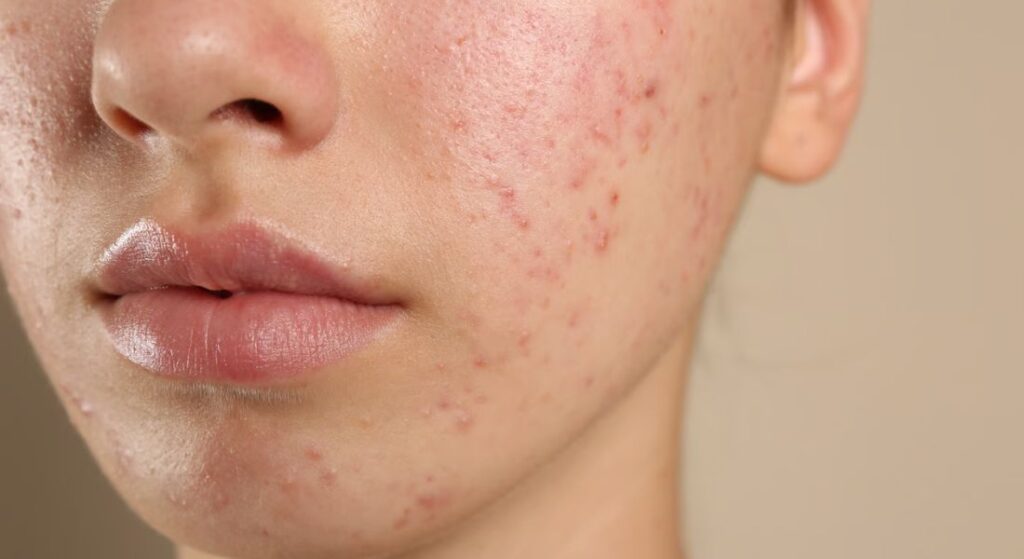
Acne-prone skin can be affected by both over-treatment and under-treatment. You may think that scrubbing harder, washing your face repeatedly or layering several drying products will clear your skin faster, but these habits can increase irritation without addressing the underlying causes of acne.
A simple routine allows you to focus on one or two appropriate acne treatments while protecting your skin barrier with gentle cleansing, moisturising and daily sun protection. You should give your treatment enough time to work, as improvement usually comes with consistency rather than constantly adding new products.
If you have moderate, severe or scarring acne, you should seek professional advice because prescription treatment may be more effective and help reduce the risk of persistent marks or scarring. Skinimalism is about simplifying evidence-based acne care, not avoiding medical treatment when your skin needs it.
How Skinimalism Is Influencing Cosmetic Procedures
The principles of skinimalism are extending beyond skincare routines and into aesthetic medicine. You may be looking for treatments that improve your skin’s texture, tone and overall quality while preserving your natural appearance rather than creating obvious cosmetic changes.
Instead of combining multiple procedures in one appointment, you may choose a single targeted treatment and allow enough time to assess the results before deciding whether anything further is needed. This approach encourages more measured and personalised treatment planning.
Skinimalism shifts the focus from asking, “What else can be added?” to “What is the least intensive suitable treatment for your concern?” By taking this approach, you are more likely to receive treatments with a clear purpose while avoiding unnecessary procedures.
A Skinimalist Approach to Cosmetic Treatment Decisions
| Treatment question | Skinimalist approach | Why it may improve decision-making |
| Is there a specific concern to treat? | Define one clear concern before choosing a procedure. | This prevents treatment from becoming a response to general dissatisfaction or social-media pressure. |
| Is treatment actually necessary? | Consider skincare, observation or no treatment when the likely benefit is small. | Avoiding unnecessary procedures reduces cost, downtime and complication risk. |
| Can one treatment address the concern? | Begin with the least intensive suitable option rather than combining several procedures immediately. | A staged approach makes it easier to assess results and identify side effects. |
| Is the treatment supported by evidence? | Ask for evidence relating to the exact product, device and indication. | Research involving one treatment cannot automatically support every similar product or technology. |
| Will the result preserve natural features? | Choose conservative treatment that respects facial movement, proportions and existing anatomy. | This reduces the risk of an overtreated or standardised appearance. |
| Are the risks proportionate to the expected benefit? | Compare the likely improvement with common and serious complications. | Even subtle cosmetic treatments can cause infection, scarring, pigment changes or other adverse effects. |
| Is maintenance required? | Ask how often treatment needs to be repeated and what happens when it wears off. | This clarifies the long-term financial and practical commitment. |
| Can the treatment be reversed? | Understand whether the effect can be reduced, dissolved or only allowed to fade over time. | Some treatments, including certain fillers and biostimulatory products, are not easily reversible. |
| Does the practitioner recommend multiple treatments at once? | Ask whether each procedure has a separate, clearly explained purpose. | Package-based treatment can lead to unnecessary intervention and make results harder to evaluate. |
| What happens if you wait? | Discuss whether delaying treatment could be reasonable or beneficial. | Elective cosmetic treatment rarely requires an immediate decision. |
| Who will manage complications? | Confirm that follow-up, emergency advice and appropriate clinical support are available. | Safe care includes aftercare and complication management, not only the treatment itself. |
| Is choosing no treatment acceptable? | A responsible consultation should allow this outcome without pressure. | Skinimalism should support informed choice rather than create a new form of treatment expectation. |
Prioritising Skin Quality Over Facial Transformation
Skin quality refers to features such as hydration, smoothness, elasticity, pigmentation and the overall appearance of your skin. Depending on your concerns, you may benefit from treatments such as professional skincare, chemical peels, microneedling or selected energy-based procedures.
These treatments work in different ways and are not interchangeable. Your skin tone, medical history, current skin condition and the amount of downtime you can manage should all be considered before choosing the most suitable option.
Skinimalism does not mean everyone needs a professional skin treatment. Instead, it encourages you to focus on improving your skin’s overall health and appearance when appropriate, with the aim of enhancing your natural features rather than changing the shape or proportions of your face.
A More Conservative Approach to Injectables
Dermal fillers and botulinum toxin can be used conservatively when there is a clear reason for treatment. Skinimalism encourages practitioners to preserve natural facial movement and individual facial expression, proportions and individual features rather than following the same treatment plan for every patient.
With dermal fillers, you may need only a small amount in one carefully chosen area instead of adding volume throughout your face. Similarly, botulinum toxin may be used to temporarily reduce activity in selected facial muscles while aiming to preserve natural expression.
Even small amounts of injectable products carry potential risks, so every treatment requires a thorough assessment and informed consent. You should receive treatment only when there is a genuine benefit, and a responsible practitioner should be willing to recommend no treatment when the expected benefit does not justify the risks.
UK Safety Note: Botulinum Toxin and Dermal Fillers
Botulinum toxin is a prescription-only medicine in the UK. It should be supplied following an appropriate assessment and prescription, with consideration of your medical history, treatment goals, contraindications and the practitioner’s ability to manage complications.
Seek emergency medical attention if you develop difficulty breathing, swallowing or speaking, slurred speech or marked muscle weakness after botulinum toxin treatment. Call 999 or attend A&E if breathing or swallowing is affected. These complications are rare but may indicate that the toxin’s effect has spread beyond the intended muscles.
Dermal filler can also cause uncommon but serious complications. Contact the treating clinic immediately if you develop severe or increasing pain, pale or mottled skin, dusky discolouration, cool skin or rapidly worsening changes. Any sudden visual disturbance, eye pain, severe headache, weakness or difficulty speaking following facial filler treatment requires emergency medical attention.
Why Personalised Treatment Remains Important

Skinimalism should not become another rigid trend where everyone follows the same routine or receives the same cosmetic treatment. Your skin type, age, medical history, lifestyle, medications and personal goals should always guide the decisions you make about your skincare and aesthetic care.
You may achieve a suitable outcome with a simple home routine and no professional treatment at all. On the other hand, you may need prescription treatment for a skin condition before cosmetic concerns can be addressed appropriately.
A personalised approach helps ensure that every product or procedure has a clear purpose. You are more likely to achieve appropriate results when your treatment plan reflects your skin type, medical history and treatment goals rather than the latest skincare trend.
When Less Is Not Necessarily Enough
Skinimalism can become unhelpful if using fewer products prevents you from treating a genuine skin problem. Persistent acne, worsening pigmentation, painful inflammation or a changing skin lesion should not be managed with a minimal skincare routine alone.
Some skin conditions require prescription medicines, medical procedures or ongoing professional monitoring. You should not avoid effective treatment simply because it does not fit a minimalist approach, as delaying appropriate care may allow your symptoms to worsen or increase the risk of permanent scarring.
The most sensible interpretation of skinimalism is not to do as little as possible. Instead, you should use the treatments your skin genuinely needs while avoiding products or procedures that offer no clear benefit.
Choosing Treatments for the Right Reasons
Cosmetic treatment should begin with a concern that genuinely matters to you rather than pressure from social media, beauty trends or someone else’s opinion. You should understand what a treatment can realistically improve and accept that some natural features will always remain part of your appearance.
A responsible practitioner should explain the available alternatives, possible risks, expected recovery and whether delaying treatment may be the better option. You should never feel pressured to purchase a treatment package simply because several procedures can be performed at the same time.
Skinimalism encourages a slower and more thoughtful approach to cosmetic care. By choosing treatments with a clear purpose, you are more likely to avoid unnecessary procedures and stay focused on addressing your original concern without unnecessary intervention.
The Future of Skinimalist Aesthetic Medicine
Skinimalism may continue to influence aesthetic medicine rather than simply being a passing beauty trend. As more people prioritise healthy skin, natural movement and subtle results, you may see greater emphasis on personalised consultations, prevention and long-term treatment planning.
This approach also challenges the idea that successful aesthetic care must involve dramatic transformation. You may choose to address a single concern, maintain your natural features or decide that no cosmetic procedure is necessary at the present time.
The future of skinimalism will be most beneficial when it remains flexible and tailored to your individual needs. By choosing fewer, well-selected products, appropriate treatments and realistic expectations, you can support healthy-looking skin without making your skincare or aesthetic routine unnecessarily complicated.
Key Takeaways
1. Skinimalism is a consumer term rather than a formal dermatological treatment pathway.
2. A simpler routine may reduce unnecessary product overlap and make irritation easier to identify.
3. Many people can begin with gentle cleansing when needed, a suitable moisturiser and appropriate sun protection.
4. The right routine depends on your skin type, medical history, prescribed treatment and specific concerns.
5. Active ingredients should have a clear purpose and should usually be introduced one at a time.
6. Do not stop prescribed skincare or medication merely to follow a minimalist routine.
7. Persistent acne, redness, itching, pain, pigmentation changes or a changing skin lesion require professional assessment.
8. Professional procedures should address a defined concern rather than be added simply because they are available.
9. Small amounts of injectable treatment still carry risks and require appropriate assessment and informed consent.
10. Choosing no cosmetic treatment can be a valid outcome of a responsible consultation.
FAQs:
1. What is skinimalism?
Skinimalism is an approach to skincare and aesthetic medicine that focuses on using fewer, carefully chosen products and treatments. Rather than following complicated routines or dramatic cosmetic trends, it encourages healthy-looking skin through consistent, personalised care.
2. Is skinimalism suitable for every skin type?
A simplified approach may be suitable for many skin types, but it is not appropriate to reduce treatment merely to follow a trend. If you have an active skin condition, your routine should continue to include the medicines and supportive products recommended by your clinician.
3. What is the ideal skinimalist skincare routine?
For many people, a basic routine may include gentle cleansing when needed, a suitable moisturiser and appropriate broad-spectrum sun protection. Additional products should only be added when they address a specific skin concern, such as acne, pigmentation or signs of ageing.
4. Can using too many skincare products damage your skin?
Combining multiple active ingredients can irritate your skin or disrupt its barrier, potentially causing redness, dryness, stinging, peeling or increased sensitivity. A simpler routine may make it easier to identify which product is causing a reaction.
5. Does skinimalism mean avoiding active skincare ingredients?
No. Skinimalism encourages using active ingredients only when there is a clear reason to do so. Products such as retinoids, vitamin C, niacinamide or azelaic acid may still be appropriate when selected according to your individual skin needs.
6. How has skinimalism influenced cosmetic treatments?
Skinimalism reflects an interest in more conservative cosmetic treatment and greater emphasis on skin quality, individual assessment and avoiding unnecessary procedures. Practitioners increasingly focus on improving skin quality and facial balance while preserving your natural features.
7. Can skinimalism help if you have acne or sensitive skin?
A simplified routine may help reduce irritation and make it easier to manage acne or sensitive skin. However, persistent acne, eczema, rosacea or other skin conditions may require professional assessment and prescription treatment.
8. Does skinimalism mean you should stop having aesthetic treatments?
Not at all. Skinimalism does not discourage professional treatments when they are appropriate. Instead, it promotes choosing evidence-based procedures that have a clear purpose and avoiding unnecessary treatments.
9. Why is sunscreen still important in a skinimalist routine?
Sun protection can reduce ultraviolet-related skin damage and photoageing and may reduce the risk of some skin cancers. A skinimalist routine should remove unnecessary duplication rather than remove useful protective measures.
10. When should you seek professional advice instead of relying on a simple skincare routine?
If you have persistent acne, worsening pigmentation, unexplained redness, painful skin changes or a lesion that is changing in appearance, you should seek advice from a qualified medical professional. A personalised assessment can identify the underlying cause and recommend the most appropriate treatment.
Final Thoughts: Why Skinimalism Represents a Lasting Shift in Aesthetic Care
Skinimalism reflects a growing appreciation for healthy skin, realistic expectations and personalised treatment rather than complex routines or dramatic cosmetic change. By focusing on protecting your skin barrier, using carefully selected products and choosing professional treatments only when they offer a genuine benefit, you can often achieve healthier-looking skin without unnecessary complexity.
The movement also encourages a more thoughtful approach to aesthetic medicine. Instead of following short-lived beauty trends, more people are choosing subtle enhancements that preserve their natural features and support long-term skin health. As skincare science and cosmetic treatments continue to evolve, skinimalism is likely to remain an important influence on how both patients and practitioners approach aesthetic care. To learn more about evidence-based aesthetic treatments and personalised facial assessment, you can contact us at the London Medical and Aesthetic Clinic and explore the services.
References:
1. Li, X., et al. (2025) The role of moisturizers in maintaining skin barrier function and preventing inflammatory skin diseases. Skin Health and Disease. Available at: https://pmc.ncbi.nlm.nih.gov/articles/PMC12392241/
2. Purnamawati, S., Indrastuti, N., Danarti, R. and Saefudin, T. (2020) ‘The role of moisturizers in addressing various kinds of dermatitis: A review’, Clinical Medicine & Research, 18(3–4), pp. 75–87. Available at: https://pmc.ncbi.nlm.nih.gov/articles/PMC7446296/
3. Proksch, E., Brandner, J.M. and Jensen, J.M. (2008) The skin: An indispensable barrier. Experimental Dermatology, 17(12), pp. 1063–1072. Available at: https://pubmed.ncbi.nlm.nih.gov/19043850/
4. Lynde, C.W., Andriessen, A., Barankin, B., et al. (2016) Moisturizers and Ceramide-containing Moisturizers May Offer Concomitant Therapy with Benefits. Journal of Clinical and Aesthetic Dermatology, 9(12), pp. 43–48. Available at: https://pmc.ncbi.nlm.nih.gov/articles/PMC5487048/
5. Kang, S.-Y., Um, J.-Y., Chung, B.-Y., Lee, S.-Y., Park, J.-S., Kim, J.-C., Park, C.-W. and Kim, H.-O. (2022) ‘Moisturizer in patients with inflammatory skin diseases’, Medicina, 58(7), article 888. Available at: https://www.mdpi.com/1648-9144/58/7/888