


Non-surgical rhinoplasty is often described as manageable, although you may experience temporary discomfort because the treatment involves injections into a sensitive and highly vascular area of your nose. Your practitioner may apply a topical anaesthetic cream, and some hyaluronic acid fillers contain lidocaine, which may help reduce discomfort as the treatment progresses.
You may feel brief pinching, pressure or stinging during the injections, followed by mild tenderness or swelling for a few days. Contact your treating clinic immediately if you develop severe or increasing pain, pale or blanched skin, mottling, or grey or dusky discolouration. Sudden loss of vision, severe eye pain or neurological symptoms require immediate emergency assessment through 999 or A&E.
What Happens During Non-Surgical Rhinoplasty?
Non-surgical rhinoplasty uses dermal filler to adjust selected areas of your nose without removing bone or cartilage. Your practitioner may place small amounts of hyaluronic acid filler to smooth a minor bump, fill a depression or improve the balance of your nasal profile.
The procedure should involve assessment from different angles and controlled filler placement to create a balanced contour change. Although the appointment is usually shorter than a surgical procedure, nasal filler remains a specialised medical treatment because the nose has a complex blood supply. Serious vascular complications, including vision loss or stroke-like symptoms, are rare but can occur.
Is Non-Surgical Rhinoplasty Usually Painful?
Non-surgical rhinoplasty is commonly performed using topical or local anaesthetic rather than sedation, but you may still feel discomfort during the injections. A brief pinch, pressure, stinging or stretching sensation is common, especially around sensitive areas such as the nasal tip.
Your experience will depend on your pain tolerance, anxiety levels and the technique used by your practitioner. Any expected injection discomfort should be brief and manageable. You should not be told that the procedure is guaranteed to be completely painless.
Why Can the Nose Feel Sensitive?
Your nose contains a dense network of nerves, blood vessels and delicate tissues, so pressure, tightness or tenderness may be noticeable during and after treatment. Because the skin and underlying structures have limited space, adding filler may create temporary pressure, tightness or awareness of the area.
Previous filler, surgery or injury can also affect how your nose responds. Mild and improving sensitivity may be part of normal recovery. Severe, burning or increasing pain, particularly when accompanied by skin-colour changes, requires immediate assessment by the treating clinic.
What Should Be Discussed Before Treatment?
Before non-surgical rhinoplasty, your practitioner should explain how the procedure works, what discomfort you may experience and whether the treatment is suitable for you. A detailed consultation also gives you the opportunity to discuss your goals, medical history and any concerns about safety or recovery.
1. Your medical history: Tell your practitioner about allergies, prescribed and non-prescribed medicines, health conditions, bleeding problems and any previous nasal surgery, injury or filler treatment.
2. The filler and numbing method: Ask which filler will be used, whether it contains lidocaine and how the treatment area will be numbed.
3. Expected results and limitations: Your practitioner should explain what the treatment can realistically improve and whether surgery may be more suitable for your goals.
4. Risks and emergency care: Ask which symptoms require an immediate call to the clinic, whether emergency support is available outside normal opening hours and how the practitioner would respond to suspected vascular occlusion or visual symptoms.
5. Product information: Ask for the name of the filler, its manufacturer, the batch number and confirmation that the details will be recorded in your clinical notes.
You should feel fully informed and comfortable before agreeing to treatment. A responsible practitioner will answer your questions clearly, explain the aftercare process and never pressure you to proceed.
Who May Not Be Suitable for Non-Surgical Rhinoplasty?
Non-surgical rhinoplasty is not suitable for every nasal concern. Filler cannot make your nose physically smaller, remove bone or cartilage, correct major structural deviation or treat breathing problems. Surgical assessment may be more appropriate when your main goal involves reducing the size of your nose or changing its underlying structure.
Treatment may also need to be postponed or reconsidered if you have active infection or inflammation near the treatment area, an unresolved complication from previous filler or a medical condition or medicine that increases your bleeding or treatment risk. Previous nasal surgery, injury or filler does not always prevent treatment, but it can make the anatomy less predictable and requires careful assessment. Elective dermal filler treatment is also usually postponed during pregnancy and breastfeeding because its safety during these periods has not been established.
In England, it is illegal to provide or arrange cosmetic filler injections for anyone under 18, except in limited medically authorised circumstances.
What Will You Feel When the Filler Is Injected?
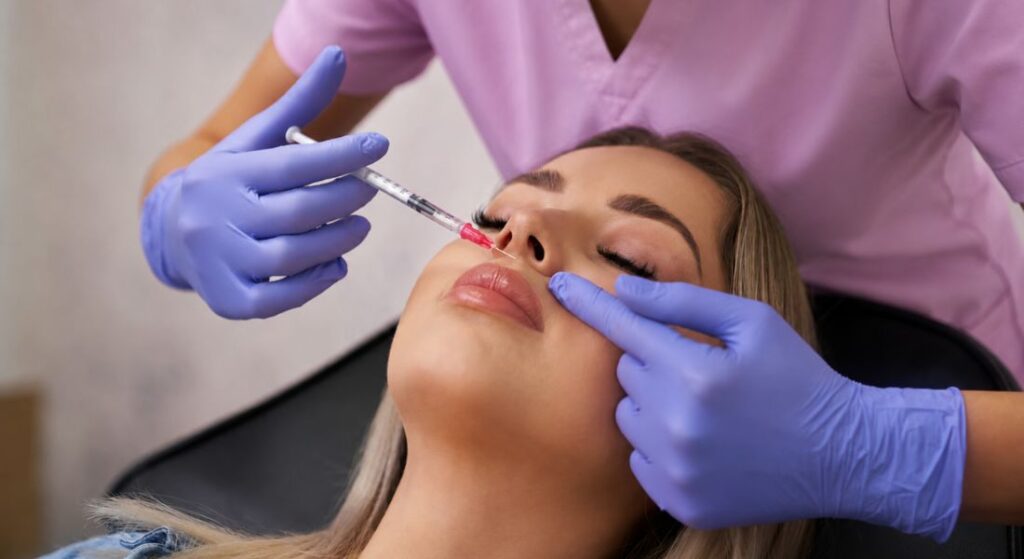
During the injection, you may feel a brief pinch followed by pressure, stretching or a tight sensation as the filler is placed. You may also notice your practitioner holding or gently pressing your nose while assessing the shape and symmetry.
Mild stinging or unusual sensations can occur, but you should always tell your practitioner if the pain feels sharp, intense or different from expected. Clear communication allows your practitioner to reassess the area and decide whether treatment should be paused or stopped.
How Is the Nose Numbed Before the Injections?
Before treatment, your practitioner may apply a topical anaesthetic cream to reduce discomfort from the needle. Some hyaluronic acid fillers contain lidocaine, which may reduce discomfort after the first part of the filler has been placed.
Numbing methods may make the injections more comfortable, but you may still feel pressure, movement or mild sensations during treatment. Your practitioner should explain the pain-control approach before starting so you know what to expect.
Does Treatment of the Nasal Bridge Hurt?
Filler placed along the nasal bridge may feel like a brief pinch followed by pressure or tightness as the product is added. The sensation can vary depending on the injection area, the amount of filler used and your individual sensitivity.
Mild tenderness may occur after treatment and should gradually improve. Severe, burning or increasing pain should be reported to the treating clinic immediately. Your practitioner should monitor the area carefully and check for any unexpected changes during the procedure.
Is Treating the Nasal Tip More Uncomfortable?
The nasal tip may feel particularly sensitive for some people because of its nerve supply and compact underlying anatomy. You may notice a sharper pinch, pressure or tightness, although the experience varies considerably between patients.
Your practitioner should use a conservative amount of filler and explain whether the expected improvement is realistic for you. If a larger structural change is needed, surgical rhinoplasty may be more suitable than adding more filler.
Why Should the Appointment Not Be Rushed?
The injection stage may be relatively brief, but the complete appointment should allow enough time for assessment, informed consent, preparation, careful treatment and aftercare advice. Your practitioner may inject slowly, pause to assess the shape and check the skin before deciding whether any further filler is needed.
A careful approach is more important than speed, especially because the nose has a complex blood supply. You may also be monitored briefly afterwards to ensure you feel well before leaving the clinic.
What Will Your Nose Feel Like Immediately Afterwards?
After non-surgical rhinoplasty, your nose may feel firm, tight or tender as the tissues adjust to the filler and injections. Temporary numbness, redness, mild injection-site swelling and tenderness can occur during the early recovery period.
You should avoid touching, pressing or massaging the area unless your practitioner advises you to do so. Your clinic should provide aftercare guidance and explain which symptoms are expected and which require urgent attention.
What Should You Expect During the First Few Days?
During the first few days, you may experience mild swelling, tenderness, redness or bruising around the treated area. Your nose may feel sensitive or firm, and the early appearance should not be considered the final result.
These effects usually improve gradually, but recovery varies between individuals. Contact your practitioner if symptoms become worse rather than settling, especially if you are concerned about unexpected changes.
Research Insight
A small, single-centre prospective study of 33 female participants reported that treatment-related swelling, redness and pain resolved within two to seven days. However, the study used a specific filler and technique, so it does not establish a universal recovery time. Symptoms that become worse rather than gradually improving require assessment regardless of when treatment was performed.
Which Symptoms Are Normal and Which Are Concerning?

Mild soreness, swelling, redness, bruising and tightness are common after non-surgical rhinoplasty and usually improve as your nose heals. These effects should gradually settle rather than become more severe over time.
Severe or increasing pain, spreading discolouration, pale or mottled skin, sudden visual symptoms, facial weakness, speech difficulty or weakness on one side of the body require immediate action. Knowing the difference between normal recovery and warning signs helps you seek advice at the right time.
Normal Recovery or Warning Sign?
| Symptom | What should you do? |
| Mild tenderness that gradually improves | Follow your written aftercare instructions and monitor it |
| Mild swelling, redness or bruising | Usually expected; contact the clinic if it becomes worse |
| Temporary firmness or tightness | Monitor it according to your practitioner’s advice |
| Increasing or severe pain | Contact the treating clinic immediately and state that you may have a vascular complication |
| Pale, grey, dusky or mottled skin | Contact the treating clinic immediately for emergency assessment of possible vascular compromise |
| Cool skin or a net-like colour pattern | Contact the treating clinic immediately |
| Painful, hot or increasingly swollen lump | Arrange prompt assessment for infection or inflammation |
| Any sudden visual disturbance, severe eye pain or loss of vision after treatment | Call 999 or attend A&E immediately; do not drive yourself |
| Facial weakness or difficulty speaking | Call 999 immediately |
| Sudden breathing difficulty, swelling of the mouth or throat, severe dizziness or collapse | Call 999 immediately |
How Can You Stay Comfortable After Treatment?
After treatment, follow your clinic’s specific aftercare advice and avoid touching, pressing or trying to reshape your nose. Keeping the area clean and avoiding unnecessary pressure can help your recovery.
Use a cool compress only if your treating practitioner recommends it. Do not apply ice directly to your skin, press firmly on your nose or use cooling as a substitute for seeking advice about increasing pain or skin-colour changes. Ask your practitioner which pain relief, if any, is suitable for you. Do not use repeated or stronger pain relief to ignore pain that is severe, burning or becoming worse.
What Should You Avoid During Recovery?
Your practitioner may advise you to avoid strenuous exercise, excessive heat, alcohol and activities that place pressure on your nose for a limited period. Your practitioner will advise how long these restrictions should apply based on your treatment and recovery.
Avoid irritating skincare products, facial treatments or anything that could disturb the treated area until your skin has settled. Following your written aftercare instructions may support recovery and make it easier to identify unexpected changes.
When Can You Return to Work and Normal Activities?
Many people can return to non-strenuous daily activities soon after treatment, especially when their work is not physically demanding. However, mild swelling, bruising or tenderness may still be visible, so plan treatment around important events.
Your practitioner may recommend temporarily avoiding strenuous exercise, excessive heat, pressure on the nose and activities in which the treated area could be knocked. Follow your practitioner’s advice and contact the clinic if you notice any unexpected changes during recovery.
How Can You Prepare for Safer Treatment?

Choosing an appropriately qualified practitioner with specific training and experience in nasal filler is an important part of preparing for treatment. You should choose someone with specific experience in nasal filler who can explain why the treatment is suitable for you and how they will manage potential risks.
Ask about the filler used, emergency procedures and what you can expect during recovery. A responsible practitioner should help you feel informed, comfortable and confident in your decision rather than promise a completely painless or risk-free experience.
Myth vs Fact
| Myth | Fact |
| Non-surgical rhinoplasty is completely painless. | Anaesthetic may reduce discomfort, but injections can still cause pinching, pressure or stinging. |
| Severe pain is a normal part of treatment. | Severe, burning or increasing pain requires immediate assessment. |
| Numbing cream prevents every sensation. | You may still feel pressure, movement or tightness. |
| No pain means there is no vascular complication. | Pain may not always be prominent, particularly when local anaesthetic has been used. Skin-colour, temperature and visual changes also require attention. |
| All swelling is harmless. | Worsening swelling with pain, heat, discolouration or illness needs review. |
| Pale skin is caused only by numbing cream. | Persistent, spreading or unusually sharply defined paleness may indicate impaired blood flow and requires immediate assessment. |
| Visual symptoms can wait until the clinic opens. | Sudden visual symptoms require 999 or A&E assessment. |
| Recovery takes the same time for everyone. | Tenderness, swelling and bruising vary between patients. |
| A fast procedure is a safer procedure. | Careful assessment and controlled placement matter more than speed. |
| Increasing the dose of pain relief is the right response to worsening pain. | Pain relief should not be used to delay assessment of severe, burning or increasing pain. |
Key Takeaways
1. Non-surgical rhinoplasty may cause brief pinching, pressure, stinging or tightness.
2. Anaesthetic cream and lidocaine-containing filler may reduce discomfort but cannot guarantee a painless procedure.
3. Mild tenderness, swelling or bruising should gradually improve.
4. Severe, burning or increasing pain is not a normal recovery symptom.
5. Pale, grey, dusky or mottled skin may indicate impaired blood flow.
6. Vascular complications may occur without prominent pain.
7. Sudden visual or neurological symptoms require emergency assessment through 999 or A&E.
8. Previous nasal filler, surgery or injury may make treatment more complex.
9. Choose an appropriately qualified practitioner with clear emergency and aftercare procedures.
Frequently Asked Questions
1. Is non-surgical rhinoplasty more painful than lip filler?
Pain varies between individuals, and there is no reliable universal comparison with lip filler. Both treatments may cause brief pinching, pressure or stinging, while numbing cream or lidocaine-containing filler may reduce discomfort.
2. How long does discomfort last after non-surgical rhinoplasty?
Most tenderness, swelling and mild soreness improve over the first few days. While recovery differs between individuals, many people notice that discomfort settles within about a week.
3. Can I ask the practitioner to stop if the treatment feels painful?
Yes. Tell your practitioner immediately if you experience significant or unusual pain. They should pause the treatment, assess the area and decide whether it is safe to continue before placing any more filler.
4. Is the nasal tip more sensitive than the bridge?
The nasal tip can feel more sensitive than the bridge for some people because it has a rich nerve supply and compact anatomy. However, sensitivity varies between individuals.
5. Will my nose hurt when I wear glasses afterwards?
The bridge of your nose may feel tender for a short time, particularly if filler has been placed where your glasses rest. Your practitioner may advise you to avoid unnecessary pressure until the area has settled.
6. Is swelling after non-surgical rhinoplasty normal?
Yes. Mild swelling, redness and tenderness are common after treatment and usually improve gradually over several days. However, worsening pain or unusual skin colour changes should be assessed urgently.
7. Can I return to work straight after the procedure?
Many people return to work on the same day or the following day. However, you should remember that temporary swelling or bruising may still be visible during the early recovery period.
8. What should I avoid after non-surgical rhinoplasty?
Avoid pressing or rubbing your nose, strenuous exercise, excessive heat and any activities that could knock the treated area until your practitioner advises it is safe to resume normal activities.
9. Are painkillers usually needed after treatment?
Most people only experience mild discomfort that settles without significant pain relief. If you feel you need medication, ask your practitioner which option is most suitable for you.
10. When should pain after non-surgical rhinoplasty become a concern?
Mild tenderness is expected, but severe or increasing pain is not. If pain is accompanied by pale, mottled or unusually discoloured skin, contact the treating clinic immediately. If you develop any sudden visual disturbance, severe eye pain, loss of vision, facial weakness or difficulty speaking, call 999 or attend A&E immediately. Do not drive yourself.
Final Thoughts: Is Non-Surgical Rhinoplasty Right for You?
Non-surgical rhinoplasty can be a suitable option if you want to improve the shape of your nose without surgery and understand that the treatment works by adding volume rather than removing bone or cartilage. Although discomfort is often mild and temporary, it is important to choose an experienced practitioner who can explain the benefits, limitations and potential risks before treatment. If you’re considering non-surgical rhinoplasty in London, contact the London Medical & Aesthetic Clinic to arrange a consultation.
References:
1. Nikolis, A. et al. (2025) ‘A prospective clinical trial evaluating the efficacy and safety of non-animal stabilized hyaluronic acid injections for non-surgical rhinoplasty’, Plastic Surgery, 33(1), pp. 97–106. Available at: https://pmc.ncbi.nlm.nih.gov/articles/PMC11773380/
2. Song, D., Wang, X. and Yu, Z. (2024) ‘Nonsurgical rhinoplasty: an updated systematic review of technique, outcomes, complications, and its treatments’, Aesthetic Plastic Surgery, 48(23), pp. 4902–4915. Available at: https://pubmed.ncbi.nlm.nih.gov/38862661/
3. Mortada, H. et al. (2024) ‘The use of hyaluronic acid in non-surgical rhinoplasty: a systematic review of complications, clinical, and patient-reported outcomes’, Aesthetic Plastic Surgery, 48(2), pp. 194–209. Available at: https://pubmed.ncbi.nlm.nih.gov/37217605/
4. Sansome, S. et al. (2026) ‘Consensus Guidelines for the Management of Tissue Filler–Induced Vision Loss in the United Kingdom’, Aesthetic Surgery Journal, 46(5), pp. 563–568. Available at: https://academic.oup.com/asj/article/46/5/563/8414170
5. DeVictor, S., Ong, A.A. and Sherris, D.A. (2021) ‘Complications secondary to nonsurgical rhinoplasty: a systematic review and meta-analysis’, Otolaryngology–Head and Neck Surgery, 165(5), pp. 611–616. Available at: https://pubmed.ncbi.nlm.nih.gov/33588622/