



Before-and-after photographs can make hair mesotherapy look like a quick solution, but you should not expect your hair to change overnight. If treatment produces a response, you may gradually notice changes in shedding, hair thickness or visible density over several months. The type and degree of improvement can vary according to the injected formulation and your underlying hair-loss condition.
You should also remember that hair mesotherapy is not one standardised treatment, as different clinics may inject substances such as dutasteride, minoxidil, peptides or vitamins. Your results will depend on the cause and stage of your hair loss, the product used and your individual response, so you should view mesotherapy as an injectable treatment approach with variable evidence rather than a guaranteed method of restoring lost hair.
What Does Hair Look Like Before Mesotherapy?
Before mesotherapy, you may notice a widening parting, reduced volume, increased scalp visibility or thinning around your crown.
Your starting point matters because any potential improvement depends partly on whether follicles are still capable of producing hair. Long-standing bald areas, particularly where follicles have been permanently lost through scarring, should not be expected to respond like areas containing miniaturised hairs. Baseline photographs taken under consistent conditions and, where clinically useful, trichoscopic measurements can make later comparison more objective.
Why Should the Cause of Your Hair Loss Be Confirmed First?
Hair thinning can have several causes, including pattern hair loss, temporary shedding, alopecia areata, nutritional deficiencies and inflammatory or scarring conditions. You should therefore find out what is causing your hair loss before considering mesotherapy, particularly if you have sudden shedding, patchy loss, scalp pain, scaling or inflammation.
You may not need injections if your hair loss is temporary and improves after the underlying trigger is addressed. An accurate diagnosis also gives you a clearer starting point, making it easier to judge whether changes seen during follow-up are consistent with a treatment response or may instead reflect the natural course of the underlying condition.
What Exactly Is Injected During Hair Mesotherapy?
Hair mesotherapy describes an injection technique rather than one standard product, so you may receive very different substances depending on the clinic and treatment plan. Research has investigated ingredients such as dutasteride, minoxidil, peptides and multivitamin formulations, with differences in dosage, injection depth and treatment frequency.
You should ask exactly what will be injected, including the name and concentration, before agreeing to treatment. A before-and-after result achieved with dutasteride mesotherapy cannot automatically be used to predict what you will experience with a vitamin or peptide formulation because each ingredient works differently.
What Changes Might You Notice First?
If treatment is producing a response, changes in shedding may become noticeable during follow-up, while changes in visible density or hair shaft diameter may take longer to assess. However, there is not enough standardised evidence to promise that every responder will experience reduced shedding before other changes.
You should look for a gradual trend rather than expecting a dramatic transformation after one appointment. Standardised photographs taken under the same lighting and from the same angle can help you judge changes in density and thickness more reliably than checking your hair every day.
Can Hair Mesotherapy Increase Hair Density?
Some mesotherapy studies have reported increases in measured hair density, but this has not been demonstrated consistently across all formulations or protocols. Results vary depending on the substance injected, treatment schedule, your type of hair loss and how your follicles respond.
You should not expect a guaranteed increase in density, as some studies have found little or no significant improvement.
Evidence Note
A 2026 systematic review evaluated 30 studies of injectable treatments for androgenetic alopecia. Reported outcomes included improvements in hair density and shaft diameter and stabilisation of shedding, but the studies used different ingredients, injection depths, doses and treatment schedules. The authors concluded that the current evidence remains limited by small study sizes, variable protocols and short follow-up, and that standardised trials are still needed before injectable therapy can be recommended as routine treatment.
An earlier randomised study involving 30 women compared a nutritional mesotherapy formulation with topical 5% minoxidil over 12 weeks. It found no statistically significant difference between the groups in overall improvement in hair density or hair loss, although the mesotherapy group showed a greater increase in one measured follicle-count outcome. The small sample and short follow-up make it inappropriate to use this study to promise a particular before-and-after result.
Can Mesotherapy Make Individual Hairs Thicker?
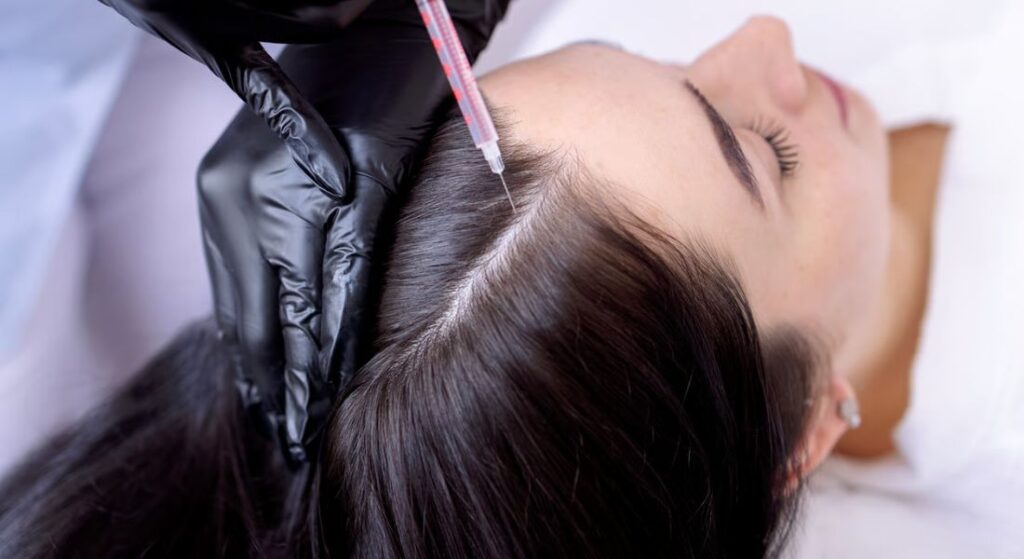
You may notice thicker-looking hair if mesotherapy is associated with an increase in hair-shaft diameter in some responders. This can make your scalp appear less visible and your overall hair look fuller, even if the total number of follicles has not changed significantly.
You should not rely only on how your hair feels because styling, washing and humidity can affect its apparent thickness. Trichoscopy can provide a more objective assessment of hair diameter and miniaturisation, helping you see whether the change is a genuine improvement rather than a temporary visual difference.
How Soon Can You Expect Visible Before-and-After Changes?
You should think in months rather than days when judging hair mesotherapy results. Different outcomes may become noticeable at different times, and there is not enough standardised evidence to promise that reduced shedding will always occur before visible changes in density or thickness.
You should be cautious with before-and-after photographs taken only a few weeks apart because lighting, hairstyle, hair wetness and scalp concealers can change the appearance significantly. A review after several months, using photographs taken under consistent conditions, gives you a more realistic way to judge whether the treatment is working.
How Should You Compare Hair Mesotherapy Before and After?
Hair growth changes gradually, so photographs taken immediately after treatment or only a few weeks apart can be misleading.
| Stage | What you may notice | How to interpret it |
| Before treatment | Thinning, widening parting, increased scalp visibility or reduced volume | Establish your baseline with consistent photographs and, where appropriate, objective measurements |
| Immediately after a session | Redness, swelling, tenderness or small injection marks | These are treatment effects, not evidence of hair regrowth |
| Early follow-up | Shedding may fluctuate and visible change may still be limited | Avoid deciding that treatment has succeeded or failed too early |
| Following months | Some responders may show changes in shedding, visible density, hair count or shaft diameter depending on the treatment protocol | Compare with the original baseline under the same photographic conditions |
| Treatment review | Remaining thinning or limited change can be assessed objectively | Decide whether further treatment is justified rather than continuing automatically |
| Longer term | Any improvement may persist or change over time, but long-term durability remains uncertain | Long-term mesotherapy durability remains uncertain and varies with the underlying hair-loss condition |
The current evidence base uses varied treatment schedules and relatively short follow-up periods, so there is no single scientifically established timeline that applies to every formulation.
How Many Treatment Sessions Might You Need?
You may need several hair mesotherapy sessions, but there is no universally accepted treatment schedule. Published studies use different injection intervals, concentrations and treatment durations, so your recommended frequency should depend on the substance being injected and the evidence supporting that particular protocol.
You should be cautious if every patient is offered the same fixed package regardless of their diagnosis or formulation. Your plan should include regular reviews using standardised photographs or measurements, so you can decide whether further sessions are producing enough improvement to justify continuing.
What Should Good Before-and-After Photographs Show?
Consistent before-and-after photographs can help you judge whether your hair has genuinely changed over time.
1. Consistent Lighting: Take each photograph under similar lighting so shadows and brightness do not distort the appearance of your hair density.
2. Same Camera Position: Keep the camera distance, angle and head position as consistent as possible for every comparison.
3. Matching Hair Preparation: Your hair should ideally be clean, dry and styled with the same parting so scalp visibility can be compared fairly.
4. Objective Measurements: Trichoscopy or hair-density measurements may provide additional evidence of changes that are difficult to judge from photographs alone.
A series of standardised photographs taken over several months can give you a more reliable picture of your progress than one isolated image. This can help you and your practitioner decide whether the improvement is meaningful enough to continue treatment.
Can Hair Mesotherapy Improve Scalp Health?
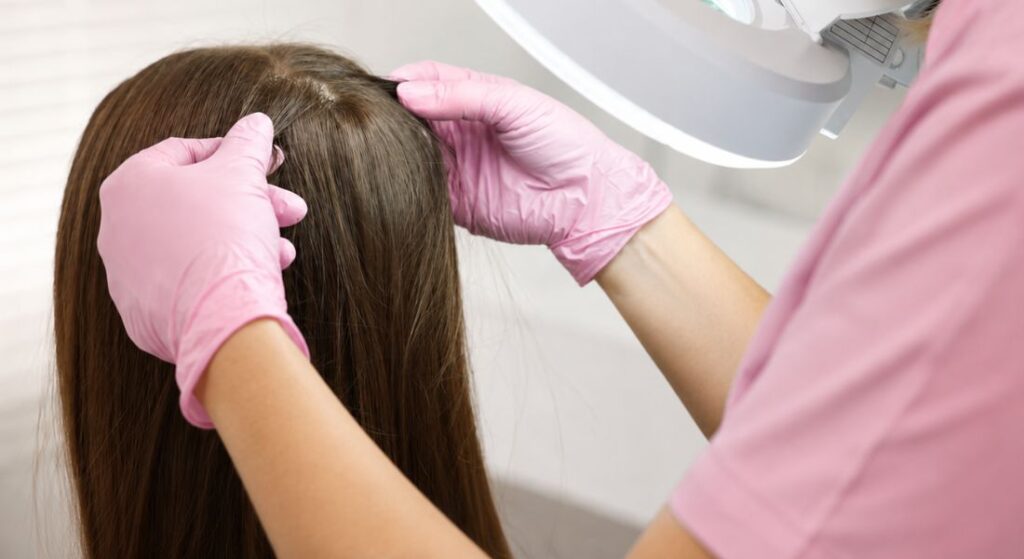
You may notice that your scalp looks or feels different after mesotherapy, but this does not necessarily mean your overall scalp health has improved. Hair-loss mesotherapy protocols are generally intended to influence hair-growth outcomes rather than treat unrelated inflammatory or infectious scalp disease.
You should have significant itching, scaling or inflammation assessed before treatment because injecting through inflamed or infected skin may increase irritation and complications. If a nutritional deficiency is contributing to your hair loss, identifying and treating that underlying problem is more appropriate than assuming scalp injections will correct it.
Can Mesotherapy Restore Advanced Bald Areas?
You should not expect hair mesotherapy to recreate dense hair across a long-standing bald area, particularly when few responsive follicles remain. If you have early or moderate pattern hair loss, there may be more opportunity to improve existing miniaturised hairs, while permanently destroyed follicles cannot simply be rebuilt through injections.
You should ask whether the intended goal is to stabilise your hair loss, increase thickness or improve visible density because these are different outcomes.
Myth vs Fact
| Myth | Fact |
| Before-and-after photos prove that hair mesotherapy will work for you. | Photographs show what happened to one person under one treatment protocol and cannot predict your individual response. |
| Hair mesotherapy is one standard treatment. | Mesotherapy describes the injection method; the ingredients, doses and schedules can differ substantially. |
| Every mesotherapy formulation produces the same hair-density improvement. | Evidence varies according to the substance being injected, and results from dutasteride or minoxidil studies cannot automatically be applied to vitamin or peptide formulations. |
| Visible improvement should appear within a few days. | Hair growth takes time, and meaningful changes generally need to be assessed over a longer period rather than immediately after treatment. |
| More injections automatically produce better results. | There is no universally established session schedule, and unnecessary treatment adds cost and procedural risk. |
| Mesotherapy can recreate follicles in completely bald areas. | It cannot reliably recreate follicles that have been permanently destroyed. |
| Injecting a medicine into the scalp means there are no systemic risks. | Local administration does not prove that systemic exposure or drug-specific adverse effects are impossible. |
| Hair mesotherapy results are permanent. | Long-term durability remains uncertain, particularly because androgenetic alopecia can continue progressing over time. |
What Happens Immediately After Each Treatment Session?
You should not expect your scalp to look fuller immediately after hair mesotherapy because new hair growth takes time. You may instead notice temporary redness, tenderness, swelling or small spots of bleeding around the injection sites, with mild soreness or tightness also possible.
You should not use an immediate post-treatment photograph as evidence of hair regrowth because swelling, damp hair or styling can temporarily change how much scalp is visible. Meaningful before-and-after comparisons should be made later, once enough time has passed for your follicles to produce measurable changes.
Are There Risks That Could Affect Your Result?
You should remember that hair mesotherapy is not risk-free because it involves repeated injections into your scalp. You may experience temporary pain, redness, swelling, bruising or folliculitis, while increasing pain, warmth, swelling, discharge or persistent crusting should be assessed rather than assumed to be normal.
You should also be aware that uncommon reports have described unexpected hair loss and, in some cases, scarring after mesotherapy. Ask your clinic how complications are managed and who you should contact if you develop worsening symptoms or a new patch of hair loss after treatment.
How Long Might Your Improvement Last?
You should not assume that hair mesotherapy results will be permanent because long-term evidence remains limited and many studies only follow patients for several months. If you have androgenetic alopecia, the underlying tendency towards follicular miniaturisation can continue even when treatment has improved the appearance of your hair.
You may therefore need maintenance treatment or another evidence-based therapy to help preserve any improvement you achieve. You should ask about the expected duration of benefit, likely maintenance schedule and long-term costs before starting, rather than assuming that one treatment course will provide a permanent result.
How Does Mesotherapy Compare with Minoxidil?
You should not assume that hair mesotherapy is more effective than minoxidil, which has a much longer history of use for male and female pattern hair loss. In one small randomised study involving 30 women, there was no statistically significant difference between mesotherapy and topical 5% minoxidil in overall improvement in hair density or hair loss. Reviews have described mesotherapy as promising, but the current evidence remains limited and heterogeneous.
You may find injections more convenient than applying a topical treatment every day, but mesotherapy also involves discomfort, clinic appointments, higher costs and injection-related risks. Your choice should therefore consider the evidence, your diagnosis, how well you tolerate topical treatment and which approach is practical for you.
How Can You Decide Whether Your Expected Result Is Worth It?

You should first decide what improvement would be meaningful for you, such as reduced shedding, thicker existing hairs or a modest increase in visible density. You should also ask exactly what formulation will be injected and what evidence supports it, because dutasteride, minoxidil, peptides and vitamin mixtures do not have the same evidence or expected results.
You should agree in advance on how and when your progress will be assessed so you can decide whether continuing treatment is worthwhile.
Key Takeaways
1. Hair mesotherapy results usually need to be judged over months rather than days.
2. Hair mesotherapy is an injection technique rather than one standardised treatment, so results depend heavily on what is injected.
3. Some studies report improvements in hair density, hair-shaft thickness or shedding, but the evidence remains heterogeneous and relatively limited.
4. Before-and-after photographs should use consistent lighting, camera distance, hair condition, parting and head position.
5. Immediate redness, swelling or injection marks should not be mistaken for hair-growth improvement.
6. Mesotherapy cannot be relied upon to recreate permanently destroyed hair follicles.
7. There is no universally established number of treatment sessions or maintenance schedule.
8. Long-term durability remains uncertain, particularly for progressive conditions such as androgenetic alopecia.
9. Published complications include injection-site reactions and uncommon reports of paradoxical hair loss, dermatitis and scarring.
10. If dutasteride, minoxidil or another medicine is being injected, ask about the evidence and regulatory status of that specific formulation and route.
11. Your progress should be reviewed objectively rather than continuing treatment automatically because you purchased a fixed package.
Frequently Asked Questions
1. What should you expect to see before and after hair mesotherapy?
You may notice less shedding, thicker-looking hair or improved visible density if your follicles respond to treatment. However, changes usually develop gradually over several months rather than immediately after your injections.
2. How soon can you see results from hair mesotherapy?
You should not expect noticeable hair growth within days of treatment. Your hair follicles need time to produce new growth, so meaningful changes are generally assessed over several months.
3. Can hair mesotherapy increase hair density?
Hair mesotherapy may improve measured hair density in some people with pattern hair loss. However, results vary depending on the injected substance, your stage of hair loss and how your follicles respond.
4. Can hair mesotherapy make thinning hair thicker?
Some studies have reported increases in hair-shaft diameter after injectable treatment, which may make thinning hair appear fuller. However, the extent of improvement varies according to the treatment used and your individual response.
5. Can hair mesotherapy regrow hair in bald areas?
Hair mesotherapy is unlikely to restore dense hair where follicles have been permanently destroyed. It is generally more suitable when you still have functioning or miniaturised follicles that may respond to treatment.
6. How many hair mesotherapy sessions will you need?
There is no single standard number of sessions because treatment schedules depend on the substance being injected and the specific protocol used. Your practitioner should explain how often you need treatment and when your progress will be reviewed.
7. How long do hair mesotherapy results last?
The long-term durability of hair mesotherapy results is still uncertain because many studies have relatively short follow-up periods. If you have pattern hair loss, you may need ongoing or maintenance treatment because the underlying tendency towards hair thinning can continue.
8. Is hair mesotherapy better than minoxidil?
You should not assume that mesotherapy is better than topical minoxidil. Minoxidil has a longer history of use and stronger established evidence, while mesotherapy results vary considerably depending on the substance injected.
9. Is hair mesotherapy painful?
You may experience mild discomfort, including pinching, stinging or pressure, because the treatment involves multiple scalp injections. Temporary redness, tenderness, swelling or small areas of bruising can also occur afterwards.
10. How can you tell whether hair mesotherapy has worked?
You can compare standardised photographs taken under the same lighting, angle and hair conditions before and after treatment. Your practitioner may also use trichoscopy or hair-density measurements to assess whether there has been a genuine change rather than relying only on how your hair looks day to day.
Final Thoughts: What Can You Expect from Hair Mesotherapy?
Hair mesotherapy may be associated with gradual changes in shedding, hair thickness or visible density in some people with pattern hair loss. However, your before-and-after results can vary considerably depending on the cause of your hair loss, the substance injected, the treatment schedule and your individual response.
If you are considering hair mesotherapy treatment in London, you can discuss your hair loss, expected results and treatment options with our team at the London Medical & Aesthetic Clinic. Taking consistent photographs and allowing enough time for your hair to respond can also help you assess whether the changes are meaningful for you.
References:
1. Beer, J., Boghosian, T., Mendez, H., Sayegh, M., Boghosian, N. and Tosti, A. (2026) ‘Injectable therapy for androgenetic alopecia: a systematic review’, Dermatologic Surgery, 52(7), pp. 659–665. Available at: https://pubmed.ncbi.nlm.nih.gov/41603616/
2. Hunter, N., Sayed, K., Abdel Hay, R., Allam, R. and Hussein, N. (2019) ‘Comparing the efficacy of mesotherapy to topical minoxidil in the treatment of female pattern hair loss using ultrasound biomicroscopy: a randomized controlled trial’, Acta Dermatovenerologica Croatica, 27(1), pp. 1–7. Available at: https://pubmed.ncbi.nlm.nih.gov/31032783/
3. Aledani, E.M., Kaur, H., Kasapoglu, M., Yadavalli, R., Nawaz, S., Althwanay, A. and Nath, T.S. (2024) ‘Mesotherapy as a promising alternative to minoxidil for androgenetic alopecia: a systematic review’, Cureus, 16(5), article e59705. Available at: https://pmc.ncbi.nlm.nih.gov/articles/PMC11152360/
4. Ferro, A. et al. (2026) ‘Advances in medicalized hair loss solutions: a review of current clinical practices and regenerative medicine-based protocols with focus on off-label injectable treatments’, Journal of Clinical Medicine, 15(5), article 1836. Available at: https://www.mdpi.com/2077-0383/15/5/1836
5. Duque-Estrada, B., Vincenzi, C., Misciali, C. and Tosti, A. (2009) ‘Alopecia secondary to mesotherapy’, Journal of the American Academy of Dermatology, 61(4), pp. 707–709. Available at: https://www.sciencedirect.com/science/article/pii/S0190962208024687