


Eyelid surgery and non-surgical eye treatments can both improve an ageing or tired-looking eye area, but they work in different ways. Blepharoplasty removes or repositions selected eyelid tissue, while non-surgical treatments can target wrinkles, mild skin laxity, volume loss or skin texture.
The right option depends on what is causing your concern. Significant excess eyelid skin and prominent fat-related under-eye bags may be addressed more directly with surgery, while treatments such as botulinum toxin, dermal fillers or laser may be considered for selected wrinkles, hollows or changes in skin quality.
Why Does the Eye Area Change with Age?
The appearance of your eye area can change gradually as your skin, fat, muscles and supporting tissues age. These changes can affect different parts of the upper and lower eyelids, so you may notice more than one concern developing over time.
1. Skin Changes: Your eyelid skin can become thinner and less elastic, contributing to hooding, fine lines or mild laxity.
2. Fat Distribution: Changes in the position or prominence of fat can contribute to under-eye bags or hollow areas.
3. Brow Position: A lower brow position can make your upper eyelids appear heavier even when excess eyelid skin is not the only cause.
4. Individual Ageing: Genetics, skin quality and your natural facial anatomy can influence which changes become most noticeable around your eyes.
Because different age-related changes can create a similar tired or heavy appearance, identifying the underlying cause is important before choosing treatment. Your assessment can help determine whether surgery, a non-surgical treatment or a combination of approaches is more appropriate for your concerns.
What Does Eyelid Surgery Actually Treat?
Blepharoplasty makes structural changes to your eyelids. Upper surgery can remove excess skin and selected fat, while lower surgery may remove or reposition fat and treat loose skin or other changes beneath your eyes.
Surgery is most useful when excess or displaced tissue is the main concern. It is not about removing as much tissue as possible, because your eyelids still need to close properly and protect your eyes.
What Counts as Non-Surgical Eye Rejuvenation?
Non-surgical eye rejuvenation includes different treatments depending on what you want to improve. You may choose botulinum toxin for crow’s feet, fillers for selected hollows, or laser and radiofrequency treatments for fine lines, texture and mild skin laxity.
You should remember that these treatments do not work like blepharoplasty. You may see an improvement in wrinkles, hollows or skin quality, but you cannot use them to remove significant excess eyelid skin or directly treat prominent fat bags.
How Do Eyelid Surgery and Non-Surgical Treatments Compare at a Glance?
| Concern | Blepharoplasty | Non-Surgical Treatment |
| Significant upper-eyelid excess skin | Usually more direct | Limited improvement |
| Prominent lower-eyelid fat bags | Can remove/reposition fat | Does not remove fat bags |
| Mild tear-trough hollow | Surgery may not always be necessary | HA filler may suit selected patients |
| Crow’s feet | Does not directly stop muscle movement | Botulinum toxin may help |
| Fine lines/skin texture | May improve indirectly | Laser/RF may be considered |
| Pigmented dark circles | Does not directly remove pigmentation | Skin-focused treatment may be more appropriate |
| Brow ptosis | Blepharoplasty alone may not correct it | Requires separate assessment |
| True eyelid ptosis | Different surgical problem | Cosmetic injectables do not correct the underlying ptosis |
| Downtime | Longer | Usually shorter, depending on treatment |
| Maintenance | Structural result lasts longer | Repeat treatment is usually required |
Which Treatment Is Better for Excess Upper-Eyelid Skin?
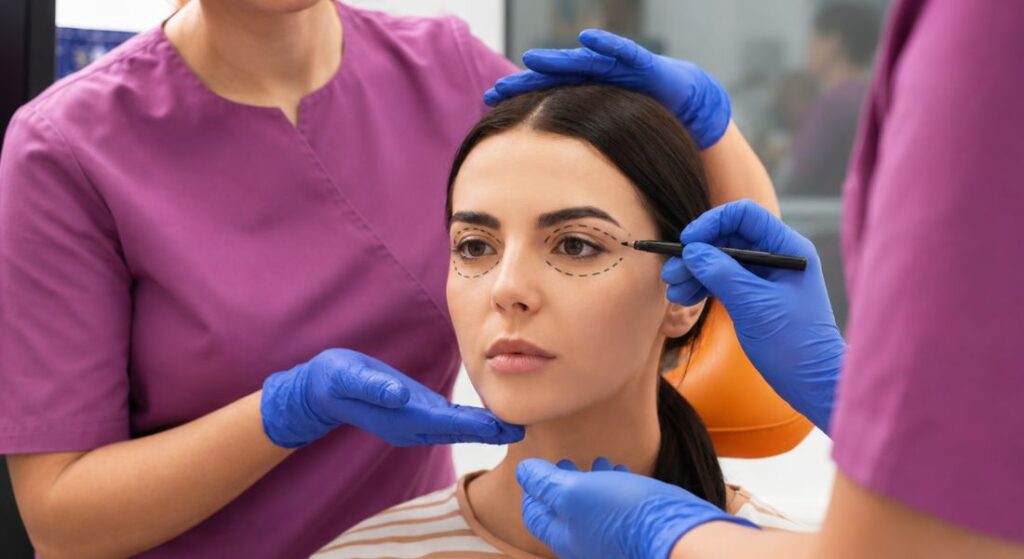
If you have significant excess upper-eyelid skin, surgical blepharoplasty usually provides the most direct correction. During upper blepharoplasty, a carefully planned amount of excess skin may be removed according to your eyelid anatomy and the need to preserve normal eyelid closure and function.
You can consider non-surgical treatments when your skin laxity is mild and you want a subtler improvement. However, you should not expect these treatments to remove substantial excess skin in the same way surgery can, particularly when your hooding is pronounced.
Which Option Is Better for Under-Eye Bags?
If you have prominent under-eye bags caused by fat protrusion, lower blepharoplasty may provide a more direct solution. Selected fat may be removed or repositioned, depending on your anatomy, with the aim of improving the contour between the lower eyelid and cheek.
You may benefit from non-surgical treatments when your concern is mainly fine lines, mild skin laxity or a shallow hollow. However, you should not expect laser, radiofrequency or filler to remove a significant fat bag itself.
When Can Tear-Trough Filler Be a Good Alternative?
If you have a mild tear trough with good skin quality and little lower-eyelid laxity, hyaluronic acid filler may be considered to improve the hollow. In appropriately selected patients, treatment may improve the contour between the lower eyelid and cheek without requiring surgery.
You should remember that filler does not remove prominent fat bags or significant excess skin. You may also experience swelling, bruising or lumps, and rare but serious complications can affect vision, so you should have periocular filler performed by an appropriately qualified professional.
Research Insight
A systematic review of non-surgical tear-trough volumisation found generally high patient satisfaction, while confirming that filler results are temporary. Minor complications were common, including bruising, highlighting the importance of careful patient selection and injection technique.
Periocular filler also requires careful anatomical knowledge because vascular complications can rarely affect the eye. A 2025 systematic review and meta-analysis of reported ocular complications following hyaluronic acid filler injections confirmed that filler-related visual loss can be severe and may be irreversible, reinforcing the importance of careful patient selection and appropriately trained treatment.
When Is Botulinum Toxin More Appropriate Than Surgery?
If you mainly have dynamic wrinkles around your eyes, you may find botulinum toxin more appropriate than surgery. Botulinum toxin can temporarily relax the muscles that create crow’s feet when you smile or squint.
You should not expect botulinum toxin to remove excess eyelid skin or under-eye bags. You may need repeat treatments to maintain the effect, and temporary bruising or unwanted muscle weakness can occur.
What Can Lasers and Radiofrequency Improve?
If you mainly have fine lines, crepey skin or mild texture changes, you may benefit from laser or radiofrequency treatment. Depending on the device and treatment protocol, laser or radiofrequency treatments may improve selected periorbital wrinkles, skin texture or mild laxity without surgical tissue removal.
You should not expect them to remove significant excess eyelid skin or prominent fat bags. If significant structural hooding or prominent fat-related under-eye bags are the main concern, blepharoplasty may provide a more direct structural treatment.
Which Treatment Is Better for Dark Circles?
If your dark circles are mainly caused by hollows or shadows from under-eye bags, you may benefit from treatment that improves the underlying contour. You could consider tear-trough filler for a mild hollow or lower blepharoplasty when prominent fat bags are contributing to the shadow.
You should know that surgery does not directly treat pigmentation or visible blood vessels. If your main concern is skin colour or texture, you may need a skin-focused treatment instead, so identifying the cause of your dark circles is important.
What If Your Brows or Eyelids Are Actually Drooping?
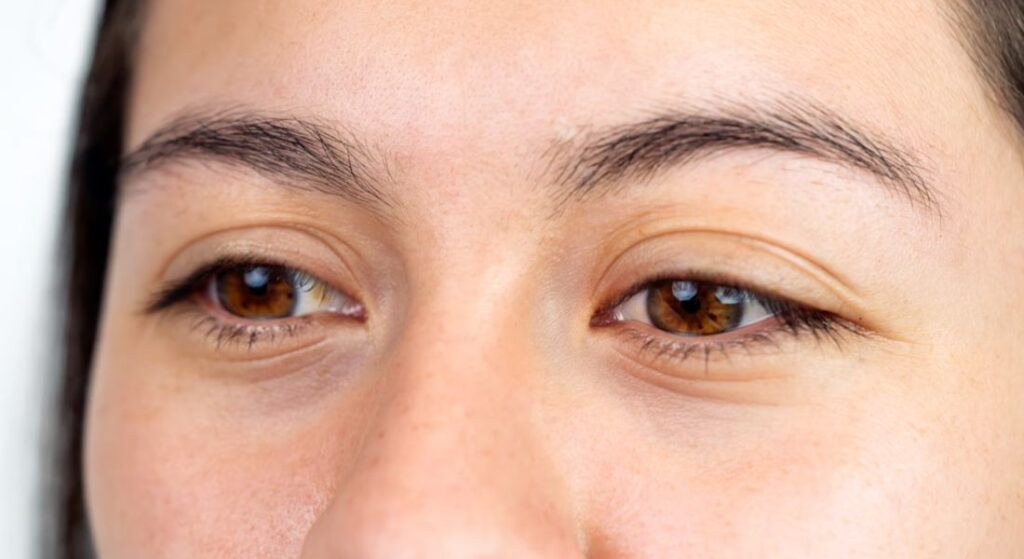
If your upper eyelids look heavy, you may not simply have excess skin. Your brow position or true eyelid ptosis can also contribute, and treating the wrong cause may leave you disappointed with the result.
You should have your brow and eyelid position assessed before choosing treatment. If your brow or eyelid itself is drooping, you may need a different procedure rather than blepharoplasty alone.
Which Gives Longer-Lasting Results?
If you want a longer-lasting structural change, you may find blepharoplasty more suitable because selected excess tissue is removed or repositioned. Natural ageing continues after blepharoplasty, but the structural changes created by surgery are generally longer-lasting than the temporary effects of treatments such as filler or botulinum toxin.
You may need regular maintenance with non-surgical treatments because their effects are temporary. When choosing between your options, you should consider how long you want the results to last, as well as the recovery, risks and ongoing treatment you are comfortable with.
How Does Downtime Compare?
If you choose a non-surgical treatment, you may have less downtime than with blepharoplasty. You may experience temporary bruising, swelling, redness or peeling depending on whether you have filler, botulinum toxin or laser treatment.
Recovery after blepharoplasty is generally longer than after minimally invasive treatments, and many people take around two weeks away from work depending on the procedure and their job. However, you should also consider the intensity of your non-surgical treatment, as stronger laser procedures can require several days of recovery.
How Do the Risks Compare?
If you choose blepharoplasty, you should understand the surgical risks, including bleeding, infection, scarring, asymmetry and temporary dry eyes. Lower-eyelid surgery can also affect eyelid position, while rare bleeding behind the eye can threaten vision.
You may avoid surgical incisions with non-surgical treatments, but you still have risks to consider. Botulinum toxin, fillers and laser treatments can cause bruising, swelling or other complications, and rare filler-related vascular problems can seriously affect vision.
Evidence Note
Blepharoplasty is performed close to the eye surface, so pre-existing dry eye, difficulty closing the eyelids and eyelid-position problems can affect surgical planning and recovery. Temporary dryness, irritation or watering can occur after surgery, and people who already have significant dry-eye symptoms may need more careful assessment before treatment.
Non-surgical treatments around the eyes also require appropriate anatomical assessment because the periocular area contains important blood vessels, muscles and other structures. Sudden eyelid drooping, sudden double vision, eye pain or a change in vision should be assessed promptly rather than assumed to be a cosmetic concern. Sudden eyelid drooping or double vision may require urgent assessment through a GP, optician or NHS 111, while sudden severe eye pain or sudden loss of vision requires emergency assessment. Significant dry-eye symptoms should also be assessed before cosmetic treatment is considered.
Can Surgical and Non-Surgical Treatments Be Combined?
Yes, you may benefit from combining surgical and non-surgical treatments when they address different concerns. For example, you could have blepharoplasty to improve excess skin or under-eye bags and later use botulinum toxin for crow’s feet.
You should not assume that every treatment needs to be done together. Your surgeon may recommend a staged approach so you can heal properly and see the result before deciding whether you need further treatment.
Who Is More Likely to Benefit from Non-Surgical Treatment?
You may benefit from non-surgical treatment when your concerns are mild and you have limited excess skin or structural change. You can consider options such as botulinum toxin for crow’s feet, filler for selected hollows, or laser and radiofrequency for fine lines and skin texture.
You should have realistic expectations about what these treatments can achieve. If significant excess skin or prominent fat-related under-eye bags are the main concern, blepharoplasty may provide a more direct structural treatment than non-surgical options.
How Can You Decide Which Approach Is Right for You?

You should start by identifying what you actually want to improve, such as excess eyelid skin, under-eye bags, hollows, wrinkles or pigmentation. Your practitioner can then assess whether the cause is structural, related to muscle activity, or mainly linked to skin quality.
You should also ask what your chosen treatment can realistically change. You may need surgery for significant excess skin or fat bags, while non-surgical treatment may suit you better for wrinkles, mild hollows or skin texture.
Myth vs Fact
| Myth | Fact |
| Non-surgical treatment can remove significant eyelid skin. | Laser or RF may improve mild laxity, but they do not reproduce surgical tissue removal. |
| Tear-trough filler removes under-eye bags. | Filler adds volume to selected hollows; it does not remove protruding fat. |
| Lower blepharoplasty always requires fat removal. | Fat may be removed or repositioned depending on the anatomy. |
| Botulinum toxin treats hooded eyelids. | It mainly treats dynamic muscle-related wrinkles such as crow’s feet. |
| Dark circles always need filler. | Pigmentation, vessels, hollows and shadows can all produce dark circles. |
| Non-surgical means risk-free. | Fillers, lasers, RF and botulinum toxin all have potential complications. |
| Filler-related visual loss cannot happen because treatment is non-surgical. | Vascular occlusion and visual loss are rare but recognised filler complications. |
| Blepharoplasty permanently stops ageing. | Surgery can create durable structural change, but natural ageing continues. |
Key Takeaways
1.Blepharoplasty is mainly used for structural concerns such as significant excess eyelid skin or prominent fat bags.
2. Botulinum toxin primarily targets dynamic wrinkles such as crow’s feet.
3. Tear-trough filler may suit carefully selected volume-related hollows but does not remove lower-eyelid fat bags.
4. Laser and radiofrequency treatments may improve selected wrinkles, texture or mild laxity but do not reproduce surgical tissue removal.
5. Dark circles can result from pigmentation, visible vessels, hollows or shadows, so the cause should be assessed first.
6. Brow ptosis and true eyelid ptosis should be distinguished from excess eyelid skin.
7. Non-surgical treatments usually require maintenance, while surgical structural changes are generally longer-lasting.
8. Periocular filler carries rare but potentially serious ocular vascular risks.
9. Eye health and eyelid anatomy should be assessed before choosing surgical or non-surgical treatment.
Frequently Asked Questions
1. What Is the Difference Between Eyelid Surgery and Non-Surgical Eye Rejuvenation?
Eyelid surgery physically removes or repositions selected eyelid tissues, while non-surgical treatments usually target wrinkles, skin texture, muscle activity or volume loss. The better option depends on the specific cause of your concern.
2. Is Eyelid Surgery Better for Excess Upper-Eyelid Skin?
Yes, significant excess upper-eyelid skin is generally treated more directly with blepharoplasty. Non-surgical treatments may be considered for selected mild skin laxity, but they do not remove substantial excess eyelid skin in the same way as blepharoplasty.
3. Which Treatment Is Best for Under-Eye Bags?
Lower blepharoplasty can remove or reposition fat responsible for prominent under-eye bags. Non-surgical treatments may improve surrounding wrinkles or hollows but cannot reliably remove significant structural fat bags.
4. Can Tear-Trough Filler Replace Lower Eyelid Surgery?
Tear-trough filler may be suitable when you have mild hollowing with good skin quality and little lower-eyelid fat or laxity. If you have prominent fat bags or more substantial structural changes, lower blepharoplasty may provide a more direct way of addressing the underlying anatomy.
5. Is Botulinum Toxin Better for Crow’s Feet?
Botulinum toxin can be more appropriate when your main concern is dynamic crow’s feet caused by muscle movement. Eyelid surgery does not prevent the muscle contractions responsible for these expression lines.
6. Can Laser or Radiofrequency Treatments Improve Eyelid Skin?
Laser and radiofrequency treatments can improve selected fine wrinkles, skin texture and mild laxity. However, they do not provide the same structural correction as surgery when you have substantial excess skin or prominent fat bags.
7. Which Treatment Has Less Downtime?
Non-surgical treatments generally involve less downtime than blepharoplasty, although recovery varies between procedures. Some laser treatments can still cause noticeable redness, swelling or peeling, while eyelid surgery commonly requires around two weeks before returning to work.
8. Do Non-Surgical Eye Treatments Last as Long as Eyelid Surgery?
Non-surgical treatments generally require maintenance because their effects are temporary or gradually diminish. Blepharoplasty provides a more durable structural change, although natural ageing continues after surgery.
9. Can Eyelid Surgery and Non-Surgical Treatments Be Combined?
Yes, they can sometimes be combined because they address different concerns. For example, blepharoplasty may improve excess skin or under-eye bags, while botulinum toxin or laser treatment can address remaining wrinkles or skin texture.
10. How Can I Decide Which Eye Rejuvenation Treatment Is Right for Me?
Your choice should be based on what is actually causing the appearance you want to change. A specialist can assess your eyelid skin, fat, wrinkles, volume, brow position and overall eye health before recommending the most appropriate surgical or non-surgical approach.
Final Thoughts: Choosing the Right Approach for Eye Rejuvenation
Choosing between eyelid surgery and non-surgical eye rejuvenation starts with understanding what is actually causing the changes around your eyes. If significant excess skin or prominent lower-eyelid fat bags are the main concern, surgery may provide a more direct structural treatment, while non-surgical options can be useful for selected fine lines, dynamic wrinkles, mild laxity, texture changes or tear-trough hollows.
If you are considering eyelid surgery in London, you can contact our team at London Medical & Aesthetic Clinic to arrange a consultation and discuss whether surgery or a non-surgical approach may be more appropriate for your eyelid concerns.
References:
1. Christodoulou, S., Tzamalis, A., Tsinopoulos, I. and Ziakas, N. (2024) ‘Surgical and non-surgical approach for tear trough correction: Fat repositioning versus hyaluronic acid fillers’, Journal of Personalized Medicine, 14(11), article 1096. Available at: https://www.mdpi.com/2075-4426/14/11/1096
2. Gorbea, E., Kidwai, S. and Rosenberg, J. (2021) ‘Nonsurgical tear trough volumization: A systematic review of patient satisfaction’, Aesthetic Surgery Journal, 41(8), pp. NP1053–NP1060. Available at: https://pubmed.ncbi.nlm.nih.gov/33693530/
3. Kim, H., Woo, S.J. and Lee, W. (2025) ‘Systematic review and meta-analysis of ocular complications following hyaluronic acid filler injection’, Plastic and Reconstructive Surgery, advance online publication. Available at: https://pubmed.ncbi.nlm.nih.gov/41453353/
4. Coerdt, K., Murray, T. and Khetarpal, S. (2025) ‘Non-surgical management of the periorbital area’, Clinics in Plastic Surgery, 52(1), pp. 93–101. Available at: https://www.sciencedirect.com/science/article/pii/S0094129824000610
5. Zhang, S-Y., Yan, Y. and Fu, Y. (2020) ‘Cosmetic blepharoplasty and dry eye disease: A review of the incidence, clinical manifestations, mechanisms and prevention’, International Journal of Ophthalmology, 13(3), pp. 488–492. Available at: https://pmc.ncbi.nlm.nih.gov/articles/PMC7154208/