


If you’re looking at neck rejuvenation before-and-after photos, you may be wondering how much of that change you could realistically expect for your own neck. The answer depends on what is causing the concern you want to improve. For example, fine lines, crepey skin, mild laxity, muscle bands or significant excess skin.
Some treatments can create an earlier visible change, while treatments that rely on collagen remodelling may take weeks or months to develop. Early swelling, redness or bruising can also make a photograph look very different from the eventual result.
What Does Neck Rejuvenation Before and After Really Mean?
You may see different results depending on what you want to improve. Your treatment may target crepey skin, lines or mild laxity rather than lifting your neck.
You should check what was treated before comparing before-and-after photos. Your final result will depend on your concern and the treatment you choose.
Why Can Results Look So Different Between People?
You may get different results from someone else because your skin, fat distribution, muscle activity and facial structure are different. Your age, genetics, sun exposure and previous treatments can also affect your starting point.
You should not compare your results only with clinic photographs. Your outcome depends on your individual neck and the treatment you choose.
What Can Different Neck Rejuvenation Treatments Actually Change?
| Main concern | Possible visible improvement | Important limitation |
| Crepey skin and fine texture | Smoother-looking skin and less visible fine wrinkling | Does not necessarily create a lifting effect |
| Horizontal neck lines | Creases may look softer or less deeply indented | Deep or anatomically established lines may remain visible |
| Mild skin laxity | Gradual improvement in firmness or contour | Non-surgical treatments cannot remove significant excess skin |
| Reduced jawline definition | Definition may improve when mild laxity or selected soft-tissue concerns are treated | Natural chin, jaw structure and fat distribution still influence the result |
| Platysmal bands | Treatment is aimed at making visible bands less prominent | Treating muscle-related bands does not remove loose skin |
| Significant loose skin | Surgical treatment may create a more substantial contour change | Requires greater recovery and carries surgical risks |
What Improvement Can You Expect in Crepey Neck Skin?
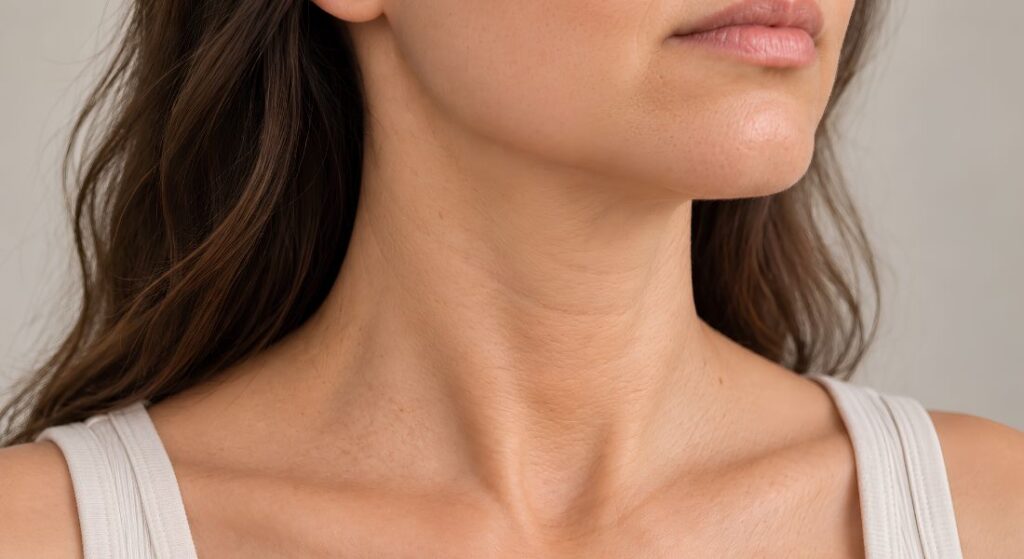
You may notice smoother, firmer-looking skin and less visible fine lines. Your skin quality may improve without creating a significant lifting effect.
Lighting can make crepey skin look more or less pronounced, so photographs are easiest to assess when they are taken under similar conditions. The amount of improvement will depend on your skin and the treatment used.
What Happens to Horizontal Neck Lines After Treatment?
You may see softer, less noticeable horizontal neck lines after treatment. Your lines may not disappear completely because your neck naturally moves and folds.
You should compare before-and-after photos in similar positions and lighting. Your results will depend on the cause of your neck lines and the treatment you choose.
Clinical Tip
Before-and-after photographs are most useful when the person in the photograph had a similar starting concern to yours. A treatment that produces a good result for fine surface lines may not produce the same change when significant skin laxity, submental fullness or prominent muscle bands are the main issue.
Check what was actually treated rather than focusing only on how different the overall neck looks in the final photograph.
How Much Can Non-Surgical Treatment Tighten Loose Neck Skin?
Some non-surgical treatments may produce gradual improvements in firmness when your neck has mild to moderate laxity. The amount of tightening varies by treatment and individual response, and the change is generally more limited than the structural correction possible with surgery.
You should not expect non-surgical treatments to remove significant excess skin. Your results depend on your skin laxity and the treatment you choose.
Can Neck Rejuvenation Improve Your Jawline?
You may see a more defined jawline when the treatment you receive appropriately addresses mild laxity or another suitable soft-tissue concern affecting your profile. Your results depend on what is causing the loss of definition.
You should compare before-and-after photos from the same angle and head position. Your natural jaw and chin structure can also affect your final result.
What Results Can You Expect for Platysmal Neck Bands?
Platysmal bands are muscle-related, so they should be assessed separately from loose or lax skin. The visible result will depend on how the muscle-related concern is treated and how prominent the bands are before treatment.
Improving platysmal bands does not necessarily remove loose skin, which is why photographs should show clearly which concern was treated.
What Results Can Injectables Produce?
Selected injectable treatments may soften certain neck lines or improve skin quality, but the expected result depends on the specific product and concern being treated.
Some changes may appear earlier than others, so check when the after photograph was taken before comparing outcomes.
Evidence Note
Evidence for injectable neck treatments is specific to the product and concern being treated rather than applying to all “injectables” as one category. For example, a systematic review and meta-analysis of 11 studies involving 379 patients found that hyaluronic acid fillers could improve selected horizontal neck lines, although products, injection methods and study designs varied.
The same review found that around half of patients underwent retreatment within 12 months. The pooled complication rate was 14%, with reported effects generally mild and temporary, such as bruising, swelling or tenderness. These figures also show why a single after photograph cannot tell you how long a result lasted or what recovery involved. This means before-and-after photographs from one injectable treatment should not be used to predict the result of a different product or a different neck concern.
What Results Can You Expect After Fractional CO₂ Laser Treatment?

Fractional CO₂ laser treatment may improve selected aspects of neck skin texture, laxity and horizontal lines. In a small study of 20 women, improvements were seen at one month and remained better than baseline at one year, although some of the improvement had reduced by the one-year assessment.
Redness, swelling, crusting or peeling can occur during recovery, so early photographs may not reflect the final result. In the small study cited here, temporary post-inflammatory hyperpigmentation also occurred in some patients, and two patients developed infections; no serious or persistent complications were reported. Different laser technologies work differently, so results from fractional CO₂ treatment should not automatically be applied to every type of laser.
What Do Radiofrequency Before-and-After Results Look Like?
You may notice firmer, smoother-looking neck skin after radiofrequency treatment. Your improvement is usually gradual and modest rather than a dramatic lift.
You may not see your final results immediately. You should compare photos over several months to assess your changes fairly.
How Quickly Do Ultrasound Results Appear?
You may see gradual tightening after microfocused ultrasound rather than an immediate change. Your results can develop over several months as your tissues remodel.
You should not judge your results from photos taken straight after treatment. You should compare photos taken later with similar lighting and angles.
Research Insight
A 2025 systematic review and meta-analysis of microfocused ultrasound with visualisation included 42 studies across several treatment areas, including the face and neck. The review found improvements in overall aesthetic appearance and selected skin-quality outcomes, but only a small proportion of the included studies focused exclusively on the neck. Results also varied between studies, and the authors noted limitations that could lead to overestimation of benefit.
This supports judging ultrasound results over time rather than relying on immediately post-treatment photographs, but it also shows why the amount of improvement cannot be predicted from one before-and-after example.
How Different Are Surgical Neck-Lift Results?
You may see a more noticeable change with a neck lift, especially if you have significant loose skin or muscle laxity. Your jawline and neck contour may appear more defined.
Surgery involves a longer recovery, and your final result may take several months to fully settle.
When Will You Start Seeing Your Results?
You may see some changes quickly, while collagen-based treatments can take weeks or months. Your treatment type will determine when your results become visible.
Ask when you can realistically judge your results, as early swelling may temporarily affect how your neck looks.
Why Can Your Neck Look Worse Before It Looks Better?
Your neck may temporarily look more irritated or swollen after treatment before the final improvement becomes visible. This is often part of the normal healing process.
1. Redness: Fractional CO₂ laser and radiofrequency treatments can cause temporary redness while the treated area recovers.
2. Swelling: Mild swelling can temporarily change the shape or smoothness of your neck, especially during the first few days after treatment.
3. Bruising or tenderness: Some procedures can cause short-term bruising or sensitivity, which may make the treated area look worse before it improves.
4. Dryness or peeling: Resurfacing treatments may cause temporary dryness, flaking or peeling while the outer layers of your skin heal.
You should allow the recommended recovery time before judging your final result. Your practitioner can explain which changes are expected and when unusual or worsening symptoms should be assessed.
How Long Do Neck Rejuvenation Results Last?
How long your results last depends strongly on the treatment. In a 2026 review of hyaluronic acid fillers for horizontal neck lines, the pooled retreatment rate within 12 months was 50%, showing that repeat treatment was common in the included studies. In a small fractional CO₂ laser study, improvements were still better than baseline at one year, although the effect had reduced compared with the one-month assessment.
Long-term evidence is less certain for some non-surgical technologies. In the 2025 MFU-V review, around 80% of studies followed patients for six months or less. Surgical results can create a more substantial structural change, but your neck will still continue to age naturally.
How Should You Assess Before-and-After Photographs?

You should compare before-and-after photos with the same head position, lighting and angle. Your photos should also show when the after image was taken.
You should check whether other treatments were used. Your most useful comparison is with someone who has similar neck concerns to yours.
Myth vs Fact
| Myth | Fact |
| A dramatic before-and-after photograph means you will get the same result. | Your anatomy, starting concern, treatment settings and healing response can all affect your outcome. |
| Non-surgical neck treatments can produce the same result as a neck lift. | Non-surgical treatment may improve selected skin or laxity concerns, but it cannot remove significant excess skin like surgery can. |
| A photo taken immediately after treatment shows the final result. | Swelling, redness and other temporary changes can affect early photographs, while some results develop over weeks or months. |
| The treatment with the most dramatic photos is automatically the best option. | The most appropriate treatment depends on what is actually causing your neck concern and the level of change you want. |
| Before-and-after photographs are enough to prove a treatment works. | Photographs can illustrate possible outcomes, but clinical evidence and an individual assessment are also important. |
Key Takeaways
1. Neck rejuvenation results depend on whether your main concern is skin texture, horizontal lines, mild laxity, jawline definition, muscle bands or significant excess skin.
2. Before-and-after photographs are most useful when the starting concern, treatment and timing of the photographs are clearly explained.
3. Non-surgical treatments generally produce more modest changes than surgery and should not be expected to remove substantial excess skin.
4. Fractional CO₂ laser, radiofrequency and ultrasound results can develop gradually, so photographs taken immediately after treatment may not represent the final outcome.
5. Lighting, camera angle, head position and temporary swelling can all affect how dramatic a before-and-after comparison appears.
6. Your own result depends on your anatomy, skin quality, treatment plan and healing response, so photographs should help set expectations rather than promise an identical outcome.
Frequently Asked Questions
1. What can you expect from neck rejuvenation before and after treatment?
Your results depend on the concern being treated, such as crepey skin, wrinkles, laxity or platysmal bands. You may notice smoother skin, softer lines or improved firmness rather than a dramatic lift.
2. Why does it matter when your ‘after’ photo was taken?
The timing can make a big difference. If your photo was taken soon after treatment, you may still have some swelling, redness or other temporary changes. Some treatments also take several weeks or months to develop fully, so check when the after photo was taken before deciding how much improvement it really shows.
3. Can a before-and-after photo tell you how long your results will last?
Not by itself. A before-and-after photo only shows how your neck looked at one particular point in time. It cannot tell you how long the result lasted or whether another treatment was needed later. How long your results last will depend on the treatment you have, your skin and how your neck responds.
4. Can horizontal neck lines be reduced with treatment?
Some treatments, including selected hyaluronic acid fillers, may soften horizontal neck lines. Fractional CO₂ laser and radiofrequency treatments may also improve selected aspects of the surrounding skin quality. However, a deep crease may remain partly visible.
5. Can non-surgical treatments tighten loose neck skin?
Some non-surgical treatments may provide gradual improvements when your neck laxity is mild to moderate. You may notice firmer skin and better definition, but significant excess skin cannot be physically removed without surgery.
6. Can lighting or camera angles make your results look more dramatic?
Yes. Different lighting, camera angles, head positions or distances can change how visible your neck lines, shadows and contours appear. When you compare before-and-after photos, look for images taken in similar conditions so you can judge the change more fairly.
7. Why should you check whether other treatments were used?
If more than one treatment was carried out, it may be difficult to tell which treatment created a particular change. Before you use a photo to judge what one treatment could do for your neck, check whether any other procedures were performed at the same time or during the same treatment plan.
8. How long does it take to see neck rejuvenation results?
The timing depends on your treatment. Some injectables can create an earlier visible change, while radiofrequency, ultrasound and fractional CO₂ laser treatments may take weeks or months as collagen remodelling develops. Surgery can also take several months for the final result to settle.
9. Why can your neck look worse before it looks better?
Redness, swelling, bruising, tenderness, dryness or peeling can occur after treatment. These temporary changes may make your neck look worse before improvements become visible. You should judge your result after the appropriate recovery period.
10. How should you assess neck rejuvenation before-and-after photos?
Check that the head position, lighting, camera angle and distance are similar in both photographs. You should also check when the after photo was taken and whether other treatments were performed. Comparing photos of someone with similar starting concerns gives you a more realistic idea of what you may achieve.
Final Thoughts: What Can You Expect from Neck Rejuvenation?
Neck rejuvenation results vary depending on your skin, concerns and treatment. You may see smoother skin, softer lines, improved firmness or better definition.
Before-and-after photos can help set expectations, but your results may differ. A professional consultation can help you understand what is realistic for your neck.
References:
1. Wong, Z.Y. et al. (2026) ‘Efficacy and safety of hyaluronic acid fillers for horizontal neck lines: a systematic review and meta-analysis’, Aesthetic Surgery Journal Open Forum, 8, ojaf163. Available at: https://academic.oup.com/asjopenforum/article/doi/10.1093/asjof/ojaf163/8374640
2. Amiri, M. et al. (2025) ‘Microfocused ultrasound with visualization (MFU-V) effectiveness and safety: a systematic review and meta-analysis’, Aesthetic Surgery Journal, 45(3), pp. NP86–NP94. Available at: https://academic.oup.com/asj/article/45/3/NP86/7900203
3. Austin, G.K., Struble, S.L. and Quatela, V.C. (2022) ‘Evaluating the effectiveness and safety of radiofrequency for face and neck rejuvenation: a systematic review’, Lasers in Surgery and Medicine, 54(1), pp. 27–45. Available at: https://pubmed.ncbi.nlm.nih.gov/34923652/
4. Oram, Y. and Akkaya, A.D. (2014) ‘Neck rejuvenation with fractional CO₂ laser: long-term results’, Journal of Clinical and Aesthetic Dermatology, 7(8), pp. 23–29. Available at: https://pmc.ncbi.nlm.nih.gov/articles/PMC4142817/
5. Chinta, S.R. et al. (2025) ‘Current trends in deep plane neck lifting: a systematic review’, Annals of Plastic Surgery, 94(2), pp. 222–228. Available at: https://pubmed.ncbi.nlm.nih.gov/39652837/